-
Report Page 1
-
Report Page 5
-
Report Page 2
-
Report Page 3
-
Report Page 4


Inspiration
Having lived in Botswana my whole life I got to witness firsthand the impact of diseases including HIV/AIDS, Malaria, and more. However, most of the diseases were caused by uncontrollable external factors meaning that it was much harder to detect and prevent. Yet, there was another silent disease that was so prevalent: Diabetes. It affected a large part of our population and was preventable through self-implemented measures yet many of the people weren't aware of how to go about fixing this not only because of a lack of awareness regarding these issues, but also due to an aversion to medical practices due to apartheid-era segregation. So we wanted to build an application that can put the power to help themselves into the hands of the people in a cheap and efficient manner.
What it does
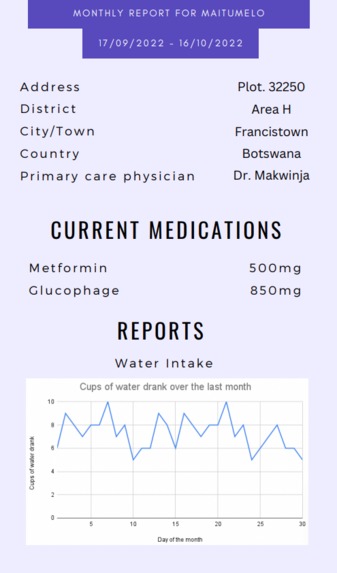
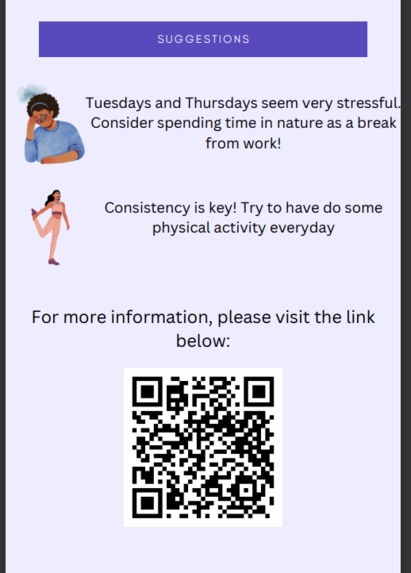
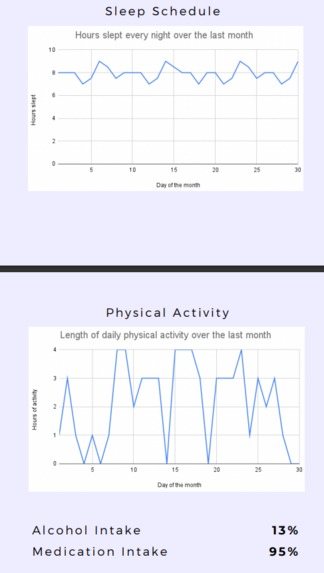
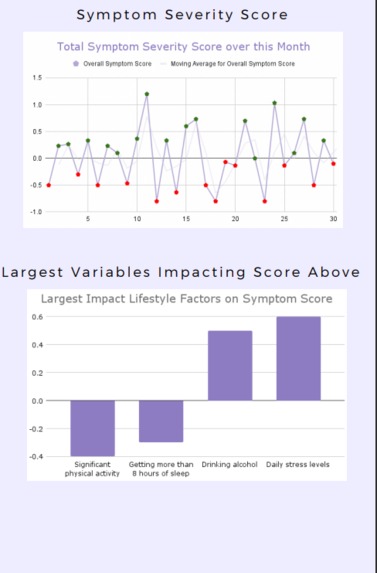
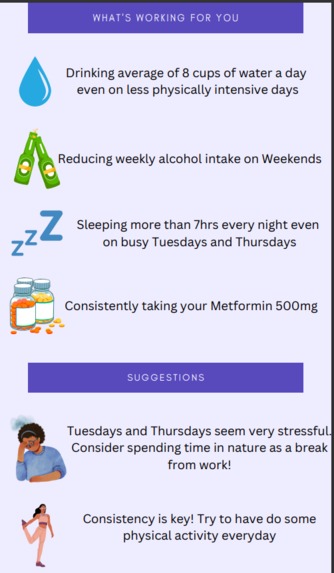
Based on survey data from users on their lifestyle on a given day (sleep, alcohol consumption, medication) and how their symptoms of diabetes felt (hunger, thirst, tingling sensations, blurry vision) we create reports to show what lifestyle factors provide the most positive change to people's lives.
Furthermore, we account for one of the leading causes of blindness in Botswana using a model that can predict the chance of Diabetic Retinopathy based on a picture of the retina. This can act as an intermediate proxy for diabetes prediction when glucose tests are unavailable / too expensive
How we built it
Dashboard:
- React.JS
- Vercel
Patient Data Store:
- Intersystems
Model:
- Tensorflow
- Python
Analytics API:
- Python
- Flask based REST API
Git to track all changes
Challenges we ran into
The main challenge from a technical standpoint was actually integrating all the components (Central API, Analytics API, Model API, Frontend, Intersystems)
From an ideological standpoint, we knew we wanted to avoid just diet-based recommendations although they're quite easy as their effectiveness is quite low especially when the people using it don't have anywhere as close to the number of options we have thus leaving out key minority groups.
Accomplishments that we're proud of
Building a working model to get above-human accuracies in predicting Diabetic Retinopathy
Ensuring data handling best practices especially as we're dealing with Health-related data
Working on a project that we strongly believe can help a lot of people by serving all populations without leaving out any minority or less well-off groups
What we learned
Always think about the benefit of the user! Don't just focus on what you think is right, check with the folks who will be most impacted.
Keep it Simple! Don't add more than necessary so as to not confuse the user
Sleeping is quite useful (we planned on sleeping for 2 hrs but ended up sleeping for a lot more than that) 10/10, would do again.
What's next for Shelo
- Work with the Botswana Government deploy a small-scale pilot
- Generate population-wide analytics to best utilize Government Resources
- Deploy prediction infrastructure into serverless systems to enable scalability once fully deployed
- Put support for other languages / other diseases that could benefit by user-centric analytics


Log in or sign up for Devpost to join the conversation.