-
-
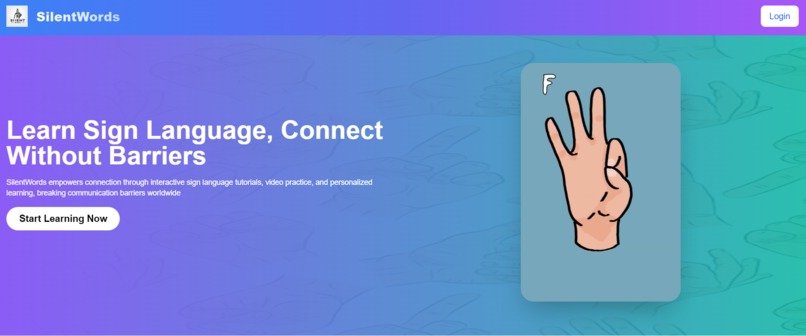
Landing Page Hero Section
-
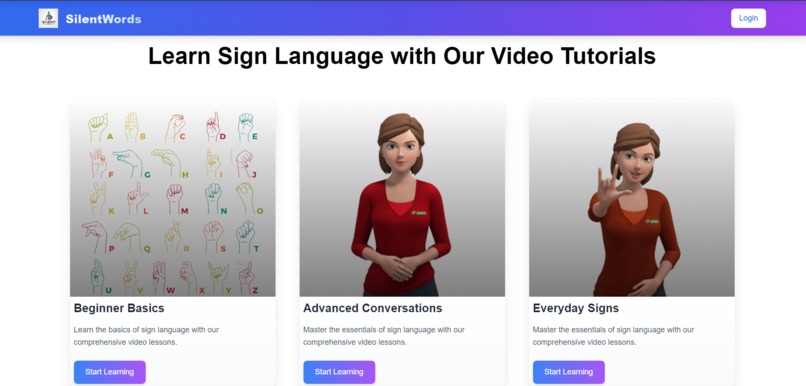
Landing Page
-
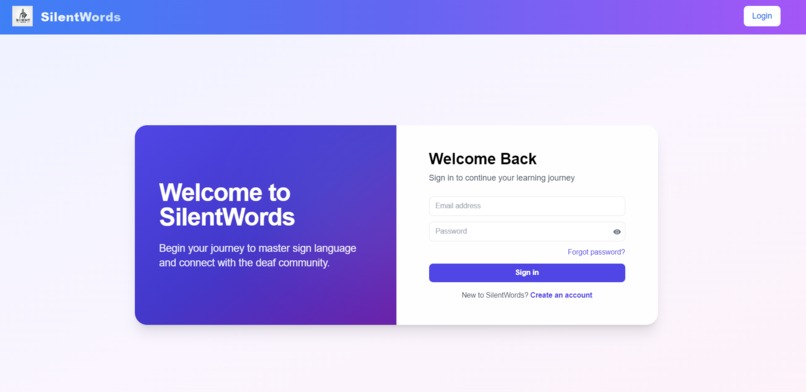
Login
-
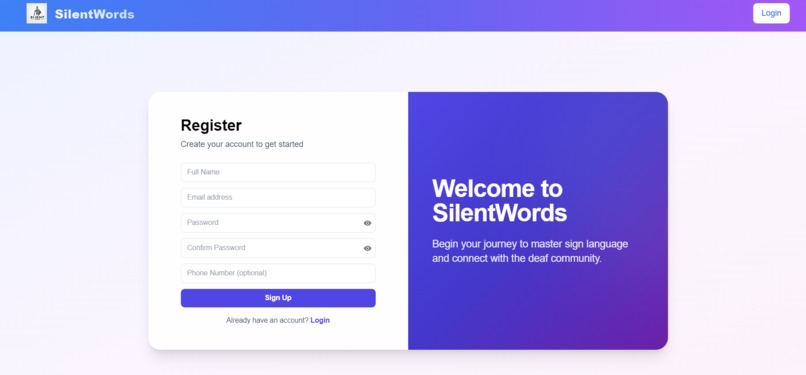
Register
-
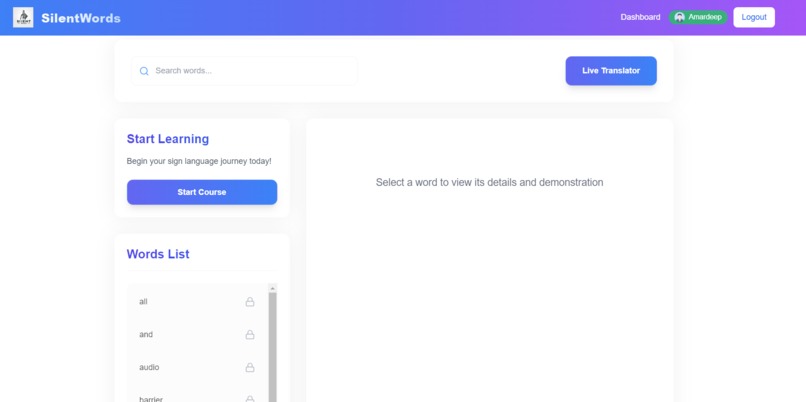
User Dashboard
-
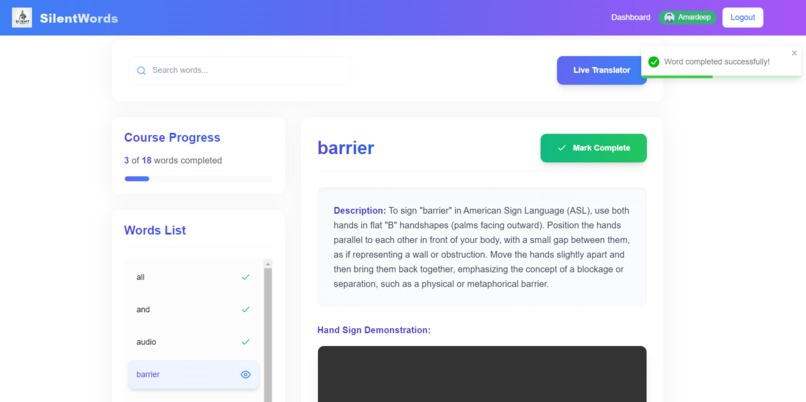
User Learning track
-
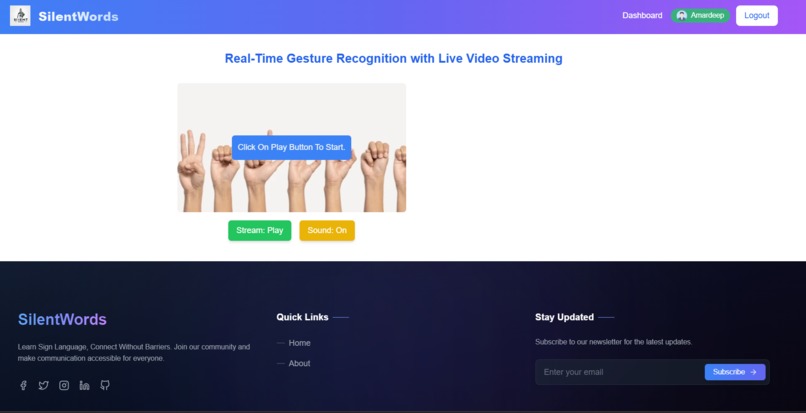
Real Time Sign Detection Page
-
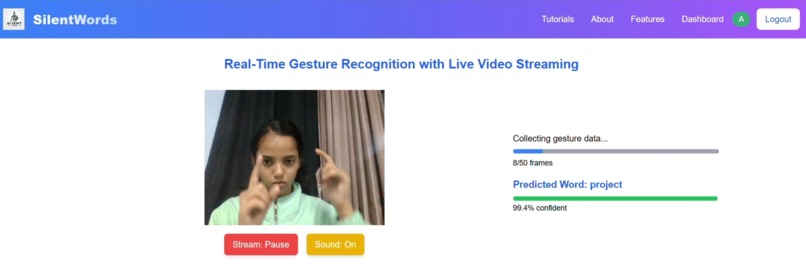
Real Time Sign Detection
-
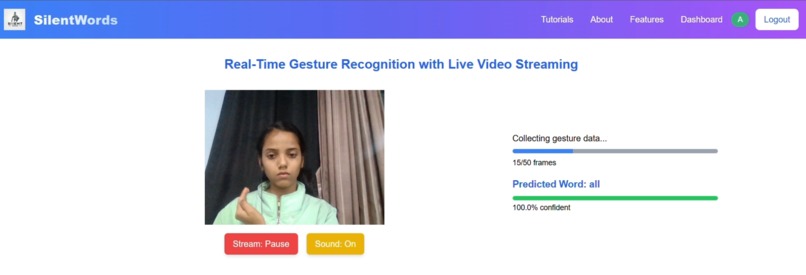
Real Time Sign Detection


Inspiration
The inspiration for SilentWords came from recognizing the communication barriers faced by the deaf and hard-of-hearing community. We observed that while sign language is crucial for inclusion, learning resources are often limited and not easily accessible. Our team was motivated by the potential of AI technology to bridge this gap and make sign language education more interactive and widely available.
What it does
SilentWords is a comprehensive sign language learning platform that:
- Provides real-time sign language detection and feedback using AI
- Offers interactive tutorials for beginners to advanced learners
- Features a sign-to-text conversion system for practical communication
- Includes progress tracking and personalized learning paths
- Supports multiple sign language variations
- Creates an engaging learning experience through gamification
How we built it
We developed SilentWords using a stack of modern technologies:
- Frontend: React.js for a responsive and interactive user interface
- Backend: Node.js and Express for robust server-side operations
- AI Model: TensorFlow and MediaPipe for hand gesture recognition
- Database: MongoDB for user data and progress tracking
- Real-time Processing: WebRTC for camera input and real-time feedback
- Cloud Infrastructure: AWS for scalable deployment
Challenges we ran into
- Achieving accurate real-time hand gesture recognition across different lighting conditions
- Optimizing the AI model for low-latency performance in web browsers
- Handling various edge cases in sign detection
- Creating an intuitive user interface that works for both learning and practice modes
- Implementing real-time feedback without overwhelming users
Accomplishments that we're proud of
- Developed a highly accurate sign language detection system
- Created an intuitive and engaging learning interface
- Successfully implemented real-time feedback mechanisms
- Built a scalable platform that can support multiple sign language variants
- Achieved low-latency performance for real-time interaction
- Created an inclusive design that caters to various user needs
What we learned
- Deep insights into computer vision and machine learning model optimization
- Importance of user-centric design in educational platforms
- Complexities of sign language variations and standardization
- Technical skills in full-stack development and AI integration
- Project management and team collaboration in a time-constrained environment
What's next for SilentWords
- Expand the sign language database to include more regional variations
- Implement advanced natural language processing for better sign-to-text conversion
- Develop mobile applications for iOS and Android
- Add community features for peer-to-peer learning
- Integrate VR/AR capabilities for immersive learning experiences
- Partner with educational institutions and organizations for wider adoption
- Create an API for third-party integrations


Log in or sign up for Devpost to join the conversation.