-
-
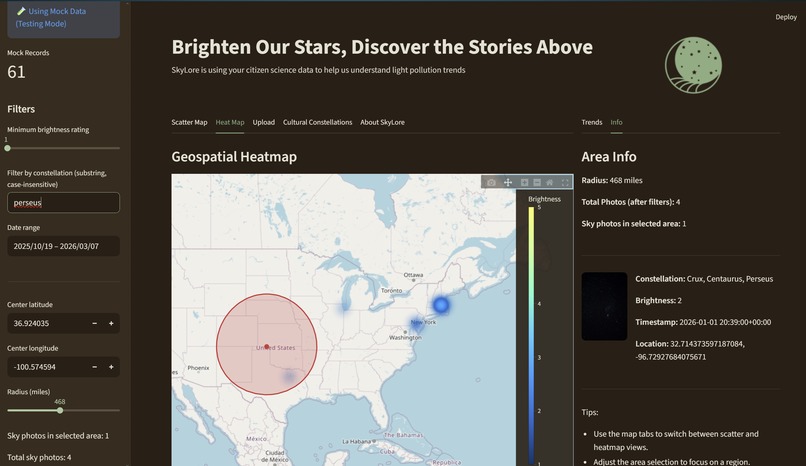
Heatmap Homepage
-
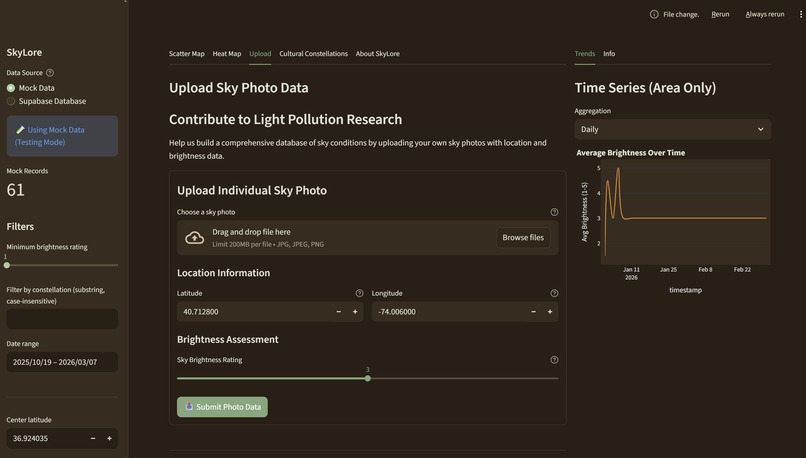
Upload Night Sky Photos
-
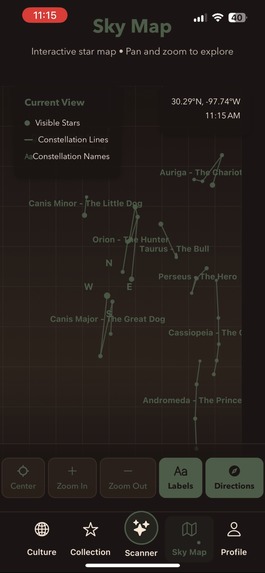
Constellation Map
-
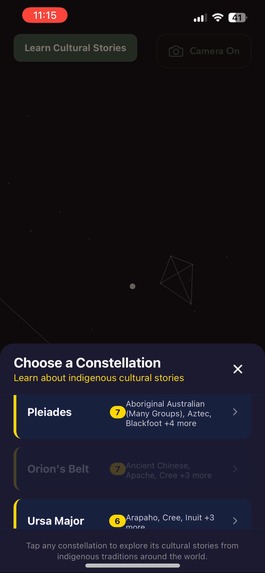
Gyroscope View of the Night Sky
-
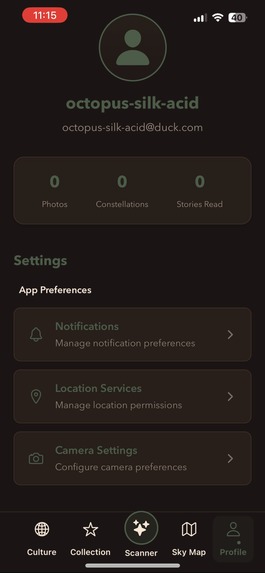
Profile Page
-
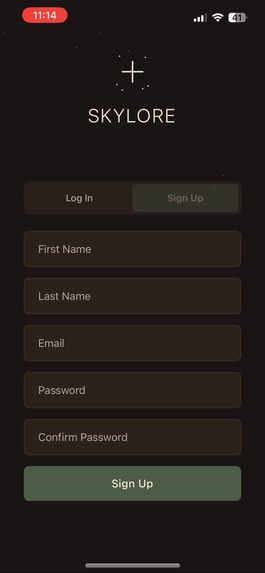
Login


SkyLore: Exploring the Night Sky Across Cultures
What is SkyLore?
The HackTX 2025 theme, "Celestial," immediately intrigued us. During the opening ceremony’s tribute to Indigenous peoples, a question sparked our imagination:
Did every ancient culture see the sky differently? Why do we only use the Roman constellations today?
As we brainstormed, we discovered that one of our teammates had Indigenous roots — and from that connection, SkyLore was born. We wanted to go beyond building just an educational app. Our goal became to combine cultural learning with citizen science — allowing people to explore how different civilizations viewed the stars while contributing real data to modern research.
By inviting users to photograph the night sky and share their observations, SkyLore transforms cultural curiosity into meaningful impact. Each submission adds to a growing, public dataset that visualizes global light pollution trends, helping scientists, educators, and communities understand how our skies are changing.
As users learn about lost constellations and the stories behind them, they also become citizen scientists, helping preserve the beauty and knowledge of the night sky for generations to come.
Components of SkyLore
1. Mobile App
Our mobile app allows users to explore the night sky interactively:
- Compass-Based Navigation: Look around using your device’s compass to explore different parts of the sky.
- Photo Capture & Collection: Take photos of constellations and add them to your personal collection.
- Upload to Supabase: Share your photos with the SkyLore community by uploading them to our Supabase database, contributing to the public dataset.
2. Streamlit App
Our Streamlit web app provides a rich interface for analyzing and visualizing collected data:
- Constellation Library: Browse a growing collection of constellations from different cultures.
- Light Pollution Heat Map: Visualize light pollution across the globe, with filters for date, constellation name, and other parameters.
- Zone-Based Graphs: Select a geographic zone to see how light pollution is changing over time.
- Data Insights: Understand trends and impacts of light pollution on visibility of the night sky.
3. Website Features
Our SkyLore website complements the mobile and Streamlit apps:
- Photo Submissions: Users can upload their night sky photos directly.
- Machine Learning Analysis: Uploaded photos are sent to a machine learning API that identifies constellations and objects in the image.
- Community Contributions: All submissions help improve the public dataset, supporting research, education, and conservation efforts.
Impact
SkyLore bridges cultural learning and citizen science. By participating, users not only rediscover lost constellations but also contribute valuable data to track and reduce the effects of light pollution. Together, we preserve the stories of the sky and help future generations enjoy the beauty of a clear, starry night.


Log in or sign up for Devpost to join the conversation.