-
-
Logo
-
Prototype
-
Circuitry
-
Code
-
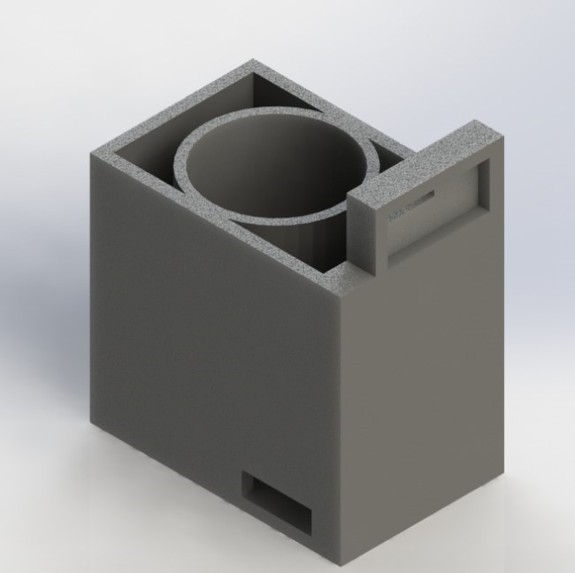
Future Pot Design
-
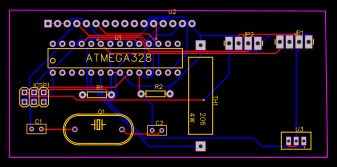
PCB Design


Inspiration
Plants are great, but let's face it - it's hard to keep them alive. With the many benefits that come with indoor plants, we wanted to create a lightweight, cost-efficient solution for people, such as university students, who want to enjoy the pleasure of having plants without devoting extensive care or spending too much money.
What it does
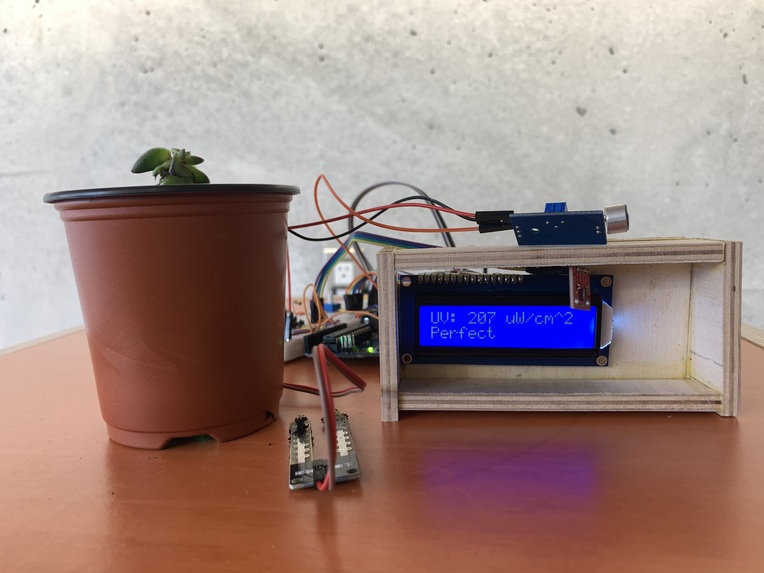
Enter the SmartPot, an innovative add-on device to your favourite plant that detects key survival factors, such as temperature, soil moisture and exposure to UV light. Buttons enable full control over the view of information on a compact screen, and based on sensor data, as well as benchmarks for your specific kind of plant, our solution will determine whether conditions are healthy or not for the plant, and notify the user of any needed adjustments.
How we built it
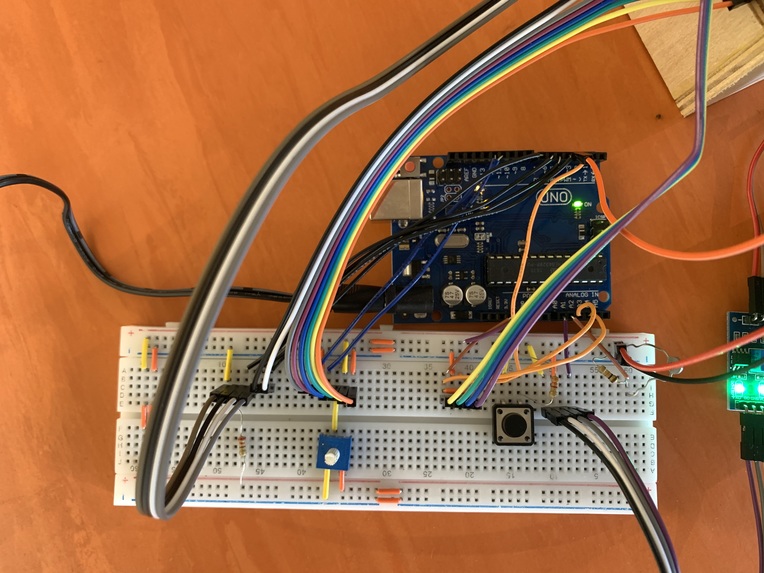
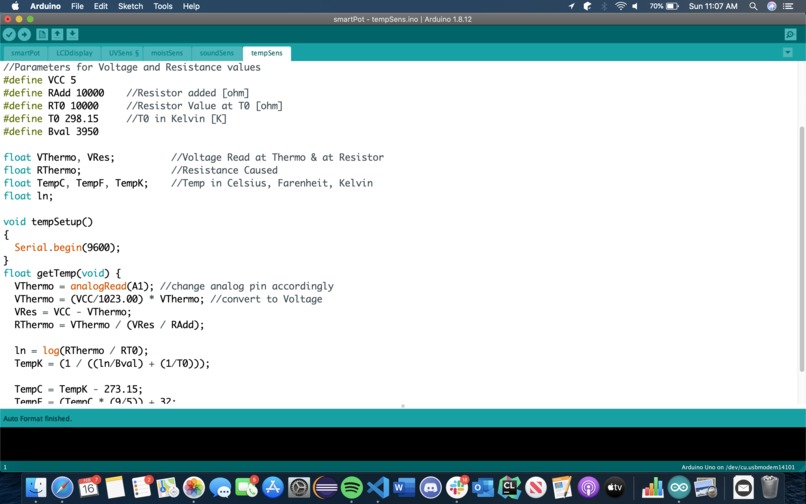
All four of us contributed to the construction of the circuit and wiring of the physical components, as well as the programming needed to enable their various functionalities. We implemented several sensors and libraries, including the LiquidCrystal dependency to control the output of the LCD screen, the ESP8266 temperature sensor, the LM393 sound sensor, and the ML8511 UV light sensor. A custom-built wooden enclosing case was designed utilizing various tools, such as soldering, to conglomerate our various components. We used separate Arduinos to work on individual functions of the SmartPot, then combined our circuity and used Git source control to put together a successful hardware hack!
Accomplishments that we're proud of
We challenged ourselves to work on an unconnected hack and explore lower-level programming in this project. It was an awesome opportunity to learn and refresh our knowledge on breadboards, circuitry, and basic sensor interfacing, and allowed us to pursue a cause that we could all relate to as university students ourselves (seriously, plants are hard).
What we learned
"Welcome to hardware!"
What's next for SmartPot
Every project always has the potential to grow. The SmartPot is no different. The next steps include expanding the database of plants that the project supports, implementing a buzzer or speaker, in addition to the LCD screen, that notifies the user when the plant needs water or sunlight, and adding a container for all of the circuitry.


Log in or sign up for Devpost to join the conversation.