-
-
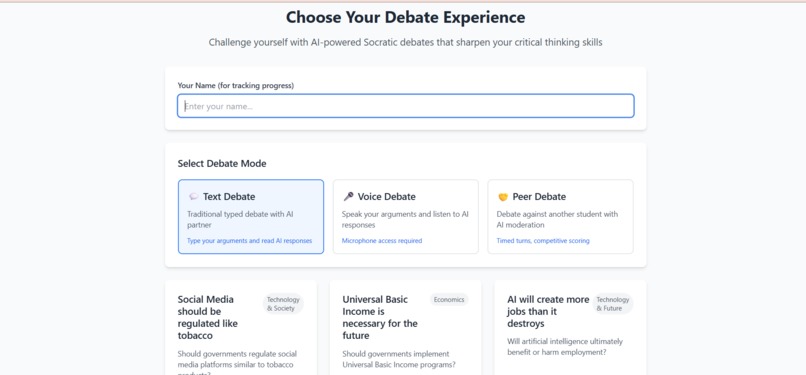
debate modes
-
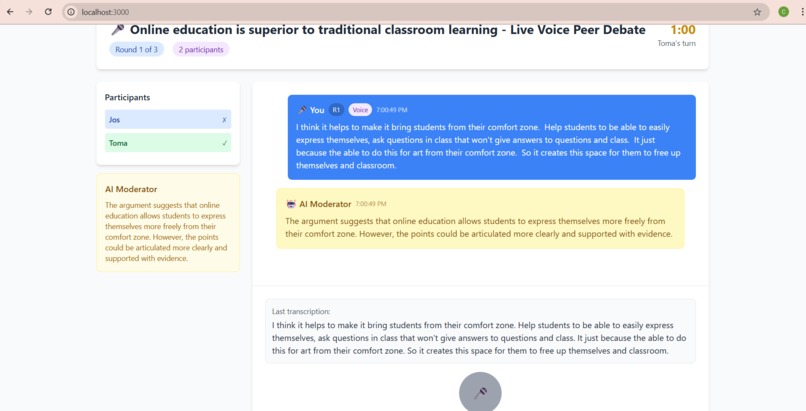
peer debate
-
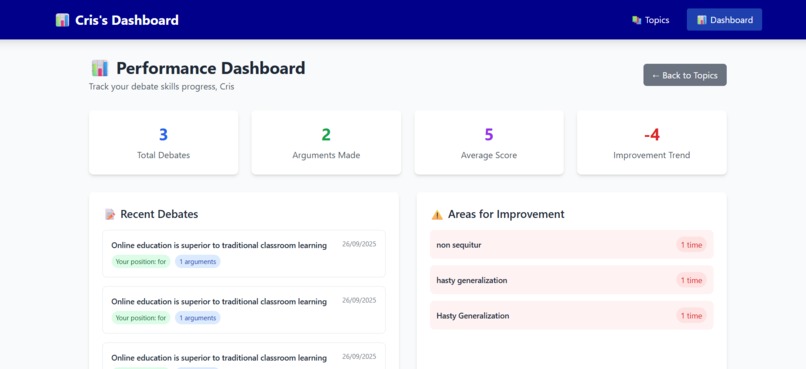
analytics


Inspiration
Traditional debate education often lacks personalized feedback and real-time guidance. Students struggle to identify logical fallacies in their arguments and rarely get immediate, constructive criticism that helps them improve. We recognized that combining AI's analytical capabilities with the Socratic method could create a more engaging and educational debate experience that adapts to each student's skill level.
What it does
Socratic AI provides three distinct debate modes: AI opponent debates where students argue against intelligent artificial opponents, voice-enabled debates for more natural conversation flow, and peer-to-peer debates with AI moderation. The system analyzes arguments in real-time, identifies logical fallacies, evaluates evidence quality, and provides detailed feedback on reasoning strength. Students can track their progress through comprehensive dashboards showing improvement trends and common weaknesses.
How we built it
The application uses a React frontend with a Node.js/Express backend connected to a PostgreSQL database. We integrated Google Cloud Speech-to-Text for voice processing and implemented WebSocket connections for real-time peer debates. The AI functionality leverages the AI/ML API for generating responses and analyzing arguments. Audio processing uses MediaRecorder API for recording, with multer handling file uploads. The matching system for peer debates uses in-memory storage with WebSocket notifications.
Challenges we ran into
Voice processing proved complex, requiring careful handling of audio formats and transcription accuracy. The peer matching system initially had race conditions where students wouldn't properly match due to inconsistent waiting keys. Real-time synchronization between multiple users presented timing challenges, especially with turn-based voice debates. Database schema design needed multiple iterations to properly support voice messages and peer debate states.
Accomplishments that we're proud of
We successfully created a fully functional debate platform that provides meaningful educational value. The argument analysis system accurately identifies logical fallacies and provides constructive feedback. The voice integration works seamlessly across different browsers and devices. The peer matching system creates engaging competitive experiences while maintaining educational focus through AI moderation.
What we learned
Building real-time collaborative applications requires careful state management and error handling. Voice processing on the web has significant browser compatibility considerations. Database design for complex multi-user interactions needs thorough planning. User experience in educational technology must balance engagement with learning outcomes.
What's next for Socratic AI
We plan to implement adaptive difficulty scaling that adjusts argument complexity based on student performance. Advanced analytics will provide teachers with detailed insights into student progress and common misconceptions. After multiple rounds, the AI will provide a comprehensive analysis comparing both participants' performance, declaring a winner based on logic, evidence quality, and clarity. Integration with learning management systems will streamline classroom adoption. Mobile app development will expand accessibility, and multilingual support will broaden the platform's reach.
Built with:
- Frontend: React, JavaScript, Tailwind CSS, WebSocket API, MediaRecorder API
- Backend: Node.js, Express.js, WebSocket (ws), Multer, Helmet
- Database: PostgreSQL with connection pooling
- AI Services: AI/ML OpenAI API for argument generation and analysis
- Voice Processing: Google Cloud Speech-to-Text API
- Infrastructure: RESTful API architecture, real-time WebSocket connections
- Development Tools: Axios for HTTP requests, CORS middleware, Rate limiting
- Audio Processing: WebM/Opus encoding, multipart form data handling
Built With
- express.js
- google-speech-to-text
- javascript
- multer
- node.js
- openai
- react
- restful


Log in or sign up for Devpost to join the conversation.