-
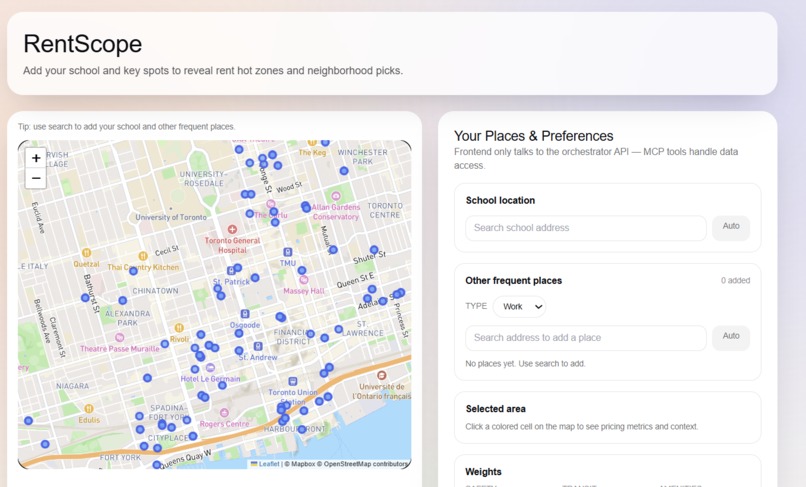
UI
-
-
-

overall flowchart
-
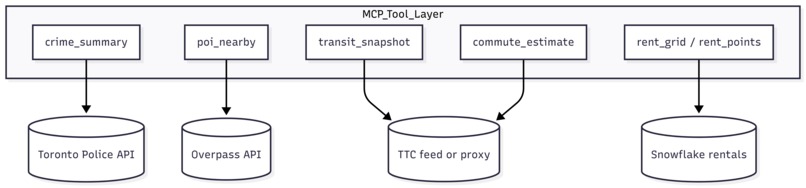
MCP
-

Orchestration
-

frontend


Inspiration
Finding student housing is messy: listings are scattered, commute matters, and “safety” or “amenities” are hard to compare. We wanted a calm, map‑first tool that turns those tradeoffs into a visual decision powered by reliable AI insight.
What it does
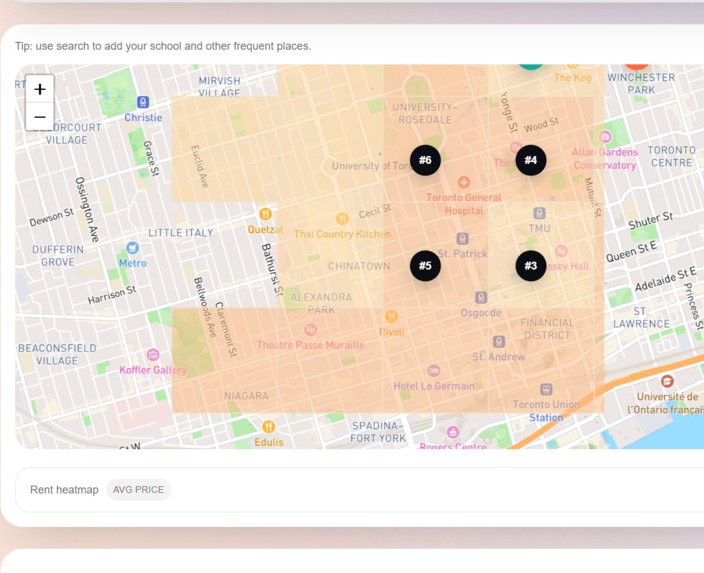
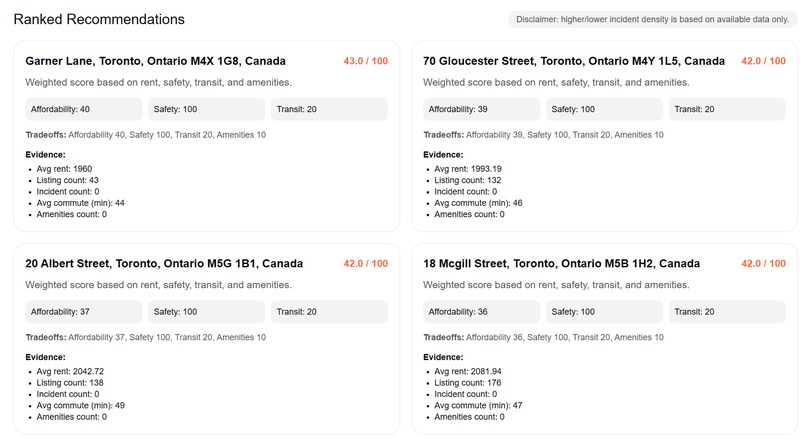
RentScope lets students add the places they visit most (school, work, etc.), then generates a rent heatmap and ranked neighbourhoods based on affordability, commute, safety signals, and amenities. Users can explore areas, see evidence for each score, and compare tradeoffs quickly.
How we built it
We built the MVP to mimic a robust, production‑style workflow. On the AI side, we use Gemini with multi‑agent orchestration (specialists + aggregator). To make the results more reliable, each agent consumes structured data from an MCP tool layer, which helps reduce hallucinations and ensures the model’s output is grounded and explainable. This also lets us surface clear reasoning alongside the rankings.
For data, we integrated MongoDB as a cache for expensive API calls and intermediate results, keeping the experience fast and resilient to rate limits. Since there’s no public live‑listing dataset, we generated synthetic rental listings from historic Toronto rent data and stored them in Snowflake. This mimics how a real product would handle high‑volume listings in a warehouse, while still enabling a realistic MVP pipeline that can later plug into true live data.
Challenges we ran into
- Heatmap coverage and consistency when data was sparse.
- API rate limits and caching strategy.
- Making AI summaries useful while staying based on real data.
- Debugging frontend build issues (tokens, envs, Docker vs local).
Accomplishments that we're proud of
- A working end‑to‑end MVP: user inputs → map heatmap → ranked neighborhoods with evidence
- A clean UI that hides complexity and feels usable
- A multi‑agent pipeline and MCP that keeps reasoning transparent and avoids fabricated numbers. Integration groundwork for MongoDB and Snowflake to support real datasets.
What we learned
- AI is most helpful when paired with clear, verifiable data sources.
- Even with “soft” data, we can still create a meaningful, decision‑support experience. ## What's next for Soft Submission
- Plug in real‑time listings and verified datasets.
- Improve neighbourhood naming and boundary accuracy.
- Add personalized constraints (budget, commute cap, accessibility).
- Expand the recommendation logic with better confidence scores and bias checks.


Log in or sign up for Devpost to join the conversation.