-
-

Onboarding part 3: Interests
-
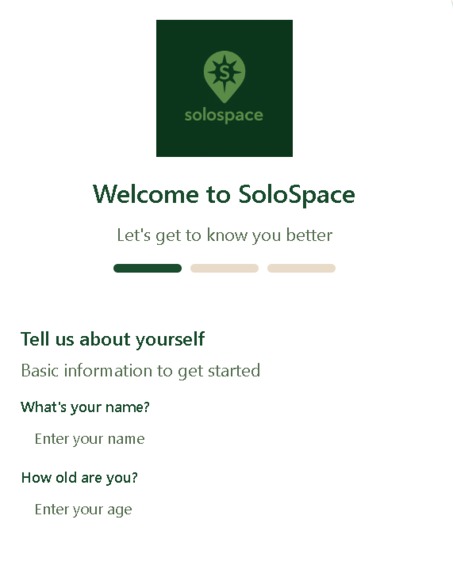
Onboarding part 1: Name & Age
-
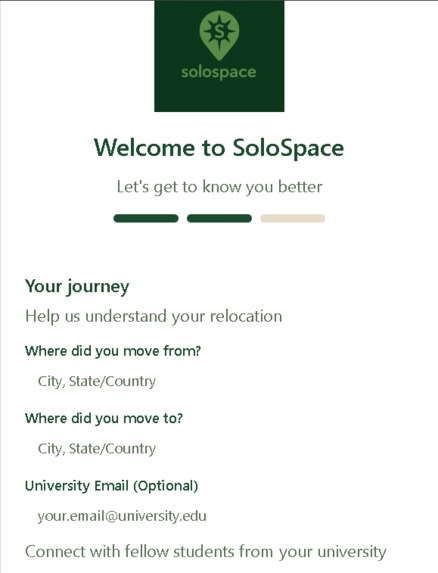
Onboarding part 2: Location & Optional University affiliation
-
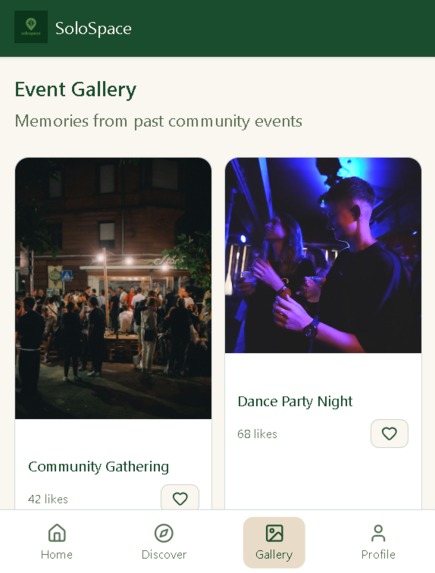
Gallery page: photos from past events
-
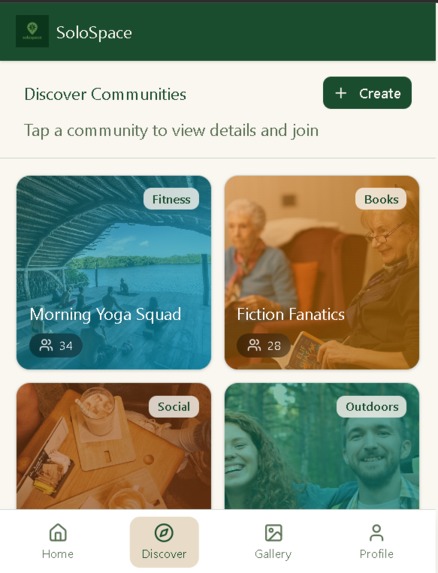
Discover page: Micro-communities based off of interests entered
-
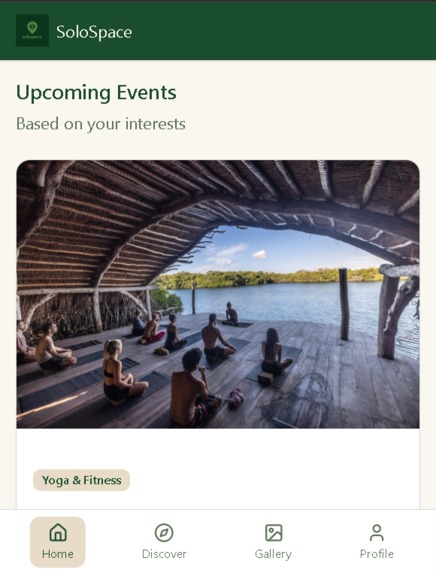
Home page: Upcoming Events


Inspiration
Moving to a new city is exciting, but for many young adults it comes with overwhelming loneliness. Our team noticed that most social apps focus on content, not community. They create comparison, pressure, and isolation, but not real friendships. We wanted to build something that actually helps newcomers make meaningful, safe, in-person connections. That vision became SoloSpace: an app designed to make moving somewhere new feel less like starting over and more like starting fresh.
What it does
SoloSpace makes it easy and safe to meet new people, participate in local activities, and build a true sense of belonging. Home Page: Personalized events, volunteer opportunities, recommended activities, and events that users from their university are attending. Discover Page: Micro-groups based on hobbies, with the ability to join or create new communities. Gallery Page: Photos from past events, with likes only, but with no comments, to promote healthy digital interaction. Profile Page: User details, interests, verification status, and a clean overview of their community involvement.
How we built it
We created a four-page app structure on Figma and designed each feature around digital wellbeing principles, such as removing public comments, reducing metrics that drive comparison, and incorporating verified identities. For development, we structured an onboarding system that collects interests and relocation data to personalize the user experience. We prototyped the UI using a dark green and crème color scheme to create a calming, welcoming environment. Each page was then built around simple navigation, intentional content display, and clean community flows that help users go from browsing to connecting.
Challenges we ran into
Most of the challenges we ran into were trying to properly format the UI on Figma. We also struggled to make the UI look more interesting.
Accomplishments that we're proud of
We’re proud that we created a platform specifically focused on healthy, real-world community building rather than shallow digital engagement.
What we learned
Our research into relocation challenges and loneliness taught us how much users value structure, clarity, and trust when joining new communities. Most importantly, we learned how intentional design can transform a digital product into something that genuinely empowers people in the real world.
Key Performance Indicators
To measure SoloSpace’s early success and ensure we are meaningfully reducing newcomer loneliness, we focus on a set of clear KPIs. Our primary usage metrics include achieving 10,000+ Monthly Active Users (MAU) within the first six months, maintaining a 30-day user retention rate of at least 55%, and sustaining an average session duration of 7–10 minutes, which indicates healthy engagement without doom-scrolling behavior. We aim for an onboarding completion rate of 80% or higher, ensuring new users successfully enter the ecosystem, and a meetup attendance rate of 60%, showing strong conversion from digital interest to real-world interaction. In addition to these core KPIs, we will track micro-group participation, targeting 2–3 groups joined per active user, as well as a volunteer participation rate of at least 10% to measure community impact. Collectively, these KPIs demonstrate SoloSpace’s ability not only to attract and retain users, but also to foster authentic, safe, and meaningful connections between young adults in new cities.
What's next for SoloSpace
Next, we plan to pilot SoloSpace in high-newcomer cities such as Austin, Seattle, Chicago, Atlanta, and New York City. We’ll integrate more advanced event recommendation algorithms, expand university partnerships, and introduce in-app community moderators. We also want to develop features like safe group chat, volunteer badges, local business partnerships, and city-specific “newcomer guides.”
Built With
- figma


Log in or sign up for Devpost to join the conversation.