-
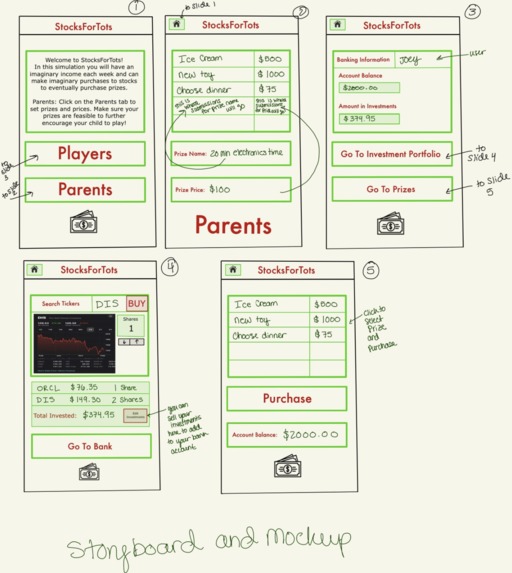
StoryBoard and Mockup
-
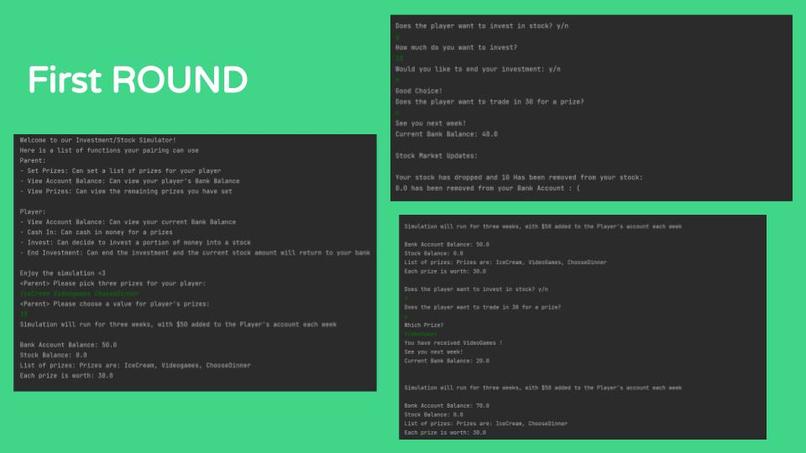
First week (round 1 in mockup)
-
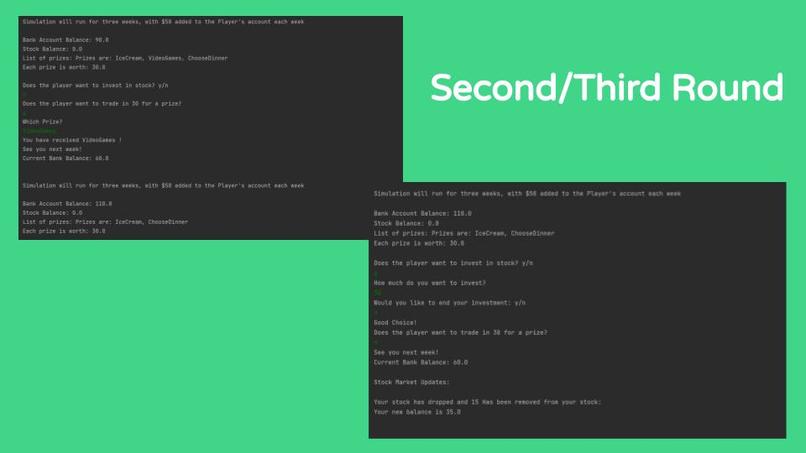
Second and third week (round 1 in mockup)
-
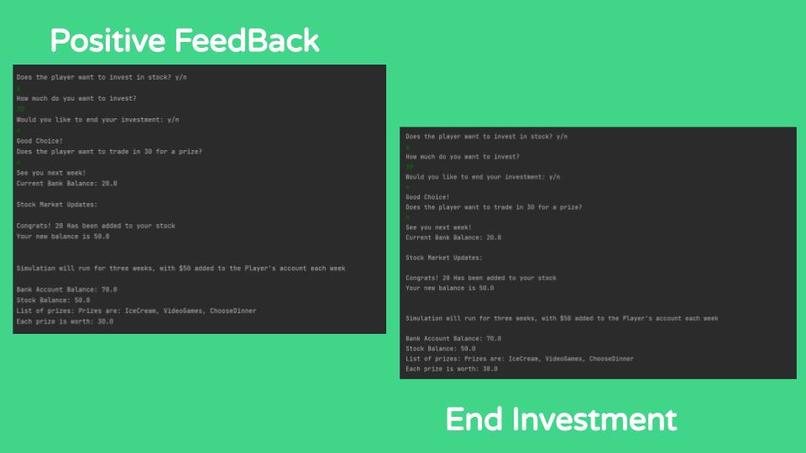
Positive feedback and ending and investment
-
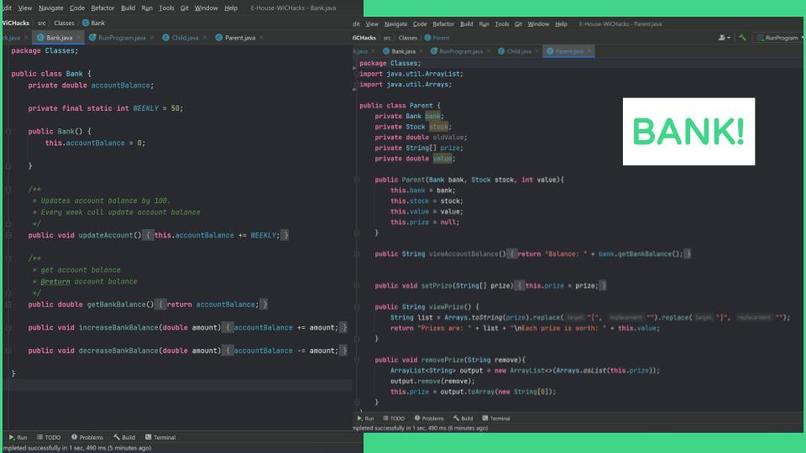
Code for the bank
-
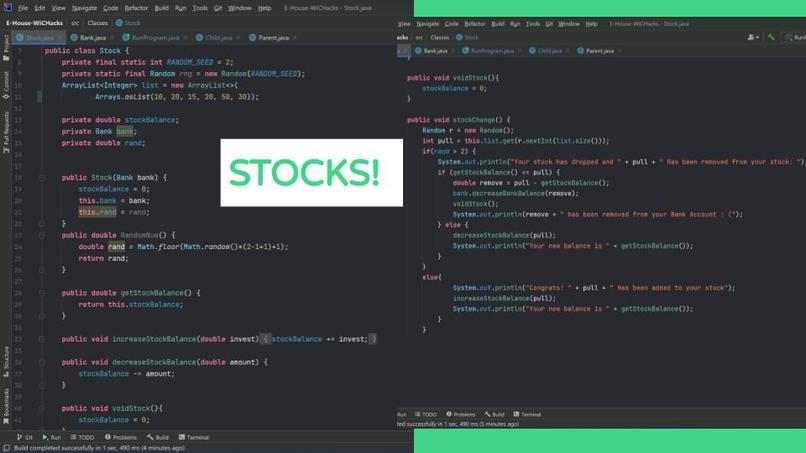
Code for stock algorithm
-
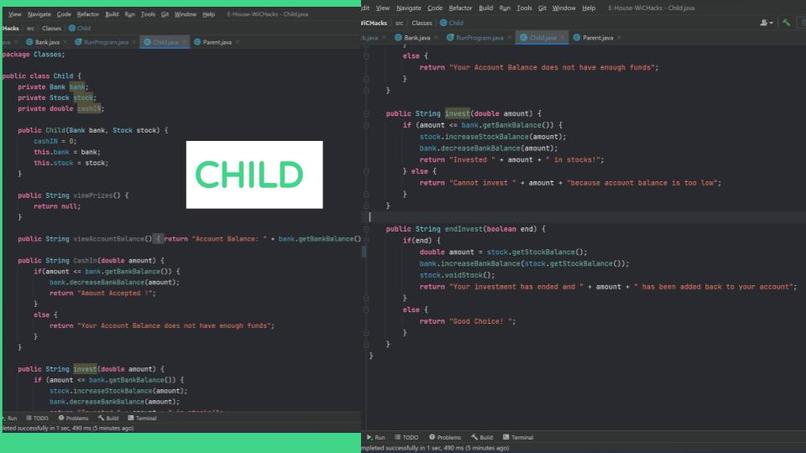
Code for player account
-
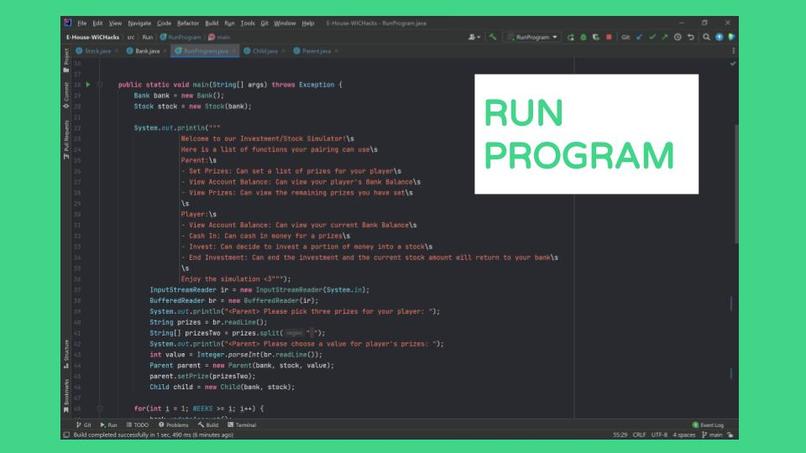
Text-based UI


Inspiration
When kids want to learn about investing, quality resources are limited. Currently, the educational market can offer books or games. Games are the most often used in financial literacy classes; they challenge players to reach goals and badges. Then incentive? Bragging rights: not exactly what youth want after their hard work understanding personal finances. Our idea came from "let's give kids real incentives to learn financial literacy." But everyone's financial situation is unique. Some families can offer games and toys for reaching certain goals, others cannot. StocksForTots offers custom prizes so parents can create real learning goals and follow through on them. This helps the economic community by raising investors who are actually interested in learning and enriching their understanding through hands-on experience with none of the real financial consequences. It also teaches parents to set reasonable prizes for their youth and hold responsibility for distributing the prizes. Ultimately: it's a great place for aspiring investors to make mistakes!
What it does
Each week the player receives an imaginary income (we set ours at $50 in the demo) in their imaginary bank account. They can either choose to invest a portion of it or keep it there. If they keep it in the bank, it will grow a very very small amount (similar to a bank paying interest) but ultimately their total amount will be stable. Players can also invest it which teaches them that the return has the potential to be higher, but is much riskier. The end goal: teach players how to invest and have them learn to not keep all their money in one place.
The prizes can be set by the parent (in our demo we ask for 3 prizes and their price) the price tier of the prizes can also be set. At any point, a child with enough money can exchange it for a prize set by their parents.
Our text-based mockup currently has the functionality for parents to set the prize names and one price. Players can choose where to put their money. For the demo, we show rounds as weeks. Each round/week $50 is added to the bank account. We do this automatically because the program focuses on what to do with the money once you have it, not necessarily how to obtain it. After income is added the player can invest it, keep it in the bank, or cash it in for a prize. Each round/week the stock changes by a random amount (can either increase or decrease).
How we built it
Our java simulation was created in IntelliJ idea. The diagram includes four classes that each have separate functionality. There is Bank, Stock, Parent, Child. Stock, Parent, and Child are all constructed with the same bank, so any change made to the Bank is done for all classes. The Parent can set prizes, view prizes, remove prizes, and view bank account balance. The Child has the ability to invest in stocks, end their investment, and Cash In money to the Parent. The Bank and Stock both can show the amount in each and decrease/increase this value by a certain amount. The simulation is pre-built, with some user interaction. The user over a three week period can decide what they want to do with their allowance.
What's next for StocksForTots
The next step would be to connect the methods to a GUI with simple button pressing to activate the methods appropriately. The end goal with StocksForTots would be to incorporate the back-end code we made with an intuitive UI. We would also like parents to be able to set prices to particular prizes instead of one price for all. An informational goal would be to create an about page on the GUI with resources for Players to learn more about managing funds and investing in stocks and Parents to learn how to give appropriate incentive to Players. Finally, the stretch goal would be to incorporate polygon.io API into the code so players can create imaginary investments based on real enterprises and real data.
Challenges we ran into
We tried to add polygon.io into the program, but we lacked time and experience with figuring out how to use APIs. The same was true with a UI. We found backend and front end are very different styles of programming and ultimately learning "javax" was too large of a learning curve. We decided we would rather have a solid presentation and proof of concept for the backend than a dysfunctional backend with a pretty UI.
Accomplishments that we're proud of
We are the proudest of getting the backend to work about how we expected. As mentioned, there are many features we would like to add, but for the first hackathon for both of our team members, we are proud we have a working prototype. Even though we didn't get the API or GUI to work, we still learned a lot about the conceptual portion of it which will be very useful in continuing to learn more about them.
Built With
- intellij-idea
- java
- vscode


Log in or sign up for Devpost to join the conversation.