-
-
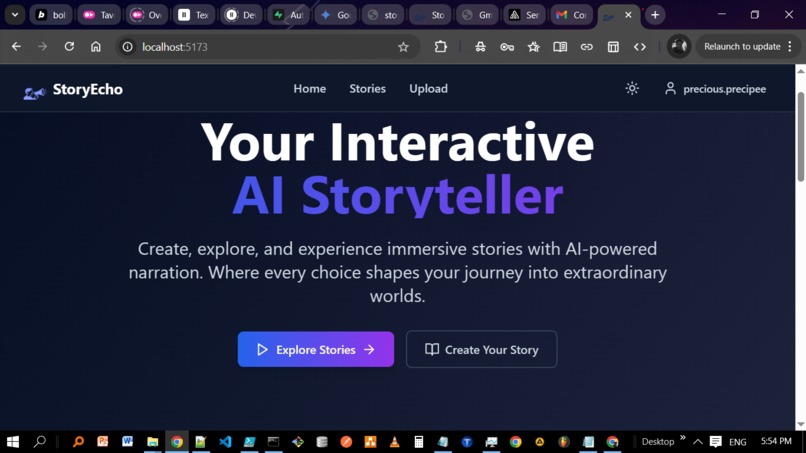
landing page
-
CTA
-
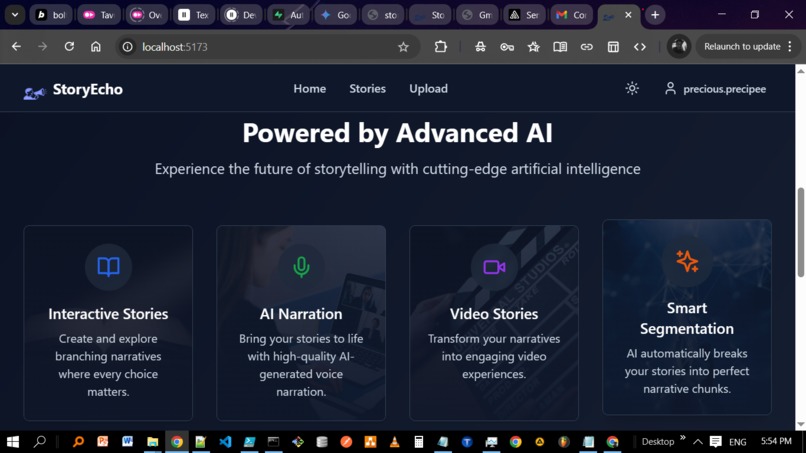
features
-
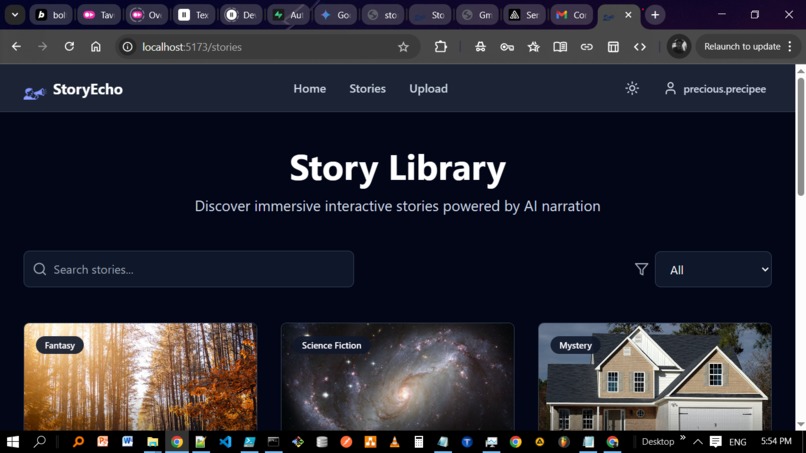
story library
-
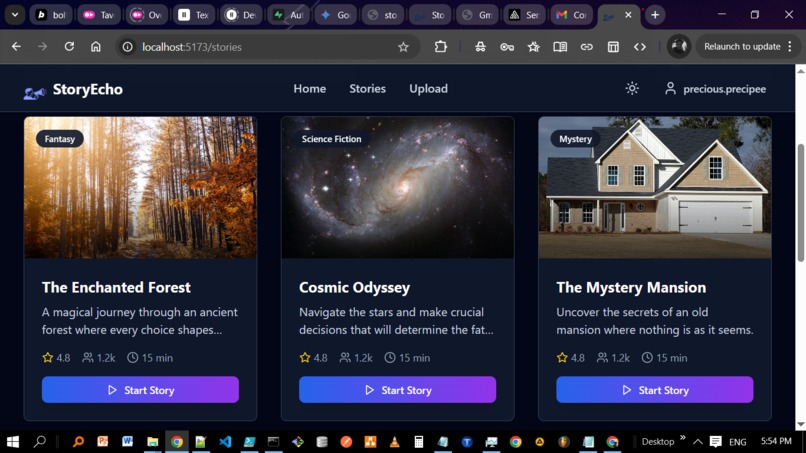
stories
-
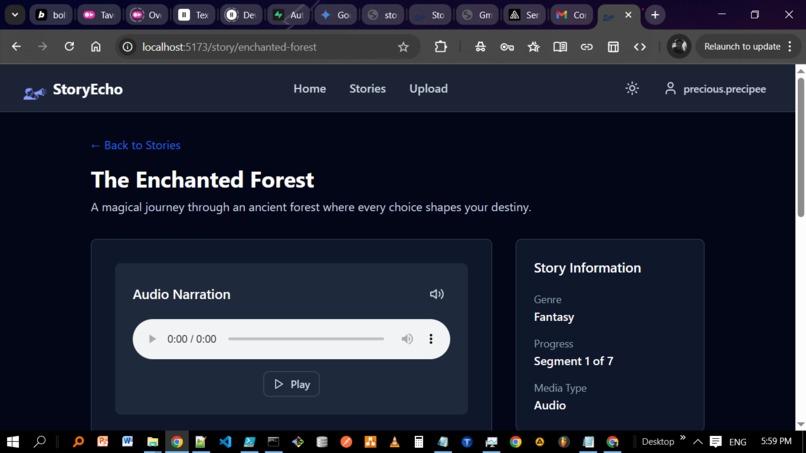
audio story player
-
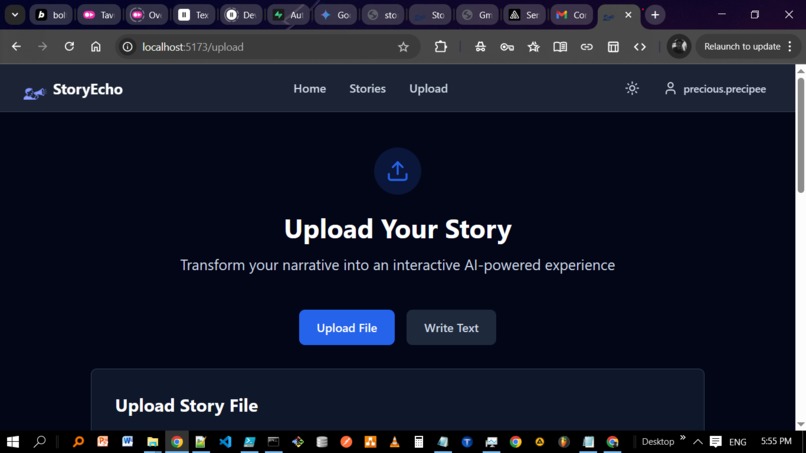
story upload
-
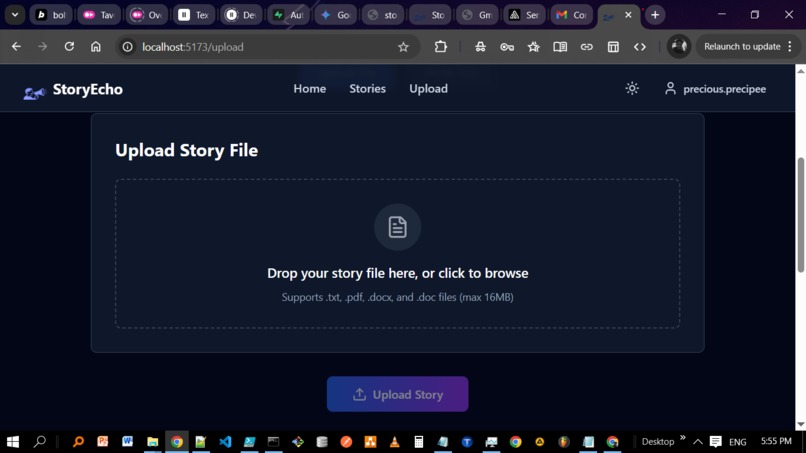
story file uplaod
-
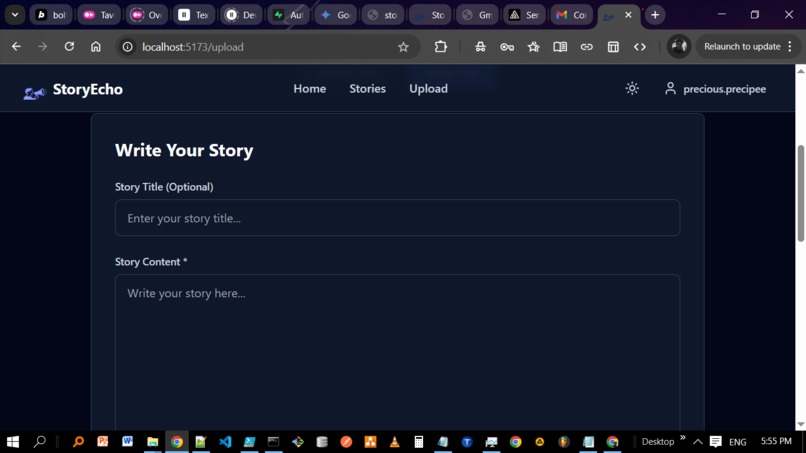
story text uplaod
-
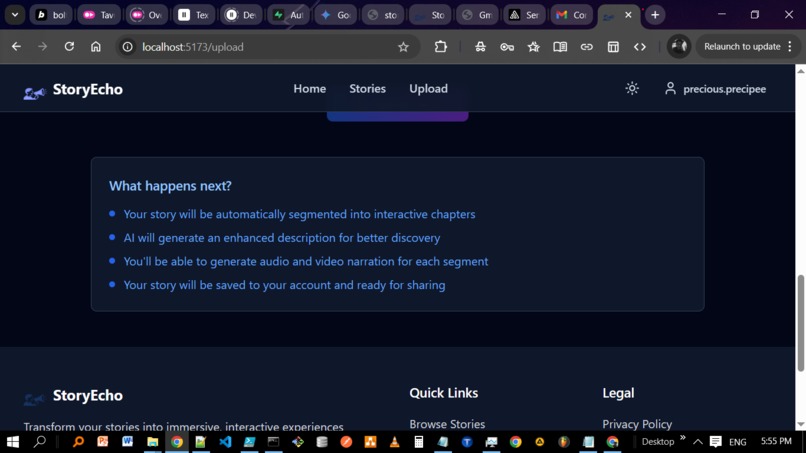
tips
-
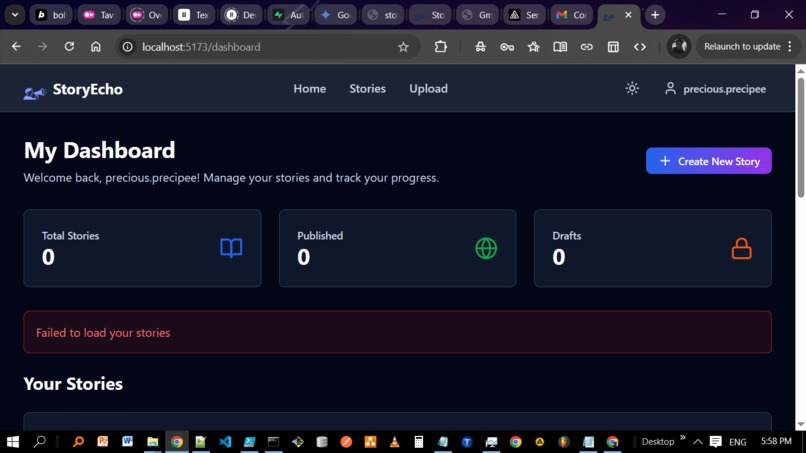
user dashboard
-
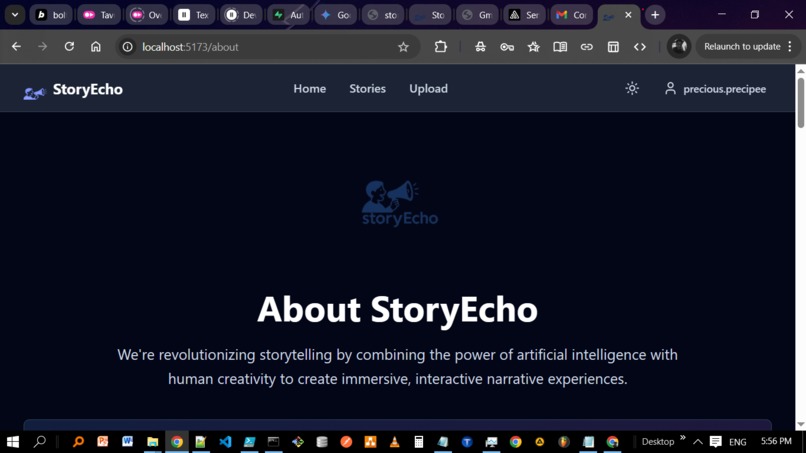
about
-
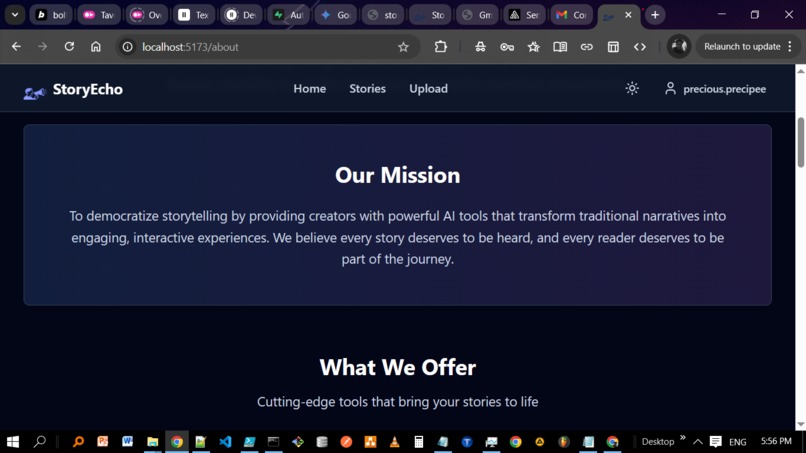
mission statement
-
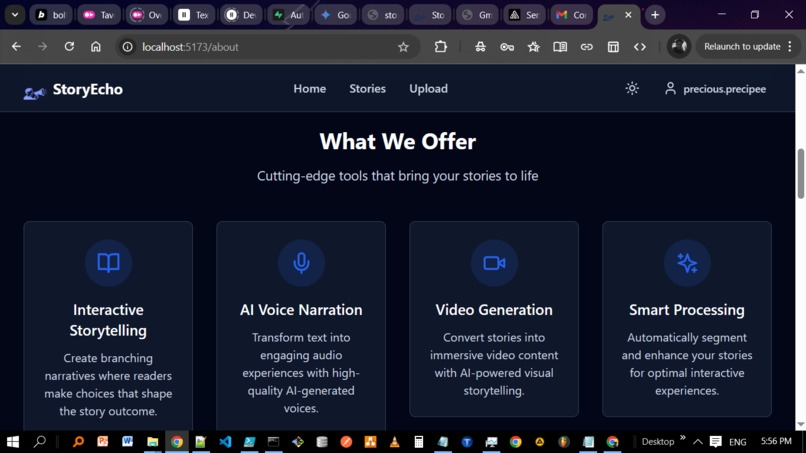
value proposition
-
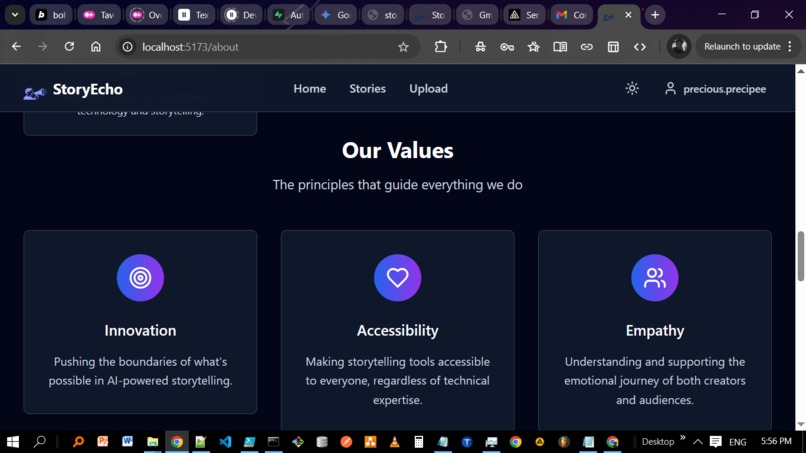
values
-
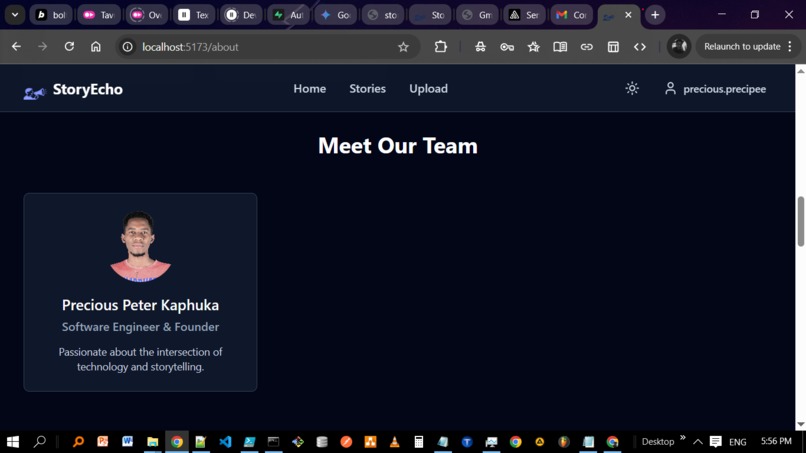
experts
-
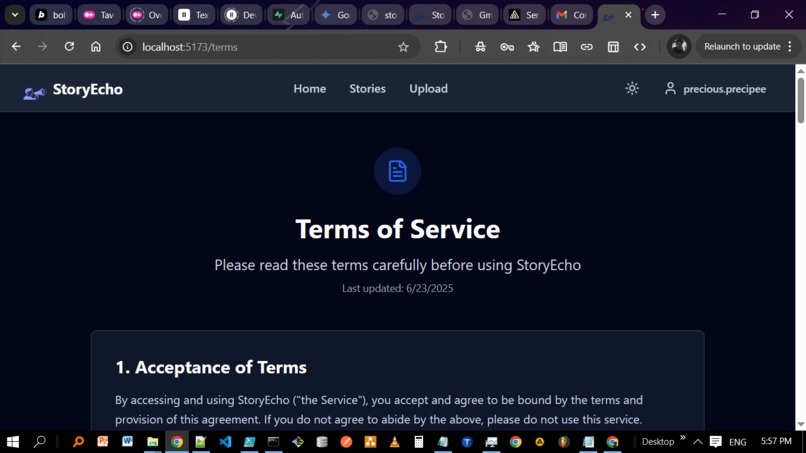
terms
-
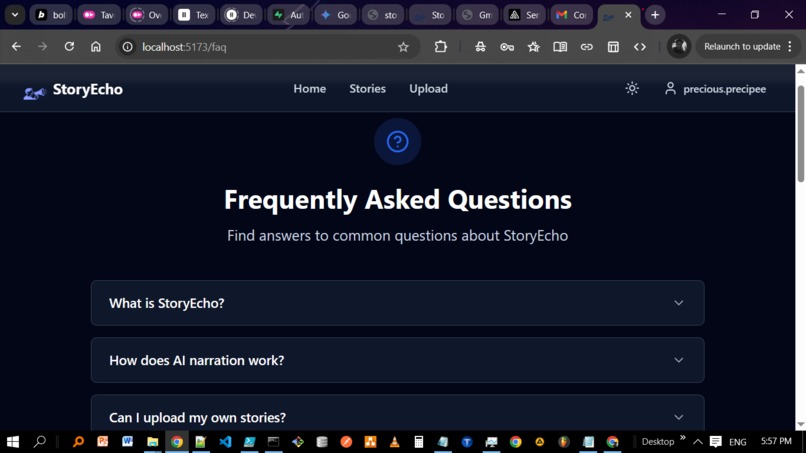
FAQ
-
footer


Inspiration
My lifelong love for ancient stories often left me wishing for a more immersive experience, one where I could truly feel the reader's tone and the emotions embedded within the narratives, all with the convenience of listening rather than reading.
This desire for an enhanced, easily digestible format for literary classics, especially for those who prefer to listen, was the core inspiration behind StoryEcho. I wanted to make these rich stories and tales readily available and engaging, even for the busiest or laziest readers among us.
What I Learned
This project was a profound learning experience across several domains. I discovered the incredible convenience and performance capabilities of Bolt.new as an AI-powered code editor, significantly accelerating the initial development phase.
Delving into deployment techniques across platforms like Netlify and Render expanded my understanding of bringing applications to life. Exploring the possibilities of Eleven Labs and Tavus API requests was particularly enlightening; their potential for dynamic content creation is immense, and I'm already brainstorming another project for these powerful tools once I refine the right concept.
Furthermore, integrating Supabase has been invaluable, solidifying my knowledge of robust backend services and cementing its place as a key technology for my future career as a software developer or engineer.
What it does
StoryEcho takes your text or PDF story and transforms it into an engaging audio or video narration. This allows users to experience stories in a new, immersive format.
How I Built My Project
The development of StoryEcho began with a meticulous planning phase, where I designed the software architecture and user flow using Draw.io.
Once the conceptual blueprint was complete, I leveraged Gemini AI to craft a precise template prompt, which then became the foundational input for Bolt.new. Within Bolt.new, I iteratively developed the core application by continuously refining my prompts and observing the software's output, allowing for rapid prototyping.
However, I encountered limitations with Bolt.new's ability to implement certain critical components, especially those involving sensitive information handling, complex AI integrations, and building a robust Flask backend.
At this point, I transitioned the project by downloading it as a ZIP file and continuing development in VS Code. After completing the remaining implementations, I uploaded the entire project to GitHub, from which it was seamlessly deployed to Netlify_ for the frontend and Render for the backend, bringing StoryEcho to life.
Challenges I Faced
Building StoryEcho presented several significant hurdles:
Bolt.new's Limitations: While incredibly powerful for initial development, Bolt.new proved unable to implement critical, more nuanced components of the system, forcing a pivot to traditional IDEs.
Unstable Internet Connectivity: Consistent internet connectivity during both development and testing phases was a persistent challenge, often hindering progress and API interactions.
Knowledge Gaps in Non-Functional Requirements: A lack of current, in-depth knowledge in certain areas of non-functional requirements (like advanced security practices or highly optimized performance patterns beyond basic implementations) required additional research and iterative learning during the project.
Accomplishments that we're proud of
We are particularly proud of the story enhancement capabilities within StoryEcho, which refine and enrich narratives before they are converted into audio or video. This ensures a higher quality and more captivating listening or viewing experience.
What's next for StoryEcho
Our vision for StoryEcho involves enhancing the immersive experience even further. Next steps include integrating audio with dynamic sound effects to bring narratives to life, and generating videos with diverse scenes that visually complement the story for a truly full and engaging narration experience.
Built With
- elevenlabs
- flask
- github
- javascript
- netlify
- python
- react
- render
- supabase
- tailwind
- tavus




Log in or sign up for Devpost to join the conversation.