-
-

Logo
-
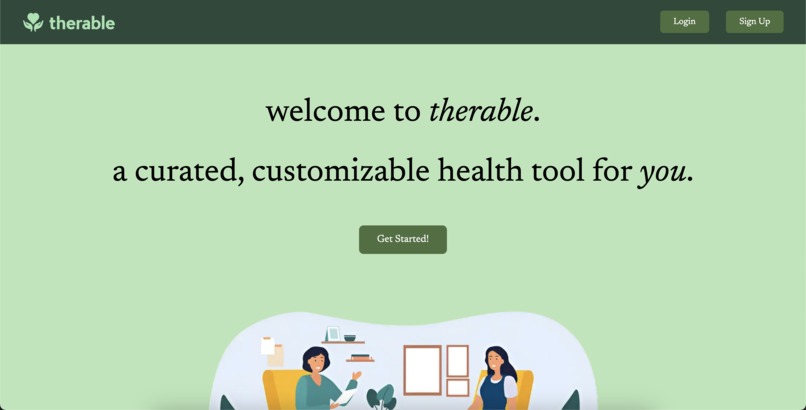
Landing Page
-
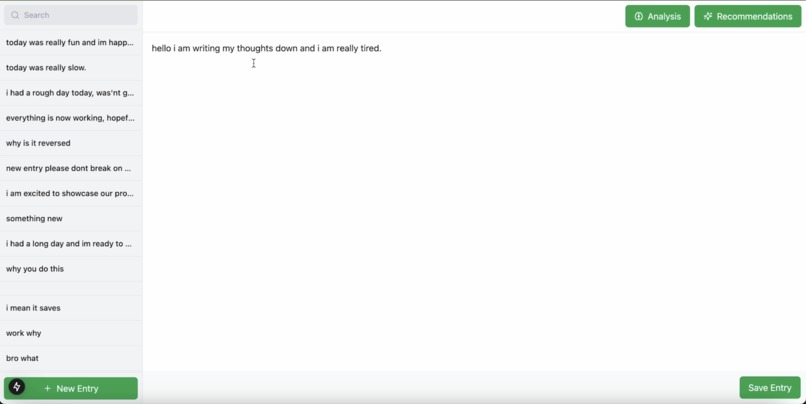
Main Page


Inspiration
Mental health is essential to our overall well-being. In the United States, more than 1 in 5 adults (23.1% of the adult population) live with a mental illness. We believe recognizing the early signs of mental strain or illness may make all the difference. When we thought about the Intersystems Challenge, we said we can meet it: to marry leading-edge technology with compassionate care. Our goal at Therable is simple: powerful-to give, curated insights, to support how one can understand and nurture his or her mental health. Empowered with the tools at work courtesy of Intersystems, proactive mental health care becomes accessible, personal, and impactful for one and all.
What it does
Therable is a smart mental health journal designed to help users track, understand, and support their mental well-being. With every entry you make – whether it’s a thought, feeling, or mood – Therable analyzes your notes using Intersystems IRIS vector search technology. By recognizing patterns, it can identify signs of potential mental health concerns, such as depression, anxiety, or stress.
But Therable does not stop at analysis: when signs of mental health issues are detected, it sends out personalized, research-backed articles and resources in those specific areas you might need the most. This will provide you with immediate, actionable insights and strategies appropriate for your mental health.
Thereble is much more than a journal; it is your friendly, data-driven companion that will enable you in your mental health journey to understand yourself better and lead you through advice you seek.
How we built it
Therable utilizes a Next.js framework with JavaScript, React, and TailwindCSS to create a dynamic, responsive website. We integrated Clerk to insure the user's information is safe, secure, and can only be accessed by the user. We created a python backend-service that utilizes Flask to host APIs and uses InterSystem's IRIS Data Platform to host our database and to preform our vector search. We integrated Retrieval-Augmented Generation (RAG) for personalized insights and for efficient data retrieval. If the RAG determines that there several similar postings that have a negative sentiment, we use GPT3.5 to find scientifically backed articles that can give the user insight into why they may have the negative sentiment, and offer steps for the user to start feeling better.
Challenges we ran into
Setting up the database tables to handle the vector search was our biggest challenge since it was complete new technology to all of our team members.
Accomplishments that we're proud of
Integrating and using Vector search. Creating a Next.js and Flask application.
What we learned
25 hours is not much time to create an app from scratch using a tech stack that you are unfamiliar with. We also learned how to integrate a python backend with a Node.js front end.
What's next for Therable
Better UI, adding gamification by adding a counter of days in a row with an entry, and a more versatile and robust vector search.
Built With
- flask
- javascript
- next.js
- python
- react
- retrieval-augmented-generation
- sql
- tailwindcss
- vector-search


Log in or sign up for Devpost to join the conversation.