-
-
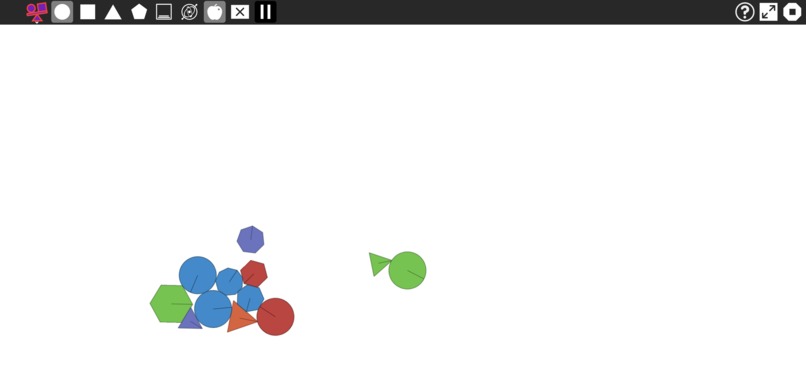
Simulation with user analytics and leaderboard on Chainlink blockchain
-
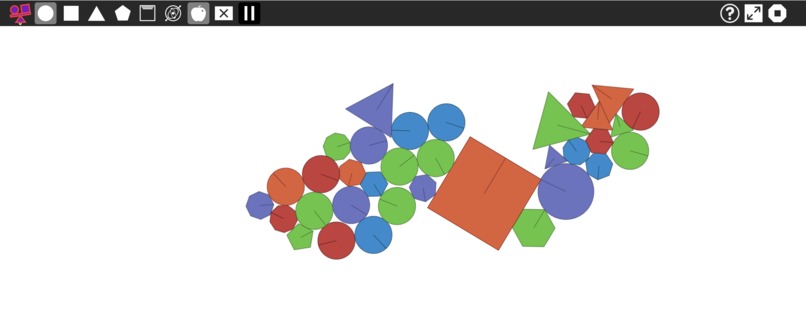
physics playground on chainlink blockchain
-
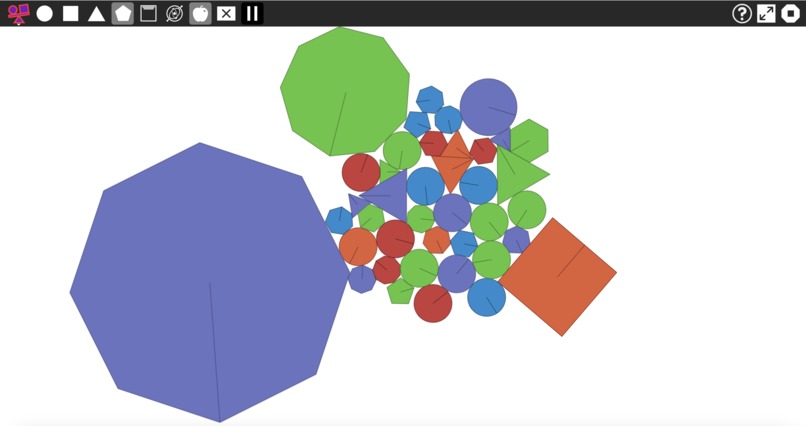
colision detection and interaction, user analytics on chainlink blockchain
-
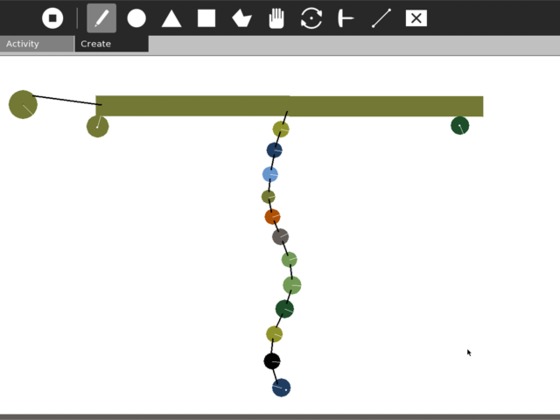
Illustration of wave motion with analytics on chainlink blockchain


Inspiration
Epistemology is the construction of personal standards for telling fact from fancy, truth from fiction, and certainty from doubt. Ontology is the construction of theories of what exists. Ethical constructions remind us of what we think we should do even if we don't want to, and why. Learning by doing in a broader sense signifies a method where children are taught concepts and simultaneously they are given chances to apply them in real-time scenarios. Performing tasks practically makes it easier for the children to grasp a concept and helps retain it for a longer period of time. Educational games based on this learning concept itself can prove to be an important and versatile way to harness a child’s untapped potential and gauge his/her true ability.
What it does
Developer tools to enable DeSci educators and Web3 game designers to create a kinematics playground and simulator to develop on-chain educational games -- you can add and create a variety of shapes, and see them come to life with forces (visualize gravity (g), Newton!), friction (scrrape), and inertia (think, slow down!) using Theta blockchain, Theta user analytics and security, Video plugins on Chainlink blockchain using VRF and Automation, Optimism, NFT.Storage, Lattice's, MUD, 0xPARC, Avalanche, Scroll and zksync, Trufflation and OSS Web3 tools.
We wish to enable constructionist learning by empowering Web3 game developer community and DeSci educators to build educational games and teach concepts in Kinematics including Newton Laws, acceleration due to gravity, circular motion, rotational motion and projectiles.
Web3 Kinematics experiments to try using Physics Suite:
Build a machine that sorts different sized balls in to two buckets, large and small, with no ball jams. A cyclic mechanism for lifting balls from the bottom of the screen to the top, again and again. Try dropping 2 different mass objects at the same time. Experiment with pendulums of different lengths and masses. Ping pong, can you make a device that hits a ball back and forth across the screen? Convert rotation into parallel motion using pistons. Try building a ratchet mechanism.
How we built it
We are using Chainlink Blockchain, Chainlink user analytics and security, Chainlink VRF and Automation, Lattice's MUD, Optimism, NFT.storage, Avalanche, Scroll and zksync and OSS Web3 tools.
Chainlink Blockchain Enablement for on-chain simulation and Physics playground:
- Chainlink Analytics Tools with OP and IPFS integration for on-chain activity and communication with off-chain data sources: Integration with OSS spreadsheet for tabulation, organization and validation: https://github.com/aspiringsecurity/Web3KinematicsTools/tree/main/web3kinematicsdev/optimism-calc-analytics-dao
2a. Payouts of Scholarships to EWS (Economically Weaker Students) to learn Physics for free: Chainlink Parametric Insurance dapp at https://github.com/aspiringsecurity/Web3KinematicsTools/tree/main/EWS-Students-Free-Learning-payout
2b. Physics Storyboard Builder: Create and share your own Physics activities on Chainlink blockchain network.
NFT certificate for submitting Physics activities using Chainlink services: https://github.com/aspiringsecurity/Web3KinematicsTools/tree/main/NFT-giveaway-certificate-service-rating
Space and Time (SxT): Dynamic NFT using Space and Time and Chainlink services at https://github.com/aspiringsecurity/Web3KinematicsTools/tree/main/NFT-giveaway-certificate-service-rating/Web3-SxT-dNFT
Dynamic NFT generated for educators and physics content creators for submitting Physics activities using Chainlink services, Space and Time (SxT) project.
- Creating a PhyKT token (physics activity token) and submitting to Verse DEX: https://github.com/aspiringsecurity/Web3KinematicsTools/tree/main/EWS-Students-Free-Learning-payout/Token-verse-dex
Chainlink VRF: We utilized Chainlink VRF (Verifiable Random Function) to enable provably fair and verifiable random number generator (RNG) that further enables smart contracts to access random values without compromising security or usability for Physics Suite. For each request, Chainlink VRF generates one or more random values and cryptographic proof of how those values were determined. The proof is published and verified on-chain before any consuming applications can use it. This process ensures that results cannot be tampered with or manipulated by any single entity including oracle operators, users, or smart contract developers. At this juncture, we are planning to use only subscription supported network for Chainlink VRF.
Challenges we ran into
Ability to use the Physics Suite in both landscape and portrait mode with on-chain theta blockchain interaction;
Network quality and availability for Video processing on Blockchain.
Understanding Chainlink Blockchain network and its implementation.
Accomplishments that we're proud of
Learning Anytime Anywhere on Chainlink blockchain: Physics relate to everyday life. Interactive way of learning helps in better and seamless adoption of science among young kids.
On-chain gaming and analytics on Chainlink blockchain: Physics Suite can give real-time simulation experience to various laws in physics like law of motion, energy, force and other key topics of Kinematics.
What we learned
We learned key tools and techniques for developing an Chainlink VRF blockchain enabled game, which can be extended and adapted to a variety of learning use-cases:
Building Chainlink blockchain games and NFTs.
Choosing a representative sample for Chainlink consensus (DAO) mechanisms.
We also witnessed the great eco-system available to developers to learn and contribute in the Chainlink blockchain and Optimism eco-system.
What's next for Physics Suite
A cyclic mechanism on Chainlink Blockchain for lifting balls from the bottom of the screen to the top, again and again; Try dropping 2 different mass objects on Chainlink blockchain at the same time; Experiment with pendulums on theta blockchain of different lengths and masses; Ping pong, can you make a device that hits a ball back and forth across the screen?; Try building a mechanical binary clock; Convert rotation into parallel motion using pistons; Experiment with touching one motorized circle against one pinned circle of various sizes; Try building a rag-doll puppet and make it dance in a convincing way; Use just links and circles to make a structurally sound Eiffel Tower; Try building a ratchet mechanism; Try building an analogue clock face where the min hand goes around 60 times for each hour; Build a machine that sorts different sized balls in to two buckets, large and small, with no ball jams.
We are extending and improving an existing dapp on Theta blockchain to receive students feedback, stores feature requests from both students and Physics educators on the Physics use cases to cover so that they could use the app more productively at the classroom.
We still need focus on key performance indicators like throughput and measure the performance of our smart contracts on theta blockchain before moving to mainnet. We plan to utilize tools like blocktest for measuring and benchmarking our smart contracts and unit tests on a variety of key parameters like throughput, latency.
Built With
- 0xparc
- avax
- chainlink
- flow
- html
- html5
- javascript
- mud
- optimism
- pybox2d
- python
- scroll
- sxt
- theta
- truflation
- verse
- zksync


Log in or sign up for Devpost to join the conversation.