-
-
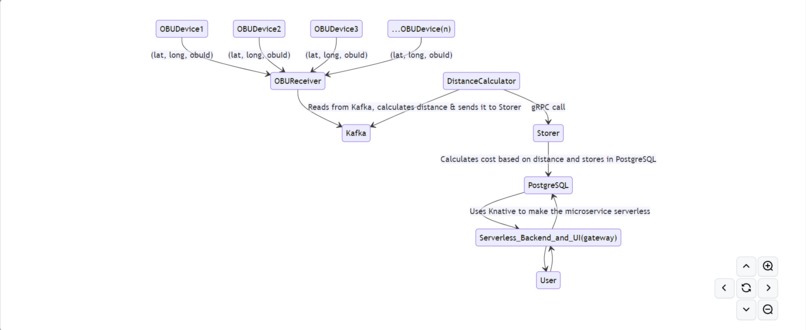
Toll Microservice Architecture
-
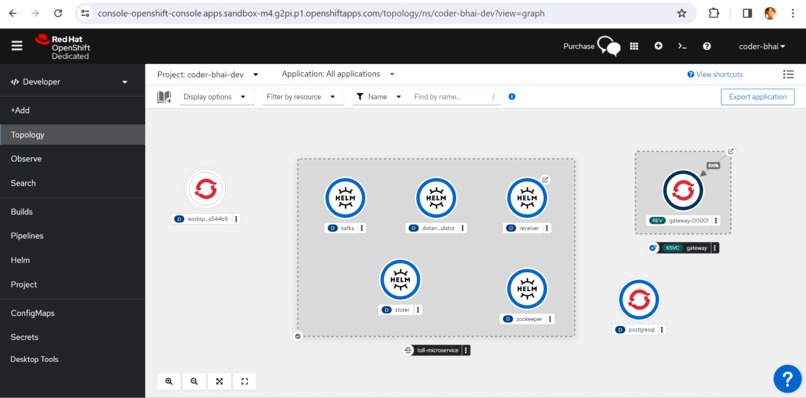
Deployed microservice in openshift cluster
-
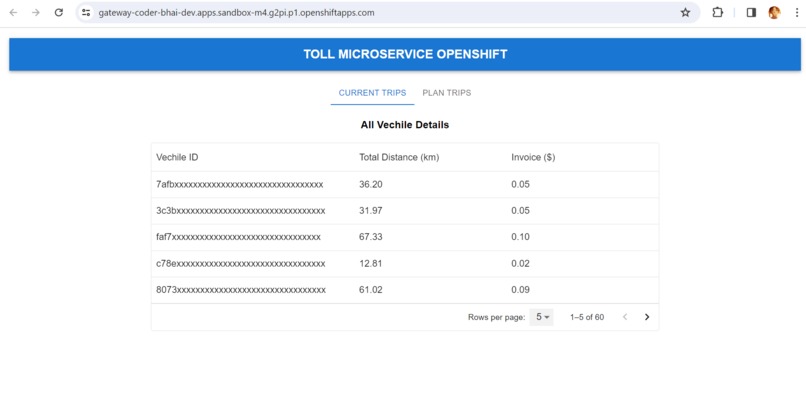
Simple User Interface
-
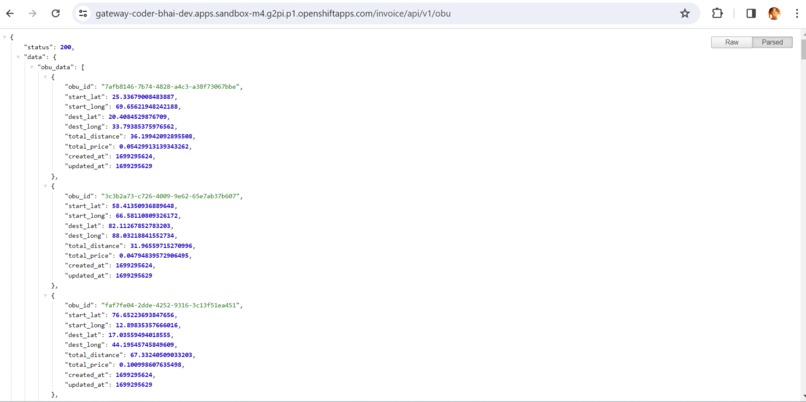
open rest api to track all obu device
-
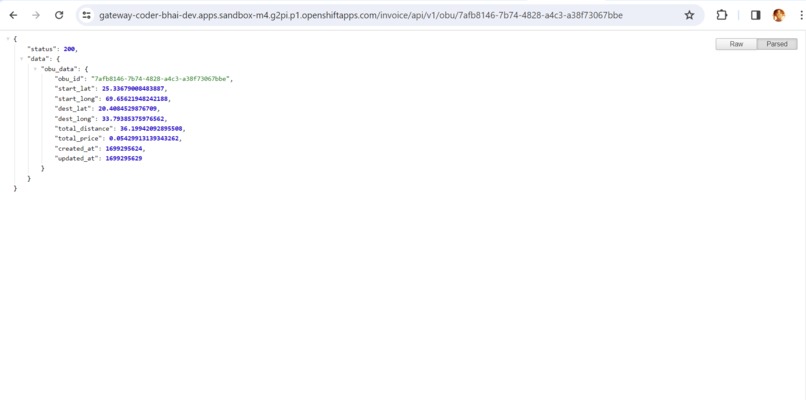
open rest api to track single obu device


Inspiration
The inspiration for the Toll Microservice project stemmed from the need to streamline toll calculation processes for vehicles equipped with On-Board Units (OBU). The aim was to automate toll cost calculations, enhance real-time tracking, and improve overall efficiency in managing toll expenses for fleets.
What it does
The Toll Microservice is a comprehensive solution that facilitates automated toll calculation based on the distance covered by vehicles with OBU devices. It includes various components such as the OBU Receiver Server, Kafka Stream, Distance Calculator Microservice, Storer Microservice, and Gateway Microservice. These components work collaboratively to collect location data, process it in real-time, calculate toll costs, and present the information through a user-friendly interface also expose data via public api.
How we built it
The project was built using a combination of custom servers, Apache Kafka for event streaming, gRPC for communication between microservices, PostgreSQL for data storage, Knative for serverless architecture in the Gateway Microservice, and React JS for the user interface.
Challenges we ran into
Building the Toll Microservice came with its fair share of challenges. We had to tackle issues like making sure all the data stayed in sync, getting different microservices to talk to each other smoothly, ensuring quick responses without delays, and setting up the serverless part with Knative. Overcoming these hurdles meant our team had to work together, solve problems as a group, and bring in our technical know-how.
Accomplishments that we're proud of
The team successfully created a robust microservice architecture that automates toll calculations, provides real-time tracking, and ensures scalability. The implementation of serverless architecture with Knative for the Gateway Microservice stands out as a notable accomplishment, enabling the system to handle a large number of OBU devices efficiently.
What we learned
Through the development of the Toll Microservice, the team gained valuable insights into handling real-time data processing using Apache Kafka, implementing microservices with gRPC, utilizing serverless architecture with Knative, and designing a user-friendly interface with React JS. And they deploying all the microservice to redhat openshift cluster.
What's next for Toll Microservice
The future plans for the Toll Microservice may involve further optimization, feature enhancements and integration with additional technologies.


Log in or sign up for Devpost to join the conversation.