-
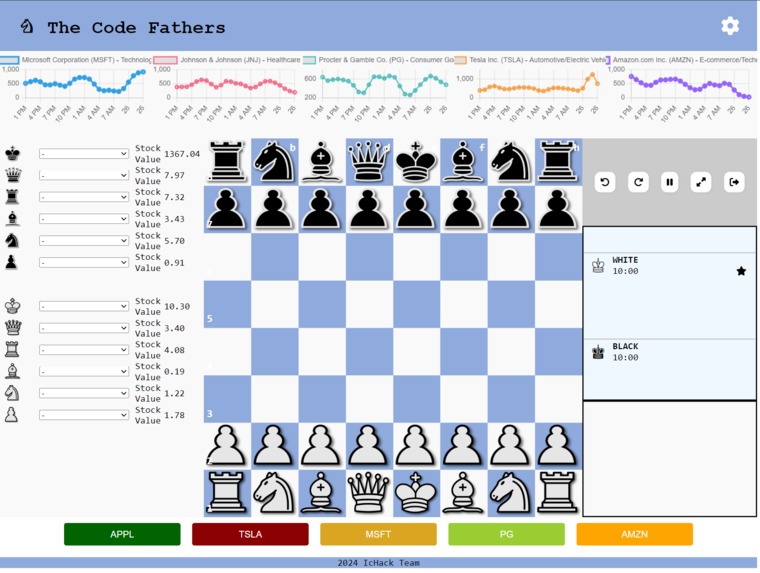
Game-mode image
-
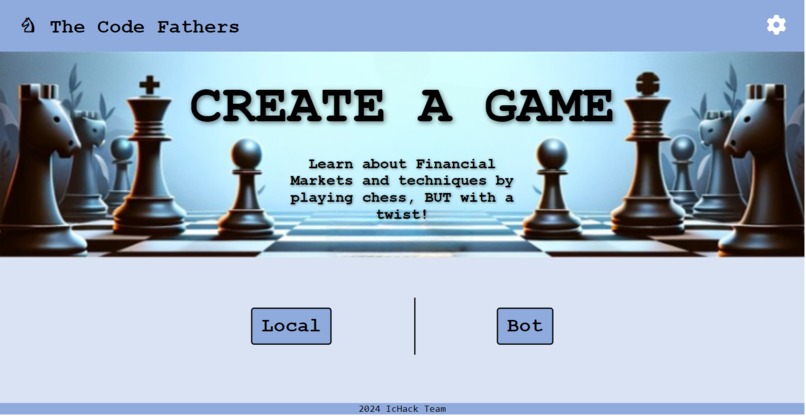
Home page


Project Story: Trading Chess - Bridging Chess and Finance
In the heart of innovation, a group of passionate developers and finance enthusiasts embarked on a journey to create a project that would bridge the gap between the world of chess and the complexities of finance. The result was "Trading Chess," a captivating chess variant with a unique twist that integrates real-time stock data into traditional chess gameplay.
Inspiration Strikes:
The inception of "Trading Chess" can be traced back to a casual conversation at a local coffee shop. A group of friends, each with their own expertise in either software development or finance, was brainstorming ideas for a project that would not only be engaging but also educational. The conversation meandered through various topics, from chess strategy to stock trading, until a eureka moment occurred – why not combine the two?
Concept Development:
The team quickly got to work, sketching out the core concept of "Trading Chess." The idea was to assign real stocks to each chess piece and make their capturing abilities dependent on the stock's actual market value. This integration of finance and chess would create a unique gaming experience that simultaneously taught valuable financial principles.
Building the Foundation:
Development began in earnest, with the team opting to use React for the user interface. Styled-Components provided the modern and sleek appearance that was essential for an engaging user experience. Chess.js was brought in to handle the chess game logic and validations. The project also incorporated React Router for smooth navigation and Firebase for potential real-time multiplayer support.
Iterative Development:
The journey was filled with exciting challenges and opportunities for growth. The team meticulously tested and refined the game mechanics, ensuring that stock values influenced chess strategies in a balanced and educational manner. The user interface was continually improved to provide an intuitive and visually appealing experience.
Educational Focus:
One of the project's key objectives was to educate users about finance and investment strategies. A comprehensive tutorial mode was included, seamlessly blending chess tactics with financial insights. This feature aimed to empower players with valuable knowledge while they enjoyed playing the game.
Community and Contributions:
As development progressed, the project was open to contributions from the community. Developers and chess enthusiasts alike eagerly embraced the opportunity to enhance the game. The team encouraged collaboration through GitHub, making it a collaborative effort to improve and expand "Trading Chess."
The Big Launch:
Finally, after months of dedication and hard work, "Trading Chess" was ready to meet the world. The project was open-sourced on GitHub, and its creators hoped that it would not only be a source of entertainment but also a valuable tool for learning and engaging with finance.
Conclusion:
"Trading Chess" represents the harmonious fusion of two seemingly disparate worlds – chess and finance. It serves as a testament to the power of innovation, collaboration, and a shared passion for creating something that can both entertain and educate. As the project continues to evolve and grow, it stands as a symbol of what can be achieved when diverse skills and interests converge to create something truly remarkable.
Trading Chess
Trading Chess is an innovative chess variant that seamlessly combines real-time stock data with traditional chess gameplay. In this unique twist on the classic game, each chess piece is associated with a specific stock, and its capturing abilities are determined by the stock's current value. This project's primary goal is to provide users with an engaging and familiar platform to learn about finance and investment strategies.
Features
- Real-time Stock Integration: Every chess piece is connected to a real stock, and their gameplay impact fluctuates dynamically with the stock's value.
- Stock Value Dependency: A chess piece can only capture another piece if its associated stock's value is higher.
- Responsive Design: The user interface gracefully adapts to various screen sizes, ensuring a consistent gaming experience across all devices.
- Custom Styled Components: The UI is crafted using styled-components, offering a modern and sleek appearance.
- Tutorial Mode: A comprehensive guide is available to teach users how to play, combining chess strategies with financial insights.
- Multi-platform Support: Supports local, bot, and online gameplay modes.
Installation
Clone the repository:
git clone https://github.com/euangoodbrand/ICHack_Chess.gitNavigate to the project directory:
cd trading-chessInstall the dependencies:
npm installRun Application
    npm run dev
    ```

**To start playing Trading Chess:**

- Open your web browser and go to [http://localhost:3000](http://localhost:3000) to enjoy playing Trading Chess!

**Components:**

- **Chessboard**: The central component where the chess game takes place.
- **Controls**: UI elements that allow users to interact with the game, including undo/redo moves, toggle fullscreen, and quit the game.
- **Players**: Displays players' information and status.
- **Moves**: A log of all the moves made during the game.
- **FakeStockChart**: A component that simulates stock price charts for the stocks associated with chess pieces.

**Technology Stack:**

- **React**: Used for building the user interface.
- **Styled-Components**: Employed for styling the components.
- **React Router**: Manages navigation within the application.
- **Chess.js**: Handles chess game logic and validations.
- **Firebase** (if applicable): Utilized for real-time data synchronization in online multiplayer mode.

**Contributing:**

Contributions are welcome! If you have any suggestions to improve this project, please follow these steps:

1. Fork the Project
2. Create your Feature Branch (`git checkout -b feature/AmazingFeature`)
3. Commit your Changes (`git commit -m 'Add some AmazingFeature'`)
4. Push to the Branch (`git push origin feature/AmazingFeature`)
5. Open a Pull Request


Log in or sign up for Devpost to join the conversation.