-
-
Logo
-
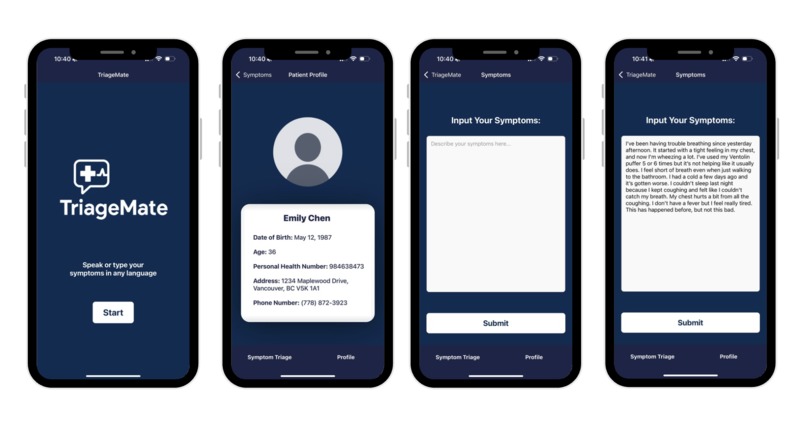
User Flow 1
-
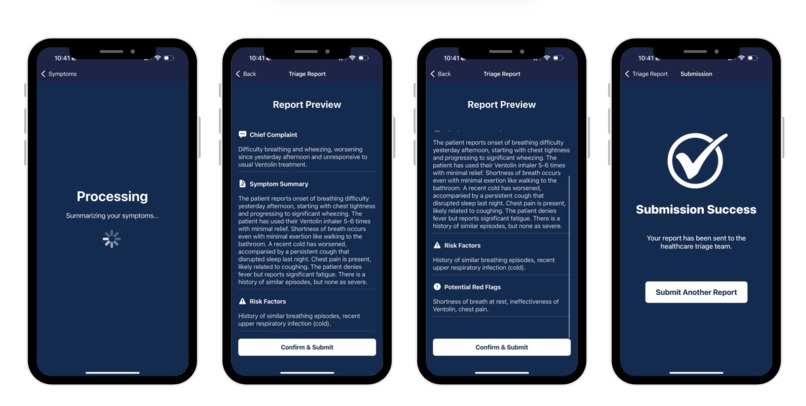
User Flow 2
-
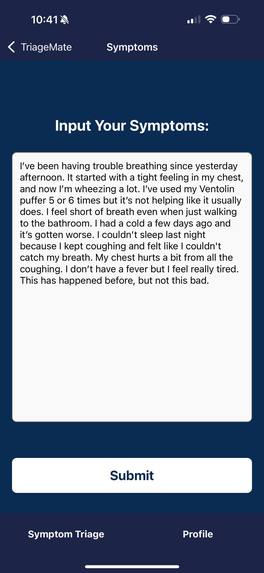
English Input
-
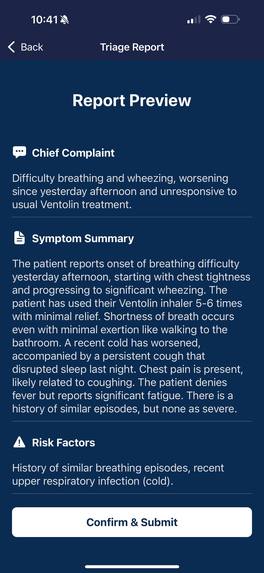
English Results Part 1
-
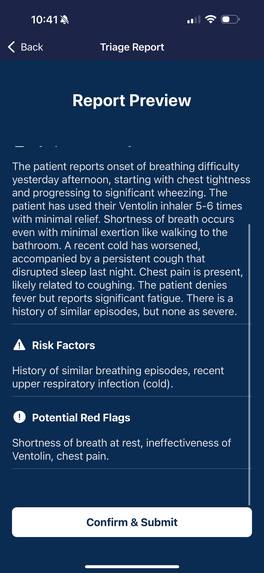
English Results Part 2
-
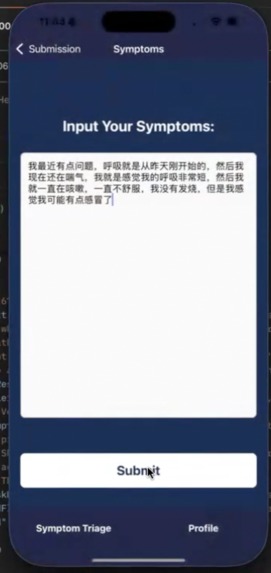
Chinese Input
-
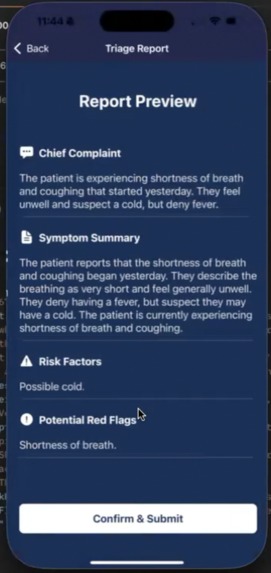
Chinese Results


Inspiration
Our inspiration for TriageMate stemmed from a shared understanding of the gaps in our current healthcare system. About a month ago, one of our team members had to take his mother, who suddenly started profusely bleeding, to the emergency department (ED) in the Vancouver General Hospital. While trying to find a spot to park, she had already completed the nurse-patient intake interview, despite not being able to speak English. The nurse who saw her marked her condition as "profusely bleeding, looks well", and together they ended up waiting at the hospital for 12 hours to be seen by a doctor because of this. If she had some help where she could speak in her native tongue to express her concerns and have the information parsed for triage, it would have helped her a lot. Another member of our team comes from a healthcare background as a pharmacist and has seen firsthand how communication gaps and systemic inefficiencies affect both patients and providers. This is what sparked our idea.
Communicating health concerns can be overwhelming — especially when symptoms are complex, emotions run high, or language barriers exist. Together, our group was inspired to create a solution that empowers patients to communicate their symptoms in their native language (spoken or text-based) and enables healthcare professionals to receive structured, meaningful triage reports to streamline care and improve triage. Through TriageMate, we aim to empower individuals to speak freely, in any language, and ensure that their needs are captured accurately and compassionately — helping healthcare professionals deliver the right care, faster.
What it does
TriageMate is an AI-powered hospital triage assistant that streamlines symptom reporting and risk assessment — where smart tech meets compassionate care. Our application transforms the traditional triage experience by enabling users to describe their symptoms through voice or text in any language, which is then intelligently translated, analyzed, and structured into a concise report for healthcare providers. Whether you're managing patient flow, reducing language barriers, or enhancing clinical decision-making, TriageMate empowers both patients and healthcare teams with faster, smarter, and more accessible triage.
How we built it
- Frontend: Developed with React Native and TypeScript using the Expo platform, enabling a smooth and responsive cross-platform mobile experience.
- Backend: Leveraged Node.js, Express.js, and JavaScript to handle API requests and server-side logic
- Database: Used MongoDB to provide a secure and flexible database for storing report data
- API: The app uses Google Gemini's 2.0 Flash AI API for AI-powered symptom translation and parsing, which translates and parses multilingual user input into structured medical triage reports.
Challenges we ran into
Most of our team had never worked with React Native or built a mobile app before, so the development process was a challenging learning experience. Getting the React Native environment set up with Expo and running the app smoothly on the mobile Expo Go platform proved to be tricky at first. We also encountered difficulties connecting the frontend to the backend on a mobile device, which required careful debugging to ensure seamless integration. Throughout development, we dealt with merge conflicts, platform-specific issues, and lots of trial-and-error debugging, all of which pushed us to grow rapidly as a team.
Accomplishments that we're proud of
- Managed to successfully build a multilingual AI-powered triage system that translates and parses user symptoms from any language that aims to improve accessibility for diverse patient populations
- Designed a clean, intuitive mobile app, making symptom input and report confirmation simple and user-friendly
What we learned
Through this project, we learned how to build a fully functional mobile application using React Native and the Expo platform, gaining hands-on experience with cross-platform development and mobile integration. We developed a deeper understanding of how to structure a React Native project, connect it to a backend, and debug issues specific to mobile environments. A key highlight was learning how to prompt engineer healthcare-related data—specifically, how to extract only the relevant clinical details from free-text input and translate it into a structured triage report using AI. Additionally, we strengthened our collaboration skills, learning how to work effectively as a team, manage merge conflicts, and support each other in navigating new tools and technologies.
What's next for TriageMate
Next for TriageMate, we aim to expand its capabilities to make it even more impactful in real-world healthcare settings. This includes implementing secure user authentication, enable persistent patient profiles, and allow direct integration with electronic health records (EHR) systems or healthcare provider dashboards. On the frontend, we want to improve the user experience with language selection features, accessibility features, and a more dynamic report visualization. We envision TriageMate evolving into a reliable digital assistant that bridges communication gaps and supports faster, more inclusive patient care across diverse healthcare environments.




Log in or sign up for Devpost to join the conversation.