-
-
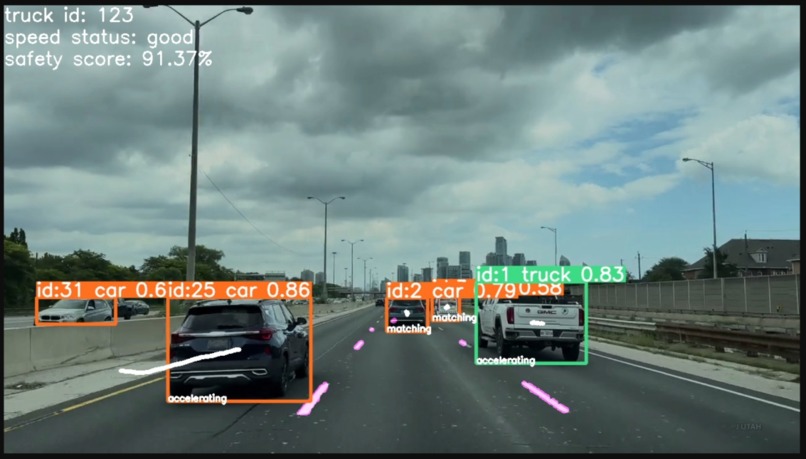
driving safety score analysis, analyzed in real time
-
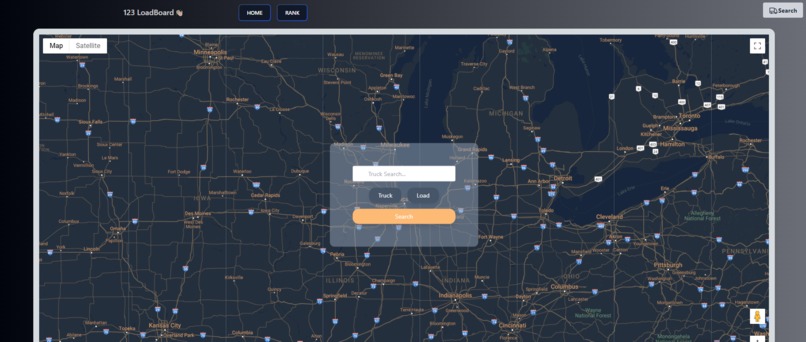
dashboard of map to search trucks or loads!
-
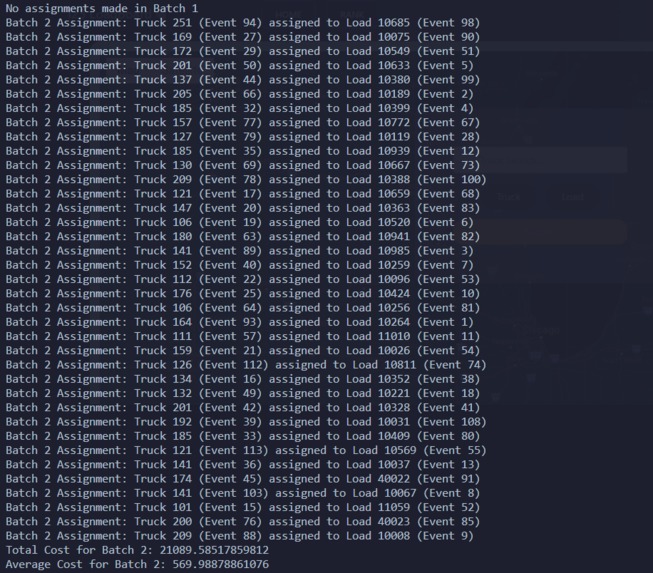
example from api for the start of day matching.
-

ranking of the driving safety of trucks


Inspiration
Our project was inspired by the challenges of optimizing truck logistics in real-time. We recognized the need for a dynamic system that can adapt quickly to changing demands and schedules in the trucking industry. Our goal was to create a solution that maximizes efficiency, reduces costs, and improves the overall experience for truck drivers, logistic managers and brokers alike.
Our inspiration stemmed from a vision to revolutionize the trucking logistics industry. We identified a gap in real-time, adaptive logistics management and set out to bridge it with an innovative solution. The goal was to transcend traditional methods, creating a system that's not only efficient but also scalable and adaptable to the ever-evolving demands of the industry.
What it does
We developed our solution by integrating advanced matching algorithms with real-time data processing. The core of our system is an online matching algorithm tailored to the unique needs of the trucking industry. We chose this approach over traditional methods like KD-Tree or Dijkstra’s algorithm for its efficiency in handling dynamic, real-time scenarios. The decision to use batch processing was influenced by market design principles in operations research and economics, ensuring a balance between immediate response and overall optimization.
Our system is a game-changer in trucking logistics, employing a sophisticated maximum weight online matching algorithm to pair truck drivers with loads. It goes beyond conventional logistics software by factoring in real-time data, driver preferences, and economic efficiency. Our platform excels in handling the dynamic nature of logistics, ensuring optimal matches and maximum resource utilization. Furthermore, we use advanced computer vision technology to carefully assess driver safety by observing how vehicles around them move. This safety score helps brokers check if drivers have the right qualifications for specific jobs. It makes it easier for them to choose the right drivers for different types of loads, ensuring driving safety and expertise match the requirements. In short, our safety score system improves trucking operations by making them safer and more efficient, benefiting both drivers and those responsible for assigning loads.
How we built it
This project is the culmination of extensive research, including academic papers in computer science and operation research (both cs and econ) and industry best practices. We drew inspiration from market leaders like Uber and other marketplace giants. Our system integrates cutting-edge algorithms, proven in both academia and industry, with real-time data processing. The use of batch processing, a novel approach in this sector, allows us to efficiently manage continuous loads and routine orders. We chose this method over traditional algorithms like KD-Tree or Dijkstra's for its superior performance in dynamic scenarios.
Cars are detected and tracked using a powerful model called YOLOv8. We used this model to help us identify road obstacles and id each on road vehicles and track their positions over time. By doing so, we can calculate the relative speeds of the other vehicles on the road and estimate the driving safety level of the driver. For example, if all other cars are decelerating relative to the driver, then it is obvious that the driver is going too fast. Additionally, to find the road lines, the code uses a technique called edge detection, like tracing the outlines of objects in a picture. We first filtered the specific colors of the road lines, then used the Canny edge detection algorithm. This helps in drawing the lines on the road.
Backend: Flask, as our web application framework. Ultralytics, OpenCV for computer vision. Frontend React.js & TailwindCSS
Challenges we ran into
It was our first time creating a frontend design for our applications. We all came from a backend/scripting background, so the learning curve for frontend design was significant. We ran into many roadblocks which set us back a lot.
One of the main challenges was designing an algorithm that can efficiently process data in real-time without losing accuracy or performance. Additionally, integrating various factors such as driver preferences and load specifications into the matching process posed a significant challenge.
Another significant challenge was allowing for batch processing while continuously listening to incoming events. We tackled this through a multi-threaded approach, ensuring seamless data handling without sacrificing real-time responsiveness. Another challenge was incorporating a multitude of factors into our algorithm – a complex task that required meticulous planning and execution.
aside: another challenge was that most of our team was stuck in the elevator due to the failure of trottier's elevator
Accomplishments that we're proud of
We're proud of developing a system that not only optimizes logistics efficiency but also considers driver preferences, making it a more driver-friendly solution. Implementing a batch processing approach that effectively manages continuous loads and routine orders was a significant achievement. Additionally, incorporating a driver’s choice feature, where drivers can accept or decline orders, adds flexibility and autonomy to the system and a feature which accounts for broker needs as well, not just truckers. Our system represents a significant leap forward in logistics technology. We are particularly proud of:
Developing a multi-threaded solution that handles batch processing in real-time. Creating a driver-centric platform, where drivers have the autonomy to accept or decline orders. Implementing a scalable solution that can revolutionize the trucking industry.
What we learned
Throughout this project, we learned about the intricacies of logistics and trucking operations. We gained insights into the importance of balancing various factors like economic efficiency, driver preferences, and real-time adaptability. The experience also enhanced our understanding of applying theoretical algorithms to practical, real-world scenarios.
This project was a deep dive into the complexities of logistics and the power of algorithmic solutions. We learned the importance of real-time adaptability in logistics and how advanced computing techniques can be leveraged to create impactful solutions. The project also broadened our understanding of market dynamics and the role of technology in shaping future industries.
What's next for trucking
Looking ahead, we plan to integrate a learning model that can adapt and optimize the weightings in our scoring system, improving the match quality over time. Enhancing our pricing system is also on the agenda. We aim to use our project as a benchmark to challenge and inspire further innovations in the trucking industry.
Our vision for the future includes:
- Integrating an AI-driven learning model to continuously refine and optimize our matching algorithm.
- Enhancing our pricing mechanism to align with market dynamics and driver preferences.
- Establishing our platform as a benchmark in the industry, inspiring and challenging others to innovate.
- Allow checking for violation of driving laws (such as skipping stop signs, and red lights)
- Determine steering angle based on road lines.
- Accurately determine distances to objects seen, which can be used for checking for tailgating practices, for example. Our project is more than a logistics solution; it's a stepping stone towards a more efficient, driver-friendly, and economically sustainable trucking industry.




Log in or sign up for Devpost to join the conversation.