-
-

TRUFFEL - Findings on the apron
-
TRUFFEL - Findings in the warehouse
-
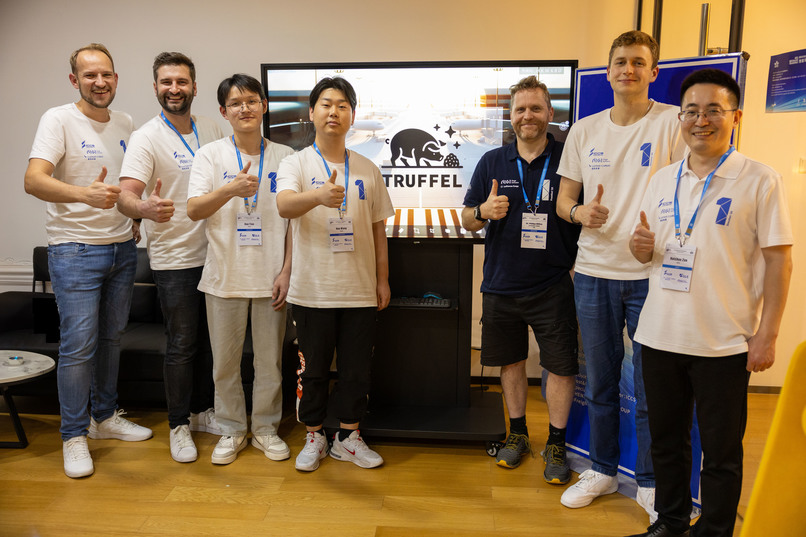
The TRUFFEL Team
-
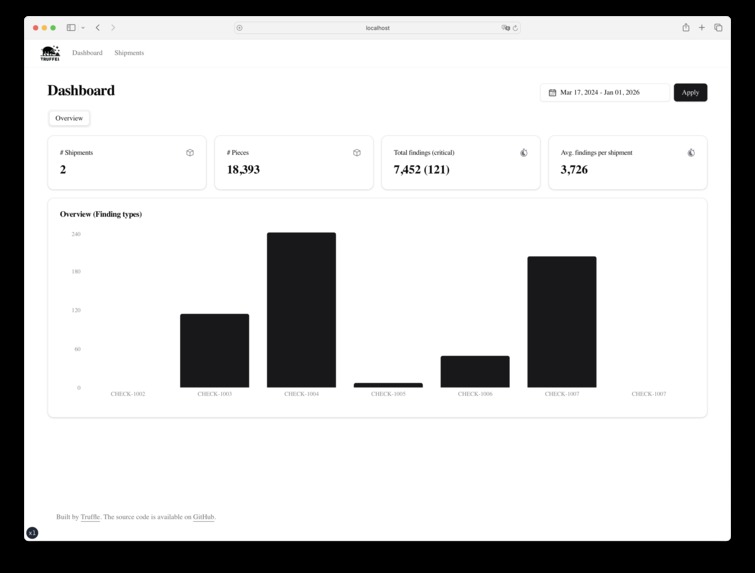
TRUFFEL - Dashboard View
-
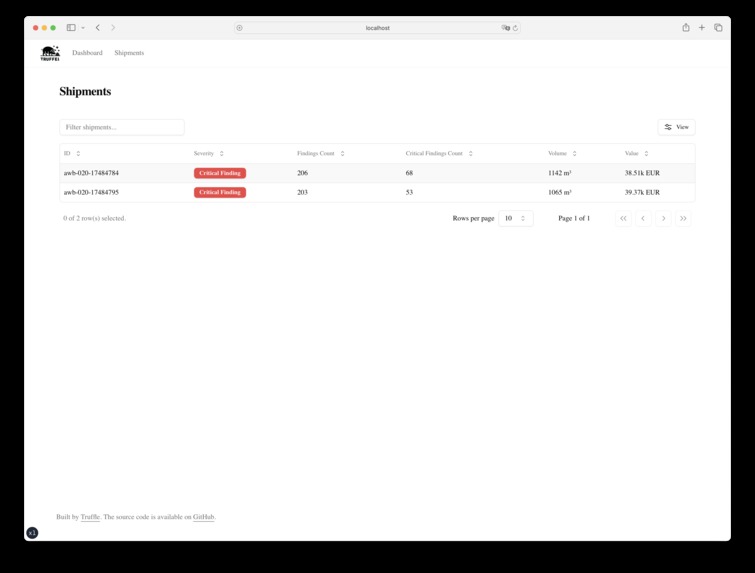
TRUFFEL - Shiptments View
-
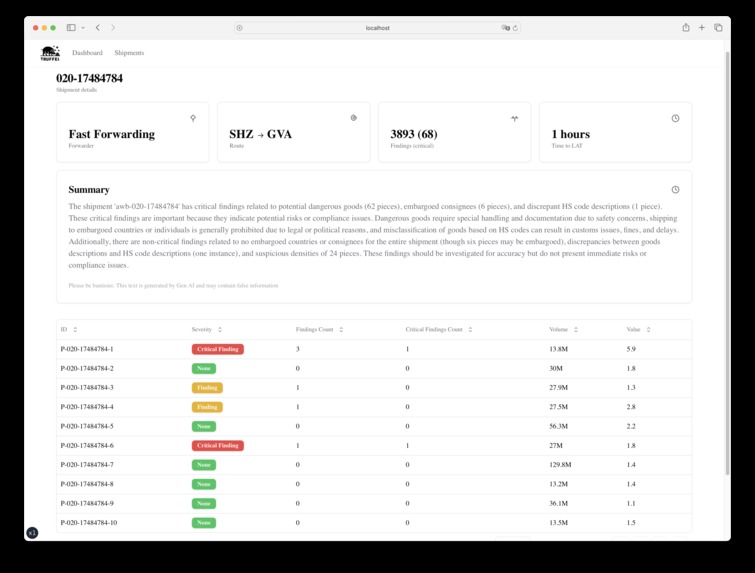
TRUFFEL - Shipment Details
-
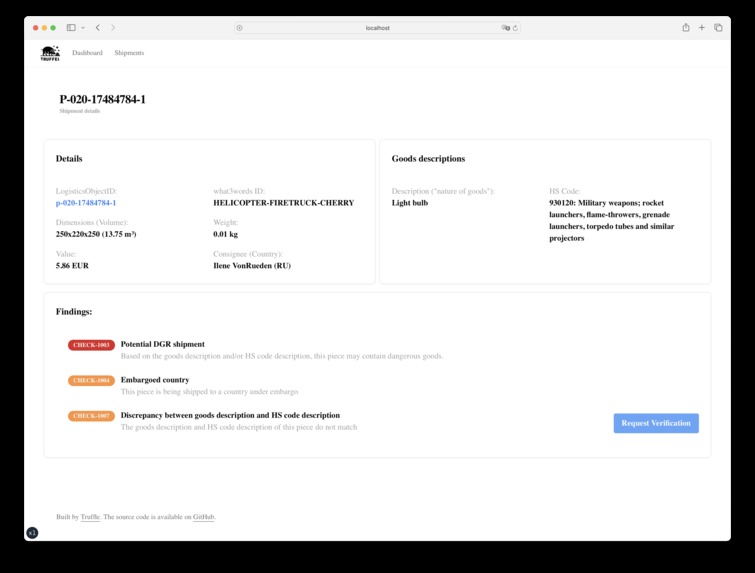
TRUFFEL - Piece View
-
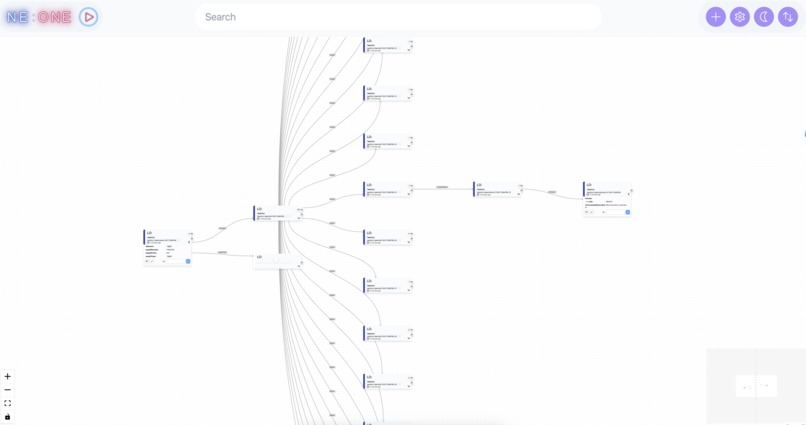
eCommerce data in NE:ONE Play
-
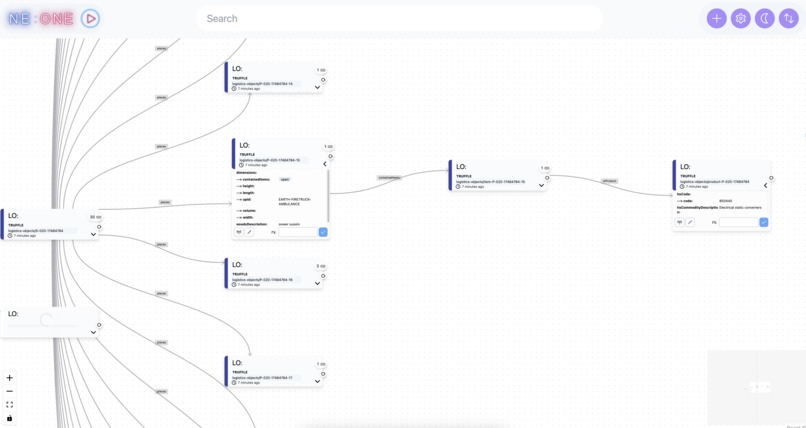
eCommerce data in NE:ONE Play part 2
-
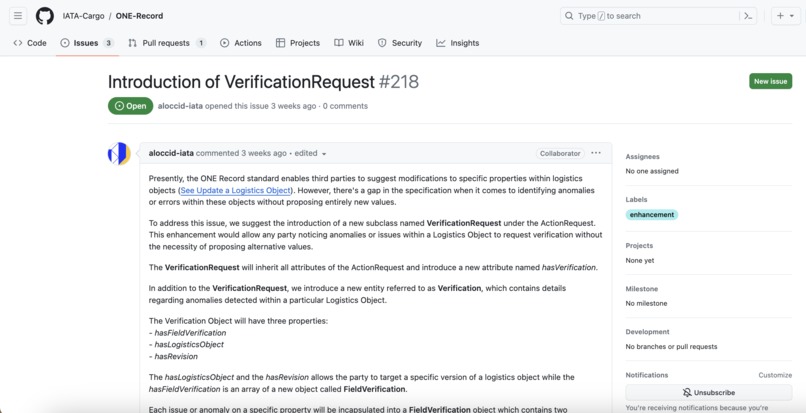
GitHub issue on the VerificationRequest
-
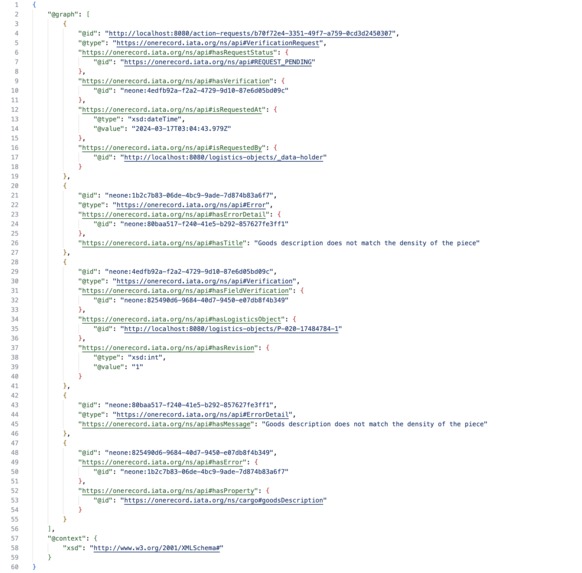
successfull VerificationRequest on the NE:ONE Server


Problem and Challenges addressed
eCommerce booms with huge volumes of new data to the air cargo industry. But existing data systems have mostly exceeded their limits, unable to handle the amount and detail level needed. Additionally, for humans, manual checks of these amounts of data are impossible to do. This poses high risks for safety and compliance in air cargo handling, e.g. undeclared and undetected lithium-ion batteries. Fortunately, modern technologies like AI are enablers for innovative solutions, when applied to piece level data shared by ONE Record.
eCommerce Challenge: Addressed by providing a comprehensive analytics platform that enhances safety, compliance, and customer experience through advanced AI analysis of piece level data.
AI Challenge : We are employing advanced AI algorithms and natural language processing to semantically analyze the descriptions of goods, ensuring the match of harmonized commodity codes and detect undeclared dangerous goods like hidden lithium-ion batteries.
Open Challenge: We are making full use of the ONE Record data standard through detailed piece level information as an enabler for state-of-the-art use cases.
Our solution: Truffle
Our solution brings an easy-to-use analytics platform to analyze eCommerce data at piece level. It makes use of advanced algorithms and AI to ensure safety & compliance of shipments. This will bring peace of mind for Airlines, Customs, and last - but not least - the Shippers.
The central component is a dashboard, showing basic shipment-information on piece level. Importantly, findings in relation to shipments, pieces, types of findings are displayed in different graphs.
What it does
The graphical interface provides all information for the user to understand the level of compliance on shipment and piece level plus options to mitigate eventual problems.
Because some information in eCommerce is written in natural language (e.g. the nature of goods), checks can only be performed by humans or AI. This solution centers on the application of AI-based natural language processing to answer the following questions:
Do Harmonized commodity codes match the goods descriptions? A deep semantical comparison between the Nature of goods and the resolved description of the Harmonized Commodity Code is performed to understand if those two texts match by content, even when the words are completely different.
Can we find hints for undeclared Dangerous Goods, especially hidden lithium-ion batteries? Here, AI tries to detect hidden batteries by a semantic analysis (e.g. "electric shavers" often contain batteries)
Are the goods effected by embargos on persons or countries? This is a check on the consignee information against embargoed persons or countries plus the country of origin for the piece.
Can the goods be identified as "Dual Use"-items? Here we developed a compelling set of master data checks based on the dual-use HCC-codes as published by authorities.
Is the physical description versus the available consistent? This AI-based check compares the expected density of the piece by the declared content with the actual calculated density in the piece data (volume / weight).
We extended the NE:ONE Server to communicate our findings to the shipper. This was done by implementating VerificationRequests, as proposed in the latest ONE Record API extension. See GitHub: https://github.com/IATA-Cargo/ONE-Record/issues/218
How we you build it
Our project was built using a mix of front-end and back-end technologies. We employed Shadcn, ReactJS, Next.js, Radix UI, and Tailwind for a responsive and dynamic user interface. The back-end was powered by Python and FastAPI, with ONE Record API for data management. Recharts enabled data visualization. This combination of technologies ensured a robust and efficient system. For data science we used pandas, scikit-learn, Word2vec, word embeddings and ploltly. We used Mistral LLM in combination with open source Ollama LLM to run large language models (LLMs) locally. This helped us enabling the executive summaries of our findings. Using NE:ONE & NEONE Play, we had an ideal setup to work with ONE Record. As a first, in this hackathon, our friends ChatGPT and Github Co-Pilot seemed a little jet lagged ;)
What we are proud of
- It was great to collaborate as an inter-cultural team of developers from Germany and China, beyond all communication challenges.
- We would be very proud if approach and solution would find their way into operations, to increase safety and compliance of the growing eCommerce market.
- Development without complete internet access can be challenging. Still, we made it to train the AI models and implement the use case.
- We are proud of the piloting of the new ONE Record API feature, the VerificationRequest.
Next steps for our solution
We have already seen much interest in the solution and will be happy if this application of AI would help the world to be safer. Still, during development, we had more ideas on extending the check and further improving the customer experience.
Built With
- chatcn
- fastapi
- mistral-llm
- ne:one
- ne:one-play
- ne:one-server
- next.js
- ollamallm
- one-record
- pandas
- ploltly
- python
- radix-ui
- react
- recharts
- scikit-learn
- shadcn
- tailwind
- word2vec




Log in or sign up for Devpost to join the conversation.