-
-

Our name is derived from the math expression that makes 2048
-
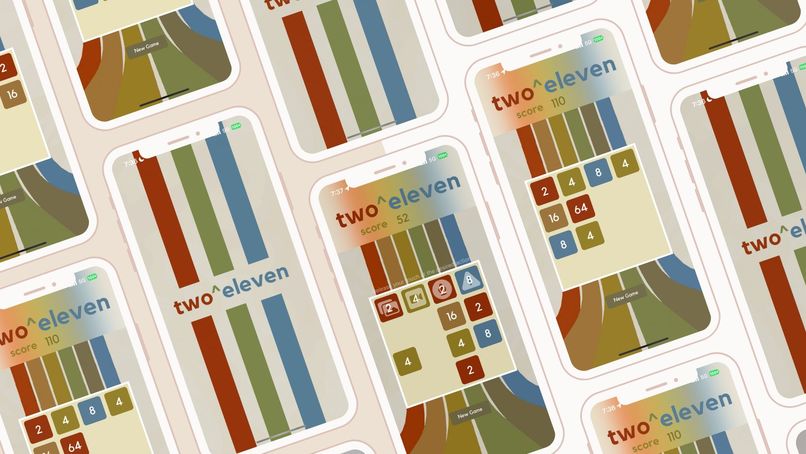
UI design for the 2048 game and the record and report functions
-
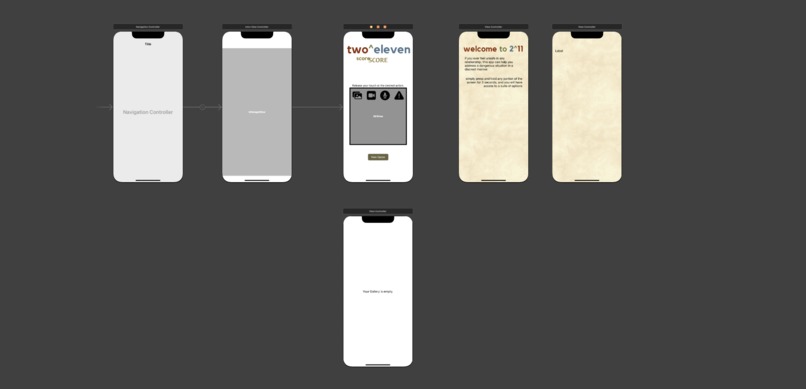
Our Storyboard file containing the different UI designs


Inspiration
Upon our first meeting, the team bonded over a shared inclination to create software that betters persistent issues in our society. One of the topics that came up was the challenge of proving non-physical abuse in front of a court of law. According to the National Coalition Against Domestic Violence, 1 in 20 people experience physical abuse every minute in the United States ("Statistics", n.d.). However, abuse comes in many forms — whether physically, verbally or emotionally. Thus, 50% of abusive incidents go unreported as many victims believe that they could never prove their case, especially when the abuse is non-physical ("Data says domestic violence incidents are down", 2021). We all find this to be extremely disheartening and wanted to come up with a way to help these victims get out of their difficult situations.
What it does
Two^Eleven uses the classic mobile game 2048 as a decoy for a system of discreet recording mechanisms, file storing, and emergency report to assist victims of domestic violence in documenting their situation. To the normal eye, the app looks and works like nothing more than a simple game to avoid suspicion, but holding onto the screen for 3 seconds will reveal a menu of different actions disguised onto the first row of the 2048 board. The user can subtly gesture to start an audio or video recording, to open the storage library, or to trigger emergency mode. In this state, the app will send an SOS message to the user’s chosen emergency contacts with the current location of the user and ask them to call local authorities to the location.
How we built it
This iOS Application was built on Xcode using Swift. We utilized the Twilio API for automatic text messaging when the emergency mode is triggered.
Challenges we ran into
Our team ran into some challenges while developing Two^Eleven, but that did not deter us from creating an effective, usable application. We had difficulties implementing Twilio and connecting it to any phone. This cloud communication platform is essential to our application because the victims of abuse need a way to discreetly report dangerous situations to the police and their emergency contacts. Another obstacle we faced was trying to store user media on the cloud. We attempted to implement Google Cloud, but we realized it was out of our scope of skills. We had to then focus on using iCloud to save media directly to the user’s account.
Accomplishments that we're proud of
Since this is our first hackathon and we are all emerging participants, being able to see our project from ideation to executable was an absolute joy. We were proud that we were able to practice, adapt and learn new skills in our mission to create a solution to a problem we deem important for us to address. It was also really fun going around and letting people play the game on our phone, then revealing the twist — the gist, really — of our application. Their genuine reactions made us really proud of the hard work we’ve poured into this project the past 36 hours.
What we learned
As this is our first hackathon, we definitely learned a lot, firstly, about how to quickly put together a meaningful project with an executable. We had to swiftly adapt to changes on the go due to time constraints and technology malfunctions. This allowed us to be exposed to a variety of technology as we continuously look for tools to improve our app’s functionalities. Through this process, we got to learn about Google Cloud’s, Apple CloudKit’s and Twilio’s technologies even though we couldn’t incorporate them all into our project within the time constraints. Teamwork is also an invaluable lesson we got from this project. We were all cognizant of communications but mishaps are bound to happen. We also run into disagreement fairly often, but have collectively learned to be comfortable enough to voice our own disaccords while keeping our minds open to other teammate’s ideas. We came to understand it is not the harmony in opinions but a good blend of differing ideas that pushes our product to a higher level. Above all, we learned to respect and uplift each other as friends and teammates in a flourishing way, so that we could all proudly say that Two^Eleven is the fruit of our collective labor.
What's next for Two^Eleven
Two^Eleven’s security element can be improved to lower the chance of data being erased by the abuser or a third person. This can be done by hosting the data elsewhere like on Google Cloud Storage where it can be restricted to not be deleted before a certain length of time and ensures that even in the case where the device is destroyed or revoked, the data remains intact. We also want to implement a backup option where, when entered into emergency mode, all data gathered in the app will be compiled and emailed to a person of the user’s choice before wiping itself out entirely.
Citations
Statistics. National Coalition Against Domestic Violence. (n.d.). https://ncadv.org/STATISTICS Data says domestic violence incidents are down, but half of all victims don't report to police. USAFacts. (2021). https://usafacts.org/articles/data-says-domestic-violence-incidents-are-down-but-half-of-all-victims-dont-report-to-police/
Built With
- alamofire
- avfoundation
- core-haptic
- core-location
- swift
- twilio
- xcode




Log in or sign up for Devpost to join the conversation.