-
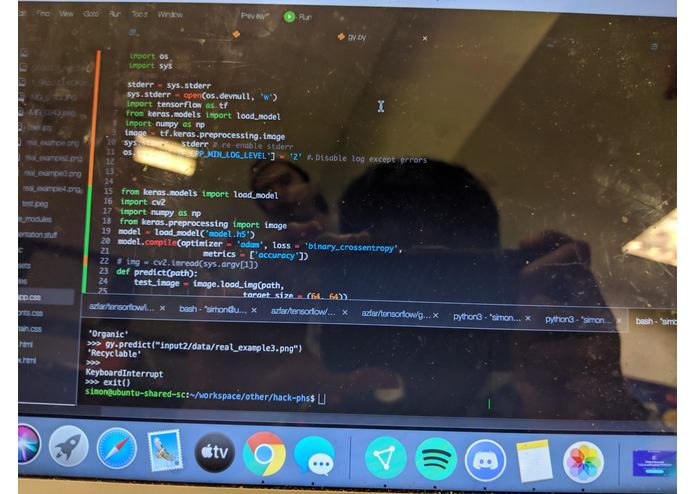
Our first successful Keras model
-
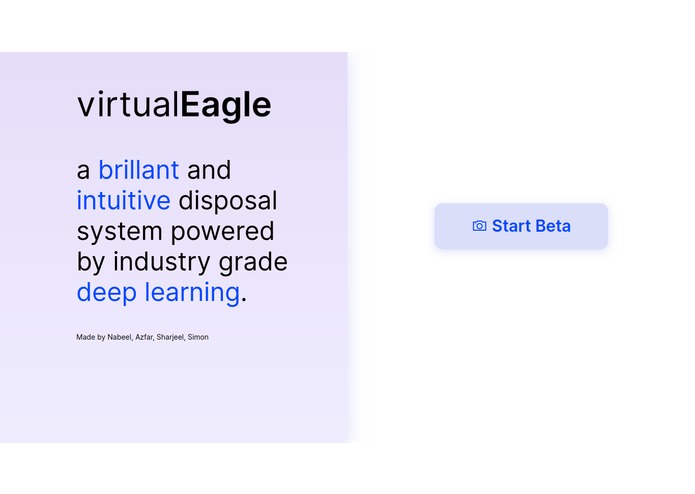
Home Page
-
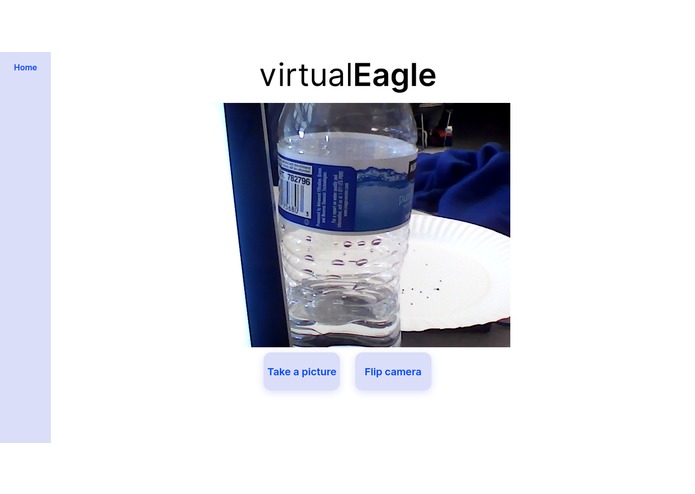
Image classification web app
-
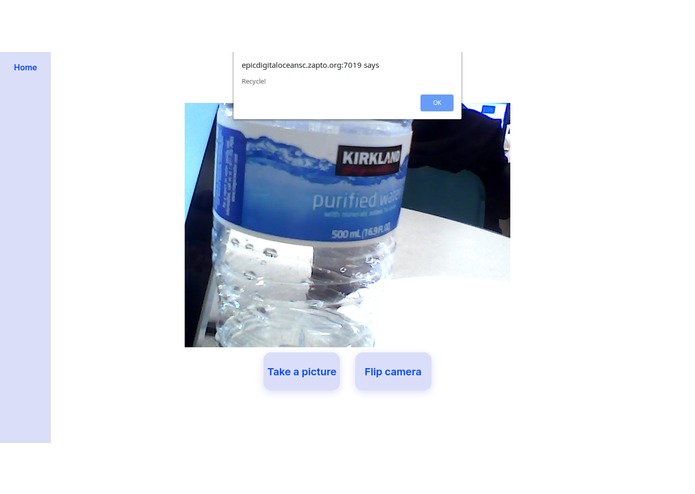
Image classification web app response


Inspiration
- Drastic increase in recycled items over the next few years.
- Great Pacific Garbage Patch is only getting larger over the years
- Estimated 100 million tons of trash
- Human Labor is not effective ## What it does Differentiates recyclable and organic materials using an image classifier based on a Keras neural network. There is one dense layer and 3 pooling layers and in the end, there is a sigmoid with one node. The sigmoid helps show the percentage. ## How we built it We used over 23 000 different images for classifying between organic and recyclable items. We trained a neural network using a cloud VM which we got from Digital Ocean. We designed the model ourselves and fitted the data from Kaggle. ## Challenges we ran into
- Overfitting - I forgot to dropout which caused the data to basically memorize the pixels and not be generalized which led to a poor validation score.
- Combining Nodejs with Python - We created an Express Server and ran into the issue of sending standard buffer data between two different languages. Python and Javascript. ## Accomplishments that we're proud of
- Creating an effective neural network that we _ made ourselves _.
- Created a beautiful UI design for the web app
- Linked the raspberry pi to our cloud VM ## What we learned
- How to debug and properly increase the validation score of neural networks
- How to pass data between two different languages
- How to effectively build an API for an IoT device (Raspberry pi) to use for image classification project ## What's next for virtualEagle
- We would like to train more data and have a better CPU/GPU to train our complex models.
- Create a public API for anyone to access through an API key
- Cooperate with industries such as Waste Management Inc., and provide modern solutions to their traditional disposal systems.
Built With
- cloud-computing
- digitalocean
- express.js
- keras
- node.js
- python
- raspberry-pi
- tensorflow



Log in or sign up for Devpost to join the conversation.