-
-
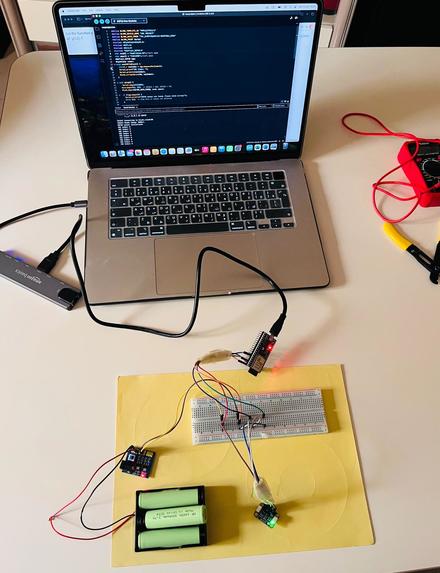
This is the entire setup of the VOCTracker including the laptop on which I have done the coding in.ESP32,SGP40,POWER MODULE AND 12V BATTERY

Inspiration
Travelling in a vehicle, especially a car, that has been parked under the hot summer sun for a long time, has always been uncomfortable due to the headaches and nausea it causes. I often noticed my parents would first roll down the windows and switch on the AC before letting the rest of us get in. It usually took 15 minutes before the air felt breathable again. I have been in situations where I had to often take cabs for commuting and couldn't expect to have the luxury of waiting for the air quality inside the cab to become breathable and then step in. I have also felt the interiors to be warm and smelly, which would make me feel sick. Curious to know what exactly was in the air that made me feel ill, I researched online and discovered that VOCs (Volatile Organic Compounds) such as Formaldehyde, Benzene, Xylenes, Styrene, and Toluene are released from materials inside the car, like plastics, upholstery, and adhesives and foams— build up when cars are sealed and heated. These VOCs can cause short-term effects such as headaches, dizziness, and nausea, and allergic skin reactions, along with long-term effects such as respiratory and reproductive issues, hormonal disruptions, and vital organ damage, especially in poorly ventilated spaces.
What it does
This portable device monitors VOC (volatile organic compounds) levels by using the SGP 40 gas sensor, which offers accurate measurements of total VOC with built-in humidity and temperature compensation. It communicates via I2C, making it easy to interface with microcontrollers, ensuring a safer and healthier environment inside the car. It also seamlessly transmits real-time data to a user-friendly interface, such as the BLYNK App or website, alerting passengers when the VOC level rises, so that they can take timely precautions and avoid potential health risks.
How we built it
The design and development of the robotic prototype is structured around a modular and iterative engineering approach to ensure accuracy, functionality, and user safety. The components used are as follows: a) Gas sensor -SGP 40 to detect harmful gases such as benzene, toluene, and xylene. b) Microcontroller ESP 32D for signal processing and control logic. c) Power unit (12-volt DC adapter) to power the system safely inside the car. d) Communication module used to develop a Wi-Fi-based interface to send VOC alerts to a web device. e) Male to female wires f) Arduino software used for intense coding to program the entire device, including the VOC sensor. g) Power module used to connect the power unit to the microcontroller. All the above components were interconnected by using a breadboard.
Challenges we ran into
It was an extremely tedious process, not only in making a functional device but also in procuring the different sensors, modules, and other materials. One of the significant challenges faced was short-circuiting due to several wire connections. This was tackled with high precision by carefully connecting the wires to the various components. Another issue encountered was the device's coding, which required high precision and advanced coding, necessitating multiple rectifications, such as displaying the different port numbers connected to each component. Being a novice in soldering, I had to request my family friend to guide me through the process. ## Accomplishments that we're proud of Successfully building a robotic prototype that is functional and can transmit real-time data to the passenger, thereby warning the person of the hazardous VOC Level in his/her vehicle, thus averting a major health disaster.
What we learned
Building this device not only enhanced my knowledge about handling various electronic components and their uses, but it also exposed me to the different possibilities of utilising such components for a social cause and improving the quality of life.
What's next for VOCTracker
I want to integrate the precautionary steps the passenger should follow according to the different VOC reading levels that can be accessible through the BLYNK app/website. I aim to produce such devices on a large scale, cost-effectively, as it would save a lot of lives by making them accessible to the general public. I also intend to educate the public on the working and application of the device through my blog and demonstrate its role in preventing health hazards


Log in or sign up for Devpost to join the conversation.