-
-
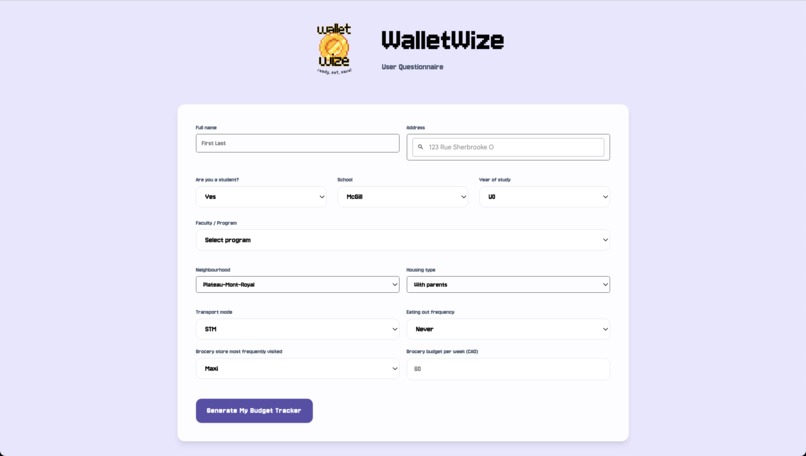
Questionnaire Form Page
-
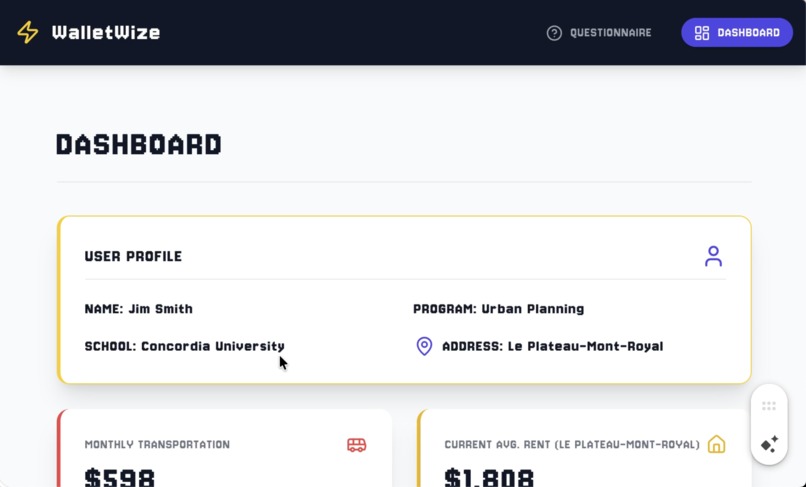
Dashboard Page
-
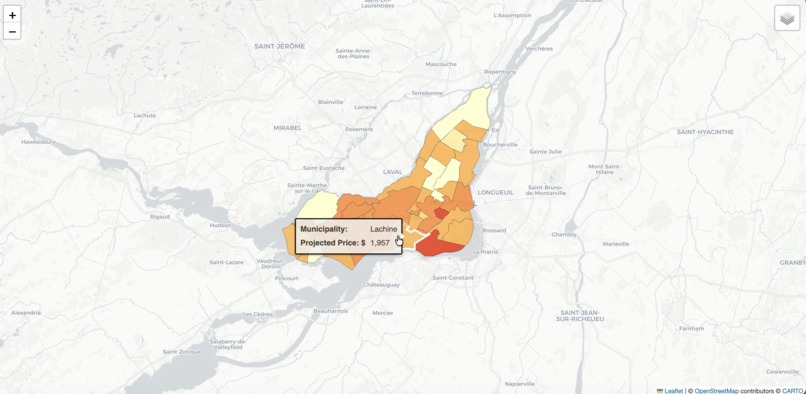
Predictive Interactive Map for Montreal Rent Prices
-
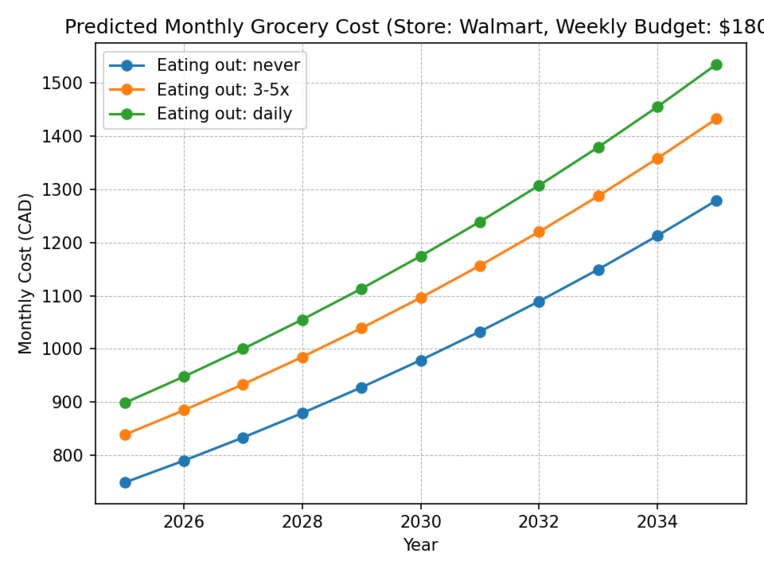
Food Price Prediction for the Next 5 Years


Inspiration
Rent, tuition, and groceries in Montréal keep climbing, and most student budget tools feel like homework. We wanted a tracker that feels like a game: quick, visual, and rewarding, so staying on budget is something you want to open.
What it does
WalletWize projects a student’s cost of living for a target year and breaks it down by categories (food now; housing/transport/school next). It turns historical CPI into a simple forecast and shows the impact on monthly spend so users can plan ahead.
How we built it
- Data & model: Historical CPI (StatsCan), yearly index normalization, and a short-horizon CAGR forecast.
- Backend: Python + Flask endpoints that return projected indices and costs.
- Frontend: React (Vite) UI with a lightweight dashboard; Firebase for quick auth/storage.
- Flow: User selects a year → API returns projected indices → UI renders monthly cost estimates.
Challenges we ran into
- Integrating the frontend and backend
- Learning full-stack development overnight
Accomplishments that we're proud of
- We were able to build a great framework for a potential project and design a UI
- Building multiple models to predict different areas of pricing
What we learned
- Learning Git, React, and Flask in limited time
- Creating a clean UI
- Using Google APIs and fonts
What's next for WalletWize
In the future, we plan to expand WalletWize in three stages:
- Short term: expand dataset, refine predictions for local Montreal users
- Medium term: expand more to more cities and add more personalized expense categories;
- Long term: transform WalletWize into an intelligent personalized financial assistant for every student, adapting automatically to your city, your lifestyle, and your data.
Built With
- canva
- chatgpt
- flask
- gemini
- javascript
- python
- react-native


Log in or sign up for Devpost to join the conversation.