-
The problem
-
Prototype
-
-
What it would look like


Inspiration
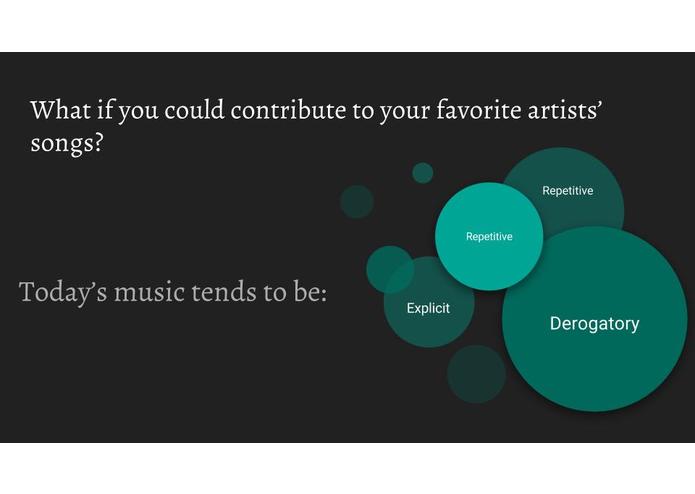
Our group wanted to explore what would happen if you could contribute to your favorite artists’ songs? We've noticed that many songs nowadays, especially in rap music, have explicit lyrics and are often extremely inappropriate. Our solution to this is to crowd-source music lyrics, so that everyday people can have a say in the music industry and contribute to the song lyrics of famous singers as well as upcoming artists.
What it does
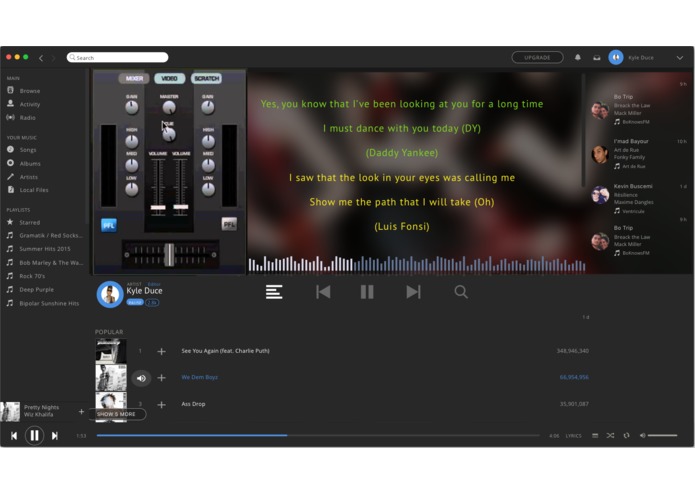
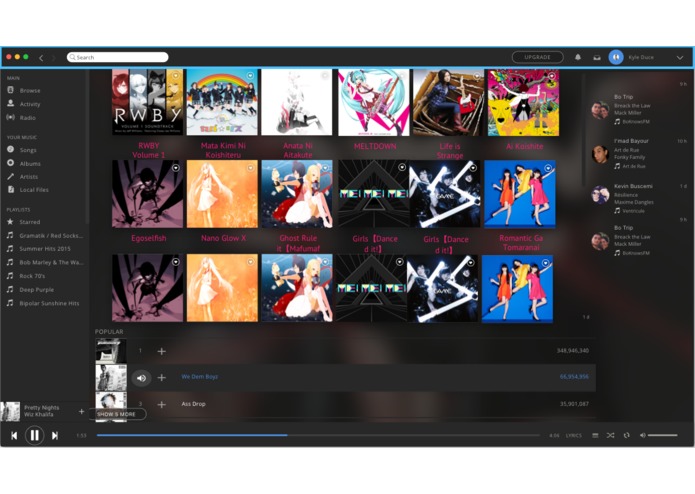
To tackle the problem, we wanted to create a website that lets users create an account and profile, start editing lyrics of songs they select, and then share and download the edited version. Once users change a lyric within a song, that song will still have the voice of the original singer. Therefore, people don't need to be good at singing to start contributing to songs.
How do users edit songs?
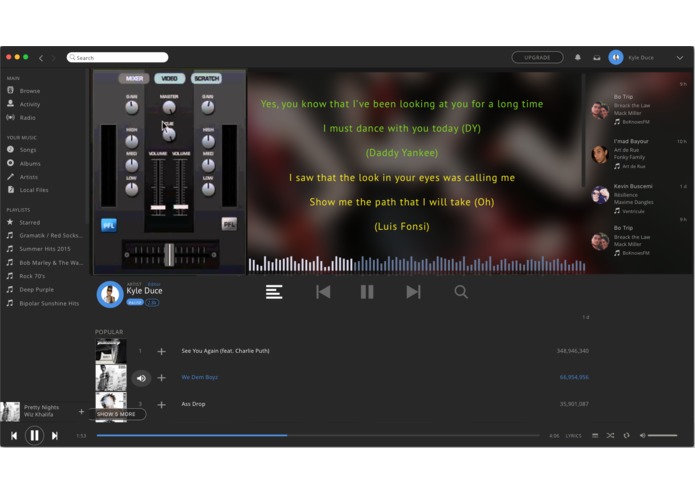
All the user would have to do is upload the song (eventually it would have a library of songs). Lyrics would automatically be generated, then the user is able to select words that they want to change. For now, there are set options on what replacements can be made, but eventually the user would be able to replace a specific lyric with any word as long as the syllable count is the same.
How we built it
The original plan was to use python and Google APIs to convert audio into text, to obtain the lyrics of the song and extract the lyrics from the background music. This would also let users select which words they want to edit and then replace the lyrics. Then we wanted to code a website using html and css and incorporate the python code into our website.
Challenges we ran into
As a team of mostly first-time hackers, we ran into challenges on the technical side. We realized too late that a website in html and css will need Flask in order to incorporate python code. We built the basic website in html and css, however, we were unable to deploy it. We also realized that a function that separates the lyrics and background music from an mp3 file is much more of a challenge than we realized. We were not able to get this portion to work as we expected.
Additionally, we had problems with laptops and internet. Karan's laptop has two operating systems, Windows and Linux. However, his wifi was not working on either operating system. Also, Rohith's laptop was not supporting PyCharm so he had to use Tanvi's laptop. As a result, we only had 3 working laptops, and only one of them could be used to code in Python.
Accomplishments that we're proud of
We were able to get the Google speech to text API to work. Although we could not get the function of separating the lyrics from the background music, Google's API helped us get one step further towards a complete project. We are also very proud of our idea since it is something that we could actually envision being implemented.
What we learned
We learned a lot about what is feasible to make in 36 hours. Originally, we had a lot of big plans for our project but we ended up having to cut a lot of it out because we would not be able to finish in the time given. We also learned about Google's cloud platform and their API which turned out to be very useful for us.
What's next for Wavz
We could eventually monetize Wavz by paying to edit songs, edit them, and eventually share them so other users can buy. We could bring this service to Spotify, Genius, etc. Another service we could offer is for artists to upload drafts of their songs, let users edit the lyrics, and eventually record the finished song.
Built With
- css3
- google-cloud
- html5
- python
- speech-to-text-google-api


Log in or sign up for Devpost to join the conversation.