-
-
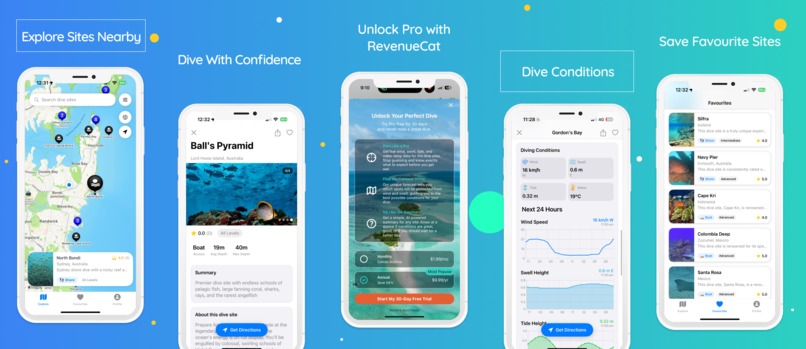
AppStoreGraph

Wikibubbles: Mapping the Underwater World
Inspiration
Our journey began during a van trip around Australia's stunning coastline. As a couple passionate about both traveling and the ocean, we found ourselves constantly searching for the perfect dive spots along our route. We'd spend hours researching fragmented information across multiple websites, forums, and local dive shops, often missing incredible sites just kilometers from where we were camping.
The frustration peaked when we discovered—after the fact—that we had driven past some of Australia's most spectacular dive sites without even knowing they existed. We realized that millions of divers worldwide face this same challenge: the underwater world is vast and largely undocumented in an accessible way.
What it does
Wikibubbles is your all-in-one guide to underwater exploration, transforming the way you discover, plan, and share your adventures. With Wikibubbles, you can:
🌊 Discover Hidden Gems: Unlock a global map of thousands of snorkeling and dive sites. Filter by your skill level and interests to find everything from secret coves to legendary shipwrecks.
📍 Plan with Confidence: Go beyond the map. Get the real picture with live weather, detailed dive conditions, and honest reviews from our community. Save your favorite spots and build your ultimate dive bucket list.
📸 Share Your World: Become a guide for others by contributing your own reviews, photos, and discoveries to a growing, global community of fellow ocean lovers.
How we built it
We initially launched Wikibubbles as a web platform to map dive sites globally, but quickly realized that mobile apps were essential for the diving community.
Most divers discover and plan sites on-the-go, whether researching during travel, checking conditions at the dive site, or sharing experiences immediately after surfacing.
We then developed native mobile apps focusing on the real needs of divers: intuitive search, GPS navigation to dive sites, and seamless photo sharing. The platform integrates multiple data sources to provide comprehensive dive site information, weather conditions, and community insights.
Our monetization strategy leverages RevenueCat's subscription management to offer a freemium model where the free version provides live weather and premium Pro provides diving condition data for safe dive planning.
Challenges we ran into
Building WikiBubbles is overall very fun! Because we are trying to solving a problem ourselves are facing - where to go diving today to make all the hassles of pulling the sticky wetsuit and weight belt on and off worth it. But there ARE some hurdles we encountered along the way.
Getting good dive site location and information turns out to be not that easy. We know that we can just scrape this information from other websites, but we quickly realized the best info comes from locals, so we started partnering with dive shops and photographers to get real, on-the-ground knowledge. If you are a dive shop or an underwater photographer, please reach out to partner with us.
When we try to add real time weather data, how might we turning complex weather data into a simple answer was something we found challenging. Just showing wind speed and swell height is easy, but it’s not actually helpful, especially for beginners. No one wants to do mental math to figure out if a dive is safe. Our biggest design challenge was turning that 'data dump' into a simple answer to the question: "Is it good to dive here today?" After a lot of trial and error, we landed on our AI-powered 'Divability Summary'—a simple, plain-English forecast that does the hard work for you.
Lastly is the challenge about community building. Any community app faces the risk of getting filled with spam or low-quality content. We needed a system that would encourage great contributions while weeding out the bad stuff, especially as we grow. We designed our review system so that the community itself can help, with simple upvoting and flagging tools to keep the information trustworthy.
Accomplishments that we're proud of
Our greatest achievements haven't just been in the code, but in the human connections we've made. Speaking with dive shops face-to-face and exchanging emails with owners across the globe has been a huge source of encouragement, validating that we're building something the industry truly needs.
With the crucial help of the global diving community, we've managed to map and catalog thousands of dive sites spanning six continents. This extensive data allows us to power a fast, intuitive search system that lets divers instantly find the right spot based on location, access, and activity type.
Under the hood, we designed a scalable backend architecture ready to handle a growing global user base and seamlessly integrate complex, real-time weather data.
Ultimately, though, the biggest thrill is seeing the community grow. The continuous, daily trickle of new user sign-ups and positive feedback is the strongest proof that we’re solving a real problem and making the effort of getting into that wetsuit worth it.
What we learned
Building WikiBubbles has been a continuous learning process, and we’ve picked up several crucial lessons along the way:
- The MVP mindset: Prioritise ruthlessly
We learned that in the early days, you can't solve every problem at once. Our initial instinct was to build complex systems for spam prevention and content moderation. But we realized that you can't have a spam problem if you don't have users. We made a strategic decision to focus 100% of our energy on solving the core problem for our users: "Where is a good place to go diving right now?" This focus on delivering immediate value was key to getting our first users on board.
- The Humbling Power of Feedback: Your Users Will Surprise You
This was our most humbling and valuable lesson. We are our own target users, but we still couldn't predict every use case. For example, we designed our live weather feature as a planning tool to help users decide where to go. But our community started using it in a way we never imagined: as a logging tool. They would come back from a dive and compare our forecast data to their real-world experience to better understand how wind and swell truly affect a site. This taught us that our job isn't just to build features, but to listen and see what problems our users are actually solving with them.
- Make decisions Wisely: Solve Problems from First Principles:
It would have been easy to just build "AllTrails for diving." But we quickly realized a fundamental truth: a bad hike means muddy shoes. A bad dive means a wasted, expensive, and potentially dangerous day. This truth forced us to ignore how other apps look and think from first principles. Instead of asking "What does a weather widget look like?", we asked, "What is the one question a diver needs answered?" The answer was, "Is this specific spot good for diving right now?" That insight led directly to our "Divability Summary." It's the same reason our Search understands "places to see turtles," not just dive site names. We learned we're not just building a map; we're building an answer engine for divers.
- A Solid Foundation is Non-Negotiable
In the beginning, we moved fast to get a product into users' hands. Our initial NoSQL data structure was flexible, but it created a "technical debt" that came due when we started building for iOS, which demands more structured data. We faced a tough decision: keep patching a leaky foundation or pause new features to rebuild it properly. We chose to pause and refactor. That investment in a clean, modular architecture is now paying dividends, allowing us to ship complex features faster and with more confidence. It was a hard-learned lesson that a great user experience can only be built on a great developer experience.
What's next for WikiBubbles
Our mission is to make getting in the water—whether for a swim, snorkel, freedive or dive—universally simple and accessible for everyone.
- Make Dive Log Fun
The traditional dive log is a private, paper-based record. We see an opportunity to transform it into a vibrant, visual, and connected experience. Soon, you'll be able to log your dives, tag the marine life you saw, and share a beautiful summary of your adventure with your buddies and the wider community. We're not just making a digital log; we're making it easy to share the joy of diving.
- Build the Ecosystem
Our goal is to remove every point of friction between inspiration and submersion. This means building an integrated booking system that closes the loop. Users will be able to discover a perfect dive site and, in the same app, book a charter with a local dive center, rent equipment, or even enroll in a certification course. We want to be the single, trusted platform that takes you from dreaming about a dive to living it.
- Group Plan and Adventure Together
Diving is inherently social, you always need to go with a buddy! Our next step is to build powerful group planning tools directly into Wikibubbles. You'll be able to create trip plans, invite your buddies, check skill levels, and coordinate logistics all in one place, making it easier than ever to get in the water together.
Built With
- algolia
- claude
- cursor
- firebase
- gemini
- google-analytics
- ios
- javascript
- svelte
- swift
- swiftui
- tailwind
- typescript
- xcode


Log in or sign up for Devpost to join the conversation.