-
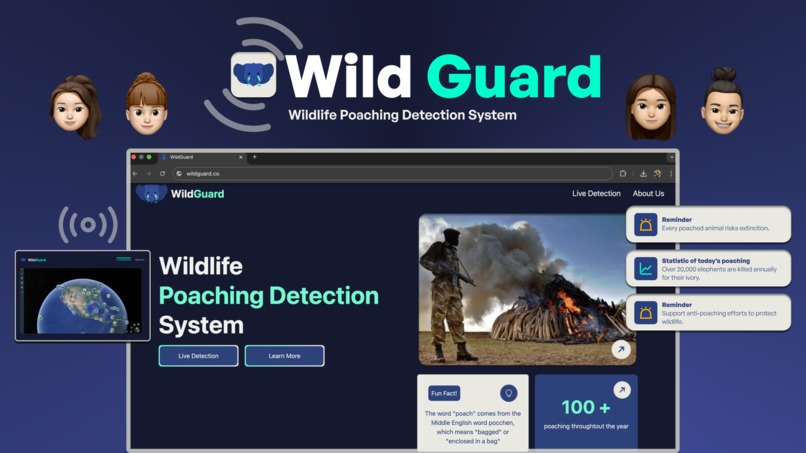
WildGuard
-
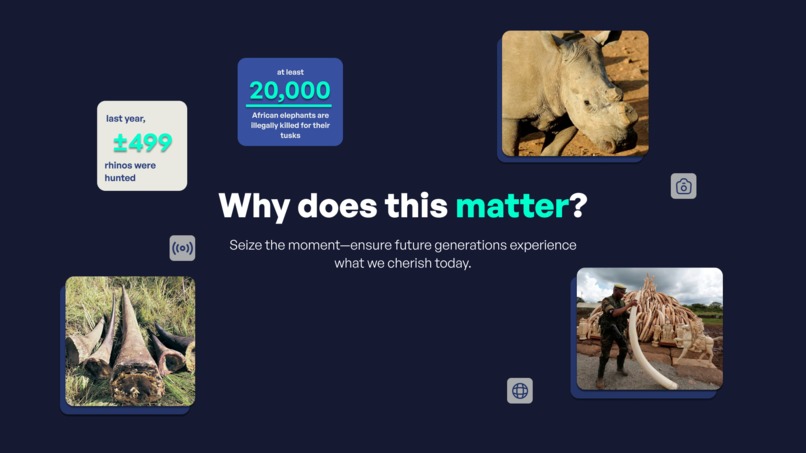
Central Issue
-
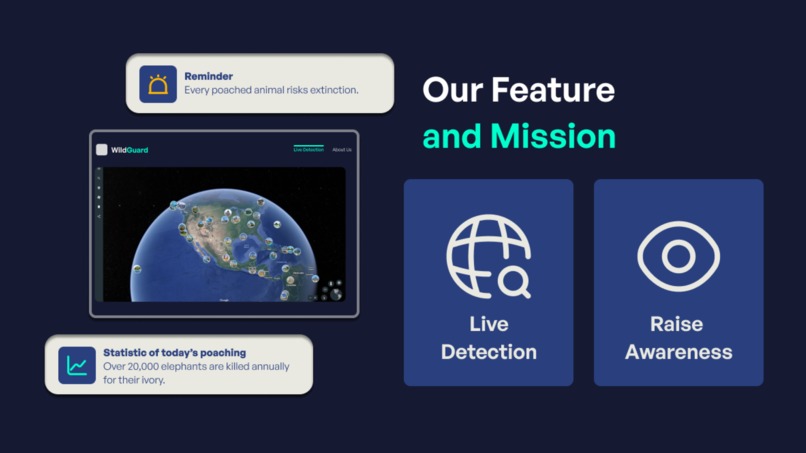
Solution
-
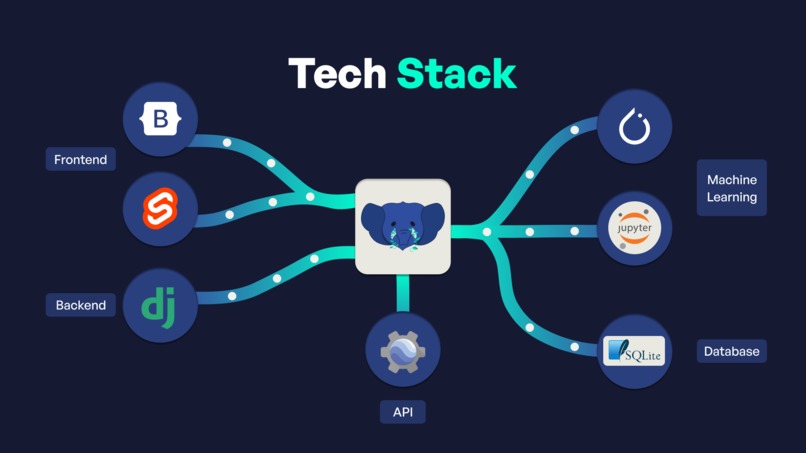
Tech Stack: How we built it
-
System Design
-
What's next for WildGuard


Inspiration 💡
Imagine a world where the younger generation sees elephants only as pictures rather than living, breathing creatures. The stark reality is that these majestic animals are increasingly at risk due to poaching. Our inspiration for WildGuard came from the desire to bridge this gap and protect these iconic species in the wild. We envision a future where our children can witness elephants and other wildlife thriving in their natural habitats, not just in virtual or static images.
What it does 🕵️♀️
WildGuard is an innovative web application designed to combat wildlife poaching on a global scale. Our platform utilizes various technologies to monitor and detect poaching activities in real time. By integrating Google Earth Engine, we provide users with up-to-date Earth views and geospatial data. Additionally, we have trained a machine learning model using a specialized dataset from Roboflow, focusing on elephant poaching statistics. This allows WildGuard to analyze and identify potential poaching incidents, offering a critical tool for conservationists and law enforcement agencies.
How we built it 👷♀️
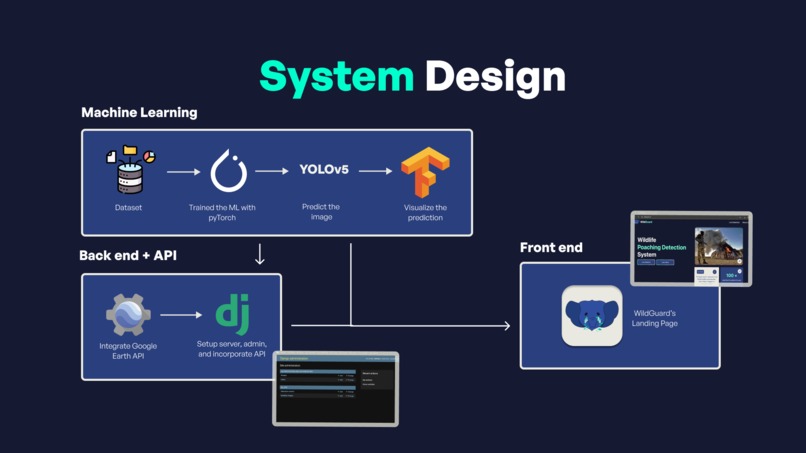
Our tech stack is a carefully selected combination of powerful technologies to achieve our mission:
- Frontend: We used Svelte and Bootstrap to create a responsive and user-friendly interface. Svelte’s reactive framework enabled us to build a dynamic and efficient front end, while Bootstrap ensured a clean and accessible design.
- Backend: Django was chosen for its robust and scalable backend capabilities. It handles user authentication, data management, and server-side logic efficiently.
- Machine Learning: Yolo V5, Pytorch, Tensorflow and Jupyter Notebook were employed for developing and training our machine learning models. Pytorch’s flexibility and Jupyter’s interactive environment facilitated iterative experimentation and model refinement.
- API: Google Earth Engine API was integrated to provide real-time geospatial data. This API allows us to harness vast amounts of satellite imagery and analyze geographical patterns crucial for detecting poaching activities.
Challenges we ran into 𝌉
- Setting up the server: Configuring our server environment and ensuring smooth deployment was initially challenging. We had to troubleshoot various issues related to server setup and management.
- Connecting Google Earth Engine to the front end: Integrating Google Earth Engine with our front end was a learning curve, as it was our first experience with this API. Ensuring seamless data flow and interaction between the front end and the Earth Engine required significant adjustments and testing.
- Finding the right dataset: Identifying and obtaining a specific dataset for elephant poaching was a complex task. We sifted through numerous data sources and eventually found a suitable dataset on Roboflow, which was crucial for training our model.
- OAuth2 authorization: The Google Earth Engine API required OAuth2 authorization, which initially presented a challenge. We had to invest time in understanding the OAuth2 process and obtaining the necessary credentials to access the API.
Accomplishments that we're proud of ⭐️
- Successful tech stack integration: We are proud of how we managed to integrate various technologies into a cohesive system. Connecting the frontend, backend, machine learning components, and the Earth Engine API was a major milestone.
- Dataset discovery and utilization: Finding the precise dataset needed for training our model involved multiple attempts and perseverance. We are proud of our success in securing and utilizing this data effectively.
What we learned 📖
- Server setup and management: We gained valuable experience in setting up and managing our own server, which is a crucial skill for future projects.
- Integrating complex APIs: Working with Google Earth Engine taught us how to integrate complex APIs and manage large datasets effectively.
- Machine Learning Model Training: Training a model with specialized data expanded our knowledge of machine learning processes and dataset handling.
- OAuth2 authentication: We learned the importance of understanding and implementing OAuth2 authorization for accessing external APIs, especially when dealing with sensitive data.
What's next for WildGuard 🔮
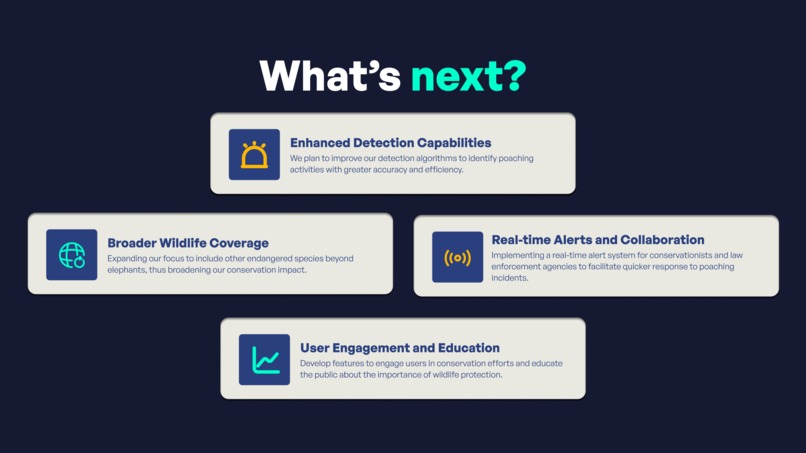
- Enhanced Detection Capabilities: We plan to improve our detection algorithms to identify poaching activities with greater accuracy and efficiency.
- Broader Wildlife Coverage: Expanding our focus to include other endangered species beyond elephants, thus broadening our conservation impact.
- Real-time Alerts and Collaboration: Implementing a real-time alert system for conservationists and law enforcement agencies to facilitate quicker response to poaching incidents.
- User Engagement and Education: Develop features to engage users in conservation efforts and educate the public about the importance of wildlife protection.
Built With
- bootstrap
- django
- google-earth
- jupyternotebook
- pytorch
- sqlite
- svelte




Log in or sign up for Devpost to join the conversation.