Technology
Engineered diamond systems for durable optics today and advanced devices tomorrow.
Diamond Quanta develops engineered diamond material systems by combining diamond optical coating stacks and substrates with defect-state engineering via pulsed laser annealing and co-doping. Our approach is guided by physics-based modeling and validated through optical, structural, and electrical characterization.
What We Build: A Platform From Modular Technology Blocks
We design diamond-based material stacks and post-process modules that can be inserted into product development workflows. Each module is validated with measurement, then packaged into a deployable offering for customers and partners.
Defect control is the lever that unifies optics, electronics, and quantum
Across optics and devices, defects drive losses. They scatter light, unfavorably alter the crystal lattice through strain, and introduce electronic states that affect absorption, charge transport and color-center stability. Our technology stack uses a kinetic, module-based approach: engineer material stacks, then use controlled post-processing to stabilize improved structure and defect-state behavior. The same framework that improves optical durability and clarity extends into electronic transport and quantum-relevant regimes.
Today: Optical stacks for high durability and clarity on glass-class substrates and diamond substrates
Next: Laser-enabled defect reconfiguration and co-doped diamond programs for electronic and quantum-photonic relevant devices.

Module 1: Diamond Optical Stacks & Substrates
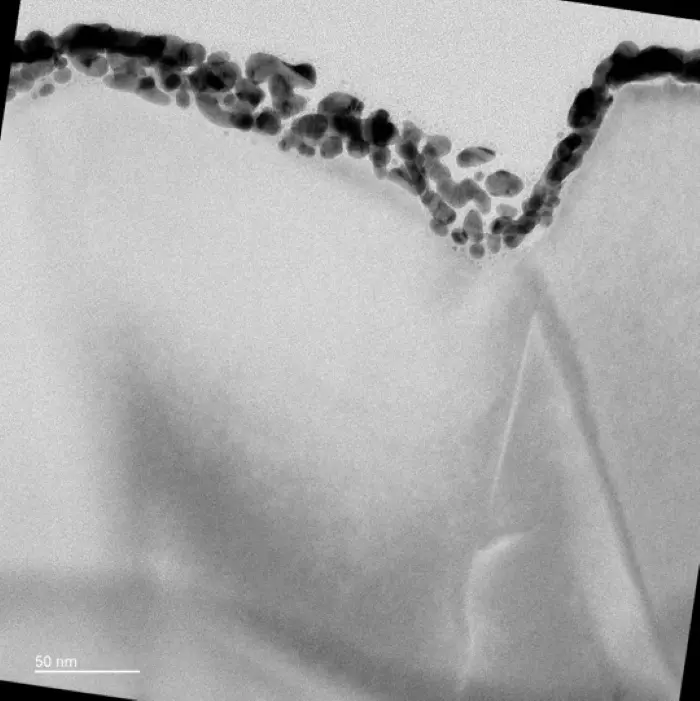
We develop diamond-based optical stacks that integrate with industry coating architectures and prioritize the gating items that determine real product viability: optical clarity, adhesion, mechanical resilience, and environmental stability.
Full methods and datasets are available under NDA for qualified partners.
Best for: cover glass durability, camera windows, sensor windows, harsh-environment optics, thermal spreader windows
Module 2: Defect State Engineering via Pulsed Laser Annealing (PLA)
A Repair and Enhancement Step for Near-Surface and Device Depth Performance
Lab-grown diamond performance is often limited by defect complexes that introduce strain, scatter charge carriers and decohere quantum states, and promote only deep electronic states in the Diamond Band Gap. We use PLA as a kinetic pathway to drive near-surface densification and defect depletion while preserving the diamond lattice structure ordering.
This module is designed to improve functional performance and to provide a controlled post-process step that can be paired with coatings or device flows.
Results are reported with application-specific outcomes.


Module 3: Defect State Engineering via Co-Doping
We develop co-doped diamond material systems designed to control defect complexes and electronic states. The goal is to shape a stable defect-state manifold that supports improved transport and device behavior beyond conventional single-dopant approaches.
We pair material design with post-processing and measurement to validate structure-function relationships. In some regimes, the engineered defect-state manifold can be discussed in intermediate-band-like terms, where controlled states within the bandgap influence absorption and transport. We treat these effects as measurable and designable, not assumed.
Typical validation includes electrical measurements where appropriate (transport, contacts, temperature dependence), correlated with structural and spectroscopic characterization.
Best for: advanced power and sensing devices, high-temperature operation, quantum-relevant defect-state control
Designed for Manufacturability
Scale and Integration
We build toward scalable manufacturing through partner-friendly process modules, metrology-driven iteration, and IP-backed stack designs. Our goal is compatibility with existing production and qualification workflows, not exotic one-off processing.

Partner Programs Include:
stack design for specific substrates and system requirements
OEM process integration and transfer
metrology and reliability planning aligned to customer standards
licensing and co-development structures where appropriate
Adopting Change
Our technology enables widespread adoption, offering enhanced device performance and affordability. Join us in embracing innovation and driving the future of diamond-based technologies. Reach out to us today to learn more about how our disruptive solutions can elevate your business.