How are you viewing Digital Validation
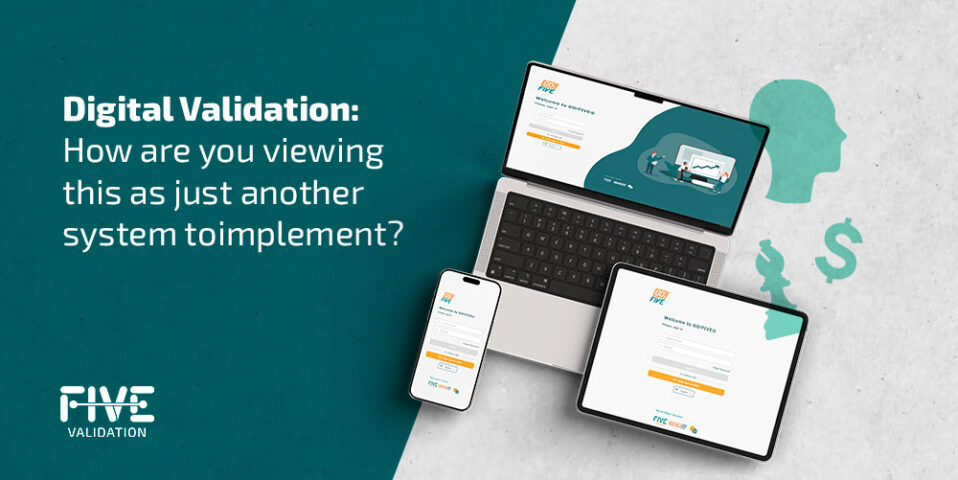
Digital Validation
How are you viewing this as just another system to implement?
Digital transformation has accelerated faster than most organizations anticipated. Some companies have already positioned themselves ahead of the curve, embracing digital validation not as an operational detail, but as a strategic enabler. Others, however, are still wondering whether this shift is essential.
In our conversations with industry leaders, one truth has become undeniable: digital validation is no longer a trend. It has become a prerequisite for organizational resilience, competitiveness, and trust, and it aligns with GAMP5®, EU GMP, and FDA guidance.
But awareness alone doesn’t drive transformation. A shift in mindset does.
What Has Changed?
Technology is advancing so quickly that there's no room for outdated processes. Regulatory expectations are tightening. Systems are more interconnected, data volumes are increasing, and risks can propagate across an organization in seconds.
As digital ecosystems expand with solutions like LIMS, MES, and other specialized platforms, relying only on ERP systems is no longer enough. These modern environments demand a stronger, smarter, and more integrated approach to validation.
Yet many companies still treat digital validation as a secondary step. This is a critical mistake. Manual, traditional validation methods slow transformation, introduce inconsistencies, and put entire initiatives at risk.
A digital validation platform must be part of the strategy—not an afterthought. It’s the difference between scalable, reliable digital operations and projects that stall before delivering value.
And that’s the real problem:
You cannot scale digital operations using analog mindsets.
Organizations that overlook validation today risk more than non-compliance.
What Are the Implications of Keeping Things as They Are?
When validation is treated as a formality — something performed to “tick a box” — the business absorbs hidden costs:
- Processes slow down, because people compensate manually for what systems fail to do reliably.
- Compliance gaps widen, exposing the organization to risk.
- Customer trust declines because digital experiences become inconsistent.
- Teams burn out, caught between increasing complexity and inadequate tools.
- Innovation stalls, because no one trusts the foundation enough to build on it.

So the question is no longer:
“Can we afford to invest in digital validation?”
It’s: “What is the cost of not doing it?”
What Opportunities Are You Missing?
By integrating digital validation into your operational core, you unlock advantages that go far beyond compliance:

If validation is the foundation, stability becomes scalable.
And scale becomes strategic.
What Does Your Organization Really Need?
Before thinking about tools or processes, consider the real questions:
- Are your current validation practices truly supporting your digital operations?
- Where are the blind spots—those gaps that could one day turn into compliance or quality issues?
- How much time does your team lose compensating for unreliable systems or unclear documentation?
- How might your competitive position shift if these gaps were closed?
- And finally: what could your organization achieve if validation became a strategic asset instead of a reactive task?

Transformation begins the moment you stop accepting the status quo.
A Mindset Shift: From “Support Function” to Strategic Driver
One of the biggest barriers to progress isn’t technology — it’s perception.
Validation, Quality, and Compliance teams have the power to shape business direction, yet too often they are seen merely as support functions. When this mindset prevails, organizations underestimate the value these teams can create.

But here’s the reality:
Every digital initiative, every automation, every system, every AI deployment—depends on the reliability and trust established by validation.
When you begin to see your work through this lens, your role evolves:
from executor → to strategist,
from gatekeeper → to enabler,
from cost center → to value generator.
This is where professional growth accelerates.
This is where recognition increases.
This is where validation becomes not just necessary, but powerful.
Digital validation speaks differently to each level of the organization:
For Validation Technicians: It means less firefighting, clearer documentation, fewer repetitive tasks, access to reliable knowledge bases — and the satisfaction of solving problems with confidence.
For Managers: It means on-time deliverables, predictable processes, visibility over project status, and the assurance that compliance is never left to chance — enabling teams to perform at their best.
For Executives: It means brand reputation, operational excellence, customer trust, and revenue protection — where digital reliability directly influences competitiveness and market perception.
Different perspectives, same conclusion:
Digital validation resolves pain points across the entire organization. It reduces friction, enhances trust, and accelerates growth.
What Mindset Will You Choose Moving Forward?
Digital validation is not just about systems — it’s about people, culture, and strategy.
- Those who embrace it will lead.
- Those who delay will follow.
- And those who ignore it may not stay in the race at all.
So ask yourself:
- What future are you building for your organization?
- And what future are you building for yourself?
construindo para si mesmo?
Now is the moment to rethink, realign, and rise above outdated approaches.
If you want to learn more: [email protected] or schedule a call to know more about digital validation!
GAMP5® is a guide that has its intellectual rights reserved by ISPE®. Available for purchase at https://ispe.org/.
Frequently Asked Questions
About the author

Lílian Ribeiro is a chemical engineer, biomedical systems technologist, postgraduate in Integrated Management Systems, and Data Science and Business Analytics. He has over a decade of technical and commercial experience in the food, pharmaceutical, and healthcare industries. As an advocate for paperless validation, she is passionate about introducing efficiency and innovation into life sciences companies. Lílian's vast experience is fundamental in validation and qualification projects, encompassing VLMS, ERP, EQMS, automation (PW) and IT infrastructure qualification.
About the reviewer

Sílvia Martins, an electrical engineer with 23+ years in Life Sciences, specializes in AI validation training, data integrity, and e-compliance. As CEO of FIVE Validation, she created GO!FIVE®, an agile digital solution for regulatory compliance with support of a great team