Secure Data Sharing Between Units: Best Practices in Regulated Environments
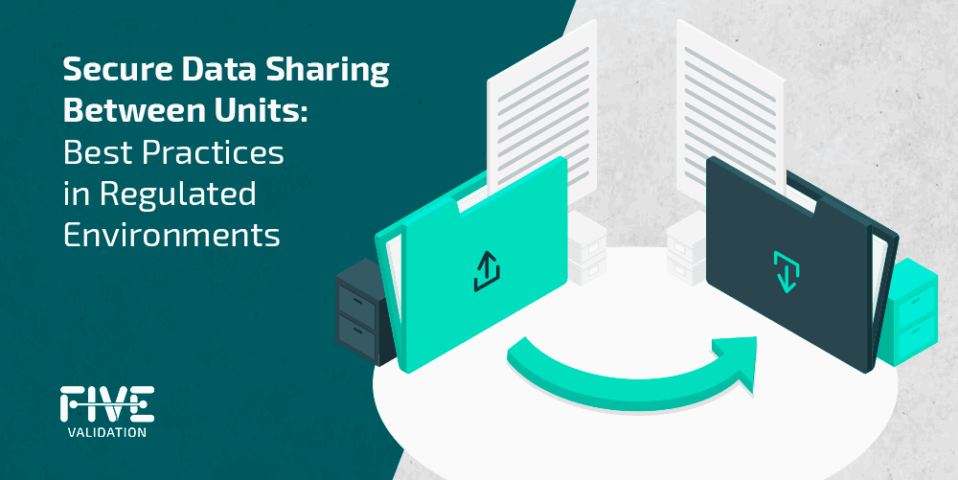
In many Life Sciences organizations, sharing data between business units, manufacturing sites, or legal entities is essential for operational efficiency and regulatory reporting. However, this exchange should be handled with care to ensure data integrity, security, and compliance with global regulations.
The Importance of Secure and Controlled Data Exchange
Data sharing across units may involve production records, quality documentation, batch release information, equipment logs, or even sensitive personal data. Whether driven by global supply chains or corporate integration, companies should put in place controls that ensure only authorized parties can access, view, or modify shared data.
This involves not only technology but also policies and procedures that define how data is shared, under what conditions, and with what protections.
Regulatory Expectations
Global regulatory bodies such as the FDA and EMA expect organizations to implement safeguards to ensure:
- Data integrity: Records must remain accurate, complete, and protected from unauthorized changes.
- Traceability: All data interactions should be tracked with secure audit trails.
- Confidentiality: Access must be limited to authorized personnel only.
- Security: Systems should include protection against cyber threats and misuse.
For systems that process or share personal data, compliance with regulations such as the GDPR and HIPAA is also mandatory, particularly when handling sensitive categories of data or transferring it across borders. See also: FDA 21 CFR Part 11 and EU GMP Annex 11.
Best Practices for Secure Data Sharing
1. Role-Based Access Control (RBAC)
Ensure that users can only access the data relevant to their role, site, or function. Access rights should be reviewed regularly and revoked when no longer required.4. Encryption
Use encryption at rest and in transit to protect critical, sensitive, and regulated data during storage and transfer between units or systems.
2. Segregation of Data
Where multiple units access a shared platform, logical or physical data segregation should be enforced to prevent unauthorized cross-access.5. Consent and Data Ownership
If personal or sensitive data is involved, especially under GDPR or HIPAA, organizations should manage data subject consent, understand data ownership, and document the legal basis for data processing and sharing.3. Audit Trails
All activities, data access, modifications, and transfers must be logged in tamper-proof audit trails and regularly reviewed.6. Secure Interfaces for Data Transfer
Ensure that system integrations, APIs, and file-sharing mechanisms are validated and auditable.
System Design Considerations
Although the system’s architecture (e.g., single-tenant vs. multi-tenant) does not define whether secure sharing is possible, it influences how access controls, segregation, and logging are implemented.
Multi-tenant platforms may centralize data sharing under strict logical separation, while single-tenant systems might require data transfers across instances. Regardless of architecture, what matters most is how the system enforces controls, ensures traceability, and protects data integrity.
Expert Perspective from Silvia Martins, CEO of FIVE Validation
“Regulatory agencies such as the FDA and EMA focus on principles, not technology types. What matters is ensuring that shared data remains secure and controlled, no matter where it resides or how it moves.
From a validation standpoint, one of the efficient practices is rolling out an already-validated system to other units. This approach simplifies global deployment while maintaining consistency.
During rollouts, document sharing becomes critical. Whether transferring protocols, quality records, or master data, companies should ensure that sharing is secure, permissioned, and auditable at every step.”

Want to Learn More About System Rollouts?

About the author: