
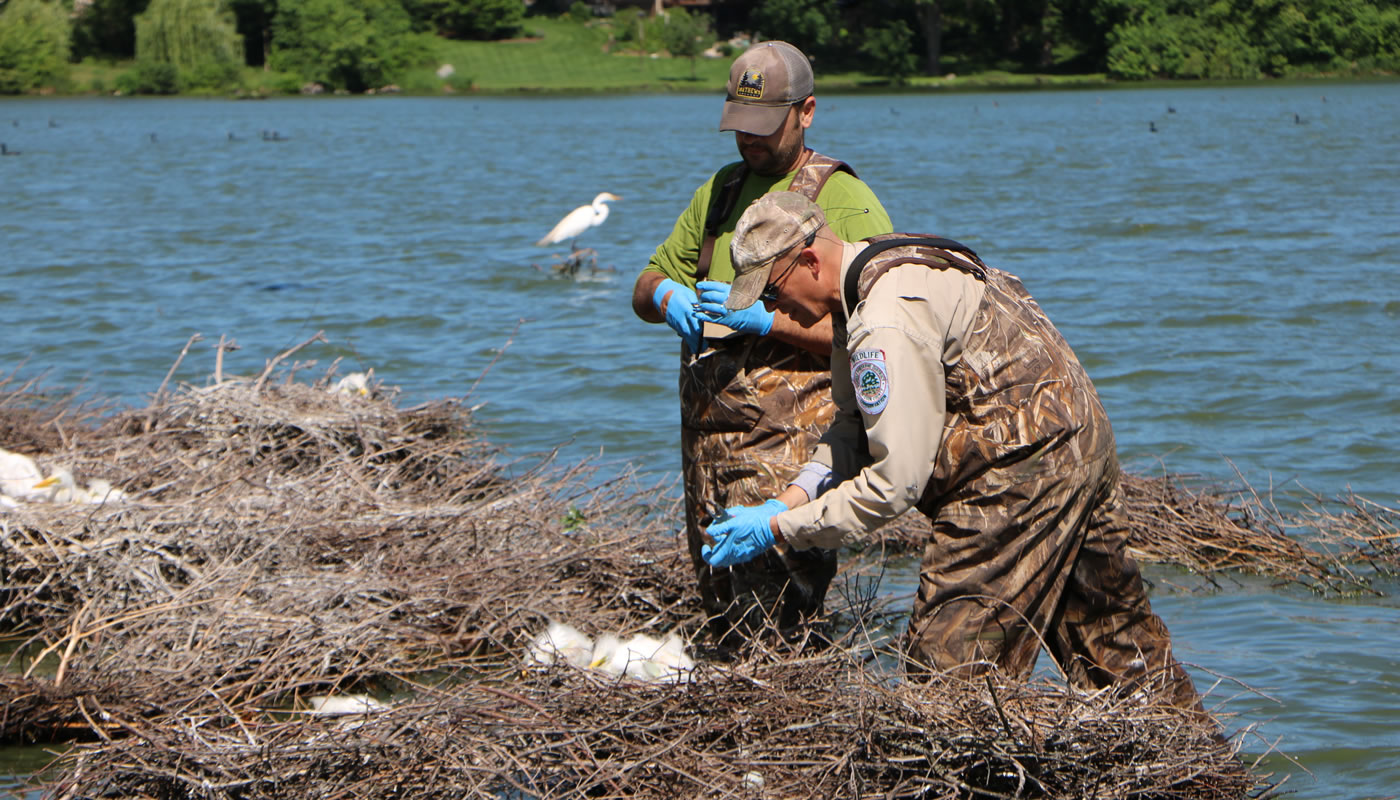
The Forest Preserves of Cook County has long conducted field research and has well-established partnerships with academic research institutions. The Forest Preserves are home to some of the nation’s most biologically diverse flora and fauna, inspiring a wide array of scientists and students to better understand the natural world.
On this page:
- Research Agenda
- Urban Coyote Research Project
- Bird Banding & Research
- Research Ideas
- Research Access Permit
- Peer Reviewed Publications
Research Agenda
Each year The Forest Preserves’ Resource Management department issues more than 50 permits that allow researchers to conduct scientific studies on Forest Preserves land. Data from each project is shared with the Forest Preserves, allowing us to leverage resources and enrich our understanding of the natural world. Many researchers from throughout the country use Forest Preserves data to inform their work and guide land management, benefiting people, plants and animals.
The Forest Preserve engages in research to accomplish the following goals:
- Improve land management practices to maximize biodiversity.
- Understand the transmission of zoonotic diseases to protect public health, and enable additional research on the interaction between zoonotic diseases, flora and fauna.
- Expand understanding of climate change on local populations of plants and animals.
- Compile raw data to create usable and accessible databases, facilitating further analysis and study
The Forest Preserves works with a wide range of academic research partners from throughout the region and beyond, including:
- Chicago Botanic Garden
- Chicago Zoological Society/Brookfield Zoo
- Cornell University
- Field Museum
- Lincoln Park Zoo
- National Park Service
- Oregon State University
- Rutgers University
- The Ohio State University
- University of Wisconsin-Madison
- University of Illinois at Urbana-Champaign
- University of Tennessee
- University of Notre Dame
- University of Oklahoma
- University of California, Berkeley
The Forest Preserves also recruits citizen scientists who participate in long-running frog, bird, dragonfly, and plant monitor programs.
The Forest Preserves have done extensive research and data collection on zoonotic diseases, those diseases transmitted from animals to humans. The Forest Preserves’ has collected wildlife blood samples since 1988, making us one of the oldest and largest contributors to the Center for Disease Control. Our data collection was particularly useful during the first outbreaks of West Nile Virus and Lyme disease.
Urban Coyote Research Project
Urban Coyote Research Project is a partnership between the Forest Preserves, Cook County Animal & Rabies Control, Max McGraw Wildlife Foundation and The Ohio State University.
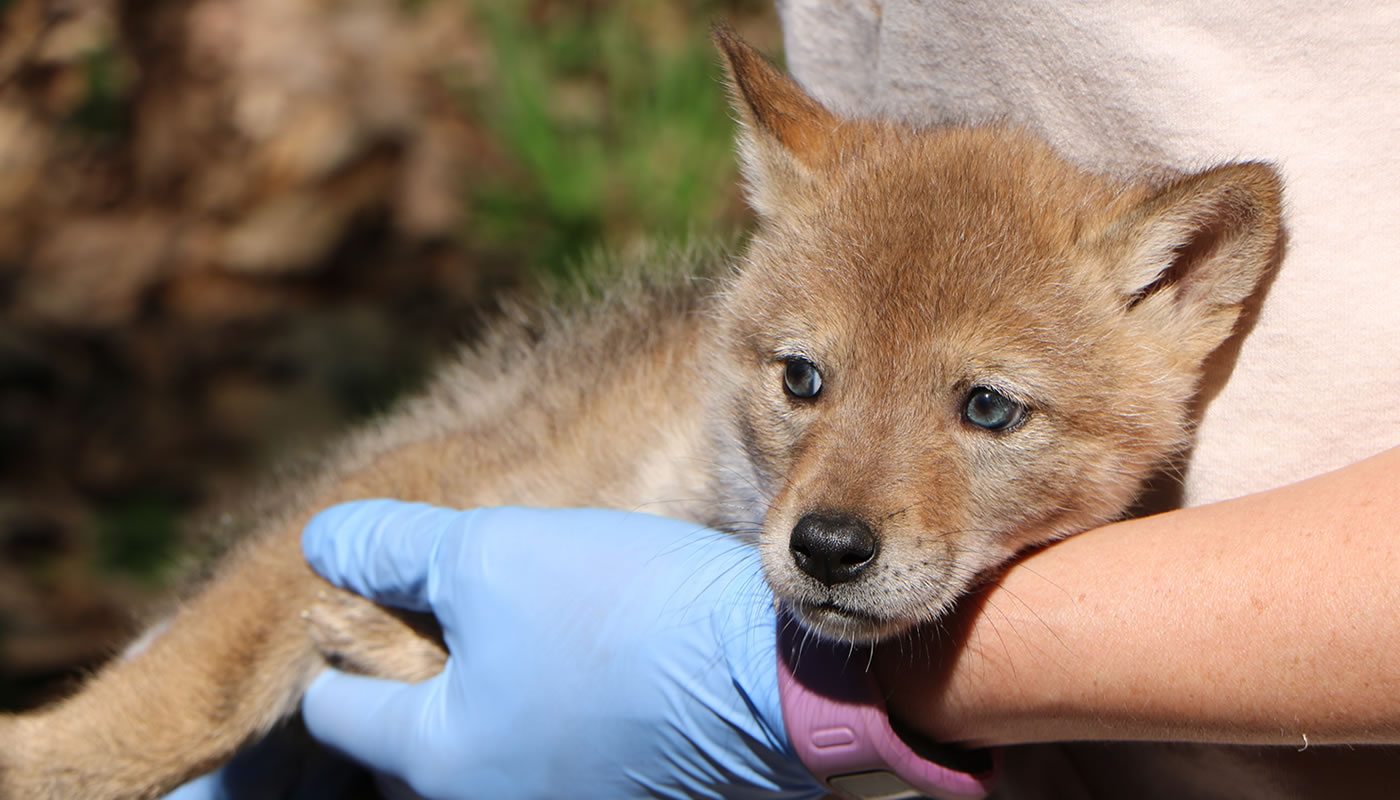
The Cook County Coyote Project is a comprehensive study of coyotes in Chicago metropolitan areas. Also known as the Urban Coyote Research Program, the study was initiated in 2000 as a non-biased attempt to address shortcomings in urban coyote ecology information and management; the Coyote Project is still underway. With the help of many key agencies, a continuous subset of coyotes is live-captured, collared, and released at their capture site. Coyotes are monitored to understand how they live in urban areas and how they interact with other wildlife, domestic animals, and humans.
Urban Coyote Research Project Website
In addition to giving researchers and the public a window into the lives of coyotes in Cook County, the project has provided training and support for multiple young researchers, including postdocs and graduate students.
Bird Banding & Research
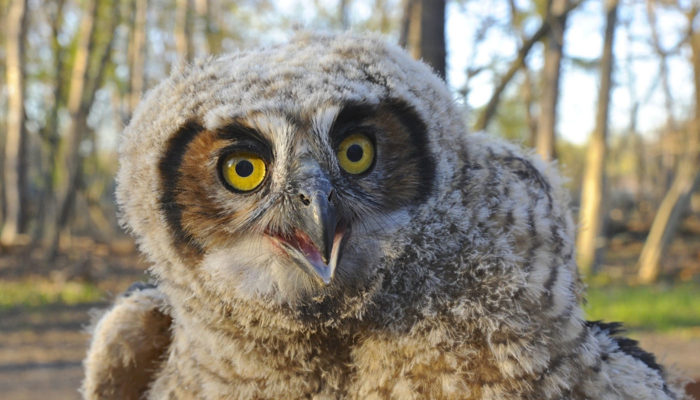
From sparrows to sandhill cranes, Forest Preserves of Cook County biologists safely capture, handle and band an average of 400 birds per year. But what is bird banding and why do we do it?
Explore an interactive map, videos and photos that tell the story of our ongoing research to track zoonotic diseases (illnesses passed between animals and humans), uncover local environmental issues, and measure the success of our restoration efforts—all through the amazing birds that live in and migrate through Cook County.
Research Ideas
Looking for a research idea? Potential questions and topics:
- What are the most effective new chemical treatments of various invasive species?
- Does the full process of brush pile burning or chipping (trucks, chippers, etc.) produce more pollution?
- Is there a correlation between the incidence of prescribed burns and the occurrence of oak wilt disease?
- Is there an increase in insect diversity and plant interactions with prescribed burn practices?
- How do soil biotic elements affect ecosystem management outcomes and health?
- What are the biotic and edaphic factors that enhance a natural community’s resistance to invasive species?
- What is the impact of genetically modifying and mixing native plant communities?
Research Access Permit
Unless otherwise under contract with the Forest Preserves, all research investigations on Forest Preserve property require a Research Access Permit. Research investigations include any monitoring, collecting, testing, study, observation, investigation or other related activity, that benefit the Forest Preserves, public education or the community.
If these stipulations do not apply, or if the proposed activity includes the installation, repair or maintenance of roads, facilities, or structures, a Construction Access Permit will be required. The Research Permit has a maximum term of one year with five additional one year extensions as approved by the Forest Preserves.
- Research Access Permit (PDF)
- Special Access Permit Waiver- Entity (PDF)
- Special Access Permit Waiver- Individual (PDF)
Contact
Department of Resource Management
708-771-1180
ResourceManagement.FPCC@cookcountyil.gov
Peer Reviewed Publications
Bats
- Gehrt, S. D., & Chelsvig, J. E. (2004). “Species-specific patterns of bat activity in an urban landscape.” Ecological Applications.
- Gehrt, S. D., & Chelsvig, J. E. (2003). “Bat activity in an urban landscape: Patterns at the landscape and microhabitat scale.” Ecological Applications.
- White, E. P., & Gehrt, S. D. (2001). “Effects of recording media on echolocation data from broadband bat detectors.” Wildlife Society Bulletin.
Cats
- Gehrt, S. D., Wilson, E. C., Brown, J. L., & Anchor, C. (2013). “Population ecology of free-roaming cats and interference competition by coyotes in urban parks.” PLoS ONE.
Coyotes
- Anchor, C. & Gehrt, S. D. (2024). “Survival of translocated coyotes in the Chicago Metropolitan Area, USA.” Human–Wildlife Interactions.
- Winter, J. M., Anchor, C., Gehrt, S. D., Landolfi, J., & Allender, M. C. (2024). “Serosurvey for Canine Influenza in Coyotes (Canis latrans) in Illinois, USA, 2000–23.” Journal of Wildlife Diseases.
- Robertson, K. E., Ellington, E. H., Tonra, C. M., & Gehrt, S. D. (2023). “Stress in the city? Coyote hair cortisol varies with intrinsic and extrinsic factors within a heavily urbanized landscape.” Science of The Total Environment.
- Worsley-Tonks, K. E. L., Gehrt, S. D., Anchor, C., Escobar, L. E., & Craft, M. E. (2021). “Infection risk varies within urbanized landscapes: the case of coyotes and heartworm.” Parasites & Vectors.
- Wurth, A., Ellington, E. H., & Gehrt, S. D. (2020). “Golf courses as potential habitat for urban coyotes.” Wildlife Society Bulletin.
- Ellington, E. H., & Gehrt, S. D. (2019). “Behavioral responses by an apex predator to urbanization.” Behavioral Ecology.
- Gehrt, S. D., Brown, J. L., & Anchor, C. (2011). “Is the urban coyote a misanthropic synanthrope? The case from Chicago.” Cities and the Environment (CATE).
- Gehrt, S. D., Anchor, C., & White, L. A. (2009). “Home range and landscape use of coyotes in a metropolitan landscape: conflict or coexistence?” Journal of Mammalogy.
- Gehrt, S. D. (2007). “Ecology of coyotes in urban landscapes.” In D. L. Nolte, W. M. Arjo, and D. H. Stalman (Eds.), Proceedings of the 12th Wildlife Damage Management Conference.
- Morey, P. S., Gese, E. M., & Gehrt, S. D. (2007). “Spatial and temporal variation in the diet of coyotes in the Chicago metropolitan area.” American Midland Naturalist.
Disease
- Ready, Z. C., Adamovicz, L., Wellehan, J. F. X., Daleo, M., Simmons, A., Glowacki, G., Graser, W., Anchor, C., Thompson, D., & Allender, M. C. (2025). “Detection of Adenoviruses in Free-Ranging Blanding’s Turtles (Emydoidea blandingii), Painted Turtles (Chrysemys picta), and Red-Eared Sliders (Trachemys scripta elegans) in Illinois, USA.” Journal of Wildlife Diseases.
- Fredrickson, K., Adamovicz, L., Terio, K., Davidson, A., Ryan, M., Waligora, M., Schroder, K., Bradley, S., Lionetto, C., Anderson, K., Engel, A., Graser, W., Anchor, C., Glowacki, G., & Allender, M. C. (2024). “Emydomyces testavorans surveillance in multiple free-ranging terrestrial and aquatic chelonian species in Illinois, USA.” Journal of Wildlife Diseases.
- Worsley-Tonks, K. E. L., Gehrt, S. D., Miller, E. A., Singer, R. S., Bender, J. B., Forester, J. D., McKenzie, S. C., Travis, D. A., Johnson, T. J., & Craft, M. E. (2021). “Comparison of antimicrobial-resistant Escherichia coli isolates from urban raccoons and domestic dogs.” Applied and Environmental Microbiology.
- Imanse, S. M., Anchor, C. L., Anchor, G. C., Landolfi, J. A., Kinsel, M. J., Levengood, J. M., Delaney, M. A., & Terio, K. A. (2021). “Pathologic impacts of contaminants in freshwater fish of Cook County IL.” Aquatic Toxicology.
- Worsley-Tonks, K. E. L., Miller, E. A., Anchor, C. L., Bender, J. B., Gehrt, S. D., McKenzie, S. C., Singer, R. S., Johnson, T. J., & Craft, M. E. (2021). “Importance of anthropogenic sources at shaping the antimicrobial resistance profile of a peri-urban mesocarnivore.” Science of the Total Environment.
- Burrell, C. E., Anchor, C., Ahmed, N., Landolfi, J., Jarosinski, K. W., & Terio, K. A. (2020). “Characterization and Comparison of SLAM/CD150 in Free-Ranging Coyotes, Raccoons, and Skunks in Illinois for Elucidation of Canine Distemper Virus Disease.” Pathogens.
- Hollis-Etter, K. M., Montgomery, R. A., Etter, D. R., Anchor, C. L., Chelsvig, J. E., Warner, R. E., et al. (2019). “Environmental conditions for Jamestown Canyon virus correlated with population-level resource selection by white-tailed deer in a suburban landscape.” PLoS ONE.
- Page, L. K., Delzell, D. A. P., Gehrt, S. D., Harrell, E. D., Hiben, M., Walter, E., Anchor, C., & Kazacos, K. R. (2016). “The structure and seasonality of Baylisascaris procyonis populations in raccoons (Procyon lotor).” Journal of Wildlife Diseases.
- Gehrt, S. D., Kinsel, M. J., & Anchor, C. (2010). “Pathogen dynamics and morbidity of striped skunks in the absence of rabies.” Journal of Wildlife Diseases.
- Page, L. K., Anchor, C., Luy, E., Kron, S., Larson, G., Madsen, L., Kellner, K., & Smyser, T. J. (2009). “Backyard raccoon latrines and risk for Baylisascaris procyonis transmission to humans.” Emerging Infectious Diseases.
- Page, L. K., Gehrt, S. D., Cascione, A., & Kellner, K. F. (2009). “The relationship between Baylisascaris procyonis prevalence and raccoon population structure.” Journal of Parasitology.
- Pinkerton, M. E., Wellehan, J. F. X., Johnson, A. J., Childress, A. L., Fitzgerald, S. D., & Kinsel, M. J. (2008). “Columbid herpesvirus-1 in two Cooper’s Hawks (Accipiter cooperii) with fatal inclusion body disease.” Journal of Wildlife Diseases.
- Page, L. K., Gehrt, S. D., & Robinson, N. P. (2008). “Land-use effects on prevalence of raccoon roundworm (Baylisascaris procyonis).” Journal of Wildlife Diseases.
- Jobe, D. A., Nelson, J. A., Adam, M. D., & Martin, S. A. Jr. (2007). “Lyme disease in urban areas, Chicago.” Emerging Infectious Diseases.
- Jobe, D. A., Lovrich, S. D., Nelson, J. A., Velat, T. C., Anchor, C., Koeune, T., & Martin, S. A. Jr. (2006). “Borrelia burgdorferi in Ixodes scapularis ticks, Chicago area.” Emerging Infectious Diseases.
- Page, L. K., Gehrt, S. D., & Robinson, N. P. (2005). “Measuring prevalence of raccoon roundworm (Baylisascaris procyonis): a comparison of common techniques.” Wildlife Society Bulletin.
- Gehrt, S. D. (2005). “Seasonal survival and cause-specific mortality of urban and rural striped skunks in the absence of rabies.” Journal of Mammalogy.
- Lednicky, J. A., Meehan, T. P., Kinsel, M. J., Dubach, J., Hungerford, L. L., Sarich, N. A., Witecki, K. E., Braid, M. D., & Pedrak, C. (2004). “Effective primary isolation of wild-type Canine distemper virus in MDCK, MV1 Lu and Vero cells without nucleotide sequence changes within the entire haemagglutinin protein gene and in subgenomic sections of the fusion and phospho protein genes.” Journal of Virological Methods.
- CDC (2002). “Raccoon roundworm encephalitis–Chicago, Illinois, and Los Angeles, California 2000.” MMWR Weekly.
- Dubey, J. P., Hollis, K., Romand, S., Thulliez, P., Kwok, O. C. H., Hungerford, L., Anchor, C., & Etter, D. (1999). “High prevalence of antibodies to Neospora caninum in white-tailed deer (Odocoileus virginianus).” International Journal for Parasitology.
- Picken, R. N., Cheng, Y., Han, D., Nelson, J. A., Reddy, A. G., Hayden, M. K., Picken, M. M., Strle, F., Bouseman, J. K., & Trenholme, G. M. (1995). “Genotypic and phenotypic characterization of Borrelia burgdorferi isolated from ticks and small animals in Illinois.” Journal of Clinical Microbiology.
Raccoons
- Page, L. K., Loiacono, A., Edmunds, S., Black, B., Dangoudoubiyam, S., & Anchor, C. (2025). “Sensitivity of Methods to Determine Presence of Baylisascaris procyonis Eggs in Raccoon (Procyon lotor) Feces.” Journal of Wildlife Diseases.
- Jacob, J., Kent, M., Benson-Amram, S., Herculano-Houzel, S., Raghanti, M. A., Ploppert, E., Drake, J., Hindi, B., Natale, N. R., Daniels, S., Fanelli, R., Miller, A., Landis, T., Gilbert, T., Johnson, S., Lai, A., Hyer, M., Rzucidlo, A., Anchor, C., Gehrt, S., & Lambert, K. (2021). “Cytoarchitectural characteristics associated with cognitive flexibility in raccoons.” Journal of Comparative Neurology.
- Graser, W. H., Gehrt, S. D., Hungerford, L. L., & Anchor, C. (2012). “Variations of demographic patterns and population structure of raccoons across the urban landscape.” Journal of Wildlife Management.
- Hauver, S. A., Gehrt, S. D., Prange, S., & Dubach, J. (2010). “Behavioral and genetic aspects of the raccoon mating system.” Journal of Mammalogy.
- Hauver, S. A., Gehrt, S. D., & Prange, S. (2010). “Maternal response to conspecific visits at natal dens in raccoons (Procyon lotor).” American Midland Naturalist.
- Bozek, C. K., Prange, S., & Gehrt, S. D. (2007). “The influence of anthropogenic resources on multi-scale habitat selection by raccoons.” Urban Ecosystems.
- Prange, S., Gehrt, S. D., & Wiggers, E. P. (2004). “Influences of anthropogenic resources on raccoon (Procyon lotor) movements and spatial distribution.” Journal of Mammalogy.
- Prange, S., Gehrt, S. D., & Wiggers, E. P. (2003). “Demographic factors contributing to high raccoon densities in urban landscapes.” Journal of Wildlife Management.
- Gehrt, S. D., Hungerford, L. L., & Hatten, S. H. (2001). “Drug effects on recaptures of raccoons.” Wildlife Society Bulletin.
- Hungerford, L. L., Gehrt, S. D., Anchor, C., Magnarelli, L. A., & Dubey, J. P. (2000). “Prevalence of zoonotic infections in suburban Illinois raccoons (Procyon lotor).”
White-tailed Deer
- Potratz, E. J., Brown, J. S., Gallo, T., Anchor, C., & Santymire, R. M. (2019). “Effects of demography and urbanization on stress and body condition in urban white-tailed deer.” Urban Ecosystems.
- Piccolo, B. P., Van Deelen, T. R., Hollis-Etter, K., Etter, D. R., Warner, R. E., & Anchor, C. (2010). “Behavior and survival of white-tailed deer neonates in two suburban forest preserves.” Canadian Journal of Zoology.
- Etter, D. R., Hollis, K. M., Van Deelen, T. R., Ludwig, D. R., Chelsvig, J. E., & Anchor, C. L. (2002). “Survival and movements of white-tailed deer in suburban Chicago, Illinois.” Journal of Wildlife Management.
- Van Deelen, T. R., Hollis, K. M., Anchor, C., & Etter, D. R. (2000). “Sex affects age determination and wear of molariform teeth in white-tailed deer.” Journal of Wildlife Management.
- Etter, D. R., Van Deelen, T. R., Ludwig, D. R., Hollis, K. M., Warner, R. E., & Chelsvig, J. E. (2000). “Overabundant deer: Better management through research.” Wildlife Damage Management Conference Proceedings.
- Karmen, M., Anchor, C. L., Chelsvig, J. E., Etter, D. R., Dubey, J. P., Warner, R. E., & Hungerford, L. L. (2000). “Radio-telemetry and geographical information systems to assess urban deer zoonoses.” Wildlife Damage Management Conference Proceedings.
- Piccolo, B. P., Van Deelen, T. R., Hollis, K., Etter, D. R., Warner, R. E., & Anchor, C. (2000). “Variation of white-tailed deer home ranges in fragmented urban habitats around Chicago, Illinois.” Wildlife Damage Management Conference Proceedings.
Books
- Gehrt, S. D., & Luft, K. (Eds.) (2024). Coyotes Among Us: Secrets of the City’s Top Predator. Seattle, Washington, USA: Flashpoint.
- Rothrock, P. E. (2021). Sedges of Indiana and the Adjacent States: The Carex Species (Vol. II). Indianapolis, Indiana, USA: Indiana Academy of Science.
- Wilhelm, G., & Rericha, L. (Eds.) (2017). Flora of the Chicago Region: A Floristic and Ecological Synthesis. Indianapolis, Indiana, USA: Indiana Academy of Science.
- Gehrt, S. D., Riley, S. P. D., & Cypher, B. L. (Eds.) (2010). Urban Carnivores: Ecology, Conflict, and Conservation. Baltimore, Maryland, USA: Johns Hopkins University Press.
Other
- Ready, Z. C., Adamovicz, L., Daleo, M., Simmons, A., Glowacki, G., Graser, W., Anchor, C., Thompson, D., & Allender, M. C. (2025). “Epidemiology of Sulawesi Tortoise Adenovirus in Free-living Blanding’s Turtles (Emydoidea blandingii), Painted Turtles (Chrysemys picta), and Red-eared Sliders (Trachemys scripta elegans) in Illinois, USA.” Journal of Wildlife Diseases.
- King, R., Anchor, C., Anthonysamy, W. J. B., Denham, S., Dreslik, M., Dunham, N., Glowacki, G., Golba, C. K., Graser, W., Jablonski, C., Janzen, F., Kessler, E. J., Kuhns, A. R., Ludwig, D. R., McCabe, K., Phillips, C., Thompson, D., & Towey, J. B. (2025). “Archival data reveals human impacts on Blanding’s turtle population persistence.” Journal for Nature Conservation.
- Landolfi, J. A., Kinsel, M. J., Anchor, G., Feldmann, M., & Anchor, C. (2024). “Parasitism and branchitis in various fish species from 4 Cook County, Illinois inland freshwater lakes, 5 year survey, 2017-2021.” Journal of Veterinary Diagnosis.
- King, R., Anchor, C., Jablonski, C., Jaeger, C., Ludwig, D., Roloff, A., & Thompson, D. (2023). “An ad hoc assessment of Blanding’s turtle translocation success.” Herpetological Review.
- Dosmann, M. S., & Thomas, E. (2023). “A certain type of place.” Arnoldia.
- Rericha-Anchor, L. (2022). “A diagnostic key to ants ecologically affiliated with the genus Carex.” Proceedings of the Indiana Academy of Science.
- Vitt, P., Finch, J., Barak, R. S., Braum, A., Frischie, S., & Redlinski, I. (2022). “Seed sourcing strategies for ecological restoration under climate change: A review of the current literature.” Frontiers in Conservation Science.
- Guilfoyle, M. P., Farrington, H. L., Lance, R. F., Hanson-Dorr, K. C., Dorr, B. S., & Fischer, R. A. (2017). “Movement of Hypophthalmichthys DNA in the Illinois River Watershed by the Double-Crested Cormorant (Phalacrocorax auritus).” Waterbirds.
- Thieme, J. L., Rodewald, A. D., Brown, J., Anchor, C., & Gehrt, S. D. (2015). “Linking grassland and early successional bird territory density to predator activity in urban parks.” Natural Areas Journal.
- Engeman, R. M., Guerrant, T., Dunn, G., Beckerman, S. F., & Anchor, C. (2014). “Benefits to rare plants and highway safety from annual population reductions of a ‘native invader’, white-tailed deer in a Chicago-area woodland.” Environmental Science and Pollution Research.
- Kilbourne, B. M., & Hoffman, L. C. (2013). “Scale effects between body size and limb design in quadrupedal mammals.” PLoS ONE.
- Prange, S., & Gehrt, S. D. (2007). “Response of skunks to a simulated increase in coyote activity.” Journal of Mammalogy.
- Gehrt, S. D., & Prange, S. (2007). “Interference competition between coyotes and raccoons: A test of the mesopredator release hypothesis.” Behavioral Ecology.
- Prange, S., Jordan, T., Hunter, C., & Gehrt, S. D. (2006). “New radiocollars for the detection of proximity among individuals.” Wildlife Society Bulletin.
- Prange, S., & Gehrt, S. D. (2004). “Changes in mesopredator-community structure in response to urbanization.” Canadian Journal of Zoology.
- Gehrt, S. D., & Clark, W. R. (2003). “Raccoons, coyotes, and reflections on the mesopredator release hypothesis.” Wildlife Society Bulletin.
