
In the media
Example hero paragraph text.
The Ira A. Fulton Schools of Engineering are frequently featured in news outlets for our research, community impact and expert commentary. Below you’ll find a collection of our latest media mentions. Use the filters to search the archive by month, publication, topic or featured people.

Scholarship celebrates 25 years of overcoming barriers to higher education
Eric Davis is among those who have demonstrated that the ASU Nina Mason Pulliam Legacy Scholars program provides a clear path to career readiness. The scholarship offers years of need-based funding, staff support, mentorship and exclusive curriculum. Davis entered the foster care system at age 5. Later the directors of a group home in which he lived urged him to attend an event about the Pulliam program and apply for a scholarship. He went on to graduate from the Fulton Schools with an engineering management bachelor’s degree and a master’s degree in industrial engineering. He recently completed officer’s training school through the Virginia National Guard and now provides management for government projects.
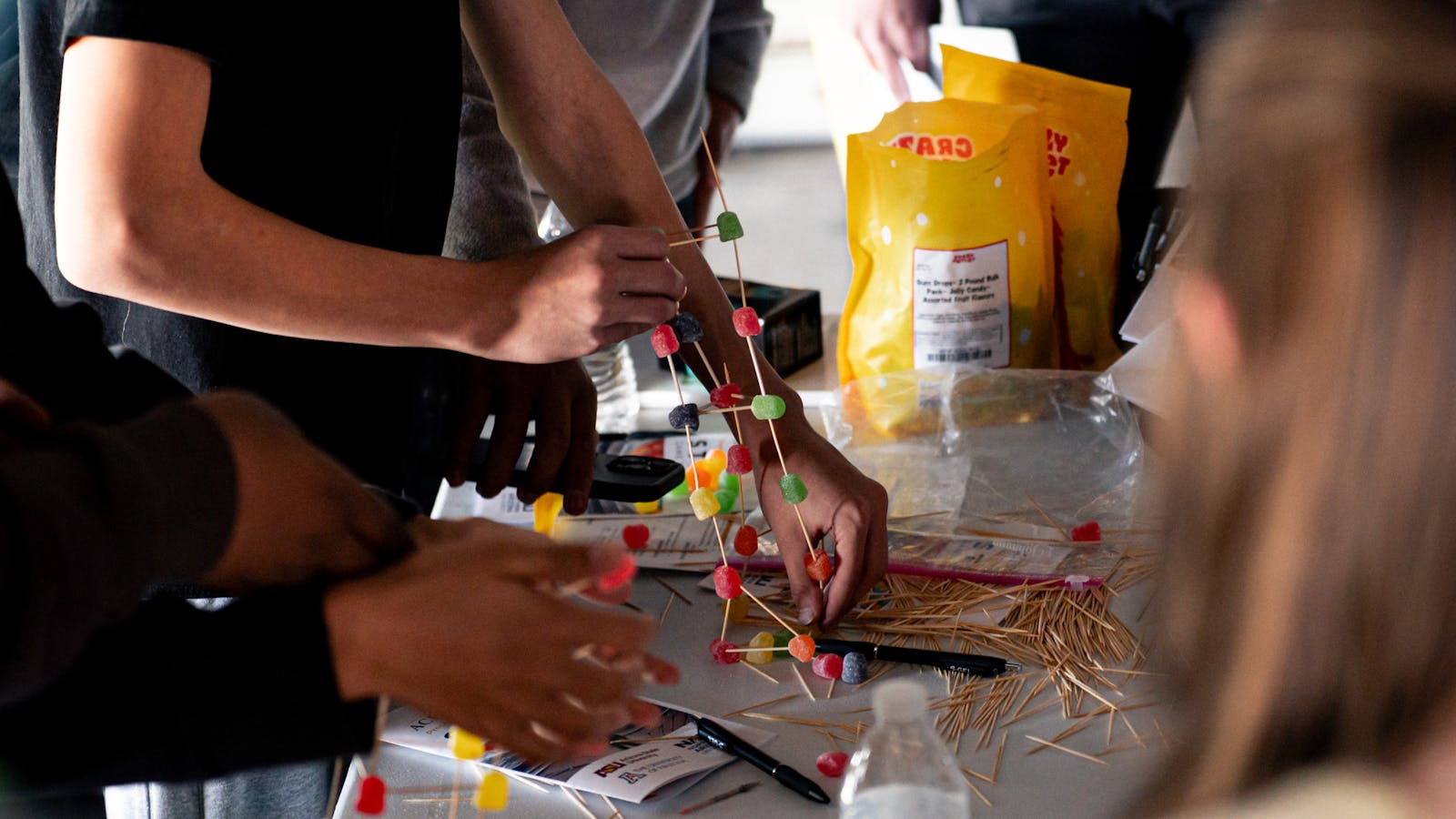
‘Game Day’ At ASU Helps Introduce Local Arizona Schools To Engineering And STEM Careers
ASU’s football stadium was nearly packed recently with about 600 young students from local Arizona schools and 160 volunteers for the fourth annual STEM “Game Day” event. The focus was on introducing middle school students to engineering — including how engineers play a role in putting on big events like ASU Sun Devil game days. Fulton Schools civil engineering graduate Zachary Lambros, who led the event hosted by the American Council of Engineering Companies of Arizona, said the gathering was about a shortage of engineers and showing youngsters a career in the field is attainable. Among volunteers for the event was Esther Law, a Fulton Schools biomedical engineering student, who noted that an introduction to STEM fields at a young age led to her passion for engineering.
ASU’s AAIR Lab Increases Autonomous Robot Reasoning
Making autonomous systems more capable, more trustworthy and better able to cooperate with humans efficiently and safely in everyday environments is the goal of research led by Siddharth Srivastava, a professor the School of Computing and Augmented Intelligence, part of the Fulton Schools. A major thrust of the work in his Autonomous Agents and Intelligent Robots laboratory involves expanding the abilities of AI systems, including robots and digital assistants, to reuse knowledge to complete various tasks, rather than having to relearn knowledge for each individual task. That’s part of a broader endeavor to develop autonomous AI systems capable of performing tasks reliably and safely in real-world settings. Undergraduate, master’s and doctoral students are involved in the work.

ASU researchers are working on VR glasses that walk users through medical procedures in real time
In a NASA funded project led by Pooyan Fazli, an assistant professor in The GAME School, and Hasti Seifi, an assistant professor in the School of Computing and Augmented Intelligence, part of the Fulton Schools, involves development of augmented reality glasses to enable people to see the details of various medical procedures in real time. The technology could be especially useful to people in rural areas, other remote areas and even in space. Fazli and Seifi are working with ASU’s nursing school to develop the technology through the use of medical manikins. They hope to also collaborate with community health centers and hospitals as their work progresses. They foresee the technology enabling family caregivers and others to help people when professional medical care is not readily accessible.

The intelligence revolution: Insurance in the fourth industrial era
Presenters at a recent Microsoft AI Skills Fest reported that a large percentage of organizations today are not confident that they are able to adequately detect or prevent loss of their sensitive data. In addition, most corporate data collections remain unclassified, ungoverned and unprotected. As a result, corporations and institutions are accelerating their adoption of AI to strengthen defenses against data breaches. Hasan Davulcu, a professor in the School of Computing and Augmented Intelligence, part of the Fulton Schools, who teaches AI governance, explainable AI and the responsible deployment of intelligent systems, offers potential solutions to various aspects of the situation.

Engineering-driven startups at ASU advance biomedical innovation
Among the new generation of biomedical entrepreneurs applying recent research discoveries to developing new technologies to improve human health is Jessica Weaver, an associate professor in the School of Biological and Health Systems Engineering, part of the Fulton Schools. She is advancing cell therapy innovation through her startup, ImmunoShield Therapeutics, a company that is developing a hydrogel-based cell-encapsulation platform designed to protect transplanted therapeutic cells from being rejected by the human immune system. Weaver is being assisted by Fulton Schools biomedical engineering postdoctoral researcher Matthew Becker. Collaborations with ASU’s Skysong Innovations and the Fulton Schools’ Venture Devils program are helping to navigate early-stage development and patenting of the technologies.
See also: Engineering-driven startups at ASU advance biomedical innovation, News Medical
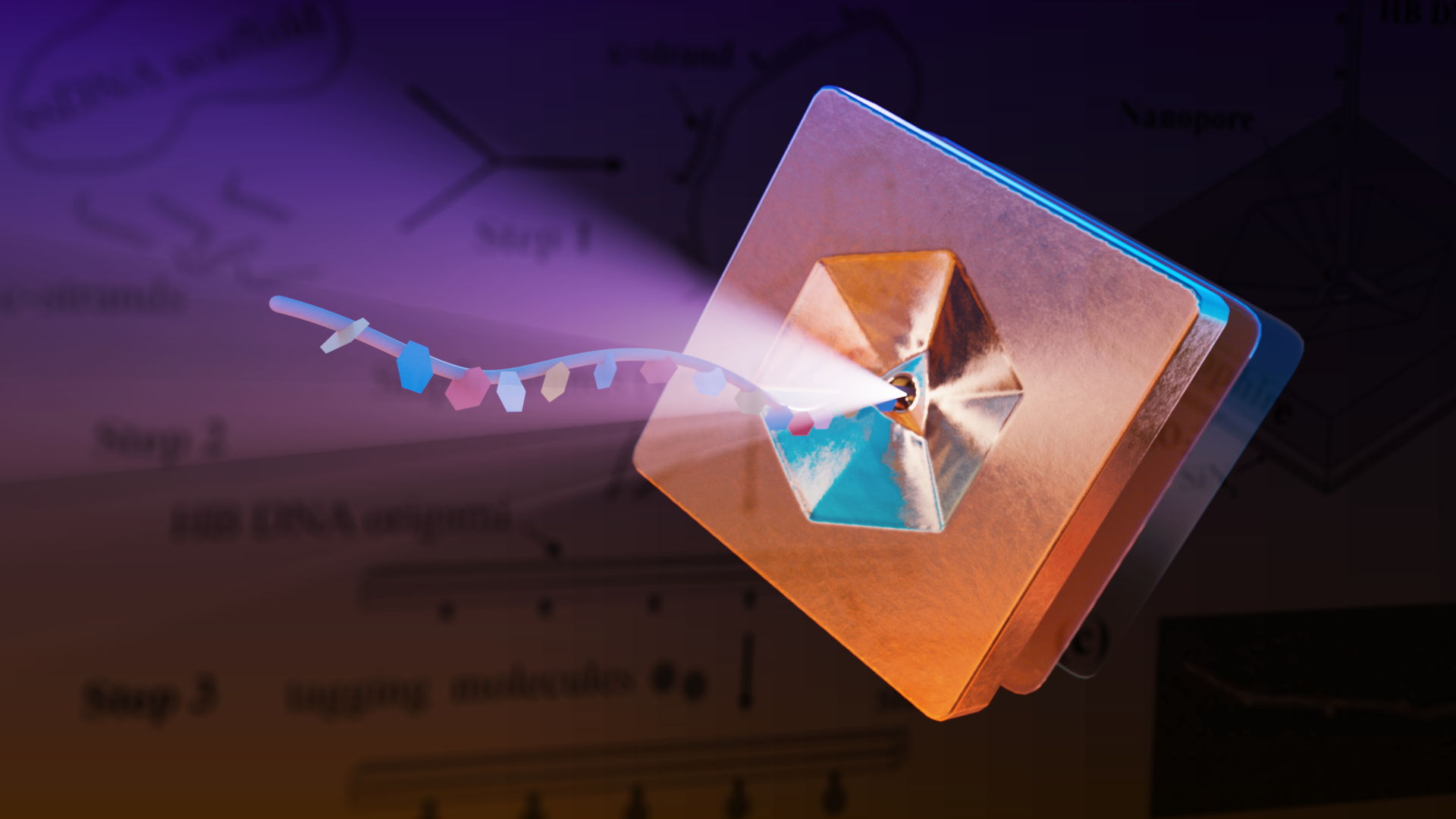
DNA provides a solution to our enormous data storage problem
ASU researchers are exploring the use of DNA nanostructures as carriers of digital information as a way to improve the storage of increasingly accumulating data and to help secure the information from unintended access. Chao Wang, an associate professor in the ASU’s School of Electrical, Computer and Energy Engineering, part of the Fulton Schools, is among leaders of the effort. Wang explains how the project brings together DNA nanotechnology, super-resolution optical imaging, high-speed electronic readouts and machine learning to better understand the function of DNA nanostructures. Wang says the work also brings together semiconductor technology and biology for applications of advanced biosensing in programmable nanodevices.

These ASU professors have a plan to reuse salty wastewater in Arizona — and save money
Facing drought conditions and a decrease in allocation of water from the Colorado River, Arizonans are being challenged to find ways to effectively boost water conservation. Among those exploring solutions are Associate Professor Tiezcheng Tong and Associate Research Professor Shahnawaz Sinha in the School of Sustainable Engineering and the Built Environment, part of the Fulton Schools. They are pursuing possibilities for treating briny wastewater produced by manufacturing and industrial processes in ways that will remove salt, making it suitable for a variety of uses. One system being developed would turn the brine into fresh water while also reducing water pollution and extracting usable salt. The system would also be mobile.
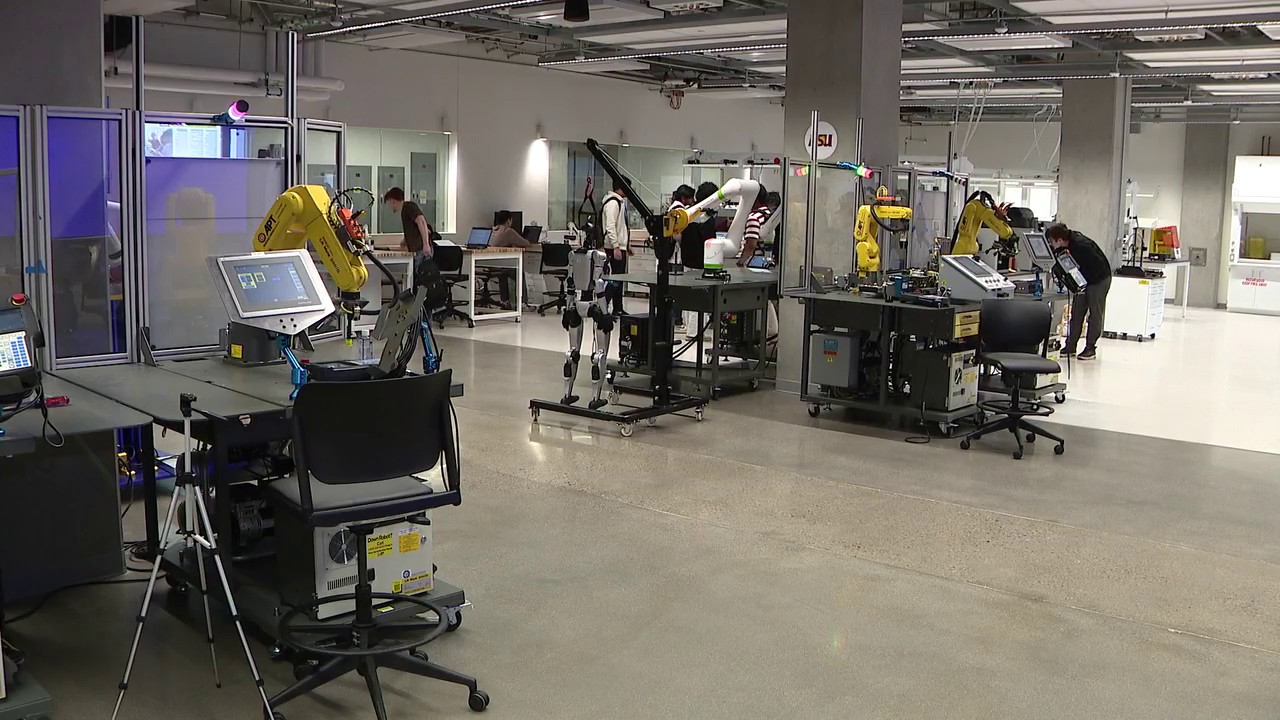
An inside look at ASU’s newest research facility
ASU has expanded its research facilities with the opening of a new interdisciplinary science and technology center for research and education that is part of the School School of Manufacturing Systems and Networks, part of the Fulton Schools.The center offers advanced manufacturing facilities and state-of-the-art equipment for hands-on training in manufacturing engineering, robotics engineering, and related areas. Students benefit from practical experience with industrial robots and technologies widely used in manufacturing operations. The facilities enable hands-on training that helps to provide students theoretical knowledge as well as experience in the use of industry-standard equipment, preparing them to become qualified for employment in manufacturing and robotics industries.

ASU Online earns 25 top 10 rankings in latest US News & World Report
That stature of some of ASU’s online bachelor’s and master’s degree programs as among the best in the U.S. was bolstered by inclusion of several Fulton Schools programs in rankings by the US News & World Report national magazine. Those included the first-ever appearance in the rankings of the master’s degree program in information technology. Fulton Schools online engineering programs ranked at 16th overall, with electrical engineering and engineering management programs ranking second in the nation and industrial engineering ranking third, ahead of similar programs at some of the most prestigious universities in the country.

These planes with lasers will measure snow from Arizona skies
Snow from Arizona’s high-altitude mountain ranges that melts into rivers and reservoirs when temperatures heat up in the spring is an important part of state’s water supply. To get a more accurate forecast of how much water can be expected from the seasonal runoffs into the southern part of the state, airplanes equipped with high-tech sensors that can measure snow with high accuracy are being deployed. The effort is a collaboration between a company that operates data-gathering aircraft and ASU experts, including Enrique Vivoni, Fulton Professor of Hydrosystems Engineering in the School of Sustainable Engineering and the Built Environment, part of the Fulton Schools. Vivoni says data now being gathered will be used to help train computer programs to make better-informed water forecasts in the future.
See also: High-tech planes gather crucial snowpack data to help SRP manage Valley water supply KTAR News
ASU and SRP snowpack study begins, Arizona PBS
ASU, SRP project takes flight to improve water supply forecasting, ASU News

ASU Adds A New Student Fee For ‘Advanced Technology’
ASU plans to add Advanced Technology fees for students starting next fall. It will help pay for artificial intelligence tools and related systems and digital experiences to help advance students’ education in the skills necessary for them to work in many of today’s evolving major industries. Kasim Selcuk Candan, a professor at the School of Computing and Augmented Intelligence, part of the Fulton Schools, notes that these new technologies will provide students access to educational resources that can adapt to their individual learning styles. Most importantly, these efforts are seen as a way ASU can help fulfill its responsibility to prepare students for the world of the future.

Coaxing water from air could stretch resources, ASU researcher says
Experts are touting the air around us as a promising source of the additional supply of water the world increasingly needs. At the recent International Atmospheric Water Harvesting Summit at ASU, Paul Westerhoff, a professor in the School of Sustainable Engineering and the Built Environment, part of the Fulton Schools, pointed to the sky as a place from which to harvest water to drink. Both researchers and entrepreneurs discussed possibilities of “drinking from the air” to provide water for people, for agriculture and military forces. Westerhoff and others point to the possibilities of creating water on demand around the world and enjoying water without threatening contaminants often found in ground water.

An A.I. Pioneer Warns the Tech ‘Herd’ Is Marching Into a Dead End
A prominent computer scientist recognized as a leading artificial intelligence expert who helped to develop technology to create chatbots says many tech companies are on a disturbing path to creating more intelligent machines. Yan LeCun contends today’s A.I. systems are making more mistakes as they are used to take on more complex tasks. Subbarao Kambhampati, a professor in the School of Computing and Augmented Intelligence, part of the Fulton Schools, agrees today’s A.I. technologies don’t always provide a path to true intelligence, but says they are still useful in many positive ways, though he adds that producers and users of A.I. systems must be vigilant about the potential shortcomings of these technologies.
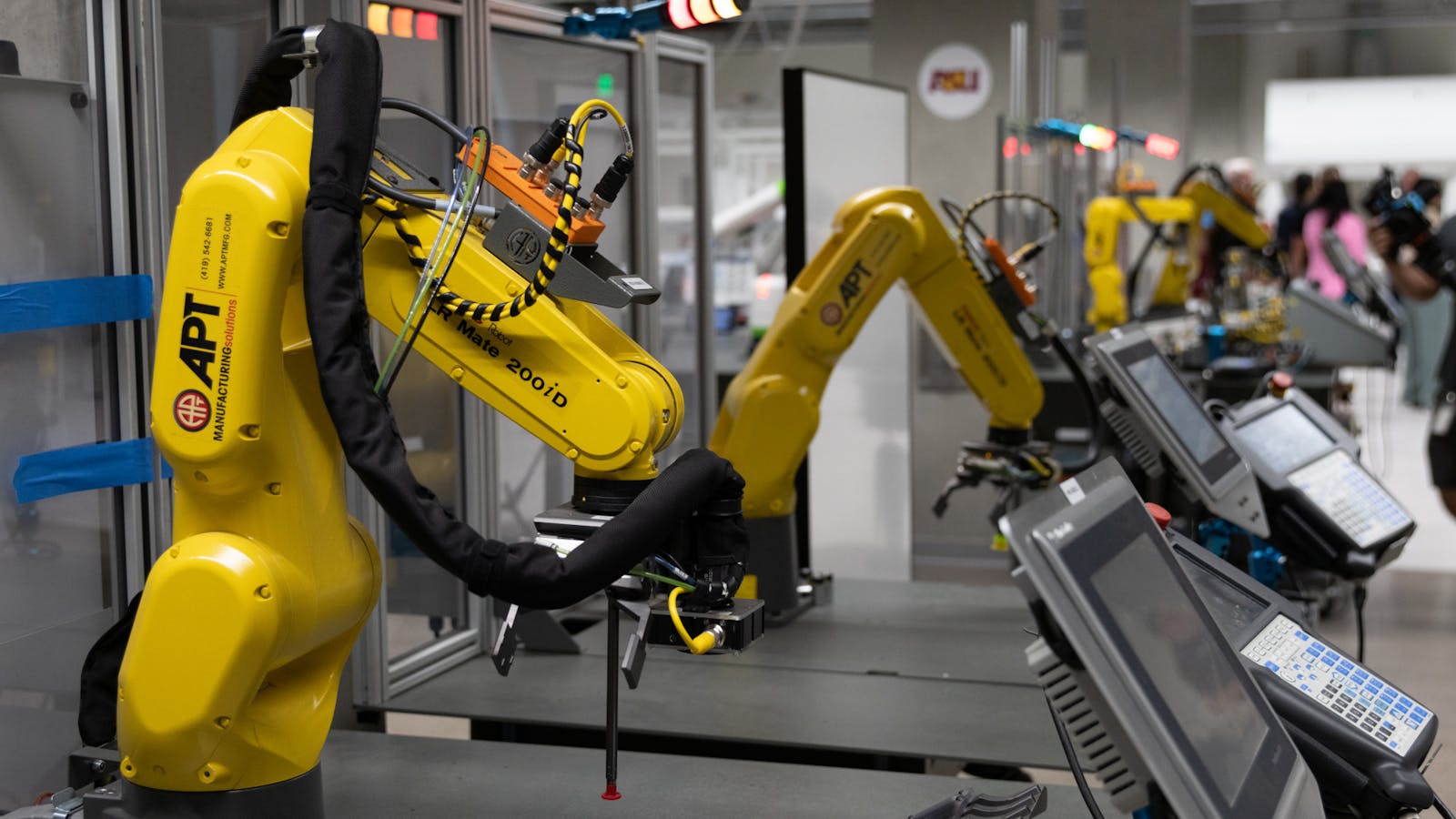
Los Alamos National Laboratory Supports ASU Student Research
Students in the School of Manufacturing Systems and Networks, part of the Fulton Schools, are working with the Los Alamos National Laboratory through a partnership that is enabling them and other ASU engineering students to engage in research on national projects. Students’ work is supporting the national laboratory’s evolving progress in manufacturing and materials processing pursuits. They’re also participating in production of materials for nuclear reactor energy and medical applications. Students majoring in computer science, electrical systems engineering and other engineering fields also say the hands-on experiences are clearly enhancing both their education and research skills.
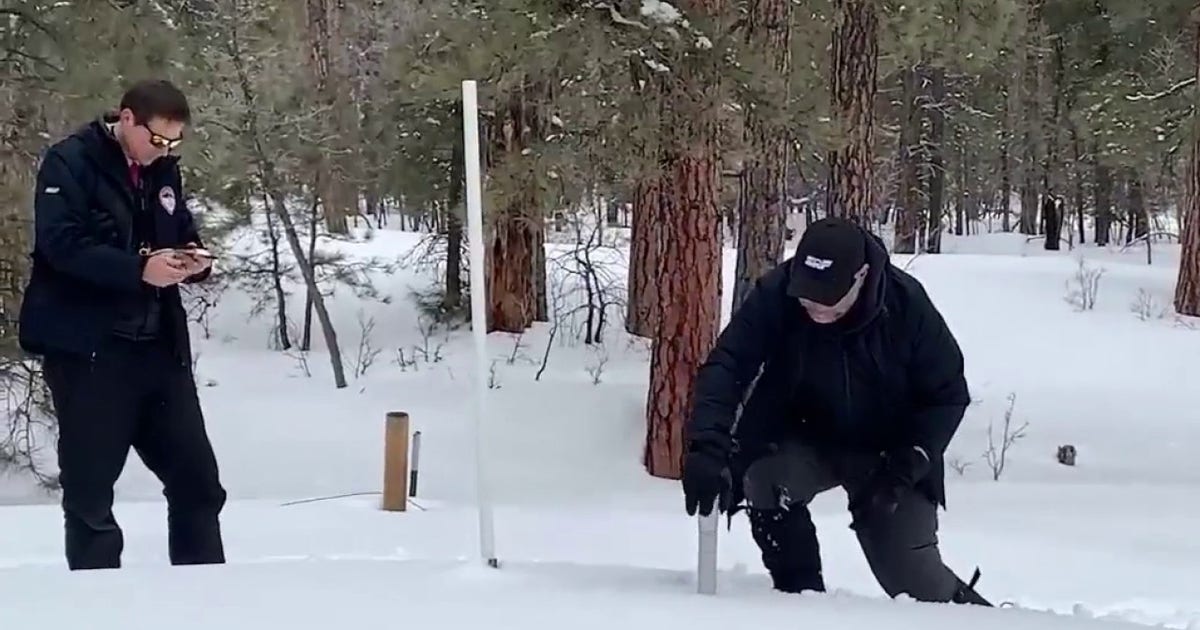
New aerial technology aims to predict water management in Phoenix area
ASU and the Salt River Project utility company are partnering to use NASA-developed aircraft technology to measure mountain snowpacks in a project aimed at gathering data to aid efforts to improve water management in the greater Phoenix area. Enrique Vivoni, a professor in the School of Sustainable Engineering and the Built Environment, part of the Fulton Schools, is involved in the project to improve predictions about the water coming into reservoirs, which will help officials manage water use more effectively. Other ASU researchers, as well as students, will contribute by analyzing results of the snow mapping enabled by the aircraft.
See also: ASU, SRP project takes flight to improve water supply forecasting, ASU News and in AZ Big Media.

Company launched by ASU alums develops AI robots to help with farmwork
Raghu Nandivada’s, who earned a master’s degree in electrical engineering from the Fulton Schools, has started the company called Padma Agrobotics. The company is working with farmers to bring technology powered by artificial intelligence, or AI, into agricultural operations. The president of the Arizona Farm Bureau reports the agriculture community is embracing the new automation. One of the robots acts as a mobile scarecrow. Other machines pull weeds from the ground with their mechanical arms. The technology is helping farmers cope with labor shortages and higher expenses. Read more in a post on this page dated January 8 linking to an article on ASU News and other news sites.

Silver just solved a major solid-state battery problem
Researchers have discovered that a nanoscale silver treatment can significantly strengthen the cores of solid-state batteries, reducing the tendency of the batteries to crack over time and subsequently fail to operate. The research leading to the advancement was directed at Stanford University by Xin Xu, now an assistant professor in The Polytechnic School, part of the Fulton Schools. By showing ultrathin surface coatings can make electrolytes less brittle and more stable under extreme electrochemical and mechanical conditions, the treatment technique could help to produce durable, failure-resistant solid electrolytes for the next generation of energy storage technologies, Xu says.
See also: New protective layer boosts lithium metal battery performance, Battery News
Thin Layer of Silver Could Save Li Batteries from Failure, AZO Materials
A Simple Silver Fix May Finally Stop Solid-State Batteries From Cracking, Sci Tech Daily

From lab to startup: ASU researchers drive health innovation
ASU engineering students are being trained to also be entrepreneurs, says biomedical engineer David Brafman, associate director of academic excellence in the School of Biological and Health Systems Engineering, part of the Fulton Schools. Those students have an example to follow in Jessica Weaver, an associate professor in the school whose startup venture is contributing to a growing wave of engineering-driven health care innovations. Her company, ImmunoShield Therapeutics, is developing technology to avoid the immune system from rejecting transplanted therapeutics cells. The venture is among others giving graduate and undergraduate students opportunities to work with faculty members on research to develop promising health care and medical advances.

Democratizing health care: There’s an app for that
A device created by the late Nongjian Tao, an electrical engineering professor in the Fulton Schools and former director of ASU’s Center for Bioelectronics and Biosensors, spurred more extensive research that enabled the use of molecular electronics, nanoelectronics, chemical and biological sensors, and wireless devices to monitor human health. Erika Forzani, a research professor in the School for Engineering of Matter, Transport and Energy, part of the Fulton Schools, worked with Tao to develop the Mindset Medical app. The device has made remote sensing easier, enabling people to monitor and measure their vital signs on a mobile device. Forzani notes Tao’s creativity in adapting modern technological advances to help pave the way for mobile health care.
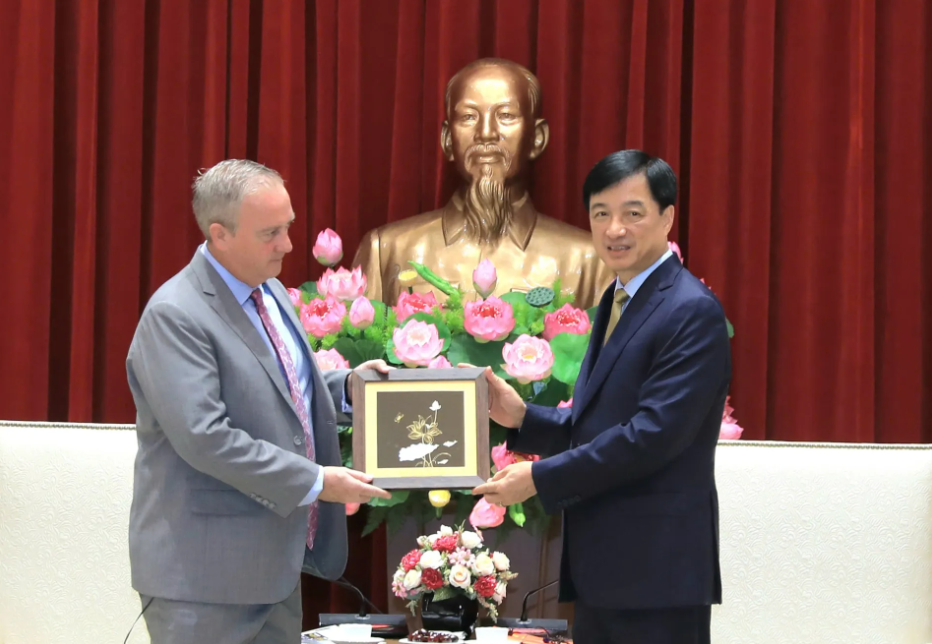
Hanoi ramps up global engagement in semiconductor sector
Jeffrey Goss, executive director of the Fulton Schools’ Office of Global Partnerships and Extended Education, is helping to strengthen ASU’s international connections to leaders in Vietnam. Such efforts are also aiding the U.S. overall in developing more productive partnerships with the southeast Asian country, which will also help both ASU and the U.S. benefit from a stronger role in the continuing growth of the robust international semiconductor industry. Goss sees involvement in Vietnam’s growing efforts to train its workforce, promote research and strengthen its national intellectual capacity in the semiconductor sector also bolstering ASU’s stature as an institution with a significant and positive international impact.
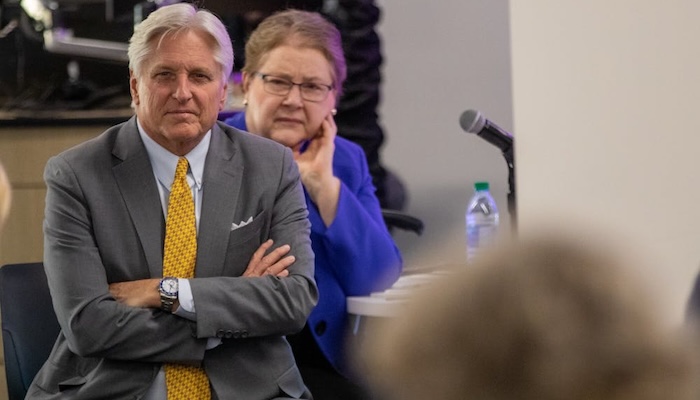
Arizona Board of Regents Grant Invests In Research with Defense, Commercial Uses
Arizona Board of Regents Grant Invests In Research with Defense, Commercial Uses
Faculty: Saeed Zeinolabedinzadeh (ECEE) Ayan Mallik (PTS-Polytechnic School)
Funding for research at ASU that is expected to provide technological advances designed to benefit U.S. national defense endeavors will support the work of two Fulton Schools’ faculty members. Ayan Mallik, a professor at The Polytechnic School is developing a more efficient and quickly acting drone charging system that will operate more efficiently and keeps drones airborne for longer periods of time. Saeed Zeinolabedinzadeh, a professor at ASU’s School of Electrical, Computer and Energy Engineering, will develop more precise positioning, navigation and timing systems that operate where global positioning and navigation system cannot.

ASU construction projects expand learning, living and research spaces
New construction and enhancements of exisiting facilities in the recent year continue shape ASU’s built environment in ways that support the university’s learning, research and community engagement aspirations. Among projects that most extensively reflect those objectives is the Interdisciplinary Science and Technology Building, or ISTB 12, on ASU’s Polytechnic campus. The building is home to the School of Manufacturing Systems and Networks, part of the Fulton Schools, and serves as the hub for robotics, manufacturing and engineering education at ASU. ISTB12 now supports more than 100 classes and 10,000 student users each year in an environment designed to cultivate collaboration among students, faculty and industry partners.

Farming robots tackle labor shortages using AI
A challenge from his mother to make a robot that could remove weeds to help his family of farmers boost their harvests sparked Raghu Nandivada’s interest in engineering education. Only a little more than half a decade later, Nandivada was earning a master’s degree in electrical engineering from the Fulton Schools and going to work in the semiconductor industry. He went on to start the Padma AgRobotics company that today is developing smart products for agriculture and helping to advance the industry with innovative robotic tools and the use of artificial intelligence. Agricultural automation is helping farmers stay in business today as U.S. farm owners are struggling to retain workers. The article is also posted on Farms.com and on the Precision Farming Dealer website.

A new heart
In an article also featured in a recent edition of ASU Thrive magazine, the contributions of Medhi Nikkhah, a professor in the School of Biological and Health Systems Engineering , and Justin Ryan, a recent Fulton Schools biomedical engineering doctoral graduate, are noted in the development of a breakthrough that aids the work of surgeons using 3D printed heart models. For more than a decade, Nikkhah has been working on cardiac regeneration and disease modeling to develop engineered heart tissues that can help repair damage from heart attacks. Ryan, now leading the 3D Innovations Lab at Rady Children’s Hospital in San Diego, says the breakthrough enables physicians to essentially hold patients’ heart in their hand before operating.

Chandler removes interim tag for Public Works/Utilities director
Jeremy Abbott, who earned a master’s degree from the Fulton Schools in environmental and resource management with a concentration on water resources, is the new director of Public Works and Utilities for the city of Chandler. He comes to the job with more than 25 years of experience in municipal leadership, civil engineering and water resources management, having also earned the stature of registered professional engineer, certified water and wastewater operator and a certified public manager. Previously, Abbot earned a degree in environmental engineering and public affairs and later was Chandler’s assistant public works and water resources director, overseeing more than 300 employees and optimizing a $1.4 billion water and wastewater infrastructure capital improvement program.

ASU annual research funding reaches $1 billion mark for 1st time
Over the past year ASU continued on a path that has helped it achieve an all-time high of $1 billion in research funding for the 2024 fiscal year. That pace has now placed the university at 37th nationwide among all research institutions and 21st among public universities. The boost in national research institution rankings is due to a significant degree to ASU having recently placed first nationwide for engineering research expenditures, putting it ahead of ahead of the University of Pennsylvania, Harvard, the University of Wisconsin-Madison and the University of Arizona. Overall, ASU has for the first time surpassed $1 billion in annual research funding and ranks sixth in industrial and manufacturing engineering research expenditures as well as in civil engineering research expenditures.
See also: Research expenditures ranking underscores ASU’s dramatic growth in high-impact science, ASU News
Arizona State University Surpasses $1 Billion In Research Spending, Cementing Its Role As A National Science Leader, The Ritz Herald (RH Newsroom)

How Arizona is cultivating talent for a US chip revival
The Arizona Commerce Authority reports that at least 25,000 new jobs will be created by the expanding semiconductor manufacturing operations in the state. Intel and TSMC have built two of the world’s largest semiconductor chipmaking operations in Arizona, which have drawn more than $200 billion in investments from major chipmakers and suppliers. Kyle Squires, dean of the Fulton Schools, comments on how ASU’s educational offerings in the high-tech realm are contributing to supporting workforce development and production of talent that are essential to the growth and success of these major chip manufacturers. The Fulton Schools is also providing companies a source for recruitment of skilled international students.

Strengthening Asphalt Roads With a Unique Green Ingredient: Algaes
Led by Elham Fini, an associate professor in the School of Sustainable Engineering and the Built Environment, part of the Fulton Schools, a research team is developing an algae-based asphalt binder to make roads more durable in cold climates. The binder can help protect drivers and pedestrians from the potential hazards that arise when ice and snow damaged paved surfaces. The algae-derived compounds show promise for improving moisture resistance and enabling self-healing in asphalt, potentially extending pavement life and creating more sustainable, resilient and environmentally responsive roadways.

Fast Food With Most Plastic Chemicals Revealed
PlasticList, a database showing many popular highly processed food items sold at major dining chains in the U.S. contain high levels of chemicals commonly found in products that have contact with plastics during production, packaging or delivering processes. Studies show chemical in these plastics can leach into food products and cause harm to human health. Rolf Halden, a professor in the School of Sustainable Engineering and the Built Environment, part of the Fulton Schools, and the director of ASU’s Biodesign Center for Environmental Health Engineering, is among experts warning of an array of harmful impacts these plastics can have on the health of humans and animals.

ASU engineering graduate aims for clean water equity
Having recently been awarded a bachelor’s degree in environmental engineering through the School of Sustainable Engineering and the Built Environment, part of Fulton Schools, Kavya Walia now aims to earn a graduate degree in the field through the Fulton Schools’ accelerated master’s program in environmental engineering and deepen her focus on water quality and environmental remediation. Her undergraduate education included an internship involving work on water treatment system projects. She hopes to work in consulting and remediation and pursue efforts to expand clean water access in low-income communities. Walia credits her undergraduate experiences for giving her the confidence and connections needed to excel in her profession.

Goodbye to potholes: bio-oil technology increases asphalt recovery by 70% and reduces global dependence on oil.
Researchers are developing new ways to make paving materials such as asphalt more resilient and less detrimental to the environment. Among them is Elham Fini, an associate professor in the School of Sustainable Engineering and the Built Environment, part of the Fulton Schools. Fini’s work is contributing to efforts to reduce global dependence on oil for the production of essential road materials. Her team is also developing materials to improve moisture resistance, provide more elasticity and self-repair to extend the time pavement can maintain structural toughness. Among solutions is an asphalt reinforced with microalgae oil that significantly reduces pavement deformation in extreme cold and decreases harmful emissions.
See also: Strengthening asphalt roads with a unique green ingredient, the microbiologist
Algae-based asphalt binder strengthens roads for cold climates, PHYS.ORG

ASU Regents Professor Alexandra Navrotsky receives honorary doctorate from ETH Zurich
One of the world’s leading universities for science and engineering education and research , ETH Zurich, in Switzerland, has recognized ASU Regents Professor Alexandra Navrotsky for innovative and impactful contributions to materials science and geophysics research. As a professor in the School for Engineering of Matter, Transport and Energy, part of the Fulton Schools, and in ASU’s School of Molecular Sciences, Navrotsky has helped to drive progress that has had many beneficial impacts. Her research is credited for important insights into how materials store and release energy and behave under extreme conditions and how those properties can be applied to challenges in energy, Earth and planetary sciences, and advanced materials design.

School of Computing And Augmented Intelligence Announces Doctoral Degree In AI
Students will learn from leading scientists and engineers with expertise in data science, analytics, cognition, reasoning, perception, decision making, statistical learning and related areas in a new artificial intelligence, or AI, doctoral degree program in the School of Computing and Augmented Intelligence, part of the Fulton Schools. School Director and Professor Ross Maciejewski details what the program will offer to provide not only knowledge about AI and the skills to use it productively but also to prepare students to perform research to advance AI. Professor Siddharth Srivastava, chair for the AI program’s doctoral and master’s degree programs, says the goal is to equip students with the expertise to develop the next generation of more reliable, resilient, effective AI technology.

Student teams create AI tools to help neurodivergent learners
Four Fulton Schools students make up one of only two ASU student teams selected to compete in the Global AI Challenge after being finalists in the Arizona AI Challenge. Team captain Stevie Cervantes is a computer systems engineering student and members Chandler Farrington, Journey Hancock and Dvir Hamu are computer science students in the School of Computing and Augmented Intelligence, part of the Fulton Schools. Their team was one of 20 participating in the Arizona AI Challenge, in which students developed AI-enabled tools to help people with neurodiversity. The team, named Capstone because they competed while working on their engineering capstone projects, is refining their AI assistant in an effort to win seed funding at the upcoming Global AI Challenge.
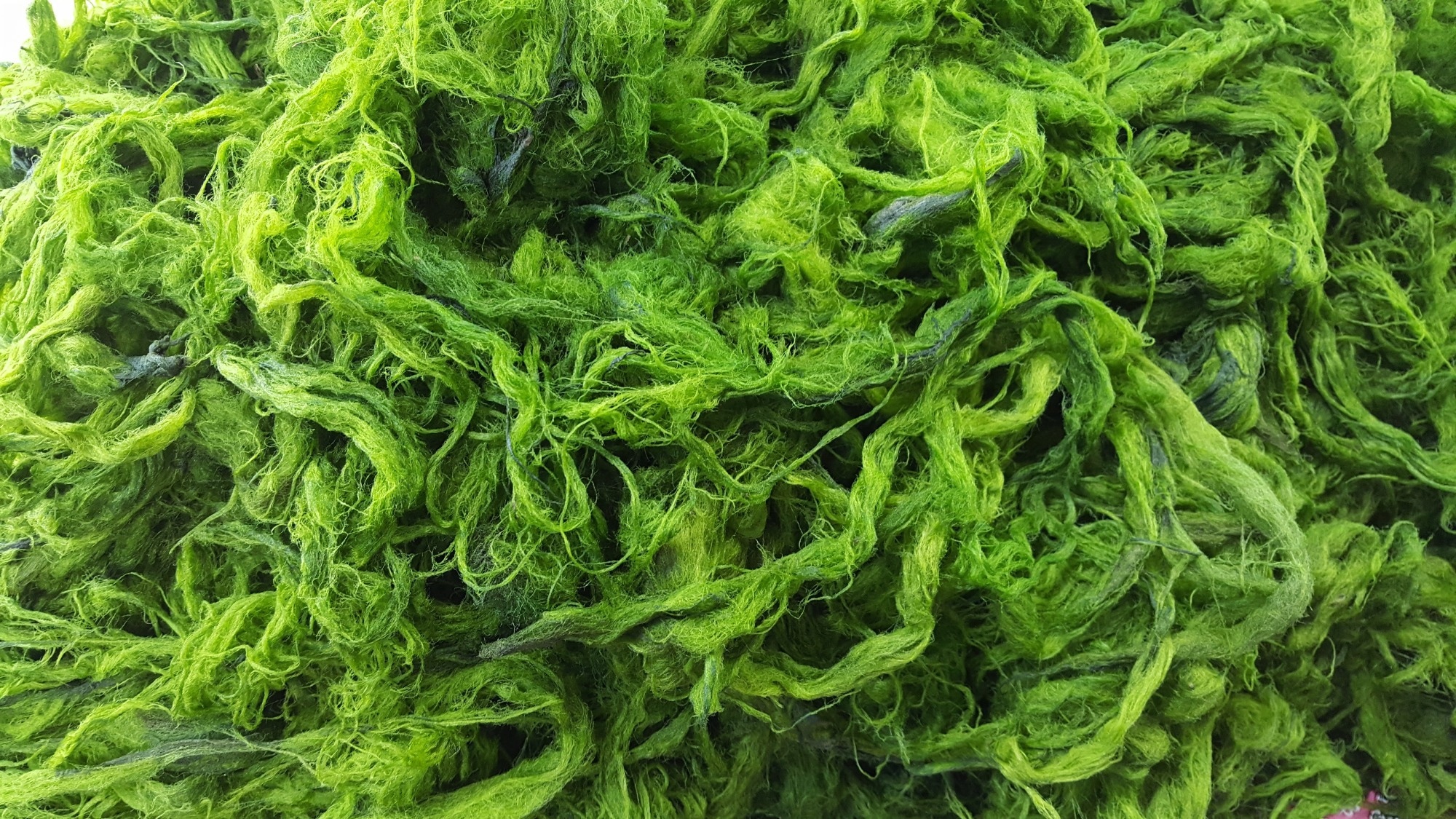
Researchers Develop Algae-Based Binder to Boost Asphalt Durability in Cold Climates
A recently developed bio-based asphalt binder made from algae boosts the durability of pavement in freezing weather and at the same time reduces hazardous carbon emissions. The binder is the work of a research team led by Elham Fini, an associate professor a professor in the School of Sustainable Engineering and the Built Environment, part of the Fulton Schools. Guided by Fini’s expertise in bio-based and bio-inspired materials, adhesives and sealants for use in construction, the team devised ways to use algae-derived compounds to help improve asphalt’s moisture resistance, flexibility, and self-healing ability to extend pavement life and cut environmentally harmful emissions.

Arizona State University to study nuclear power for AI data centers in DOE program
Fulton Schools researchers and colleagues in ASU’s Julie Ann Wrigley Global Futures Laboratory, The College of Liberal Arts and Sciences, and the Research Technology Office of Knowledge Enterprise, will be part of a team working with the U.S. Department of Energy to develop new applications for advanced microreactor technologies to enhance the abilities of high-performance computing and artificial intelligence, or AI. ASU and its partners will help provide tools and systems to position the U.S. as a leader in advanced AI technology. Among key goals are advances in energy applications needed for AI data center enhancements. Meeting fast-growing AI nuclear power requirements is now seen as a national priority.
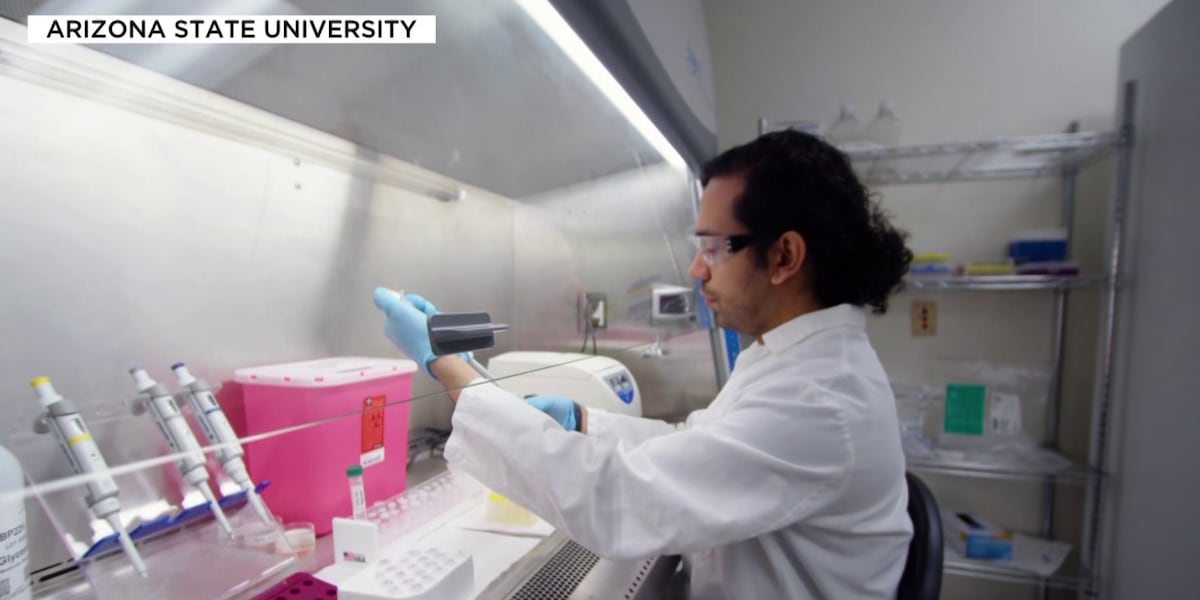
ASU researchers developing single drop blood test
Chao Wang, an associate professor in the School of Electrical, Computer and Energy Engineering, part of the Fulton Schools, and his research team are developing a blood test administered through what is described as a rapid electronic detection tool that uses nano-particles to function as biomarkers for detecting infectious and/or chronic diseases such as cancer, Alzheimer’s disease, COVID, Ebola and Lyme disease. Wang foresees the test tool being ready for public use within three years and being affordable and deployed to underserved communities. Details of the research leading to development of the new test have been reported in an ACS Publications article.

Securing America’s critical minerals supply
ASU researchers are contributing to development of new technologies needed to increase the supplies of critical minerals, including many essential to U.S. national security, as well as to the the country’s energy sources and supplies and its overall economy. Among those researchers are Fulton Schools faculty members Cesar Torres, a professor in the School for Engineering of Matter, Transport and Energy, Nick Rolston, an assistant professor in the School of Electrical, Computer and Energy Engineering and Anca Delgado, an associate professor in the School of Sustainable Engineering and the Built Environment. Their expertise can aid efforts to make the most valuable and productive uses of critical minerals to support a variety of national priorities. The article has also been published in the Phoenix Business Journal: ASU researchers develop new technologies to increase US critical minerals.

The ‘solar’ in these solar roofs is invisible. Are they worth the price?
It’s been taking a while for significant progress in the development of solar energy technologies and systems for homes to show promise in meeting challenges of being optimally efficient, reasonably affordable and acceptable from an aesthetic point of view. Zachary Holman, Fulton Schools vice dean for research and innovation, is among experts now reporting continuing advances toward achieving those goals. Holman, who is also a professor in the School of Electrical, Computer and Energy Engineering, part of the Fulton Schools, points to how the expense of systems involving photovoltaics is moderating. Other experts note lower costs, including falling solar cell prices, and easier installation.
A look under the hood of DeepSeek’s AI models doesn’t provide all the answers
The Chinese company DeepSeek has touted one of its newest Large Language Models as a breakthrough in elevating the reasoning abilities of artificial intelligence, or AI, technology. The company implied that making AI model improvements could be done with inexpensive hardware rather than massive computing infrastructure or the best computer chips. Subbarao Kambhampati, a professor in the School of Computing and Augmented Intelligence, part of the Fulton Schools, assesses the validity of those claims, saying DeepSeek’s claims are a bit premature and that a full comprehension of the inner workings of the reasoning capabilities of AI model has yet to be achieved. Until then, he warns that an over-reliance on AI’s reasoning capacity could be risky.

Who Wants to Play SimParkingLot?
Excerpted from “The Unfinished Metropolis,” a new book exploring how America’s favorite things to build — including freeways, single-family homes, malls, and downtown office towers — are keeping us stuck in the past. Mikhail Chester, a professor in the School of Sustainable Engineering and the Built Environment, part of the Fulton Schools, comments on how he and colleagues looked at the number of parking spaces across the country and the extremely expansive amount of space they are taking up. At least one city has as many as 10 parking spaces for every car within its boundaries — a prime example of what the book’s author reports as one grim reality of American urbanism.

US Department of Energy selects ASU and DCX to pioneer new ways to power data centers
Fulton Schools researchers are among members of a team of ASU experts involved in a national effort to develop new applications for advanced microreactor technologies. Microreactors provide a reliable energy source for growing demands of AI and high-performance computing, which will help to strengthen U.S. competitiveness in the AI sphere. Achieving that goal will be essential to U.S. national security and global leadership stature in the high technology realm. Researchers in ASU’s Julie Ann Wrigley Global Futures Laboratory, The College of Liberal Arts and Sciences, and the Research Technology Office of Knowledge Enterprise are part of team.

ASU to open its own medical school
A new ASU school set to open in 2026 will offer students the opportunity to earn a combined Doctor of Medicine and medical engineering degree. The programs are designed to provide a curriculum that will give future physicians the ability to work with advanced medical technologies, particularly artificial intelligence, or AI, says Professor Heather Clark, director of the School of Biological and Health Systems Engineering, part of the Fulton Schools, and ASU’s senior associate dean for engineering integration. The school will provide students training to that will enable them to use AI to help make a range of future medical and health care advances, Clark says. The new state-of-the-art medical school building is set to open in downtown Phoenix in 2028.

18,000 Reasons It’s So Hard to Build a Chip Factory in America
ASU has five times the number of engineering students it had 15 years, a jump that to a significant degree has been spurred by the semiconductor industry boom. That growth is reflected locally by the growth of the Taiwan Semiconductor’s Manufacturing Company, a global leader in the industry that along with other companies has invested billions of dollars to establish new operations in the U.S., including in Arizona. The company’s expansive hub in Phoenix is under construction across more than a thousand acres. Such projects, however, are highlighting the challenges of undertaking such exceedingly pricey and large-scale microchip factory projects. Still, advances being made by the semiconductor industry and the robust expansion plans are portending growing career opportunities for engineering students in Arizona and elsewhere. The article was also published in the Seattle Times.

A Growing U.S. Tech Hub Needs Workers. Colleges Try To Keep Up
Investments are being made to finance construction of factories for dozens of companies in the Phoenix area that supply the Taiwan Semiconductor Manufacturing Company and other semiconductor chip makers. To be successful, many local people will need to be effectively educated to perform the necessary skilled factory work. That will require retraining people who have old-school thinking about manufacturing, says Binil Starly, director of the School of Manufacturing Systems and Networks, part of the Fulton Schools. ASU students are already learning to operate fully functioning modern semiconductor fabrication facilities, Starly says. In addition, the Maricopa County Community College system, from which many students transfer to ASU, is expected to create programs to help fill the semiconductor industry’s talent pipeline.

From lab to orbit: Solestial’s takeoff from research to startup
Engineering and related high-tech talent found at the Fulton Schools and elsewhere at ASU has been integral in preparing the EnduroSat satellite company to soon launch its advanced satellites. Two former ASU affiliates, Stan Herasimenka and Mikhail Reginevich, one of whom earned a doctoral degree in electrical and electronics engineering in the Fulton Schools, have started the company. They also started the Solestial company while still in school. At ASU, they utilized resources at the Engineering Research Center and MacroTechnology Works to do work that helped them form the foundation for EnduroSAT. Many of Solestial’s employees are ASU graduates. Herasimenka and Reginevich now hope to see their new company revolutionize energy output in outer space.

ASU names 4 Regents Professors for 2026
Among four ASU faculty members recently bestowed with the prestigious title of Regents Professor, recognizing their contributions to groundbreaking work in various professional fields, is Stephanie Forrest, a professor of computer science in the School of Computing and Augmented Intelligence, part of the Fulton Schools and director of ASU’s Biodesign Center for Biocomputation, Security and Society. Forrest is credited for contributing to decades of groundbreaking research in computer science, biology and security, as well as pioneering accomplishments in computational immunology that essentially transformed the computer security field. Her work has been especially noted as a model to guide ASU’s aspirations to provide research that best serves society’s needs.

How ASU’s SEFCOM Is Changing The World of Cybersecurity
A collaboration of the School of Computing and Augmented Intelligence, part of the Fulton Schools, and experts connected to ASU’s Cybersecurity and Trusted Foundations, or CTF, organization, aims to find ways to more effectively anticipate cybersecurity risks and devise stronger defenses against cyberattacks. Fulton Schools Professor Gail-Joon Ahn, founding director of ASU’s Security Engineering for Future Computing lab, and Associate Professor Adam Doupé, director of CTF, are among leaders of projects that will also enable students to be involved in research. Arvind Sriram Raj, a Fulton Schools computer science doctoral student and researcher in Ahn’s lab, says researchers plan to alert computer programming developers about problems so they can help find ways to better fend off cyberattacks.

How TSMC Arizona changes the state’s economic landscape
The expanding operations of the Taiwan Semiconductor Manufacturing Company, or TSMC, in Arizona are boosting the state’s economic outlook. ASU’s significant output of new engineering talent that has been contributing significantly to boosting state’s semiconductor ecosystem is recognized as providing a key wellspring of talent needed to fulfill the company’s aspirations for continued robust growth. In an extensive interview about the company’s strategy for the future, the president of TSMC Arizona notes that ASU, with the largest enrollment of engineering students among U.S. universities, is a major source of the expertise the company will continue to rely on to meet the constant challenges of the global semiconductor industry.

Two Nigerian scientists, 18 others win German science award
Among the 20 winners of the 2025 global Digital Green Talent Award is Adesola Adegoke (pictured at right), a graduate research associate in the School of Sustainable Engineering and the Built Environment, part of the Fulton Schools. The award program is an annual initiative of the German Federal Ministry of Education and Research to recognize outstanding young researchers whose work is applying innovations in digitalization to advance environmental sustainability. Adegoke is being recognized for his research on the use of fungi, specifically Mycelium, to enhance sustainable environmental efforts. He is focusing on ways to reduce the significant amount of harmful global carbon dioxide emissions produced by current construction industry practices.
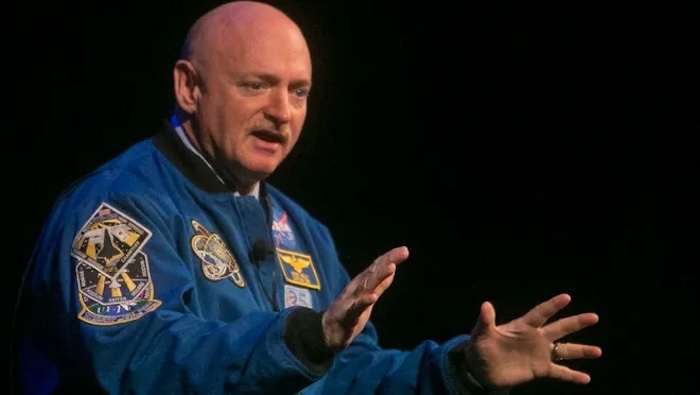
How does military recall work? It could happen to Sen. Mark Kelly
Brad Allenby, a professor in the School of Sustainable Engineering and the Built Environment, part of the Fulton Schools, whose expertise includes geopolitics, the implications of emerging military technologies and military ethics, has cast doubt on the legality of any punishment of Arizona’s Democratic Senator Mark Kelly, a U.S. Navy veteran, for his statements about the rights of members of the military to refuse to obey illegal orders. On social media, President Donald Trump has accused Kelly of seditious behavior and said the federal government might recall Kelly to active duty so he could be tried in a military court. The debate over this issue was also explored in an earlier Arizona Republic article in which Allenby is also quoted.
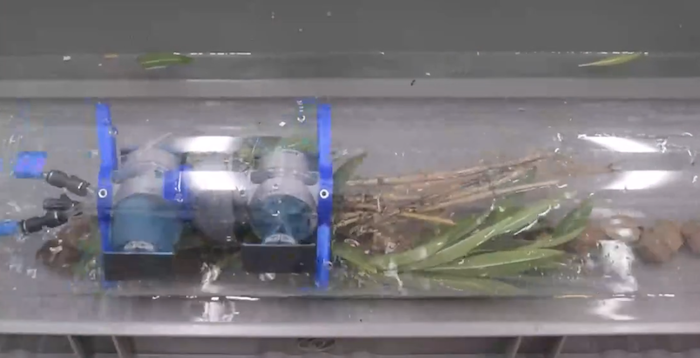
ASU researchers develop advanced robotics and AI system to inspect pipelines and prevent blockages
Pipelines that transport natural gas, crude oil and refined fuels are critical to keeping modern society running productively. But as underground infrastructure ages, it poses serious dangers. These threats are being addressed through work powered by artificial intelligence, or AI, technology, and soft, flexible inspection robots capable of navigating pipes to understand how pipelines fail and other technologies to help anticipate problems before they occur. Contributors include Fulton Schools faculty members Yongming Liu in the School for Engineering of Matter, Transport and Energy, Hai Yan in the School of Computing and Augmented Intelligence and Wenlong Zhang, in the School of Manufacturing Systems and Networks, along with Hanna Breetz, an associate professor in ASU’s School of Sustainability.

Thailand and ASU Forge Strategic Alliance to Power Global Semiconductor Talent Pipeline
A new Semiconductor Ecosystem Master Class developed by Fulton Schools educators is providing 21 faculty and professionals in Thailand an intensive overview of design, fabrication, packaging, testing, and global supply chain strategies being used in the semiconductor industry. It is equipping teachers with knowledge to bring that expertise to Thai institutions. The ASU and Kingdom of Thailand partnership aims to foster a robust ecosystem for microelectronics education, research, and workforce training promising to bring thousands of highly skilled engineers and technicians into the global talent pool. The ASU-Thailand semiconductor workforce development collaboration is expected to also be catalyst for future innovation in artificial intelligence and advanced electronics.
See also: ASU and Thailand advance semiconductor collaboration through workforce development initiatives, ASU News

ASU launches ASU London, bringing global reputation for innovation to the UK
The Engineering & Design Institute London (or TEDI-London), co-created by ASU four years ago, has set the stage for ASU London, which will incorporate TEDI-London’s project-based engineering programs alongside new offerings of related degrees. Students will study within the global culture of London, guided by U.K.-based faculty in collaboration with faculty from the Fulton Schools, as well as ASU’s W. P. Carey School of Business. Collaborations will offer engineering and business students opportunities to engage in entrepreneurial endeavors to help fulfill ASU’s commitment to preparing students for careers as global citizens who can bridge cultural perspectives, work across borders and contribute solutions to major societal challenges.
See also: ASU London’ campus launches; now enrolling for fall 2026, Arizona Family (Channel 3 CBS News-Arizona)
Updated report: Arizona State University launches independent program overseas in London (Channel 3 CBS News-Arizona)
ASU launches new London institution, available to students across the globe, Arizona Republic
ASU launches ASU London offering 2 international degrees, KJZZ News (NPR)
Arizona State University launches ASU London, bringing global reputation for innovation to the UK, London Post
Arizona State University launches ASU London, THE PIE (London)
ASU expands global reach with ASU London, set to open in Fall 2026, The State Press
ASU launches ASU London as U.K.-accredited institution offering dual-degree pathways, ETIH (Ed Tech Innovation Hub)

Charting a shared groundwater future in rural, southern Arizona with the community
Experts in the Fulton Schools are collaborating with peers in ASU’s Julie Ann Wrigley Global Futures Laboratory to help communities in three Arizona counties develop collaborations to provide secure and sustainable groundwater supplies to ensure a stable future for these vital resources. Community leaders, researchers, industry representatives, environmental and hydrology experts and others joined in a workshop in the Arizona town of Patagonia to examine water security challenges and potential long-term solutions with leaders of local groups focused on the resource management, restoration and conservation.

Collaboration is key to the success of ASU’s forensic school, director says
Opportunities in the field of forensic science are projected to see a significant spike in the next decade. With the expected growth in employment already beginning to emerge, ASU has opened a school that will focus on education in the use of the expanding applications of forensics in many fields. The new School of Interdisciplinary Forensics plans to partner with other ASU schools and colleges, including the Fulton Schools, which will focus on educating students in designing and validating analytical instruments, digital imaging systems and AI-enabled forensic tools.

AI Or Human? ASU Researchers Use Radar To Verify Human Speech
Researchers are seeking ways to enable distinguishing between human speech and AI-generated speech –– especially when not knowing the difference can pose serious danger. Among those efforts is work led by Visar Berisha, the Fulton Schools associate dean of research and commercialization, involving utilization of radar and microphone sensing to enable discerning between human speech and voices created by AI. A presentation on the project was made at the recent Proof of Presence: Grounding Media in the Human Body in the Age of AI seminar. Finding a solution is necessary to diminish serious threats posed by AI deepfakes to financial information, corporate security and related fraudulent activities that can affect even media communications and the arts.

Earnings call transcript: AirJoule Technologies Q3 2025 highlights water innovation
AirJoule Technologies Corporation, an atmospheric renewable energy and water harvesting technology company, recently won a competition sponsored by the Net Zero Innovation Hub for Data Centers, a consortium founded by Google, Microsoft and other major tech companies. The achievement is seen as validating Airjoule’s technology as a promising tool for ensuring the sustainability of data center operations. Airjoule’s new system has been delivered to ASU’s Global Center for Water Technology, a leading atmospheric water harvesting research institution directed by Paul Westerhoff, a professor in School of Sustainable Engineering and the Built Environment, part of the Fulton Schools. The center will conduct research on AirJoule’s performance and potential applications for industrial operations in the Southwest.

ASU Students Prepare For National Theme Park Design Challenge
Students in ASU’s Theme Park Engineering and Design Club are applying what they’ve been learning in their classes in ventures such as a Ride Engineering Competition that has drawn more than 220 students from 21 universities. Vidhi Dharnidharka, a mechanical engineering student in the School for Engineering of Matter, Transport and Energy, part of the Fulton Schools, manages the club’s funding and travel expenses and helps to secure materials and equipment. Fellow mechanical engineering student Arial Antonini notes how club members learned new skills as they designed the team’s roller coaster for the competition. Such opportunities outside the classroom are providing students hands-on technical education as well as experience in developing and managing creative collaborative efforts.

Hundreds of millions of people rely on a virtual private network, or VPN, app to guard their data, but there’s cause for concern about breaches of the defenses set up to protect users’ data on the app. Benjamin Mixon-Baca, a computer science doctoral student in the School of Computing and Augmented Intelligence, part of the Ira A. Fulton Schools of Engineering has helped to expose ways information on the app can be revealed and shared. His paper, coauthored by Jedidiah Crandall, a Fulton Schools associate professor of computer science and engineering, and Jeffrey Knockel of Citizen Lab, details those security failures. Mixon-Baca applied skills he learned in school’s doctoral program to expose the threat to VPNs, Crandall says. An earlier version was posted on Full Circle, the Fulton Schools’ website news page.

Manufacturing Day at Polytechnic campus sparks student interest in STEM careers
At the recent Manufacturing Day event, Professor Binil Starly, director of the School of Manufacturing Systems and Networks, gave high school students a primer on the manufacturing field and the career opportunities it could provide for future engineers and others in STEM fields. The event was presented by Access ASU, ASU Career Services, the Arizona Manufacturing Extension Partnership and the Arizona Department of Education on ASU’s Polytechnic campus, which has a new state-of-the-art manufacturing hub. Starly took the students on a tour of the facility, the ISTB12 building, where ASU students are working on complex manufacturing projects and taking interdisciplinary science courses.

2 ASU students nominated for prestigious Churchill scholarship
Fulton Schools students Megan Duncan and Tamara Grujicic have been nominated for a prestigious postgraduate award for science, mathematics and engineering studies. They are among only 16 graduates from U.S. universities selected for the scholarship that funds a year of master’s studies engineering, the sciences and mathematics at the prestigious University of Cambridge in England. Duncan, a student in the Fulton Schools materials science and engineering program, plans to pursue an advanced degree in materials science and metallurgy. Grujicic, a student in the computer science program, will pursue an advanced degree in her field. The director of the organization announcing the scholarship awards describes Duncan and Grujicic as outstanding scholars who can be expected to drive innovation.

ASU Lab Builds Semiconductors Modeled Off The Brain
Sai Prakash Maddineni and Yujian Huang, graduate students in the School of Electrical, Computer and Energy Engineering, part of the Fulton Schools, and research assistants in ASU’s Semiconductor Device Research Laboratory, are using artificial intelligence, or AI, machine learning and resistive random access memory, or RRAM, technologies to help develop ways of advancing semiconductor manufacturing and brain-inspired computing. The lab is also working to understand how similarities between the human synapse and RRAM technologies can be implemented into neuromorphic computing, which is inspired by human brain functions. They foresee the research leading to environmental benefits, bolstering the computer industry and reducing resource consumption, among other advances.

The Silicon Desert Blooms: Arizona Forges America’s New Semiconductor Frontier
ASU is noted for progress in developing and graduating a strong pipeline of talented students prepared to meet a growing demand for new engineers and technicians in the resurgent and fast-evolving semiconductor industry in the U.S. Arizona overall is credited for being a prime example of how a collaborative ecosystem of government, industry, and academia can bring transformative change in major industries. The state is seen as playing a major role in the resurgence of American semiconductor manufacturing, providing a pivotal moment in the nation’s industrial history. After decades of offshoring operations, there’s an evolving trend of bringing semiconductor chip fabrication back to the U.S.
See also: Greater Phoenix Intelligence Report: Semiconductors: Where the Action Is, SITE SELECTION
ASU is noted for rising to the rank of the university with the a largest engineering school in the U.S. and partnering with a major industry organization to expand access to high-impact, on-demand training for the global semiconductor workforce.

Arizona State University professor studies how sweat can keep us cool
The profuse sweating people experience in conditions of extreme heat — such as in Arizona’s desert climate — may be uncomfortable, but the salty sweat is a sign that nature’s way is at work to help protect our skin from those persistently hot conditions. The report links to a recent ASU News article looking at work led by Konrad Rykaczewski, an associate professor in the School for Engineering of Matter, Transport and Energy, part of the Fulton Schools, that explores the biology of perspiration. One of the main goals for this research is to eventually find ways to help the human body be more comfortable on those 110-degree days. A wearable “heat suit” has been developed to aid the project.

Computation And Detection At The Speed Of Light
The power of the photon is being applied to accelerate artificial intelligence, or AI, modeling as well as advanced infrared detection in research at the ScopeX Lab, directed by Jiaqi Gu, an assistant professor in the School of Electrical, Computer and Energy Engineering, part of the Fulton Schools, and by the Yao Group, led by Yu Yao, an associate professor in the school. Researchers are demonstrating how the power of light can boost infrared sensing capabilities to see wavelengths undetectable to the human eye. The endeavor is expected to pave the way for improvements in medical imaging and diagnosis, as well as for detection of defects on surface of materials.

Stabilizing Synthetic Gene Circuits Using Transcriptional Condensates
Combining expertise in genetics, synthetic biology, metabolic engineering and related fields, a team of ASU researchers has developed a new way to build more effective and reliable living systems that can be used to create more stable cell factories and develop new medical applications. Their progress provides a new design principle for researchers to ensure engineered cells work more consistently, says Xiaojun Tian, an associate professor in the in the School of Biological and Health Systems Engineering, part of the Fulton Schools. For the project, Tian teamed with David Nielsen, a professor in the School for Engineering of Matter, Transport and Energy, part of the Fulton Schools, and Wenwei Zheng, an associate professor in ASU’s School of Applied Sciences and Art.

LLMs Add Safety Risks To Physical AI
Robotics and artificial intelligence, or AI, advances are expanding possibilities to boost the beneficial capabilities of science and engineering and the technologies they help to create. At the same time, experts warn that ways are needed to prevent accidents caused by machines equipped with AI from developing built-in biases, especially if those biases impact humans negatively. Those challenges are being addressed by Ransalu Senanayake (pictured), an assistant professor in the School of Computing and Augmented Intelligence, part of the Fulton Schools, and director of ASU’s Laboratory for Learning Evaluation and Naturalization of Systems. He says such smart technologies can be vulnerable to a kind of hallucination we must learn to guard ourselves against.

New study unveils strategic decisions behind self-censorship and dissent in authoritarian settings
A news outlet focusing on defense, geopolitics, military affairs, science and technology issues reports on a study coauthored by Professor Stephanie Forrest and Assistant Professor Joshua J. Daymude in the School of Computing and Augmented Intelligence, part of the Fulton Schools, along with University of Michigan political scientist Robert Axelrod. They have developed a mathematical model illuminating decisions faced by individuals on whether to express dissent or remain silent when faced with potential retribution from authoritarian leaders. Their study presents a framework to understand variables influencing self-censorship and dissent in an era characterized by advanced surveillance technologies and social media.

AI hallucinates because it’s trained to fake answers it doesn’t know
Advances in the capabilities of artificial intelligence, or AI, technology are being made by leaps and bounds, resulting in hundreds of billions of dollars of investments in development of AI tools. At the same time, experts warn that AI is not flawless. In fact, they say AI technologies are falling prey to certain kinds of high-tech hallucinations. Subbarao Kambhampati, a professor in the School of Computing and Augmented Intelligence, part of the Fulton Schools, and other leading AI researchers talk about the complicated challenge of fixing the problem while still maintaining AI’s value. Some say the solution lies in a big change in how AI is trained.

From campus to company: How research sparked a new water tech startup
The Tributary company, launched by Enrique Vivoni, a professor of hydro systems engineering in the School of Sustainable Engineering and the Built Environment, part of the Fulton Schools, is helping communities measure water benefits provided by forest management. Vivoni, director of ASU’s Center for Hydrologic Innovations, is teaming with Zhaocheng Wang, a research scientist in the same school, and Josh Cederstrom, a graduate associate in ASU’s School of Earth and Space Exploration, to make rigorous science useful for water utilities and systems managers. The goal is to translate science knowledge, discoveries and engineering advances into guidelines to help water systems managers fulfill their mission to maintain healthy water environments.

ISTB 12 a one-stop shop for robotics, manufacturing
Colleges and universities typically put engineering programs focused on manufacturing within mechanical engineering or industrial engineering programs. But ASU and the Fulton Schools gave that branch of engineering an equal place in the spotlight with the establishment several years ago of the ASU Interdisciplinary Science and Technology Building 12 on the ASU Polytechnic campus. That project convinced Binil Starly to become director of the School of Manufacturing Systems and Networks, headquartered on the campus. The building is now home to a new campus learning and innovation space designed to serve both students and the local community. ASU President Michael Crow says the facility will help give Arizona one of the most advanced manufacturing schools.

AI reshaping Valley health care, but biases occur
While artificial intelligence, or AI, technology is raising hopes that it can improve health care, research raises concern about AI’s abilities to provide accurate diagnoses of patients’ conditions and provide the best treatment options, says Bradley Greger, an associate professor in the School of Biological and Health Systems Engineering the School of Biological and Health Systems Engineering, part of the Fulton Schools. AI is helping medical professionals more speedily wade through the vast data that provides them a framework for making health care decisions, but the technology can sometimes also present the risk of inherent biases that could misguide treatment, Greger says. He and other experts stress that human insight is crucial in assessing what AI produces.

Here are the winners of 2025 Governor’s Celebration of Innovation
Ventures springing from work led by two Fulton Schools faculty members are among award finalists for the upcoming 2025 Governor’s Celebration of Innovation, which honors Arizona’s leading innovators, entrepreneurs and business leaders. Crystal Sonic, Inc., which sprung from work led by Mariana Bertoni, a professor in the School of Electrical, Computer and Energy Engineering and director of Defect Lab at ASU, is a finalist for the spinout award. Enkoat, which emerged from the lab of Narayan Neithalath, a professor in the School of Sustainable Engineering and the Built Environment, is also a finalist for the award. Both ventures are nominated for the Innovator of the Year award in the Small Company category. Read more about Crystal Sonic and Enkoat.
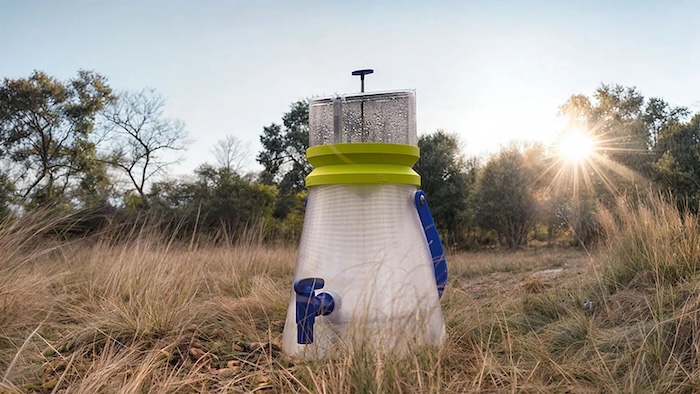
This portable, 3D-printed device can pull drinking water out of thin air
A growing need to prevent water scarcity already threatening many communities around the world, including in the United States, has spurred researchers to focus on developing solutions to current water shortages and preventing their proliferation into severe crises. One such endeavor is decribed in a recent research paper co-authored by Claire Cropper, a graduate research associate in the School of Sustainable Engineering and the Built Environment, part of the Fulton Schools, and Lee Voth-Gaeddert, a research professor in ASU’s Biodesign Institute. Their work is noted in this article about development of a 3D-printing device developed to help overcome water insecurity. More about their endeavors is detailed in an earlier ASU News article.

Drinking Water Map Shows States With Most Contaminants
Recent data from the U.S. Environmental Protection Agency raises concerns about the harm that could be caused by contaminants being found in drinking water systems in many states. According to the agency’s data, carcinogenic chemicals — substances known or suspected to cause cancer — are in water that millions of people are drinking. Paul Westerhoff, a professor in the School of Sustainable Engineering and the Built Environment, part of the Fulton Schools, says various water utilities throughout the country have different water sampling practices and states have different reporting requirements, both of which could hamper maintaining timely and accurate data and instituting needed water safety regulatory efforts.

Applied Materials, ASU celebrate opening of Materials-to-Fab center to fuel microchip innovation
ASU and the Applied Materials company officially opened the $270 million Materials-to-Fab Center facility in the MacroTechnology Works at the ASU Research Park. Seth Tongay, a professor in the School for Engineering of Matter, Transport and Energy, part of the Fulton Schools, noting the center is designed to keep great ideas from stalling, says the new center will ensure new discoveries will result in impactful manufacturing technologies. ASU’s record of propelling innovation in advanced materials engineering and the Fulton Schools, with the largest number of engineering students in any school in the nation, are seen as valuable contributors to boosting the future of materials-to-fab innovation.
See also: Applied Materials, ASU open $270M East Valley chip research center, Phoenix Business Journal

ASU SolarSPELL Initiative earns TIME ‘best invention’ award
A decade ago, Associate Professor Laura Hosman challenged her engineering students to create a device to provide a solar-powered library small enough to fit into a backpack. Made of recycled material, the device provides a Wi-Fi hot spot that needs no electricity or internet connection for users to download content to a smartphone, tablet or laptop. More than 600 of the devices have been deployed. Hosman, whose faculty appointments include a position in the The Polytechnic School, part of the Fulton Schools, and technology adviser Bruce Baikie, an ASU adjunct faculty member, codirect SolarSPell, which is working with numerous libraries and people in Arizona, Ethiopia, on the Hopi Reservation and with Peace Corps volunteers, among others, using SolarSpell to curate vast amounts of information customized for each group.
See also: This library device created by ASU professors, students named one of TIME’s 2025 Best Inventions, KJZZ News

Parched soils can spark hot drought a nation away
A recent study published in Geophysical Research Letters predicted that as climate change continues, droughts that bring hotter weather will be more likely to spread across vast distances from country to neighboring country. Enrique Vivoni, a professor of in the School of Sustainable Engineering and the Built Environment, part of the Fulton Schools, and the director of ASU’s Center for Hydrologic Innovations, says more places will be seeing dry soil conditions that cause and spread drought. To prepare for dealing with the trend, Vivoni recommends developing systems to alert countries to conditions likely to cause drought that are similar to systems now used to alert us to hurricanes.
See also: Parched soils can spark drought a nation away, American Geophysical Union Newsroom
Parched soils can spark hot drought a nation away, Maven’s Notebook
Dry soils in Mexico trigger extreme ‘hot droughts’ across the Southwest, earth.com

Microplastics Are Changing Your Insides in Unexpected Ways
Research continues to raise alarm about the impacts of the microplastics to which many people have become widely exposed. The tiny plastic particles that are in the air, water, food and many common materials and objects are more prevalent than ever. The nearly continuous exposure to microplastics is a growing and potentially serious risk to human health, say experts such as Rolf Halden, a professor in the School of Sustainable Engineering and the Built Environment, part of the Fulton Schools. Halden, director of ASU’s Biodesign Institute Center for Environmental Health Engineering, stresses the need for public education to inform people how to reduce their exposure to the threatening microparticles.

ASU team uses AI tools in 2 projects to help protect people during extreme heat
Using artificial intelligence, or AI, technology, effective ways for people to protect themselves from extreme heat have been developed by a team of researchers led by Hua Wei, an assistant professor in the School of Computing and Augmented Intelligence, part of the Fulton Schools. Among them is a shade routing tool that works somewhat like Google Maps. Instead of simply providing a map to the best route from one place to another, it enables mapping a route that will provide the most shade. Another tool is DeepShade, which can predict where shade might provide protection in specific locales. There are plans to collaborate with state government agencies in Arizona to test these shade finding tools.

AI reshapes healthcare but adopts bias
Health care services are clearly benefiting from the use of artificial intelligence, or AI, technology. But at the same time, some notable drawbacks are emerging that point to AI systems’ current shortcomings. These systems are helping to overcome some bureaucratic drawbacks on the business side of operations and giving patients more time with health care providers. On the downside, research has found that AI can have biases when analyzing conditions to diagnosis patients’ conditions. Bradley Greger, an associate professor in the the School of Biological and Health Systems Engineering, part of the Fulton Schools, talks about the complicated technical factors that can lead to “super-biased AI.” Researchers are working on ways to overcome the inbred bias factor.
See also: AI reshapes health care but adopts bias, Arizona Daily Star (Tucson)

Will AI Ever Win Its Own Nobel Prize?
How long before one of the most coveted awards in science is given to an accomplishment by artificial intelligence or AI, technology? Some are skeptical but many foresee it as almost inevitable that AI will be credited for making science and engineering breakthroughs. Others say AI has limitations that inhibit it from being the sole creator of original technological advances. Subbarao Kampbhampati, a professor in the School of Computing and Augmented Intelligence, part of the Fulton Schools, says the life experiences of human researchers are critical to the creative process. He and others contend the lack of real-world experience will make it difficult for AI to pose the creative questions and gain the worldly insights that spark true innovation.

Funding state transportation projects when federal money runs out
A section of the article cites two decades of data from five transportation surveys compiled by Professor Steve Polzin, Research Assistant Professor Irfan Batur and Professor and Director Ram Pendyala in the School of Sustainable Engineering and the Built Environment, part of the Fulton Schools. The data offered them a look at how commuting and transit ridership and other road travel habits in the U.S. have changed since the COVID-19 pandemic and the impacts of those changes. Their study details the trends that evolved during the pandemic and that still impact today’s road travel scenarios and points the way to potential solutions to many current automobile transportation challenges across the country.

From composting to solar panels, NFL stadiums are working to be more sustainable
The National Football League is putting environmental sustainability on the list of it major goals. Teams of the major sports organization are undertaking projects to equip stadiums and faculties with solar power systems and use recycled or recyclable materials for everything from cups to trophies. Tony Lamana, a professor in the School of Sustainable Engineering and the Built Environment, one of the Fulton Schools, says sustainability must involve not only making sports facilities more environmentally friendly, but also how teams influence fans’ habits in ways that enhance the going green trend. The new NFL Green program aims to help produce a “green legacy” in the communities where teams play.
Versions of the article have also been published or broadcasted across the country by the Associated Press, MSN, The Washington Times. Yahoo! News, Atlanta Journal-Constitution, NBC (Philadelphia), NBC4 Los Angeles, SF Gate, WKYC, WJBF, WHYY, Independent UK, WWLP (Massachusetts) 2News (Nevada), Winnipeg Free Press, Bozeman Daily Chronicle (Montana), KGET TV 17 (Bakerfield, California, WBOC CBS TV (Salisbury, Maryland), Imperial Valley Press (El Centro, California), Ottumwa Courier (Idaho), Temple Daily Telegram, Texas, and the trade journal Waste Advantage Magazine

ASU’s semiconductor work to be featured at nation’s largest microelectronics trade show
ASU will be well represented in the upcoming largest microelectronics trade show in North American, soon to be held in Phoenix. ASU President Michael will give a keynote address while a discussion about how fabrication labs could benefit from the of artificial intelligence, or AI, technology and robots will be led by Binil Starly, director of the School of Manufacturing Systems and Networks, part of the Fulton Schools. Fulton Schools Dean Kyle Squires foresees an opportunity to introduce the broader microelectronics community to ASU’s ongoing contributions to advances in semiconductor technology, workforce development, research and innovation. Starly says ASU also has the opportunity to highlight that it has become one of the largest producers of talent for the industry.

ARTBA Foundation honors women leaders driving innovation and excellence in transportation
Lauded as a trailblazer in sustainable materials in transportation and pioneer in the use of bio-based and bio-inspired binders as renewable alternatives to petroleum products, Elham Fini has also authored a widely used textbook and has had more than 230 publications reporting on her work, some of which has been covered by major news media outlets. Those and related accomplishments have put Fini, an associate professor in Del E. Webb School of Construction, within the School of Sustainable Engineering and the Built Environment, part of the Fulton Schools, among recent winners of the American Road & Transportation Builders Association Foundation’s Women Leaders in Transportation Design & Construction Awards.

Protecting ASU’s Supercomputer
A supercomputer named Sol is an extremely valuable tool for ASU researchers. It’s computing abilities are more powerful and faster and its data storage is more vast that those of the majority of computers. Gail-Joon Ahn, a professor in the School of Computing and Augmented Intelligence, part of the Fulton Schools, and founding director of ASU’S Center for Cybersecurity and Trusted Foundations, and Ananta Soneji, a doctoral student in the school, explain the value of Sol’s capabilities and why ASU should become proactive in taking on the challenging task of maintaining the security of the high-performing system.

ASU alumni, professionals connect with Chandler students at Latino Leaders Week
Jesus Chavez (second from right in photo), the Fulton Schools coordinator senior for student success and engagement, was among the Latino speakers with ASU connections who recently shared their professional and personal experiences with about 100 local junior high school students at the ASU Chandler Innovation Center. Chavez drew on his experiences growing up in the East Valley as a first-generation son of Mexican immigrants before eventually earning a doctoral degree in engineering education and systems design at ASU. He spoke to students about gaining an understanding of how to best prepare themselves to benefit from higher education and the career opportunities it offers.

Researchers Use AI To Simulate Shade Cycles on Maps
High-tech advances are opening new possibilities to enable people to beat the heat as temperatures in many places continue to climb. An article first published on the Fulton Schools website, details research led by Hua Wei, an assistant professor of computer science and engineering in the School of Computing and Augmented Intelligence, part of the Fulton Schools, that helps to provide ways to cope with the rising trend of extreme heat, especially in urban areas. Wei and his research team are developing new artificial intelligence, or AI, tools to predict and map the movement of shade. The DeepShade AI system produces maps giving detailed guidance to routes providing the most shade.

Meet SPARK-E the robotic dog
Robotic dogs that can help people in risky environments have been designed by Fulton Schools engineering teams. One is named SPARK-E (at lower left in photo), another is Unitree GO2. They are equipped with LIDAR (Light Detection and Ranging), remote sensing technology, voice interface capabilities and artificial intelligence cameras. The high-tech tools and devices enable the “robodogs” to adapt to various environments to take on tasks in precarious situations. Ransalu Senanayake, an assistant professor in the School of Computing and Augmented Intelligence, part of the Fulton Schools, is interviewed about the robodogs’ array of capabilities to deal with potentially dangerous circumstances. Read more in a previous post below linking to a recent article in Tech Briefs, dated September 22.

Arizona State University’s Vidya Chhabria honored with Google award
For contributing to advances in machine learning and related systems, Vidya Chhabria has been awarded a Google ML and Systems Junior Faculty Award. An assistant professor in the School of Electrical, Computer and Energy Engineering, part of the Fulton Schools, Chhabria’s research focuses on computer-aided design for large-scale integration. She is among more than 50 assistant professors at U.S. universities selected by a group of Google engineers and researchers to receive the award. Professor Stephen Phillips, director of the School of Electrical, Computer and Energy Engineering, notes the impact of such awards can benefit students who will be motivated to learn from a teacher who is shaping the future of machine learning.

Philadelphia Office of Sustainability Testing Cool Pavement Pilot in Hunting Park to Address Summer Heat
Philadelphia is among major U.S. cities seeing its neighborhoods’ temperatures heat up to uncomfortable levels due in part to their surface materials. In response, the Philadelphia Office of Sustainability is testing a reflective pavement in one of its more prominent city parks. Kamil Kaloush, a professor in the School of Sustainable Engineering and the Built Environment, part of the Fulton Schools, explains how roads, parking lots and other large paved surfaces absorb daytime heat and reemit it into the atmosphere at night. Kaloush points to newly developed “cool pavements” that reflect the sun’s energy rather than absorb it. Philadelphia leaders see it as a promising defense against rising heat.

An AI-Powered Robodog Is Here to Save the Day!
Dogs have long had the reputation as one of the animals that can be most helpful to humans. Now a quadrupedal robot known as a Robodog is poised to serve people in myriad ways. Using artificial intelligence, engineers have helped to design a four-legged robot that can perform some of the most useful and challenging tasks. Equipped with advanced artificial intelligence cameras, LiDAR and a voice interface, it is learning to aid search-and-rescue missions and guide visually impaired people through complex environments. A research team led by Ransalu Senanayake, an assistant professor in the School of Computing and Augmented Intelligence, part of the Ira A. Fulton Schools, is making progress on maximizing the robodog’s capabilities.

ASU is No. 1 in innovation for 11th straight year
Along with its overall ranking of ASU as the most innovative U.S. university for more than a decade, the US News & World Report’s latest list of top colleges also pointed to the Fulton Schools as one of the main reasons for placing the university in the top spot. The Fulton School’s education and research in microelectronics, civil engineering, electrical engineering, computer science and computer engineering are cited among reasons for the high ranking. In addition, the Fulton School’s undergraduate engineering programs overall are ranked among the top 20 in the U.S. Rankings, based on a survey of college presidents, provosts and admissions deans, and their choices of the institutions making the most innovative advances in multiple areas.
See also: ASU is again the most innovative university, AXIOS Phoenix
ASU maintains its title as US News’ most innovative university, ABC15 Arizona
ASU maintains its title as US News’ most innovative university, Phoenix Business Journal

More extreme weather due to climate change is impacting communities’ infrastructure
A vehicle in a city in Missouri recently went airborne after driving on a street that had buckled in the summer heat. The incident reflects a growing trend of roads and other public infrastructure being threatened by the impacts of climate change, particularly rising temperatures, says Mikhail Chester, a professor in the School of Sustainable Engineering and the Built Environment, part of the Fulton Schools, and director of the Metis Center for Infrastructure and Sustainable Engineering. Such dangerous heat-related incidents are likely to increase until more infrastructure is designed specifically to withstand the intense heat and the stress it inflicts on roads, bridges, sidewalks and public power and other utility systems.

How scientists in the Southwest are tackling the growing water scarcity crisis
A Las Vegas-based startup venture is developing new technology to harvest water from the air, based in part on what it is learning about the capabilities of a small tree frog species in Australia. WAVR Technologies is designing a system that copies these amphibians’ process of hydrating themselves by absorbing water through their skin. Paul Westerhoff, a professor in the School of Sustainable Engineering and the Built Environment, part of the Fulton Schools, who leads WAVR’s water working group, says the new system would help overcome environmental challenges urban areas are facing as they try to grow their economies while their populations and their need for water resources are also rapidly increasing.
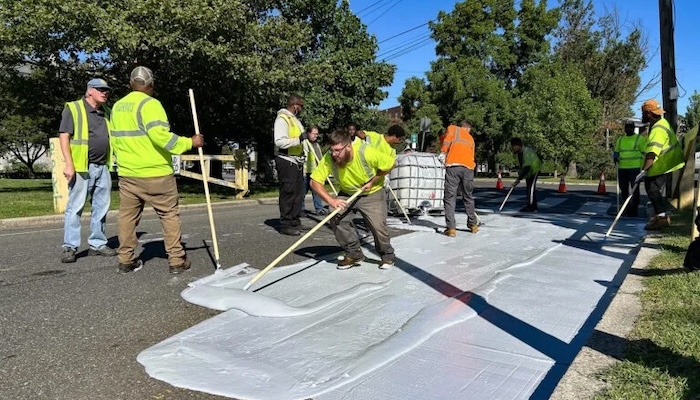
Philadelphia tests out ‘cool pavement’ in Hunting Park to combat summer heat
Conventional paved surfaces trap atmospheric heat, particularly in cities because of their many paved streets, highways and parking lots. That is making the urban heat island effect more intense in busy metropolitan areas such as Philadelphia. Combined with climate change impacts, cities are experiencing even more intense urban heat. Kamil Kaloush, a professor in the School of Sustainable Engineering and the Built Environment, part of the Fulton Schools, talks about the “cool pavement” materials developed to help mitigate city heat. The article reports on the cooling street pavements being used in Phoenix that are lowering surface temperatures — but not doing as quite as well at cooling the surrounding air.

My View: Arizona should lead in quantum computing by leaping beyond science and into practice
ASU is among the leading universities at the forefront of weaving the abilities of the expanding realm of quantum computing into the spectrum of advanced science and engineering research. Funded and powered by ASU, along with the state of Arizona and industry partners, the university’s Quantum Collaborative is extending the reach of the field across network communications, sensing, computing, simulation and cybersecurity — and educating the future quantum workforce. Students are being introduced to endeavors that explore the use of quantum computing to solve real-world problems in logistics, finance, energy optimization and other fields. By working across disciplines, they’re tackling major physics, engineering, math and even business challenges.

‘No One Comes Out of This Unscathed’: Experts Warn That Colorado River Use Needs Cutting Immediately
‘No One Comes Out of This Unscathed’: Experts Warn That Colorado River Use Needs Cutting Immediately
An extensive analysis warns that water in the Colorado River basin’s reservoirs is being depleted at rates threatening to result in severe problems unless urgent federal actions are taken to cut down dramatically on the current level of use of the river’s water. Margaret Garcia, an associate professor in the School of Sustainable Engineering and the Built Environment, part of the Fulton Schools, says an analysis of the situation clearly confirms the severity of the situation. Garcia notes the already extremely dry conditions in the river basin reservoirs. To achieve better water security in the future, she says, those reservoirs must at the least be able to better generate hydro power and to store substantially more water.
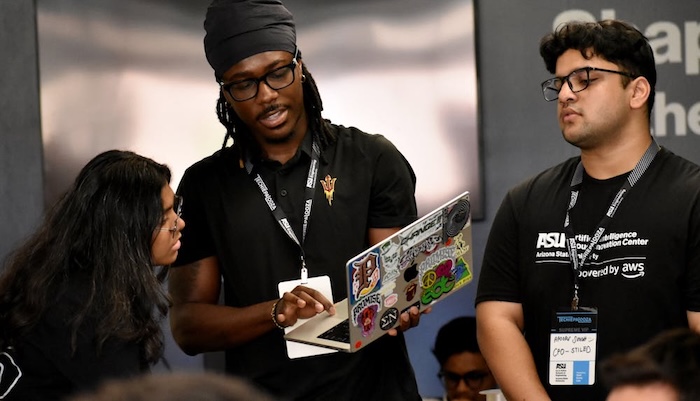
Not Just Networking: Techiepalooza Creates Founders
Techiepalooza is designed to help students ASU students get involved in work seeking to help launch the next waves of tech innovation. The Fulton Schools’ Entrepreneurship and Innovation program, directed by Brent Sebold, recently held another of its gatherings designed to help students generate ideas and build project teams. Sponsored by the Honeywell-ASU Innovation Hub and Hool Coury Law, the event opened the way for students to access other ASU entrepreneurship opportunities such as Venture Devils and SkySong. Sebold says the E+I program is showing students that entrepreneurship is a team sport and Techiepalooza is helping students to embark onto entrepreneurial journeys with each other.

Enrollment at ASU’s West Valley campus increased by 15% over past 2 years
ASU’s West Valley campus has seen student enrollment jump by more than 15 percent in the past two years. More than 500 students are now housed in campus residences. Some of the increase is attributed to the boost in engineering students. The campus is home to the School of Integrated Engineering, the newest of the Fulton Schools. Some of its curriculum is especially relevant to the booming semiconductor industry, and as a result the school has begun building a promising productive connection between ASU and the international Taiwan Semiconductor Manufacturing Company’s expanding West Valley operations.
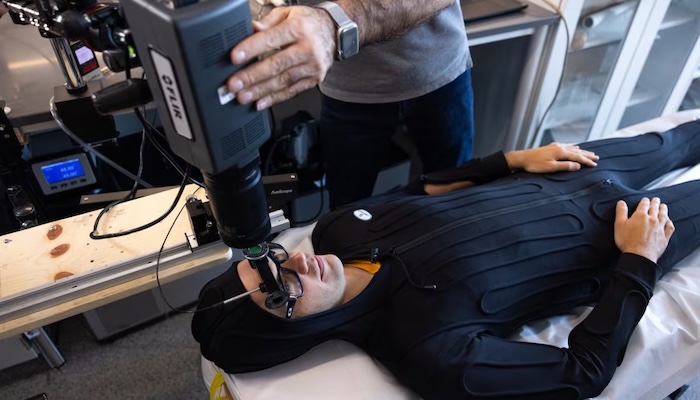
Sweat science — This research really was 90% perspiration
In a video recording of an edition of Quirks & Quarks, Konrad Rykaczewski, an associate professor in the School for Engineering of Matter, Transport and Energy, part of the Fulton Schools, explores the biology of perspiration from inside a full-body, tube filled suit than enables observing the way water emerges from human sweat glands. The suit runs hot water around his body, which increases his body temperature. His research team focused infrared cameras on his forehead to get a macroscopic look at the pattern of sweat formation. The experiment has been detailed in a report published in Journal of Royal Society Interface.
See also: Sweat Science — This research really was 90% perspiration, Quirks and Quarks with Bob McDonald, CBC Listen

ASU, Thai partners sign MOU to advance shared microelectronics goals
ASU is expanding its international outreach through new collaborations with Thailand’s Ministry of Higher Education, Science, Research and Innovation and Mahanakorn University of Technology. An ASU delegation led recently by Jeffrey Goss, the Fulton Schools associate vice provost for Southeast Asia programs, explored further joint endeavors within Thailand’s semiconductor industry ecosystem. Goss, who also helps to lead ASU’s STEM education engagement efforts, says such international partnerships are strengthening academic excellence, workforce development and innovation for all those involved. The delegation also visited the newly opened Interdisciplinary Science and Technology Building 12 on ASU’s Polytechnic campus, home to the School of Manufacturing Systems and Networks, part of the Fulton Schools.

How semiconductor boom and ASU are transforming our economy
Efforts ASU has led or contributed to have been major factors in the growing economic impact of the semiconductor industry’s growth in Arizona. Some of that progress has been achieved through the skills of Fulton Schools’ graduates and collaborations with the schools’ faculty researchers and leadership. Zachary Holman, the Fulton Schools’ vice dean for research and innovation, points to partnerships between ASU and semiconductor industry leaders that have been spurring industry progress, such as the investment to create the Materials-to-Fab Center at the ASU Research Park in Tempe. More than a dozen companies, from startups to multinational tech giants, have taken up residence at the park and invested in its expansion.

New ASU Program Fosters The Future of National Intelligence Workforce
Students who want to pursue careers in national security and government intelligence at a time when federal support for that pursuit is lacking could instead find help through a new ASU Intelligence Community Fellow program formed by the Intelligence Community Center for Academic Excellence. Fulton Schools computer systems engineering student Aysha Viene says the new program is now crucial to maintaining national security in the future, as well as the safety and privacy of citizens, and she is committed to using skills she is learning at ASU to help ensure those U.S. security protections.
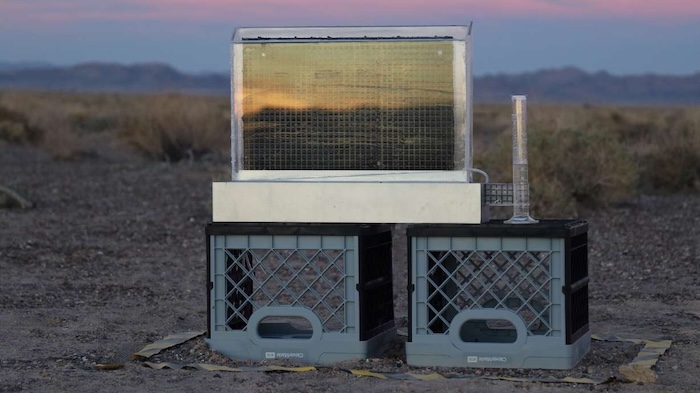
Water harvesting devices pull drinking water from the air in deserts, but face criticism
Engineers at the Massachusetts Institute of Technology are testing a new device designed to extract water for the air in desert regions. The water harvesting device uses hydrogel, an absorbent material that looks black bubble wrap that absorbs water vapor directly from the atmosphere. It is now being testing in California’s Death Valley. The new technology can extract humidity from even the driest environments, says Paul Westerhoff, a professor in the School of Sustainable Engineering and the Built Environment, part of the Fulton Schools at Arizona State University. The process is expensive and raises some concerns, he says, but is nevertheless drawing widespread interest. He foresees commercial uses eventually multiplying.
See also: These devices harvest drinking water from the air in the planet’s driest places. Critics say they’re an expensive distraction, CNN Climate

AI’s not ‘reasoning’ at all — how this team debunked the industry hype
Large Language Models, or LLMs, a type of artificial intelligence, or AI, technology capable of understanding and translating vast amounts of text data, don’t quite live up to claims of their comprehensive and superior reasoning power. Pushback against such a declaration has come from ASU researchers, including Chengshuai Zhao, a graduate research associate in the School of Computing and Augmented Intelligence, part of the Fulton Schools. Zhao and his colleagues have published a research paper making the case that while AI is a sophisticated and useful form of structured pattern matching, it is not a mechanism for genuine logical inference — or, in other words, vastly superior reasoning powers.

Tata Consulting Engineers steps in to bridge India’s semiconductor skill gap
The largest private engineering consultancy in India is enlisting the expertise of Fulton Schools’ leadership, faculty members and researchers to boost its efforts to strengthen the capabilities of the country’s semiconductor industry, as well as significantly advance its electronics manufacturing sector. A main thrust of the collaboration is to prepare the next generation of engineers to lead efforts to produce semiconductor breakthroughs, says Kyle Squires, dean of the Fulton Schools. Michael Kozicki, a professor in the School of Electrical, Computer and Energy Engineering, part of the Fulton Schools, says the focus will go beyond gaining technical knowledge to learning how to foster a vibrant culture of high-tech innovation.
See also: Tata Group’s New Semiconductor Partnership, Construction World
Tata Consulting Engineers, Arizona State University to jointly develop semicon workforce, ET Telecom
Industry leaders laud India’s semiconductor momentum at Semicon 2025, The Tribune (India)
Industry Leaders laud India’s semiconductor momentum at Semicon 2025, ANI News (South Africa)
How Tata Consulting Engineers is strengthening semiconductor workforce development. HrKatha
“Historic” Day for India’s Semiconductor Industry,’ Business leaders hail first Made-in-India chip ‘Vikram’ ANI News (South Africa)
Tata Consulting Engineers and Arizona State University Join Forces to Develop Semiconductor Workforce, The Realty Today
India’s Chip Ambitions Get a Boost as TCE and ASU Launch Semiconductor Talent Programme, Infrastructure Today (India)
Tata Consulting Engineers, ASU join hands for Semiconductor talent, BW People
Consulting engineers Partnership with Arizona State University to enhance semicondustro development workforce development, Telecom Economic Times
Tata Consulting Engineers and Arizona State University Partner to Strengthen Semiconductor Workforce Development. CXO Today

EPICS: How Sun Devils Are Engineering Change
Through the Fulton Schools Engineering Projects in Community Service, or EPICS, program, students are putting to use the skills they are learning at ASU to aid projects that are serving communities in Arizona, throughout the U.S. and even in other countries. EPICS faculty member Daniel Frank, a Fulton Schools academic and student affairs instructor and Fulton Schools computer science student Balamurali Ravipalli and others describe EPICS endeavors such as a Monkey Enrichment project, and a project using artificial intelligence to develop ways for farmers in Canada to improve their operations through eco-friendly practices and making 3D printed tactile maps to help people with visual impairments.
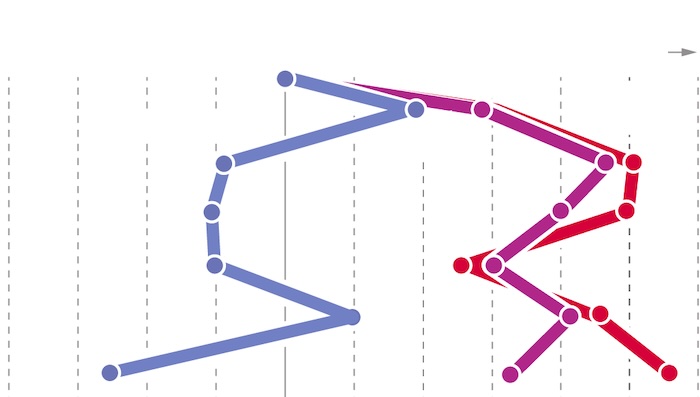
How Elon Musk Is Remaking Grok in His Image
Grok, an AI-powered chatbot developed by Elon’s Musk’s company, was heralded as being unbiased in its truth-seeking and therefore able to remain politically neutral. An analysis of thousands of Grok’s responses, however, has found its answers lean significantly toward politically conservative viewpoints. It reflects a trend of chatbots stoking ongoing battles over political issues. Subbarao Kambhampati, a professor in the School of Computing and Augmented Intelligence, part of the Fulton Schools, is among experts who point to the complexities involved in the use of AI within a highly charged, politically biased environment.

Concrete Research: Develops More-Sustainable Products and Working Conditions
Experiencing the stress a desert climate can put on roads, bridges, railways and other infrastructure is motivating engineers to explore ways to effectively fortify materials to make built environments more resilient. Professors Barzin Mobasher and Narayanan Neithalath in the School of Sustainable Engineering and the Built Environment, part of the Fulton Schools, have been helping to lead such projects. Through research and testing in ASU’s structural mechanics and infrastructure materials laboratories, they have been contributing to finding solutions, some of which not only strengthen public facilities but also ease the strain from the physical stress faced by many workers, as well as often also saving money on infrastructure projects.

ASU’s Four-legged AI Robodog Champions a Caring Robotics Future
The Laboratory for Learning Evaluation and Naturalization of Systems, founded by Ransalu Senanayake, an assistant professor in the School of Computing and Augmented Intelligence, part of the Fulton Schools, focuses on forging technologies designed to help people overcome some of the most prevalent and pressing problems affecting their lives. That’s the motivation for the creation of a robotic canine, or robodog, and developing new artificial intelligence systems to guide robodogs in fulfilling various missions to serve people. The overall goal is combining deep learning technologies to enable the robots to understand their surroundings and communicate with people — especially visually impaired people who could benefit significantly from a robodog companion.
See also: Robotic Dogs: Pioneering AI for Real-World Solutions at ASU on the Entech website.
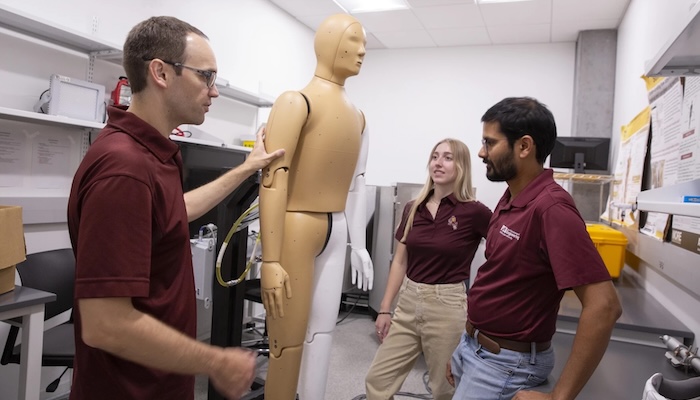
Sweating manikin helps ASU researchers learn how to make working in the heat safer
A human-shaped manikin designed and built to mimic the human body’s thermal regulation capability in various environments has been a major tool in research aimed at getting a better understanding of how people react to heating and cooling methods. Work led by Konrad Rykaczewski, an associate professor associate professor in the School for Engineering of Matter, Transport and Energy, part of the Fulton Schools, uses the manikin name ANDI to reveal in detail what the changes in humans’ core temperatures and skin temperatures look like in different climatological conditions. A primary goal is to gain knowledge of ways to protect people in extreme heat.

This air conditioning strategy is the sweet spot for saving energy and money, experts say
Turning off air conditioning units while your away from home can save money and energy. It can also cause mold problems in houses in humid environments and lead to wear and tear on air conditioning systems that requires frequent repairs. That’s one reason experts recommend simply setting the air conditioning up a few degrees when leaving the house. Patrick Phelan, a professor in the School for Engineering of Matter, Transport and Energy, part of the Fulton Schools, suggests using “smart thermostats” equipped with sensors that can monitor a house’s occupancy and raise the temperature when no one is home to conserve energy and lower temperatures when people return.

ASU researchers receive $9M to develop scalable energy solutions for Hopi Reservation
Fulton Schools researchers are working to help residents in the remote rural community on the Hopi Reservation in northeastern Arizona establish a reliable source of energy. The project is led by Kristen Parrish, a professor in the School of Sustainable Engineering and the Built Environment, part of the Fulton Schools. The Hopi community is facing energy challenges like those in small towns across the U.S., Parrish says. With a multimillion-dollar U.S. Department of Energy grant, the project will adapt an existing fossil fuel-based infrastructure to provide more sustainable and reliable energy.

New study calls AI reasoning a “brittle mirage”
Their ability to reason is on par with humans’ reasoning powers. That’s a claim made about OpenAI’s new CPT-5’s reasoning and problem-solving capabilities. But in a new research paper, some experts in artificial intelligence claim that assertion is erroneous. Chengshuai Zhao, a computer science student in the School of Computing and Augmented Intelligence, part of the Fulton Schools, and Subbarao Kambhampati, a professor in the school, present their case for why CPT-5 does not quite qualify as a master of sophisticated reasoning. Kambhampati describes CPT-5 as a producer of “jagged intelligence,” referring to its ability to answer complex problems if those problems are in its training data, but if not then it fails to accurately answer extremely simple questions.

Scientists make breakthrough discovery that could revolutionize solar panels: ‘It’s a path forward’
Recent research breakthroughs have set the stage for solar energy panels to be less expensive to make and to operate more efficiently. Now, in the latest advance, the panels can also be made to perform in a more environmentally friendly way. Developed by ASU researchers and the SolarCycle company, the system opens a path to manufacturing new solar panels using recycled materials that produce solar energy at peak performance levels that are more sustainable and scalable. Zachary Holman, Fulton Schools vice dean for research and innovation, says the project has gone beyond successful verification of the basic effectiveness of the process in the laboratory to verifying it can be fully and effectively integrated into solar energy industry operations.
See also: Solar Cycle, Arizona State University develop solar panel made with 50% recycled solar glass, Solar Power World
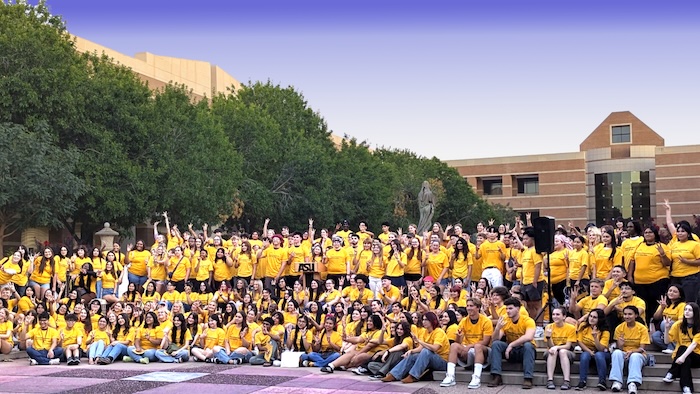
ASU West Valley campus sees 15% enrollment growth over 2 years
The growing reputation of ASU’s West Valley campus as a center for hands-on learning and an active student-centered community has recently been bolstered by a 15 percent student enrollment increase over the past two years. With recent enrollees from 40 U.S. states and 71 countries, the number of students overall has jumped to more than 5,400. New and innovative Fulton Schools’ undergraduate and graduate courses and degree programs have contributed significantly to attracting more students to the campus. Those include a new engineering science degree program with a concentration on business, as well as another engineering science program with a focus on microelectronics.

How the semiconductor boom and ASU are transforming Arizona’s economy
ASU’s state-of-the-art research facilities are credited with helping to produce technological advances that have aided the rise of today’s semiconductor industry. ASU students are being prepared to contribute to future progress. Among them is Taylor Gowdy, a 2024 ASU graduate who earned her degree through the mechanical engineering systems program in The Polytechnic School, part of the Fulton Schools. Many courses Gowdy took provided hands-on, project-based learning, giving her experience that helped her to get hired by the Taiwan Semiconductor Manufacturing Company’s Arizona operations, where she works as an equipment engineer. ASU’s many world-class researchers have been a key factor in drawing the thriving company to the Phoenix area, says Zak Holman, Fulton Schools vice dean for research and innovation. The booming semiconductor sector is now expected to produce more jobs and economic benefits extending beyond the tech manufacturing industry.

Back to school, rewritten: 1.2 million ASU learners and counting
Learning career skills that provide both immediate and long-term to value to students is among the major attractions of degree programs in many of ASU’s schools and colleges. The Fulton Schools has a place on the list of the top eight schools and colleges that are leading the way in fulfilling the mission to prepare students to excel in their chosen professions. One student earning an engineering master’s degree emphasizes that the education provided in the field has led to valuable insights into ways technological advancements are shaping not only industries but societies. Overall, students are saying there are graduating with a feeling of confidence about their readiness to contribute to the world at large.

Arizona State University Enhances Science Education With Virtual Reality Integration
Use of advancing virtual reality technology is proving its ability to boost student engagement and improve higher education, especially in engineering and science fields. This is being demonstrated at ASU, specifically at its Polytechnic campus, home to The Polytechnic School, one of the Fulton Schools, where the ability of virtual reality to help visualize scientific concepts is aiding instruction in engineering, along with medicine, biological science and even the arts. The various learning methods that virtual reality technology make possible — visual, auditory, kinesthetic, solitary, social, verbal and logical — enables class instruction to match students’ various individual learning styles, teachers say.
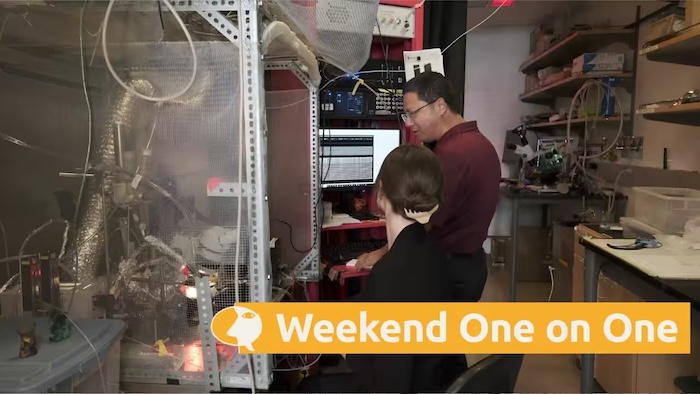
Solving AI amnesia with bee brains
Describing his interdisciplinary research project intertwining computer science and biology, Ted Pavlic, an associate professor in the School of Computing and Augmented Intelligence, part of the Fulton Schools, explains how artificial intelligence, or AI, systems can suffer from “catastrophic forgetting.” In this podcast from an Australian news outlet, he describes a current drawback of AI systems that can learn to perform new tasks but then later forget how to do them when they need to focus instead on a learning a different task. In an effort overcome that drawback, Pavlic has been examining the workings of the brains of sleeping bees, which could contribute to knowledge on how to create more memory-efficient AI technology.

Terracon Awards scholarship to ASU for engineering
A civil engineering student in School of Sustainable Engineering and the Built Environment, part of the Fulton Schools, will soon be selected to receive a scholarship from the Terracon company for the 2025-2026 school year at Arizona State University. The support comes from a new $50,000 endowment from the employee-owned company with more than 180 locations across the U.S. that is led by engineers and scientists specializing primarily in environmental consulting services in geotechnical engineering, construction materials testing and facility engineering. (Access to the article requires acquiring an account with the Wrangler News Daily Independent news service.)

Colorado River shortages will continue through 2026, with ‘dire’ predictions beyond
The Colorado River, a major source of Arizona’s water supply, is expected to remain in a water shortage condition through 2026, presenting a major challenge for the state in facing potential serious drought situations. Enrique Vivoni, a professor of in the School of Sustainable Engineering and the Built Environment, part of the Fulton Schools, and the director of the Center for Hydrologic Innovations, explains that much of the problem stems from dry soils soaking up precipitation during a long dry spell. Predictions show another year of only a small amount of water runoff from the reservoir system could pull the situation into a catastrophic condition.

ASU brings college courses to high school students worldwide
Along with the W. P. Carey School of Business, Edson College of Nursing and Health Innovation, and the College of Integrative Sciences and Arts, the Fulton Schools is among ASU schools and colleges getting involved in new international partnerships that are helping young students in more than 30 counties earn college credits. The effort is part of a broader endeavor involving a collaboration with the Council on Foreign Relations and a partnership with International Baccalaureate, through which ASU is contributing to efforts to provide educational opportunities to high school students in Asia, Africa, Europe and the Middle East through online college education programs.
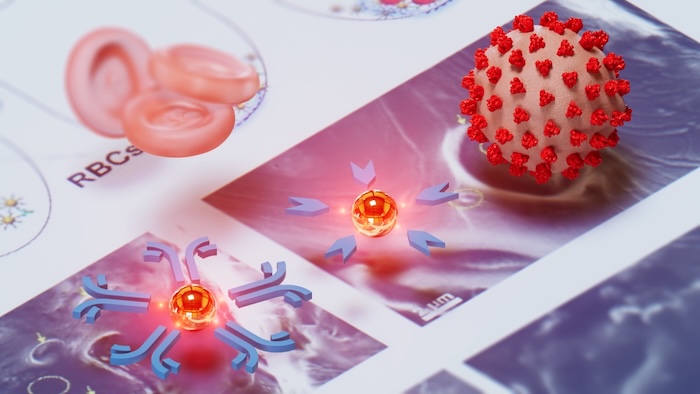
Fast, accurate, low-cost diagnostics: No lab required
An advanced diagnostic test that uses tiny gold nanoparticles has been developed by ASU researchers, including Chao Wang, an associate professor in the School of Electrical, Computer and Energy Engineering, part of the Fulton Schools. The test detects the virus that causes COVID-19 with high accuracy, distinguishing it accurately from other infections. The technology exposes extremely small amounts of disease-related proteins after researchers coat nanoparticles engineered to detect specific diseases. The test is expected to help in reducing the hundreds of thousands of Americans who die or are disabled each year because of medical diagnostics errors. Wang has received an award related to his contributions to this research.
See also: Portable test detects infections from a single drop of blood in 15 minutes, Medical Express
New diagnostic tool offers rapid, low-cost blood test for multiple diseases, News Medical

Demand for ASU surges as new year begins
For the coming fall semester, ASU is projected to enroll more first-year students than ever in the university’s history — close to 43,000 of them. Among the major areas of studies many new students have selected are mechanical engineering and computer science, fields that are the focus of two Fulton Schools degree programs. Beyond new students from around the U.S., ASU is projected to see enrollment of 14,600 international students this fall semester. An annual overall enrollment of more than 194,000 ASU students, including 43,00 graduate students over the past year, is a historically high mark for the university.

What If A.I. Doesn’t Get Much Better Than This?
A research paper by the director of the Data Mining and Research Lab by Huan Liu, a professor in the School of Computing and Augmented Intelligence, part of the Fulton Schools, and several of his colleagues looks at artificial intelligence, or AI, and its impressive capabilities — as well as how impactful progress on the promising evolution of the technology might be close to reaching an end point. The focus is on the performance of Large Language Models, or LLMs, and questions about whether some of their powers of reasoning are being overblown. AI Chain-of-Thought reasoning capabilities are also explored in highly technical detail and called into question, noting how and why they can fail.

ASU, University of Michigan launch manufacturing research center
Wenlong Zhang, an associate professor in the School of Manufacturing Systems and Networks, part of the Fulton Schools, is co-director and a principal investigator for the new Center for Digital Twins in Manufacturing, an ASU and University of Michigan collaboration pursuing ways to optimize manufacturing processes through advances in digital twin technologies. Those advances can enable engineers to better monitor, analyze and improve performance of these technologies to boost precision in manufacturing them. Funded by the National Science Foundation, the center is expected to help achieve advances in smart manufacturing while also educating students in the use of digital twin technology, enabling them to help the U.S. remain competitive in the global economy. Zhang says the project reflects Arizona’s expanding role in advanced manufacturing.

What new era of water rights and distribution means for Arizona
Climate change combined with a growing demand for water has led to a dwindling amount of water for seven western states, including Arizona, as well as 30 Native American tribes that depend on Colorado River water. Arizona could face losing a significant part of its water supply, creating a big need water reuse, such as turning wastewater into drinkable water. Enrique Vivoni, a professor of in the School of Sustainable Engineering and the Built Environment, part of the Fulton Schools, and the director of the Center for Hydrologic Innovations, describes various steps Arizona could take to help maintain adequate water supplies. A change in water rights is also expected also present some challenges to various regions and communities.
See also: Arizona’s declining share of Colorado River likely to hold steady for a year, Arizona Republic, Arizona Republic
Vivoni tells Central Arizona Project board member that dry soils are soaking up precipitation before it can reach the Colorado River, reducing the flow of water
Preparing for a drier future on the Colorado River basin, ASU News
Vivoni is quoted

Will There Be Enough Water to Make More Semiconductors in the U.S.?
In a segment of a regular news update on water issues around the world, Paul Westerhoff, a professor in the School of Sustainable Engineering and the Built Environment, part of the Fulton Schools, voices concern about a shortage of adequate water supplies to sustain the increasingly critical semiconductor manufacturing industry in the U.S. Some semiconductor fabrication facilities use tens of millions of gallons a day, raising serious doubt about the ability of many of fabrication operations to maintain their production in water-stressed regions such as Arizona. Westerhoff and his colleagues are researching water-reuse technologies that could help to adequately maintain the operations of fabrication facilities.

Revolutionary Solar Panels Use “Recycled Glass” in a Bold Move That Could Save America Billions and Slash Energy Costs
A study by ASU researchers and SOLARCYCLE shows solar energy panels made from recycled glass perform as well as those made from other new materials, a discovery expected to boost the solar energy industry. The work involved Fulton Schools researchers testing solar panel prototypes made from both new and recycled glass. Fulton Schools Vice Dean for Research and Innovation Zachary Holman says the project demonstrates that solar energy panels can be built in ways that make them more sustainable without a sacrifice of a loss in the overall energy-generating performance of the panels. That development is seen as providing a big step to a promising future for renewable energy opportunities.
See also: Solarcycle produces recycled glass test module with ‘peak performance, PV Tech
Recycled glass gives solar panels high-performance, makes them work like new, Interesting Engineering
This 50% recycled glass solar panel panel perform like brand new, Electreck
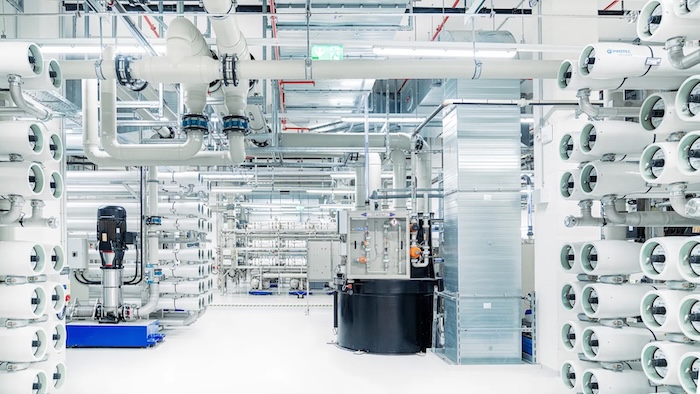
Semiconductor industry faces water, sustainability challenges
A booming U.S. semiconductor chip market is intensifyingdemand on the industry to provide more highly purified water for use in chip manufacturing processes, as well as raising a more pressing need for water conservation. Paul Westerhoff, an ASU Regents Professor in the School of Sustainable Engineering and the Built Environment, part of the Fulton Schools, gives details of various processes and systems that chip manufacturers can use to achieve sustainable water conservation. He describes what Intel and other manufacturers can do to purify their water and use wastewater for productive purposes while also improving purification processes and protecting communities by reducing possibilities of pollution.
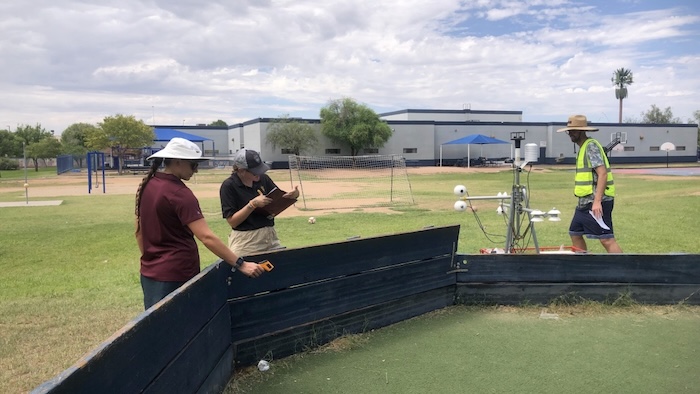
Helping elementary school kids stay active, even in the heat
A mobile temperature-measuring tool owned by ASU Associate Professor Ariane Middel, a faculty member in ASU’s new The GAME School who has affiliations with the Fulton Schools, has been instrumental in recent research aimed at helping to find safe ways for young students to stay healthy and active in hotter climates such as those of much of Arizona. The team involved in the project is working with the Arizona Department of Health Services and Arizona Department of Education to develop a tool kit designed to help guide efforts to assist people in coping with hot outdoor environments and contribute information for a HeatReady Schools initiative. Middel’s affiliations also include one with ASU’s Urban Climate Research Center and the SHaDE Lab.
See also: What are urban heat islands and what causes them?, Spectrum News (Ariane Middel is interviewed)
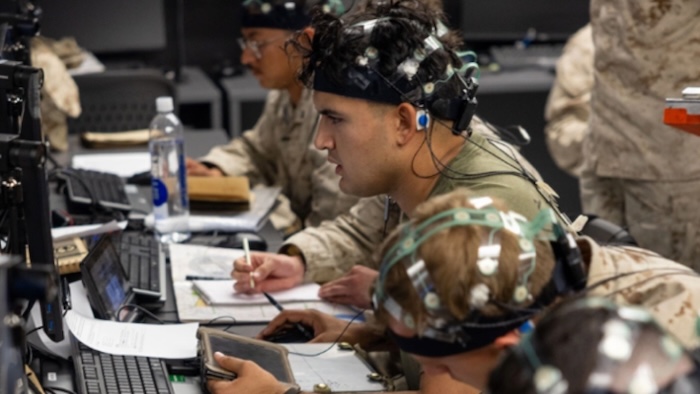
ASU developing reliable team performance measures for Marines
ASU researchers are contributing to an intensive evaluation of the effectiveness of team training techniques and related practices used by the U.S. Marine Corps. The goal is to provide the U.S. Department of Defense with optimal methods to assess team dynamics, performance and mission readiness of the nation’s military forces. Jamie Gorman, a professor in The Polytechnic School, part of the Fulton Schools, and director of ASU’s Center for Human, Artificial Intelligence, and Robot Teaming, is leading one of the efforts to help meet the project’s key goals. Gorman says the project is designed to maximize the resilience of U.S. military forces’ operations in undertaking today’s increasingly complex defense challenges.

How a robot and mobile lab are helping us better understand heat impacts
A manikin weighing 1,000 pounds, due to being equipped with a variety of sensing devices, is a new high-tech tool developed and being used by an ASU research team to understand how ambient heat impacts the human body. Led by Konrad Rykaczewski, an associate professor in the School for Engineering of Matter, Transport and Energy, part of the Fulton Schools, the team’s engineers and scientists (pictured with the robot/manikin) have been gathering data in a quest to design and develop tools and methods to protect human health during times of excessively high temperatures as much of the planet continues to experience more frequent sizzling temperatures.

Engineers Weigh Up Returning to Ancient Roman Concrete Recipes
Engineers are finding lessons from practices of ancient Roman builders could provide paths to manufacturing concrete in ways that reduce or eliminate the environmentally threatening greenhouse gasses produced in the making of much of today’s concrete. Narayanan Neithalath, a professor in the the School of Sustainable Engineering and the Built Environment, part of the Fulton Schools, notes that emissions of such gasses are required to be reduced by more than 20 percent in the near future in accord with the Paris Agreement, an international treaty that seeks to spur efforts to halt detrimental climate change. The Roman concrete formulations could prove more sustainable in the long run because they may not need to be replaced or repaired often, Narayanan notes.
See also: Neither steel nor Portland—Roman concrete can last for centuries and could save the planet from climate collapse, LAGRADA
Farewell to modern cement – Roman concrete can last for centuries and could save the planet from climate collapse, Union Rayo

ASU partners with SEMI University to expand semiconductor training through online courses
A new partnership involving Arizona State University and a semiconductor manufacturing association aims to expand access to on-demand training in semiconductor technology. ASU is collaborating with SEMI, an industry association, to provide high-quality learning experiences to university students and early-career professionals. Octavio Heredia, a director of Global Outreach and Extended Education at the Ira A. Fulton Schools of Engineering at ASU, says the students will learn all about the semiconductor industry and the manufacturing process. “I think the state of Arizona has become a critical ecosystem in the semiconductor microelectronic space from education, from research and advancing the industry in general,” Heredia says.
See also: SEMI, Arizona State University to Deliver Semiconductor Engineering, ink world magazine

5 ASU faculty receive Fulbright US Scholar awards for 2025–26
Progress in work to develop cell-based therapies that can help treat diseases such as Type 1 diabetes has brought a prestigious Fulbright Scholar award to Jessica Weaver, an associate professor in the School of Biological and Health Systems Engineering, part of the Fulton Schools. In a collaboration with researchers at the Technion Israel Institute of Technology in Haifa, Israel, known for its expertise in engineering vasculature, Weaver’s team will be integrating lab-engineered vasculature from that lab with her lab’s computationally optimized cell therapy devices. The goal is to improve oxygen delivery to encapsulated cells to help improve the effectiveness of clinical treatments to fight disease.

Forget discrete droplets. This is how sweat really forms
Sweat gets a bad rap as an off-putting bodily substance, but without sweat and its evaporation that helps to chill human skin in hot weather we would experience more discomfort in that and similar conditions, says Konrad Rykaczewski, an associate professor in the School for Engineering of Matter, Transport and Energy, part of the Fulton Schools. Rykaczewski, a materials and thermal engineer, is among researchers studying the mechanics of sweat and it affects to help develop more effective cooling technology. He and other experts are examining sweat from is its micro to macro scales to gain an understanding of various ways people could better protect themselves from dangers of overheating and related health threats.

Google set up two robotic arms for a game of infinite table tennis
Advances in artificial intelligence, or AI, technology could one day birth “brains” for humanoid robots that could enable them to more productively interact with humans in workplaces, homes and elsewhere, including in table tennis matches, researchers say. Those at DeepMind research laboratory foresee an evolution from the clunky metal robots of limited abilities long portrayed on television shows and movies to smarter and more human-like assistants. Heni Ben Amor, an associate professor in the School of Computing and Augmented Intelligence, part of the Fulton Schools, recently co-authored an article in IEEE Spectrum expressing optimism about development of increasingly capable robotic machines that will operate more effectively in the real world.
See also: DeepMind’s Quest for Self-Improving Table Tennis Agents, IEEE Spectrum, July 21
Heni Ben Amor co-wrote the article with Pannag Sanketi, a senior staff engineer and tech-lead manager on the robotics team at Google DeepMind, about how robots can learn new skills by challenging each other.

Forget discrete droplets. This is how sweat really forms
Sweat is not commonly thought of in a positive way but it’s actually a good thing, says Konrad Rykaczewski, an associate professor in the School for Engineering of Matter, Transport and Energy, part of the Fulton Schools. It’s the evaporation of sweat that chills human skin, giving it some protection against heat. So, studying sweat can aid scientists and engineers in designing and developing more effective technologies to help keep people cool, he says. Rykaczewski is working with colleagues to investigate possibilities for high-tech solutions that would alleviate or mitigate some impacts of extreme heat.
See also: Like AC for the Outdoors, The Atlantic (July 22)
To survive a heating planet, humans need shade – a lot of it.
Associate Professor Ariane Middel, director of ASU’s Sensable Heatscapes and Digital Environments, or SHaDE, Lab, who has affiliations with the Fulton Schools, talks about using shade to help overcome the global environmental challenge of rising heat. (Signing up for one-year subscription or a one-month free trial subscription is necessary to access the full article.)

Pittsburgh-area transit riders swelter in extreme heat
Use of public transportation in many communities is dropping by almost 50 percent when temperatures rise to uncomfortable levels, according to a recent study co-authored by researchers at University of Texas at Austin and University of Washington, as well as Ram Pendyala, director of the School of Sustainable Engineering and the Built Environment, part of the Fulton Schools, and faculty members in the school Steven Polzin, Mikhail Chester, Irfan Batur and Victor Alhassan. The article looks at the recent impacts of heat on ridership in 11 major cities and details the steep declines in use of buses and rail transit uses when heat rises to extreme levels. Officials are exploring solutions, but riders say they are experiencing increasing frustration.

Studying growth and development of brain cells to better understand neurological disorders
Madeline Andrews, an assistant professor in the School of Biological and Health Systems Engineering, part of the Fulton Schools, is interviewed about her research involving reprogramming blood or skin cells into brain cells to study neurological disorders. Her lab is using induced pluripotent stem cells to investigate how cells change over time, particularly in healthy development and disease states. The focus is on glucose metabolism, because 20 to 25% of glucose consumed is used by the brain. Andrews wants to understand how glucose intolerance and other nutrients impact brain function and communication. Future research will examine these processes in patients with disorders such as autism and Alzheimer’s.

Large language models lack true reasoning capabilities, researchers argue
Recent research casts some doubt on the touted capabilities of Large Language Models, or LLMs — a type of artificial intelligence, or AI, technology that uses deep learning to generate and manipulate human language. It enables text generation, summarization, translation and related results. But new studies led by Subbarao Kambhampati, a professor in the School of Computing and Augmented Intelligence, part of the Fulton Schools, and former president of the Association for the Advancement of Artificial Intelligence, cast some doubt on claims about the extent of the performance of LLMs. He and others are showing that effective use of LLMS will require a more thorough understanding of these systems and verification of their actual abilities.
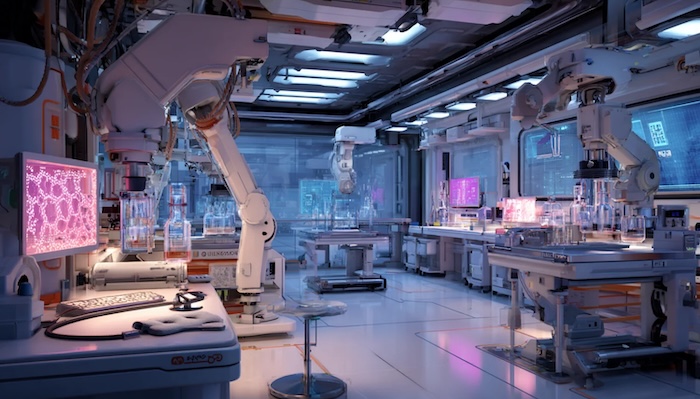
Inside AI-Powered Labs: A New Era of Materials Discovery
Artificial intelligence, or AI, is now enabling robust new advances in the materials science world. Combined with the abilities of high-performance computing and hybrid cloud technologies, AI is helping materials scientists accelerate discoveries of new materials and improve predictive modeling of their properties. Peter Crozier, a professor in the School for Engineering of Matter, Transport and Energy, part of the Fulton Schools, explains how blending of AI with electron microscopy to enable more advanced visualization of materials’ dynamics at the atomic level could open pathways to advances in areas such as electronics, industrial materials and pharmaceuticals.

Extreme heat hits unhoused Arizonans hardest
People continue to die from heat-related health issues in Arizona’s hotter regions, says Ariane Middel, an associate professor in the School of Computing and Augmented Intelligence, part of the Fulton Schools. Middel, who uses various metrics to track extreme heat that go beyond simply air temperature, says more research is needed to understand the long-term impacts of extreme heat and air pollution. She points out that towns and cities often do not have sufficient resources to adequately shield people from high summer temperatures and says more cooperative connections between communities are needed to help provide better protection from extreme hot weather.

New breath-taking technology helping patients lose weight
A new device is capable of analyzing the human metabolism in a way that provides data enabling physicians to develop personalized care plans for people to reduce their body weight. Called Breezing, the device developed by Erica Forzani, a professor in the the School for Engineering of Matter, Transport and Energy, part of the Fulton Schools, analyzes the body’s oxygen consumption and carbon dioxide production. It has been approved for use by the Food and Drug Administration in the U.S. and by the European Union. The venture is also seeking expansion of such official approvals to help people in other countries address obesity.

A visit to the New York City headquarters of Synchron, a major Neuralink competitor, provides an intriguing look at the booming potential of brain-computer interface technology. An expert in the field, Bradley Greger, an associate professor in the School of Biological and Health Systems Engineering, part of the Fulton Schools, shares his view of the potential benefits and risks of this fast-evolving high-tech advancement. Greger cautions about the expected hype of the potential benefits of these interface capabilities as companies attempt to move it quickly into the marketplace. He and other academics see its potential to provide much of benefit but are also cautious about the possibly serious consequences if such systems become in some ways invasive.
See also: Elon Musk’s Neuralink Aims to Implant 10 Times More Brain Chips in 2025, Observer

New algae system helps Arizona farmers grow better crops with less water
Improving the health of soils also helps to improve water conservation. Among current projects contributing to advances in these areas is a collaboration between ASU researchers and a Phoenix-based soil health company. The project is using live, native microalgae to enrich soil is enabling farmers to achieve greater water use efficiency, increase crop yields and reduce negative environmental impacts. There’s a strong potential for the project to have a large-scale impact, says Enrique Vivoni, Fulton Professor of Hydrosystems Engineering in the School of Sustainable Engineering and the Built Environment, part of the Fulton and the director of ASU’s Center for Hydrologic Innovations. Researchers’ goal is to see the effort to maintain better soil health result in significant increases in water conservation in agricultural uses.
See also: New algae system helps Arizona farmers grow better crops with less water, ASU News

Research center developing digital twins for manufacturing
ASU and the University of Michigan are teaming up to invite industrial partners to help produce innovations through the new Center for Digital Twins in Manufacturing. The goal is for the center to become an Industry-University Cooperative Research Center funded by the National Science Foundation. Leaders and faculty members of the universities plan to meet with industry representatives to discuss the center’s operations, vision and goals. Wenlong Zhang, an associate professor of robotics and manufacturing systems in the School of Manufacturing Systems and Networks, part of the Fulton Schools, says the meeting will be enable potential industry partners to understand the value of becoming members and helping to shape research projects.
See also: U-M, ASU Lead Efforts to Create Center for Digital Twins in Manufacturing, ExecutiveGov
10 US colleges beyond the Ivy League that offer great computer programs
As a result of its innovation-driven approach to education, ASU has emerged as one of the top choices among students aspiring to careers in growing and increasingly creative areas such as computer science. The university’s expanding offerings include a computer science education program focusing on applications of related emerging fields such as artificial intelligence, data science and human systems engineering into the computer science field. The program in the School of Computing and Augmented Intelligence, part of the Fulton Schools, is becoming known for its high-quality competitive curricula, active career support for students and connections to top-tier employers.

Landmark study links gut bacteria to autism spectrum disorder
Its complex symptoms have long made it difficult to accurately diagnose and treat autism. Today, with promising new insights derived from examining the role of the human gut and the gut-brain connection in the development of autism, researchers are making strides in tracking autism’s onset and progression. Among them are recent fecal microbiota transplant studies by researchers such as Professor Rosa Krajmalnik-Brown, a professor in the School of Sustainable Engineering and the Built Environment, part of the Fulton Schools, and director of ASU’s Biodesign Center for Health Through Microbiomes. They are revealing with the help of computational biology more about the gut-brain connection and the potential for new autism therapies.

The Best Colleges for Aerospace Engineering 2025
The American Institute of Aeronautics and Astronautics is among organizations validating the beneficial impacts of the magazine’s 2025 rankings of the best college aerospace engineering degree programs in the U.S. The aerospace engineering program in the School for Engineering of Matter, Transport and Energy, part of the Fulton Schools, is especially noted for the education it is providing to students in design thinking and prototyping, systems testing, solar-powered flight and electrical propulsion systems in the aerospace and aeronautics realm. Particularly noted is that the degree program’s industry board of directors ensures the curriculum aligns with the emerging priorities of job markets in the fields that employ aerospace engineering experts.

ASU’s AI-powered robot is great at ping pong, but its ultimate goal is to help around the house
Applying his expertise in robotics and machine learning, Heni Ben Amor, an associate professor in the School of Computing and Augmented Intelligence, part of the Fulton Schools, teamed earlier this year with Google DeepMind to develop a robot that can play ping pong. Now Ben Amor and his research collaborators have a new project called Rosey the Robot — named after of the robotic maid on the popular TV cartoon show “The Jetsons,” which first aired in the 1960s. The new Rosie is a prototype for advanced artificial intelligence, or AI, technology that could become increasing capable of cooperating with humans to ably perform household chores and possibly more complex tasks as further tech advances are made. See also a previous post on this page dated May 12 linking to related previous news articles.

The AI Industry Is Radicalizing
Experts are offering an expansive range of assessments on where artificial technology, or AI, is headed — for better or worse — in the near future. Among them is Subbarao Kambhampati, a professor in the School of Computing and Augmented Intelligence, part of the Fulton Schools, and past president of the Association for the Advancement of Artificial Intelligence. The article reports on his and other experts’ outlook on the future of AI and challenges to realizing its potential in positive and productive ways. (Accessing the full article requires purchasing a subscription or accepting a free temporary trial subscription.)

Bombshell Research Finds a Staggering Number of Scientific Papers Were AI-Generated
Following up on an earlier report in The New York Times (see the post below on this page dated July 4), this article continues to raise concerns about authors of articles in science journals using artificial intelligence to write about their scientific research and what that research is discovering. Concern about the trend and it potential impacts is growing. Subbarao Kambhampati, a professor in the School of Computing and Augmented Intelligence, part of the Fulton Schools, and past president of the Association for the Advancement of Artificial Intelligence, is among experts who talk about the complicated issues and questions this trend could raise for the science world and its credibility.

454 Hints That a Chatbot Wrote Part of a Biomedical Researcher’s Paper
There’s growing debate in the science world about when it is appropriate or inappropriate to write research papers with help from artificial intelligence, or AI, technology. Many words frequently used by ChatGPT, a conversational AI chatbot developed by OpenAI that’s designed to understand and generate human-like text responses, are showing up in research publications. Subbarao Kambhampati, a professor in the he School of Computing and Augmented Intelligence, part of the Fulton Schools, and past president of the Association for the Advancement of Artificial Intelligence, says there’s still lot of ambiguity in the science community about impacts of AI-generated content in reports on science and technology advances.

Devices that pull water out of thin air poised to take off
Technological advances that are improving the effectiveness of atmospheric water harvesting systems are expected to help many of the more than two billion people in the world who lack access to clean water. The latest progress in this area is poised to improve on the technologies in use today that require a lot of energy use, can be costly and have limited geographic reach. Cody Friesen, an associate professor in the School for Engineering of Matter, Transport and Energy, part of the Fulton Schools, and an atmospheric water harvesting pioneer, says that with further refinements of advanced technologies for atmospheric water harvesting the costs for delivery of water could be significantly lowered.

AI ‘reasoning’ models might not be doing that at all
Artificial intelligence, or AI, technology has progressed to the point that smarter-than-human systems will soon be available, say some AI industry leaders such as Open AI CEO Sam Altman. But authors of recent research papers are saying AI technology still sometimes falls short in its abilities reason at certain levels of complexity. Subbarao Kambhampati, a professor the School of Computing and Augmented Intelligence, part of the Fulton Schools, is among the experts who assert that human are still demonstrably more broadly intelligent than AI systems in many ways.

Consortium plans global shift toward net negative carbon economy
A mission to position carbon as a valuable resource rather than a waste product that degrades the environment is being undertaken by the New Carbon Economy Consortium. At it’s annual meeting, the consortium has been involving leaders of industry, universities, national laboratories and nongovernmental organizations in promoting collaboration to develop large-scale carbon capture strategies. Klaus Lackner, a professor in the School of Sustainable Engineering and the Built Environment, part of the Fulton Schools, and founding director of ASU’s Center for Negative Carbon Emissions, sees the effort as an opportunity to shift away from environmental degradation to transforming carbon in the atmosphere into a beneficial resource.

Nigerian researchers pioneer advanced concrete strength prediction technology
Adesola Adegoke, a graduate research associate in the School of Sustainable Engineering and the Built Environment, part of the Fulton Schools, and a fellow Nigerian researcher have contributed to notable advances in research on predicting the strength of concrete using artificial intelligence, or AI, technology. In work based at ASU’s Center for Bio-Mediated and Bio-Inspired Geotechnics, Adesola has been working on projects that are helping to pave the way for development of cutting-edge solutions that combine artificial intelligence with civil and construction engineering. Some of the research achievements have drawn attention from construction companies and research institutions worldwide.
See also: Nigerian Engineer Develops Revolutionary Road Construction Technology Using Polypropylene Fibres, The Guardian

‘Event-based’ data could enhance traffic management efforts and road safety
Improved self-driving automobiles and other related and ongoing advances in automotive engineering and technologies, including sensors, data systems and monitoring technology, are promising to make new automobiles and new traffic monitoring systems safer and more efficient. Yezhou Yang, an associate professor for in the School of Computing and Augmented Intelligence, part of the Fulton Schools, points to examples and rising expectations of progress that should enable making automotive travel more manageable through better systems to control traffic flow, reduce risks, employ computer-vison technologies, promote public trust in autonomous vehicles and otherwise help ensure a more predictable travel environment and driving experience.

From roadblocks to results
Members of the Fulton Schools’s Next Level Devils student organization are getting hands-on training at ASU’s Interplanetary Lab workspace in pursuit of careers that could provide opportunities to help NASA fulfill its intriguing space exploration ambitions. Project teams are producing prototypes to guide development of new technologies and systems to achieve those goals and providing students valuable experience in using cutting-edge technologies such as machine learning and advanced manufacturing systems. Students say they’re also learning to persevere when progress doesn’t come easy. Gearing up for the next NASA challenge in the fall, the team is looking for new members to help it fulfill its sky-high aspirations.

Improving Alzheimer’s prevention and care
Fulton Schools researchers are contributing to deeper understanding of Alzheimer’s as part of efforts at ASU to better diagnosis, treat and perhaps also prevent the debilitating disease. Researchers in the School of Computing and Augmented Intelligence, part of the Fulton Schools, for instance, are aiding work on advances in brain scans and positron emission tomography imaging techniques that can improve detection of Alzheimer’s disease. Fulton Schools engineers are also working with ASU’s Biodesign Institute to train doctoral students to help develop new artificial intelligence, or AI, to that can help people who have the disease. Fulton Schools graduate students are also getting opportunities to assist in the research projects.

We’re not built for this heat
It’s not only people in Arizona’s desert regions who are being challenged to cope with an extended extreme heat advisory. The warning is being shared this summer with tens of millions of people in locations across the U.S. High temperatures are impacting the structural stability of asphalt roads, affecting the operations of public transit systems and otherwise forcing people to restrict normal activities due to threats posed by debilitating heat. Mikhail Chester, a professor in the School of Sustainable Engineering and the Built Environment, part of the Fulton Schools, and director of the Metis Center for Infrastructure and Sustainable Engineering, offers advice on ways to keep cool in the extreme conditions. See related reports in Axios and broadcast on North Country Public Radio and WRVO NPR News for Central New York.
See also: Understanding the impact of extreme heat on transportation infrastructure, NPR, June 26

AI will aid transit, not transform it
Artificial intelligence, or AI, technology has already made its way into public transit in some notable ways. Some experts say it’s only the start of the inevitable widespread evolutionary transformation of the transportation environment throughout the U.S. More kinds of autonomous vehicles are certain. Quoted from a recent study, Steven Polzin, a research professor in the School of Sustainable Engineering and the Built Environment, part of the Fulton Schools, and director the TOMNET University Transportation Center, talks about what recent transit investment and ridership data indicates — or does not indicate — regarding adaptation of the latest technological advances across the overall transportation environment.

Water insecurity on the rise in American households
ASU researchers find economically disadvantaged U.S. populations are most at risk of lack of access to water resources. A research paper documenting the problem has been coauthored Claire Cropper, a graduate research associate in the School of Sustainable Engineering and the Built Environment, part of the Fulton Schools. Her work on rural Alaskan communities facing depleted water resources shows the technological, engineering, economic and governmental complexities making it difficult to overcome the problem. Cropper notes solutions might be derived from the Arizona Governor’s Office focus on statewide water security that led to the Arizona Water Initiative, which identifies technology innovations and policy changes that could improve water security.

ASU center helps future-proof infrastructure
The role of the Metis Center for Infrastructure and Sustainable Engineering, directed by Mikhail Chester, a professor in the School of Sustainable Engineering and the Built Environment, part of the Fulton Schools, is to help provide a basis for understanding, designing and managing the complex integrated built, human and natural systems shaping the planet in modern times. Chester’s recent book, co-written with Braden Allenby, a Fulton Schools Lincoln Professor of Ethics and Engineering, looks at how to best take on complex challenges of creating new infrastructure to strengthen the resilience of today’s built environment to ensure robust and sustainable energy, transportation and environmental management systems into the future.

Google’s Gemini transparency cut leaves enterprise developers ‘debugging blind’
Subbarao Kambhampati, a professor of computer science in the School of Computing and Augmented Intelligence, part of the Fulton Schools, give his perspective on recent issues in the realms of human-aware artificial intelligence, or AI, systems and related developments in “reasoning” technologies. He weighs in on issues arising as businesses integrate large language models, or LLMs, into exceedingly complex, mission-critical systems, which has sparked debate over how much of the internal workings of such models should be exposed, noting how some trends reflected in these developments have dangerous implications. Those concerns reflect growing caution about the evolving workings of ever-more powerful and complicated reasoning models and increasing access to them.
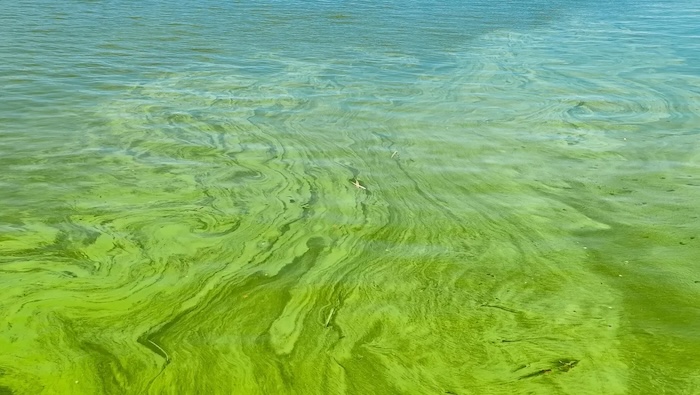
Heading out on the water? Here’s what to do if you see suspicious algae in Arizona lakes
Algae blooms that can be harmful to the health of humans and even deadly for pets are increasing in Arizona lakes due to warming temperatures and nutrient buildup. The Arizona Department of Environmental Quality has requested that people report suspicious algae sightings through the department’s app. As dryer and hotter conditions become more frequent and intense in the state’s desert region the dangerous blooms are expected to become more common and their impacts more severe, says Taylor Weiss, an assistant professor of environmental and resource management in The Polytechnic School, part of the Fulton Schools, and a researcher with the Arizona Center for Algae Technology and Innovation.

ASU is home-sweet-home (away from home) for students from India
ASU has become one of the leading U.S. universities among those with a growing global appeal — including among students seeking degrees and careers in engineering. Shashwat Srivastava, who earned a master’s degree in industrial engineering from the Fulton Schools, is among those who say ASU became their choice after they learned not only of the quality of its academic programs but also its support for international students, including ASU organizations such as Indian Students Association. Fulton Schools Dean Kyle Squires notes at least several recent engineering graduates from India who have becomes leaders in their fields in both the U.S. and India.

Acetic acid breaks down carbon fiber–reinforced polymers
Resilient carbon fiber–reinforced polymers, or CFRPs, perform well in many useful applications, including aircraft, shipping containers, natural gas storage tanks, wind turbines and sporting goods. The problem is manufacturing the polymers is expensive and produces greenhouse gas emissions that have negative environmental impacts. Now a new method using acetic acid to break down polymers looks like it can help alleviate that threat and enable safer recycling of these materials. Bhavik Bakshi, a chemical and biomolecular engineer and professor in the School for Engineering of Matter, Transport and Energy, part of the Fulton Schools, agrees this method makes CFRP recycling easier but says other recycling methods being developed might be more effective.

New AI-Powered Model From ASU Predicts Microstructures in Metal AM
Led by Professor Aviral Shrivastava and Assistant Professor Ashif Iquebal in the School of Computing and Augmented Intelligence, part of the Fulton Schools, ASU researchers are seeking to solve long-standing metal 3D printing challenges by reliably predicting the internal structure and strength of printed components. They want to develop an AI-driven system capable of forecasting how a metal’s microstructure will evolve during the printing process. Aerospace, defense and energy industries in particular stand to benefit from the project that aims to significantly improve the performance of metal components. Researchers say the achievement could also potentially birth a new era of high-precision manufacturing. The National Science Foundation is funding the project.
See also: ASU researchers use AI to improve metal 3D printing accuracy and speed, Australian Manufacturing, June 17
ASU researchers enhance 316L stainless steel 3D printing with AI, VoxelMatters, June 14
ASU’s efforts are not only accelerating advanced manufacturing but also weaving AI directly into engineering education and industry applications.
Artificial Intelligence’s Evolution, AZ Family News, June 12
Ross Maciejewski, director of the School of Computing and Augmented Intelligence, discusses the latest advances in AI technology

Compact machine turns air into ready-to-use gasoline
New direct air capture technology that promises to advance clean fuel production is based to a significant extent on the work of Klaus Lackner, a professor in the School of Sustainable Engineering and the Built Environment, part of the Fulton Schools, and founding Center for Negative Carbon Emissions. Developed by the Aircela company, the system produces engine-ready gasoline using only air and water in a process powered by renewable electricity and advanced chemical processes. The technology works with current engines and fueling systems, without need for costly upgrades. In addition, the fuel’s purity, free from sulfur and additives, helps lower harmful emissions other than only carbon dioxide.
See also: This Machine Makes Gasoline From Thin Air: Revolutionary Tech Stuns Scientists and Could Obliterate the Fossil Fuel Industry Forever, Sustainability Times. June 15

Meta Is Building a Superintelligence Lab. What Is That?
Mark Zuckerberg, chief executive of Meta, owner of Facebook, Instagram and WhatsApp, says the company will develop a Superintelligence Lab to create technology more powerful than today’s artificial intelligence. The announcement is raising questions about what superintelligence actually is and what its impacts could be on the high-tech industry and the world at large. Some say it could help overcome many societal challenges. Others express concern about harm it could do to humanity. Subbarao Kambhampati, a professor in the School of Computing and Augmented Intelligence, part of the Fulton Schools, notes that scientists and engineers are not yet close to creating superintelligence and the term is — at least for now — more of a branding and advertising term.

ASU ranks 4th among public US universities for developing digital-ready graduates
ASU is ranked highly in a recent Digital Leaders in Higher Education survey on what U.S. universities are doing to educate the next generation of leaders in the rapidly evolving fields of digital and artificial intelligence, or AI, technologies. ASU’s overall position in the poll was bolstered by the ranking of its computer science degree program, which placed fourth — ahead of such other leading universities as UCLA, Purdue and the University of Washington. The School of Computing and Augmented Intelligence, part of the Fulton Schools, is home to ASU’s computer science program. ASU was also ranked highly in the categories of data science, AI and business analytics, digital transformation management and digital entrepreneurship.

ASU program is taking water education to the streets
Fulton Schools engineering, sustainability and hydrology researchers and other experts are major contributors to the work of Impact Water — Arizona, part of the Arizona Water Innovation Initiative’s mission to ensure the state a reliable water supply in the midst of challenges presented by climate change and other factors. As a part of that effort, the Fulton Schools is aiding multiple projects to provide municipalities and communities the knowledge and tools necessary to ensure they have adequate and resilient water supplies well into the future. Those endeavors include expanding access to water education, supporting community-driven solutions and strengthening local capacity to address current problems and prevent future hardships.

Gifts support science, students and society at ASU
Learning about the value of engineering and technology innovation through the careers of her father, an electrical engineer, and other family members, as well as her professional colleagues, Lu Baird was inspired to help make a difference in the world through science and engineering. Through ASU’s Biodesign Institute, she created the $1.7 million Baird Family Biodesign Support Fund. She is also supporting the next generation of engineers through the Baird Family STEM Scholarship. Most recently, she has updated the Baird family living trust to include $100,000 for each of the 16 ASU Biodesign Institute research centers, where Fulton Schools faculty members and students are frequently involved in a variety of projects.

EV maker Lucid expands with new Phoenix hub after acquiring former Nikola sites
Major electric vehicle make Lucid has acquired sites that significantly expand its Arizona operations, giving the company a wider capacity for advanced manufacturing activities, development of related innovative products and improved testing of new components and systems. Steven Polzin, a research professor in the School of Sustainable Engineering and the Built Environment, part of the Fulton Schools, and director the TOMNET University Transportation Center, says the electric vehicle industry is facing a lot of challenges, but sees Lucid and other leaders in the field developing more economically viable products and improved manufacturing and benefiting from its ability to provide more products that help protect the environment more than fossil fueled automobiles.
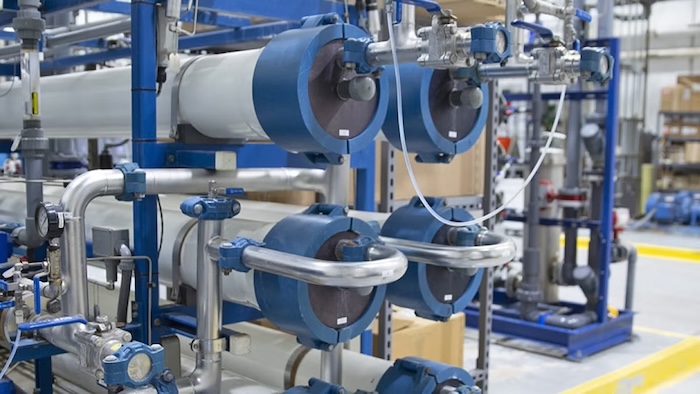
Squeezing every last drop out of wastewater
Growing industries in Arizona and across the U.S. have an increasing need for clean water but keeping up with the demand for products these industries produce involves processes that create a lot of brine, a salty waste byproduct that can become an environmental problem. Shahnawaz Sinha, an associate research professor in the School of Sustainable Engineering and the Built Environment, part of the Fulton Schools, is partnering with the Nestlé company to bolster the resilience of Arizona’s water resources by removing salt from water containing brine through a process that also extracts fresh water. Sinha foresees the project creating a way to sustainably manage waste byproducts while also extracting commercially viable materials from the process.
See also: ASU: Squeezing every last drop out of desalination wastewater, Mavens Notebook, July 16
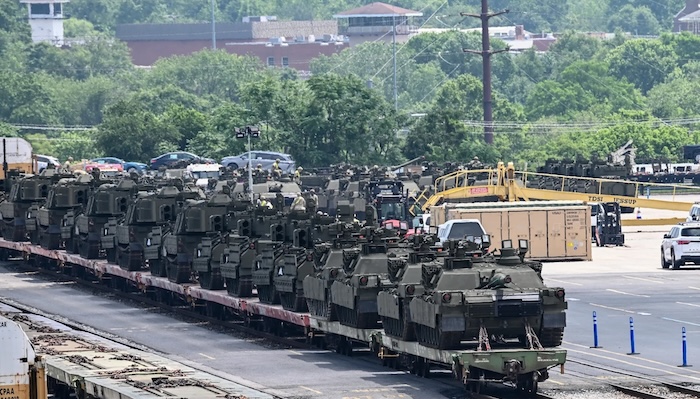
Trump’s Military Parade Has Washington Bracing for Tanks and Weaponry
Washington D.C.’s road pavements could be put to a test of their structural resilience by the U.S. Army’s 250th anniversary celebration parade, which will feature a procession in the nations’ capitol city of large military combat vehicles and heavy artillery weaponry, along with almost 7,000 marching soldiers. By one estimate, damage that might be done could cost millions of dollars to repair. Kamil Kaloush, the FORTA Professor of Pavement Engineering in the School of Sustainable Engineering and the Built Environment, part of the Fulton Schools, says damage might be only minimal, given that military tanks are built to distribute their weight across multiple wheels, which reduces the stress on the ground. But he adds that heavy, slow-moving vehicles combined with high summer temperatures might still cause some widespread damage.
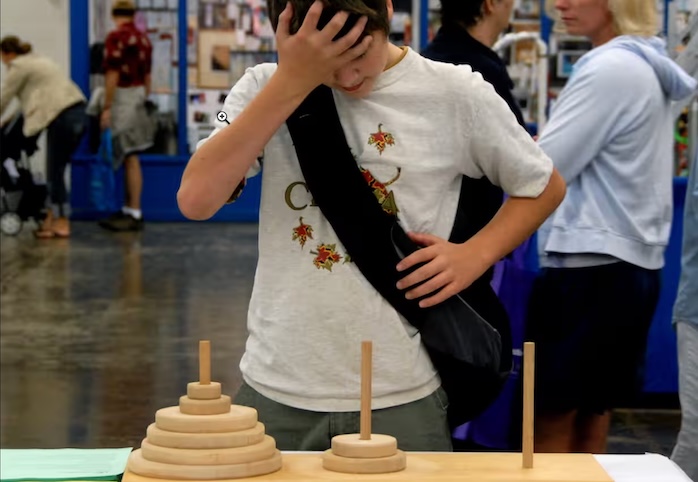
When billion-dollar AIs break down over puzzles a child can do, it’s time to rethink the hype
A recently published research paper casts doubt on claims about the abilities of a new generation of artificial intelligence, or AI, technology. The paper by the Apple company raises the warning that large reasoning models, or LLMS, are not proving to be capable of consistently reasoning reliably. The research paper reinforces claims previously made by Subbarao Kambhampati, a professor in the School of Computing and Augmented Intelligence, part of the Fulton Schools. He observed that people tend to assume these AI systems do something resembling steps humans might take when solving a challenging problem, but he shows these LLMs have the same kinds of problems Apple documented in its paper.
See related articles in which Kamhampati is quoted :
Apple Is Pushing AI Into More of Its Products—but Still Lacks a State-of-the-Art Model WIRED, June 9
Meta Is Building a Superintelligence Lab. What Is That? The New York Times, June 13
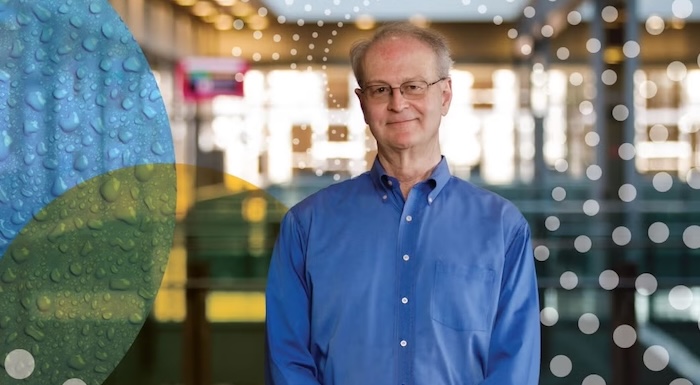
Water-cleaning bacteria can produce health, economic benefits
Development of technology that uses bacteria to remove contaminants from water and recover valuable metals that would otherwise go to waste is among the most potentially impactful goals of ASU’s Swette Center for Environmental Biotechnology, directed by Bruce Rittmann, a professor the School of Sustainable Engineering and the Built Environment, part of the Fulton Schools. Rittmann, whose work has been recognized by the Internation Water Association, is focused on using tiny organisms to solve water challenges and ways to use bacteria to benefit both human health and provide economic benefits to society. Research progress so far also promises to open paths to progress in protecting various environments, preventing more kinds of diseases and boosting extraction of valuable materials.
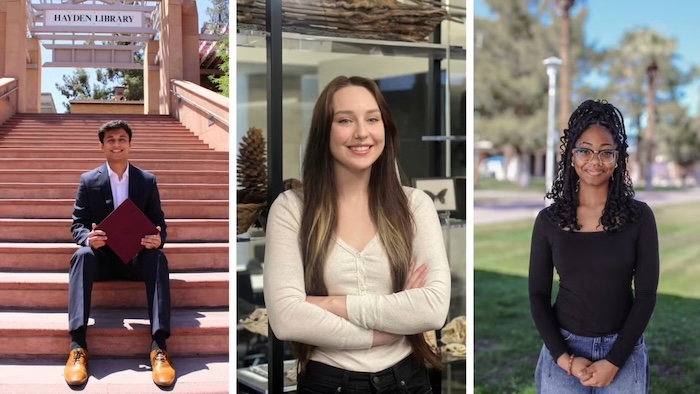
Outstanding ASU Library student employees honored for service
Gaurav Gondane (pictured at left) was among ASU Library student employees recently given an ASU spring 2025 Tomalee Doan LibAid for Student Success Award. Gondane, who earned a master’s degree in computer science from the Fulton Schools this spring, was credited with strengthening the library’s connections with students and producing social media content for the library’s Instagram account. He also helped to organize library tours for international students who had recently arrived in the United States. Gondane plans to pursue additional certifications and professional development as he begins his career and to also volunteer as an alumni mentor for ASU’s Engineering Projects in Community Service.

ASU team implements offline digital library for orphanage, school in Kenya
Fulton Schools students are part of ASU’s Engineering Projects in Community Service, or EPICS, team of students who have helped bring books and videos to educate students in the African country of Kenya. Electrical engineering student Will Reinhart is chief operations manager of the team that travelled to Kenya to install a digital library they had worked on for three years. The library provides class curriculum and more than 300 books and videos in both English and Kiswahili, a language common to several regions in Africa. Reinhart says it is “really amazing” that as an undergraduate student he had an opportunity “to make an impact on the other side of the world.”
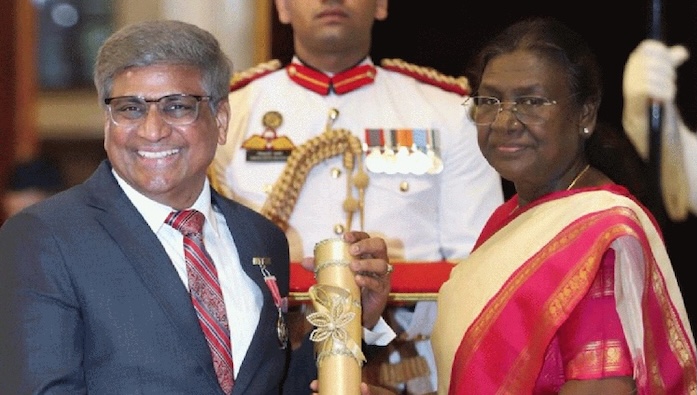
ASU’s Panchanathan wins prestigious honor in India for scientific contributions
Sethuraman Panchanathan, former Fulton Schools professor and recent National Science Foundation, or NSF, director, has been awarded one of India’s most prestigious honors. India’s president presented Panchanathan the award that expresses the country’s gratitude for excellence in the fields of art, education, industry, science, medicine, social service and public affairs. Before his years as NSF leader, Panchanathan was named Foundation Chair in Computing and Informatics in the School of Computing and Augmented Intelligence, part of the Fulton Schools. He will now return to ASU as University Professor for Technology and Innovation. In accepting this latest award, Panchanathan said the honor “really epitomizes the contributions of many people — including my colleagues from the NSF and ASU.”
The article is also publisheds on ASU News.
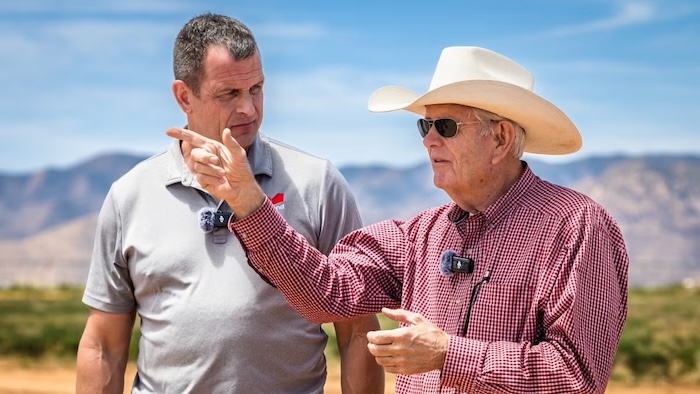
New algae system helps Arizona farmers grow better crops with less water
A soil project that will enable farmers to grow more high-quality crops but do so with less use of water is making progress with the help of Enrique Vivoni, a Fulton Schools Professor of Hydrosystems Engineering in the School of Sustainable Engineering and the Built Environment and the director of the Center for Hydrologic Innovations. The project’s overall goal is to provide access to a nature-based soil health technology across thousands of acres of Arizona’s commercial farmland that would enhance water efficiency, reduce water consumption and improve the quality of water used for agriculture. ASU’s Swette Center for Sustainable Food Systems is involved in the project. The article is also posted on News Wise and Farms.com.

ASU launches center to enhance water quality, sustainably
ASU’s new Global Center for Water Technology will focus on strategies for ensuring sustainable water and energy sources seen as critical to Arizona’s future. Paul Westerhoff, deputy director of the National Science Foundation’s Nanosystems Engineering Research Center for Nanotechnology Enabled Water Treatment, will lead the new ASU center, which will be part of ASU’s ongoing work with the Arizona Water Innovation Initiative. Westerhoff is also an ASU Regents Professor in the School of Sustainable Engineering and the Built Environment, part of the Fulton Schools, and the Fulton Chair of Environmental Engineering. Westerhoff says he is optimistic about the water and energy sector’s next five years and stressed that these partnerships will play a significant role in adequately maintaining those vital resources.

8 Flinn Scholars set to begin college careers at ASU this fall
Eight of this year’s 20 winners of the prestigious Arizona-based Flinn Foundation Scholarship have chosen to attend ASU, beginning in the fall semester. Three of the high-achieving recent high school graduates are enrolling in Fulton Schools engineering degree programs. Each will also be part of ASU’s Barrett, The Honors College. Rati Tabatadze is enrolled in the electrical engineering program. Eliut Gonzalez is enrolled in the aerospace engineering program and Alejandro Zayas Abril is enrolled in the biomedical engineering program. Tabatadze, who wants to be a software engineer, will also study data science in The College of Liberals Arts and Sciences. Each will also receive funding for study abroad experiences.

Why You Should Never Put Styrofoam Containers In The Microwave
What’s the harm in putting a Styrofoam container in the microwave? Styrofoam, which is made of expanded polystyrene, is primarily derived from a chemical called a styrene monomer, or simply styrene. Although it has long been used to make a wide variety of commercial products, it’s not completely harmless to humans. When food is stored in a Styrofoam container, small quantities can be transferred to food. Microwaving speeds up that process. Rolf Halden, a professor in the School of Sustainable Engineering and the Built Environment, part of the Fulton Schools, explains that the heat can generate more free chemical building blocks, and also accelerate the movement of chemicals out of the plastic and into food.
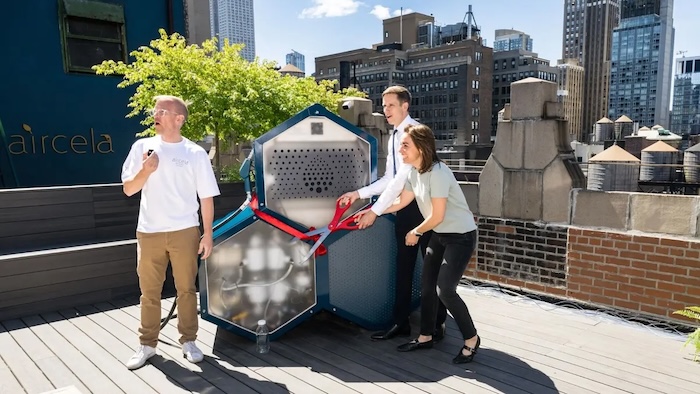
US startup unveils fridge-sized machine that makes gasoline out of thin air
The gasoline used by the vast majority of vehicles worldwide continues to be among the most valuable resources for fueling mobility. The downside is the carbon dioxide emissions from gasoline-powered vehicles that produce air pollution and are accelerating the environmental threat of climate change. The costs of developing the infrastructure and systems to replace gasoline with alternative fuels and electric-powered vehicles is steep, but New York-based fuels company Aircela is claiming it has found a solution that uses the direct air-capture technology developed in large part by Klaus Lackner, a professor in the School of Sustainable Engineering and the Built Environment, part of the Fulton Schools. Lackner joined Aircela’s recent demonstration of his machine’s carbon-capture process to deliver a cleaner fuel.

Robots at your service
Advances in robotics and have set the stage for advances that help improve the effectiveness of many engineering endeavors. Where the impact of modern robots has been less dramatic is in helping people with some of the simple domestic tasks of everyday life. In a recent edition of ASU Thrive magazine, Siddharth Srivastava, an associate professor of computer science and engineering in the School of Computing and Artificial Intelligence, part of the Fulton Schools, and director of Engineering and director of the Autonomous Agents and Intelligent Robots Lab, talks about the challenges of developing robotics with the ability to perform these types of tasks. Other Fulton Schools researchers talk about their progress in designing robots to perform many other similarly useful functions.

ASU Polytechnic program helping to train new air traffic controllers
U.S. airports are facing critical shortages of air traffic controllers. The Polytechnic School, part of the Fulton Schools, is poised to help fill these vital positions with increasingly well-trained personnel. The school’s air traffic management and aviation program is using a state-of-the-art facility that simulates operations at one of Phoenix Sky Harbor airport’s largest and busiest terminals. Along with knowledge of the air travel industry and airport business management practices, students are learning about the rules of working under Federal Aviation Administration management and related requirements. This summer, the program is planning to acquire new technologies to further enhance the education students will be receiving to prepare them for careers in the industry. The report was picked up by yahoo! news.
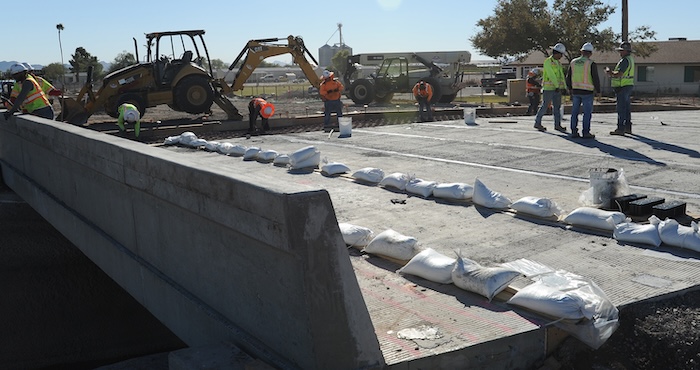
Concrete collaboration promising for speedy, cost-effective bridge repairs
ASU researchers are collaborating with the Maricopa County Department of Transportation to finds ways to shorten the time needed to build and repair roads from efforts that often take weeks to complete to work that may require only a weekend of labor. Barzin Mobasher, a professor of civil and environmental engineering the School of Sustainable Engineering and the Built Environment, part of the Fulton Schools, is leading an effort to educate and train the county transportation department’s road construction leaders in the use of a new ultra-high-performance concrete that he and his ASU colleagues have developed to make roadways and bridges not only more structurally resilient but also significantly less costly to install than standard road materials.

Is all shade created equal? Different types can cool a heat island — and boost your mental health
Ariane Middel, an assistant professor in the School of Computing and Augmented Intelligence, part of the Fulton schools, and director of The Shade Lab at ASU, was one of the go-to experts for a recent radio show interview on the critical need for refuge from the often extremely hot, sunny outdoor environments of Arizona’s desert regions — especially in the most densely developed urban areas such as Phoenix. Her research team’s work includes creating heat maps that can be used to pinpoint places most in need of more shade in the metro area. Middel points out the threatening impacts of extreme heat on both human physical and psychological health. She also identifies her favorite shade tree on ASU’s Tempe campus.
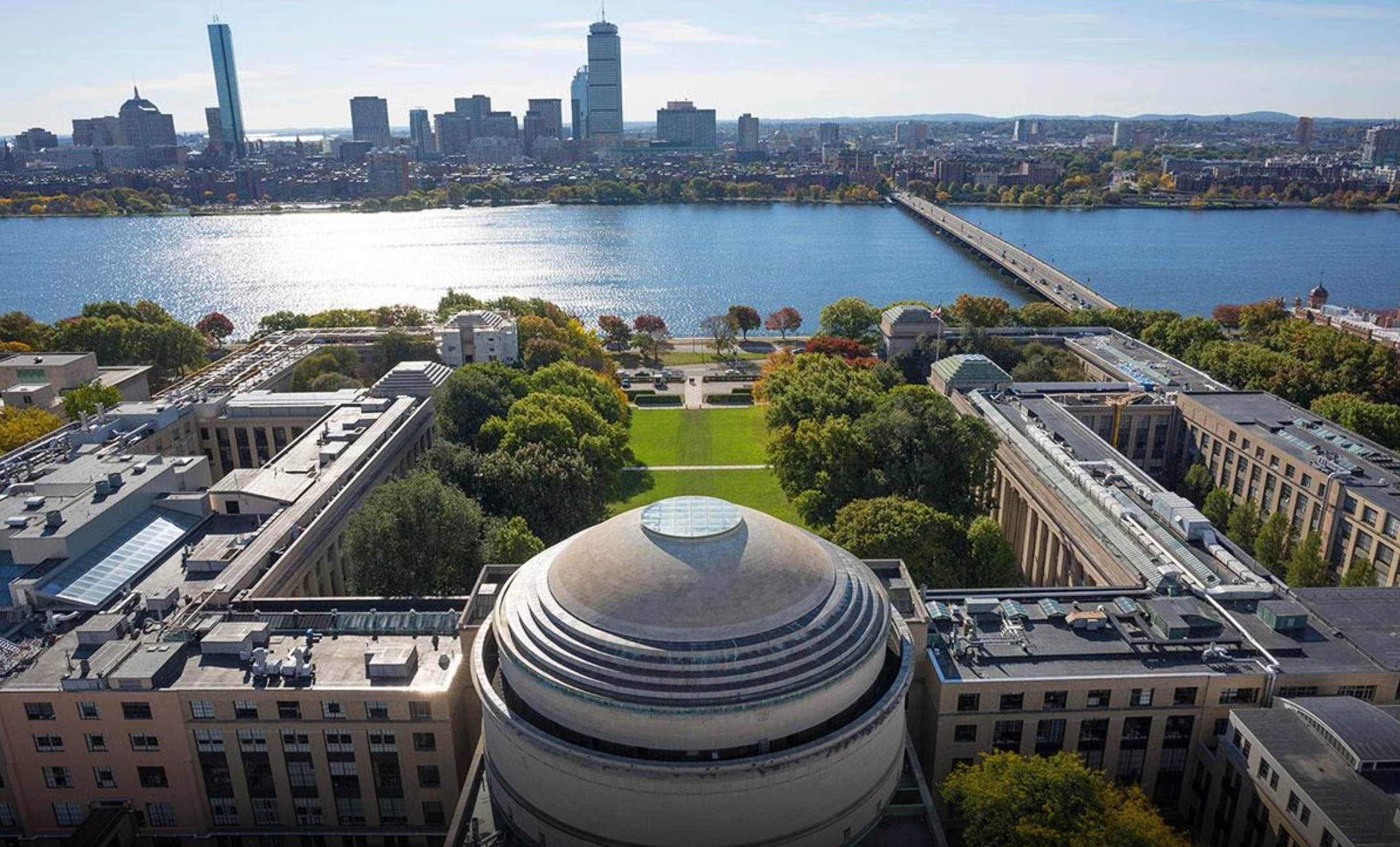
The Most Advanced Colleges in America 2025
Along with Harvard University, the Massachusetts Institute of Technology, Stanford University, Princeton University, Cornell University and other prestigious institutions of higher education, ASU’s Ira A. Fulton Schools of Engineering is among the 25 engineering education and research institutions selected as the most advanced in America for their contributions to pioneering breakthroughs in engineering, technology, life sciences and related fields. The Fulton Schools are specifically lauded for start-of-the-art research laboratories, forward-thinking curricula and industry partnerships. ASU is ranked seventh overall on the list, which particularly notes the Fulton Schools’ experiential learning opportunities in semiconductor research, microelectronics and space technologies, renewable energy and sustainable urban development.

ASU sophomore wins $100K prize in inaugural Inferno Cup
A gaming platform venture developed by Sandul Gangodagamage, a sophomore computer science student in the School of Computing and Augmented Intelligence of Fulton Schools, part of the Fulton Schools, and business law major in ASU’s W.P. Carey School of Business, won first prize at the inaugural ASU Inferno Invitational Startup Cup competition sponsored by the Fulton Schools and ASU’s J. Orin Edson Entrepreneurship + Innovation Institute. Gangodagamage’s winning Legions Platform, a multiplayer gaming platform, can be accessed with slow internet speeds. The competition brought together entrepreneurial teams from ASU, Northern Arizona University, the University of Arizona, Grand Canyon University and Estrella Mountain Community College. Each team gave a five-minute pitch to judges. Gangodagamage’s venture already has 12 million users around the world. He plans to use the prize money to expand marketing for his business.

7 Tempe students receive Desert Financial Foundation scholarships
More than 70 Arizona college students have recently won scholarships from the Desert Financial Foundation. The scholarship winners include four ASU engineering students who are focusing their studies on areas such as bioinformatics, chemical engineering, electrical and electronics engineering, and civil, environmental and sustainable engineering. All of them are pursuing doctoral degrees in their engineering fields. In addition to their academic performance, the Desert Financial Foundation scholarship winners are also selected for the commitment they have also demonstrated to community volunteerism in addition to a commitment to higher education.

Cargill partners with ASU to explore bio-based materials in chip manufacturing
ASU researchers will help the Cargill Bioindustrial company in its pursuit of technological advances that promise to boost U.S. semiconductor industry operations. The university’s research and workforce development programs are seen as major sources of new engineering and science talent that will contribute to advances in manufacturing engineering and the performance of advanced materials. A leader of ASU’s Knowledge Enterprise says the university’s training of the next generation of engineers and scientists can also be expected to especially help to achieve innovations that boost the semiconductor industry’s important lab-to-fab ecosystem.
See also: Cargill, ASU Partner to Advance Semiconductor Material Innovation, BISinfotech, May 28
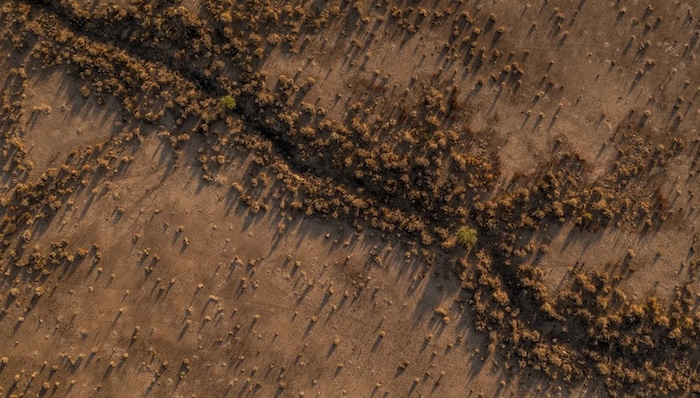
Phoenix is slowly sinking, study finds
Some of the infrastructure of Phoenix is at risk of widespread crumbling that would put roads, buildings, bridges and dams at risk. Researchers have found the city is sinking sufficiently to cause that kind of serious damage through actions such as extensive groundwater pumping. Fulton Schools Professor Edward Kavazanjian, a geotechnical engineer in the School of Sustainable Engineering and the Built Environment, part of the Fulton Schools, points to actions such as cities pumping treated wastewater back into aquifers and parts of the state that have few restrictions on pumping groundwater because they are not in groundwater management districts. Without such guardrails, experts warn the resulting sinking will amount to a slow-moving disaster.
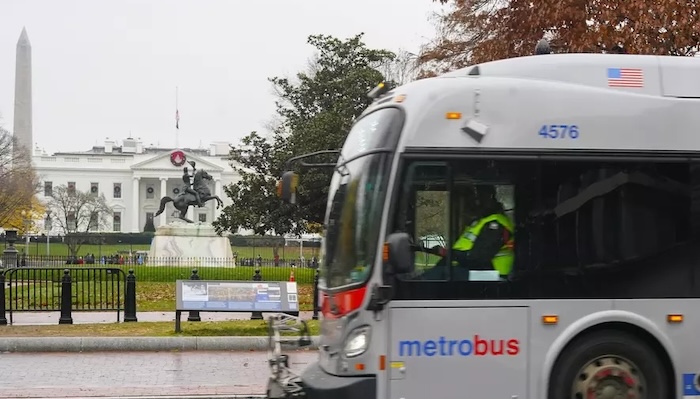
Public transportation faces ‘death spiral’ as pandemic funds dry up
Looming funding cuts to bus and rail transportation systems and services across much of the U.S. are one factor being pointed to in predictions of a dramatic drop in public transit services. With multi-million-dollar budget deficits in many parts of the country and waning funding support from President Donald Trump’s administration, public transit overall could be facing a major downward spiral, says Steven Polzin, a research professor in the School of Sustainable Engineering and the Built Environment, part of the Fulton Schools, and director the TOMNET University Transportation Center. Polzin talks about factors discouraging ridership and sees more challenges coming.

Arizona startup’s optimization tech aims to streamline business AI deployment
Aram Chavez, an assistant professor in The Polytechnic School, part of the Fulton Schools, has drawn on his expertise in technology, entrepreneurship and management to help produce a tool capable of boosting the ability of artificial intelligence, or AI, systems to better understand, process and store information, as well as reduce data storage costs. Working with mathematicians and programmers, the startup named Morphos.AI, was launched in 2023 with a team of co-founders. Chavez now plans to now hire more engineers and ramp up efforts to commercialize the company’s main product, called Green Vector AI. There’s also working being done to develop a tech tool to enable businesses to deploy Morphos technology with only a click of a button.

Frustrated with delays, ASU students engineer real-time tracking for Tempe Streetcar
Many students, faculty and staff members depend on the Tempe Streetcar service to stay on schedule on its route through downtown Tempe and ASU Tempe campus. But the system’s reliability has been sporadic, and data about the Streetcar’s estimated time of arrival at various locations is frequently inconsistent. Now a team of Fulton Schools engineering students — Veraj Patel, Abraham Duran, Landon Hack and Gerald Bowers — is devising a way to help prevent the Streetcar from being delayed. They’ve developed a real-time tracking device, an app, a user interface and a website to enable viewing of the streetcar’s location and are working on implementing these technologies. Read more and see the video “Tempe Streetcar Tracker.”
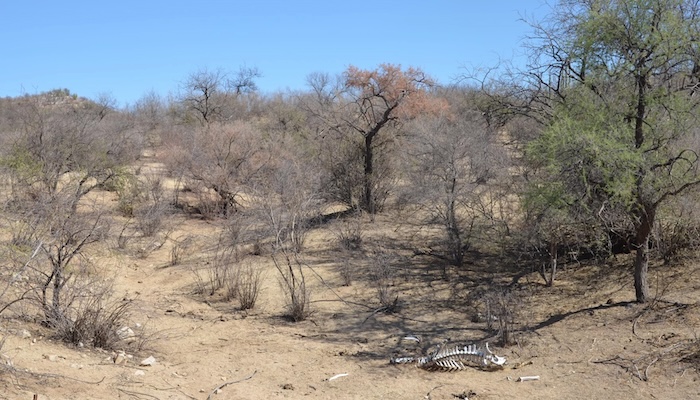
Hermosillo struggles with water waste amid staggering drought
Without water management that makes sustainability a priority, the future of the city of Hermosillo will be bleak, say an urban water management experts. Meteorologists and hydrologists agree with the outlook for dire consequences expressed by Enrique Vivoni, a professor in the School of Sustainable Engineering and the Built Environment, part of the Fulton Schools, and director of ASU’s Center for Hydrologic Innovations,. Two recent seasons during which the city has had little precipitation has substantially worsened the potential for danger, Vivoni warns, saying multiple steps must be put in motion soon to prevent a more threatening situation. A spokesperson with a local water utility says efforts are underway to plan and take preventative actions.

ASU and Google’s new AI-powered robot can probably beat you at pingpong
Artificial intelligence, machine learning, human-robot interaction, robot vision and automatic motor skills acquisition are among the areas of expertise of Hani Ben Amor, an associate professor in the School of Computing and Augmented Intelligence, part of the Fulton Schools. His recent work includes helping to create an AI athlete — a robot that is more autonomous than other kinds of robots and is demonstrating an ability to win at table tennis over many humans. Amor says that skill raises the possibility of developing such robots that are capable of helping humans with important endeavors such as search and rescue operations and the development of prosthetic devices for humans.
See also: ASU Researcher Creates AI Athlete That’s Here to Help Humanity, Newswise, May 13

Veteran, brain tumor survivor, hopes to use new ASU engineering degree to improve medical imaging
Clayton Burkhardt is graduating from ASU with a bachelor’s degree earned in the Fulton Schools electrical engineering program. He now plans to pursue a master’s degree in engineering with a mission to help improve magnetic resonance imaging, known as MRI, and other medical imaging technologies that helped to diagnose and treat his life-threatening cancer. Burkhardt was piloting a U.S. military helicopter in Germany during a training mission when he was overcome by a debilitating feeling, which turned out to be an effect from a malignant brain tumor, which hindered his speech. He relearned to communicate, then returned to his online studies at ASU, which he had begun while in the military. He now wants to write book about his story.
See also: U.S. Veteran Overcomes Brain Tumor to Graduate from Arizona State University with Engineering Degree, Hoodline-Phoenix

International student enrollment may be declining under Trump
Data from the Association of International Educators shows a growing dip in enrollment of international students in postgraduate programs at U.S. universities and colleges. Visa revocations under President Trump’s administration of students who are not U.S. citizens are apparently a cause of the decline. Many of these students in science, technology and engineering fields have been hired for jobs or had interviews with tech companies, notes Trevor Thornton, a professor in the School of Electrical, Computer and Energy Engineering, part of the Fulton Schools. The situation is especially disturbing to foreign students who are in the early years of their college education in the U.S., he says.

Engineering in Action: Students race to innovate at Baja SAE International in Marana
ASU engineering students were among the competitors in the recent SAE International Design Competition in Marana, Arizona, which gave teams of college students from across the U.S. — as well as Mexico, Canada and Brazil — the opportunity to showcase the high-performance off-road recreational vehicles they designed and built. These competitions simulate real-world engineering design projects and their related challenges. Students’ vehicles are put to the test to see if they can survive severely rough terrain. Organizers say the event gives students a look at all of the aspects of engineering skills involved in the automotive industry.

ASU Researchers Develop Plant-Based Plastics to Replace Harmful BPA
Hundreds of billions of pounds of plastic are being produced each year around the world and only a small percentage of it is getting recycled. That sets the stage for people to be more exposed to plastics waste that can have harmful effects on human health — particularly plastics made with the chemical called BPA. Matthew Green, an associate professor in the School for Engineering of Matter, Transport and Energy, part of the Fulton Schools, discusses safer and more sustainable alternatives being developed by ASU researchers, including plant-based plastic materials suitable for use in water filtration and medical devices in which BPA-based plastics might otherwise be used.
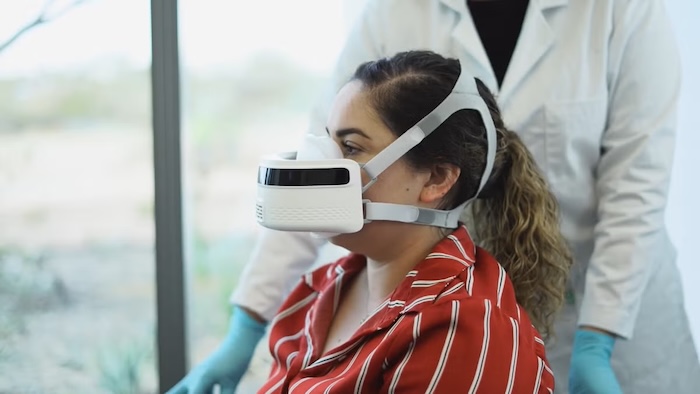
ASU invention helps people worldwide reach weight goals
Breezing, a device that analyzes peoples’ breath to reveal information about their metabolism, is improving how people can lose weight and overcome obesity. The new technology was developed by Erica Forzani, a professor in the School for Engineering of Matter, Transport and Energy, part of the Fulton Schools, and a late colleague, Professor NJ Tao. Already approved by the U.S. Food and Drug Administration, the device recently earned the European Union’s Medical Device Regulation certification. Breezing provides health care professionals the data they need to help patients overcome weight loss challenges by adjusting diet and physical activity as the body changes. The technology is also an effective tool for use in bariatric surgery, endocrinology, family medicine and nutrition.

Engineering and Technology Students At ASU Showcase Their Work
Drones that make deliveries, a navigation algorithm for self-driving cars, using heat from a hydrogen fuel cell to keep food warm, small robotic vehicles that clean debris off roadways. These are some of the projects featured during a recent event at which ASU students exhibited and demonstrated designs and models of potential new technologies they’ve been developing. The projects gave students hands-on basic training in conducting research, reinventing older technologies, mapping paths to innovation, exploring ideas for new tools and systems and using their skills to serve the public good.

How ASU helped this returning student rewrite his story
Ryan Abernathy didn’t make it through college on his first try, but various ASU programs — including an industry partnership and ASU’s Earned Admission program — gave him a second chance and he eventually earned a degree through the Fulton Schools’ information technology program. He would become a technical specialist for IBM, the major multinational technology company known for its advanced computing and related technologies and services. Abernathy’s success reflects the Fulton Schools’ efforts to design flexible degree programs to serve students “at any stage of life,” says Kyle Squires, dean of the Fulton Schools.

Green Or Greenwashed: Is Carbon Capture The Key To Combat Climate Crisis?
The MechanicalTree is among the well-known technologies designed to help counter threats posed by an atmosphere in which carbon dioxide emitted from various industrial operations and vehicles that burn fossil fuels can be captured and rendered less harmful. The technology was developed based largely on work by Fulton Schools Professor Klaus Lackner, founding director of ASU’s Center for Negative Carbon Emissions. Earlier this year, ASU was awarded a large grant from the U.S. Department of Energy to help build a carbon capture hub in the Southwest with an industry partner, Carbon Collect. Despite its capabilities, however, there are critics who contend that carbon capture technology does not adequately protect the environment.
The power of purpose: ASU scholarships emphasize service to community
Many ASU students are taking the time and making the effort to step beyond their schoolwork and pursue real-world learning experiences by getting involved in community service projects and related volunteer ventures. Among them is Hassonil Jones, who is pursuing a degree in chemical engineering in the School for the Engineering of Matter, Transport and Energy, part of the Fulton Schools. Through the school’s Summer Research Initiative program, Jones is exploring possibilities of an alternative for lithium-ion batteries, which have a history of exploding. The project is part of his work to help overcome sustainability challenges through the Fulton Schools’ Grand Challenge Scholars Program.

Arizona computer science expert explains why being polite to AI can be expensive
Artificial intelligence and chatbot technologies that feature computer programs designed to simulate conversation with humans are becoming a more prevalent way for customer service and data centers to communicate with the public. These high-tech systems are performing their basic functions adequately, but they are also requiring tens of millions of dollars in electricity costs. Yezhou Yang, (pictured) an associate professor in the School of Computing and Augmented Intelligence, part of the Fulton Schools, talks about the outlook for resolving the problem, which can also have a detrimental impact on other public services, such as water supplies. These challenges are continuing to grow in Arizona.

ASU graduates overjoyed — and employed
Some of the most accomplished ASU students are among the record number of more than 21,000 undergraduate and graduate students who will be awarded their degrees in May, including about 4,700 Fulton Schools students. Among them is Omkaar Shenoy, who has earned a degree in part through the computer science program in the School of Computing and Augmented Intelligence, part of the Fulton Schools. Shenoy has already been hired by the Aramark company as a data engineer who will analyze food supplies and build dashboards to monitor inventory. He credits ASU for enabling him to build skills in coding, media and science and “to explore my creative side,” all of which has helped to provide him a “launchpad to start my career strong.”

The mighty impact of insects
Some of the ASU researchers seeking solutions to the most pressing environmental and societal challenges are studying the lives of bugs in pursuit of their goals. Among them is Ted Pavlic, an associate professor in the School of Computing and Augmented Intelligence, part of the Fulton Schools, and director of the Bringing Ecology and Engineering Together Lab. Researchers on his team see possibilities for advances in nanomedicine and the use of nanobots being combined to provide applications in therapies cancer and other diseases. By studying ants’ various abilities, Pavlic and his colleagues have also designed decentralized systems for meeting the lighting and heating demands of smart buildings.

Scientists create ultra-tough copper alloy that is stronger than steel and can withstand temperatures of 1500 F
Airplanes and spacecraft are among things that can be built to be more structurally resilient by using a recently developed copper alloy. Kiran Solanki, a professor in the the School for Engineering of Matter, Transport and Energy, part of the Fulton Schools, helped to create the new alloy. He explains how its chemical characteristics give it a combination of physical properties that enable materials to withstand very high stress from pressure and heat. That ability could open paths for industry and the military to create new materials to strengthen hypersonic and high-performance turbine engines. For more news of this advance, see previous posts on this page dated April 12 and March 28.
See also: New copper alloy achieves unprecedented high-temperature performance, Recycling Today, April 25
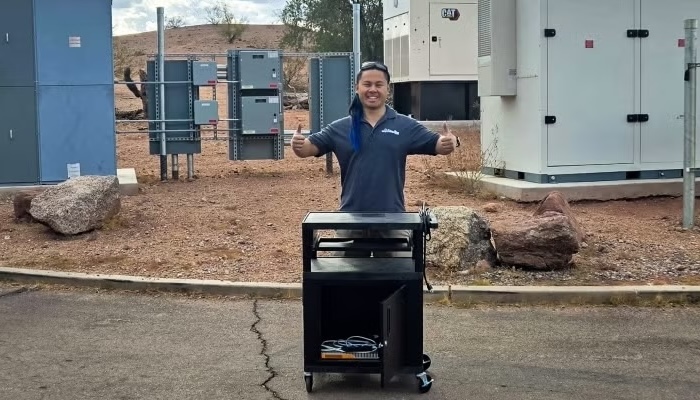
ASU technical innovation enables more reliable and less expensive electricity
ASU’s Laboratory for Energy And Power Solutions efforts have been crucial to successful demonstrations of new technology that increases the reliability and reducing the cost of electricity almost anywhere where microgrids are being used. That progress could help to make power grids more reliable and expand use and production of clean energy. Among contributors to the work is Arnel Garcesa, who will graduate this spring after earning a doctoral degree in the systems engineering program of The Polytechnic School, part of the Fulton Schools. The new Adaptive Control of Energy Systems was developed by ASU’s Laboratory for Energy And Power Solutions, directed by Nathan Johnson, an associate professor in The Polytechnic School.
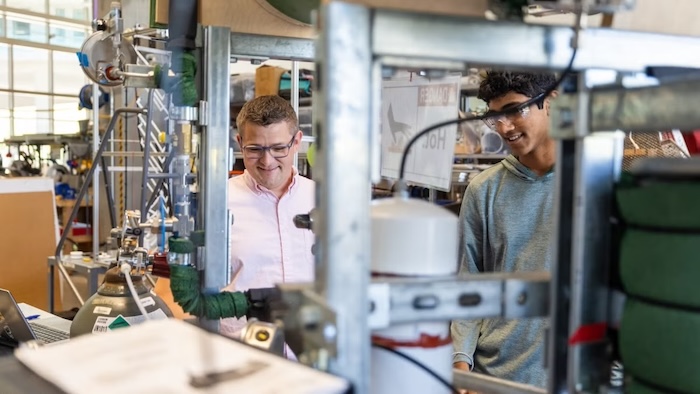
Sustainable plant-based polymers could replace endocrine-disrupting plastics
Of the almost 600 billion pounds of plastic waste produced each year, less than 15 percent is being recycled and exposure to much of this waste threatens human health, especially plastics that contain BPA, a chemical that can interfere with the body’s hormones and increase the risk of heart disease, cancer and infertility. Researchers are seeking safer and more sustainable alternatives by developing plant-based plastic materials suitable for use in water filtration and medical devices. Matthew Green, an associate professor in the School for Engineering of Matter, Transport and Energy, part of the Fulton Schools, is among researchers trying to find ways to use natural products that could replace petroleum-based materials and reduce health risks.

Saving the environment to save ourselves
Research led by Anamitra Pal, an associate professor in the School of Electrical, Computer and Energy Engineering, part of the Fulton Schools, is focused on developing and deploying monitoring systems to help protect electric power systems in the U.S. It’s one of many ASU science and engineering projects promising to help the U.S. and the world save and protect vital infrastructure. Pal has led development of the Wildlife Awareness and Risk Management System to deploy wireless sensors that monitor the environment around power transmission systems in remote locations.

Cornell researchers bring art and science to flexible solar ‘skin’
A large portable canopy designed to track the movement of the sun and maximize the capture of solar energy is being developed through a collaboration of ASU and Cornell University researchers. Development of the canopy, called HelioSkin, emerged from a research partnership of Mariana Bertoni, a professor in the School of Electrical, Computer and Energy Engineering, part of the Fulton Schools, and leader of ASU’s Defect Engineering for Energy Conversion Technologies lab, and Jenny Sabin, an architectural designer at Cornell University. They began by combining computational design, digital fabrication and 3D printing to create photovoltaic panel assemblies that boost sunlight absorption to generate energy.

Diagnostic research happening at ASU focused on detecting diseases earlier to save lives
Advances in medical diagnostics are playing a major role in many significant health care innovations. Much of this progress involves contributions from engineers. Among them is Erica Forzani, an associate professor in the School for Engineering of Matter, Transport and Energy, part of the Fulton Schools, and deputy director of ASU’s Biodesign Center for Bioelectronics and Biosensors. She and her colleagues have developed Breezing, a handheld device into which people can breathe and instantly get vital information about their metabolic rates. An advanced version, called Breezing Pro, is being used in research, fitness and sports training and health management.

Heat is threatening the integrity of America’s infrastructure
Much of the critical infrastructure the U.S. relies on for electrical power is falling victim to the impacts of climate change, especially rising heat that is stressing electricity distribution grids and inhibiting power delivery. Mikhail Chester, a professor in the School of Sustainable Engineering and the Built Environment, part of the Fulton Schools, and director of the Metis Center for Infrastructure and Sustainable Engineering, warns that the onslaught of climate change is happening too quickly to allow for adequate re-engineering of the nation’s energy distribution networks. The problem could pose threats to public safety, economic stability and various critical community services, while reinforcing power infrastructure could be costly.

ASU Student Entrepreneurs Face A Mock ‘Shark Tank’
Members of ASU’s student chapters of the Society of Hispanic Professional Engineers, Society of Asian Scientists and Engineers and American Society of Mechanical Engineers pitched ideas for projects and business ventures at the recent Shark Tank event. Judges from the Honeywell and Education at Work companies evaluated students’ ideas, rendering decisions on whether they would invest in what students proposed. One team created an automated laser power bed fusion to automatically move and deposit metal powder. Another team presented a device for measuring heat, designed to work with operations using non-oxides. The event is meant to give students an idea of what is takes to achieve innovations.

Outstanding Strength: Next-Gen Copper Alloy Pushes Past Limits of Traditional Materials
Teaming with the U.S. Army Research Laboratory and researchers at Lehigh University and Louisiana State University, Kiran Solanki, a professor in the School for Engineering of Matter, Transport and Energy, part of the Fulton Schools, has developed a new copper nanocrystalline alloy that has groundbreaking level resistance to coarsening and deformation, including at melting point temperatures. The material is now among the superalloys that are in demand for many engineering, high-tech and industrial applications that require materials that are exceptionally resilient, highly corrosion resistant and stable at high temperatures. See a previous post, dated March 28, linking to other reports on this advance in alloy strength.
See also: New engineered copper alloy could improve reliability of high-performance electrical systems, Notebook Check, April 15

Mesa: A Hub for Innovation and Technology
The city of Mesa, Arizona, has emerged as a growing hub for technology companies involved in cutting-edge endeavors. Among reasons the area has been seeing the rise in its attraction as a high-tech innovation environment are the impacts of research and education programs at ASU’s Polytechnic campus and its interdisciplinary programs in the sciences, engineering, technology and manufacturing. The campus in Mesa is home to the School of Manufacturing Systems and Networks and The Polytechnic School, both parts of Fulton Schools. The two schools’ educational offerings and research pursuits are geared to cultivating a workforce trained to meet the evolving demands of growing sectors of advanced high-tech industries.

Mom’s ‘Shock and Disbelief’ As Toddler Eats Grandpa’s Ashes
A 1-year-old boy whose mother saw something powdery and gray on his shirt discovered he had eaten some of the ashes from her deceased father’s cremation. Quoted from a previous interview, Rolf Halden, a professor in the School of Sustainable Engineering and the Built Environment, part of the Fulton Schools and director of the Center for Environmental Health Engineering at ASU’s Biodesign Institute, says cremation mineralizes the body and produces ashes that contain carbon but are not a serious health threat, unless the deceased’s teeth contained heavy metals. Learning her son was safe, the mother says she laughed about this incident, because her father “definitely would have wanted me to laugh about it.”

ASU Researchers 3D Print Flower-Inspired Blood Vessels For Medical Use
A 3D-printed artificial blood vessel with the strength and flexibility of real blood vessels has been developed in part through the work of Yuxiang Zhu, who recently earned a doctoral degree in the School of Manufacturing Systems and Networks, part of the Fulton Schools. The achievement helps to provide a printed vascular graft with a flower-mimicking design that overcomes the drawback of existing grafts that cannot fully replicate how our blood vessels respond to movement and stress. Safer and more effective cardiovascular disease treatments and fewer bypass surgery failure rates are expected to result for the achievement. The project’s long-term goal is to see the grafts move from laboratory development to use in medical clinics.

ASU graduate programs ranked among top 10 nationwide
Nancy Gonzales, ASU’s executive vice president and university provost, says the recent U.S. News & World Report’s rankings of the leading college graduate degree programs show the broad scope of academic excellence to be found at ASU’s various schools and colleges. The Fulton Schools reflect that trend. Graduate education fine-tunes the skills needed by business executives, policy makers, legal professionals, educators and engineers, Gonzales says. Among the ASU graduate programs that placed in the top 20 in the nation in these latest rankings are the Fulton Schools’ environmental engineering program and the industrial/manufacturing systems program.

Diagnosing data corruption
Krishnendu Chakrabarty, the Fulton Professor of Microelectronics in the School of Electrical, Computer and Energy Engineering, part of the Fulton Schools, has won a major award for developing quality assurance testing to improve the reliability and function of data servers. The award from the Open Compute Project Foundation acknowledges collaborations between foundries and university researchers to develop innovative data center design solutions, which can help the health care, security and finances and related industries successfully manage vast amounts of confidential user data. The new method is a breakthrough in the use of large language models that will have widespread impacts, says Chakrabarti’s ASU colleague Farshad Firouzi, an electrical engineering research scientist.

Rethinking Water West conference explores sustainable solutions
A rapidly growing population, persistent drought and outdated water supply infrastructure are among big challenges facing Arizona in ensuring clean, affordable and reliable water supplies. ASU’s Water Institute recently hosted the national Rethinking Water West conference to explore potential solutions to a variety of water-related issues throughout the U.S. Southwest. The Water Institute’s director stressed the need to fund and develop systems to deliver water security efficiently and affordably using cutting-edge water monitoring, prediction and management tools. Rujie Zeng, an assistant professor in ASU’s School of Sustainable Engineering and the Built Environment, discussed about how artificial intelligence and machine learning technologies could help produce robust and adaptable tools and systems to aid the cause.

Insight: Arizona Drivers Are Leaving Me Infuriated And Late To Class
Frustration seems all too frequent when it comes to peoples’ driving experiences on increasingly busy roadways in the greater Phoenix area, as well as much of Arizona. The ASU student’s commentary notes that one major cause of the annoying situation is that the state has some of the nation’s roadways on which drivers most frequently and recklessly exceed speed limits. Steve Polzin, a research professor at the TOMNET University Transportation Center in the School of Sustainable Engineering and the Built Environment, part of the Fulton Schools, points to a variety of factors at the root of a persistent driving safety problem.

Innovators At ACME Advance Microelectronics For Extreme Environments
Fulton Schools researchers are aiding industry in developing more resilient electronic technologies to withstand the challenging environments of outer space. The ASU Center for Semiconductor Microelectronics, founded by Krishnendu Chakrabarty, is leading the collaborative efforts to provide compact, low-cost and low-power-use devices that function reliably in space. The work involves applications of advanced microelectronics in spacecraft, satellites and various related electronic devices. Chakrabarty is a Fulton Professor of Microelectronics in the School of Electrical, Computer and Energy Engineering, part of the Fulton Schools. His colleague in the school, Professor Hugh Barnaby, provides microelectronics radiation testing expertise for the researcher endeavors. Graduate and postdoctoral students also are getting opportunities to contribute to projects.

Golden algae to blame for dead fish in some Arizona lakes
Golden algae, which can present an environmental threat to lakes and rivers, has recently been detected in some Arizona lakes. The presence of golden algae’s blooms, which are often toxic, has been confirmed in the state’s popular Canyon Lake and Saguaro Lake, where increasing fish deaths are being reported. Tayor Weiss, an assistant professor of environmental and resource management in The Polytechnic School, part of the Fulton Schools, says it could be only a matter of time before people and pets are threatened. Weiss and others warn the infestations can spread widely, especially where lakes and rivers are connected.
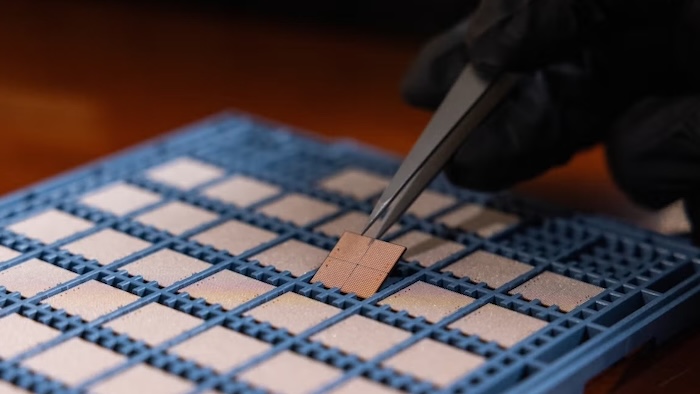
ASU at the heart of the state’s revitalized microelectronics industry
ASU has been expanding its engineering programs and repurposing its high-tech research facilities, which have been helping to attract large semiconductor industry investments of billions of dollars into Arizona. The university’s research is also helping Arizona become a global leader in microelectronics. As one example, Sarma Vrudhula, a professor in the School of Computing and Augmented Intelligence, part of the Fulton Schools, has been designing new microchips and systems that are helping to bring about the next phase of the AI revolution. His work in this area recently brought him a $2 million grant from the U.S. National Science Foundation.

Forget Trump’s ‘Riviera’. This is how Gaza will actually be rebuilt
Years of violent and destructive conflict have left Gaza a dramatically war-torn region. Now there is talk of rebuilding, but that is seen as a complicated, long-range political challenge. Restoration would also require undertaking formidable reconstruction and extensive related engineering ventures, says Mikhail Chester, a professor and urban geography expert in the School of Sustainable Engineering and the Built Environment, part of the Fulton Schools. Chester, who is also director of the Metis Center for Infrastructure and Sustainable Engineering, gives his perspective on the time, effort, investment and commitment it would take to adequately rebuild Gaza.

4 ASU researchers named senior members of the National Academy of Inventors
Three Fulton Schools faculty members recently earned the National Academy of Inventors’ prestigious senior member status. Matthew Green and Hamidreza Marvi, associate professors of chemical engineering in the School for Engineering of Matter, Transport and Energy, and Chao Wang, an associate professor in the School of Electrical, Computer and Energy Engineering, both parts of the Fulton Schools, are among four recent ASU faculty members selected by the prestigious academy. Green was noted for work on the environmental impact of the planet’s rising temperatures. Marvi’s progress on robotic technologies inspired by nature earned him the honor. Wang was chosen for developing engineering solutions in advanced manufacturing, nanophotonics and biomolecular sensing.
Breakthrough copper alloy achieves unprecedented high-temperature performance
A newly developed alloy features extraordinary mechanical strength and thermal stability. The nanocrystalline alloy has a high resistance to coarsening and deformation even when exposed to extremely high temperatures. Kiran Solanki, a professor in the the School for Engineering of Matter, Transport and Energy, part of the Fulton Schools, is a member of the team that achieved the materials science and engineering advance, which was reported about in the prominent journal Science. Solanki and his partners in the project detail the technical capabilities of the new material and describe its resilience and other qualities that promise to make it useful in myriad engineering applications.
See also: An Unstoppable New Alloy Can Survive 1,400°F-and Could Transform the Planes You Fly On, Popular Mechanics Online, April 1
ASU propels chip R&D as Arizona and US lure fabs
A big wave of growth in the fabrication of semiconductor technology in Arizona, especially by the Intel Corporation and the Taiwan Semiconductor Manufacturing Company, has been extensively supported through work at ASU facilities. At the university’s MacroTechnology Works operations, engineering faculty and students are contributing to development of processes that are boosting expansion of the domestic semiconductor microchip industry. Fulton Schools’ Vice Dean for Research and Innovation Zachary Holman, gives details on the research center’s multifaceted projects and the research and development ecosystem it has helped to foster that is serving the U.S. economy as well as national security through advances in chip technology and related areas.

Boom! Crash! ASU Club Strikes Down Concerns About The Future Of Comic Books
As movies, television and other sources of popular entertainment have increasingly moved to digital sources, comic books remain popular as a print media product. That’s reflected by The Comic Book Club at ASU Poly formed recently by Fulton Schools human systems engineering student Kevin Cruz and software engineering student Jaden Broughten. Club members gather to talk about the still-growing comic book realm. Beyond the connection they feel to classic comic books of the past, they also appreciate the artistry and craftsmanship displayed by modern comic books and cartoon strips. Club members also compare adaptations of original comic books and cartoon series into today’s movies and television shows.

What would the Great Lakes region be like with bullet trains?
Many growing major metropolitan regions are weighing the pros and cons of developing extensive high speed rail lines in efforts to serve the needs of their swelling populations and expanding urban infrastructure systems. The Great Lakes region offers a look at the challenges involved in such endeavors. Mikhail Chester, a professor in the School of Sustainable Engineering and the Built Environment, part of the Fulton Schools, and director of the Metis Center for Infrastructure and Sustainable Engineering, says these systems can provide environmental benefits but also present the challenge of maintaining the high ridership needed to make them economically viable.

ASU Undergraduates Contribute to Cutting-Edge Space Research Through Interplanetary Initiative Program
ASU students are getting first-hand experience in research focused on space exploration, technology and policy in collaboration with faculty members and industry experts in those fields. Among them are Meilyn Guas Perez and Sayantika Choudhury, both aerospace engineering students in the School for Engineering of Matter, Transport and Energy, part of the Fulton Schools. Both are nearing completion of their undergraduate studies. Perez says by combining engineering studies with materials science studies, she is better equipped to handle complex engineering challenges. Choudhury says her studies have better prepared her to achieve a goal of contributing to astronaut well-being and to space mission success.

ASU students win big at homeland security design challenge
Fulton Schools students were among dozens of competitors in this year’s Designing Actionable Solutions for a Secure Homeland challenge. They joined in proposing and devising ways to effectively overcome obstacles faced by the U.S. Department of Homeland Security. ASU engineering students Gavin Russo and Tyler Santos were among others from 15 universities taking on pressing artificial intelligence, or AI, challenges facing the U.S. Department of Homeland Security. Ron Askin, executive director of the ASU’s Center for Accelerating Operational Efficiency and an emeritus professor in the School of Computing and Augmented Intelligence, part of the Fulton Schools, said the event’s purpose was to stoke students’ interest in national security careers.

How Women Have Established Solidarity In Male-Dominated Fields
Despite progress in gender equality, there is still reluctance in some professions to fully accept females into the mainstream. Engineering is sometimes among them. But many women are maintaining solidarity in facing the challenges of acceptance. Alexandra Roselle, an aerospace engineering student in the School for Engineering of Matter, Transport and Energy, part of the Fulton Schools, and member of the Society of Women Engineers at ASU, is in a field in which fewer the 14 percent of the workforce are females. Roselle recalls teachers in elementary and middle school telling her engineering is a job suitable for women. But she and other ASU students in engineering and other fields continue challenging barriers that have long limited women’s career opportunities.

20 powerful women shaping the networking industry
Praniti Lakwara, an ASU aeronautical engineering graduate, is chief information officer at Zscaler, a leading cloud security company that provides cybersecurity solutions. Lakwara manages information technology solutions services for customers and employees. Her overarching goal is to drive a comprehensive strategy that will help rapidly scale the company into a world-class information technology organization. Those and other impressive achievements in her field has resulted in her selection as one of the most accomplished women who are shaping the fast-evolving networking industry as leaders of technology and business teams for the high-tech business world.

Teaching AI to reason
In an article in the first mass-circulation science and technology magazine from an Indian educational institution, Subbarao Kambhampati, a professor in the School of Computing and Augmented Intelligence, part of the Fulton Schools, gives a detailed technical overview on the quest by researchers to find ways to develop autonomous artificial intelligence, or AI, technology that offers not only information and knowledge but rationality. Such an advance would push AI into an evolutionary stage beyond merely “parroting” intelligence toward an ability to perform reasoning, say Kambhampati and other experts in the field. Some experts foresee the possibility of a machine that thinks like the human brain.

Flight interruptions surged to 40% of DCA arrivals last month
Increasing flight delays and cancellations have resulted from precautionary actions by the Federal Aviation Administration, or FAA, after a collision in January involving an American Airlines jet and a U.S. Army helicopter resulted in more than 60 deaths. The crash is still being investigated by the National Transportation Safety Board, while the FAA is expected to use new technology to both improve flight operations and reduce risk factors. Steve Polzin, a research professor in the School of Sustainable Engineering and the Built Environment, part of the Fulton Schools, says airport officials will need to balance new safety guidelines with the need to improve flight times. (Access to the article requires a subscription.)

ASU in position to accelerate collaboration between space, semiconductor industries
Government, business and education leaders at the annual Arizona Space Summit accessed progress in making the state a leading hub for global space exploration and semiconductor industry enterprises. Details were presented on ASU’s involvement with several NASA missions and noted the university’s NewSpace Initiative as one of 12 initiatives or institutes striving to lead the integration of academia with the commercial space sector. Hugh Barnaby, a professor in the School of Electrical, Computer and Energy Engineering, part of the Fulton Schools, and Fulton Schools Vice Dean for Research and Innovation Zachary Holman pointed to ventures taking shape at ASU to accelerate space and semiconductor sector endeavors.

Taiwan Semiconductor is hiring in Phoenix
A significant expansion of one of the world’s major semiconductor manufacturers is underway at its Phoenix facilities, where the company will need to substantially increase its workforce. The Taiwan Semiconductor Manufacturing Co., or TSMC, recruits from universities across the U.S., but is focusing particularly on the Fulton Schools, from which about 7,000 students are projected to soon graduate with skills in semiconductor work. Many are currently engaged with TSMC through fellowships and company-sponsored research. The relationship has led to an ASU TSMC Partnership that has ambitious goals to enhance education in microelectronics, upskill the industry workforce and accelerate research.

Low Earth Orbit Networks Pushing Geostationary Giants To Innovate
Financial market watchers are indicating it’s time for innovation by the Geostationary Earth Orbit, or GEO, operators due to increased competition in the satellite sector, price pressure and risk of oversupply from Low Earth Orbit networks. One research analyst says the proprietary and specialized GEO infrastructure of the past is weighing down space industry veterans who must rapidly innovate as competition mounts. Daniel Bliss, a professor in the School of Electrical, Computer and Energy Engineering, part of the Fulton Schools, and director of ASU’s Center for Wireless Information Systems and Computational Architectures, talks about the engineering and technical challenges of ensuring the effective performance space satellite networks.

ASU’s world-class science facilities are transforming student lives, careers
In the ASU Biodesign Institute’s basement lab, students are working on the compact X-ray free electron laser, or CXFEL, project, which potentially could help lead to revolutionary scientific progress. Among the research team members are Fulton Schools students, including mechanical engineering and physics student Albert Richardson and fellow engineering and physics student Gavin Russo, along with computer systems engineering Alexis Vasquez, among others. They and fellow students say the hands-on research and development experience with high-level technologies is energizing and motivating them to set their sights on pursuing efforts aimed at developing major engineering and technology innovations in their career fields.

Breaking barriers: Women driving progress in NASCAR and beyond
As the world celebrates Women’s History Month, the National Association for Stock Car Auto Racing, better known as NASCAR, is heralding how women continue to emerge in the professional auto racing arena, Among the young up-and-coming standouts in the sport is Isabella Robusto, an aerospace engineering student in the School for Engineering of Matter, Transport and Energy, part of the Fulton Schools. At 20, Robusto is seen as part of the next generation of racing stars. She shares her views on the evolution of the sport, the challenges it presents, the rewards it offers and how it is preparing for her for a career in a competitive world.

ASU student team places third in global sustainability competition
Two ASU teams from among more than 130 student teams worldwide took on challenges in the EcoTech Emerge competition to develop cutting-edge, net-zero carbon emissions for innovative agricultural management systems driven by artificial intelligence technology. An ASU team including Xiaolin Xi, a student in the university’s W.P. Carey School of Business artificial intelligence in business graduate program, and four students in the School of Computing and Augmented Intelligence, part of the Fulton Schools, Saurabh Dusane, a computer engineering student, Sreehari Krishna Sadesh, a computer science graduate student, and industrial engineering student Tanushri Magesh Sowmya earned a third place award, while computer science students Sahil Pai and Brandon Lim took a first place award.

How a 19-year-old ASU student is building an online gaming powerhouse
Problems with a slow-acting computer and a lagging internet connection when he was a teenager are among annoyances that motivated Sandul Gangodagamage to seek solutions that would eventually drive him to start a company while still in high school and later win several pitch competitions, including an ASU Venture Devils prize last year. Gangodagamage, now a second-year computer science student in the School for Engineering of Matter, Transport and Energy, part of the Fulton Schools, has scaled his Legion Games company, to what he says has more than eight million users across 190 countries. He describes his path to this success and the outlook for expansion of his ventures in coming years.

Why do so many pilots train in Arizona? The answer traces back to WWII
Why is Phoenix and municipalities in the surrounding metropolitan, suburban and rural areas a hotspot for training aircraft pilots? On this podcast, Anthony Wende, an assistant teaching professor in the aviation program at The Polytechnic School, part of the Fulton Schools, joons others in helping trace the local history and the region’s development over many decades. They reveal that Arizona became the first international airport of the Americas and how World War II brought many aspiring pilots to train in the state’s inviting climate, with its year-round blue skies.

Mapping the way to harvesting water from air
There are new technologies that promise to help solve many of the world’s biggest water supply challenges. Those tools and systems were part of the focus of the recent International Atmospheric Water Harvesting Summit at ASU. The Fulton Schools were among hosts of the event, which as chaired by Paul Westhoff, an ASU Regents Professor in the School of Sustainable Engineering and the Built Environment, part of the Fulton Schools. In this article, Westerhoff answers questions about the world’s most pressing water supply and sustainability challenges and related economic challenges. The interview also explores the possibilities of harvesting water from the Earth’s atmosphere to prevent water shortages.

Project of the Year Finalist, Airport/Transit
Contributors to the second phase of the Phoenix Northwest Light Rail Transit system included a team of students in the School of Sustainable Engineering and the Built Environment, part of the Fulton Schools, led by Fulton Schools Professor Barzin Mobasher. The team helped to ensure the performance of the concrete used in the project, which has been named a finalist in the Engineering News Record, or ENR, Southwest regional competition for Best Projects completed in 2024. In an American Society of Civil Engineers publication, Mobasher wrote about how students verified that the use of an advanced concrete with steel fibers for the 1.6-mile, multimillion-dollar extension significantly improved ductility and met the 45-year service life of 2 million structural fatigue cycles.

Can TSMC fill thousands of jobs for $165B Phoenix chip-making plants?
A planned $100 billion expansion of the Taiwan Semiconductor Manufacturing operations in Phoenix was announced recently, bringing with it the challenge of finding the many qualified workers with a range of skills in a variety of high-tech fields the company will need to achieve it goals. One source is the Fulton Schools, with many of its more than 30,000 students whose studies are preparing them to support the needs of the booming microelectronics industry. The Fulton Schools, the largest engineering school in the nation, is poised to be vital partner in TSMC’s expansion, says an ASU spokesperson.

A 6-month road repair that only takes 10 days, at a fraction of the cost? It’s possible thanks to ASU concrete research
Arizona’s bridges, railways and roadways are increasingly providing the state safer, more sustainable and economic transit infrastructure, options and services. Some of those benefits are rooted in achievements enabled by research at ASU. Among examples of that impact is the development of fiber reinforced concrete by Professors Barzin Mobasher and Narayanan Neithalath in the School of Sustainable Engineering and the Built Environment, part of the Fulton Schools. Work they are directing in the Structural Mechanics and Infrastructure Materials and Cement and Concrete Materials laboratories is contributing to improved construction materials for development and repair of transportation systems as well as broader innovations that are helping to enhance mobility and livability in communities.

ASU ranks No. 9 worldwide for US patents in 2024
ASU rose one spot among U.S. universities on the Academy of Inventors’ annual list of the top universities worldwide. Last year, ASU secured 180 utility patents, up by 10 from the previous year, earning a ranking in the top 10 in the U.S. Among achievements highlighted in this report is the development by ASU and Texas Instruments researchers of technology that helps semiconductor chip designers by improving the way electronic devices match to one another electronically inside a high-tech processing chip. Creators of the patented technology include Sule Ozev, a professor in the School of Electrical, Computer and Energy Engineering, part of the Fulton Schools.
See also: ASU among the top 10 universities for utility patents, Wrangler News Tempe Independent, March 17
Professor Sule Ozev and Associate Professor Wenlong Zhang, in the School of Manufacturing Systems and Networks are mentioned

‘Incredible milestone’: ASU, city of Phoenix announce location for ASU Health headquarters
A 30-acre Phoenix Bioscience Core innovation zone to be developed in the city’s downtown core will benefit from the resources of the Fulton Schools. The future ASU Health headquarters will be part of the complex that will include the university’s School of Medicine and Advanced Medical Engineering and the School of Technology for Public Health. Plans are for ASU Health to work closely with ASU’s College of Health Solutions, the Edson College of Nursing and Health Innovation and the Fulton Schools to form what one official said will be the “center of the universe” for dialog relating to health for Arizonans.
See also: Officials announce plans for new ASU health headquarters in downtown Phoenix, ABC News 15 Arizona, March 10
ASU announces location for health headquarters in Phoenix, Daily Independent, March 10
ASU announces downtown Phoenix location of future medical school, KTAR News-Phoenix, March 11
ASU, City of Phoenix announce location for ASU Health headquarters, AZ Big Media, March 11
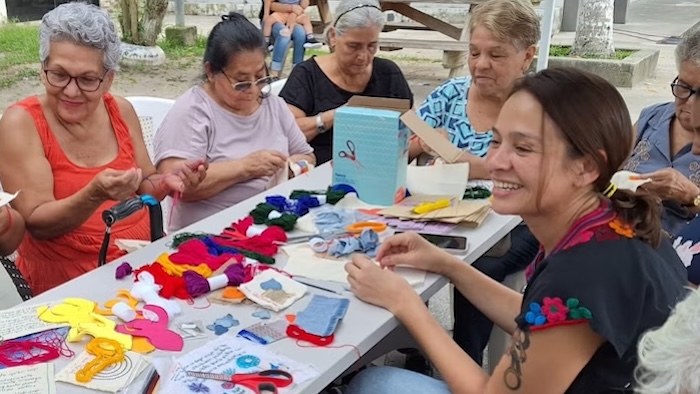
ASU’s USAID projects provided economic benefits to US
The U.S. Agency for International Development, or USAID, is among federal agencies undergoing a funding freeze and its work with ASU has stopped. ASU has supported more than 20 USAID projects in the past decade through research, technical support, administrative expertise and staffing. Those efforts have included help from the Fulton Schools in looking at public infrastructure for parks and transportation in El Salvador to consider modifications to help decrease harassment that is common there. The Fulton Schools collaborations with USAID are also lauded as the gold standard for matching public-sector goals and private-sector needs with education-sector abilities to help build workforces and provide investments for the future.

President Trump calls for end of CHIPS Act: what does it mean for chipmakers?
Billions of dollars have already been promised to U.S. chipmakers to provide the nation’s semiconductor manufacturers the advanced technology necessary to support the growth of the high-tech sector. President Donald Trump has called for halting this effort put in motion by the CHIPS Act, even though it has driven substantial new investments in the U.S. by major companies such as Taiwan Semiconductor. Binil Starly, director of the School of Manufacturing Systems and Networks, part of the Fulton Schools, and other experts say the value of the CHIPS Act is crucial to realizing the potential for an ongoing upswing in the country’s economy aided by a growing supply of cutting-edge manufacturing systems.
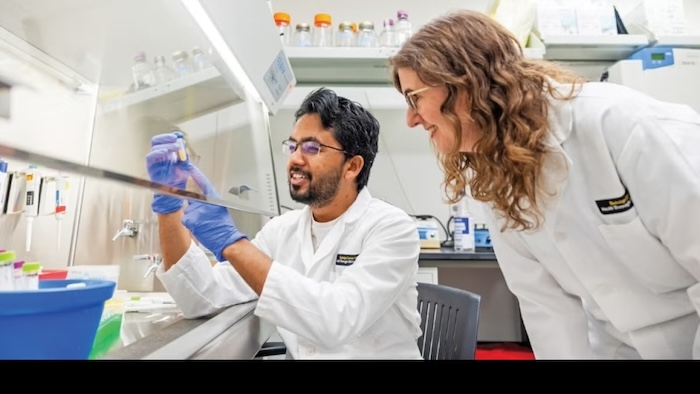
Putting health first: ASU experts doing research that improves lives and gets results
Rosa Krajmalnik-Brown is Among ASU researchers whose work extends beyond the study of health into applying what is being learned and taught about human health and how to protect it. Krajmalnik-Brown is a professor in the School of Sustainable Engineering and the Built Environment, part of the Fulton Schools and director of the ASU Biodesign Institute’s Center for Health Through Microbiomes. A video that’s part of this article detailing many of ASU’s health and medical research endeavors includes a video on the work she and her colleagues are doing to improve treatment for people with autism. The video includes James Adams, a professor in the School for the Engineering of Matter, Transport and Energy, part of the Fulton Schools, who is also doing research to improve autism treatment for children. Details of other ASU health and medical research projects are reported in the article.

From road coatings to a sweating manikin, these ASU research projects are helping Arizonans keep their cool
As climate trends trigger rising temperatures and more persistent heat, ASU researchers are working to enable people to remain safe and healthy in such conditions. Among projects are a thermal manikin that can measure the effects of extreme heat on humans so they can design adequate solutions. Leaders of that work include Konrad Rykaczewski, an associate professor in the School for Engineering of Matter, Transport and Energy. Other faculty members involved in related projects are Ariane Middel, an assistant professor in the School of Computing and Augmented Intelligence and Narayanan Neithalath, a professor in the School of Sustainable Engineering and the Built Environment.

Giant chipmaker TSMC to spend $100B to expand chip manufacturing in US, Trump announces
Taiwan Semiconductor Manufacturing Co., or TSMC, the world’s largest semiconductor manufacturer, is poised to invest an additional $100 billion in the United States. That will include significant funding to expand operations at the company’s facilities in the Phoenix area. Plans call for the TSMC Phoenix complex to grow to six fabrication plants. Binil Starly director of the School of Manufacturing Systems and Networks, part of the Fulton Schools, says the expansion shows investments by U.S. and Arizona state governments in manufacturing infrastructure are paying off. Starly says the next challenge will be providing the large number of skilled workers required by TSMC.
See also: In ‘major win’ for Arizona, Trump and TSMC announce $100B manufacturing expansion, The Arizona Republic, March 3
Governor Katie Hobbs said the TSMC announcement “cements Arizona as the epicenter of advanced chip manufacturing and innovation in America.” That achievement, she said, has been aided by university partners, notably ASU.
Sandra Watson on TSMC’s Historic $100 billion Investment, 3TV Phoenix, March 4
Arizona Commerce Authority President and CEO Sandra Watson comments on TSMC’s announcement of an additional $100 billion investment in Arizona to build three additional semiconductor fabs and related facilities.

Real AI solutions helping people now
A look at how ASU research is paving the way for advances in fast-evolving artificial intelligence, or AI, technology that promise to change the world for the better provides details on a project to improve women’s health care. Research aimed at both protecting and improving women’s cardiovascular health is being lead by Sandeep Gupta, a professor in School of Computing and Augmented Intelligence, part of the Fulton Schools, and director of the Intelligent Mobile & Pervasive Applications & Communication Technologies Lab. Gupta’s and Fulton Schools Associate Research Professor Ayan Banerjee’s efforts, funded by the National Science Foundation, focus on developing the technology to advance medical treatment options for women.

Scrubbing The Sky: Inside the Race to Cool the Planet
In an episode of a new podcast series that focuses on news and views of direct air capture technology, or DAC, which extracts troublesome carbon dioxide from the atmosphere, Klaus Lackner, a professor in the School of Sustainable Engineering and the Built Environment, part of the Fulton Schools, and founding director of ASU’s Center for Negative Carbon Emissions, is interviewed about the work that has earned him the unofficial title of the Grandfather of DAC. This look at his contributions to the field provides an informative overview of the challenges to ensuring a safe and healthy atmospheric environment.

Luminosity Lab Moves From Corporate Problem Solving To Platforming Student Creativity
ASU’s Luminosity Lab has relocated from a Fulton Schools location but at the same time is altering its strategy in ways designed to give students more experience in generating new research ideas. Students involved in the lab’s endeavors have carried out projects with goals that had been defined by the needs of corporations. The change is shifting to an emphasis on formulating research pursuits revolving around achieving progress that would benefit society at large in meaningful ways. Third-year Fulton Schools electrical engineering student Nabiha Ama, who has been on the lab’s team since her freshman year, sees the new direction helping to broaden the range of students’ educational and research experiences.

D.C. Delegate Eleanor Holmes Norton asks DOD to ground VIP helicopter flights near Reagan airport
The Washington District of Columbia’s representative in the U.S. Congress has asked the U.S. defense secretary to stop nonessential VIP helicopter travel in the area. Citing the more than 60 lives lost recently in a collision between an Army Black Hawk helicopter and an American Airlines flight in the district, D.C. congressional delegate Eleanor Holmes Norton wants the U.S. Department of Defense to halt most of these VIP flights. Travel behavior and transportation policy expert Steven Polzin, a research professor in the School of Sustainable Engineering and the Built Environment, part of the Fulton Schools, provides some perspective on exploring viable solutions.

Has Progress on Travel Safety Run Off the Road?
Travel safety on roadways has typically been a high priority of all levels of government, and many local, state and national programs address travel safety issues. The new U.S. secretary of transportion has pointedly emphasized the issue. Still, progress in maintaining road transportation safety has been not only slow but showing some reversals, writes Steven Polzin, a research professor in the School of School of Sustainable Engineering and the Built Environment, part of the Fulton Schools, whose work focuses on travel behavior and transportation policy. The consequences are often tragic for families and society, Polzin says, declaring that progress will require losing our tolerance of unsafe driver behavior.

Artificial Intelligence could be the future of Arizona disaster response
Paulo Shakarian, an associate professor in the School of Computing and Augmented Intelligence, part of the Fulton Schools, is working with colleagues and students on software to help Arizona officials make critical decisions in reacting to potential dangers to the public that can result from wildfires, floods and similar rapid growing environmental threats. The team will explore if artificial intelligence, or AI, technology could help in determining what kinds of threatening chain reactions could be ignited from these and other emergency situations. A recent research grant from the Arizona Board of Regents has already been approved to fund development the new AI software.
See also: Arizona Board of Regents supporting AI-powered disaster response efforts, KTAR News, February 17

Solar solutions: Bio-inspired approach creates bespoke photovoltaics
Cornell University researchers have developed photovoltaic panels using a lightweight fabric that wraps around complex shapes and be contorted to better absorb sunlight to provide a versatile component for renewable solar energy generation. Called HelioSkin, it evolved from a collaboration between Cornell Professor Jenny Sabin and Mariana Bertoni, a professor in the School of Electrical, Computer and Energy Engineering, part of the Fulton Schools, who is also a member of the HelioSkin team. They combined computational design, digital fabrication and 3D printing to produce customized filters and photovoltaic panel assemblies. The achievement advances efforts to enable integrated material systems of buildings to act like organisms to respond and adapt to their environments.

ASU’s building boom illustrates university’s commitment to keep moving forward
A building spree by Arizona State University is doing more than benefitting the university community. The projects are also offering multiple benefits and contributions to the state’s economy. Among them is the more than 170,000-square-foot structure that will provide office, meeting, instructional, research and collaboration spaces and be the home of ASU’s new School of Manufacturing Systems and Networks, part of the Fulton Schools. Planned for a fall 2025 opening, it will feature additive manufacturing labs, labs for robotics, smart manufacturing, industry automation, cyber manufacturing and operation research, as well as semiconductor manufacturing and manufacturing systems for the energy sector.

Chip In For Arizona: Students Compete To Shape The Future of The Semiconductor Industry
Brent Sebold, the Fulton Schools’ director of entrepreneurship and innovation, sees students in any area of academic studies getting valuable opportunities to contribute to Arizona’s emerging semiconductor technology industry ecosystem. The Chip In for Arizona competition, open to students 18 and older enrolled at Arizona’s accredited higher education institutions, is challenging them to create brand narratives to reflect Arizona’s growing stature in the semiconductor industry. The president and CEO of the Greater Phoenix Economic Council says the competition offers those in the next generation of technology professionals a chance to both participate and invest in shaping the future of Arizona’s economic growth.

Cutting-edge security and defence research collaborations
Nine new projects to be funded by the Security & Defence PLuS will support research to address critical national security and defense challenges. The organization is part of the PLuS Alliance, a partnership of three leading research universities — the University of New South Wales, King’s College London, and Arizona State University. Project leaders include three Fulton Schools faculty members: Heather Lum, an assistant professor of human systems engineering in The Polytechnic School ; Qijun Hong, an assistant professor of materials science and engineering in the School for Engineering of Matter, Transport and Energy and Professor; and Katina Michael in the School of Computing and Augmented Intelligence, an expert on socio-ethical implications of emerging technologies with an emphasis on national security.

ASU students awarded for hydration device
An ASU start-up, HydroGuard, developed an app that tracks peoples’ physical activities, heart rate, skin temperature and fluid intake to give them real-time feedback on their hydration status. The venture’s team includes biomedical engineering graduate student Saanya Aroura, (at far right in photo) in the School of Biological and Health Systems Engineering, part of the Fulton Schools, and Asiful Arefeen (second from left in photo), a master’s degree student in computer science with a concentration in biomedical informatics, in the School of Computing and Augmented Intelligence, also part of the Fulton Schools. The team won an ASU College of Health Solutions pitch fest last September for the hydration monitor designed to help prevent the onset of heat-related illnesses.

Georgia Tech Research Targets ‘Forever Chemicals’ in Drinking Water
A multi-university research team that has been discovering membranes capable of removing. harmful “forever chemicals” includes Tiezheng Tong (pictured in an ASU photo), an associate professor of environmental engineering in ASU’s School of Sustainable Engineering and the Built Environment, part of the Fulton Schools. Tong is helping to use advanced machine learning technology to perform membrane separation. The process enables researcher. to get a better understanding of the transport of forever chemicals across nanofiltration and reverse osmosis membranes, thereby expanding the boundaries of membrane separation science, Tong says. The project is a step to stopping the pollution caused by forever chemicals due to their toxic nature and their presence in water and common products found in most homes.
See also: Machine learning accelerates discovery of membranes to filter PFAS from water, Tech Xplore, February 19
Researchers Unveil Breakthrough in Understanding Mineral Scaling in Water Desalination, CityBuzz, January 23

Different ways of thinking, different ways of thriving: How ASU is supporting students with autism
The Building Bridges to College and Beyond for Autistic and Neurodivergent Students event — led by the College Autism Network, with sponsorship from Arizona State University — will be at Mesa Community College February 20 and 21. It will spotlight ASU’s programs to help autistic students succeed in college and career pursuits. The Fulton Schools are contributing, with faculty members getting involved in discussion panels and presentations. ASU’s efforts to support students with autism include the Employment Assistance & Social Engagement program, or EASE, Developed by faculty in the Fulton Schools and ASU’s College of Health Solutions, EASE pairs autistic engineering students with peer mentors for training in social engagement, career preparation, technical expertise and skills needed for STEM careers.

ASU Interplanetary Lab celebrates 5 years of success
Much of the success of student projects coming out of the Interplanetary Laboratory since it got started five years ago has stemmed from the pursuits and contributions of Fulton Schools students. A recent event to spotlight accomplishments made in the lab noted work of several ASU engineering students. They included recent graduate Chandler Hutchins, who now has bachelor’s and master’s degrees in aerospace engineering and space systems engineer job at Northrop Grumman. Second-year aerospace engineering student Beth McAuliffe says the lab is providing students valuable opportunities to learn and do research in multiple areas of engineering and take on science, engineering and technology projects with business partners from outside the university.

ABOR Regents’ Grants boosts AI-powered disaster response efforts to help keep Arizona better prepared
An initiative designed to pave the way for artificial intelligence, or AI, technology to help make disaster response efforts more effective calls for teaming ASU researchers and the Arizona Department of Emergency and Military Affairs to harness AI capabilities to enhance disaster response and planning, including identifying emerging threats to public safety and resources so that potential damaging impacts could be averted. ASU experts in technology development would lead efforts to develop advanced technologies capable of achieving the project’s goals. Paulo Shakarian, an associate professor in the School of Computing and Augmented Intelligence, part of the Fulton Schools, will be one of the co-principal investigators for the project. Shakarian comments about the project in a related Instagram post.
See also: Arizona Board of Regents supporting AI-powered disaster response efforts, KTAR News, February 17
Artificial Intelligence could be the future of Arizona disaster response, ABC 15 News, February 21

Recycling technology thrives off collective efforts, local experts say
Electronic waste is piling up at a rate five times faster than the rate of e-waste recycling. The United Nations Institute for Training and Research has documented that in 2022 more than 62 million tons of e-waste were generated worldwide and forecast that it could exceed 80 million tons by 2030. Improperly discarded e-waste poses threats to the environment and human health. Dwarak Ravikumar, an assistant professor at the School of Sustainable Engineering and the Built Environment in the Ira A. Fulton Schools of Engineering, who researches circular economy solutions to address climate change solutions, talks about potential solutions to the problem and the benefits those solutions could have for businesses and communities.

Phoenix Business Journal unveils 2025 Outstanding Women in Business honorees
Fulton Schools Associate Director of People and Talent Ashley Anderson is among the Business Journal’s Outstanding Women in Business for 2025. Anderson is among 25 executives chosen from more than 280 nominees from industries including real estate, health care, education and nonprofits. At a March 25 event in Phoenix, Anderson and others selected will be honored for their notable business achievements. The honorees will also be featured in special Business Journal print and digital publications. Anderson is part of the ASU Engineering Dean’s Office of Fiscal and Business Administration and has a professional certification credential as a senior-level human resources professional and a master’s degree in business administration from American Intercontinental University.

Sandwich-making robot is just one of the many Arizona State University projects advancing AI
There are concerns about expanding use of the advancing capabilities of artificial intelligence, or AI, technology —including the prediction that AI will do jobs now done by millions of people. But some see AI doing more to help people than to replace them. Faculty and students in School of Computing and Augmented Intelligence, part of the Fulton Schools, are exploring possibilities for AI applications to prepare food for seniors who aging in their own homes, aid people with disabilities and help people communicate more effectively. Ross Maciejewski, the school’s director, says that throughout history new technologies have taken over tasks once done by people, but he sees AI eventually creating more jobs than it eliminates. The report is also on a YouTube video on ABC 15 News Arizona and a KRDO/CNN Regional News report.

Protecting national security in a rapidly changing world
ASU’s Global Security Initiative, or GSI, begins its second decade after 10 years contributing to research and education aimed at helping to ensure public and government security throughout the world as the tools and weapons employed by menacing sources continue to advance. GSI Director Nadya Bliss, who is also a professor of practice in the School of Computing and Augmented Intelligence, part of the Fulton Schools, talks about the growing challenges of geopolitical power competitions and the threats they create. Under her leadership GSI has become a global leader in addressing the complex issues and challenges involved in ensuring global security.

The hottest new idea in AI? Chatbots that look like they think
The Chinese start-up company DeepSeek recently became the leading artificial intelligence, or AI, app by developing a free version of a popular AI chatbot that goes into something like a human thought process before providing answers to users. That ability has led to DeepSeek quickly becoming the hot U.S. tech stock and has been prompting leading companies, such as Google and Amazon, to respond with similar AI apps. AI experts such as Subbarao Kambhampati, a professor in the School of Computing and Augmented Intelligence, part of the Fulton Schools, are assessing the probabilities for how these new models — despite their advances — could still fall short of accuracy and sound reasoning.

From sludge to solutions: ASU students collaborate with city of Tempe on water treatment
About 40 ASU chemical engineering students got a tour of one of Tempe’s water plant recently to learn how the city is aiding municipalities and communities as they try to implement sustainable operational and environmental solutions for their parks, water treatment and management systems and related facilities. It’s part of a project called Project Cities, designed to engage the university and communities in collaborating to address local quality of life needs. It’s challenging Fulton Schools students to use what they are learning in chemical engineering studies to devise scientifically grounded solutions to solve some challenge the city has faced for years.

Sun Devil athletes excel in the classroom
For an eighth straight semester, 100 or more ASU Sun Devils athletes have earned a perfect 4.0 semester or cumulative grade point average, or GPA. ASU now leads the Big 12 Conference with more than 150 academic All-Americans among the ranks of its student-athletes. Among them is Tiago Behar, a fourth-year undergraduate computer science student in the School of Computing and Augmented Intelligence, part of the Fulton Schools. Behar, the 2023–24 NCAA Elite 90 Award recipient for men’s swim and dive, also earned an award for a student athlete with the highest cumulative GPA who has reached the finals competition for each of the NCAA’s 90 men’s championships. He plans to pursue a career in cybersecurity.

Mentorship propels ASU engineer’s journey from student to staff
While earning undergraduate and master’s degrees in information technology in the Fulton Schools through ASU’s 4+1 program, Torey Takahashi joined ASU Enterprise Technology, where she is now a full-time staff member contributing to a dynamic digital system through which the ASU community is learning, working and achieving success in their related pursuits. Takahashi collaborates with a team that includes software engineers, systems integration specialists and infrastructure management experts to provide scalable and reliable technology experiences to the community. Takahashi has earned promotions across various positions and now has a role as an orchestration engineer.

Behind the deal: What the loss of KORE Power means for Buckeye
Arizona’s aspirations to be an emerging green technology industry hub had been boosted by the decision of KORE Power Inc., a battery cell developer, to build a lithium-ion battery factory in Buckeye, a town west of Phoenix, to support electric vehicles, energy storage systems and more. The company recently pulled back on its plan, but state and local leaders are still intent on seeing the area become the “Sustainable Valley” to attract other battery industry operations. Candace Chan, a professor of materials science and engineering in the School for Engineering of Matter, Transport and Energy, part of the Fulton Schools, talks about challenges in gathering the array of high-tech knowledge and skills need to eventually make the effort successful.

ASU Students Working To Develop A Sleeve To Counteract Parkisons’ Tremors
An Engineering Projects In Community Service, or EPICS, student team is combining digital signal processing with accelerometer and gyroscope technologies to minimize negative health impacts of Parkinson’s disease — a neurodegenerative condition that causes people to loose muscle control. Fulton Schools electrical engineering student Dylan Levine leads of the Parkinson’s Sleeve development group. The device analyzes tremors and the signal processing send an electrical signal through a specially designed sleeve to the arm to stop the tremor. After work on the prototype, the team will test data and fine-tune the technology, says Jared Schoepf, an associate teaching professor in Engineering Academic & Student Affairs.

Expert wants US to arm Philippines with sound cannons to fight China’s gray-zone tactics
China’s coast guard recently deployed a sound cannon in a harassment effort aimed at Philippine vessels in disputed South China Sea waters. The cannons can blast noise loud enough to cause pain and damage hearing. A professor at the University of Hawaii’s School of Pacific and Asian Studies recommended the U.S. provide the Philippines with sound cannons to deter Chinese vessels pushing deeper into the country’s territorial waters. Brad Allenby, a professor in the School of Sustainable Engineering and the Built Environment, part of the Fulton Schools, an expert in the geopolitical implications of emerging technologies, discusses the pros and cons of deploying sound cannons in response to China’s actions.

Arizona State University partners with Rajalakshmi Engineering College to expand academic opportunities for Indian students
India is ASU’s largest source of international students — many of whom are Fulton Schools students — which is a driving factor behind a new initiative partnering ASU and India’s Rajalakshmi Engineering College. Designed to help redefine pathways for Indian students’ global education pursuits, the effort will include introducing new undergraduate and master’s degree programs in engineering, computer science, and business and management studies. The college will join the ASU-Cintana Alliance, a global network of progressive universities across Europe, Asia, the Middle East and Latin America. The alliance will also enable the college to leverage ASU’s extensive resources and collaborative research opportunities while also strengthening ASU’s global presence. The news is also reported in Investing.com’s Stock Market News and in Investment Guru India.com, Illustrated Daily News and The American Bazaar.
See also: Rajalakshmi Engineering College signs MoU with Arizona State University, USA ,The Hindu, February 12 (access to the article requires a subscription)
ASU partners with Rajalakshmi Engineering College to cater to Indian students, New India Abroad, February 12
ASU Expands Educational Horizons in India: A Leap into AI-Enhanced Learning, Devdiscourse (Discourse & Development) February 13

Readers beware: AI vacuums up information from the internet and spews it out
Search engines are increasingly integrating more tools into their services. Among them are knowledge panels and blurbs excerpted from a search result and provided before the links to web pages. These features use artificial intelligence, of AI, technology that vacuum up information from the internet and other sources and offer answers based on how they are trained to associate words. A complaint about them is that they often remove the user’s judgment from the equation. Paulo Shakarian, an associate professor in the School of Computing and Augmented Intelligence, part of the Fulton Schools, explains why such features are often not providing relevant and reliable information.

ASU spinoff develops new coating that could keep Phoenix roofs up to 40 degrees cooler
A new roof coating developed by an ASU spinoff company is continuing to be tested and showing its effectiveness as a moisture and heat barrier and in boosting the lifespans of roofs. Narayanan Neithalath, a professor in the School of Sustainable Engineering and the Built Environment, part of the Fulton Schools, explains what testing is finding that the EnKoat coating system is capable of doing to protect and improve the durability of roofing structures and systems. EnKoat has a controlled microstructure to protect against extreme heat and help cool indoor temperatures in response to various ambient climate conditions. The advances promise to bring significant future progress in strengthening the resilience of many built environments.

How huge parts of the US could become uninhabitable within decades — even so-called ‘climate havens’
How huge parts of the US could become uninhabitable within decades — even so-called ‘climate havens’
An expanding range of factors is deepening the threat of more serious and widespread climate change impacting the U.S. Recent occurrences such as last summer’s 113 consecutive days of temperatures in Phoenix exceeding 100 degrees Fahrenheit and fewer than five inches of rain over the past year are among weather and climate trend warning signs. Climate adaptation and infrastructure expert Mikhail Chester, a professor in the School of Sustainable Engineering and the Built Environment, part of the Fulton Schools, says extreme climatic conditions and the problems they cause, including wildfires, are becoming more common and likely to raise growing threatens to habitability, quality of live, community stability and overall prosperity.
