Game of Thorns

Gardening in Austin, Texas

Image
  • About

Zinnias Beat the Heat

Posted by gitanjaliyadav on July 21, 2013
Posted in: cut flowers, veggies. Tagged: cut and come again, eggplant, ichiban, zinnias. 3 Comments

In Texas, the dog days of summer are not kind to the roses. Fewer, faded blooms that shrivel in the noonday sun are the most we can hope for. So what’s a gardener with a penchant for cut flowers and an abundance of heat and sun to do? Plant Zinnias.

Untitled

Unlike most flowers that wilt in the heat of our Texas summers, zinnias seem to thrive on heat. In fact they prefer a sunny location. These beauties are in all day sun in my community garden plot. I planted them by seed in June and within 3 weeks I was cutting my own blooms. I have found through trial and error that zinnias do much better by seed than from nursery starts.

I planted a variety called “Cut and Come Again”. They aren’t lying. These pretty flowers reward my need to fill my house with cut blooms by blooming even more prolifically. What’s not to like about that?

Untitled

Here’s a pretty bouquet of zinnias I cut this morning. I love all the flower forms and the rainbow of cheerful colors. They also look really pretty with the Ichiban eggplant I harvested (zinnias vegetable counterpart in terms of heat loving and easy care).

If beautiful blooms and low maintenance growing needs aren’t enough to convince you to plant zinnias, they are also a fantastic attractor of pollinators.

Untitled

This little carnelian honeybee is just one of the few pollinators I have seen on these plants. The native bees and butterflies are just as attracted to these bright blooms. If you have a vegetable plot dependent upon pollinators, planting zinnias is a genius idea since most heat loving vegetables share the same needs. You may think it a waste of space in the vegetable garden but a gardener with a plot bordering mine was commenting on how there were no bees pollinating the squash in her garden. At this point in the season, my garden is producing more squash than I can eat. And I owe it all to the zinnias.

The Roses Join the Party

Posted by gitanjaliyadav on April 15, 2013
Posted in: antique roses, wildflowers. Tagged: Bamboo Muhly, bluebonnets, Francis Dubreuil, Hermosa, Marie Pavie, rosette delizy. Leave a comment

I think the roses in my yard were jealous of all the attention the wildflowers were getting. Usually, the wildflowers bloom first and the roses start after. This year, the winter was so mild that the roses have joined the party early. Seemingly, every single plant in my garden has burst into bloom at the same time.

Front Yard Spring 2013

Above you can see the bluebonnets flanked by monster roses Perle D’or on the left and Rosette Delizy on the right.

And here’s a closer view of Perle D’or.

Perle D'or and Bluebonnets

Because Rosette Delizy is under two big trees, she’s really a once blooming rose for me. Even so, I put up with her ungainly lopsided growth the rest of the year just so I can see her glorious spring blooms. I adore her multi colored flowers.

Rosette Delizy and Bamboo Muhly

I like the contrast of the Bamboo Muhly with this rose.
Rosette Delizy and Bamboo Muhly

The cooler spring weather brings out the velvety rich blooms of Francis Dubreuil.

Francis Dubreuil

This is the most fragrant rose in my garden. The mild winter weather has yielded the largest blooms I have ever seen on this rose.

Francis Dubreuil

Marie Pavie is another fragrant rose that has burst into bloom. Her scent wafts enticingly through the yard, especially in the mornings.

Marie Pavie

Nothing illustrates how ardently the roses wanted to join in on the action more than this last picture. This is the bed that I used to have Hermosa in. I removed her in the fall because she really wasn’t doing well in that spot. Clearly, Hermosa had other ideas.

Hermosa in Bluebonnets

The Ephemeral but Spectacular Flowering Dogwood

Posted by gitanjaliyadav on March 21, 2013
Posted in: Uncategorized. Tagged: Dogwood, flowering trees. Leave a comment

Flowers aren’t the only thing in bloom in Cental Texas right now. Spring is when some of our most beautiful trees burst into bloom. My favorite is the Dogwood. The blooms really only last for a few weeks, but I think the short bloom period only heightens this tree’s beauty. One of the most beautiful specimens I’ve seen in Austin is right across the street from the Sunshine Community Gardens where I have a vegetable plot. I’ve never noticed it before because when they aren’t in bloom a Dogwood blends in with the other oak and pecan trees. But in spring the Dogwood is hard to miss.

Dogwood

From far away, the Dogwood tree has such a beautiful shape, it’s not just the abundant ethereal white flowers that draw you in. I caught this tree a few days after it’s peak but it doesn’t even matter. Here’s a closer view of the beautiful canopy.

Dogwood in bloom

And an even closer view of the flowers, with the leaves just starting to come in.

Dogwood Blooms

I don’t see any in this picture, but I bet the bees just love this tree. I know I do.

Austin in Bloom

Posted by gitanjaliyadav on March 16, 2013
Posted in: roses, wildflowers. Tagged: california poppies, larkspur, rosette delizy. 1 Comment

It’s been too long since I last posted. Though I have been lazy and and unproductive in the last few months, the same can’t be said for the garden.

The California Poppies have just unfurled their petals in the past week.

California Poppy and Larkspur

Here’s a wider shot so you can see the larkspur that are in the background. I love how the purple of the larkspur contrasts with the gold of the poppies.

California Poppies and Larkspur

These aren’t the only wildflowers in my garden.

Bluebonnet Macro

With the drought we’ve been having this winter, the bluebonnets haven’t been blooming along the roadsides like they generally do at this time of year. Lucky for me, I have them in the garden.

Bluebonnets

I’ve let them take over the whole front yard. Literally.

Bluebonnets

You can smell their deep sweet fragrance from the front porch. In a couple of weeks the roses will start to bloom as well. Here’s a preview from Rosette Delizy. She always looks her best in the cooler weather of spring, when you can really see the color variations of her petals.

Rosette Delizy

Things are really taking off in Central Texas right now so stay tuned for more blooms.

Tis the Season

Posted by gitanjaliyadav on December 25, 2012
Posted in: public gardens, veggies. Tagged: chioggia beets, pickling, Sunshine Community Garden. Leave a comment

Christmas is a time for snow, Santa, eggnog and, if you garden in Central Texas, beets. I know, beets don’t sound very Christmassy, do they? How about Chioggia beets then?

Untitled

Still don’t see it? Try cutting them open.

Untitled

Inside is a glorious red and white peppermint root vegetable perfect for the holiday season. I planted these beauties in mid September and they were ready for harvest by the end of November. Not only are they beautiful, but they really don’t stain like the common red variety. See how happy my chopper-in-chief is to be slicing them.

Untitled

One of my favorite ways to prepare beets is to make refrigerator pickles with them. The best recipe I’ve tried comes from Martha Stewart. The beets retain their crunch and a spicy vinegar broth balances their sweet flavor.

All you need to do is pack a few jars with thinly sliced beets which have first been scrubbed and peeled. I find that a pint jar holds one large beet. After you have packed the jars, then you make a spicy vinegar broth with sugar, rice wine vinegar, thai chilis, pepper corns and bay leaf.

Untitled

Bring the mixture to a boil over the stove top.

Untitled

Then divide the liquid and the spices evenly amongst the pre-packed jars. Share them with friends and enjoy them in salads and sandwiches. They should last about a month in the refrigerator. I haven’t personally tested this because ours have never lasted that long.

Untitled

Happy Holidays!

The Bountiful Winter Garden

Posted by gitanjaliyadav on November 27, 2012
Posted in: Uncategorized. Tagged: All American, Brussels Sprouts, Carrots, Fennel, Parsnips, Rainbow Chard, Scarlet Nantes. Leave a comment

In September, we planted a lot of vegetables in our new Community Garden plot from a mixture of starts, seeds and bulbs. It’s now November and the vegetables are thriving.

In the bulb family we have garlic and shallots.

Garlic and Shallots

The shallots, which are smaller and on the right, seem to be doing better than the garlic. It could be the warmer than usual winter that is making the garlic leaves turn brown.

Here are the carrots after a judicious thinning. We planted an heirloom variety called Scarlet Nantes, which is supposed to be fairly consistent and takes 65 days to produce.

Carrots

We also planted parsnips from seed. Despite the similarity in appearance, carrots and parsnips act quite differently in the garden. Parsnips take about two weeks longer for the seeds to germinate. We planted All American and the packet says they take 95-105 days to germinate. Looking at the pictures, you can definitely tell they take a lot longer to germinate than carrots. The parsnip leaves are also very different from carrots. I don’t know why I thought they would be the same.

Parsnips

Some of the vegetables we planted would not look out of place in an ornamental garden. The rainbow chard we planted from seed looks like stained glass when it is backlit.

Rainbow Chard

The fennel bulbs we planted from starts add a nice feathery texture.

Garlic and Fennel

Even the brussels sprouts provide structure as the tiny sprouts grow larger.

Brussel Sprouts

But the best thing about winter vegetable gardening in Texas is that it can be done fairly easily even in a drought. Right now, Austin is experiencing drought conditions since it hasn’t rained since September and usually our winters are wet. Still, we manage to grow this garden with only once a week watering (daylight savings and full time jobs prevent more). I’m definitely hooked on a winter vegetable garden.

My Edible Garden

Posted by gitanjaliyadav on November 18, 2012
Posted in: veggies. Tagged: okra, Sunshine Community Garden, toscano kale. 1 Comment

Gardeners mostly come in two varieties, ornamental and edible. For most of my gardening life, I’ve mostly been the ornamental variety. The occasional foray into vegetable gardening has had mixed results. My current house is on a tiny urban lot and is dominated by two large oak trees. The trees house lots of squirrels. The squirrels dig in newly planted seedlings and run off with unripened fruit. Also, the prime sunny locations are taken up by giant antique roses. And so I’ve been content with planting herbs and the odd cherry tomato. Until now. In March, Karl started a hive in the Sunshine Community Gardens. Since we spent every week or two at the gardens checking the hives, we decided to put our name on the waiting list for a plot. In September, we were notified that a 20′ x 20′ plot was ours if we wanted it. We did.

Here’s the plot we were given.

Untitled

And here’s another view.

Untitled

The previous owner left the plot in good condition. We even got a bonus row of okra plants. Sadly, okra is the only vegetable neither Karl nor I will eat. Luckily, we have many okra loving friends.

Untitled

The aptly named community garden is blessed with an abundance of sunshine. It has few trees and no squirrels that I can see. The soil is also the lovely loamy type I have always read about but had never seen in person. The only negative thing about the gardens is the presence of bermuda grass. It borders each plot and, as anyone who gardens in Texas knows, nothing short of nuclear warfare keeps bermuda grass out of your garden. We found quite a lot of bermuda in our plot as we turned the soil after adding a half yard of turkey compost to our plot. We also added two wood chip paths down the center so that we could easily move amongst the rows without trampling emerging plants. This is what it looked like in September.

Untitled

From seed we planted golden beets, chioggia beets, carrots, parsnips, rainbow chard, fava beans, rapini, arugula and cilantro. We also planted garlic and shallots from small cloves. Just in case none of these things came up we planted brussel sprouts, toscano kale, and fennel from small starts. We needn’t have worried.

Toscano Kale

This is the garden two months later. Stay tuned for a post chock full of luscious and pornographic photos of vegetables.

October is Monster Month

Posted by gitanjaliyadav on October 21, 2012
Posted in: antique roses, Holidays. Tagged: bees, decorations, Halloween, Marie Pavie, perle d'or, skeletons. 3 Comments

October brings out the Monsters in my yard.

Perle D'Or

The monster roses, that is. Perle D’or is in full bloom (and seven feet tall and just as wide).

In the back is her sister monster rose, Marie Pavie, backlit in the morning sun.

Untitled

Monster though she is, Marie Pavie doesn’t scare the bees.

Untitled

They swoop in for some delicious nectar.

Untitled

But maybe they should be scared because these aren’t the only monsters in my yard.

Untitled

Behind the monster roses lurk actual monsters.

Monsters in the Garden

But if that’s too graphic for you, maybe you’ll like my garden gnomes instead.

Untitled

Aren’t they precious?

Just add water

Posted by gitanjaliyadav on September 29, 2012
Posted in: Uncategorized. Tagged: bulbs, rain lily, zephyranthes candida. Leave a comment

We in Central Texas appreciate our fall rainy season for many reasons. The rain helps alleviate the drought, it brings cooler temperatures, and the garden blooms in response. Also, the rain brings the aptly named rain lilies. Here is a picture of some that bloomed right after our last storm three weeks ago.

20120929-171326.jpg

The rain lilies in my garden (zephyranthes candida) were planted by the last owners of the house and they are one of the few plants I kept. These lilies are different than the native ones in the area that pop up after a rain and then disappear entirely. I think the blooms of this variety are prettier but the foliage doesn’t quite die away. Rather, they appear like chives in the garden when it isn’t raining. But after a rain shower, be prepared for a surprise bouquet of dainty blooms.

20120929-171339.jpg

Seattle’s Wasthington Park Arboretum Japanese Garden: A Closer View

Posted by gitanjaliyadav on September 14, 2012
Posted in: public gardens, Uncategorized. Tagged: ferns, japanese garden, mondo grass, moss, washington park arboretum. 1 Comment

The Washington Park Arboretum Japanese Garden has expansive views and colorful wildlife for the visiting gardener to admire. Yet it’s the finer details in the garden that can be implemented in even the smallest urban garden. Because a Japanese Garden does not rely upon colorful blooms to provide interest, those of us who garden in shade should take a closer look.

Lesson One: Use structure and form in the garden.

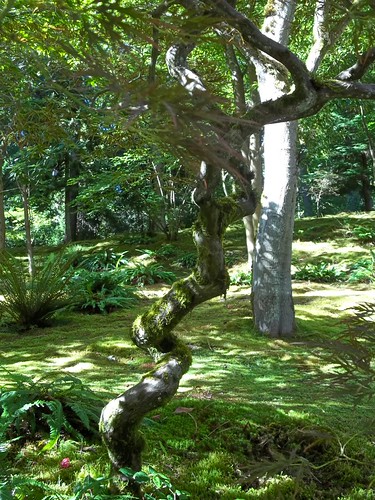
The Japanese Garden does this in some surprising ways. Here the dark, twisting trunk of a tree stands out against a sea of green.

Tree Trunk in Japanese Garden

Lesson Two: Employ contrasting textures.

In the photo below, not only do you see the structure of the tree trunk, but you can also appreciate the contrasting textures of the leaves on the tree and the moss on the ground.

Moss and Trees

Below, the garden has again employed these two lessons into one vignette that is easily translated into an urban setting. The structure is provided by the strong form of the ferns and the contrasting texture is provided by the moss.

Moss and Ferns

Lesson Three: Install plants with contrasting shades of green.

Just because you can’t grow flowers in the shade, doesn’t mean that you cant provide the same contrast using a green palette. The Japanese Garden shows how it can be done in a particularly stunning way.

Moss and Mondo Grass

You can also see the first two lessons employed in this picture. The structure is provided by the large rocks and you can also see the contrasting texture of the mondo grass and the soft moss on the rock.

I plan on using some of these lessons in my own shade garden in the near future. I’ve spent too long trying to force my shade garden to be something that it isn’t. Hopefully, I can employ some of these tactics to greater effect. I’ll keep you posted on my progress.

Posts navigation

← Older Entries
  • Search

  • Archives

    • July 2013
    • April 2013
    • March 2013
    • December 2012
    • November 2012
    • October 2012
    • September 2012
    • August 2012
    • July 2012
    • June 2012
    • May 2012
    • April 2012
    • March 2012
    • February 2012
  • Recent Posts

    • Zinnias Beat the Heat
    • The Roses Join the Party
    • The Ephemeral but Spectacular Flowering Dogwood
    • Austin in Bloom
    • Tis the Season
  • Blogroll

    • Antique Rose Emporium
    • Baab Brock Farms
    • Digging
    • Garden Web Antique Rose Forum
    • Help Me Find Roses
Blog at WordPress.com.
Game of Thorns
Create a free website or blog at WordPress.com.
Privacy & Cookies: This site uses cookies. By continuing to use this website, you agree to their use.
To find out more, including how to control cookies, see here: Cookie Policy
  • Subscribe Subscribed
    • Image Game of Thorns
    • Already have a WordPress.com account? Log in now.
    • Image Game of Thorns
    • Subscribe Subscribed
    • Sign up
    • Log in
    • Report this content
    • View site in Reader
    • Manage subscriptions
    • Collapse this bar
 

Loading Comments...
 

    Design a site like this with WordPress.com
    Get started
    Advertisement