10th International Gull Meeting

The 10th International Gull Meeting will be placed on Herakleion, at Natural History Museum of Crete, University of Crete. Dates: Nov 24 to Nov 28 2010. NHMC will be offer meeting supplies as the conference room and more.
The NHMC site lies on coastal line of the town, with a nice view to Cretan sea.
ImagePlaces for interest for Gulling are the harbour, the Almyros wetland to the west and the waste tratment site further west. From NHMC there are easy paths to the west (Giofyros river mouth) and to harbour to the east. (next picture). During late November most wintering gulls are present including the common Yellow-legged and Black-headed, also Mediterranean, Caspian, Baltic, Lesser Black-backed, Heuglin's are easy and in most cases Armenian, Slender-billed, Little and Audouini's gulls are present. Pallas Gull is a vagrant with good chance to be present too, other taxa/forms are either vagrants or still unconfirmed for the site.

ImageA map of the town with some hotels here:ImageMore information about the Program of the meeting and important dates will be post next month.

Gulls arrived with the North winds...

ImageImageOctober 2009 was not a good gulling month on harbour, possibly a result of ferry "traffic" and absence of good winds. But today I got a typical "winter" gulling day with most wintering species in place. Eight Medirterranean Gulls and 19 Black-headed were seen (first personal observation of both species in harbour this year), also a first-winter Audouni's Gull present:

ImageOne heuglini present with 4 adults or sub-adults Baltic Gulls, one of them with noticeable difference in size with the Heuglin's appears here:
ImageNext bird, most possibly a L.f. intermedius in heavy (strange?) moult:
ImageImageA first-winter unidentified Gull (heuglini?):
ImageNo Caspians or Armenians noted, but several immatures of fuscus complex present. Anyway, that was a good winter start!Image

First autumn observation on harbour - Sep 28

Image
Few gulls present. Next one, a YLG in primary moult and with a lot of streaks - both give more possibility to be of northern origin:
Image
Two adults LBBGs present, both with no streaks on head. That and mantle colour indicate intermedius. This one in body moult:
ImageAnd this one more advance - see head:
ImageImage
Four birds in 1st winter plumage gave close views, this one a northern YLG?:
Image
A small birdf with sooty dark markings on mantle, probably Baltic?:
Image
A quite pale bird, but still with dark mantle markings, heuglini?:
Image
And a strange one with a "Caspian" type head:
Image

Late March Gulling

ImageRain during the night, north winds - best case of gulling in Herakleion Harbour!
Although late March there are still wintering birds around. At least 15 individuals of the LBBG complex, including the late staying ringed Baltic one, one or two Heuglin's. Also one 2 cal-y Caspian, and several YLG, two Sandwich Terns and one difficult bird as usual!. The strong wind make photography difficult but I try my best!
The well known male Baltic in summer plumage now!:

Image
From left side one Heuglini (lagre with one white mirror on P10, one intermedius type with large white mirror, one LBBG with still wintering plumage, probably subadult, the ringed Baltic and a YLG:

ImageClose view of the two of the previous birds:

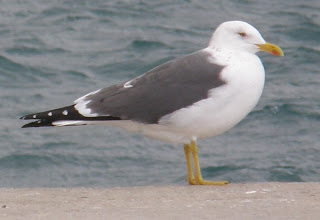
ImageAnd the "suvadult" LLBB again, maybe a female Heuglin's? :
Image
Two more intermedius type adult birds with larhe white mirrors in both R10-P9:

ImageImageAnd another LBBG, beside of the YLG with only a small mirror, different bird than previous with long wings and lighter. Probably another Heuglin's? :

Image
The wind plays with the plumage of this presumed as 2nd cal year Baltic Gull:

ImageImageCaspian I suppose:
ImageImageAnd YLG:

ImageTrying to understand the moulting differences between 1st summer Caspian and YLG:
Image
And finally the difficult one! :

ImageFrom far away was looking as a big Common Gull. Grey/fleshy legs are also remind Common or LBBG cases. The small dark eye reminds a Caspian but look the dark mantle comparing to YLG. Bill too slender for an Armenian Gull. The clean white head with only few streaks, mainly on hindneck looks strange for western LBBG cases in Mar although can be an advanced one. Moult like a Heuglin's but the bird is smaller than a candidate female of that taxon, the head is rounded and the bill is rather slender. So what?

Image

Yellow-legged and Caspian Gulls: immature cases

That picture was taken on Sep 2008 in Herakleion harbour. Some especially the head shape looks quite atypical as 2cy YLG. This reminds more a 3cy Caspian. So, is that a YLG or CG or something else? Usually no Caspians are present in September on Crete:
Image


Most of the local fledged juveniles YLG leave Crete in July-August to unknown areas! The few remaining local YLG in 1stwinter - 2nd winter plumages are pale birds, and this make them difficult to ID in winter together with soame aeging Caspians coming through. Also YLG from unknown origin are coming to winter on Crete (Greece) but their immatures look much darker from locals. Body moults (mandle, covers) and even primary moult seems to be later on such wintering birds.
The next bird is a typical 1st-winter local YLG in January, picture taken in colony of Elafonissi in SW corner of Crete:
Image


Image


The local YLG in 2nd winter (2cy/3cy) are even more scarse on Cretan colonies! Probably because of mortality. Birds of this age are more common on harbours and waste areas but I think they are mostly wintering visitors. The locals may look like this one in November:
Image


And like this one inJanuary:
Image


Possible Caspian in late December 2008, Herakleion:
Image


And another bird in February 2007 with bill and face remind cachinnans, but...:
Image


Finally a bird from February 2001, identificated as an 2cy Armenian:
Image

Mid Winter Gulls, Herakleion-Crete

Low numbers but good gull diversity this winter.

A candidate female heuglini:

Image


A large heuglini, most probably a male, comparing in size with an "intermedius":

Image


Another adult intermedius type:

Image


Heavily moulted 2nd winter Baltic Gull:

Image


The next 2 birds of type intermedius look different:

Image


Image


Typical michahellis:

Image


Caspian and YLG together:

Image


Adult Armenian:

Image


Slender-billed Gull, a rare visitor in Crete in winter, just the 5th wintering record!:

Image


Apart the YLG there are some difficult cases of immatures.
YLG:

Image


Possible Caspian 1st winter:

Image


Is that a heuglini?:

Image


Most probably a 2nd winter armenicus:

Image


A strange bird, small as an armenicus, darker of michahellis:

Image