Image

Tolerating Delay With DTN

The Internet has spoiled us. You assume network packets either show up pretty quickly or they are never going to show up. Even if you are using WiFi in a crowded sports stadium or LTE on the side of a deserted highway, you probably either have no connection or a fairly robust, although perhaps intermittent, network. But it hasn’t always been that way. Radio networks, especially, used to be very hit or miss and, in some cases, still are.

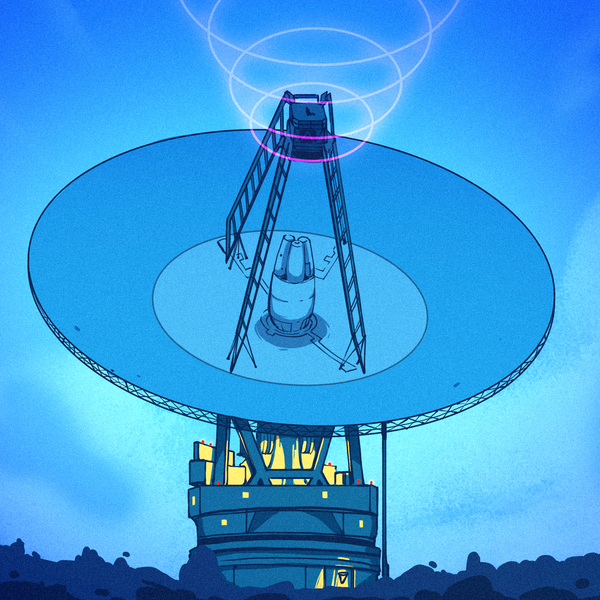
Perhaps the least reliable network today is one connecting things in deep space. That’s why NASA has a keen interest in Delay Tolerant Networking (DTN). Note that this is the name of a protocol, not just a wish for a certain quality in your network. DTN has been around a while, seen real use, and is available for you to use, too.

Think about it. On Earth, a long ping time might be 400 ms, and most of that is in equipment, not physical distance. Add a geostationary orbital relay, and you get 600 ms to 800 ms. The moon? The delay is 1.3 sec. Mars? Somewhere between 3 min and 22 min, depending on how far away it is at the moment. Voyager 1? Nearly a two-day round trip. That’s latency!

Continue reading “Tolerating Delay With DTN”

Image

ISS Medical Emergency: An Orbital Ambulance Ride

Over the course of its nearly 30 years in orbit, the International Space Station has played host to more “firsts” than can possibly be counted. When you’re zipping around Earth at five miles per second, even the most mundane of events takes on a novel element. Arguably, that’s the point of a crewed orbital research complex in the first place — to study how humans can live and work in an environment that’s so unimaginably hostile that something as simple as eating lunch requires special equipment and training.

Today marks another unique milestone for the ISS program, albeit a bittersweet one. Just a few hours ago, NASA successfully completed the first medical evacuation from the Station, cutting the Crew-11 mission short by at least a month. By the time this article is released, the patient will be back on terra firma and having their condition assessed in California.  This leaves just three crew members on the ISS until NASA’s Crew-12 mission can launch in early February, though it’s possible that mission’s timeline will be moved up.

Continue reading “ISS Medical Emergency: An Orbital Ambulance Ride”

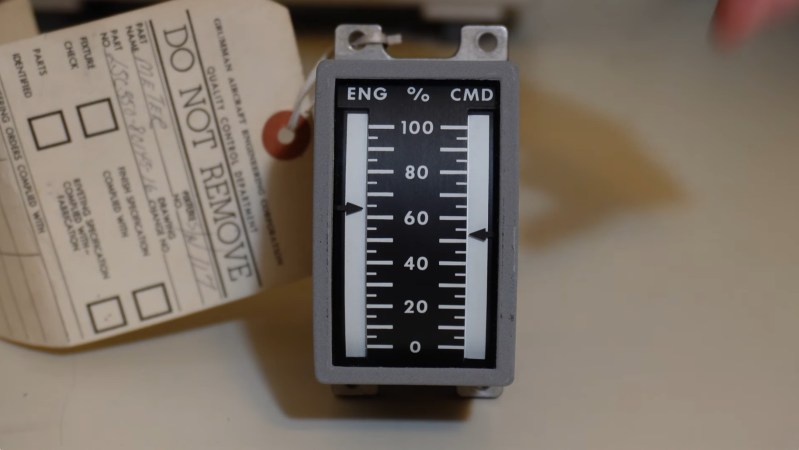
A photo of the thrust meter from the Apollo lunar module

Apollo Lunar Module Thrust Meter Lives Again

[Mike Stewart] powers up a thrust meter from an Apollo lunar module. This bit of kit passed inspection on September 25, 1969. Fortunately [Mike] was able to dig up some old documentation which included the pin numbers. Score! It’s fun to see the various revisions this humble meter went through. Some of the latest revisions are there to address an issue where there was no indication upon failure, so they wired in a relay which could flip a lamp indicator if the device lost power.

This particular examination of this lunar thrust module is a good example of how a system’s complexity can quickly get out of hand. Rather than one pin there are two pins to indicate auto or manual thrust, each working with different voltage levels; the manual thrust is as given but the auto thrust is only the part of the thrust that gets added to a baseline thrust, so they need to be handled differently, requiring extra logic and wiring for biasing the thrust meter when appropriate. The video goes into further detail. Toward the end of the video [Mike] shows us what the meter’s backlights look like when powered.

If you’re interested in Apollo mission technology be sure to check out Don Eyles Walks Us Through The Lunar Module Source Code.

Continue reading “Apollo Lunar Module Thrust Meter Lives Again”

Image

3D Printing A Telescope Is Rewarding, Even If Not Always Cheaper

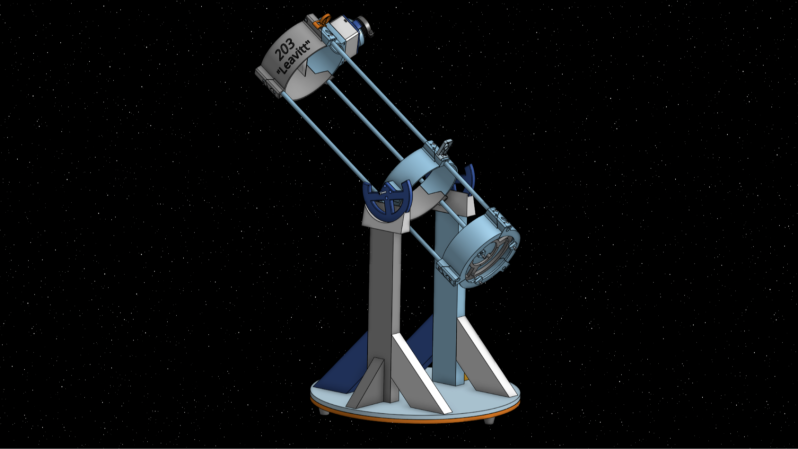
What can one expect from 3D printing an 8″ Newtonian telescope? [Molly Wakeling] shares her thoughts after doing exactly that. The performance was on par with any solid 8″ telescope, but in the end it wasn’t really any cheaper than purchasing a manufactured unit. Does that mean it wasn’t worth it? Not at all!

Image[Molly] makes the excellent observation that the process of printing and building one’s own telescope is highly educational and rewarding. Also, the end result is modular, user-serviceable, and customizable in a way that many commercial offerings can only dream of. It’s a great conversation starter with other enthusiasts, as well!

[Molly] printed the 203 Leavitt design (3d models available on Printables) which is an 8″ Newtonian telescope. This telescope design uses a concave parabolic mirror (a significant part of the expense) at the back of the tube to gather and focus light, and a small flat mirror near the front of the tube reflects this light to an eyepiece on the side. The wood stand makes things convenient, and we like the elastic tie-down used as a simple way to put tension on the mounts.

Do you find yourself intrigued but would prefer to start a little smaller and cheaper? Good news, because the same designer of the 203 Leavitt has a very similar design we happen to have featured before: the 114 Hadley. It features easily obtainable, lower-cost optics which perform well and can be easily ordered online, making it a great DIY starter telescope.

Image

NASA May Have Lost The MAVEN Mars Orbiter

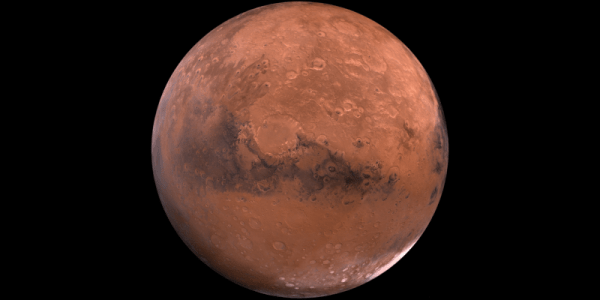
When the orbit of NASA’s Mars Atmosphere and Volatile EvolutioN (MAVEN) spacecraft took it behind the Red Planet on December 6th, ground controllers expected a temporary loss of signal (LoS). Unfortunately, the Deep Space Network hasn’t heard from the science orbiter since. Engineers are currently trying to troubleshoot this issue, but without a sign of life from the stricken spacecraft, there are precious few options.

As noted by [Stephen Clark] over at ArsTechnica this is a pretty big deal. Even though MAVEN was launched in November of 2013, it’s a spring chicken compared to the other Mars orbiters. The two other US orbiters: Mars Reconnaissance Orbiter (MRO) and Mars Odyssey, are significantly older by around a decade. Of the two ESA orbiters, Mars Express and ExoMars, the latter is fairly new (2016) and could at least be a partial backup for MAVEN’s communication relay functionality with the ground-based units, in particular the two active rovers. ExoMars has a less ideal orbit for large data transfers, which would hamper scientific research.

With neither the Chinese nor UAE orbiters capable of serving as a relay, this puts the burden on a potential replacement orbiter, such as the suggested Mars Telecommunications Orbiter, which was cancelled in 2005. Even if contact with MAVEN is restored, it would only have fuel for a few more years. This makes a replacement essential if we wish to keep doing ground-based science missions on Mars, as well as any potential manned missions.

Image

MagQuest: Measuring Earth’s Magnetic Field With Space-Based Quantum Sensors

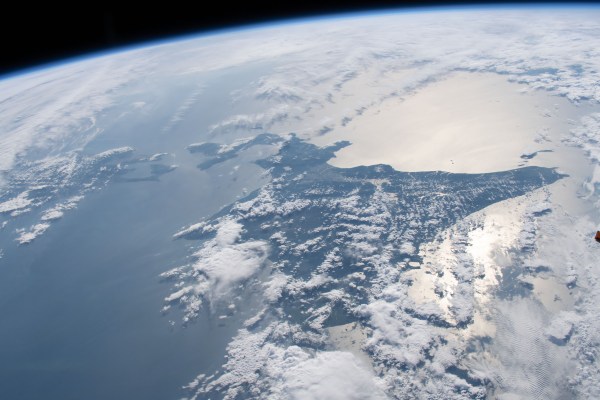
Recently the MagQuest competition on improving the measuring of the Earth’s magnetic field announced that the contestants in the final phase have now moved on to launching their satellites within the near future. The goal here is to create a much improved World Magnetic Model (WMM), which is used by the World Geodetic System (WGS). The WGS is an integral part of cartography, geodesy and satellite-based navigation, which includes every sat nav, smartphone and similar with built-in GNSS capabilities.

Although in this age of sat navs and similar it can seem quaint to see anyone bother with using the Earth’s magnetic field with a compass, there is a very good reason why e.g. your Android smartphone has an API for estimating the Earth’s magnetic field at the current location. After your sat nav or smartphone uses its magnetometer, the measurements are then corrected so that ‘north’ really is ‘north’. Since this uses the WMM, it’s pertinent that this model is kept as up to date as possible, with serious shifts in 2019 necessitating an early update outside of the usual five-year cycle.

Continue reading “MagQuest: Measuring Earth’s Magnetic Field With Space-Based Quantum Sensors”

Image

Water On Mars? Maybe Not

We were as excited as anyone when MARSIS (the Mars Advanced Radar for Subsurface and Ionosphere Sounding) experiment announced there was possibly liquid water under the southern polar ice cap. If there is liquid water on Mars, it would make future exploration and colonization much more feasible. Unfortunately, SHARAD (the Shallow Radar) has a new trick that suggests the data may not indicate liquid water after all.

While the news is a bummer, the way scientists used SHARAD to confirm — or, in this case, deny — the water hypothesis was a worthy hack. The SHARAD antenna is on the Mars Reconnaissance Orbiter, but in a position that makes it difficult to obtain direct surface readings from Mars. To compensate, operators typically roll the spacecraft to give the omnidirectional antenna a clearer view of the ground. However, those rolls have been under 30 degrees.

Continue reading “Water On Mars? Maybe Not”