Recommendations for Oxytetracycline Injections

Recommendations for Oxytetracycline Injections
Injections Photo by Gabriel Pugina

Three University of Florida Institute of Food and Agricultural Sciences (UF/IFAS) researchers recently issued the document Suggested Use Pattern of Injectable Antimicrobials for Huanglongbing (HLB) Management. The authors are Ute Albrecht, associate professor of horticulture; Ozgur Batuman, associate professor of plant pathology; and Megan Dewdney, associate professor of plant pathology. The antimicrobials for Florida citrus are ReMedium TI and Rectify; both contain oxytetracycline. Some document highlights follow.

APPLICATION TIMING Only one application per year is allowed for bearing trees, but non-bearing trees can be injected twice annually with a four-month interval. The most desirable timings of injection for various citrus varieties are: Early-season varieties such as Hamlin, Navel and Fallglo: March, April and May. June is a less desirable injection time. Mid-season varieties such as Murcott, Pineapple and Midsweet: March, April, May and June. July is a less desirable injection time. Late-season varieties such as Valencia: March, April, May, June and July. August is a less desirable injection time. Grapefruit such as Ray Ruby, Flame and Ruby Red: March, April and May. June is a less desirable injection time.

APPLICATION GUIDELINES Do not apply during bloom. Do not apply during leaf flushing. Apply when leaves are fully expanded for efficient uptake and distribution. Trees should be well watered before and at the time of application. Do not apply during drought conditions. Leaf yellowing (phytotoxicity) may occur on the side of injection. Only inject once the product is fully dissolved. Only use freshly prepared solution.

INJECTION SITES Do not re-use injection sites. The rootstock is the recommended location for injection, but scion injections are also effective. Subsequent injections should be above or below the initial site by 2 inches and on the opposite side, or to the right or left by 2 to 3 inches. Do not use any post-wounding treatments as these may interfere with wound healing.

OTHER CONSIDERATIONS Injection into the trunk can cause significant damage to the tree. Trees with a trunk diameter of less than 2.5 inches are prone to more damage. Minimizing the hole size by using a smaller injector tip will minimize tree damage. The document also contains information about pre-harvest and re-entry intervals, maximum amount of product per tree per year, dose per tree by trunk diameter, and personal protective equipment.

Source: UF/IFAS

Consider Summer Gibberellic Acid Applications

Consider Summer Gibberellic Acid Applications

By Tripti Vashisth, Maricielo Postillos and Taylor Livingston
In recent years, many citrus growers in Florida have begun using gibberellic acid (GA) to enhance tree growth and productivity. Initially, the recommendation was to apply GA monthly from September to January for Valencia oranges to maintain canopy health, reduce fruit drop and improve yields.

However, some growers are hesitant about applying GA in the fall due to concerns about the greener peel color, which can affect the appeal of fresh fruit even though GA does not impact internal quality. Additionally, applying GA five times increases production costs. gibberellic acid
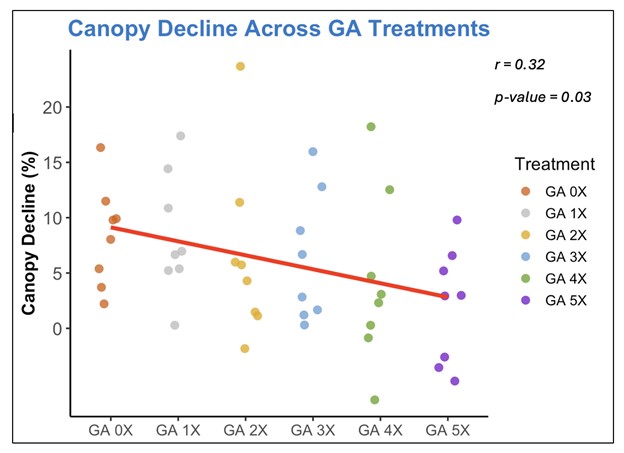
This graph shows the decline in canopy over two years. Each color represents a treatment with a different number of gibberellic acid (GA) applications (0 to 5). As the number of GA applications increases, canopy decline decreases.

Recent field trials have investigated the effectiveness of applying GA in early summer and the minimum number of applications needed to optimize tree productivity. Data collected over two years for both Hamlin and Valencia oranges showed that trees receiving three or more GA sprays exhibited better fruit retention and lower preharvest fruit drop compared to untreated trees. While untreated trees experienced a decline in canopy density, those treated with GA maintained a more stable canopy, with better results for trees receiving more applications. Notably, even after Hurricane Milton, the treated trees preserved their canopies.

Overall, the yield improved by 30% with a higher number of GA applications. In terms of fruit quality, internal traits such as Brix, acidity percentage and pounds of solids per box were not significantly affected by the number of GA sprays in either Hamlin or Valencia oranges. However, peel integrity improved, indicated by lower electrolyte leakage, even though the color development of treated fruit was slightly delayed. It is important to note that applying GA three to five times resulted in a greener peel color.

The research results suggest that early and repeated GA applications can be a valuable strategy for growers managing groves affected by HLB (citrus greening disease). A minimum of three applications, spaced 45 days apart starting in July, can promote canopy health and reduce fruit loss without compromising the internal fruit quality.

Tripti Vashisth is associate center director and an associate professor, Maricielo Postillos is a visiting scholar, and Taylor Livingston is a biological scientist — all at the University of Florida Institute of Food and Agricultural Sciences Citrus Research and Education Center in Lake Alfred.

Managing Aggressive Weeds in Citrus

managing aggressive weeds
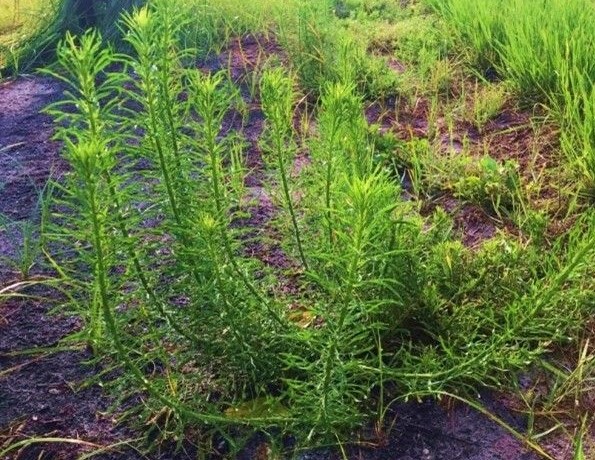
Horseweed is hard to control in citrus.
Photo by Ramdas Kanissery

Ramdas Kanissery gave advice for growers in a May 20 virtual presentation about managing aggressive weeds in citrus. Kanissery is a University of Florida Institute of Food and Agricultural Sciences associate professor of horticultural sciences at the Southwest Florida Research and Education Center in Immokalee.

A summary of his recommendations follows. Regular grove monitoring helps catch weed escapes from herbicide programs. If only one weed species escapes after treatment, it likely indicates herbicide tolerance in weeds, not overall herbicide failure. Rotate and tank-mix herbicide modes of action. Tank-mixing pre-emergent herbicides helps stop hard-to-control weeds from emerging. Spray when weeds are young. Never let weeds grow and adapt.

CULTURAL PRACTICES Mechanical mowing trims down the tall growing weeds (grasses at a height of about 1 to 2 feet). It must be done regularly, before seeding. Cover cropping may contribute to longer-term management of weeds in row middles. Planting cover crops in the row middles effectively reduced grass infestation in the tree rows.

PRACTICAL APPROACHES Using low herbicide rates reduces control and encourages weed tolerance. Always apply full rates. Skipping surfactants and adjuvants reduces herbicide effectiveness. Always include them for optimal results. Using an appropriate surfactant helps improve the herbicide retention, coverage and efficacy. Applying herbicides at the wrong time of day reduces effectiveness. Target ideal timing for best control. Apply when there is ample sunlight. Mid-day applications enhance effectiveness of glufosinate. Broadleaf weeds tend to be more sensitive to the time-of-day effect than grasses. Low temperatures affect herbicide effectiveness. Post-emergent herbicides do best when the temperature is between 65 and 85 degrees. In the summer, apply during the cooler part of the day. Applying herbicides just before rain can reduce effectiveness. Always check the forecast and avoid application between rains. Generally, rainfall within six hours after application may reduce effectiveness. Don’t skip pre-emergent herbicides. A square foot of soil 6 inches deep can have about 3,000 viable weed seeds. That’s 130 million viable seeds per acre. As part of his presentation, Kanissery also discussed the harm weeds do.
  Citrus Industry Magazine © 2025.
Unsubscribe or manage your email subscriptions.   WordPress.com and Jetpack Logos   Get the Jetpack app   Subscribe, bookmark, and get real‑time notifications – all from one app!   Download Jetpack on Google Play Download Jetpack from the App Store   WordPress.com Logo and Wordmark title=   Automattic, Inc.
60 29th St. #343, San Francisco, CA 94110  

Snail Management

Snail Management By Lauren Diepenbrock
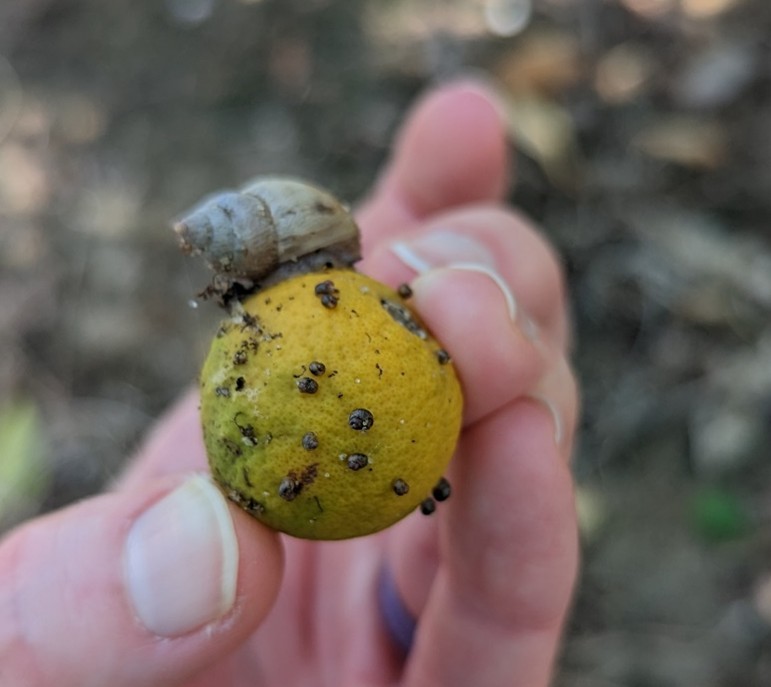
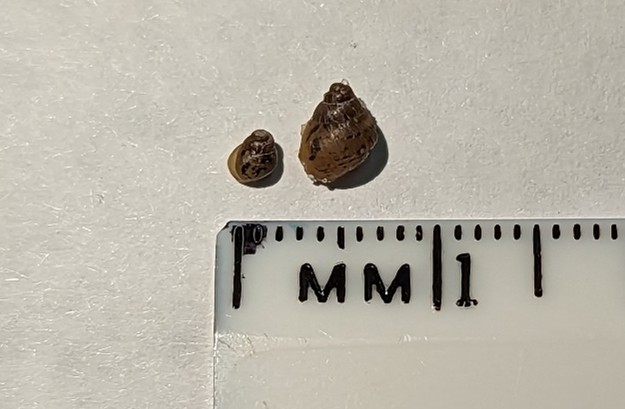
Snail management is becoming a more common discussion in Florida citrus with the arrival of a newer species in the Southeast. The snail of concern is Bulimulus bonariensis, previously referred to as Bulimulus sporadicus (Figure 1). Snail Management Figure 1. Multiple sizes of B. bonariensis were collected from citrus on April 27, 2023.
Photos by L. Diepenbrock

Over the past three years, the first emergence of newly hatched snails was noted in late April through early May. The smallest recovered snail was only 3 millimeters in diameter (Figure 2). These small young snails are hard to detect. It is likely that populations of snails go undetected for several generations due to the small size of the younger life stages. Until snails are larger, or the population is high enough to begin clogging irrigation, they are easy to miss in fields. Snail Management
Figure 2. Two smaller snails were recovered from scouting on April 27, 2023.

Snail management is tricky at best. At present, there are six baits and one liquid molluscicide registered for use on snails in Florida citrus: Deadline GT, Deadline M-Ps, IronFist, Ferroxx, Ferroxx AQ, Sluggo (baits) and Slug-Fest (liquid). In a laboratory study, all baits were found to be effective in killing B. bonariensis within a seven-day period in a confined setting. The data was presented in a 2023 Citrus Industry article.

However, these findings do not always translate to field efficacy. Additionally, University of Florida Institute of Food and Agricultural Sciences (UF/IFAS) researchers have been screening other pesticides registered for use in citrus as potential management tools. Molluscicides can provide short term relief from molluscan pests, but for long-term management, habitat manipulation and/or finding a predator is often key to snail and slug management.

Lauren Diepenbrock is an assistant professor at the UF/IFAS Citrus Research and Education Center in Lake Alfred.

IPCs: To Tie or Not to Tie?

By Daniel Cooper on April 9, 2025 ipcs By Fernando Alferez and Osbaldo Vasquez

As individual protective covers (IPCs) are being adopted as a standard management practice to protect newly planted citrus trees from psyllid infestation, it has become apparent that one of the main effects of this tool is improved tree growth.

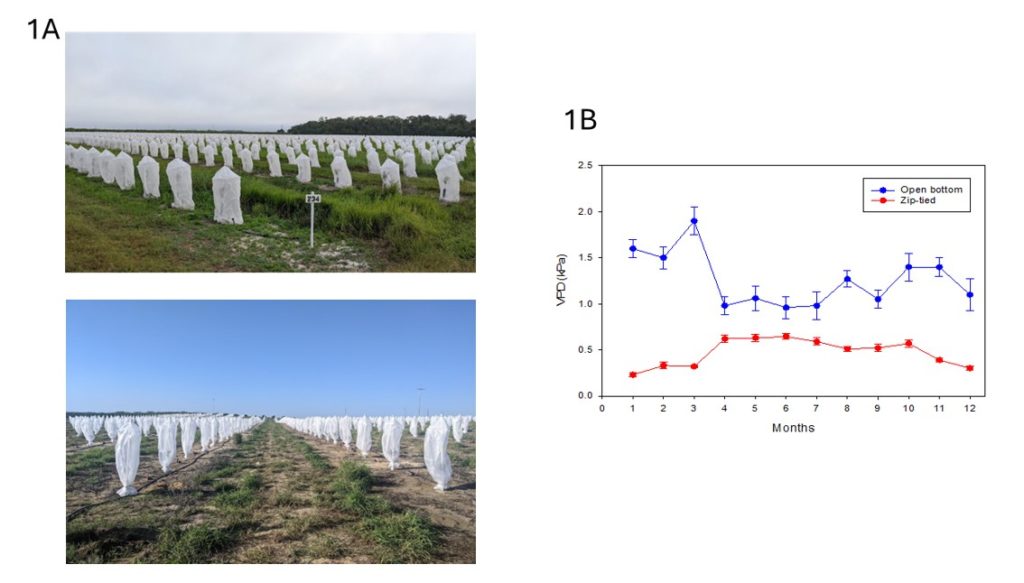
Trees under IPCs grow larger with thicker canopies. This is probably the result of healthier trees that perform better because they don’t allocate resources to fight with the greening disease. It may also be the result of some mild shading that improves vegetative growth and the effect of less evapotranspiration due to the special environment that the IPC mesh creates. IPCs Figure 1. A: Open IPCs (top) and zip-tied IPCs (bottom) in commercial groves. B: Vapor pressure deficit (VPD) under open-bottom IPCs (blue) and zip-tied IPCs (red). Note the significantly higher VPD under open-bottom conditions.

University of Florida Institute of Food and Agricultural Sciences (UF/IFAS) researchers have determined in different trials that the vapor pressure deficit is lower under IPCs than in the surrounding atmosphere. This results in less evapotranspiration in the covered trees. These observations have been done in trees where IPCs are zip-tied at the bottom. However, many growers are not zip-tying the bags. They leave the bottoms open (Figure 1A).

This has advantages as installation of the covers is faster and less labor intense. In addition, a loose bottom may allow some beneficials to enter the canopy while reducing some secondary pests.

However, the impact of this practice on the environmental conditions inside the bag and its effect on tree growth has not been studied. Zip-tying may have some implications not only for tree growth but also for irrigation frequency and water-use efficiency.

To address these questions, UF/IFAS researchers are conducting several trials. So far, they have seen that vapor pressure deficit is indeed significantly different when comparing zip-tied or open-bottom IPCs (Figure 1B). It is still too early to determine if more frequent irrigation will be necessary in open-bottom IPC trees to achieve the same growth as in zip-tied IPC trees. This information is currently being collected and will be available soon.

Fernando Alferez is an associate professor, and Osbaldo Vasquez is a biological scientist, both at the UF/IFAS Southwest Florida Research and Education Center in Immokalee.

Recovering Unprotected HLB-Infected Young Trees

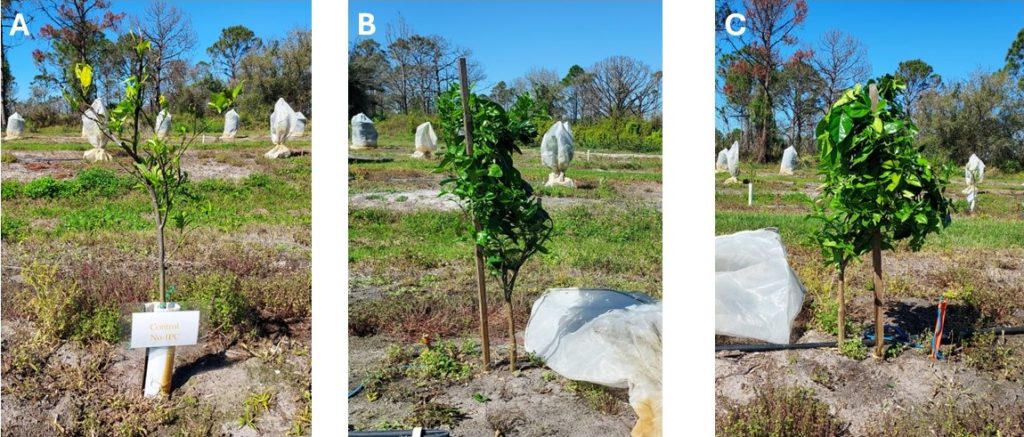
Image By Daniel Cooper on March 25, 2025 Citrus canker hlb A: Untreated control tree after 24 months of exposure to psyllid infection
B: Tree that was exposed to psyllids for 12 months and then protected for an additional 12 months with an individual protective cover (IPC)
C: Tree that was exposed to psyllids for 12 months and then protected for an additional 12 months with an IPC and treated monthly with brassinosteroids.

By Fernando Alferez and Saoussen Ben Abdallah

Individual protective covers (IPCs) are now being increasingly adopted in Florida to protect newly planted citrus trees from psyllid colonization. The risk of new citrus plantings becoming infected with HLB is especially high, as young trees flush more frequently and attract more psyllids. However, the adoption of IPCs does not occur in all groves. In some cases, trees are still planted with no protection. Under these circumstances, if trees are left unprotected, they become infected with HLB during the first year and will not enter fruit production.

But can these trees be recovered so they become productive as they age? Treatment with brassinosteroids (BRs) may induce a strong immune response in young trees by activating the salicylic acid pathway. Treatment with BRs in non-protected trees may delay HLB infection and spread in the grove. University of Florida Institute of Food and Agricultural Sciences (UF/IFAS) researchers hypothesized that infected young trees could be recovered by covering them with IPCs, so reinfection would not occur as the psyllids would be excluded, and by treating them with BRs, so immune response would be induced.

A research trial began in February 2023. Ninety Valencia trees grafted on US-942 rootstock were planted and left unprotected and exposed to psyllids. After one year, all trees tested positive for HLB and were declining. Then, in February 2024, one third of the trees were covered with IPCs, and another third of the trees were covered with IPCs and received a monthly dose of BRs at a rate of 6.2 fluid ounces per 100 gallons of water. The remaining 30 trees were left unprotected and not treated, so they served as the control trees.

After one year, there is a clear recovery of the trees that were covered with IPCs. They have better canopy density and larger leaves than the control trees. These effects are maximized in trees that were not only covered with IPCs but also treated with BRs. In this case, bacterial titer has been significantly reduced, and the trees are even blooming for the first time. In contrast, unprotected trees are in clear decline. Researchers will continue monitoring the trees for at least one more year to determine if these changes are sustained over time.

Acknowledgement: This research is funded by U.S. Department of Agriculture-National Institute of Food and Agriculture project 2022-70029-38481.

Fernando Alferez is an associate professor, and Saoussen Ben Abdallah is a postdoctoral associate, both at the UF/IFAS Southwest Florida Research and Education Center in Immokalee.

Reduce Fruit Drop From Citrus Canker

Image By Daniel Cooper on March 18, 2025 Citrus canker By Megan Dewdney
Citrus canker can contribute significantly to the loss of fruit prior to harvest. As bloom begins in Florida, it is time to finalize management plans for foliar diseases. For many growers, very aggressive canker management programs are no longer a possibility, however, some management is important.

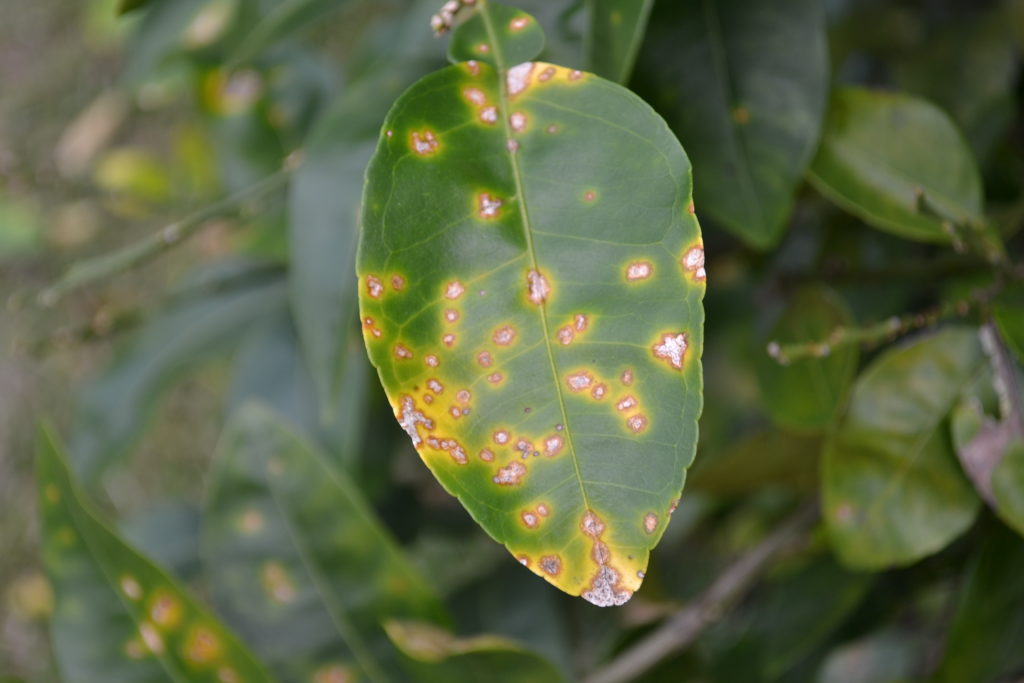
Citrus canker susceptibility of young fruitlets usually starts at the end of March or the beginning of April. The exact timing is dependent on fruitlet size in a particular year. Oranges are most susceptible when the fruitlets are between 0.25 to 1.25 inches in diameter. Grapefruit are most at risk when fruit are 0.5 to 1.5 inches. Citrus canker Citrus canker lesions appear on both the upper and lower surfaces of leaves.
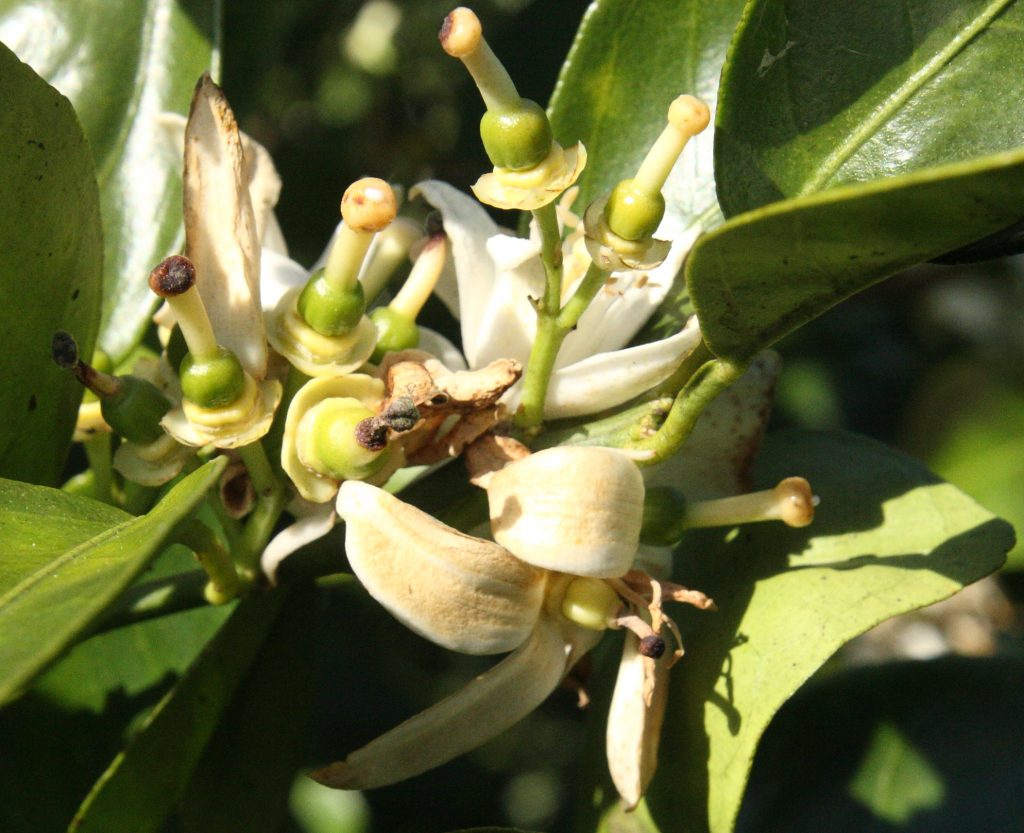
Photo by Beth Bolles, UF/IFAS Extension Escambia County

Prioritize early-season canker management when planning a limited number of applications. The lesions on fruit from early-season infections tend to grow large. These lesions stimulate ethylene production which loosens the fruit, leading to drop. It is uncertain if Florida will have the warm wet weather that canker loves when the fruit are vulnerable. But it only takes one ill-timed wind and rain event to cause significant losses. Florida is expected to have a drier than average spring but don’t ignore forecasted rain events. Be prepared, particularly if you have highly susceptible cultivars.

Early oranges are more susceptible in Florida than late-season oranges. Navels and lemons are also susceptible. Grapefruit are extremely susceptible and can serve as inoculum sources if not well managed. There is less information on some of the newer cultivars, but OLL-8 can be badly affected.

Copper is still the most effective and economical canker management product, particularly for suppressing fruit lesions. Unless you are using the Citrus Copper Application Scheduler, the 21-day interval is the best balance between enough copper to be an effective barrier and intervals between applications. Copper does not redistribute on the plant surfaces, so it needs replenishment as it decays from rainfall and fruit growth. Stretching intervals to 28 days leads to inadequate protection and increased disease incidence and severity. Depending on the application timing, copper can help manage other foliar diseases like melanose and greasy spot. Copper rates as low as 0.5 pounds of metallic copper/acre can be used, but if planning to manage fungal diseases with the same application, higher rates will be required.

In many Florida Valencia blocks, three springtime applications should be adequate to keep the fruit from dropping. On the more susceptible early oranges, applications are recommended until late June or early July. If you plan to market fresh fruit, applications may be required until October to keep the fruit blemish-free. Particularly in fresh fruit production, keep leaf lesions to a minimum. They provide inoculum that affects fruit. Copper is not an effective treatment for leaf lesions because of the frequent new growth and rapid expansion that outgrows the coverage. However, acibenzolar-S-methyl (Actigard) reduces leaf lesions by activating the systemic acquired resistance in plants. A second product, Aura Citrus, is also a good alternative for foliar canker.

For more information about citrus canker management, see the 2024–25 Florida Citrus Production Guide.

Megan Dewdney is an associate professor at the UF/IFAS Citrus Research and Education Center in Lake Alfred. Sponsored Content

Will Weather Set Florida Free From the Threat of PFD?

Image By Daniel Cooper on March 11, 2025 Image By Megan Dewdney
Despite being in a transition from a La Niña to a neutral El Niño Southern Oscillation phase, Florida has not had warmer than average temperatures in the last two weeks from March 3. Looking at historical trends, temperatures for the last two weeks of February were in the normal range for this time of year.

When looking at the precipitation situation, locations are very different. In Central Florida and the Indian River, rainfall is just below the average yearly accumulation, but in the Southwest, there is a rainfall deficit of nearly 2 inches. weather Postbloom fruit drop symptoms include petal lesions and shriveled petals.
With all the cool weather and in some cases, water deficit, citrus trees are primed to flower in a synchronized manner. For the predicted timing in your area, follow the flower bud advisories. In North Central and Central Florida, flowering is expected to occur in the first and second weeks of March. Much of this period is predicted to be dry, with warm days and cool nights. These are good conditions for humans, but not great conditions for postbloom fruit drop (PFD).

There is a prediction of rain in Central Florida in the first week of March after warmer weather with lows in the 60s. Since this rain is associated with cooler weather, a PFD infection period seems unlikely unless the conditions are wet for a long period of time. What might transpire when bloom is at its peak in Southwest Florida and Indian River is too far away to make any predictions now, but keep an eye on warm, wet weather predictions.

Because weather can be very local, it is important to be monitoring for PFD disease risks even though the likelihood of disease seems low this year. Blocks with chronic problems may be at just enough risk with the upcoming rain events during bloom to see disease.

Monitor the disease risk in your area with the Citrus Advisory System. As a reminder, if a block is located in an area where there are longer wetting periods than your Florida Automated Weather Network station, add up to 0.05 to the infection index to see if you cross the threshold for disease. These locations include low-lying areas prone to fog or near waterbodies.

There are limited fungicide choices for PFD. Only the strobilurin (FRAC 11) fungicides have been consistently effective in University of Florida Institute of Food and Agricultural Sciences (UF/IFAS) trials. But these fungicides are prone to resistance development so they should be used sparingly. There is a label limit of four applications within a growing season.

Consult the Florida Citrus Production Guide for specific information on fungicides and timing to manage PFD.

Megan Dewdney is an associate professor at the UF/IFAS Citrus Research and Education Center in Lake Alfred. Sponsored Content

By Daniel Cooper on February 25, 2025 oxytetracycline HLB-affected trees
By Tripti Vashisth and Mary Sutton

HLB-affected trees have small and weak root systems. These trees often experience water and nutrient deficit. However, not all HLB-affected trees experience the same impact. Trees with severe HLB symptoms will have higher root loss and water deficit than trees with mild HLB symptoms. The water deficit exacerbates during spring, which is often the low rainfall period in Florida and coincides with significant growth in trees.

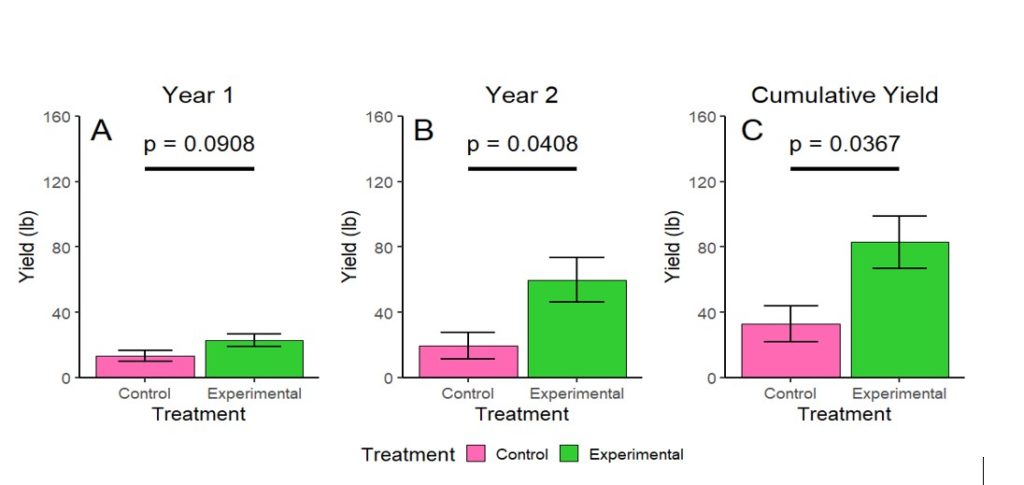
Flowering, fruit set, fruit growth and leaf growth require high water availability. The growth of fruit can be attributed to cell division and enlargement, which increases the number and size of cells, respectively, during the first two months following the beginning of fruit set (stage I of fruit development) and about four to six months thereafter (stage II). Fruit size increases rapidly because of water accumulation in cells during fruit development. Additionally, there is a link between fruit size and fruit drop. Small fruit are more prone to drop from the tree than large fruit. HLB-affected trees Figure 1. Harvest data shows that frequent irrigation with the same amount of total water significantly improved yield.
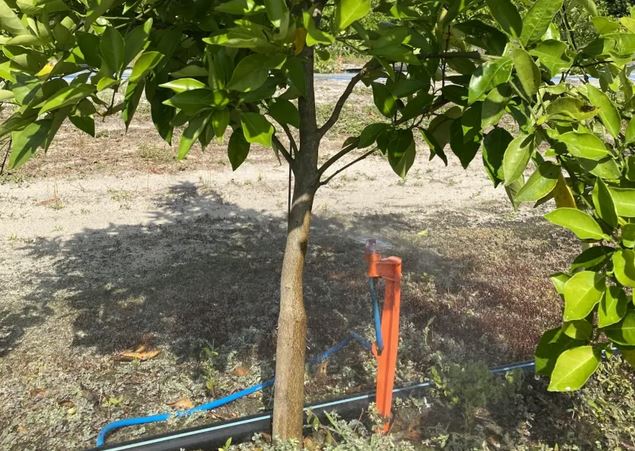
In an experimental field trial for two consecutive years, University of Florida Institute of Food and Agricultural Sciences (UF/IFAS) researchers found that frequent irrigation produced more than double yield (Figure 1) than conventional irrigation (every other day irrigation). The two treatments received the same amount of water over time but differed in how often they received water and how much water they received at a time. The trees in both treatments had similar canopy volumes and densities before treatments were implemented. At the conclusion of the study, the experimental trees had significantly larger canopies than the control (27 m3 vs. 22 m3). Similarly, the experimental trees had significantly denser canopies than the control (83% vs. 75% light interception).

In citrus, canopy density and health is often determined by measuring the amount of light that is intercepted by the canopy. The more light that is intercepted, the denser the canopy. Adequate water supply during spring and early summer (low rainfall period) is critical to ensure uninterrupted fruit development and growth for better fruit retention. The more well-watered status of frequently irrigated trees is likely to contribute to higher reproductive and vegetative growth and significantly higher yields.

Tripti Vashisth is associate center director and associate professor at the UF/IFAS Citrus Research and Education Center in Lake Alfred. Mary Sutton is an assistant professor and citrus Extension specialist at the University of Georgia in Tifton.

When to Apply Brassinosteroids to Improve Valencia Fruit Quality

When to Apply Brassinosteroids to Improve Valencia Fruit Quality Image
By Daniel Cooper on February 11, 2025

By Fernando Alferez and Divya Aryal
Like the work being done with Hamlin sweet orange, University of Florida Institute of Food and Agricultural Sciences (UF/IFAS) researchers are studying the effect of brassinosteroids (BRs) on the internal maturation of Valencia sweet orange fruits.

The conditions of the treatments are the same as in Hamlin: A treatment of 186 milliliters of BR (homobrassinolide 0.1%) per 100 gallons water is applied just once at the right time of fruit maturation. This concentration has been determined after several dose-response trials. One gallon of this solution per tree is enough to fully cover the canopy. The only difference with Hamlin treatments is the time of application, as the window of efficacy for the Valencia oranges is different.

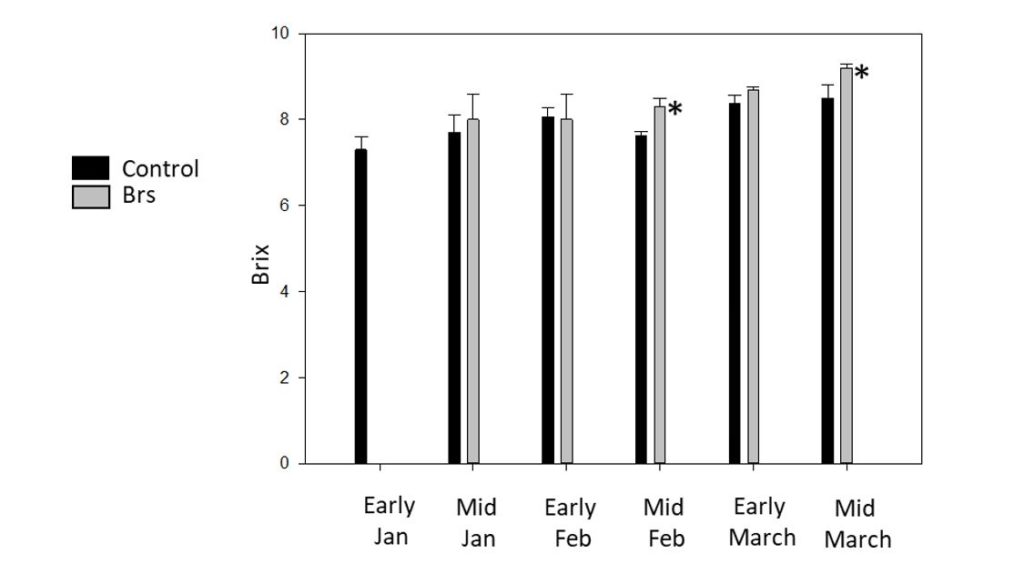
Plant growth regulators (PGRs) usually have very narrow windows of efficacy that depend on the physiological status of the plant organ to be treated (in this case, the fruit). BRs have reported effects on influencing the maturation of different fruits, but the research on citrus has been scarce to date, so there is no clear guidance on when to apply BRs to increase internal maturation in different varieties. Targeting the fruit at the right maturation stage will produce the desired effect of the PGR. brassinosteroids Changes in Brix in juice of Valencia sweet orange two weeks after each treatment with brassinosteroids. The goal is to increase Brix and the sugar-to-acid ratio in the juice. The approach for the past two seasons has been to treat independent plots of mature fruit-bearing Valencia trees with the dosage mentioned above. Every independent plot receives only one treatment, and treatments are performed two weeks apart in each independent plot from early January to mid-March (in other words, from the time the fruit starts to slightly change color). Then, the change in Brix and titratable acidity is measured two weeks after every treatment, in order to determine the sugar-to-acid ratio at each date. 

Last year, researchers started to see an increase in Brix with applications performed in mid-February, and this trend continued well into March. Applying BRs before February did not make any difference in Brix or in the sugar-to-acid ratio. However, starting in mid-February, there was a mild increase in Brix. By March, Brix in fruit from BR-treated trees was 9.4 as compared to 8.5 in non-treated controls. There was also a more pronounced decrease in titratable acidity after BR treatment as compared to controls.

As a result, the sugar-to-acid ratio in the BR-treated fruit was 10.5 as compared to 7.9 in the controls. As was previously noticed in Hamlin, trees with variable health also vary in their response to this PGR. For this reason, this year researchers are assaying these treatments on trees that are being treated with oxytetracycline. It is expected that better tree health will result in better BR response.

Acknowledgement: This research is supported with funding from the Citrus Research and Development Foundation (grants 22-003 and 24-001).

Fernando Alferez is an associate professor, and Divya Aryal is a graduate Ph.D. student — both at the UF/IFAS Southwest Florida Research and Education Center in Immokalee.