
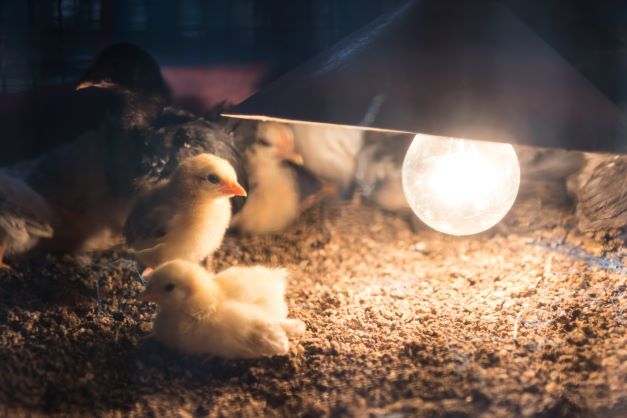
Classroom Incubation – The Hidden Harms of Hatching Projects
Hatching projects—often presented as educational tools to teach students about life cycles—actually perpetuate cruelty, violate laws, pose serious public‑health risks, and teach children the wrong lessons about life and empathy.
Teaching Children all the wrong lessons
Lesson #1: Animals are Disposable Props for our exploitation
Scientists widely recognize that birds possess complex social structures and remarkable memories—clear signs of intelligence on par with many mammals. Anyone who has spent time with ducks or chickens knows that each bird has a unique personality, often shaped by their place in the pecking order. Some are bold and outgoing, while others are shy and cautious. Some seek out human companionship, while others remain wary or even a little feisty. Like dogs, cats, and humans, every chicken and duck is an individual with its own temperament, preferences, and quirks.
Yet in hatching projects, these intelligent, sentient beings are reduced to mere classroom tools—objects to manipulate for the sake of an experiment. Instead of fostering empathy, curiosity, and respect for life, these projects teach students the wrong lesson: that living creatures exist to serve human curiosity, rather than deserving care, dignity, and protection.

The Tragic Story of Mr. Quackers
In 2024, a Good Samaritan found Mr. Quackers, a duck abandoned on a Babylon creek, huddled, covered in parasites, and unable to walk. He was suffering from osteomyelitis, a painful bone infection caused by untreated bumblefoot. Despite weeks of care, the infection had destroyed most of his ankle bone, and walking without pain became impossible. Ultimately, to end his suffering, Mr. Quackers had to be humanely euthanized.
Tragically, Mr. Quackers was the last survivor of several ducks abandoned by a teacher after a hatching project. His story is a heartbreaking example of the cruelty behind these classroom experiments, where intelligent, sentient animals are treated as disposable objects rather than living beings deserving care and respect.
Lesson #2: BULLYING IS Acceptable
Teaching children to nurture chicks they will inevitably bond with—only for those animals to likely be killed later—sends a troubling and dangerous message: that it is acceptable to exploit and harm more vulnerable beings for our own temporary purposes. Hatching projects risk normalizing cruelty, undermining lessons about empathy and compassion, and contradict the anti-bullying values we should be instilling in young minds.

Lesson #3: Motherhood is Not Worthy of Respect
Birds form deep family bonds, maintain complex social relationships, and have a strong instinct to protect and value their own lives. Yet when they are used as classroom teaching tools, they are denied everything that is natural and essential to them. Even before hatching, chicks rely on their mothers, who carefully rotate the eggs up to 30 times a day to ensure proper temperature, moisture, and positioning. Eggs incubated artificially often fail to meet these critical needs, leading to sickness, deformities, or even organ damage from sticking to the shell. If eggs hatch on weekends or holidays when no one is present, the chicks may be left alone for hours or days, with no care at all.
Chickens communicate with more than 30 distinct vocalizations, and mother hens begin teaching these calls before the chicks even hatch. Sitting on her eggs, a hen clucks softly while the chicks chirp back from inside the shell, forming the first bonds of their lives. Denying animals the ability to form these natural connections—simply for classroom convenience—is cruel and undermines the very goal of education. True learning should inspire curiosity, respect, and empathy for life, not force animals to endure suffering for the sake of an experiment.

This duckling was photographed 24 hours after being hatched at Massapequa's McKenna Elementary School in 2024
Still coated in dried yolk, feces, and shell fragments a full day after being left without care, this newborn duckling was rushed to Humane Long Island’s veterinarian. There, the duckling was humanely euthanized after being diagnosed with a painful congenital leg deformity caused by improper incubation.
Lesson #4: Inconvenient Truths Are Acceptable Lies
Because keeping ducks and roosters is illegal in New York City and most Long Island municipalities, teachers and students generally cannot take chicks or ducklings home as pets—or even find them safe, permanent homes. Instead, most of these vulnerable animals are returned to suppliers, where they may be killed immediately to prevent potential pathogens from the school from infecting commercial flocks. This harsh is hidden from children who become attached to the developing baby animals.

Baby birds may be suffocated or ground alive by suppliers.
Exempt from even the minimal protections of the Humane Slaughter Act and the Animal Welfare Act, unwanted baby birds may be suffocated in trash bags or ground up alive in machines called macerators.
Lesson #5: Killing is conservation
Some teachers are misled into participating in hatching programs for pheasants and quails under the guise of “conservation education.” In reality, chicks raised by children are almost never equipped to survive. Most are quickly killed by hunters—the stated purpose of the DEC’s day-old chick hatching program, predators, or exposure, and many die from disease, deformities, or starvation. Non-native ringneck pheasants bred by the DEC are so fragile that over 90% die almost immediately after release. Even native bobwhite quails rarely survive beyond a few days, with urban sprawl, habitat loss, and domestic cats leaving wild populations all but destroyed. These so-called “conservation” releases are little more than a death sentence for vulnerable birds.
These programs not only divert millions of dollars intended for true conservation but also teach children the wrong lessons: that it is acceptable to exploit and abandon vulnerable animals for human convenience or amusement. True conservation means fostering respect, empathy, and protection for wildlife—not using sentient beings as disposable tools for classroom experiments or canned hunting.

In 2025, Humane Long Island responded to urgent calls about injured and dying quails released by a so-called environmental group, CEED, stretching from the Town of Oyster Bay in the west to the Hamptons in the east. In one case, chicks from two hatching projects had been improperly incubated and were born with severe disabilities. One chick died en route to our facility, and another passed away within an hour of arrival. Fortunately, one teacher surrendered the remaining chicks, allowing us to arrange their responsible release on Shelter Island under the supervision of a licensed wildlife rehabilitator.
That same year, Humane Long Island recovered roughly 10% of the bobwhite quails released by the Town of Brookhaven in partnership with CEED. Some chicks were picked up by concerned local children whose parents called for help. One suffered a broken leg and head injuries after presumably being attacked by a cat and colliding with a window while trying to escape. The rest, abandoned and unable to survive without their mothers, likely perished shortly after release—completely undermining the supposed goals of tick control or ecological benefit.
These programs are not only cruel and wasteful, they also teach children the wrong lessons: that it is acceptable to manipulate, abandon, and exploit vulnerable animals for human convenience or amusement. True conservation instills respect, empathy, and protection for wildlife, rather than using sentient beings as disposable tools for classroom experiments or recreational hunting.
Exposing children to Zoonotic disease
If the COVID-19 pandemic has taught us anything, it is that the threat of zoonotic disease cannot be underestimated. The National Institutes of Health estimates that around 60% of all known infectious diseases—and up to 75% of new or emerging diseases—originate from animals. The Centers for Disease Control and Prevention warn that young children are especially vulnerable to illnesses carried by animals, making exposure to unsafe animal environments a serious public health risk.
Think That Chick Is Safe? They Could Be Hiding Deadly Salmonella
Classroom chicks and ducklings may look harmless, but according to the CDC, they can carry dangerous bacteria like E. coli and multiple strains of Salmonella—including antibiotic-resistant types. They can also harbor Highly Pathogenic Avian Influenza and West Nile Virus. Young children, whose immune systems are still developing, are especially at risk, and even touching surfaces in the birds’ area can expose them to illness. Airborne dander and dust add another layer of danger, particularly for kids with asthma. Hatching projects aren’t just cruel to animals—they can also be a serious public health hazard.

Illness Close to Home
In 2022, a Long Island teacher reported that Cornell Cooperative Extension informed her the eggs provided for a classroom hatching project were “contaminated” and requested that the resulting chicks be returned to be euthanized. At a recent New York education conference, an upstate teacher revealed that her district ended its hatching projects after a salmonella outbreak was traced back to the classroom birds. In 2023, nearly 7,000 pheasants were killed at Reynold’s Farm—the facility where the DEC breeds day-old chicks for its program—after hundreds tested positive for Highly Pathogenic Avian Influenza, a disease with a mortality rate nearly 100 times that of COVID-19.
Seattle Public Schools responded to these serious risks by banning all hatching projects. If schools across the country can take action to protect students and animals, why haven’t all schools followed suit?
Violating the Law
Hatching projects are inconsistent with NYS Education Law, Article 17, Section 809.
New York law mandates that every elementary school teach the “humane treatment and protection of animals” and the importance of preventing their unnecessary suffering. Yet hatching projects directly violate this mandate. By forcing chicks and ducklings to grow in incubators rather than with their mothers, schools put these animals’ health and lives at risk. Many are later abandoned or killed, sending a dangerous message to children: that it is acceptable to exploit and discard vulnerable beings for human convenience. Hatching projects don’t foster curiosity or compassion—they teach cruelty, normalize exploitation, and contradict the very lessons of empathy and respect that schools are meant to instill.
Article 161 of the NYC Health Code prohibits the possession of both waterfowl and roosters. Most Long Island municipalities do, too.
Conducting live hatching projects in violation of local laws places teachers, principals, and superintendents at serious risk. Beyond potential civil and criminal liability, schools could face major lawsuits if students fall ill from dangerous pathogens such as Salmonella or E. coli. Violating these laws not only exposes a district to significant legal and financial consequences, but insurance providers are also unlikely to cover claims arising from such malfeasance, leaving schools fully responsible for any resulting damages.

What Humane Long Island is doing to help

PRoviding Free Humane Education Instruction
Anthrozoologist John Di Leonardo and Licensed Wildlife Rehabilitator Juliana Di Leonardo are available to bring engaging, compassionate, and hands-on learning experiences to any school in the New York metropolitan area, from Pre-K through university. For schools outside the metro area, we offer interactive sessions via Zoom, ensuring students everywhere can learn about animals safely and responsibly.
Offering Modern, Humane Alternatives
Our friends at TeachKind have compiled several free and paid programs that meet curricular objectives and save birds:
- Cornell Lab Bird Cams has amazing videos of red-tailed hawk eggs hatching and more on YouTube.
- Virginia Tech’s “4-H Virtual Farm” Chicken Embryo Development site includes video of chick embryo development, still images, and text on the development process.
- The University of Illinois’ “Chickscope” provides diagrams, images, and detailed information on each day of chicken embryo development in the 21-day process.
- The NOVA Online Odyssey of Life website includes a video clip of chick embryo development.
- Learning Resources sells a set of 21 egg replicas that show development day by day.
- Egg: A Photographic Story of Hatching by Robert Burton (with photographs by Jane Burton and Kim Taylor) looks at the egg-hatching process through close-up photographs. The book follows the first crack in the eggshell to the moment that the chick breaks out of the egg.
- A Home for Henny, written by United Poultry Concerns founder Karen Davis and illustrated by Patricia Vandenbergh, tells the story of a grade-school chick-hatching project and a chick, Henny, who was going to be disposed of but who finds a happy home at a sanctuary, thanks to a student named Melanie and her parents.
- Virtual Incubator guides students through every step of the 21-day chick-hatching process in one sitting. Students are required to monitor the health of the virtual eggs, weigh and rotate them, and check the humidity of the virtual incubator.
Transitioning Schools away from Hatching projects
In 2023, Humane Long Island partnered with Hopscotch Montessori Schools on Manhattan’s Upper East and Upper West Sides, as well as St. John the Baptist Diocesan High School in Islip, to permanently end hatching projects on their campuses.
As part of this initiative, Humane Long Island rescued and rehabilitated two dozen baby birds, finding them safe, permanent homes at vegan animal sanctuaries in Vermont and New Jersey—ensuring these vulnerable animals would never face abandonment or harm.

Installing billboards near schools in high traffic areas
Humane Long Island has placed seven billboards across Nassau and Suffolk counties, reaching an estimated five million people with a powerful message: keep animals off your plate and out of the classroom.
experimenting on animals Harms Students and Animals Alike
Experimenting on animals—whether through hatching projects or dissections—can desensitize students to the value of life and foster callous attitudes toward animals. Research shows that many students across all educational levels feel uncomfortable with the use of animals in these activities. Other studies suggest that presenting animal dissection as “science” may even discourage some young people from pursuing careers in scientific fields, undermining the very purpose of education.
