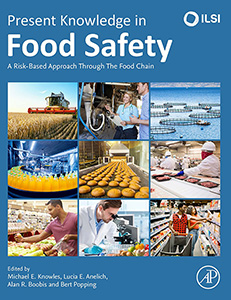
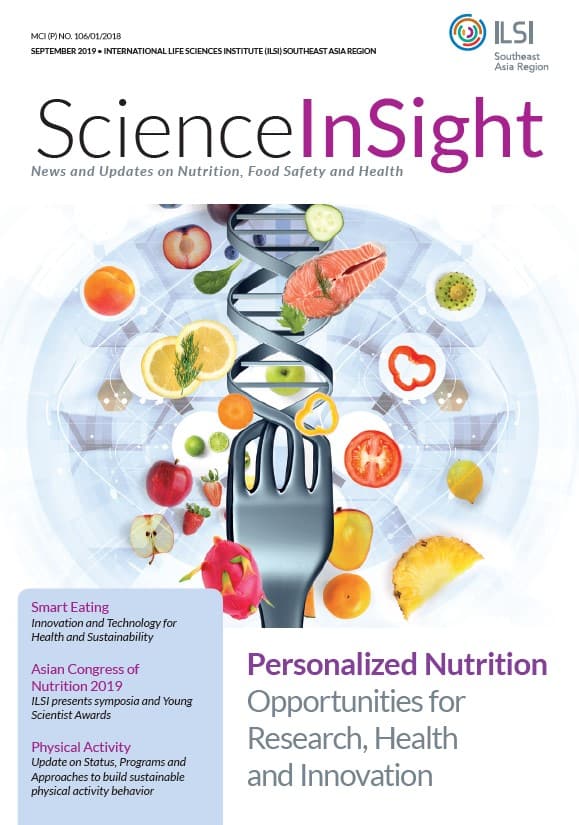
Present Knowledge in Food Safety is a comprehensive resource that addresses food safety concerns and scientific advancements along the farm-to-consumption supply chain.
ILSI SEA Region initiates and coordinates scientific programs, research, as well as knowledge and information dissemination in Southeast Asia, Australia, New Zealand and the Pacific Islands. Read more
This one-day symposium convenes scientific experts and stakeholders to strengthen understanding of sodium consumption patterns, advance assessment methods, and align policy and industry practices with scientific evidence, while fostering consumer acceptance of lower-sodium options.
Excessive dietary sodium intake is considered a major contributor to hypertension and other non-communicable diseases (NCDs), posing a significant public health challenge worldwide. Despite global recommendations and intervention measures to reduce sodium consumption, many populations, including those in Southeast Asia, continue to exceed advised intake levels. It is therefore essential to have a better understanding of the main contributors to sodium intake in communities within the region, as well as to review the approaches and strategies undertaken. Addressing this issue requires coordinated efforts across scientific, policy, industry, and consumer domains to ensure effective and sustainable sodium reduction strategies.
This one-day symposium brings together scientific experts, public health authorities, industry representatives, and other stakeholders to jointly re-think this long-standing issue of sodium and health. With the prevailing high rates of NCDs in the region, there is an urgent need to better understand sodium consumption patterns to identify the main sources of sodium in the diet. This would include understanding the long-held culinary practices and the increased consumption of meals away from home, as well as the role of processed foods. Additionally, it is important to strengthen the tools used to measure sodium intake from various sources, particularly through emerging and more accurate population-level assessment methods. These measures will provide the fundamentals needed to align approaches and strategies with key players in the food environment - food service and food processing industries - with available science to work towards more optimal sodium intake of the population.
SESSION TOPICS
Session 1: Understanding Sodium in the Diet
Session 2: Bridging Consumers, Industry, and Policy: Strategies for Effective Sodium Reduction
Session 3: Driving Sodium Reduction Forward: Industry as a Critical Part of Innovative Solutions
Session 4: Panel Discussion on Advancing Sodium Reduction: Challenges, Opportunities, and Multisectoral Solutions
Stay tuned- more information on the program and speakers will be announced shortly.
REGISTRATION
Registration details will be available soon.
ORGANIZERS
CONTACT
If you have any inquiries, please do not hesitate to contact us through:
Excessive dietary sodium intake is considered a major contributor to hypertension and other non-communicable diseases (NCDs), posing a significant public health challenge worldwide. Despite global recommendations and intervention measures to reduce sodium consumption, many populations, including those in Southeast Asia, continue to exceed advised intake levels. It is therefore essential to have a better understanding of the main contributors to sodium intake in communities within the region, as well as to review the approaches and strategies undertaken. Addressing this issue requires coordinated efforts across scientific, policy, industry, and consumer domains to ensure effective and sustainable sodium reduction strategies.
This one-day symposium brings together scientific experts, public health authorities, industry representatives, and other stakeholders to jointly re-think this long-standing issue of sodium and health. With the prevailing high rates of NCDs in the region, there is an urgent need to better understand sodium consumption patterns to identify the main sources of sodium in the diet. This would include understanding the long-held culinary practices and the increased consumption of meals away from home, as well as the role of processed foods. Additionally, it is important to strengthen the tools used to measure sodium intake from various sources, particularly through emerging and more accurate population-level assessment methods. These measures will provide the fundamentals needed to align approaches and strategies with key players in the food environment - food service and food processing industries - with available science to work towards more optimal sodium intake of the population.
SESSION TOPICS
Session 1: Understanding Sodium in the Diet
Session 2: Bridging Consumers, Industry, and Policy: Strategies for Effective Sodium Reduction
Session 3: Driving Sodium Reduction Forward: Industry as a Critical Part of Innovative Solutions
Session 4: Panel Discussion on Advancing Sodium Reduction: Challenges, Opportunities, and Multisectoral Solutions
Stay tuned- more information on the program and speakers will be announced shortly.
REGISTRATION
Registration details will be available soon.
ORGANIZERS
CONTACT
If you have any inquiries, please do not hesitate to contact us through:
Join our NewsFlash and Nano Alert mailing list to receive the latest scientific updates in nutrition, food innovations, safety issues and nanotechnology applications in food, agriculture, food packaging, skin care, medical applications with potential links to those focus topics, and related toxicology and risk assessment.
This site uses cookies to provide you with a personalized browsing experience. By clicking “I Agree” or continuing to use the site you agree to allow cookies to be placed and accept the terms set out in our [Privacy Notice]. Please read the Privacy Notice for more information on how we handle information collected from users and how you can control the use of such information.
Functional
Always active
The technical storage or access is strictly necessary for the legitimate purpose of enabling the use of a specific service explicitly requested by the subscriber or user, or for the sole purpose of carrying out the transmission of a communication over an electronic communications network.
Preferences
The technical storage or access is necessary for the legitimate purpose of storing preferences that are not requested by the subscriber or user.
Statistics
The technical storage or access that is used exclusively for statistical purposes.The technical storage or access that is used exclusively for anonymous statistical purposes. Without a subpoena, voluntary compliance on the part of your Internet Service Provider, or additional records from a third party, information stored or retrieved for this purpose alone cannot usually be used to identify you.
Marketing
The technical storage or access is required to create user profiles to send advertising, or to track the user on a website or across several websites for similar marketing purposes.