
RAND kicked off a new series of short reports designed to provide policymakers in the U.S. with potential learnings from the EU AI act on key facets of AI governance. The series, written by researchers on both continents, highlights the need for deepening collaboration between the EU and the U.S. as any regulatory progress in these regions will have far-reaching effects on the broader societal, legal and ethical consequences of AI adoption globally.
New RAND Research – Why do AI Projects Fail?
August 14, 2024 by

By some estimates, 80% of AI projects fail – more than double the rate of non-AI IT projects – but why? A group of RAND researchers investigated this issue and found five key problems leading to failure.
Report: Using HPC for Public Policy Analysis & Water Resource Management
August 25, 2016 by
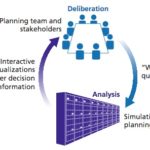
Researchers from the RAND Corporation and LLNL have joined forces to combine HPC with innovative public policy analysis to improve planning for particularly complex issues such as water resource management. By using supercomputer simulations, the participants were able to customize and speed up the analysis guiding the deliberations of decision makers. “In the latest workshop we performed and evaluated about 60,000 simulations over lunch. What would have taken about 14 days of continuous computations in 2012 was completed in 45 mins — about 500 times faster,” said Ed Balkovich, senior information scientist at the RAND Corporation, a nonprofit research organization.