

Shreds.AI, an AI capable of generating complex, business-grade software from simple descriptions in record time, today announced its formal beta launch. Shreds.AI slashes the time to market for software, along with team sizes and costs, by over 80% compared to traditional software development methods. It also solves the software obsolescence problem, increases software lifespan by more than 60% with automatic maintenance and makes it easy to switch software technology, for example, from PHP to Java, from C++ to JavaScript, etc.
AI Software: Understanding the Rapidly Expanding Ecosystem
December 20, 2017 by
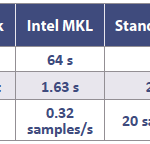
The hardware and software for AI devices is rapidly evolving, so it is important to procure wisely for the future without incurring technology or vendor lock in. This post from an insideHPC Special Report focuses on AI software and how to best use and understand this rapidly expanding ecosystem.
UMass Amherst Computer Scientists Develop New Techniques to Measure Social Bias in Software
August 20, 2017 by

Today, banks are increasingly using software to decide who will get a loan, courts to judge who should be denied bail, and hospitals to choose treatments for patients. These uses of software make it critical that the software does not discriminate against groups or individuals, say computer science researchers at the University of Massachusetts Amherst. […]
Scaling Software for In-Memory Computing
January 16, 2017 by
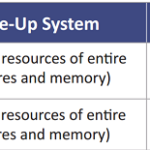
“The move away from the traditional single processor/memory design has fostered new programming paradigms that address multiple processors (cores). Existing single core applications need to be modified to use extra processors (and accelerators). Unfortunately there is no single portable and efficient programming solution that addresses both scale-up and scale-out systems.”
Better Software For HPC through Code Modernization
September 15, 2016 by
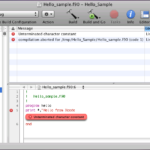
Vectorization and threading are critical to using such innovative hardware product such as the Intel Xeon Phi processor. Using tools early in the design and development processor that identify where vectorization can be used or improved will lead to increased performance of the overall application. Modern tools can be used to determine what might be blocking compiler vectorization and the potential gain from the work involved.
Software Defined Infrastructure
September 1, 2016 by Leave a Comment

Software defined infrastructure (SDI) enables organizations to deliver HPC services in the most efficient way possible, optimizing resource utilization to accelerate time to results and reduce costs. Software Defined Infrastructure is the foundation for a fully integrated environment, optimizing compute, storage and networking infrastructure to quickly adapt to changing business requirements, and dynamically managing workloads and data, transforming a static infrastructure into a workload- , resource- and data-aware environment.