A Master Index To This Site, with Links (as of October 1, 2012)

Trevor Vartanoff, one of the frequenters of this web site, has come up with an invaluable gift to me and to others — an alphabetical master index of all (or almost all) the postings here, complete with links. “I found it useful,” Trevor just wrote me, “maybe you or readers will too.” (2021 postscript: sorry for the links here that no longer work.) — J.R.

Featured Texts

*Corpus Callosum

*CORPUS CALLOSUM

12 Monkeys

12 and Holding

15th Annual Festival of Illinois Film and Video

2 Oxford Companion Entries (Albert Brooks and découpage)

2 or 3 Things I Know About Her

2001: A Space Odyssey

2046

20th International Tournee of Animation

29th Chicago International Film Festival: Mired in the Present

4 Little Girls

4

60s Wisdom

7 Women

8 1/2

8 Mile

84 Charlie Mopic

9 1/2 Weeks with Van Gogh

A Bankable Feast [BABETTE’S FEAST]

A Beauty and a Beast

A Bluffer’s Guide to Bela Tarr

A Breakthrough And A Throwback

A Brief History of Time

A Brighter Summer Day

A Bronx Tale

A Christmas Commodity: SCROOGED

A Cinema of Uncertainty

A Constant Forge

A Couple of Kooks [MY BEST FIEND]

A Cut Above [HENRY: PORTRAIT OF A SERIAL KILLER]

A Depth in the Family [A HISTORY OF VIOLENCE]

A Dialogue about Abbas Kiarostami’s SHIRIN

A Different Kind of Swinger [GEORGE OF THE JUNGLE]

A Different Kind of Thrill (Richet’s ASSAULT ON PRECINCT 13)

A Dry White Season

A Family Thing

A Far Off Place

A Few Eruptions in the House of Lava

A Few Things Well [A LITTLE STIFF]

A Film of the Future

A Fish Called Wanda

A Force Unto Himself [on Hou Hsiao-hsien]

A Great Day in Harlem

A History of Violence

A Home of Our Own

À la recherche de Luc Moullet: 25 Propositions

A Little Transcendence Goes a Long Way

A Lucky Day

A Major Talent [on SWEETIE]

A Man Escaped

A Midnight Clear

A Moment of Innocence

A New Leaf

A Nightmare on Elm Street 4: The Dream Master

A Page of Madness

A Perfect World

A Perversion of the Past

A Place Called Chiapas

A Place in the Pantheon: Films by Bela Tarr

A Place in the World

A Price Above Rubies

A Prophet in His Own Country [Jon Jost retrospective]

A Quirky Cowboy Classic [on THE THREE BURIALS OF MELQUIADES ESTRADA]

A Radical Idea [HALF NELSON & THIS FILM IS NOT YET RATED]

A Road Not Taken (The Films of Harun Farocki)

A Room With No View [ORPHANS]

A Russian in Hollywood [SHY PEOPLE]

A Scanner Darkly

A Short Film About Killing and A Short Film About Love

A Single Girl

A Soldier’s Daughter Never Cries

A Stylist Hits His Stride (ETERNAL SUNSHINE OF THE SPOTLESS MIND)

A Tale of Love

A Tale of Winter

A Tale of the Wind

A Tale of the Wind

A Thousand Words

A Time of Love

A Time to Lie (CROSS MY HEART)

A Time to Live and a Time to Die

A Touch of Class [GOSFORD PARK]

A Woman’s Tale

A World Apart

A Year at the Movies

A Zed and Two Noughts

A.I. Read more

Partisan [on CITIZEN LANGLOIS]

This was published in the September-October 1995 issue of Film Comment, as a sidebar to https://jonathanrosenbaum.net/2024/06/ambiguous-evidence-cozarinskys-cinema-indirect-tk/– J.R.

Image

Partisan

by Jonathan Rosenbaum

As a member of the FIPRESCI jury at Berlin that gave this year’s Forum prize to Edgardo Cozarinsky’s 68-minute Citizen Langlois, I’d like to quote our citation: “For a brilliant essay revealing a multifaceted grasp of a major pioneer for whom cinema was the ultimate nationality.”

Indeed, at a time when much of what passes for film history is being regulated nationalistically, by state bureaucrats — a process observable in such projects as the British Film Institute’s “A Century of Cinema” series (which stepped off in Berlin with Edgar Reitz’s Night of the Directors), and in the blatantly pro-industry PBS miniseries calling itself American Cinema -– Cozarinsky’s film carries a distinct polemical charge. For Henri Langlois, the unruly and passionate founder/gatekeeper of the Cinémathèque Française spent his life railing against state bureaucracies, and most of his legacy would be unthinkable without this sustained resistance. His eclectic partisanship is more than adequately matched in a personal essay that is as much about exile as Cozarisnky’s One Man’s War and Sunset Boulevards.

Image

Viewers looking for a comprehensive dossier may be as disappointed as the Gaullist bureaucrats were when they demanded strict accounts and an orderly catalog from Langlois. Read more

Two Questions for Marta Mateus

An exchange done via email for MUBI in November 2020. — J.R.

Jonathan Rosenbaum: What were the personal (or autobiographical) aspects of your film Farpões Baldios (Barbs, Wastelands), and what were the less personal aspects?

Image


Marta Mateus: In any art, everything’s autobiographical, isn’t it? This film is based, first, on the experience and history of the people I grew up with, on the stories they shared with me since my childhood. These stories are in their hands, their gazes, in what binds us together, perhaps also in our blood and in our dreams. Landscapes also participate in it: it’s the source, the roots, a matter of fertility, hope, grief, shadow, solitude, birth, rebirth, joy, struggle. Therefore, there is also collective experience, historical memory and the landscape has its marked wounds, just like us. Thousands of years of exploitation, of nature and of man by man. There was a very clear route to follow, for us all, but no need to be spoken. Filming was a form of communion, in search of our other selves and each other–maybe a ritual, not “recreation” or narration but action. It was a very long process but made in a state of emergency; we only became aware of some things afterwards. Read more

The Farber Mystery

From Moving Image Source (www.movingimagesource.us), posted September 22, 2009. Also reprinted in my collection Goodbye Cinema, Hello Cinephilia. — J.R.

Image

Following James Agee: Film Writing and Selected Journalism (2005), and American Movie Critics (2006), Farber on Film: The Complete Film Writings of Manny Farber is the Library of America’s third and so far most ambitious effort to canonize American film criticism — a daunting task that’s been lined at every stage with booby traps, at least if one considers the degree to which film criticism might be regarded as one of the most ephemeral of literary genres. And this is certainly the volume that adds the most to what has previously been available; by rough estimate, it easily triples the amount of film criticism by Manny Farber that we have between book covers.

As Karl Marx once pointed out, quantity changes quality, but this doesn’t entail any lessening of Farber’s importance. I would even argue that both the nature and evolution of his taste and writing over 30-odd years, before he gave up criticism to concentrate on his painting, still make him the most remarkable figure American film criticism has ever had.

Bringing a painter’s eye to film criticism and couching even his most serious observations in a snappy, slangy prose, Farber was the first American in his profession to write perceptively about the personal styles of directors and actors without any consumerist agendas or academic demonstrations. Read more

The End-of-Film-Criticism Industry (2009)

This was published as my ninth one-page column in  Cahiers du Cinéma España; it ran in their January 2009 issue (No. 19). — J.R.

Image

It’s by no means unusual for a “retired” film scholar such as myself to find more work as a freelancer since my retirement late last February than I did for most of the previous two decades as a staff reviewer for the Chicago Reader. Two of my contemporaries, both former academics and both friends of mine — the slightly younger David Bordwell and the slightly older James Naremore — have told me that they’re busier nowadays than they were when they were teaching. But what seems more surprising, at least to me, is how much of my time recently has been consumed by my participation in panels and symposia, both in print and in person, about the alleged death of film criticism. The October issue of Sight and Sound is full of ruminations on this subject, under such headings as “Who needs critics?” and “critics on critics”; so is the Autumn issue of Cineaste, where the stated topic is “Film Criticism in the Age of the Internet: A Critical Symposium”. A week from now, I will be flying from Chicago to the New York Film Festival to speak on a panel called “Film Criticism in Crisis?” Read more

Jafar Panahi’s Rebellion

Posted by New Lines (https://newlinesmag.com/) with a different title on June 28, 2023:

Image

It is a pity and a paradox that Jafar Panahi — Iran’s most important living filmmaker, in my judgment (at least among those I’m familiar with) — seems to be valued in the West more for his persecution than for his filmmaking. His first feature, “The White Balloon” (1995), became the first Iranian film ever to win a major award at the Cannes Film Festival (the Camera d’Or), and his four subsequent features — “The Mirror” (1997), “The Circle” (2000), “Crimson Gold” (2003) and “Offside” (2006) — all won awards at major festivals. But it wasn’t until Panahi was arrested in 2010, sentenced to six years in prison and banned from all filmmaking activities for the next 20 years that he was noticed in the mainstream press in the West. (He was charged with “propaganda against the system” for attending the funeral of a student killed during the 2009 Green Movement protests and for attempting to make a film sympathetic to that rebellion.)

Since then, Panahi has miraculously managed to make five more features in defiance of the ban, appearing as himself in each of them. Severely limited in terms of their resources and shooting conditions, the films have nonetheless garnered more attention than the five features made between 1995 and 2006, prior to his arrest. Read more

Problems of Access: On the Trail of Some Festival Films and Filmmakers

Adapted from “Problemes d’accès: Sur les traces de quelque films et cinéastes ‘de festival,’” translated by Jean-Luc Mengus, Trafic no. 30, été 1999. — J.R.

istandalonetitle

“Festival film”: a mainly pejorative term in the film business, especially in North America. It generally refers to a film destined to be seen by professionals, specialists, or cultists but not by the general public because some of these professionals decide it won’t or can’t be sufficiently profitable to warrant distribution. Whether these professionals are distributors, exhibitors, programmers, publicists, or critics is a secondary issue, particularly because these functions are increasingly viewed today as overlapping, and sometimes even as interchangeable.

istandalone6

The two types of critic one sees at festivals are those (the majority) who want to see the films that will soon be distributed in their own territories, and those who want to see the films that they’ll otherwise never get to see — or in some cases films that may not arrive in their territories for a few years. The first group is apt to be guided in their choices of what to see by distributors, or else by calculated guesses of what distributors will buy. The second group, if it hopes to have any influence, will ultimately seek to persuade potential distributors as well as ordinary spectators, but whether it functions in this way or not, its spirit is generally guided by cinephilia more than by business interests. Read more

Under the Sign of Sontag

This book review, which I’ve alluded to previously on this site, appeared in the November 2, 1980 issue of The Soho News. —J.R.

Under the Sign of Sontag

Image

Image

Under the Sign of Saturn

By Susan Sontag

Farrar, Straus & Giroux, $10.95

Image

If, dialectically speaking, every book can be said to have an unconscious — a repressed subtext — one can find glimpses of the unconscious of this one in the misleading flap copy  that quotes from an interview (“Women, the Arts, and the Politics of Culture,”  Salmagundi 31-32) and mentions the inclusion of a “famous exchange on fascism and feminism” (apparently with Adrienne Rich, in the March 20, 1975 New York Review of Books), both regrettably missing from this slim volume of seven essays.

These omissions betray the absence of a gritty, indecorous social context — a sense of Sontag existing in the world, not merely staging grand Platonic shadow-plays in the theater of her mind. Much as Illness as Metaphor (1978) was partially structured around her refusal to allude once to her own personal struggle, this book discreetly, indirectly dances around the notion that the subject of every essay proposes a different kind of mirror to the author, a speculative self-portrait. Read more

Not All Angels Have Wings: Notes on Masumura’s RED ANGEL

This is my text, read aloud for an audiovisual essay on Arrow Films’ new digital release of Red Angel.Due to a technical glitch in my sound recording, Arrow had to omit the last portion of my narration, which is retained here. — J.R.

Image

Hello. My name is Jonathan Rosenbaum and I’m a Chicago-based film critic. Thanks to a research project that I embarked on in the late 1990s, and which I was able to pursue in both the United States and in Japan, I estimate that I’ve been able to see around 40 of Yasuzo Masumura’s 55 features. These 55 features were all made between 1957 and 1982. And on the basis of the 40 or so that I’ve seen, I would offer the generalization that Masumura’s best features often tend to be the ones in black and white and Cinemascope that were made in the 1960s, which was his most prolific period, and that a good many of them star the wonderful young actress Ayako Wakao, whom he first encountered when he was working as an assistant director to Kenji Mizoguchi on the latter’s final feature, Street of Shame, only two years before Masumura directed her in his own second feature, The Blue Sky Maiden. Read more

Un soir, un train: Nightmare of a Divided Self and Nation

Commissioned by the Belgian web site Cinetek and posted in December 2022.

Image

Displacement in relation to language stands at the center of André Delvaux’s troubling and troubled Un soir, un train (1968) — so precisely and so relentlessly that even the disquiet created by the collision of disparate nouns in the poetic title (a time and a place/ thing/vehicle, improbably yoked together like a chance meeting between a sewing machine and an umbrella on a dissecting table) arguably becomes lost or at least diluted in its English translation. One Night… A Train, by contrast, feels like the opening phrase in a familiar-sounding narrative, a prosaic flow of words that accounts for the three- period ellipsis, continuance replacing collision. And somewhere in between this collision and this continuance is the sort of stasis or uncertainty of both time and place evoked by the Flemish title of the Johan Daisne novella that the film is loosely based on, De trein der traagheid, which my Google translation engine, recognizing it as Dutch, translates as “The Train of Indolence”.

Image

In the film, a conflict is being played out between Mathias (Yves Montand), a Flemish linguist and literature professor, and a theatrical stage designer named Anne (Anouk Aimée) who left France to live with him in Belgium and feels both excluded and scorned by the Flemish members of Mathias’ circle. Read more

Reflections on “List-o-mania”

From the Chicago Reader (October 14, 2011). — J.R.

ishtar-atpiano

It’s a fairly safe bet that “List-o-mania,” first published in June 25, 1998, was the most popular piece I published in the Reader during my 20 years there as film reviewer, roughly halfway through my stint there. I suspect its appeal had a lot to do with the growing popularity of movie lists ever since the video market started expanding the choices of most viewers.

Like a commercially successful Hollywood feature, “List-o-mania” had its share of sequels and spinoffs. Retitled “The AFI’s Contribution to Movie Hell,” it became a chapter in my most popular book, Movie Wars: How Hollywood and the Media Limit What Films We Can See (2000), a rant that received over a hundred reviews despite the fact that its small Chicago publisher (a cappella books, a division of Chicago Review Press) couldn’t afford much advertising, aside from freebies in the Reader, and I never even met my publicist there.

In the book, I added in a footnote a list of 25 titles in the AFI’s list that I probably would have included if I’d started my own list from scratch. Then, as an appendix to my 2004 collection Essential Cinema: On the Necessity of Film Canons (Johns Hopkins University Press), I compiled a chronological list of my 1000 favorite films, with asterisks next to my 100 crème de la crème, this time including shorts as well as features and non-American as well as American items—a list to which I added 60 more titles in my Afterword to the 2008 paperback. Read more

The Awkward Agee

This film review appeared in The Soho News‘ November 12, 1980 issue. Agee (the writer) has long since then gone up again, considerably, in my estimation of his work. (Alas, the very pricey collection The Complete Film Criticism of James Agee, edited by Charles Maland, made it go down again.)

Ross Spears’ documentary about Agee, which was later nominated for an Oscar, can be ordered now on DVD, along with An Afternoon with Father Flye, from this site. —J.R.

Image

Image


Agee
A film by Ross Spears
Bleecker Street Cinema (The James Agee Room),
Nov. 14-16 and 21-23

Image

When I first saw this feature-length documentary (which is now officially inaugurating the Bleecker Street Cinema’s small, additional screening room) a year or so back, I was pleasantly surprised to find Jimmy Carter — on the campaign trail for the Presidency in ’76 –- making a guest appearance. In the opening moments of the film, he speaks with real intelligence and sensitivity about Let Us Now Praise Famous Men –- an angry, experimental, unclassifiable work of reportage, poetry and analysis about three Alabama tenant families near the height of the Depression, with photographs by Walker Evans and text by James Agee. Read more

MEGALOPOLIS

From the November 2024 Sight and Sound:

Image
“Megalopolis” poster. Photo courtesy: Festival De Cannes Press Kit

The best and worst to be said about Francis Ford Coppola is that he’s a compulsive reviser of his own self-portraits — not only when it comes to rereleasing new versions of his Godfather films, Apocalypse Now, and The Cotton Club, but even when it comes to his dropping and then reintroducing the ‘Ford’ in Francis Ford Coppola.

Part of what’s both fascinating and frustrating about his most ambitious and audacious film, developed over more than four decades, is the degree to which it revels in its own revisions — provocatively superimposing what looks like later drafts over earlier ones rather than using them as replacements. Far from emerging sadder but wiser, Megalopolis lands in our laps both happier and dumber for its lack of inhibitions. It becomes conventionally digestible only when it occasionally turns into an old-fashioned love story.

The conceit of imagining New York in terms of the Catilinarian conspiracy of 63 BC (an attempted coup d’état to overthrow the Roman consuls with a populist revolt) entails not only a collapse of today, tomorrow, and yesterday, but alternate versions of all three, ergo a city reinvented whenever there’s a new scene to unravel. Read more

Jonathan Rosenbaum converses online with Simon Petri-Lukács

Simon Petri-Lukács conducted the following online interview with me, about 5,000 words long, and requested that I post it here.(I’m sorry that many or most of Simon’s links as given no longer work, but many can be reached via my site’s search engine.) In fact, it’s an extended sequel to the in-person interview that he did with me in the lobby of my hotel in Budapest when I briefly visited that city in February 2022; the photo below shows us there and then, with a couple of friends. I’ll let Simon take over from here. — J.R.

KINGA-+-SIMON-GF

I interviewed Jonathan Rosenbaum back in February when he visited Budapest. Then, I asked him to be the Jewish Museum’s special Skype-guest later this year and to have a discussion about Elaine May, following her first ever retrospective in Hungary. Because of the pandemic, of course, the retrospective had to be postponed. This interview covers, among other things, the topic of our cancelled Q&A. Furthermore, it offers a broader look at Jonathan’s favorite comedies and his opinions on Jewish stereotypes in American films. It also includes a discussion of his 1997 book, Movies as Politics and the role of literature in his life.

One thing I regretfully forgot last time was to recommend certain works of Jonathan which are available to everyone on this website – except for those periods when he circulates certain articles, but sooner or later they’ll all be there. Read more

“Sad!”: Why I Won’t Watch Antichrist

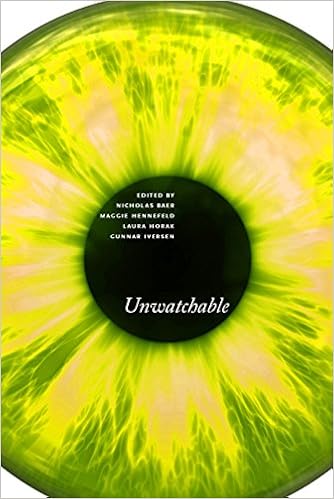
My contribution to the 2019 anthology Unwatchable, published by Rutgers University Press and edited by Nicholas Baer, Maggie Hennefeld, Laura Horak, and Gunnar Iversen. — J.R

Image

My refusal to watch Lars von Trier’s Antichrist (2009), even after Criterion   generously sent me a review copy, isn’t a position I arrived at suddenly or lightly. Even though the film premiered the year after I retired as a weekly reviewer, thus obviating any possible professional obligation, my decision wasn’t only based on the near-certainty that I would hate it — which, after all, hadn’t prevented me from twitching all the way through The Passion of the Christ five years earlier. Nor was it founded on any conviction that von Trier is devoid of talent, a conviction I don’t have.


antichrist-movie_poster

Trying retroactively to account for my steadfast refusal to see the film, arrived at eight years ago, I can only take the blatantly ahistorical, illogical, and quintessentially Trieresque tack of citing a remark of his quoted in the Guardian only six months ago. It concerns his latest project (I won’t assist his ad campaign by mentioning the title) — a feature about a serial killer (natch) that takes the serial killer’s viewpoint (ditto). It’s a film, he says, that “celebrates the idea that the life is evil and soulless, which is sadly proven by the recent rise of the Homo trumpus —the rat king. Read more

Ten Overlooked Noirs

Published by DVD Beaver in April 2006. I’ve updated this to include further links for films that have subsequently become available; there are in fact quite a few of these, and, unless I’ve missed something, only one title that isn’t currently available, The Argyle Secrets. — J.R.

Most of my favorite offbeat musicals are commercially available on DVD, and I wrote about them for DVDBeaver in March. I can’t say the same about most of my favorite noirs, and I’m not sure why this is so.

MySonJohn-Jeffersonmemorial

OddManOut

pointblank-hallway

party-girl-club


It’s also important to stress that “noir” isn’t a genre; it’s a category that’s applied retroactively to films with certain traits in common — a practice started by French critics and eventually continued by us Yanks and others. (Check out James Naremore’s definitive 1998 book on the subject, More Than Night: Film Noir in its Contexts.) This makes it something more flexible than a genre, and I’ve tried to honor this factor in some of my choices.


In the following list I’ve managed to make peace with myself by appending one
SBA title (which stands for “should be available”) to each one that you can currently buy, in the same general category, with brief explanations added. Read more

When Will — and How Can — We Finish Orson Welles’s DON QUIXOTE? (expanded version)

This final chapter in my book Discovering Orson Welles is a lecture delivered in Valencia, Spain, on November 17, 2005, at a conference, “Don Quixote  and the Cinema,”  held at San Miguel de los Reyes, a convent built during the seventeenth century, making it roughly contemporary with Cervantes’s novel. The same building was used as a prison during the Franco era and functions today as a municipal library, Biblioteca Valenciana.

Given my virtually nonexistent grasp of spoken Spanish, I regretted that the event wasn’t more international; as far as I know, my paper was the only one requiring the services of a translator. The only other non-Spanish participants in the three-day event were a French man and an Italian woman, both of whom seemed to be fluent in the language.

Thanks to the generosity of the conference’s organizer, Carlos F. Heredero (the cowriter of Orson Welles en el País de Don Quijote, cited in my introduction to chapter 15, and an academic scholar and critic whose specialties include Spanish cinema and Wong Kar-wai), I was able to route my trip to Spain through Madrid before the conference and then briefly through Barcelona afterwards. In Madrid I made arrangements to spend three days at the Filmoteca Española looking at the Quixote material mentioned in chapters 19 and 20, but I was severely disappointed to discover that the ten hours I’d arranged to see mainly consisted of material from the TV series Nella Terra di Don Chisiotte and/or bits and pieces of what might be called the wreckage left by Jesus Franco’s disposal of the other footage, not including anything shot in Mexico. Read more

Global Discoveries on DVD: The Importance of Not Being An Auteur

Image

My column in the Winter 2021 issue of CinemaScope. — J.R.

Teaching an online course on Agnès Varda at the School of the Art Institute this fall for 39 students has put me in regular touch with Criterion’s superb 15-Blu-ray box set, The Complete Films of Agnès Varda, every week. The packaging reminds me in some ways of the handsome 78 rpm albums I used to cherish as objects and totems in the mid- to late 1940s, when I was still a toddler, although Criterion’s version of this sort of assembly, held in a box, manages to be neater and more compact. There’s also a richly illustrated and annotated 200-page book inside the box, with essays by Amy Taubin, Ginette Vincendeau, So Mayer, Alexandra Hidalgo, and Rebecca Bengal, and excellent “program notes” on all the films by Michael Koresky. In short, plenty to keep a coronavirus shut-in busy, even without a course to teach. 

The course has gradually brought home to me the complexly ambiguous lesson that Varda wasn’t really or exactly an auteur, at least not in the boys’-club meaning of that term as it’s most commonly used. But not being an auteur gave her a kind of freedom and a form of elasticity denied to most auteurs. Read more

New Rose Hotel

From the Chicago Reader (July 23, 1999). — J.R.

Image

Image

It’s not at all surprising that Abel Ferrara’s most recent feature (1998) has failed to find an American distributor or that some of his most eloquent defenders have labeled this transgressive adaptation of a William Gibson story the collapse of a major talent. A murky and improbable tale about prostitution, industrial espionage, and manufactured viruses, it works on the very edge of coherence even before the final 20 minutes or so, during which earlier portions of the film are replayed with minor variations and additions. On the other hand, few American films in recent years have been so beautifully composed and color coordinated shot by shot, and the overall experience of an opium dream is so intense that you might stop making demands of the narrative once you realize that none of the usual genre expectations is going to be met. Almost all the principal action occurs offscreen, and most of Ferrara and Christ Zois’s script concentrates on scenes between a corporate raider named Fox (Christopher Walken); his deputy, X (Willem Dafoe); and Sandii (Asia Argento, daughter of cult horror director Dario Argento), an Italian prostitute hired to seduce a Japanese scientist. Read more