

Social Behaviour
Activity patterns & lifestyle
01
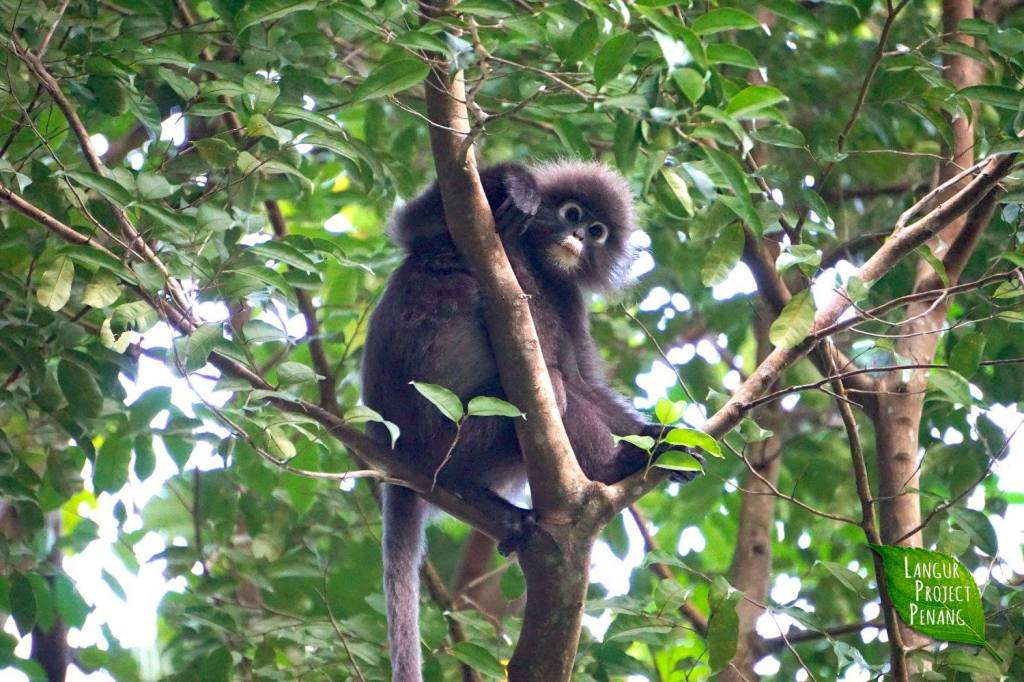
Arboreal – Individual
02

Kinship – Family Interaction
03

Social Structure
04
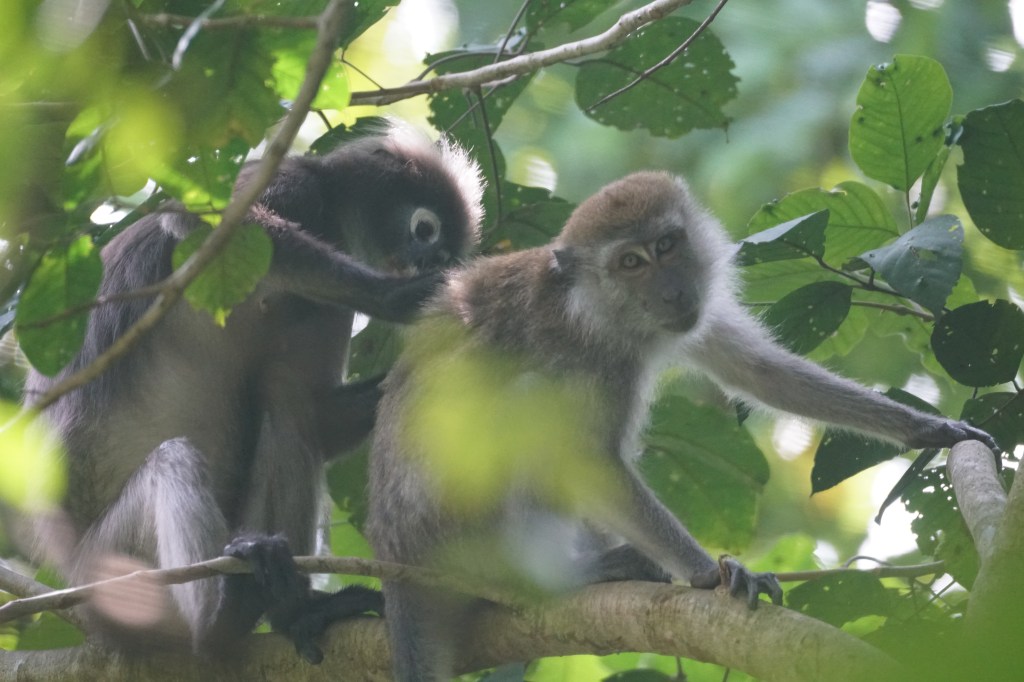
Interaction with sympatric species
Arboreal Locomotion
Dusky Langurs love to dwell upon higher canopies of trees in the forest. They prefer staying up there and moving around running, climbing and leaping on branches of trees.


The behaviour code:
a) Locomotion: (hind-limb dominated)
Quadrupedalism – Climbing, Leaping, Running, Walking
b) Positioning: Lying, Sitting, Standing
Family Matters
An average of 5-20 members in a group, consisting of 1 alpha male, 1-2 sub-adult male(s), multiple females, subadult females, juveniles, and infants. Both males and females disperse when they are about 3-4 years old.


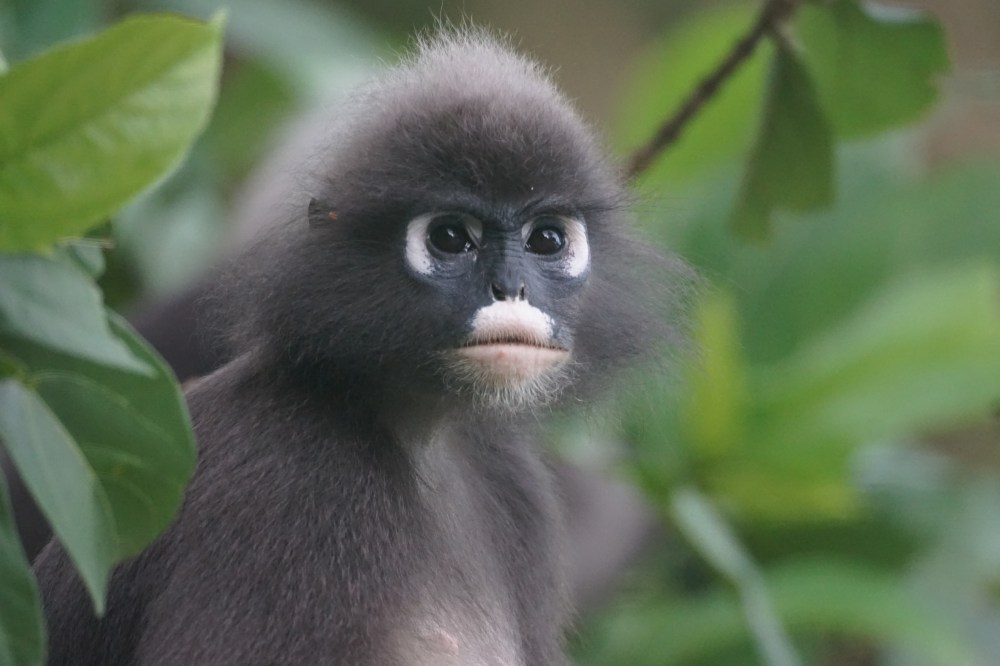


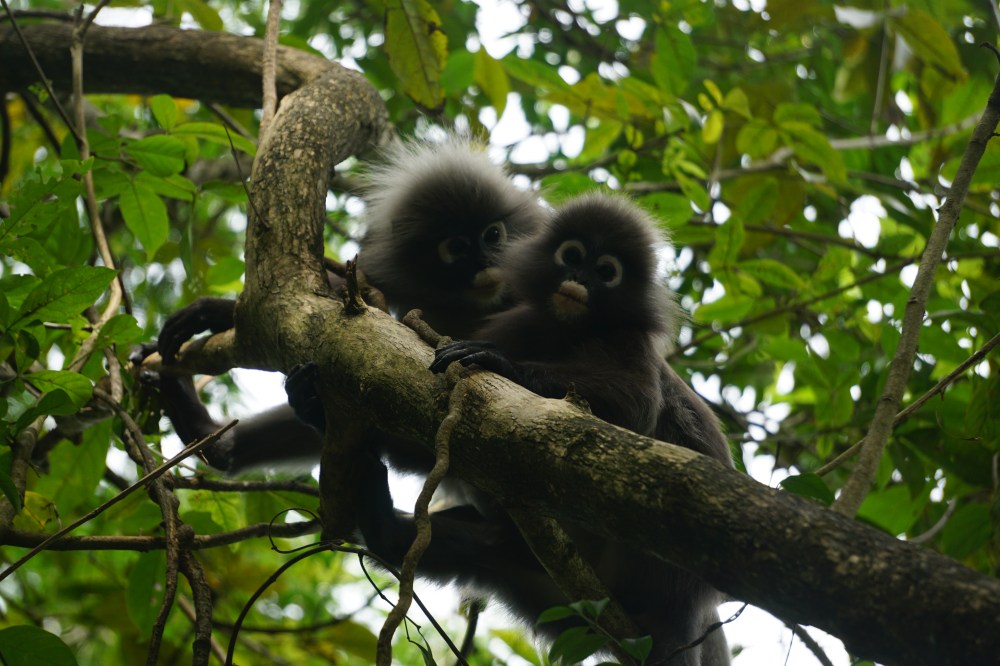

When it comes to observing the family behaviour, different kinds of interactions can be observed when they are active. Apart from feeding and moving around, they would take turns to groom each other too. There are several interesting human-like behaviour, such as embracing, chasing, and kissing.
Sympatric Species Interactions
Meet the animals that can be found coexisting with the Dusky Langurs in the rainforest. Are they friends? or foe? Let’s find out!


Territorial Defense Behaviour
Wall of Bravery
And the Award of courage goes to …….

Featuring Ah Lai & reticulated python

Featuring Eang Eang & Wagler’s pit viper

Featuring Leng Lui & vine snake
 Langur Project Penang (LPP)
