Introduction
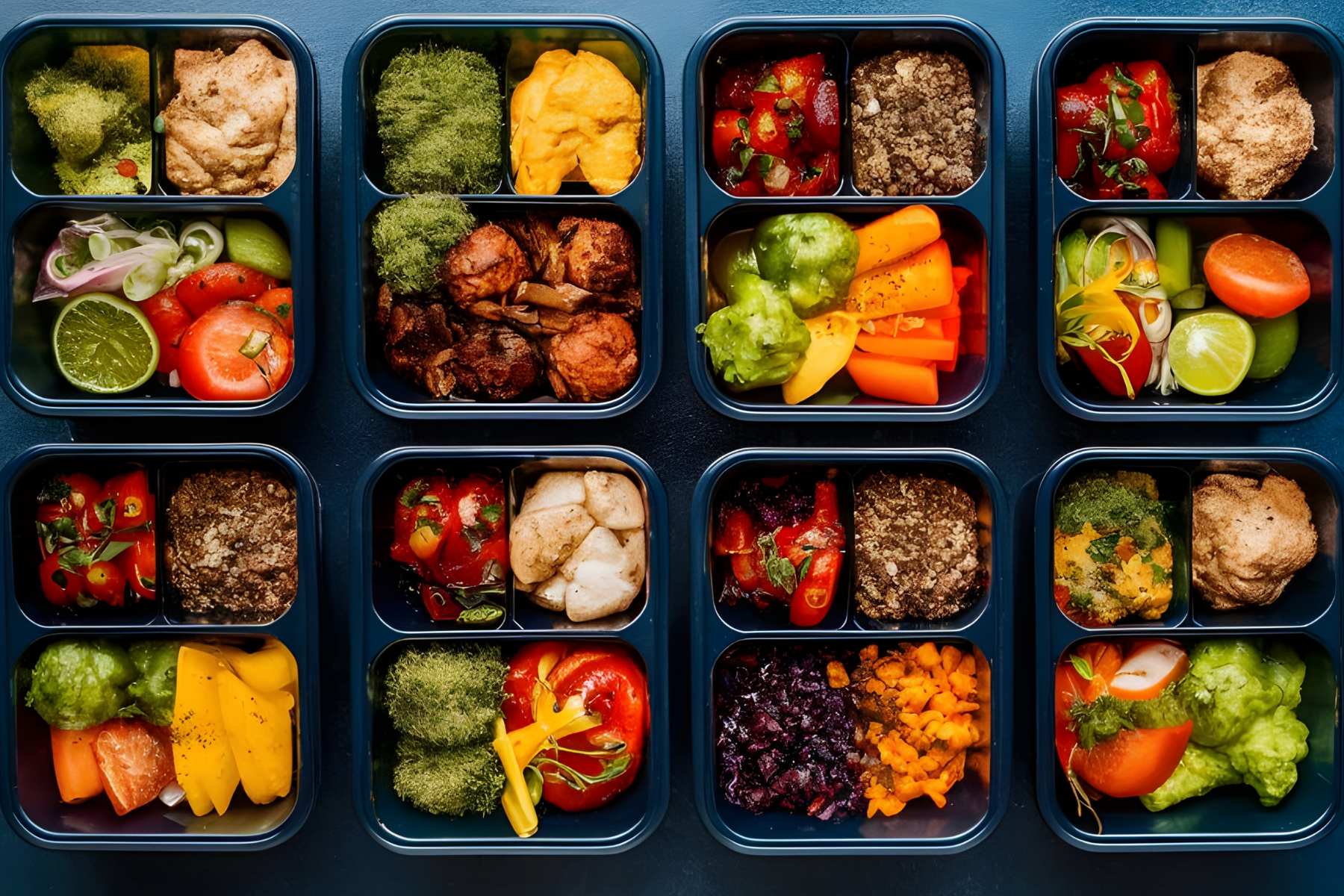
If you’ve ever tried to improve your health or body composition, meal prep is almost a rite of passage. It’s a valuable exercise that teaches you about portion sizes (like the notoriously small tablespoon of peanut butter) and how ingredients like mixed vegetables can significantly increase food volume. Meal prep and meal planning can transform your approach to macros while helping you better prepare meals you enjoy.
This article will cover the basics you need to know — from containers to food safety — along with some strategy and budget tips to make your meal prep journey easier.
Let’s dig in!
Meal prep for supporting your body composition goals
If you’re reading this on the MacroFactor site, chances are your meal prep and planning are aimed at achieving specific body composition or health goals. Your meal prep likely goes beyond saving time or money and focuses on hitting specific macronutrient and calorie targets. To succeed in reaching these goals, it takes a combination of support, accurate data, and an eating system that helps with your goal.
One key benefit of meal prep and planning for body composition is that it helps you avoid “spontaneous” food decisions. By creating a system of intentional choices, meal prep allows you to establish routines and habits that reduce the need for on-the-spot decisions. Approaching your goals with a clear plan or purpose can lead to more consistent success. And while some people thrive on spontaneous eating, even having one pre-made meal in your day can eliminate uncertainty about portions and calories. This knowledge makes tracking easier and increases your chances of progressing while avoiding decision fatigue.
Meal prep for time and cost savings
Besides improving body composition, meal prep is a solid way to save time and money. Much of our daily lives revolve around planning and paying for meals. While dining out or trying new recipes with family is enjoyable, those meal decisions can become costly and time-consuming. A meal prep strategy can free up more time for activities you enjoy and allow you to cut some of those food costs.
I’ll dive deeper into meal prep strategies and budget later, but it’s worth considering that time and cost savings are two valuable reasons to embrace meal prep.
Consider where you’ve had issues with your meals and eating lifestyle
This would be a good time to audit what’s working (and what’s not) in your current meal setup. For example, let’s say you’re consistent with your breakfast routine and hitting your macro and Calorie targets. However, when it comes to dinner, you often make last-minute decisions because you’re running short on time. These dietary decisions could lead to missed targets and create an unsupportive routine that’s not helping you toward your goals. In this situation, meal prep could help create a more goal-supporting dinner routine.
Take a moment to ask yourself a few questions about your meal habits and goals. Below is a table with a few questions to guide a conversation with yourself, your partner, or your family. Going into this in a more informed manner and with better guidance might solve some current meal strategy issues.
| Self-Question | Purpose |
|---|---|
| Are you meal-prepping to save money? | To answer if financial savings are a goal. |
| Are you meal-prepping to hit your macros better? | To address issues with hitting specific macronutrient targets, like increasing protein or reducing saturated fats. |
| Are you meal-prepping to manage your calorie intake? | This is useful if you tend to graze or overeat and need more awareness of your calorie intake. |
| Are you meal-prepping to save time? | To evaluate if meal prep can help with convenience and time management. |
| How many meals or snacks do you need help with? | To clarify which meals or snacks you need to prep — one meal, snacks, or both. |
| How much time can you realistically dedicate to meal prepping? | Consider how much time you can invest in cooking and organizing your meals. |
| How much variety do you need in these meals? | Determine if you’re comfortable with repetition or need more variety in your meals. |
| Do you have the necessary containers or storage equipment? | To assess your supplies and if you need to (or can) invest in more storage options. |
| How long do you want your meal preps to last (e.g., three days, seven days)? | Ensure your meal prep plans align with food safety guidelines. |
| Will you be eating at home or taking meals on the go? | To determine the portability of your meals and if you need cooling options. |
| What is your food storage capacity like (fridge/freezer space)? | To check if you have sufficient storage space for your prepped meals. |
These are just some questions to consider before diving into meal prepping. While it might seem overwhelming at first, doing this work upfront can save you a lot of time and money in the long run and make it easier to hit your body composition goals. That said, this whole article could easily serve as a giant advertisement for joining a meal service program — and that’s okay too!
Food safety
Many assume food safety ends with prepping and cooking, but proper storage is equally important. With non-meal prep cooking, food is typically pulled directly from refrigeration, cooked, and consumed immediately, often with little to no leftovers. In this scenario, the risk of bacteria growth is minimal, assuming the food was handled correctly, and the prep area was clean.
However, when it comes to meal prepping, food sits out longer. It undergoes storage, creating opportunities for bacteria to grow as the food cools below 140°F (temperature can vary depending on the type of food). Additionally, while refrigeration and freezing slow bacterial growth, they don’t entirely stop it.
So, the key to safe meal prepping is maintaining a clean system for cooking, storing, and reheating your food. To ensure your safety, it’s important to plan your meal prep with food safety in mind. Different foods have different safety timeframes, so while making a week’s worth of food at once might seem convenient, you need to consider if half of your batch should be frozen or if you should make batches every 3-4 days.
In short, let food safety guide your meal prep process. Here are a few food safety tips to consider.
| Category | Meal Prep Tip |
|---|---|
| Ingredients | Foods high in fat, such as oils and nuts, or those with high acidity, like many fruits, are less prone to spoilage. Protein-rich foods (like meats) and carbohydrate-rich foods (like cooked grains) tend to spoil faster. |
| Temperature | Keep foods out of the 40°F to 140°F range. This is the zone where bacteria can thrive. Reheat to the proper internal temperature before eating. Use shallow containers. This helps food cool faster in the fridge, reducing the time it spends at less-than-ideal temperatures. |
| Time | There are different time ranges for how long meal-prepped foods will remain safe to eat. The standard for most reheated items is 3-4 days, but this can vary based on their content. Freezing meals will give you a substantially longer time. Label containers with the prep date and prioritize older meals first. To minimize bacterial growth, store food as quickly as possible after cooking, and refrigerate food within 1-2 hours of preparation. If food isn’t kept hot, store it even sooner. |
| Oxygen | Minimize air exposure. Use airtight containers to reduce air exposure. Vacuum-sealing also works well for meats and leafy greens. |
| Thawing | Don’t thaw frozen food at room temperature. Use the fridge, warm water, or the microwave’s defrost setting to thaw food. |
USDA Resource for safe food storage
Various timeframes and temperatures for storage of foods
| Food Type | Refrigerator (40°F or below) | Freezer (0°F or below) |
|---|---|---|
| Meats (Raw) | ||
| Beef, Veal, Lamb, Pork (steaks, chops, roasts) | 3 to 5 days | 4 to 12 months |
| Ground Meat (beef, turkey, pork, lamb) | 1 to 2 days | 3 to 4 months |
| Chicken or Turkey (whole) | 1 to 2 days | 1 year |
| Fresh Fish or Shellfish | 1 to 3 days | 3 to 6 months |
| Cheeses | ||
| Hard Cheese (Cheddar, Swiss) | 6 months (unopened); 3 weeks (opened) | 6 months |
| Soft Cheese (Brie, Ricotta) | 1 to 2 weeks | Does not freeze well |
| Shredded Cheese (Cheddar, Mozzarella) | 3 to 4 weeks | 3 to 4 months |
| Cream Cheese | 2 weeks | Does not freeze well |
| Fruits | ||
| Apples | 4 to 6 weeks | 8 months |
| Bananas | 3 days | 2 to 3 months |
| Citrus Fruits (oranges, grapefruits) | 10 to 21 days | 4 to 6 months |
| Strawberries | 2 to 3 days | 8 to 12 months |
| Vegetables | ||
| Broccoli | 3 to 5 days | 10 to 12 months |
| Carrots | 2 to 3 weeks | 10 to 12 months |
| Peppers | 7 to 10 days | 10 to 12 months |
| Ripe Tomatoes | 2 to 3 days | 2 months |
| Prepared Foods | ||
| Cooked Rice | 3 to 4 days | 1 to 2 months |
| Cooked Pasta | 3 to 4 days | 1 to 2 months |
| Cooked Potatoes | 3 to 4 days | 1 to 2 months |
| Soups | 3 to 4 days | 2 to 3 months |
| Pickled Items | ||
| Pickles | 1 to 2 months (once opened) | Not recommended |
These guidelines are based on information from USDA and Foodsafety.gov
Tips for supplies, budget, and strategy
Alright, so you know why you’re going to meal prep, and how to meal prep safely. Now, let’s dive into the supplies you might need.
Your environment and budget will determine how simple or complex your meal prep setup will be. For example, a college student with limited funds and a small fridge will have a different approach than a family of six with access to wholesale shopping and an extra freezer.
Here’s a list of items that can enhance your meal prep experience. These range from simple solutions like a four-pack of small containers or Ziploc bags to more advanced techniques like vacuum sealers. As you plan, keep your budget and desired level of effort in mind.
| Category | Supplies |
|---|---|
| Category | Supplies |
| Cooking appliances | Slow cooker/instant pot, pressure cookers, air fryers, crock pots, rice cookers |
| Food storage | Meal prep containers, mason jars, reusable silicone bags, reusable produce bags, storage bins, vacuum sealers, airtight containers, coolers |
| Preparation tools | Food processor, blender, larger pots/dishes/skillets, mixing bowls, digital kitchen scale, measuring cups and spoons, food thermometer |
| Baking and cooking | Sheet pans, muffin pans, cooling trays |
| Serving and portioning | Divided containers, bento boxes, spice racks/organizers |
| Organization | Labeling stickers, label system |
Added tip: Buy containers of all sizes, ranging from ones that can hold condiments to flatter ones or ones with dividers. If you put a little extra into a portion of the system, focus on a few good containers.
Timing your cooks
The timing of your meal prep depends on how much you want it to save you time and simplify decision-making. If your goal is to free up more time and reduce daily food choices, consider prepping once or twice a week. Ultimately, the best approach is the one that aligns with your schedule and preferences
Here are strategies to optimize your meal prep based on different lifestyle needs.
| Meal Prep Strategy | Description | Consider |
|---|---|---|
| Weekend Bulk | Prepare and cook most meals during the weekend, allowing for easy grab-and-go meals during the week. | This is good for those who are busy and have more time to cook on the weekends. |
| Bi-Weekly | Prep and cook meals twice a week (e.g., Sunday and Wednesday). | If you’re concerned about spoilage or have less space for bigger weekend preps, this is a good option. |
| Leftovers | Cook a large meal once and eat the leftovers. | This can be good for those who are comfortable with larger dishes like casseroles or lasagnas. |
| Single Items | Spend a day prepping single ingredients like fruits, nuts, or veggies that can be used in various meals throughout the week. | This is good for those who enjoy fresh meals but want to save time. |
| Hybrid | Mix fresh food with pre-cooked items or leftovers. Allows flexibility with fresh meals. | This may be a good option for people who like a balance between fresh meals and time-saving strategies. |
| Daily Quick | This would involve a morning routine focused on getting your day’s meals together. | This strategy is ideal for those who want a little more variety but still embrace planning. |
| Packaged Items | Keep a stash of packaged items, such as boiled eggs, mozzarella sticks, whole grain crackers, pistachios, and carrot sticks, to create simple grab-and-go meals. | It’s great for those who need quick solutions or those that have fewer cooking skills. |
Work from your macronutrients
For most meals, I find it breaks down into a pretty simple format:
- Start and build around your protein.
- Determine your fibrous veggies and fruits.
- Pick your fats.
- Allocate any extras for starches, fun foods, or additional protein or fats.
- Add spices and condiments.
In action, this can look like:
- Roasted chicken breast
- Asparagus and spinach
- Avocado oil
- Couscous
- Garlic, lemon juice, salt, and pepper
The process for determining how much of each ingredient to include can be done sequentially. For example, let’s assume you’re trying to make 8 meals out of these foods, with 30 grams of protein, 15 grams of fat, and 50 grams of carbohydrate in each meal.
So, in total, you need 240g of protein, 120g of fat, and 400g of carbs.
Start by creating a recipe, so you can see how the addition of each food affects the total macro counts of the food you’re preparing. Then, you’d follow this process:
- Add chicken breast to the recipe, and figure out how much chicken breast you’d need to prepare in order to get 240g of protein (the “log by calories or macro” feature in MacroFactor can help with this).
- Add asparagus and spinach to the recipe. Just include the entire amount you’d want for all eight meals.
- Add the amount of avocado oil that would bring the total fat content up to 120g of fat.
- Add the amount of couscous that would bring the total carb content up to 240g.
- Personally, I’d skip adding the garlic, lemon juice, salt, and pepper, since they’re not going to add enough Calories to worry about.
- Since the couscous has a bit of protein, adjust the amount of chicken down slightly to bring the total protein content back down to 240g.
- Finally, since you reduced the amount of chicken, you can increase the amount of avocado oil slightly to bring the total fat content back up to 120g
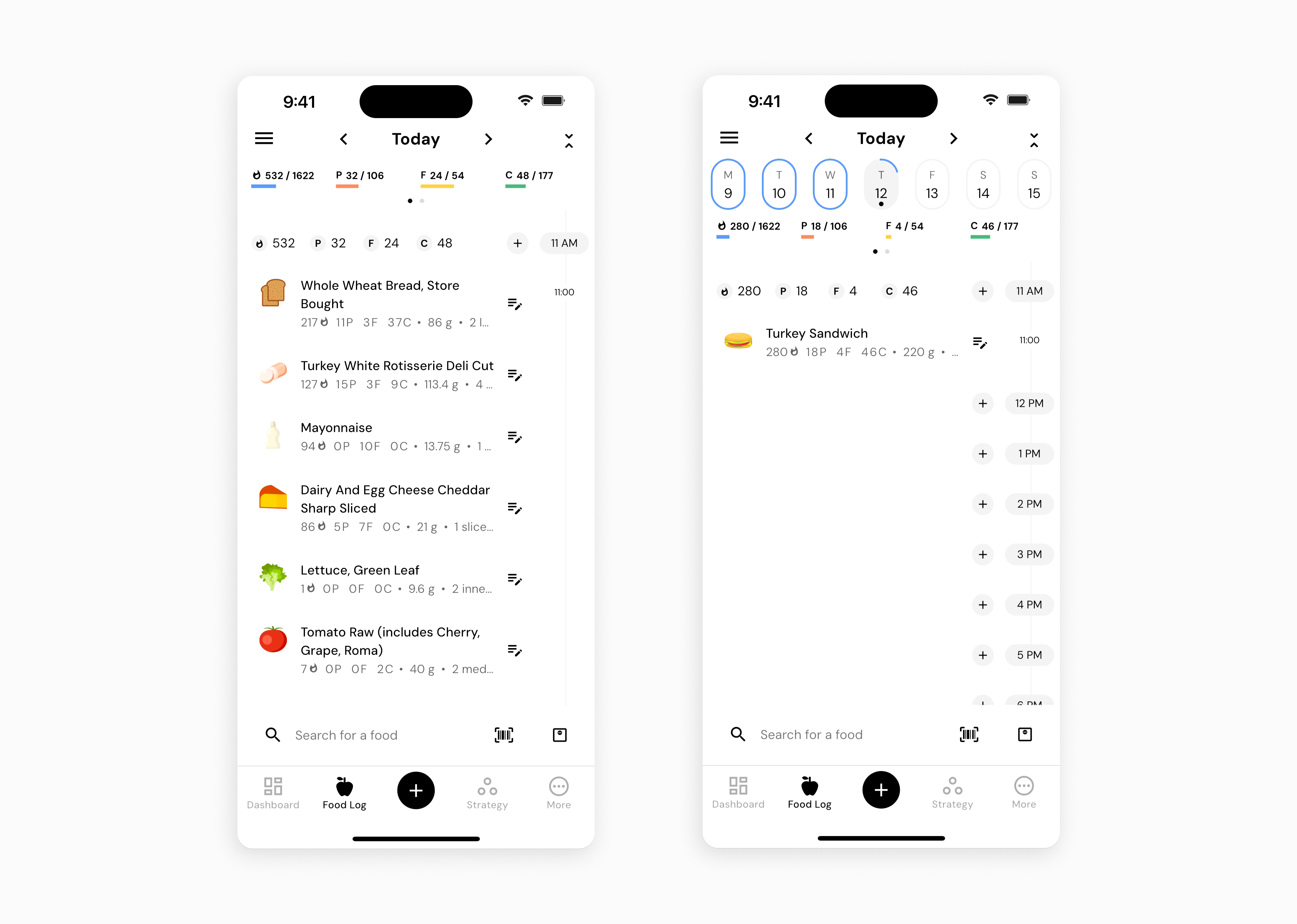
So, by following this simple process, you know exactly how much chicken, asparagus, and couscous you need to buy and cook, and how much avocado oil you can use in the cooking process, in order to prepare eight meals that will meet the exact macros you’re aiming for.
Keep items separate if overwhelmed
Sometimes, it’s easier to keep your meats separate from your vegetables. Many people find success by prepping only their vegetables and adding fresh or cooked meat on the day they eat them. For example, I had a client who pre-cooked and weighed stir-fried vegetables, then paired them with a rotisserie chicken — eating half a chicken one day and saving the rest for the next.
It’s important to step outside the traditional meal-planning box and find what works best for your time and situation. People often get caught up in an all-or-nothing approach to meal prep, which can lead to being overwhelmed and avoiding the whole process. That’s the opposite of what I’d want you to achieve. Meal prep can be as simple as making larger portions at dinner to have leftovers for the next day or as detailed as planning every Monday through Friday meal. There’s no one right way to meal prep — the goal is to make your life easier, not harder.
Budget-friendly meals
One of my favorite things about meal prep is the budget aspect. As you get better at prepping and planning meals, you can save not only time but a decent chunk of money. An easy way to look at it is to combine cheaper food items with your meal prep system. This often involves choosing cheaper protein sources or buying in bulk, but it’s worth noting that if your carbs or fats are budget-friendly, even higher-priced proteins can still help you save money overall.
Budget-friendly items separated by different macronutrient categories
| Proteins | Carbohydrates | Fats | ||
| Vegetables | Starches | Fruits | ||
| Bulk chicken | Carrots | Rice | Bananas | Canola Oil |
| Beans & Legumes (V) | Cabbage | Bread | Apples | Peanuts |
| Non-fat greek yogurt | Frozen Mixed Veggies | Pasta | Oranges | Olive Oil (store brand, not extra virgin) |
| Skim milk | Potatoes | Potatoes | Frozen Berries | Bulk mixed nuts |
| Canned Tuna | Small Onions | Grits | Pineapple | Bulk sunflower seeds |
| Bulk lean patties | Zucchini | Tortillas | Grapes (Seasonal) | Flaxseed |
| Eggs/Egg whites | Tomatoes | Beans & Legumes | Watermelon | Store brand specialty oils |
| Mushrooms (V) | Frozen Spinach | Cereal | Raisins | Chia seeds |
| Cottage cheese | Frozen Broccoli | Oats | Plums (dried) | Pumpkin seeds |
This list also tries to assume more lean protein sources versus the cheapest cuts of some meats, which can be higher fat. This list was mostly sourced from the USDA Economic Research Service.
From this list alone, you can make a lot of meal prep recipes. Here are a few examples.
| Meal | Ingredients | Days |
|---|---|---|
| Overnight Oats | Milk, Greek yogurt, frozen berries, chia seeds | Three |
| Frozen Burritos | Chicken, mushrooms, beans, tomatoes, spinach | One week |
| Lentil Curry | Lentils, mixed vegetables, potatoes | Four |
Take it one meal at a time
Starting your meal prep journey can feel overwhelming, especially if you’re new to cooking, tracking Calories, or structuring your diet. That’s why I recommend mastering one complete meal prep at a time. Don’t worry about jumping into complex multi-day meal plans right away. For example, you can start with the “Packaged items” strategy I discussed above (boiled eggs, mozzarella sticks, whole grain crackers, pistachios, and carrot sticks). Divide those items into a container and call it lunch.
Once you’re comfortable with that, you can gradually add more variety and seasoning. For instance, if you buy pre-cooked, hard-boiled eggs, you can elevate your meal by chopping up some veggies, adding seasoning, and mixing in oil and mustard to create an egg salad. You can then pair it with whole-grain bread or lettuce wraps.
If you logged both of these meals in MacroFactor, you’ve now saved two meals in your database. Soon, you’ll have three, then four meals logged, creating a customized catalog of your meal preps.
App Tip: When using MacroFactor, name your recipes with “Meal Prep” in the title to easily browse your catalog of meals suited for these plans.

Using MacroFactor for meal prepping and portioning
One key advantage of using MacroFactor is the ability to create custom recipes tailored to your meal prep needs. For example, let’s say you’re making a batch of chili you plan to eat over four days. You also want to prepare toppings — like light sour cream, 2% cheese, and a portion of tortilla chips — to accompany each serving.
Here’s how you can streamline this process if using a food scale.
- Weigh Your Cookware: Weigh the pot that you’re using to make the chili. This will save you time later by allowing you to weigh the finished product directly in the pot and then subtract the pot’s weight to determine the total weight of your chili.
- Create a Custom Recipe: As you add ingredients to your chili, use the recipe creation feature in MacroFactor to log each component. Once the chili is done cooking, you can divide it evenly into four containers. In the app, you can set the recipe to yield four servings, so when you’re ready to eat, you simply log “1 serving” of chili for each meal.
- Add Your Toppings: If you’re preparing toppings, include them in your custom recipe or log them separately. For instance, you might add a serving of light sour cream, 2% cheese, and tortilla chips to your recipe and keep them in a separate but portioned-out container. When you’re ready to eat, everything is already accounted for.
- Explode Function for Flexibility: If you want an extra serving of sour cream or want to adjust any other ingredients, you can use the Explode feature to break down your recipe into its components. This allows you to make quick adjustments without creating a new recipe.
For more detailed instructions on how to weigh and portion your meals accurately, refer to our Tips for Creating Recipes for Dishes Comprised of Multiple Servings and Create and Add a Custom Recipe articles.
Closing
Remember, meal prepping can be as complex or as simple as you need it to be. Find a way to keep things easy to help you hit your targets and budget or time-saving goals. Hopefully, this article has given you some practical ideas on making meal prep work for you, whether you prefer to keep things simple or go all out.