

Every 3D artist faces the challenge of delivering visually stunning animation projects within tight deadlines and limited budgets. For studios across Central Europe, upgrading to GPU cloud computing means instant access to high-performance graphics power without expensive hardware investments. Remote GPU platforms accelerate demanding rendering tasks, streamline collaborative workflows, and offer pay-per-use models that adapt to every project size. Discover how scalable cloud GPU solutions empower studios with flexible, cost-effective tools designed for professional efficiency.
Key Takeaways
| Point | Details |
|---|---|
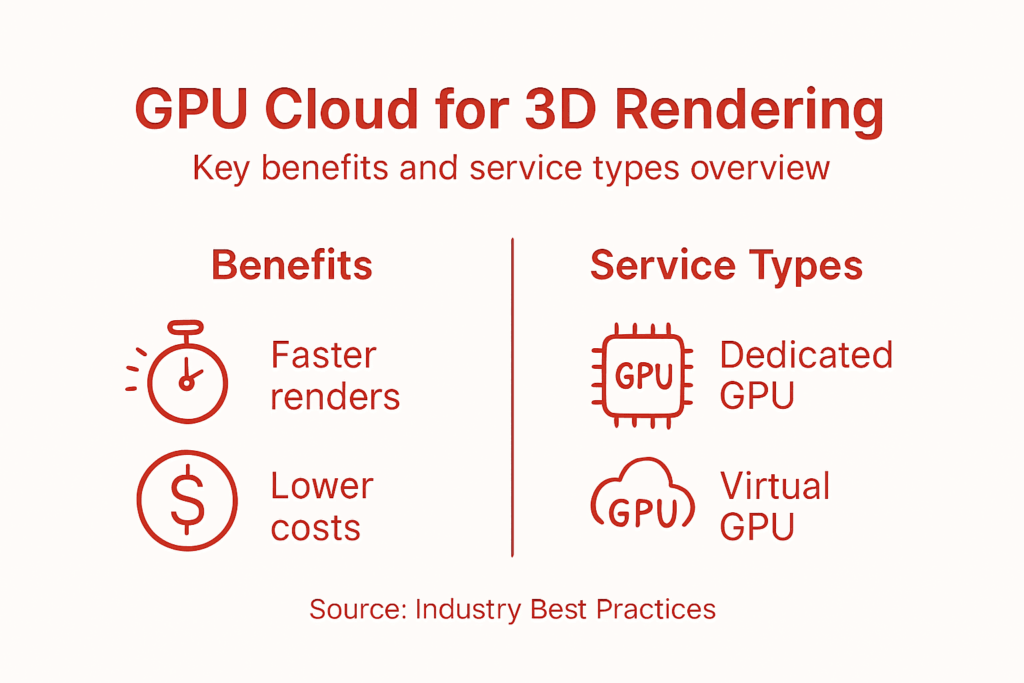
| GPU Cloud Computing Benefits | Studios can access high-performance GPU resources without costly hardware, enabling flexible, scalable rendering capabilities. |
| Service Type Variety | Various GPU cloud services cater to different needs, including dedicated servers for large studios and virtualized instances for smaller teams. |
| Financial Advantages | Transitioning to GPU cloud models reduces capital expenses, offering pay-per-use pricing that aligns with project demands. |
| Operational Flexibility | Cloud platforms allow studios to dynamically adjust resources, enhancing efficiency during fluctuating production periods. |
Defining GPU Cloud Computing for Studios
GPU cloud computing represents a powerful technological paradigm where studios can access remote, high-performance graphics processing units through internet-connected platforms. Remote GPU processing capabilities enable animation, visual effects, and rendering professionals to execute complex computational tasks without massive local hardware investments.
The core functionality of GPU cloud computing centers on providing scalable, on-demand computational resources specifically tailored for graphics-intensive workflows. Studios gain significant advantages through this approach:
- Instant access to enterprise-grade GPU infrastructure
- Pay-per-use computational models
- Elimination of expensive hardware upgrade cycles
- Global collaboration through cloud-based rendering platforms
- Reduced capital expenditure on physical computing equipment
Unlike traditional local rendering setups, GPU cloud computing distributes computational workloads across multiple remote graphics processors. Advanced cloud GPU architectures enable parallel processing that dramatically accelerates rendering times, allowing studios to complete complex 3D animation and visual effects projects with unprecedented efficiency.
GPU cloud platforms transform studio workflows by offering flexible, powerful computational resources that adapt to project-specific requirements. These systems provide granular control over rendering processes while eliminating the substantial upfront hardware investments traditionally required for high-end graphics production.
Pro tip: Always evaluate a GPU cloud service’s specific rendering capabilities, network latency, and compatibility with your primary 3D software before committing to a long-term subscription.
Key Types of GPU Cloud Services
GPU cloud services have evolved to provide specialized solutions that cater to diverse computational requirements across different industries. Diverse GPU service architectures enable studios and professionals to select infrastructure precisely matching their specific rendering and computational needs.
The primary categories of GPU cloud services include:
- Dedicated GPU Servers: Fully reserved hardware with guaranteed performance
- Virtualized GPU Instances: Shared resources with configurable allocations
- Serverless GPU Functions: On-demand computational units for burst processing
- Managed GPU Services: Comprehensive platforms handling infrastructure management
Each service type offers unique advantages for different workflow demands. Cloud GPU configurations provide granular options ranging from single-GPU virtual machines to massive multi-GPU clusters, allowing studios to scale computational resources dynamically.
Dedicated GPU servers represent the most straightforward cloud service, offering exclusive hardware access with predictable performance characteristics. These platforms ensure consistent computational power without resource contention, making them ideal for studios with continuous, intensive rendering requirements.
Virtualized GPU instances introduce flexibility by allowing multiple users to share underlying hardware while maintaining isolated computational environments. This approach significantly reduces infrastructure costs while providing robust performance for smaller studios and individual professionals.
Here’s a summary of the main GPU cloud service types and their ideal studio applications:
| Service Type | Best For | Key Benefit |
|---|---|---|
| Dedicated GPU Servers | Large studios, 24/7 workloads | Consistent, high performance |
| Virtualized GPU Instances | Small teams, freelancers | Lower costs, flexible configurations |
| Serverless GPU Functions | Burst workloads, testing phases | Instant scaling, pay-per-task |
| Managed GPU Services | Studios lacking IT resources | Simplified management, support |
Pro tip: Always conduct thorough performance testing across different GPU cloud service types to identify the most cost-effective solution for your specific rendering workflow.
How GPU Cloud Enables High-Efficiency Rendering
GPU cloud computing fundamentally transforms rendering workflows by unlocking unprecedented computational capabilities for 3D artists and animation studios. Advanced parallel processing techniques enable studios to dramatically accelerate complex rendering tasks through distributed computational architectures.
The key mechanisms that drive high-efficiency rendering in GPU cloud environments include:
- Massively parallel compute resources
- Dynamic workload distribution
- Instant scalability of processing power
- Reduced render time through concurrent processing
- Elimination of local hardware bottlenecks
GPU cloud platforms optimize rendering performance through several critical strategies. By leveraging distributed computational networks, these systems can break down complex rendering jobs into smaller, manageable tasks that can be processed simultaneously across multiple graphics processors.
Parallel processing capabilities represent the most significant advancement in GPU cloud rendering technologies. Unlike traditional local rendering setups, cloud platforms can dynamically allocate computational resources, allowing studios to tackle increasingly complex visual effects and animation projects with unprecedented speed and efficiency.
The computational architecture enables studios to transform their rendering workflows by removing traditional hardware limitations. Complex scenes that once required days of processing can now be completed in hours or even minutes, providing remarkable acceleration for time-sensitive production environments.
Pro tip: Configure your rendering pipeline to leverage cloud GPU’s parallel processing capabilities by breaking large projects into smaller, independently processable segments for maximum computational efficiency.
Financial and Operational Implications
The emergence of GPU-as-a-Service (GPUaaS) fundamentally transforms financial models for 3D rendering studios, introducing unprecedented flexibility in computational resource management. GPU cloud economic models enable studios to transition from substantial capital expenditures to more predictable operational expenses.
Key financial advantages of GPU cloud computing include:
- Elimination of upfront hardware investment
- Pay-per-use computational pricing models
- Reduced infrastructure maintenance costs
- Scalable resource allocation
- Predictable monthly technology expenses
Traditional rendering infrastructure required significant capital investment in high-performance GPUs, creating substantial financial barriers for smaller studios. GPU cloud platforms democratize access to advanced rendering capabilities by offering flexible, granular pricing structures that align directly with project requirements and computational demands.
Operational flexibility represents another critical benefit of GPU cloud computing. Studios can now dynamically adjust their computational resources, scaling up during peak production periods and scaling down during slower project phases without maintaining expensive, underutilized hardware infrastructure.
The shift from capital expenditure (CAPEX) to operational expenditure (OPEX) provides studios with greater financial agility. By converting hardware investments into predictable monthly service fees, organizations can allocate resources more strategically, investing saved capital into creative talent, software development, and core business growth initiatives.
Pro tip: Conduct a comprehensive cost-benefit analysis comparing your current local rendering infrastructure against potential GPU cloud solutions to accurately assess your potential savings and operational efficiencies.
Comparing GPU Cloud With Traditional Hosting
Traditional GPU hosting represents an aging infrastructure model that locks studios into rigid, expensive computing frameworks. GPU hosting solutions comparison reveals fundamental differences between legacy hardware approaches and modern cloud computing strategies.
Key distinctions between traditional and cloud GPU hosting include:
- Initial capital investment requirements
- Hardware maintenance responsibilities
- Scalability and flexibility
- Performance consistency
- Technology upgrade cycles
Traditional hosting models demand substantial upfront hardware investments, requiring studios to purchase expensive GPU infrastructure that quickly becomes obsolete. Cloud GPU platforms eliminate these constraints by providing dynamic, pay-as-you-go computational resources that adapt seamlessly to changing project demands.
Operational scalability represents the most significant advantage of GPU cloud hosting. Unlike traditional setups with fixed computational capacity, cloud platforms allow studios to instantly expand or contract their rendering capabilities without purchasing additional physical hardware.
The financial implications are profound. Traditional hosting forces studios into long-term hardware commitments, creating significant depreciation risks and technological obsolescence. Cloud GPU services transform these expenses into predictable operational costs, enabling more strategic resource allocation and financial planning.
The table below compares financial factors between traditional GPU hosting and GPU cloud computing:
| Financial Aspect | Traditional Hosting | GPU Cloud Computing |
|---|---|---|
| Upfront Investment | High – hardware costs | None – subscription or pay-per-use |
| Cost Predictability | Variable – upgrades, repairs | Stable – monthly or usage-based billing |
| Hardware Lifecycle | Fast obsolescence, depreciation | Always latest technology available |
| Resource Allocation | Fixed, hard to scale | Dynamic, scales with project needs |
Pro tip: Conduct a detailed computational audit of your current rendering workflow to precisely quantify potential cost savings and performance improvements when transitioning from traditional to cloud GPU hosting.
Unlock the Full Potential of GPU Cloud Computing with MaxCloudON
Studies highlight the challenges studios face when upgrading local hardware, managing high rendering costs, and handling resource scalability. The article underscores the power of GPU cloud computing to solve these pain points by providing on-demand, powerful, and scalable GPU resources that eliminate upfront investments and accelerate complex 3D rendering workflows with parallel processing. If you want to move beyond the limitations of traditional hosting and maximize efficiency in your rendered projects, understanding these concepts is only the first step.
At MaxCloudON, we specialize in delivering dedicated GPU servers and automated render farms designed precisely for your high-performance rendering needs. Our platform offers full root/admin access, flexible pricing, and seamless scalability to meet your project’s demands from start to finish. Discover how RenderSonic, our cloud render farm solution, simplifies 3D production workflows by supporting popular software like Blender, 3ds Max, Maya, and Cinema 4D without manual setup or infrastructure worries. Learn more about our Nvidia-optimized products and tutorials via Your Guide to Nvidia Products, Features and Tutorials and explore our terms and transparent processes at Terms and Processes – MaxCloudON.
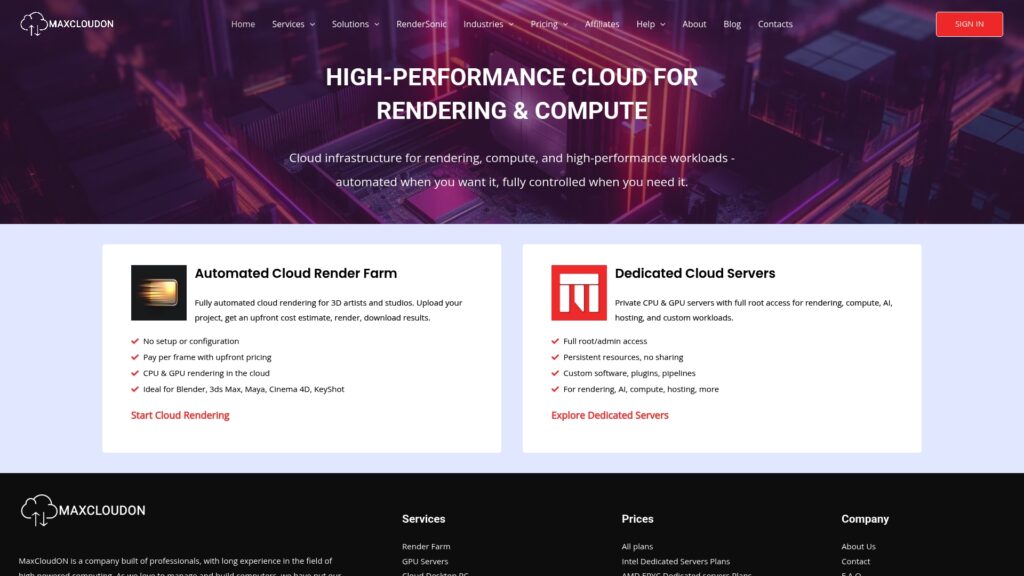
Take control of your 3D rendering workflow today by partnering with a cloud provider that truly understands the computational intensity of your work. Visit MaxCloudON now to experience reliable, high-performance GPU cloud servers and streamline your creative process with real-time scalability. Your next project deserves the best technology delivering speed and cost-efficiency.
