bad buddy mbti post
Jun. 4th, 2022 11:08 ami think i'm just going to do this for every new media i get into lol
pat - esfp
pran - infj
ink - entj? still deciding on this but she's defs an E and i like her with Te
pa - isfj
korn - esfp
wai - intj
ohm - istp
nanon - enfp
pran's analysis:
Ni - when he said about 'if you know how it's going to end, isn't it best not to start it at all?')
Fe - awareness of how wai and louis getting into fights is bad for them all the time, willing to lend an ear to them regardless, paying attention to pat's feelings and how that affects his own
Ti - he is quick to make what he perceives as logic-based judgments, for example not talking to pat thinking that that would make pat give up on him
Se - the impulsivity which pran absolutely lacks... also the fact that it is so low makes it evident why he was so hesitant to get into a relationship with pat even though he already figured that their feelings were mutual, but that his Ni was so dominant and focused on how things could end up in the future that he wasn't comfortable with taking that risk, unlike pat
pat's analysis:
Se - impulsivity comes naturally to him; the bus stop brainstorming thing was definitely NOT what he planned on doing but came as a spur of the moment and was ultimately helpful; high extraverted sensing is very natural at trusting their reactions to What Is Happening in this regard
Fi - his motivations and interactions with the world are very much from how he experiences and interprets things and whatever his natural, personal or emotion-based reaction to it is; in the same way that it seems important to pran to always consider other people and react to that, whether positive or not, it is similarly important to pat for him to trust what he thinks/believes/feels, like his jealousy and testing it in episode 5
Te - episode 3 is literally just this, lmao - when he saw the poster in the library (which, ok, is his Se), he knew that he wasn't going to give it to pran, but instead annoyed him with it into a paper airplane bc that would guarantee that pran would actually read it and wouldn't have to give him credit for it. similarly, the way he improvised the new bus stop idea and knew the right things to say to appeal to logtech, as well as behind the scenes getting their faculties unbanned from freshy day, etc etc.... episode 3 is pat's Te episode
Ni - this is just a blatant disregard for the consequences of his actions / their dating / his desire to share that they were dating even though it was secret. dominant Se/inferior Ni is very evident in this sense that the inferior Ni usually makes people worry too little with their impulsivity, whereas with dominant Nis like pran, they worry too much without taking action
pran has also been more seemingly understanding and fair to pat's feelings that he has never allowed his own crush on pat to really affect how he interacts with him or to the fact that pat may be interested in other people (use of his extroverted feeling), while pat wanted to understand his feelings and then immediately when he did, wanted them to be known and act/judge based on that (use of his introverted feeling) bc. well. he has never not made his feelings not known haha
pat - esfp
pran - infj
ink - entj? still deciding on this but she's defs an E and i like her with Te
pa - isfj
korn - esfp
wai - intj
ohm - istp
nanon - enfp
pran's analysis:
Ni - when he said about 'if you know how it's going to end, isn't it best not to start it at all?')
Fe - awareness of how wai and louis getting into fights is bad for them all the time, willing to lend an ear to them regardless, paying attention to pat's feelings and how that affects his own
Ti - he is quick to make what he perceives as logic-based judgments, for example not talking to pat thinking that that would make pat give up on him
Se - the impulsivity which pran absolutely lacks... also the fact that it is so low makes it evident why he was so hesitant to get into a relationship with pat even though he already figured that their feelings were mutual, but that his Ni was so dominant and focused on how things could end up in the future that he wasn't comfortable with taking that risk, unlike pat
pat's analysis:
Se - impulsivity comes naturally to him; the bus stop brainstorming thing was definitely NOT what he planned on doing but came as a spur of the moment and was ultimately helpful; high extraverted sensing is very natural at trusting their reactions to What Is Happening in this regard
Fi - his motivations and interactions with the world are very much from how he experiences and interprets things and whatever his natural, personal or emotion-based reaction to it is; in the same way that it seems important to pran to always consider other people and react to that, whether positive or not, it is similarly important to pat for him to trust what he thinks/believes/feels, like his jealousy and testing it in episode 5
Te - episode 3 is literally just this, lmao - when he saw the poster in the library (which, ok, is his Se), he knew that he wasn't going to give it to pran, but instead annoyed him with it into a paper airplane bc that would guarantee that pran would actually read it and wouldn't have to give him credit for it. similarly, the way he improvised the new bus stop idea and knew the right things to say to appeal to logtech, as well as behind the scenes getting their faculties unbanned from freshy day, etc etc.... episode 3 is pat's Te episode
Ni - this is just a blatant disregard for the consequences of his actions / their dating / his desire to share that they were dating even though it was secret. dominant Se/inferior Ni is very evident in this sense that the inferior Ni usually makes people worry too little with their impulsivity, whereas with dominant Nis like pran, they worry too much without taking action
pran has also been more seemingly understanding and fair to pat's feelings that he has never allowed his own crush on pat to really affect how he interacts with him or to the fact that pat may be interested in other people (use of his extroverted feeling), while pat wanted to understand his feelings and then immediately when he did, wanted them to be known and act/judge based on that (use of his introverted feeling) bc. well. he has never not made his feelings not known haha
obligatory mdzs/cql mbti post
Sep. 21st, 2020 06:53 pmi'm lumping these in together for now because i would like to believe that their personality types are the same regardless of medium but i will edit this post for any discrepancies i see fit.
as goes with my usual mbti typings, note that when i say that i'm debating between one letter or the other i'm not treating the letters individually but instead am taking functions into account; usually when i type characters i take into account how all the functions interact with each other so yes when i say "deciding between J or P" i really am deciding if i think the character has si/te/fi/ne Working Like That or se/ti/fe/ni Working Like That
wei wuxian - entp in every other iteration except cql, where he's an enfp bc of xz's acting
lan wangji - istj
lan xichen - enfj
jiang cheng - estj
jiang yanli - she has like no personality but i'll attribute isfj to her anyway
wen qing - intj
wen ning - infp
nie huaisang - isfp
nie mingjue - estj
xiao xichen - infj
song lan - istj
xue yang - extp (i've seen estp a LOT and wouldn't knock it out but also i'm not gonna knock out entp either)
lan sizhui - infj
lan jingyi - entp
jin ling - istp
ouyang zizhen - enfp
jin guangyao - intj
su she - tbd
yu ziyuan - estj
jiang fengmian - some sort of ixfx
a-qing - okay you know what i saw entp for her on the personality database and im here for it
as goes with my usual mbti typings, note that when i say that i'm debating between one letter or the other i'm not treating the letters individually but instead am taking functions into account; usually when i type characters i take into account how all the functions interact with each other so yes when i say "deciding between J or P" i really am deciding if i think the character has si/te/fi/ne Working Like That or se/ti/fe/ni Working Like That
wei wuxian - entp in every other iteration except cql, where he's an enfp bc of xz's acting
lan wangji - istj
lan xichen - enfj
jiang cheng - estj
jiang yanli - she has like no personality but i'll attribute isfj to her anyway
wen qing - intj
wen ning - infp
nie huaisang - isfp
nie mingjue - estj
xiao xichen - infj
song lan - istj
xue yang - extp (i've seen estp a LOT and wouldn't knock it out but also i'm not gonna knock out entp either)
lan sizhui - infj
lan jingyi - entp
jin ling - istp
ouyang zizhen - enfp
jin guangyao - intj
su she - tbd
yu ziyuan - estj
jiang fengmian - some sort of ixfx
a-qing - okay you know what i saw entp for her on the personality database and im here for it
Basic MBTI Functions
Aug. 24th, 2020 08:14 amBefore I get into explaining each of the individual functions, here is the foundation of both the functions and MBTI in general.
Each personality type, as we know, goes in the order of this:
- Either I or E
- Either N or S
- Either T or F
- Either J or P
However, when it comes to the functions, we have to forget about the first bulletpoint and the last bulletpoint, at least for a second. They do mean things eventually, but as the Functions (which I will now be capitalizing) basically lay the groundwork for MBTI, and neither IEJP are technically within these functions as we will be initially understanding them, we have to forget about them completely. Just focus on the middle two possible letters - NS/TF.
So. Here we are, with I(N)tuition, (S)ensing, (T)hinking, and (F)eeling. These are basically the four key ways that the brain functions, according to personality typing ideology.
What most people are familiar with is that you’re either N or S, or you’re either F or T. This is wrong. I mean, okay, yes, an ISTJ and ISFJ are valid personality types and they are very different types of people. But that’s not to say that the ISTJ doesn’t have Feeling, or the ISFJ doesn’t have Thinking. To be a mythbuster here, the other core part of MBTI is that everyone has all of these functions. An ISTJ also has Intuition and Feeling; an ENFP also has Sensing and Thinking. And explaining that we have to understand two additional features of MBTI.
( this is not my mbti magnum opus but it's close )i love generalizing myself
Jul. 28th, 2019 02:22 amat least 60% of all intps are gremlins. no i will not be taking constructive criticism on this post. yes i am one of them.
(no subject)
Mar. 15th, 2019 12:27 amI'm rewatching Lost again and I may retract my housing of Jack into Slytherin... we'll see
Jack Shephard - Slytherin - I know this is unconventional, but Jack's way of caring about people is out of a feeling of duty and responsibility, thus putting people into his care before actually caring about them. He focuses a lot on what he thinks is the best thing to do in terms of pros and cons, and automatically doubts (and continues doubting) people who want to do things that may put other people in danger for The Greater Good. He's not brave and heart-led as much as he's strategic and cold; he doesn't care about gathering information/intellectuality/rationalization as much as he does taking action and relying on empirical truth; and like I said he doesn't necessarily care about people, but that his position as a doctor puts him in a certain type of responsibility. Whether he knows it or not, Jack is a self-centered guy who, throughout the show, needs to let other people's perspectives into his life. But this is evidence of his Slytherin values, of pure ambition and - well, I wouldn't say cunning, but His way of doing things right.
Kate Austen - Slytherin
Sawyer/James Ford - Gryffindor - Yeah he's sarcastic and a dick but those aren't Slyth qualities! He leads with his heart more than Jack does (see above); while he does seem to care about himself a lot and only begins to care about people when he lets them in, a lot of the decisions he makes seem to be based on pure feeling than him actually thinking about pros/cons. He does not simply care about the people he cares about just because he's let them in; once he learns how to use his heart with direction and care (and also overcome his trauma), he is very, very capable with others, leading them, and taking the largest risks possible to follow what his feelings say.
Juliet Burke - Ravenclaw
John Locke - Gryffindor
Ben Linus - Slytherin (this is so obvs)
Sayid Jarrah - Slytherin (select loyalist not genuine one)
Sun-Hwa Kwon - Slyther/claw
Jin Kwon - Hufflepuff
Charlie - Gryffindor
Desmond Hume - Gryffindor
Penny Widmore - Ravenclaw
Hurley Reyes - Hufflepuff pls don't argue with anyone on this bc if u do ur in denial
Claire Littleton - Hufflepuff
Jacob - Ravenclaw but also a fucking idiot whom I love
Boone Carlyle - Gryffindor
Shannon Rutherford - Gryffindor
Ana Lucia Cortez - Slytherin obvs
Ol' Smokey - Slytherin, pls. Would also make room for Ravenclaw tbh
Richard Alpert - Ravenclaw
Danielle Rousseau - Slytherin
Alex Rousseau - Hufflepuff
Miles Straume - I want to say Slytherin but also he's not that attached to people he cares about tbh. Ravenclaw would fit best even though his attitude "seems" Slytherin-ish
Charlotte Lewis - Sticking her in Ravenclaw to be with her boys
Daniel Faraday - Ravenclaw
Dipper - Ravenclaw (INTP)
Mabel - Hufflepuff (ENFP)
Grunkle Stan - Slytherin (too loyal to people he cares about while completely apathetic to nearly everyone else to be a Puff) (ENTJ)
Soos - Hufflepuff (ENFP)
Wendy - Gryffin/Claw (ESTP)
Bill - Slytherin (ENTJ)
Gideon - Slytherin probs (ENTJ)
Ford - Ravenclaw (INTJ)
Kate Austen - Slytherin
Sawyer/James Ford - Gryffindor - Yeah he's sarcastic and a dick but those aren't Slyth qualities! He leads with his heart more than Jack does (see above); while he does seem to care about himself a lot and only begins to care about people when he lets them in, a lot of the decisions he makes seem to be based on pure feeling than him actually thinking about pros/cons. He does not simply care about the people he cares about just because he's let them in; once he learns how to use his heart with direction and care (and also overcome his trauma), he is very, very capable with others, leading them, and taking the largest risks possible to follow what his feelings say.
Juliet Burke - Ravenclaw
John Locke - Gryffindor
Ben Linus - Slytherin (this is so obvs)
Sayid Jarrah - Slytherin (select loyalist not genuine one)
Sun-Hwa Kwon - Slyther/claw
Jin Kwon - Hufflepuff
Charlie - Gryffindor
Desmond Hume - Gryffindor
Penny Widmore - Ravenclaw
Hurley Reyes - Hufflepuff pls don't argue with anyone on this bc if u do ur in denial
Claire Littleton - Hufflepuff
Jacob - Ravenclaw but also a fucking idiot whom I love
Boone Carlyle - Gryffindor
Shannon Rutherford - Gryffindor
Ana Lucia Cortez - Slytherin obvs
Ol' Smokey - Slytherin, pls. Would also make room for Ravenclaw tbh
Richard Alpert - Ravenclaw
Danielle Rousseau - Slytherin
Alex Rousseau - Hufflepuff
Miles Straume - I want to say Slytherin but also he's not that attached to people he cares about tbh. Ravenclaw would fit best even though his attitude "seems" Slytherin-ish
Charlotte Lewis - Sticking her in Ravenclaw to be with her boys
Daniel Faraday - Ravenclaw
Dipper - Ravenclaw (INTP)
Mabel - Hufflepuff (ENFP)
Grunkle Stan - Slytherin (too loyal to people he cares about while completely apathetic to nearly everyone else to be a Puff) (ENTJ)
Soos - Hufflepuff (ENFP)
Wendy - Gryffin/Claw (ESTP)
Bill - Slytherin (ENTJ)
Gideon - Slytherin probs (ENTJ)
Ford - Ravenclaw (INTJ)
Auxiliary...
Mar. 2nd, 2018 03:26 pmThe auxiliary function is always, always values. They value whatever is in their aux position, whether it is endless possibilities (Ne), being productive (Se), quantitative reliance (Si), what now means for later (Ni), making goals and executing them (Te), impacting others (Fe), the self's inner values and wants (Fi), or internally followed logic (Ti.)
Before you type a character a certain way, examine what their auxiliary function may be - does their auxiliary function seem to be important to them? Or is it simply used, like a dominant or tertiary function?
Before you type a character a certain way, examine what their auxiliary function may be - does their auxiliary function seem to be important to them? Or is it simply used, like a dominant or tertiary function?
On Function Placement (wip)
Feb. 22nd, 2018 06:55 pmRegardless of the internet's overall frequent misinterpretations of MBTI (I blame the elementary way it's often summarized; I'm much more into socionics theory than academic MBTI theory due to that socionics tends to flesh things out more and measures people's functions based on interrelations and behavior wrt cognition), graphs like these actually highlight the usage of functions well:
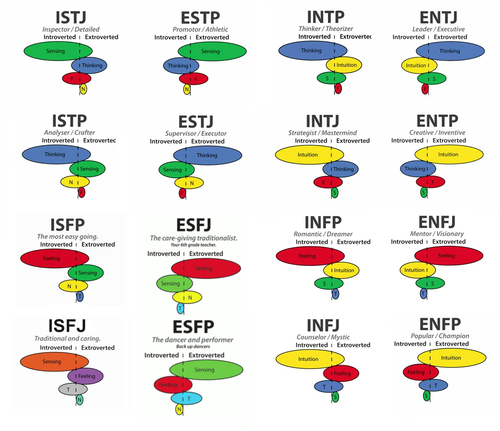
Whenever I type people/characters/whatsoever, I usually keep an eye out for dominant and tertiary functions. This image implies - but doesn't state - and I've also seen here and there, that the dominant and tertiary functions tend to be the most prominent in behavior. When I was first learning about cognitive functions, I'd read that the dominant function is the thing you use the most naturally, without question; the tertiary function is what you use without question, but not as naturally.
It's interesting, and paves a way to my theory of this:
(which I've also seen implied here and there among abstract posts about cognitive functions)
Dominant and tertiary functions are what you do. Auxiliary and inferior functions are why you do them.
Obviously I don't mean this literally; but it's more in that while you "externally" use either your dominant or tertiary function, your internal procedure is more keyed on the auxiliary and/or inferior function.
When it comes to typing, this is why I tend to seek the tertiary function, or at least have a couple of contenders. (Usually I can distinguish the functions that are either dominant or tertiary; it's positioning that sometimes takes me a while.) I have seen typings of characters that I find to be obvious IxTJs as ExTJs, possibly because of the aggression of a Te. But in the case of STJs the characters I find to be "obvious" ISTJs do not have tertiary Ne at all, because their Ne is something that they reject, or are hard to consolidate with, or only come during moments of panic - inferior at worst.
As for INTJs vs ENTJs, I think it's really a matter of taking into consideration that since INTJs have Te auxiliary, it's a likelihood that in instances they are militant and emotionless, it's completely deliberate, whereas for an ENTJ it would just seem more "natural," as in the idea of them being otherwise is bizarre and unnatural to them. Contrary to popular belief, INTJs have more flavor in this area, both in this choice to exercise their auxiliary Te in an intentional way, and also the tertiary Fi. People often talk about INTJs like they've forgotten that the INTJ's instinctive yet unnatural function is introverted feeling. But we'll get to tertiary functions in any introvert later.
I find there to be similar issues between the I/E dichotomy with NFJs. (Hilariously enough, most people can at least distinguish an ISFJ from an ESFJ.) I have seen many characters/people - usually women, mind you - typed as ENFJs, when I would highly oppose the idea that the person in question has inferior Ti. It's because the thing about IxFJs is similar to that of IxTJs - their aggression or friendliness or whatever that may make them seem like their extroverted counterpart (i.e. leading with Fe or Te) when it's really not that simple. With an ExFJ, the constant awareness of others and how one's (or other's) behaviors affects others is, like the ExTJ, a natural mode. To think or behave otherwise is foreign concept to the ExFJ.
The IxFJ, like the IxTJ, is deliberately friendly, or concerned about others, or what have you. They do not behave friendly and invested in others because it's their natural way of thinking, but because it's highly important to them. When interacting with an IxFJ, you get a stronger sense of how much they do (or don't) care about how others live their lives and interact with each other - plus, with that tertiary Ti, they're also awfully good at justifying whatever they say due to this. On the other hand, when interacting with an ExFJ, comparatively you get a stronger sense of how externally aware they are - usually external social awareness - more than anything else. Of course, this doesn't mean "socially competent" (although the average ExFJ is likely to have the most socially competent people), but the mere aspect of focusing outwardly, judging first by any ethical implications around them.
When it comes to ExTPs and ExFPs, it can often be tricky in choosing whether they're one or the other (F vs. T.) Sometimes it may feel obvious, but I think the most important thing is to compare if they're aux Ti/tert Fe, or aux Fi/tert Te. An ENTP (I would say looping, but I think an average ENTP is prone to this too) may look like an ENFP by how "random" and enthusiastic they are. However, because of an ENTP's tertiary Fe, it's likely that they're doing this on purpose - that they want to get a rise out of people, that they are desperate for attention (however buried down it may be). An ENTP is aggressive in this.
And it's not to say that ENTPs are rude and ENFPs are sensitive. It's intention. Despite the Fe doing things for/around people, because the Fe is tertiary, the ENTP struggles more with being socially aware - that is, recognizing that what they're saying/doing works, how people react to what they're doing, thinking about how what they do/say impacts others. The tertiary Fe tries extremely hard to be used, but unlike the ExFJ, the average/unhealthy tert Fe lacks the subsequent awareness in being used.
But the tertiary Fe does not come in just forms of calls of attention - it can come out through complete apathy, in which the user convinces themselves that they don't need to be concerned with how they affect others; or caretaking, in which the user tries very hard to protect and provide for people around them. Again, though they may behave these ways, the downside of any tertiary function is consequential awareness.
And like any F in any type, the tertiary Fe is highly selective and protective of those they care about.
The auxiliary Fi is different. People tend to assume that hyper, enthusiastic, random, happy, and usually loud characters are ExFPs, ENFPs more (if the character is ubiquitously happy.) And they're not always wrong.
(I will write a post on dom Se vs dom Ne at some point - that's another distinction I want to discuss.)
However, what sets the loud ExFP apart from the loud ExTP is that there is more... sincerity. (Sorry looping ExTPs.) An ExFP is behaving as such because that's themselves, they're choosing to do so because they want to. Where the obnoxious ExTP is prone to feel more performative or doesn't regularly appear to have some strong internal value driving them, the obnoxious ExFP is just Like That.
Like everyone who knows cognitive functions knows, Fi is largely based on internal self-awareness and personal values/ethics. When it comes to being in the auxiliary (or inferior) function, it is less used and more of a backdrop. What the ExFP and the ExTP have in common is that they are both aware of how they want to affect other people. However, the ExFP uses their (objective) tertiary Te to exert whatever it is they are exerting (usually activities/projects/ideas), while their auxiliary Fi a) knows how they want to affect people, and b) is aware of how they affect people, due to being in a "thinking/internal" (aux/inf) position.
It's not to say that auxiliary Fi is superior to tertiary Fe. An ExFP may be more naturally likable than an ExTP (your mileage may vary, of course; I'm just going by general overviews), but once the ExTP utilizes their Ti enough along with their Fe, they will notice patterns and make logical conclusions of how people will react and can easily navigate their way through a social atmosphere. Conversely, a looping ExFP may ignore personal values and their aux Fi will instead depend on external values/situations rather than self-generated emotions, ideas, and principles.
A looping ExFP is unique in that they tend not to look like their more average counterparts at all. Of course, I can say this about any type - but I feel like, for example, with an ISFJ, you still get some sort of idea that they are an ISFJ despite their being in an Si-Ti loop.* However, a looping ExFP tends to look extremely apathetic, indulging themselves in something they externally act on that they know will not guarantee in making them happy. This is the tertiary Te - usually a looping ExFP is overindulging in creating and performing objectives that their Fi does not genuinely and fully want without some sort of unhealthy motivation. Due to whatever is buried deep down within their auxiliary Fi - whether it's insecurity, trauma, need for attention - that is what's driving them. A looping ExFP knows exactly what they're doing! They also likely know why but try to ignore that reality. And yet, when presented with an issue, situation, or person they care about, they can easily access those emotions internally because their auxiliary Fi is still auxiliary Fi.
(I've been obsessed with the Good Place recently and there is a certain character there who I keep seeing typed as a T when I am pretty sure it is a looping auxiliary Fi.)
I dislike calling auxiliary Fi users "sensitive," although that's what they are in a more literal sense. Their static Fi both knows who they are and how what they do may impact others. An ENFP who gets into an argument knows they are, and knows they will get a rise out of the other person. An ENTP who gets into an argument is either completely unaware, or doesn't care.
So the ability to blatantly ignore that auxiliary function comes with any other type. The thing with ExFPs is that since Fi is basically self-sincerity, ignoring that tends to make them look not like themselves - that is, not like an ExFP and prone to getting mistyped. This is the issue with perhaps bizarre looking extroverts looking like another type... but not quite.
... I absolutely did not mean to make the ExFP vs ExTP portion so long, apologies.
* Loops are not void of the auxiliary function, but rather become extremely subconscious while the user struggles with their dominant & tertiary functions. Despite not being "used", from an outsider's perspective they can still be pretty visible.
Whenever I type people/characters/whatsoever, I usually keep an eye out for dominant and tertiary functions. This image implies - but doesn't state - and I've also seen here and there, that the dominant and tertiary functions tend to be the most prominent in behavior. When I was first learning about cognitive functions, I'd read that the dominant function is the thing you use the most naturally, without question; the tertiary function is what you use without question, but not as naturally.
It's interesting, and paves a way to my theory of this:
(which I've also seen implied here and there among abstract posts about cognitive functions)
Dominant and tertiary functions are what you do. Auxiliary and inferior functions are why you do them.
Obviously I don't mean this literally; but it's more in that while you "externally" use either your dominant or tertiary function, your internal procedure is more keyed on the auxiliary and/or inferior function.
ExxJ vs IxxJ, and tertiary functions
When it comes to typing, this is why I tend to seek the tertiary function, or at least have a couple of contenders. (Usually I can distinguish the functions that are either dominant or tertiary; it's positioning that sometimes takes me a while.) I have seen typings of characters that I find to be obvious IxTJs as ExTJs, possibly because of the aggression of a Te. But in the case of STJs the characters I find to be "obvious" ISTJs do not have tertiary Ne at all, because their Ne is something that they reject, or are hard to consolidate with, or only come during moments of panic - inferior at worst.
As for INTJs vs ENTJs, I think it's really a matter of taking into consideration that since INTJs have Te auxiliary, it's a likelihood that in instances they are militant and emotionless, it's completely deliberate, whereas for an ENTJ it would just seem more "natural," as in the idea of them being otherwise is bizarre and unnatural to them. Contrary to popular belief, INTJs have more flavor in this area, both in this choice to exercise their auxiliary Te in an intentional way, and also the tertiary Fi. People often talk about INTJs like they've forgotten that the INTJ's instinctive yet unnatural function is introverted feeling. But we'll get to tertiary functions in any introvert later.
I find there to be similar issues between the I/E dichotomy with NFJs. (Hilariously enough, most people can at least distinguish an ISFJ from an ESFJ.) I have seen many characters/people - usually women, mind you - typed as ENFJs, when I would highly oppose the idea that the person in question has inferior Ti. It's because the thing about IxFJs is similar to that of IxTJs - their aggression or friendliness or whatever that may make them seem like their extroverted counterpart (i.e. leading with Fe or Te) when it's really not that simple. With an ExFJ, the constant awareness of others and how one's (or other's) behaviors affects others is, like the ExTJ, a natural mode. To think or behave otherwise is foreign concept to the ExFJ.
The IxFJ, like the IxTJ, is deliberately friendly, or concerned about others, or what have you. They do not behave friendly and invested in others because it's their natural way of thinking, but because it's highly important to them. When interacting with an IxFJ, you get a stronger sense of how much they do (or don't) care about how others live their lives and interact with each other - plus, with that tertiary Ti, they're also awfully good at justifying whatever they say due to this. On the other hand, when interacting with an ExFJ, comparatively you get a stronger sense of how externally aware they are - usually external social awareness - more than anything else. Of course, this doesn't mean "socially competent" (although the average ExFJ is likely to have the most socially competent people), but the mere aspect of focusing outwardly, judging first by any ethical implications around them.
ExTP and ExFP, and tertiary/auxiliary judging functions
When it comes to ExTPs and ExFPs, it can often be tricky in choosing whether they're one or the other (F vs. T.) Sometimes it may feel obvious, but I think the most important thing is to compare if they're aux Ti/tert Fe, or aux Fi/tert Te. An ENTP (I would say looping, but I think an average ENTP is prone to this too) may look like an ENFP by how "random" and enthusiastic they are. However, because of an ENTP's tertiary Fe, it's likely that they're doing this on purpose - that they want to get a rise out of people, that they are desperate for attention (however buried down it may be). An ENTP is aggressive in this.
And it's not to say that ENTPs are rude and ENFPs are sensitive. It's intention. Despite the Fe doing things for/around people, because the Fe is tertiary, the ENTP struggles more with being socially aware - that is, recognizing that what they're saying/doing works, how people react to what they're doing, thinking about how what they do/say impacts others. The tertiary Fe tries extremely hard to be used, but unlike the ExFJ, the average/unhealthy tert Fe lacks the subsequent awareness in being used.
But the tertiary Fe does not come in just forms of calls of attention - it can come out through complete apathy, in which the user convinces themselves that they don't need to be concerned with how they affect others; or caretaking, in which the user tries very hard to protect and provide for people around them. Again, though they may behave these ways, the downside of any tertiary function is consequential awareness.
And like any F in any type, the tertiary Fe is highly selective and protective of those they care about.
The auxiliary Fi is different. People tend to assume that hyper, enthusiastic, random, happy, and usually loud characters are ExFPs, ENFPs more (if the character is ubiquitously happy.) And they're not always wrong.
(I will write a post on dom Se vs dom Ne at some point - that's another distinction I want to discuss.)
However, what sets the loud ExFP apart from the loud ExTP is that there is more... sincerity. (Sorry looping ExTPs.) An ExFP is behaving as such because that's themselves, they're choosing to do so because they want to. Where the obnoxious ExTP is prone to feel more performative or doesn't regularly appear to have some strong internal value driving them, the obnoxious ExFP is just Like That.
Like everyone who knows cognitive functions knows, Fi is largely based on internal self-awareness and personal values/ethics. When it comes to being in the auxiliary (or inferior) function, it is less used and more of a backdrop. What the ExFP and the ExTP have in common is that they are both aware of how they want to affect other people. However, the ExFP uses their (objective) tertiary Te to exert whatever it is they are exerting (usually activities/projects/ideas), while their auxiliary Fi a) knows how they want to affect people, and b) is aware of how they affect people, due to being in a "thinking/internal" (aux/inf) position.
It's not to say that auxiliary Fi is superior to tertiary Fe. An ExFP may be more naturally likable than an ExTP (your mileage may vary, of course; I'm just going by general overviews), but once the ExTP utilizes their Ti enough along with their Fe, they will notice patterns and make logical conclusions of how people will react and can easily navigate their way through a social atmosphere. Conversely, a looping ExFP may ignore personal values and their aux Fi will instead depend on external values/situations rather than self-generated emotions, ideas, and principles.
A looping ExFP is unique in that they tend not to look like their more average counterparts at all. Of course, I can say this about any type - but I feel like, for example, with an ISFJ, you still get some sort of idea that they are an ISFJ despite their being in an Si-Ti loop.* However, a looping ExFP tends to look extremely apathetic, indulging themselves in something they externally act on that they know will not guarantee in making them happy. This is the tertiary Te - usually a looping ExFP is overindulging in creating and performing objectives that their Fi does not genuinely and fully want without some sort of unhealthy motivation. Due to whatever is buried deep down within their auxiliary Fi - whether it's insecurity, trauma, need for attention - that is what's driving them. A looping ExFP knows exactly what they're doing! They also likely know why but try to ignore that reality. And yet, when presented with an issue, situation, or person they care about, they can easily access those emotions internally because their auxiliary Fi is still auxiliary Fi.
(I've been obsessed with the Good Place recently and there is a certain character there who I keep seeing typed as a T when I am pretty sure it is a looping auxiliary Fi.)
I dislike calling auxiliary Fi users "sensitive," although that's what they are in a more literal sense. Their static Fi both knows who they are and how what they do may impact others. An ENFP who gets into an argument knows they are, and knows they will get a rise out of the other person. An ENTP who gets into an argument is either completely unaware, or doesn't care.
So the ability to blatantly ignore that auxiliary function comes with any other type. The thing with ExFPs is that since Fi is basically self-sincerity, ignoring that tends to make them look not like themselves - that is, not like an ExFP and prone to getting mistyped. This is the issue with perhaps bizarre looking extroverts looking like another type... but not quite.
... I absolutely did not mean to make the ExFP vs ExTP portion so long, apologies.
* Loops are not void of the auxiliary function, but rather become extremely subconscious while the user struggles with their dominant & tertiary functions. Despite not being "used", from an outsider's perspective they can still be pretty visible.
MBTI TYPES AS VILLAINS
Dec. 19th, 2017 10:05 pmAs collaborated with ![[personal profile]](https://www.dreamwidth.org/img/silk/identity/user.png) necessarian.
necessarian.
ENFJ - Twisted Ethics/Cult Leader
ENFP - Beast
ENTJ - Big Bad
ENTP - Magnificent Bastard
ESFJ - Anti-Villain
ESFP - Sadist/Savage Predator
ESTJ - Abusive Authority Figure
ESTP - Career Criminal/Mercenary/Hired Guns
INFJ - Rival/Mirror/Nemesis/Archenemy
INFP - Vengeful Villain
INTJ - Traitor
INTP - Evil Genius
ISFJ - Fallen Hero
ISFP - Evil Doppelganger
ISTJ - World Dominator
ISTP - Devil Incarnate
necessarian.ENFJ - Twisted Ethics/Cult Leader
ENFP - Beast
ENTJ - Big Bad
ENTP - Magnificent Bastard
ESFJ - Anti-Villain
ESFP - Sadist/Savage Predator
ESTJ - Abusive Authority Figure
ESTP - Career Criminal/Mercenary/Hired Guns
INFJ - Rival/Mirror/Nemesis/Archenemy
INFP - Vengeful Villain
INTJ - Traitor
INTP - Evil Genius
ISFJ - Fallen Hero
ISFP - Evil Doppelganger
ISTJ - World Dominator
ISTP - Devil Incarnate
ORDERED BY EFFICIENCY
* in a vacuum; efficiency defined as doing things the best way possible
** for easier reading: Intuitives value efficiency more, Sensors are more actually efficient
*** Perceivers are more selective with what they're efficient at, Judgers are more focused on being all-around
just because you can't see how effective a Perceiver's work ethic is doesn't mean it's not highly efficient
**** Thinkers are generally both more valuing and more actually efficient than Feelers
***** Sensor-Feelers value efficiency less than their actual work ethic; Intuitive-Thinkers value efficiency more than their actual work ethic (exceptions: INTPs, who are much more selective and depending on their circumstance/growth of work can be mistaken for an INFPs or an INTJ's relationship with work efficiency)
* in a vacuum; efficiency defined as doing things the best way possible
** for easier reading: Intuitives value efficiency more, Sensors are more actually efficient
*** Perceivers are more selective with what they're efficient at, Judgers are more focused on being all-around
just because you can't see how effective a Perceiver's work ethic is doesn't mean it's not highly efficient
**** Thinkers are generally both more valuing and more actually efficient than Feelers
***** Sensor-Feelers value efficiency less than their actual work ethic; Intuitive-Thinkers value efficiency more than their actual work ethic (exceptions: INTPs, who are much more selective and depending on their circumstance/growth of work can be mistaken for an INFPs or an INTJ's relationship with work efficiency)
| ACTUAL WORK ETHIC* | VALUE EFFICIENCY* | ALL-AROUND VALUE | SELECTIVE IN ACTUALITY |
|---|---|---|---|
| ESTJ | ENTJ | ISTJ | INFP |
| ISTP | ESTJ | INTJ | INTP |
| ENTJ | INTJ | ESTJ | ENFP |
| INTP | ISTJ | ENTJ | ENTP |
| ISTJ | INTP | ESTP | ISFP |
| ESTP | ISTP | ISTP | ISTP |
| INTJ | ENTP | ENTP | ESFP |
| ENTP | ESTP | INTP | ESTP |
| ISFJ | INFJ | INFJ | ENFJ |
| ESFP | ISFJ | INFP | INFJ |
| ESFJ | ENFJ | ENFJ | ENTJ |
| ISFP | ESFJ | ENFP | INTJ |
| INFJ | INFP | ESFJ | ESFJ |
| ENFP | ENFP | ISFJ | ISFJ |
| ENFJ | ISFP | ESFP | ESTJ |
| INFP | ESFP | ISFP | ISTJ |
introverts: the modes that get undersold
intps can be incredibly driven and passionate
infps can be intensely knowledgeable and rational
intjs can be incredibly sociable and adaptable
infjs can be intensely bossy and determined
istjs can be incredibly sociable and passionate
isfjs can be intensely detached and rational
istps can be incredibly driven and adaptable
isfps can be intensely knowledgeable and determined
extroverts: not as simple as an outgoing framework
entps can be two sides of silly and serious
enfps can be two sides of distracted and focused
estjs can be two sides of withdrawn and outgoing
esfjs can be two sides of supportive and aggressive
estps can be two sides of relaxed and anxious
esfps can be two sides of down to earth (outspoken) and dreamy (softspoken)
entjs can be two sides of control freaks and cheerleaders
enfjs can be two sides of sensitive and unbreakable
intps can be incredibly driven and passionate
infps can be intensely knowledgeable and rational
intjs can be incredibly sociable and adaptable
infjs can be intensely bossy and determined
istjs can be incredibly sociable and passionate
isfjs can be intensely detached and rational
istps can be incredibly driven and adaptable
isfps can be intensely knowledgeable and determined
extroverts: not as simple as an outgoing framework
entps can be two sides of silly and serious
enfps can be two sides of distracted and focused
estjs can be two sides of withdrawn and outgoing
esfjs can be two sides of supportive and aggressive
estps can be two sides of relaxed and anxious
esfps can be two sides of down to earth (outspoken) and dreamy (softspoken)
entjs can be two sides of control freaks and cheerleaders
enfjs can be two sides of sensitive and unbreakable
everyone talks about like how single-minded extjs are bc of their dom-Te but honestly dom-Tis are... p much the same just in an internal way. literally y'all @ the internet keep treatin dom-Ti like its this soft/ultra introverted thing but honestly dom-Tis have a similar energy as extjs (dom-Tes) it's just not as much task-enforced as it is personal investment enforced
dom-Tis are not the task/leading-types like Te they are more "this is how it is and you'll have to listen to me" if socialized as such non-masculine raised ixtps r prone to being more withdrawn/passive but not necessarily emotional its just that that side of their personality is not encouraged half as much but ixtps & extjs are naturally prone to doing things either a) despite emotions, or b) superficially BECAUSE of emotions, while ixtjs and extps naturally consider ~emotions~ way more than ixtps/extjs.
xtps and ixtjs use emotions like a light switch, extjs/ixtps are like "ok... i guess i know emotions exist??" n its more static
dom-Tis are not the task/leading-types like Te they are more "this is how it is and you'll have to listen to me" if socialized as such non-masculine raised ixtps r prone to being more withdrawn/passive but not necessarily emotional its just that that side of their personality is not encouraged half as much but ixtps & extjs are naturally prone to doing things either a) despite emotions, or b) superficially BECAUSE of emotions, while ixtjs and extps naturally consider ~emotions~ way more than ixtps/extjs.
xtps and ixtjs use emotions like a light switch, extjs/ixtps are like "ok... i guess i know emotions exist??" n its more static
damaged mbti types are people who have undergone certain or specific situations wherein their ability to naturally act and react based on their initial cognition has been hindered, externally controlled/influenced, or repressed. includes but is not limited to toxic environments or traumatic situations.
damaged mbti types can be located in that they still exhibit some behavioral qualities of a certain mbti type, and more frequently than not indulge in that personality or action, but this personality only appears on rare occasions and is not necessarily the perceived "norm" for them; either that or they find specific environments wherein this "side" of themselves is allowed to come out, instead of being pressed back. for example, an entj raised in an abusive home may grow to be meek, avoidant, withdrawn, and quiet; but visibly excels in situations wherein they are allowed to lead and do what they want to do in adaptation to their surroundings rather than submitting to it.
being a damaged personality is not necessarily prescriptive by situation or mbti or even choice; the way people consciously or unconsciously react to situations differs, so two people of the same mbti type (or different) and both undergo traumatic experiences may either both turn out to be damaged, neither may be, or one may naturally react to turn out damaged while the other may not. additionally, visibility and prescribing a 'typical' trait to a certain type of damaged mbti is likely not reliable, as damaging, once again, relies on the situations which on an individual basis will still differ from person to person.
damaged mbti people are easily identifiable in the areas where they feel the most visibly comfortable with themselves; this is where "true" evidence of their mbti comes out. also, being damaged may cause extroverts (lead with extroverted function) to appear as introverts (lead with introverted function), and vice versa.
further damaged examples need to be gathered, though my only examples so far are jack frost from rise of the guardians (damaged entp - as visible from flashbacks and his love of "fun," though he spends a lot of time being broody and alone so people may be prone to typing otherwise without taking the damaged qualification into consideration), and myself.
also theory/possibility - damaged mbti types overexert their inferior function??? to consider as compared to a grip
damaged mbti types can be located in that they still exhibit some behavioral qualities of a certain mbti type, and more frequently than not indulge in that personality or action, but this personality only appears on rare occasions and is not necessarily the perceived "norm" for them; either that or they find specific environments wherein this "side" of themselves is allowed to come out, instead of being pressed back. for example, an entj raised in an abusive home may grow to be meek, avoidant, withdrawn, and quiet; but visibly excels in situations wherein they are allowed to lead and do what they want to do in adaptation to their surroundings rather than submitting to it.
being a damaged personality is not necessarily prescriptive by situation or mbti or even choice; the way people consciously or unconsciously react to situations differs, so two people of the same mbti type (or different) and both undergo traumatic experiences may either both turn out to be damaged, neither may be, or one may naturally react to turn out damaged while the other may not. additionally, visibility and prescribing a 'typical' trait to a certain type of damaged mbti is likely not reliable, as damaging, once again, relies on the situations which on an individual basis will still differ from person to person.
damaged mbti people are easily identifiable in the areas where they feel the most visibly comfortable with themselves; this is where "true" evidence of their mbti comes out. also, being damaged may cause extroverts (lead with extroverted function) to appear as introverts (lead with introverted function), and vice versa.
further damaged examples need to be gathered, though my only examples so far are jack frost from rise of the guardians (damaged entp - as visible from flashbacks and his love of "fun," though he spends a lot of time being broody and alone so people may be prone to typing otherwise without taking the damaged qualification into consideration), and myself.
also theory/possibility - damaged mbti types overexert their inferior function??? to consider as compared to a grip
on terminology and levels of health
Apr. 6th, 2017 11:58 amunhealthy/looping = minimal unconscious use of the auxiliary, which should be used as motivation and in pair with the dominant function. unhealthy people do not not use their auxiliary function necessarily, but they rely on their tertiary function in place where the auxiliary should be. the auxiliary function can still show up but in less conscious/intentional bouts
average/healthy = uses the auxiliary function willingly. pretty typical. more or less most people - i want to say neurotypical, though i don't like conflating mental health and mbti (and some mentally ill people can still be healthy in an mbti sense, and vice versa.) basically, is more conscious/aware of their auxiliary function and uses it pretty much as they should
undeveloped = minimal and struggling to use the inferior function. has not (yet) found how to utilize the inferior function - struggle with it, it's a source of anxiety, etc. usually found with average/healthy, since the typical mbti type when described describes the personality type as healthy but undeveloped. just growing and trying to figure out how to be a more efficient/competent person and how to turn insecurities into something else as a strength.
the inferior function is the least developed function, in that the person can know it's there and ignores it (when undeveloped/not developing), or bring it into their range of focus (developed; see below). despite if they care about it or use it, they know it is their weak point. prone to dismissing it as unnecessary. also prone to over-indulging in it in a superficial way as well under severe stress - severe stress is situational, though, and not on a level of health/development.
developed = regularly accesses the inferior function in a way that brings the function into consciousness (in a superficial way) because the consciousness of it allows the person to focus the rest of their cognitive energies to use their inferior function as motivation/big picture. able to use former weaknesses/insecurities into a point that they want to (and then, do) actively improve on and consider.
grip = tries to use the inferior as dominant (and thusly tertiary as auxiliary), try too hard to be someone they are evidently not instead of trying to improve on whom they already are. often observable as inauthentic by others
people with mood disorders or who experience mania may sometimes utilize their auxiliary as dominant
average/healthy = uses the auxiliary function willingly. pretty typical. more or less most people - i want to say neurotypical, though i don't like conflating mental health and mbti (and some mentally ill people can still be healthy in an mbti sense, and vice versa.) basically, is more conscious/aware of their auxiliary function and uses it pretty much as they should
undeveloped = minimal and struggling to use the inferior function. has not (yet) found how to utilize the inferior function - struggle with it, it's a source of anxiety, etc. usually found with average/healthy, since the typical mbti type when described describes the personality type as healthy but undeveloped. just growing and trying to figure out how to be a more efficient/competent person and how to turn insecurities into something else as a strength.
the inferior function is the least developed function, in that the person can know it's there and ignores it (when undeveloped/not developing), or bring it into their range of focus (developed; see below). despite if they care about it or use it, they know it is their weak point. prone to dismissing it as unnecessary. also prone to over-indulging in it in a superficial way as well under severe stress - severe stress is situational, though, and not on a level of health/development.
developed = regularly accesses the inferior function in a way that brings the function into consciousness (in a superficial way) because the consciousness of it allows the person to focus the rest of their cognitive energies to use their inferior function as motivation/big picture. able to use former weaknesses/insecurities into a point that they want to (and then, do) actively improve on and consider.
grip = tries to use the inferior as dominant (and thusly tertiary as auxiliary), try too hard to be someone they are evidently not instead of trying to improve on whom they already are. often observable as inauthentic by others
people with mood disorders or who experience mania may sometimes utilize their auxiliary as dominant
no, not that kind of ism.
S-doms and T-doms are usually very expressively, visibly realistic, hence a natural need to act immediately in response to it - ExTJ, IxTP, ISxJ, ESxP
N-doms and F-doms are much less visibly focused on reality, as they tend to be wary or afraid that vocalizing an abstract fear into a concrete territory will make it real; if anything they tend appear more idealistic - IxFP, ExFJ, INxJ, ENxP
S-auxiliary and T-auxiliary to F-doms and N-doms are actually much more pessimistic than they appear, hence an innate desire to act immediately in response to it. If healthy and not in the grip this will appear as realistic idealism. - ISFP, ESFJ, INTJ, ENTP
N-auxiliary and F-auxiliary to T-doms and S-doms are actually much more optimistic than they appear, usually trusting in that their initial action (as motivated by their dominant function) to sail an abstract course away from their initial pessimism. If healthy and not in the grip this will appear as idealistic realism. - ENTJ, INTP, ISFJ, ESFP
S/T dom auxiliary and T/S dom auxiliary combine their perceived more pessimistic natures into a view they establish more objectively; that is, realism. They both act in the moment and react in the moment, able to perceive or believe in possibilities but still respond to the nature that is in front of them. If healthy and not in the grip they will have ambitions, moral values, and beliefs that they put a lot of themselves into. - ESTJ, ISTP, ISTJ, ESTP
F/N dom auxiliary and N/F dom auxiliary combine their more hopefully abstract natures into a view they establish not necessarily with optimism, but with idealism. Despite what they see is happening now, and despite what they are doing now, they have an inner faith that they cannot explain but that they believe in. Can be but is not always necessarily a spiritual/theistic faith; but they would be nothing without this inspiration. If healthy and not in the grip, they utilize this very strong core belief to motivate them to act and respond concretely and in the moment. - INFP, ENFJ, INFJ, ENFP
S-doms and T-doms are usually very expressively, visibly realistic, hence a natural need to act immediately in response to it - ExTJ, IxTP, ISxJ, ESxP
N-doms and F-doms are much less visibly focused on reality, as they tend to be wary or afraid that vocalizing an abstract fear into a concrete territory will make it real; if anything they tend appear more idealistic - IxFP, ExFJ, INxJ, ENxP
S-auxiliary and T-auxiliary to F-doms and N-doms are actually much more pessimistic than they appear, hence an innate desire to act immediately in response to it. If healthy and not in the grip this will appear as realistic idealism. - ISFP, ESFJ, INTJ, ENTP
N-auxiliary and F-auxiliary to T-doms and S-doms are actually much more optimistic than they appear, usually trusting in that their initial action (as motivated by their dominant function) to sail an abstract course away from their initial pessimism. If healthy and not in the grip this will appear as idealistic realism. - ENTJ, INTP, ISFJ, ESFP
S/T dom auxiliary and T/S dom auxiliary combine their perceived more pessimistic natures into a view they establish more objectively; that is, realism. They both act in the moment and react in the moment, able to perceive or believe in possibilities but still respond to the nature that is in front of them. If healthy and not in the grip they will have ambitions, moral values, and beliefs that they put a lot of themselves into. - ESTJ, ISTP, ISTJ, ESTP
F/N dom auxiliary and N/F dom auxiliary combine their more hopefully abstract natures into a view they establish not necessarily with optimism, but with idealism. Despite what they see is happening now, and despite what they are doing now, they have an inner faith that they cannot explain but that they believe in. Can be but is not always necessarily a spiritual/theistic faith; but they would be nothing without this inspiration. If healthy and not in the grip, they utilize this very strong core belief to motivate them to act and respond concretely and in the moment. - INFP, ENFJ, INFJ, ENFP
how to tell enfps and esfps apart
Apr. 1st, 2017 04:08 amon the internet (and also otherwise), i've seen a lot of people typing characters as enfps because they're hyperactive and/or creative, and esfps because they're athletic and jumpy. this is not prescriptive, first of all, because as stated before, Ne is not based on creativity and Se is not based on physical action, even though there can be a tendency in behavior. but also, as stated before, behavior is not indicative of mbti. a character's psyche must be taken apart and analyzed to observe and determine mbti.
but on the generalization note between esfps and enfps...
esfps love having something to do. whether it's one thing or multiple things, and whether it requires interaction or physicality - it's never about that. it's about a) something to do, and b) something they like doing. esfps love having multiple ideas and options so they can find one to eventually settle on and work for. esfps are relatively good at maintaining not necessarily focus but at least a concentration of what needs to be done and actually doing it. they are good at getting into the work, and pretty much do it right away. they may have a variety of ideas, they may be enthusiastic about a lot of things; but essentially they are really good at sitting down and doing, as long as it's something they care about and like. their aux Fi is used as a support/drive so they can pick and choose what they like and don't like. they actually can be and really value creativity because that brings in a lot of possibilities to find something they do if they haven't settled on something yet. esfps are also prone to ambition (inferior Ni - an end goal in mind), performance anxiety (inferior Ni - worried about the results/plausibility of actions), and jumping into action to do things right away, sometimes well and sometimes too soon (dom Se/tert Te) but with that focus on doing. they are also prone to giving up because their inferior Ni might see the end goal as impossible or too far away.
e.g. gene from bob's burgers, manami from yowapeda, kagami from knb, hinata from haikyuu, dre from black-ish, ron from harry potter, finn from star wars, rin from love live, amethyst from steven universe, beast boy from teen titans (cartoon)
esfps immediately tackle and are good at what they do; that tends to be pretty distinctive of them. they really like new ideas and random shit and can be exuberant, intuitive, creative, and inspiring; but they also all have a similar vibe of wanting to do what they want to do. they need new ideas for this, more than anything.
enfps love new ideas. they're pretty much all over the place both abstractly and concretely. the healthier enfp has settled on one or a few things they like to do, but their ambition is more lighthearted than authentic focus (unless they're in the middle of working, in which case they are nothing but focus.) enfps bounce from possibility to possibility, because they naturally are aware that there are a lot of things they could like or enjoy; enfps are less naturally attuned to tasking than esfps are. enfps are prone to get an idea that they enjoy, idealize doing it, and then never do it. essentially they are really good at exploring a multitude of options even if they never do them, because they feel the need to always be mentally/abstractly/intellectually occupied even if they have nothing to show for it. enfps love new ideas because they are looking for something to do, and require tasks (more than working naturally) - they idealize working regularly, but they are cognitively full of so much that it takes some time for them to sit down and do. their aux Fi picks what they like from the possibilities and their tert Te likes to jump to it right away; they are also prone to giving up if their inferior Si isn't concentrated enough. if/when they do things right away, it's mostly because the idea is so strong to them that they want to see immediate results/their abstraction brought to life (dom Ne/tert Te), which can sometimes be done well or be too soon. their inferior Si is also what allows them to begin to focus on work as long as it pairs well with their aux Fi of what they personally like/enjoy.
e.g. linda from bob's burgers, gina from brooklyn nine nine, mabel from gravity falls, steven from steven universe, bokuto from haikyuu, junior from black-ish, seamus from harry potter, honoka from love live, starfire from teen titans (cartoon)
but on the generalization note between esfps and enfps...
esfps love having something to do. whether it's one thing or multiple things, and whether it requires interaction or physicality - it's never about that. it's about a) something to do, and b) something they like doing. esfps love having multiple ideas and options so they can find one to eventually settle on and work for. esfps are relatively good at maintaining not necessarily focus but at least a concentration of what needs to be done and actually doing it. they are good at getting into the work, and pretty much do it right away. they may have a variety of ideas, they may be enthusiastic about a lot of things; but essentially they are really good at sitting down and doing, as long as it's something they care about and like. their aux Fi is used as a support/drive so they can pick and choose what they like and don't like. they actually can be and really value creativity because that brings in a lot of possibilities to find something they do if they haven't settled on something yet. esfps are also prone to ambition (inferior Ni - an end goal in mind), performance anxiety (inferior Ni - worried about the results/plausibility of actions), and jumping into action to do things right away, sometimes well and sometimes too soon (dom Se/tert Te) but with that focus on doing. they are also prone to giving up because their inferior Ni might see the end goal as impossible or too far away.
e.g. gene from bob's burgers, manami from yowapeda, kagami from knb, hinata from haikyuu, dre from black-ish, ron from harry potter, finn from star wars, rin from love live, amethyst from steven universe, beast boy from teen titans (cartoon)
esfps immediately tackle and are good at what they do; that tends to be pretty distinctive of them. they really like new ideas and random shit and can be exuberant, intuitive, creative, and inspiring; but they also all have a similar vibe of wanting to do what they want to do. they need new ideas for this, more than anything.
enfps love new ideas. they're pretty much all over the place both abstractly and concretely. the healthier enfp has settled on one or a few things they like to do, but their ambition is more lighthearted than authentic focus (unless they're in the middle of working, in which case they are nothing but focus.) enfps bounce from possibility to possibility, because they naturally are aware that there are a lot of things they could like or enjoy; enfps are less naturally attuned to tasking than esfps are. enfps are prone to get an idea that they enjoy, idealize doing it, and then never do it. essentially they are really good at exploring a multitude of options even if they never do them, because they feel the need to always be mentally/abstractly/intellectually occupied even if they have nothing to show for it. enfps love new ideas because they are looking for something to do, and require tasks (more than working naturally) - they idealize working regularly, but they are cognitively full of so much that it takes some time for them to sit down and do. their aux Fi picks what they like from the possibilities and their tert Te likes to jump to it right away; they are also prone to giving up if their inferior Si isn't concentrated enough. if/when they do things right away, it's mostly because the idea is so strong to them that they want to see immediate results/their abstraction brought to life (dom Ne/tert Te), which can sometimes be done well or be too soon. their inferior Si is also what allows them to begin to focus on work as long as it pairs well with their aux Fi of what they personally like/enjoy.
e.g. linda from bob's burgers, gina from brooklyn nine nine, mabel from gravity falls, steven from steven universe, bokuto from haikyuu, junior from black-ish, seamus from harry potter, honoka from love live, starfire from teen titans (cartoon)
the ixxjs and feelings
Mar. 30th, 2017 04:26 amixtj: more highly attuned to their own feelings (which they view subjectively/on an individual basis), prone to be less concerned about Feelings As A Whole depending; if they value feelings it (once again) stems from their value of their own feelings which is then projected onto others; healthily impositional at best but with collateral damage to being controlling/manipulative
ixfj: more highly attuned to Feelings As A Whole, yet disconnected with what they evaluate as their own feelings (which they view more objectively); value emotional effects via rational decisions; cold and emotionless at worst, incredibly sympathetic and seemingly clear-headed at best
ixfj: more highly attuned to Feelings As A Whole, yet disconnected with what they evaluate as their own feelings (which they view more objectively); value emotional effects via rational decisions; cold and emotionless at worst, incredibly sympathetic and seemingly clear-headed at best


