Best Morse Code Translator
What Is Morse Code?
Morse code is the original secret language of dots and dashes! Invented in the 1830s by Samuel Morse and Alfred Vail. Before phones or Wi-Fi, people used this simple code to send messages across oceans and battlefields. Each letter has its own rhythm: E is a quick dot (•) while T is a long dash (—). Together, they create patterns that can be tapped, flashed, or beeped into words.
What makes Morse code so fascinating is its simplicity! Just two symbols that can express everything from “HELLO” to “SOS.” It’s the ultimate mix of history and geeky fun, and with modern tools, you can explore it without memorizing a single pattern.
Hands-On Morse Code Translator in Seconds
Get started instantly with our easy-to-use Morse Code Translator! No setup, no downloads, just pure communication magic. Whether you’re converting simple phrases like “hello in Morse code” or decoding emergency signals from afar, our tool delivers fast, accurate results following Samuel Morse’s original system.
1. Type Your Message
Enter your text or Morse symbols directly into the translator box. You can type English words or paste Morse dots and dashes! Our system understands both instantly.
2. Instant Translation
Watch your text come to life as Morse code in real time. Each letter transforms into its pattern of dots (•) and dashes (—) automatically (clear, quick, and precise).
3. Listen & Learn
Hit play to hear authentic Morse code tones, just like classic telegraph beeps. You can also view flashing light signals to visualize how messages were once sent across great distances.
Features of Our Morse Code Translator
1. Convert Text to Morse Code
Type or paste any message into the Text Input Box labeled “Enter text…”. The translator instantly converts your input into Morse code, displaying the equivalent pattern of dots (•) and dashes (–) in the Morse Code Output area. It supports all letters (A–Z), numbers (0–9), and common punctuation marks, allowing you to encode messages for communication or practice.
2. Translate Morse Code to Text
Use the ⇆ switch button to reverse translation direction. Paste your Morse code into the output box, and the translator will decode it into plain text automatically. Use a single space between letters and a slash ( / ) between words. This makes it easy to interpret Morse signals received through light, sound, or written form.
3. Copy and Share Instantly
Both text and Morse code boxes include a Copy button. With one click, you can copy your input or output to your clipboard for use in other applications, messages, or documents. The Share button lets you send your translation directly to others or post it online.
4. Generate Random Messages
The Random button produces random text or Morse code samples. This feature is handy for quick practice sessions, learning new patterns, or testing your translation speed.
5. Play Morse Code Audio
Press Play to hear your Morse message in sound form. Each dot is a short beep, and each dash is a longer one. You can use Stop to pause playback and Repeat to replay the message as many times as needed. Perfect for auditory learners or Morse code practice.
6. Visual Light Playback
Activate the Light option to display the Morse output as a blinking light sequence that synchronizes with the sound. The light flashes short and long patterns for dots and dashes, helping learners visualize timing and rhythm! Just like real-world signal training.
7. Sound Configuration and Customization
Click Configure to open the advanced audio and playback settings panel. This feature lets you personalize the way Morse code is played and displayed, ensuring an experience that matches your learning or operating style. You can adjust:
- Sound Type: Choose between Telegraph sounder or CW Radio Tone, emulating authentic continuous wave radio signals.
- Pitch (Hz): Set the tone frequency, for example, 550 Hz, to match your hearing comfort or radio setup.
- Volume (0–100): Control playback loudness, adjustable up to 80 by default.
- Speed (WPM): Regulate the sending speed (e.g., 20 words per minute) to train at beginner or expert levels.
- Farnsworth Speed (WPM): Set a slower effective speed (e.g., 15 WPM) for easier comprehension while maintaining character rhythm.
- Show Word Separator (“/”): Toggle whether slashes appear between words in the Morse output for clearer visual spacing.
8. Real-Time Feedback and Counters
The tool displays character and signal counters below each input box (e.g., “0 chars” and “0 signals”). These counters update instantly, showing message length or signal count! Useful for tracking progress or staying within transmission limits.
Learn the Morse Code Alphabet, Numbers and Symbols
Ready to speak the secret language of dots and dashes? Learning the Morse Code is like unlocking an ancient digital code! One that once ruled the world of long-distance communication! Let’s break it down step by step so you can master it with ease (and maybe impress your friends, too).
The Complete Morse Code Chart (A–Z, 0–9, and Symbols)
Morse Code uses dots (•) and dashes (—) to represent each letter, number, and punctuation mark. Here’s the full chart for quick reference:
Morse Code Alphabets cart
Morse Code Numbers (0–9):
Morse Code Punctuation & Symbols:
Punctuation & Symbols | Morse Code |
Period (.) | • — • — • — |
Comma (,) | — — • • — — |
Question mark (?) | • • — — • • |
Apostrophe (‘) | • — — — — • |
Slash (/) | — • • — • |
Parentheses (() | — • — — • — |
Colon (:) | — — — • • • |
Semicolon (;) | — • — • — • |
For a full, beautifully designed visual chart, check out our Morse Code Alphabet page. It’s perfect for quick reference or printouts while practicing!
Learn the Patterns! Not Just the Dots
Here’s the fun secret: you don’t have to memorize everything randomly! Instead, look for patterns.
- Short & Sweet: Letters like E (•) and T (—) are the shortest! So, start with these.
- Double Trouble: Letters made of repeated dots like S (•••) and H (••••) sound rhythmic and easy to recall.
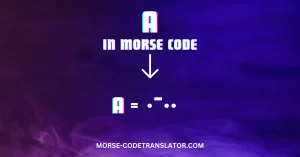
- Mirror Patterns: Letters like A (•—) and N (—•) are mirror opposites; therefore, learn them together!
Image here - Numbers follow a clear logic:
- More dots = smaller number (1, 2, 3…)
- More dashes = larger number (9, 8, 7…)
Once you spot these patterns, Morse Code becomes like a catchy tune in your head.
Don’t Forget Punctuation!
Just like in English, Morse Code includes punctuation for full sentences. Want to ask “How are you?” You’ll need that question mark (••——••)!
Learning these little extras will make your Morse messages sound complete and professional! Whether you’re tapping them out, flashing them with a light, or even beeping them in audio form. Visit here to learn step by step how Morse code works.
How to Read and Write Morse Code
Think of Morse code as a musical language made up of short and long beats, dots (•) and dashes (—). Once you understand the rhythm, reading and writing it becomes as natural as tapping your fingers to a tune!
Let’s break it down step by step so you can decode messages like a pro and send your own secret signals anytime, anywhere.
The Decoding Process: Reading Morse Code
Decoding Morse code means turning dots and dashes (or beeps, flashes, or taps) back into letters and words. Here’s how to do it:
- Listen or Look for the Patterns
Each letter or number has its own unique sequence of short (•) and long (—) signals.
Example: H = • • • •, E = •, L = • — • •, O = — — — - Understand Spacing Rules
- One unit gap = space between dots and dashes in the same letter.
- Three units gap = space between letters.
- Seven units gap = space between words.
- One unit gap = space between dots and dashes in the same letter.
So when you see or hear:
That’s HELLO in Morse code!
- Use Your Ears and Eyes
Morse code isn’t just written! It’s heard and seen too! It can be sent using sound, light flashes, or even touch signals. With practice, your brain will start recognizing familiar rhythm patterns automatically.
The Encoding Process: Writing Morse Code
Encoding is just the reverse! You take letters or numbers and turn them into dots and dashes.
Here’s how you can do it:
- Start with a Word
Let’s take the word HELLO. - Convert Each Letter
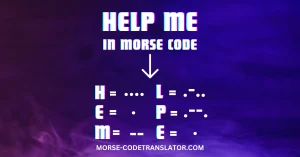
- H = • • • •
- E = •
- L = • — • •
- L = • — • •
- O = — — —
- H = • • • •
- Combine Them with Proper Spacing
Write or send them with clear breaks between letters and longer pauses between words:
- Practice with a Flashlight or Beep Sound
- Dot (•) = short blink or beep
- Dash (—) = long blink or beep
Try flashing SOS (• • • — — — • • •), it’s the world’s most famous distress signal!
- Dot (•) = short blink or beep
Master the Rhythm! The Heartbeat of Morse Code
The real magic of Morse lies in its rhythm. Think of it as music made of timing:
- Dot = one beat
- Dash = three beats
- Pause between letters = three beats
- Pause between words = seven beats
When you listen to Morse signals, try to “feel” the rhythm instead of counting. Over time, you’ll recognize letters by their sound patterns, just like recognizing words in a song.
Quick Examples to Practice
|
Word |
Morse Code |
|
• • • — — — • • • |
|
|
• • • • • • |
|
|
— — — — • — |
|
|
— • — • • • • |
|
|
…. . .-.. .-.. — |
Try saying or tapping them out! It’s surprisingly fun and satisfying once you catch the beat!
Practice Tip
Start with simple letters (E, T, A, N) and common words (HI, HELP, OK). Use online tools or apps like our Morse Code Translator to test your decoding and timing skills. You can even send messages to friends using flashlights at night! Just make sure they know Morse first!
Morse Code Sounds: The Rhythm of Communication
Imagine standing in the middle of a dark forest on a foggy night. You can’t see anyone around, but suddenly — beep… beep-beep… beeeep — a faint pattern of sounds breaks through the silence. Someone is trying to talk to you… but not with words. They’re speaking through rhythm, the timeless language of Morse code.
That’s the beauty of Morse code: it’s not just dots and dashes on paper! It’s music made from meaning, a rhythm that once carried messages across oceans, battlefields, and radio waves.
The Melody of Dots and Dashes
Every Morse code message begins with two simple sounds:
- The dot (•) is a quick, short beep.
- The dash (—) is a longer, stretched-out tone that lasts about three times longer than a dot.
When Samuel Morse first designed this system in the 1830s, he probably didn’t realize he was creating a kind of musical alphabet. Every letter dances to its own beat! E (•) is a single tap, T (—) a long hum, S (•••) a quick staccato, and O (———) a deep, steady note.
If you listen to SOS (••• ——— •••), it sounds like a heartbeat racing with urgency — short, long, short — and that rhythm alone became the most recognized distress signal in history.
Hearing the Code Come Alive
Now, imagine you’re sitting at your desk with our Morse Code Translator open. You type the word HELLO, and press Play.
Your room fills with a playful rhythm:
- beep-beep-beep-beep (H)
- beep (E)
- beep-beeeep-beep-beep (L)
- beeeep-beeeep-beeeep (O)
You don’t just see the letters anymore! You hear them.
Each sound feels alive, flowing together like a song written in dots and dashes. And suddenly, the abstract code begins to make sense.
Timing: The Silent Partner of Sound
But here’s the secret to truly understanding Morse: it’s not just about the sounds; it’s about the spaces between them.
Every dot, dash, and pause plays a part in the rhythm:
- A dot lasts for one unit of time.
- A dash lasts for three units.
- The gap between dots and dashes within a letter = one unit.
- The gap between letters = three units.
- The gap between words = seven units.
It’s like drumming! The pauses are just as important as the beats. Without rhythm, the melody collapses into noise. Skilled operators could even tell who was sending a message just by their timing, like recognizing a friend’s voice over the radio.
Learn Morse Code with Sound
Learning Morse by sound is a lot like learning to play an instrument. At first, the tones seem random. But with a bit of patience, your ears start catching the rhythm.
Here’s how to make it fun and effective:
- Start with simple words! Like HI, YES, or NO.
- Repeat them daily until your brain recognizes their beat.
- Tap along on your desk or with your fingers! It helps lock the timing into your muscle memory.
- Listen actively! Turn Morse practice into a game. Guess the letters before you see them!
Soon, you’ll find that you can understand a Morse message just by listening! Without needing to look at any chart at all.
From Beeps to Connection
The beauty of Morse code is in its simplicity. It doesn’t need language, technology, or even electricity! Just rhythm. Soldiers once tapped it through pipes, sailors blinked it through lanterns, and radio operators sent it over vast distances with nothing but tone and timing.
Today, you can relive that same thrill by typing a message into our Morse Code Translator, pressing play, and letting your computer sing your words in beeps and pauses.
Learn Morse Code Step by Step
Learning Morse code isn’t about memorizing endless dots and dashes! It’s about building rhythm, recognition, and confidence one small step at a time. Think of it like learning to play a song: start with single notes, then move on to simple tunes, and before long, you’re composing full melodies of sound and light.
Here’s a clear plan to help you master Morse code from the ground up (calm, steady, and fun).
1. Start with Simple Letters E and T
Every language begins with its alphabet, and Morse is no different. Begin with the easiest letters like E (•) and T (—).
They represent the simplest sounds: a single short tone and a single long tone. By practicing these two, you’ll understand the basic rhythm that defines Morse.
Once you can instantly recognize and send them, move on to letters that build upon them, like A (•—) and N (—•). You’ll quickly notice how patterns evolve from simple beginnings.
2. Add Short Words to Build Flow
After you’re comfortable with individual letters, start combining them into everyday words. Begin with easy, two-letter terms such as:
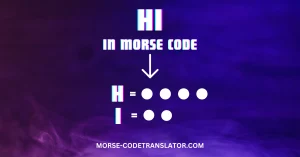
- HI (•••• ••)
- NO (—• ———)
- OK (——— —•—)
These short words help you transition from isolated letters to continuous rhythm.
3. Reinforce Memory with Tools
Learning is faster when you use a mix of methods.
- Flashcards help with visual recognition! One side shows the letter, the other shows its Morse pattern.
- Apps and online games turn practice into a challenge, rewarding accuracy and speed.
- Writing drills let you recreate Morse from memory, improving retention through repetition.
By combining these approaches, you’ll transform learning from a routine into an engaging daily habit.
4. Listen and Repeat Every Day
Consistency is key. Use the Morse Code Translator’s sound feature to listen to real tones daily. Play short messages, close your eyes, and focus on the rhythm.
This daily listening practice sharpens your ear so that over time, you’ll begin recognizing letters by their distinct tempo rather than counting dots and dashes. It’s the same way musicians learn notes by sound instead of sheet music.
5. Decode Real Messages
Once you’re familiar with the basics, it’s time to put your skills to the test. Try decoding short Morse samples! Phrases like HELP, YES, or LOVE.
You can find random practice sets online or create your own using the translator. Cover the text, press play, and see how much you can interpret just by listening. This active decoding practice strengthens both recognition and recall.
Modern Uses of Morse Code
More than 180 years have passed since Samuel Morse sent his first coded message! Yet, the rhythm of dots and dashes still echoes across modern life. From pilots in the sky to amateur radio hobbyists, and even gamers in digital worlds, Morse code continues to thrive in unexpected ways.
Let’s take a journey through the places where this timeless language still beats strong in technology, communication, and even creativity.
Amateur Radio and HAM Communication
In the quiet corners of basements, rooftops, and remote cabins, a community of enthusiasts known as HAM radio operators still keep Morse alive. They use it not out of necessity, but out of passion! A respect for precision and simplicity.
Unlike spoken communication, Morse can travel enormous distances, even when signals are weak or distorted by static. During solar storms or power outages, a short series of beeps can reach continents away.
For example, in 2020, amateur radio operators in the United States successfully transmitted Morse signals to Europe using nothing more than a low-power transmitter and good timing. Even with noise interference, the message was perfectly received! Proof that dots and dashes still cut through where digital fails.
Aviation and Navigation Signals
If you’ve ever listened to an airplane’s navigation radio, you’ve probably heard Morse code without realizing it. Many airport beacons still identify themselves through short Morse signals.
Each station, called a VOR or NDB! Transmits a continuous code that tells pilots exactly which beacon they’re hearing.
For instance:
- The beacon for Los Angeles International Airport (LAX) identifies as. –– . – (L) .– (A) –·–·· (X).
- When pilots hear that rhythmic tone, they know their instruments are tuned correctly.
Even in an age of GPS and automation, Morse remains a trusted backup — simple, reliable, and unmistakable.
Military and Rescue Signals
Few symbols are as universally recognized as SOS (••• ——— •••). Though modern technology has evolved, Morse is still a critical tool for emergency and survival communication.
In 2013, a stranded hiker in Alaska used a flashlight to signal SOS to a passing aircraft after his radio failed, and it worked. The pilot recognized the pattern immediately and radioed for rescue.
Military units and maritime organizations also continue to train with Morse for covert signaling and distress protocols, because even a brief flash of light or a tap on metal can carry a life-saving message when all else fails.
Gaming, Puzzles, and Escape Rooms
Morse has found a second life in the world of entertainment and puzzles. Game designers often use it as a hidden code, challenging players to think like cryptographers.
In the popular video game “Battlefield 1,” a secret Easter egg involved decoding a Morse message hidden in background sounds, leading players to a hidden room inside the game world. Escape rooms and puzzle boxes often feature blinking lights or audio beeps that spell out clues, forcing participants to listen carefully and decode under pressure! A thrilling modern twist on an old technology.
Accessibility and Assistive Communication
One of the most touching uses of Morse today is in helping people with disabilities communicate. For individuals who cannot speak or type easily, Morse code can be a lifeline.
Google’s Gboard keyboard for Android, for example, includes a Morse input mode. Users tap short and long signals on the screen to form words! Allowing people with limited mobility to write messages, search the web, or even chat with friends.
It’s the same 19th-century code, now helping 21st-century users connect with the world.
Education and Coding Applications
Morse has also found its way into STEM education. Teachers use it to spark curiosity about binary systems, timing, and communication. Coding workshops often introduce Morse as a fun entry point to learning how computers interpret signals like translating on/off, short/long, or 0/1 into meaning.
In 2022, a group of students in Japan built an Arduino project that translated Morse beeps into digital text using light sensors! Bridging history with modern innovation.
A Timeless Connection
From beacons in the sky to digital keyboards and classrooms, Morse code proves that a good idea never truly fades. It continues to evolve: quietly, efficiently, and universally understood.
Every dot and dash still carries the same promise Samuel Morse envisioned: a simple way for one human to reach another, across any distance, using nothing but rhythm and intention.
Why Morse Code Still Matters Today
In a world where messages travel at the speed of light, through emails, instant texts, and voice assistants! It might seem like Morse code belongs in the past. Yet, this rhythmic language of dots and dashes continues to hold a quiet but meaningful place in our modern lives.
Beyond nostalgia, Morse code endures as a skill, a hobby, and even a bridge between technology and human creativity. Let’s explore why this 19th-century invention still beats strong in the 21st century.
Morse Code as a Skill and Hobby
For many, learning Morse code is like picking up a musical instrument. It requires rhythm, patience, and a sense of curiosity. Amateur radio enthusiasts, also known as HAM operators, still practice Morse (or “CW,” meaning Continuous Wave) as part of their craft.
It’s not just about communication! It’s about precision and mastery. There’s a thrill in hearing a faint signal from across the world, decoding it by ear, and knowing that two people just connected through a pattern of sound.
Clubs and online communities worldwide host Morse code challenges, where operators compete for speed and accuracy! Proving that this old skill remains very much alive.
A Cultural and Nostalgic Treasure
Morse code carries deep cultural and emotional value. It’s a symbol of resilience! The heartbeat of early communication that connected continents before phones, satellites, or the internet existed.
Many people feel drawn to Morse for its simplicity and historical romance. It’s been immortalized in movies, literature, and even music. Who could forget the classic SOS scene in old war films or mystery stories, where a single blinking light could mean survival?
Museums and vintage radio shows still celebrate Morse code as one of humanity’s first truly global languages! Proof that innovation can be timeless.
A Lifeline in Emergencies
Even in today’s digital world, Morse remains an essential emergency tool. It can cut through static, darkness, or even silence.
Rescuers still train to recognize SOS (••• ——— •••) as a universal distress signal. Whether it’s tapped on metal, flashed through light, or transmitted by radio, its meaning is clear across languages and cultures: help is needed.
Morse is also part of HAM radio certification training. Operators learn it not just as a tradition but as a reliable backup method when voice communication fails! During storms, power outages, or disaster recovery missions.
Morse in Technology and Encryption Basics
The spirit of Morse lives on in modern technology. Its foundation! A system of signals representing letters and numbers that directly influenced binary code, the digital language used by computers today.
Understanding Morse helps learners grasp the concept of encoding, timing, and data transmission. It also inspires developers and cybersecurity enthusiasts exploring encryption and signal processing.
In some tech experiments, Morse is even used for minimalist communication! Such as transmitting data between microcontrollers using light or sound patterns. It’s simplicity reimagined for the digital age.
The Timeless Beat of Communication
Morse code is more than a relic; it’s a reminder that true communication doesn’t always need complex technology (only rhythm, intent, and connection). Whether practiced by hobbyists, preserved in culture, or used in emergencies, it remains a living link between human ingenuity and the power of simple ideas.
Even today, a few dots and dashes can still speak volumes.
Why Choose Our Morse Code Translator
Our Morse Code Translator stands out for its accuracy, speed, and simplicity. It instantly converts text to Morse and Morse to text without delays, making it perfect for quick and precise communication.
The tool features a user-friendly interface that anyone can use. It’s completely free, ad-free, and secure, ensuring a distraction-free and private experience.
Whether you’re a beginner learning the basics or an expert testing signals, our translator delivers reliable results every time. It’s the ideal tool for smooth, accurate, and enjoyable Morse code practice.
Fun Facts About Morse Code
Morse code has a long and fascinating history filled with interesting facts that connect past innovations with modern curiosity.
The very first Morse message ever sent was “What hath God wrought?”! A phrase that marked the beginning of a new communication era.
NASA once relied on Morse code to send signals to distant space probes when other communication methods weren’t possible.
SOS doesn’t represent specific words; it was chosen simply because it’s quick, easy to recognize, and nearly impossible to misinterpret in emergencies.
Even today, certain pilots, scouts, and radio operators continue to learn Morse code as part of their training and tradition.
Common Morse Code Translations
Here are a few popular examples you can try out using Morse Code Translator:
- SOS = ••• — •••
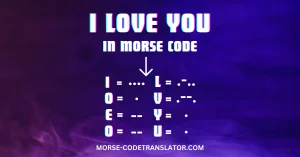
- I LOVE YOU = .. / .-.. — …- . / -.– — ..-
- GOOD MORNING = –. — — -.. / — — .-. -. .. -. –.
How to Improve Morse Code Skills
Enhancing your Morse code abilities is all about consistent practice and smart learning techniques.
- Practice daily: Spend at least 10 minutes each day translating or listening to Morse code to build familiarity.
- Focus on rhythm: Pay attention to timing and patterns rather than trying to memorize individual letters.
- Listen actively: Train your ear by hearing messages before reading them, which strengthens recognition.
- Engage with communities: Join online forums, HAM radio groups, or study circles to learn from others and share tips.
- Use challenges and games: Decode random messages or play Morse code puzzles to make practice fun and test your skills under pressure.
Frequently Asked Questions
How do you say “I love You” in morse code?
.. / .-.. — …- . / -.– — ..-
What do 7 dots mean in morse code?
Seven dots in a row do not represent a standard letter; Morse uses combinations of 1–5 dots and dashes.
Is there a translator for morse code?
Yes, online tools and apps can instantly convert text to Morse code and vice versa.
How do you make SOS in morse code?
SOS = ••• — •••
What are dots in morse code?
Dots (•) are short signals representing part of a letter or number in Morse code.
What is “f” word in morse code?
F = •• — •