Halloween Reads
“Halloween is a holiday celebrated each year on October 31, and Halloween 2025 will occur on Friday, October 31. The tradition originated with the ancient Celtic festival of Samhain, when people would light bonfires and wear costumes to ward off ghosts. In the 8th century, Pope Gregory III designated November 1 as a time to honor all saints. Soon, All Saints Day incorporated some of the traditions of Samhain. The evening before was known as All Hallows Eve, and later Halloween. Over time, Halloween evolved into a day of activities like trick-or-treating, carving jack-o-lanterns, festive gatherings, donning costumes and eating treats” (History.com). There are many ways to celebrate Halloween, one of the most popular methods being watching gothic and horror movies. Take a look below to find some books that will walk you through the history and origins of Halloween, as well as an introductory dive into the world of gothic and horror movies!
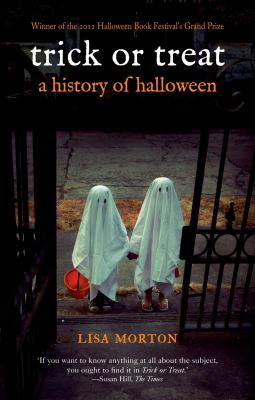
Trick or Treat: A History of Halloween
By Lisa Morton
“Halloween has spread around the world, yet its associations with death and the supernatural as well as its inevitable commercialization has made it one of our most puzzling holidays. How did it become what it is today? This book examines the origins and history of Halloween and explores in depth its current global popularity. The author reveals how holidays like the Celtic Samhain and Catholic All Souls’ Day have blended to produce the modern Halloween, and she shows how the holiday has been reborn in America, where costumes and trick-or-treat rituals are new customs. She takes into account the influence of related but independent holidays, especially Mexico’s Day of the Dead, as well as the explosion in popularity of haunted attractions and the impact of events such as 9/11 and the global economic recession.
It also examines the effect Halloween has had on popular culture through literary works by Washington Irving and Ray Bradbury, films such as John Carpenter’s Halloween and Tim Burton’s The Nightmare Before Christmas and television series, including Buffy the Vampire Slayer and The Simpsons. This book takes us on a journey from the spectacular to the macabre, allowing us to peep behind the mask to see the real past and present of this ever more popular holiday” (Primo).
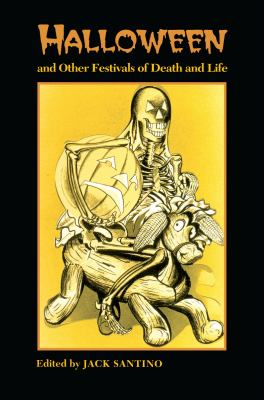
Halloween and Other Festivals Of Death and Life
By Jack Santino
“Jack Santino has put together the first collection of essays to examine the evolution of Halloween from its Celtic origins through its adaptation into modern culture. Using a wide variety of perspectives and approaches, the thirteen essayists examine customs, communities, and material culture to reveal how Halloween has manifested itself throughout all aspects of our society to become not just a marginal survivor of a dying tradition but a thriving, contemporary, post-industrial festival. Its steadily increasing popularity, despite overcommercialization and criticism, is attributed to its powerful symbolism that employs both pre-Christian images and concepts from popular culture to appeal to groups of all ages, orientations, and backgrounds.
However, the essays in this volume also suggest that there is something ironic and unsettling about the immense popularity of a holiday whose main images are of death, evil, and the grotesque. Halloween and Other Festivals of Death and Life is a unique contribution that questions our concepts of religiosity and spirituality while contributing to our understanding of Halloween as a rich and diverse reflection of our society’s past, present, and future identity” (Primo).
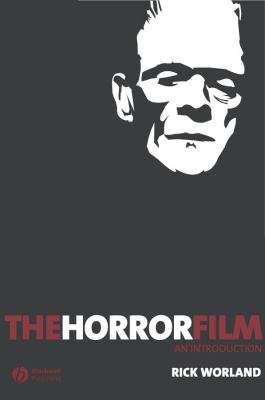
The Horror Film: An Introduction
By Rick Worland
“Examining the ways in which horror movies have been produced, received, and interpreted by film-makers, audiences, and critics throughout the medium’s history, this book combines historical narrative with readings of many significant horror films. It aims to offer a broad introduction to cinematic horror” (Primo).
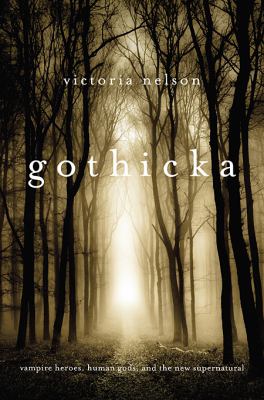
Gothicka: Vampire Heroes, Human Gods, and The New Supernatural
By Victoria Nelson
“To explain the millennial shift away from the traditionally dark Protestant post-Enlightenment Gothic, Nelson studies the complex arena of contemporary Gothic subgenres that take the form of novels, films, and graphic novels. She considers the work of Dan Brown and Stephenie Meyer, graphic novelists Mike Mignola and Garth Ennis, Christian writer William P. Young (author of The Shack), and filmmaker Guillermo del Toro. She considers twentieth-century Gothic masters H.P. Lovecraft, Anne Rice, and Stephen King in light of both their immediate ancestors in the eighteenth century and the original Gothic—the late medieval period from which Horace Walpole and his successors drew their inspiration. Fictions such as the Twilight and Left Behind series do more than follow the conventions of the classic Gothic novel. They are radically reviving and reinventing the transcendental worldview that informed the West’s premodern era. As Jesus becomes mortal in The Da Vinci Code and the child Ofelia becomes a goddess in Pan’s Labyrinth, Nelson argues that this unprecedented mainstreaming of a spiritually driven supernaturalism is a harbinger of what a post-Christian religion in America might look like” (Primo).
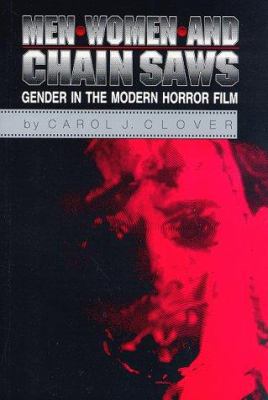
Men, Women, and Chain Saws: Gender in the Modern Horror Film
By Carol Clover
“Do the pleasures of horror movies really begin and end in sadism? So the public discussion of film assumes, and so film theory claims. According to that view, the power of films like Halloween and Texas Chain Saw Massacre lies in their ability to yoke us in the killer’s perspective and to make us party to his atrocities. In this book Carol Clover argues that sadism is actually the lesser part of the horror experience and that the movies work mainly to engage the viewer in the plight of the victim-hero—the figure who suffers pain and fright but eventually rises to vanquish the forces of oppression. A paradox is that, since the late 1970s, the victim-hero is usually female and the audience predominantly male. It is the fraught relation between the ‘tough girl’ of horror and her male fan that Clover explores. Horror movies, she concludes, use female bodies not only for the male spectator to feel at, but for him to feel through.
The author concentrates on three genres in which women and gender issues loom especially large: slasher films, satanic possession films, and rape-revenge films, especially those in which the victim is from the city and the rapists from the country. Her investigation covers over two hundred films, ranging from admired mainstream examples, such as The Accused, to such exploitation products as the widely banned I Spit on Your Grave. Clover emphasizes the importance of the ‘low’ tradition in filmmaking, arguing that it has provided some of the most significant artistic and political innovations of the past two decades. Female-hero films like Silence of the Lambs and Thelma and Louise may be breakthroughs from the point of view of mainstream Hollywood cinema, but their themes have a long ancestry in lowlife horror” (Primo).
The Changing Face of Evil in Film and Television
By Martin F. Norden
“The popular media of film and television surround us daily with images of evil—images that have often gone critically unexamined. In the belief that people in ever-increasing numbers are turning to the media for their understanding of evil, this lively and provocative collection of essays addresses the changing representation of evil in a broad spectrum of films and television programmes. Written in refreshingly accessible and de-jargonised prose, the essays bring to bear a variety of philosophical and critical perspectives on works ranging from the cinema of famed director Alfred Hitchcock and the preternatural horror films Halloween and Friday the 13th to the understated documentary Human Remains and the television coverage of the immediate post-9/11 period. The Changing Face of Evil in Film and Television is for anyone interested in the moving-image representation of that pervasive yet highly misunderstood thing we call evil” (Primo).
Posted by Gwen Cain
Read Full Post | Make a Comment ( None so far )


 What's On My Nightstand?
