
The 3L-Initiative
Our unique localised approach to tackle a global challenge.
Responsible waste management
powered by local people



If you have any questions
feel free to contact us
What is the 3L-Initiative?
You probably know the 3R Initiative (Reduce, Reuse, Recycle) - in analogy to that we created the 3L Initiative as our award-winning approach to tackling plastic pollution in emerging markets.
Low-tech: Common sense, simple solutions that work reliably Local: Technology that can be built anywhere in the world using local resources Low-cost: Affordable at the scale needed to address this global crisis
Keep it simple, pragmatic, and effective - that's our bread and butter.
Is aquatic biodiversity at risk because of your TrashBooms?
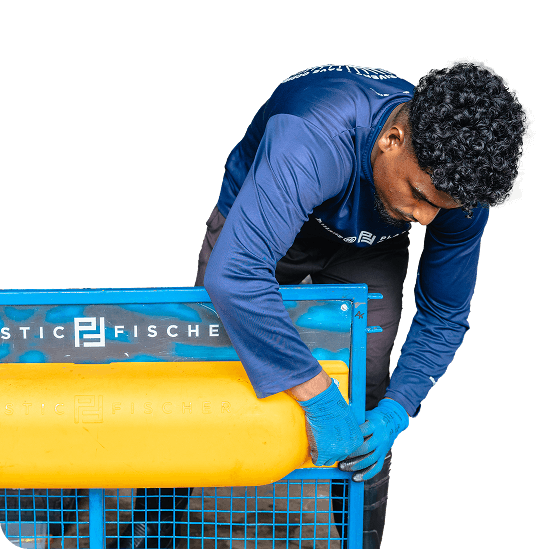
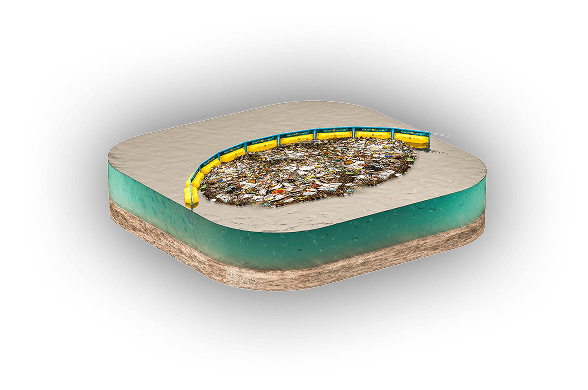
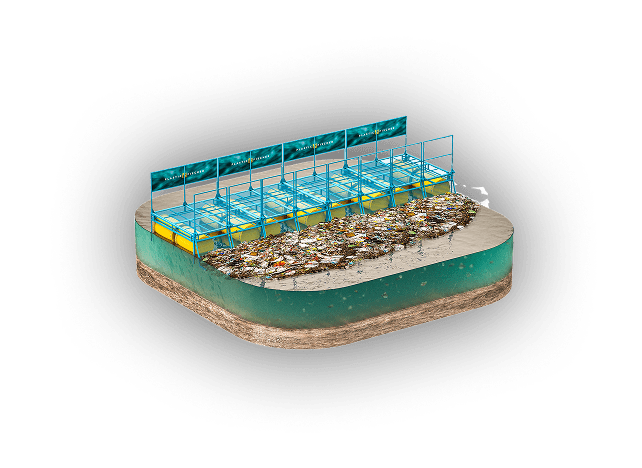
Nope. We founded the company to protect marine animals, so our systems are designed to avoid harm. To stop the plastic, we use a rigid mesh instead of a wobbly net - because we don’t want to entangle, but simply stop what's flowing downstream. The TrashBoom itself goes 50 cm below the water surface and allows fish to pass underneath. It works with the river's natural flow rather than being dragged across it - a minimally invasive solution that targets floating debris while preserving aquatic life. With our technology, we also avoid the risk of boats losing diesel or other harmful substances in the water.
Why do you work in small rivers?
Because cleaning tributaries is the most effective approach to get big, heavily polluted rivers clean. With this, we avoid boat traffic and the wild force of major rivers during the rainy season. We rather work in smaller rivers that often flow through villages and carry the discarded waste to the main stream. It also makes the problem visible to the public in many places across the city and makes the amounts stopped in each one of the TrashBooms better manageable.
Why don’t you work with high-tech and boats?
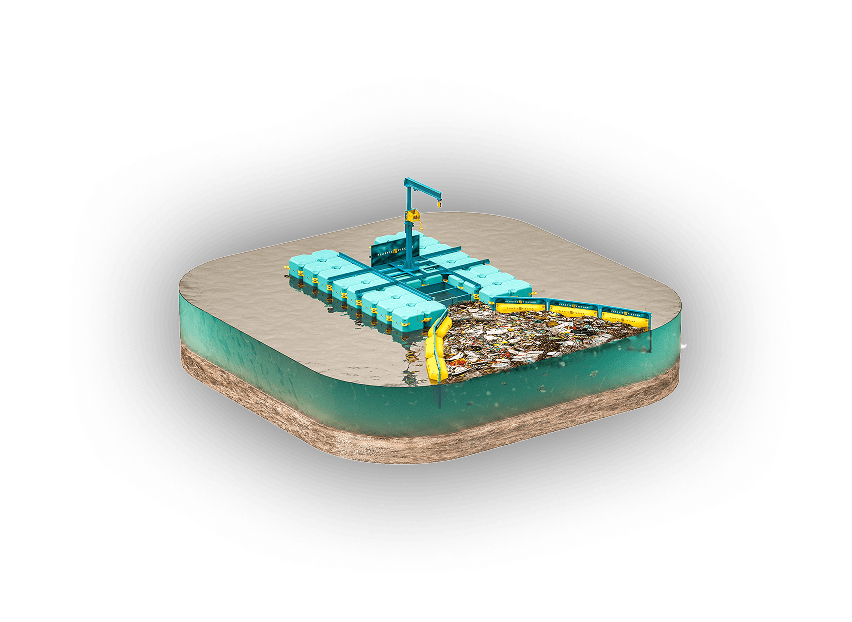
Because most of the time, they look more impressive than they actually help. Our focus is on practical, cost-effective solutions that work reliably in all conditions. In some places, we use small, emission-free paddle boats to empty our systems. But most of the time, we position the TrashBooms so that the waste can be collected directly from the shore.
It doesn’t take expensive AI-driven systems or flashy gadgets that look good but don’t solve the problem — TrashBooms do the job simply and effectively. This way, we can create local jobs, keep operations affordable, and use smart design instead of unnecessary tech. That said, we are developing more automated options to make collection easier, but we’ll always stick to our 3L approach: low-cost, local, and low-tech.
Why do you focus on rivers to stop ocean plastic?
Because it just makes sense. When we saw the Mekong River in Vietnam carrying loads of plastic straight to the sea, we thought: why not stop it right there? Rivers are basically the Autobahn for plastic on its way to the ocean—so we’d rather set up the roadblock early (yes, not the most German use of an Autobahn, we know).
Need some facts? Here you go: Around 80% of ocean plastic comes from rivers. Most of it floats in the top 50 cm of water, making it much easier to collect. Once it reaches the ocean, only about 1% of plastic remains on the surface—the rest sinks or breaks apart. In rivers, the waste hasn’t been exposed to salt water yet, so it’s usually in larger pieces, not microplastic, and far more manageable to remove. Stopping plastic in rivers is simply the most effective, efficient, and common-sense solution.
Do you stop microplastic?
Yes, indirectly. We can’t filter out existing microplastic in rivers, but we stop larger pieces of plastic (macroplastic) before they break down into it. Sunlight and saltwater slowly degrade plastic bags, bottles, fishing nets, and other items into tiny fragments. These so-called secondary microplastics make up about 69–81% of all microplastics in the ocean.
So in practice, most of the plastic we collect would already be microplastic by now if we hadn’t intercepted it upstream. We believe it makes more sense to close the tap before mopping the floor — stop macroplastic in rivers before it turns into microplastic in the oceans.
Of course, we value all complementary efforts. It will take more than Plastic Fischer to save our oceans!