




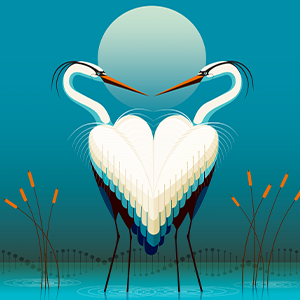
Richard Prum explains why he thinks feathers and vibrant traits in birds evolved not solely for survival, but also through aesthetic choice.
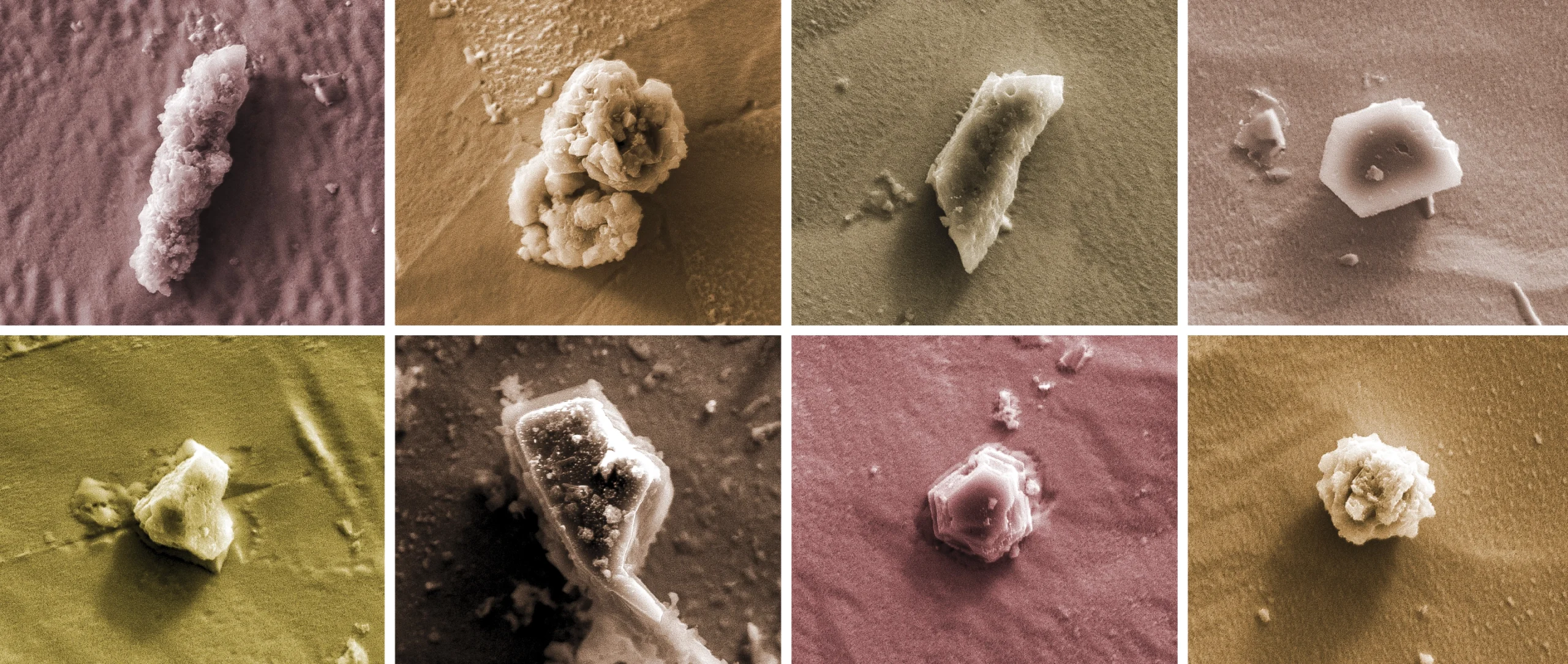
Photos courtesy of Nan Liu
Microscopic crystals extracted from meteorites could help settle a debate about the birth of our patch of the Milky Way.
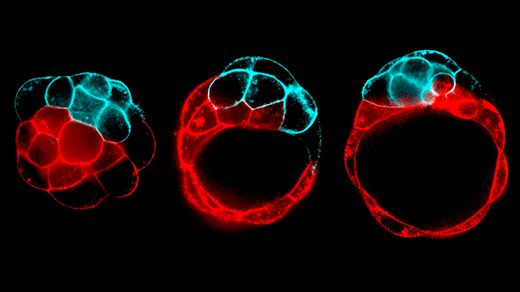
Growing tissues can crack, break, and dissociate to form structures that can later withstand immense forces.
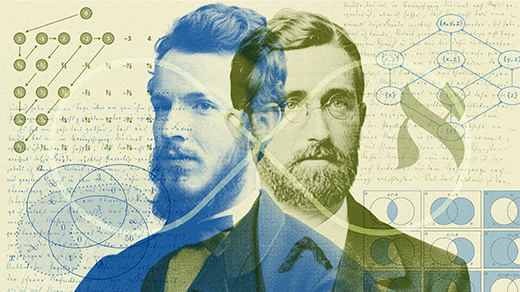
In an 1874 paper, Georg Cantor proved that there are different sizes of infinity and changed math forever. A trove of newly unearthed letters shows that it was also an act of plagiarism.
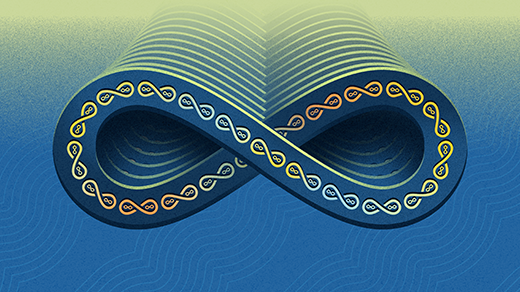
Intuition breaks down once we’re dealing with the endless. To begin with: Some infinities are bigger than others.
The planet is getting hotter, but one factor in particular makes it hard to tell just how hot it will get. Physicists and computer scientists are racing to solve the problem of clouds.
Henry Yuen is developing a new mathematical language to describe problems whose inputs and outputs aren’t ordinary numbers.
Columnist Philip Ball thinks the phenomenon of decoherence might finally bridge the quantum-classical divide.
We describe electricity as a flow, but that’s not what happens in a typical wire. Physicists have begun to induce electrons to act like fluids, an effort that could illuminate new ways of thinking about quantum systems.
Chris Young/Quanta Magazine; Carlos Arrojo for Quanta Magazine
Richard Prum explains why he thinks feathers and vibrant traits in birds evolved not solely for survival, but also through aesthetic choice.
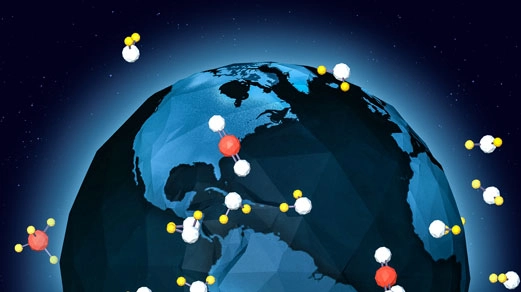
Earth’s radiation can send some molecules spinning or vibrating, which is what makes them greenhouse gases. This infographic explains how relatively few heat-trapping molecules can have a planetary effect.
Illuminating basic science and math research through public service journalism.
More about usQuanta Magazine is committed to in-depth, accurate journalism that serves the public interest. Each article braids the complexities of science with the malleable art of storytelling and is meticulously reported, edited and fact-checked. Launched and funded by the Simons Foundation, Quanta is editorially independent — our articles do not reflect or represent the views of the foundation.

![An array of images of protoplanetary disks with bright suns at the centers surrounded by rings, arcs, filaments and spirals.]](https://www.quantamagazine.org/wp-content/uploads/2022/06/Planet-Formation_300.jpg)