About the Project
QUEST Canada’s Motivating Net-Zero Action in Rural, Remote, and Indigenous Communities (MNZA) project is a multi-year research initiative examining how low-density communities across Canada experience, understand, and advance climate and energy action.
While discussions about the energy transition often focus on urban centres, nearly one in five Canadians live in rural, remote, and Indigenous communities. These places face distinct realities shaped by geography, infrastructure, governance, culture, and relationships to land. They also experience climate change and the energy transition in deeply interconnected ways—often with heightened exposure to climate impacts alongside longstanding structural challenges such as aging infrastructure, high energy costs, capacity constraints, and jurisdictional complexity. At the same time, communities are advancing locally grounded solutions rooted in stewardship, collaboration, and lived experience.
To better reflect these realities, QUEST Canada undertook a three-year research project in partnership with a pan-Canadian advisory committee and 15 rural, remote, and Indigenous communities across the country. The project combined foundational research with applied, community-engaged methods to ensure findings were both evidence-based and grounded in local priorities.
An initial literature review established key themes shaping net-zero pathways in rural, remote, and Indigenous contexts, highlighting how these communities encounter unique needs, challenges, and opportunities in pursuing climate and energy goals. The review emphasized the importance of solutions-focused, place-based approaches that address socio-economic realities alongside emissions reduction.
Building on this foundation, the final research report draws directly from community perspectives gathered through interviews, focus groups, and in-community visioning workshops. Conducted in partnership with designated community contacts, this applied research centred local knowledge, lived experience, and collective dialogue. The resulting findings reflect how communities understand climate and energy action as interconnected systems—linking energy, housing, transportation, food systems, land stewardship, governance, and wellbeing—underscoring the importance of pursuing co-benefits rather than isolated interventions.
Together with the final report, the MNZA project includes a jurisdictional scan designed to support ongoing, community-level action by mapping policies, programs, and enabling conditions across regions. This combined approach provides both practical insights and structural context, helping decision-makers, practitioners, and communities better understand what enables durable, equitable pathways to net-zero in rural, remote, and Indigenous settings.
Overall, the Motivating Net-Zero Action in Rural, Remote, and Indigenous Communities research project demonstrates that effective climate action emerges when it is community-driven, grounded in place, and designed to advance environmental sustainability, social equity, and wellbeing, together. A just transition depends not on one-size-fits-all solutions, but on sustained partnerships, local leadership, and systems-based approaches that reflect the diverse realities of communities across Canada.
Objectives
Explore
Explore the motivations for rural, remote, and Indigenous communities to consider and adopt changes that contribute to a net-zero future
Inform
Inform the development of net-zero strategies, policies, and opportunities in rural, remote, and Indigenous communities
Amplify
Amplify under-represented and marginalized community voices in net-zero decisions
Recommend
Provide recommendations to federal, provincial and territorial energy and climate policy makers that consider rural, remote, and Indigenous communities’ interests
Project Pathway
STEP 1
Establish an Advisory Committee
STEP 2
Literature Review
STEP 3
Community Recruitment & Research
STEP 4
Final Report
STEP 5
Jurisdictional Scan
Advisory Committee

Dr. Monica Gattinger
Director of the Institute for Science, Society and Policy, Full Professor at the School of Political Studies & Chair of Positive Energy at the University of Ottawa
Gabriella Kalapos
Executive Director, Clean Air Partnership
Dr. Julie MacArthur
Associate Professor and Canada Research Chair, Reimagining Capitalism, Royal Roads University
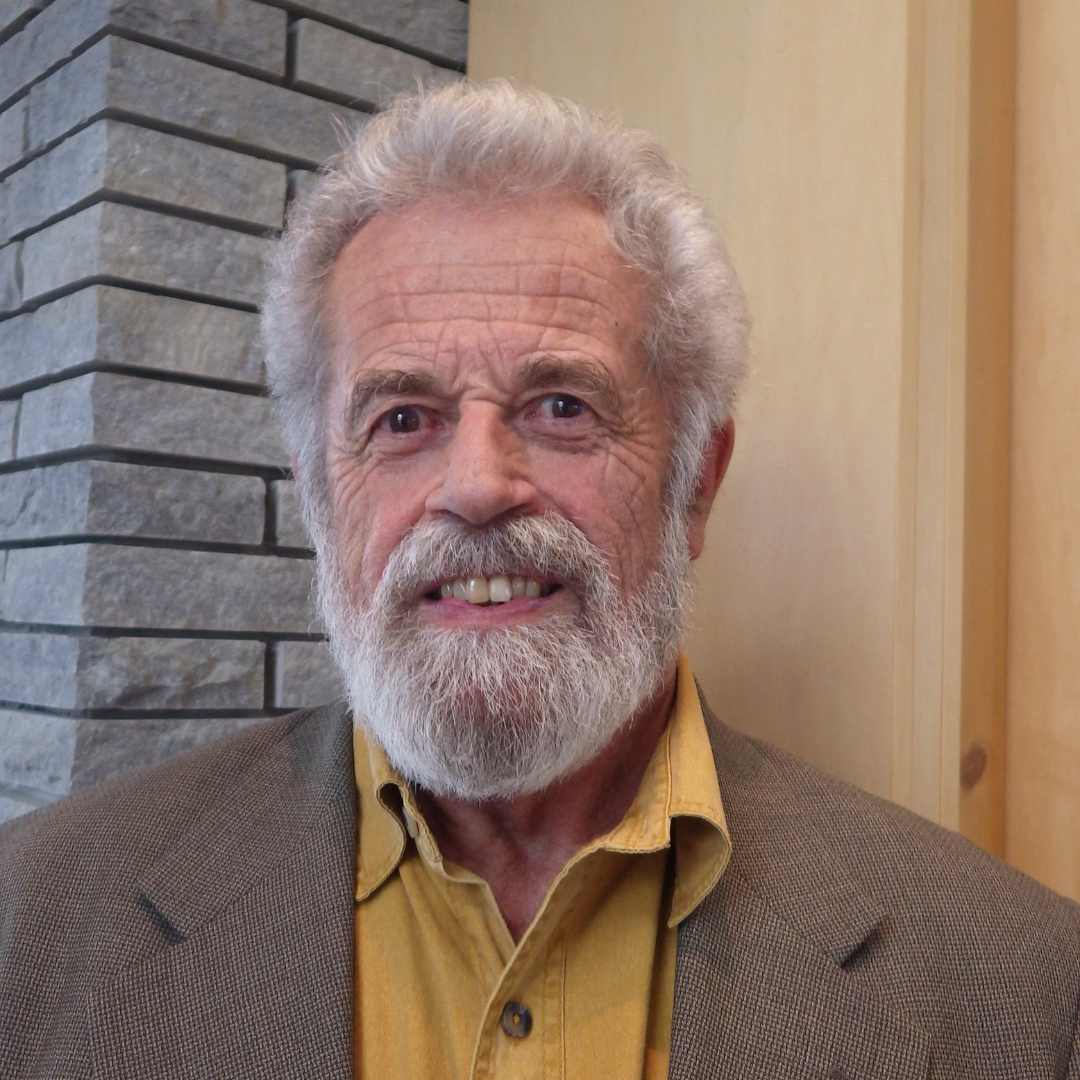
Dr. David Pearson
Professor, Department of Earth Sciences & Project Lead, Climate Change and Science Communication, Up North on Climate at Laurentian University
Resources
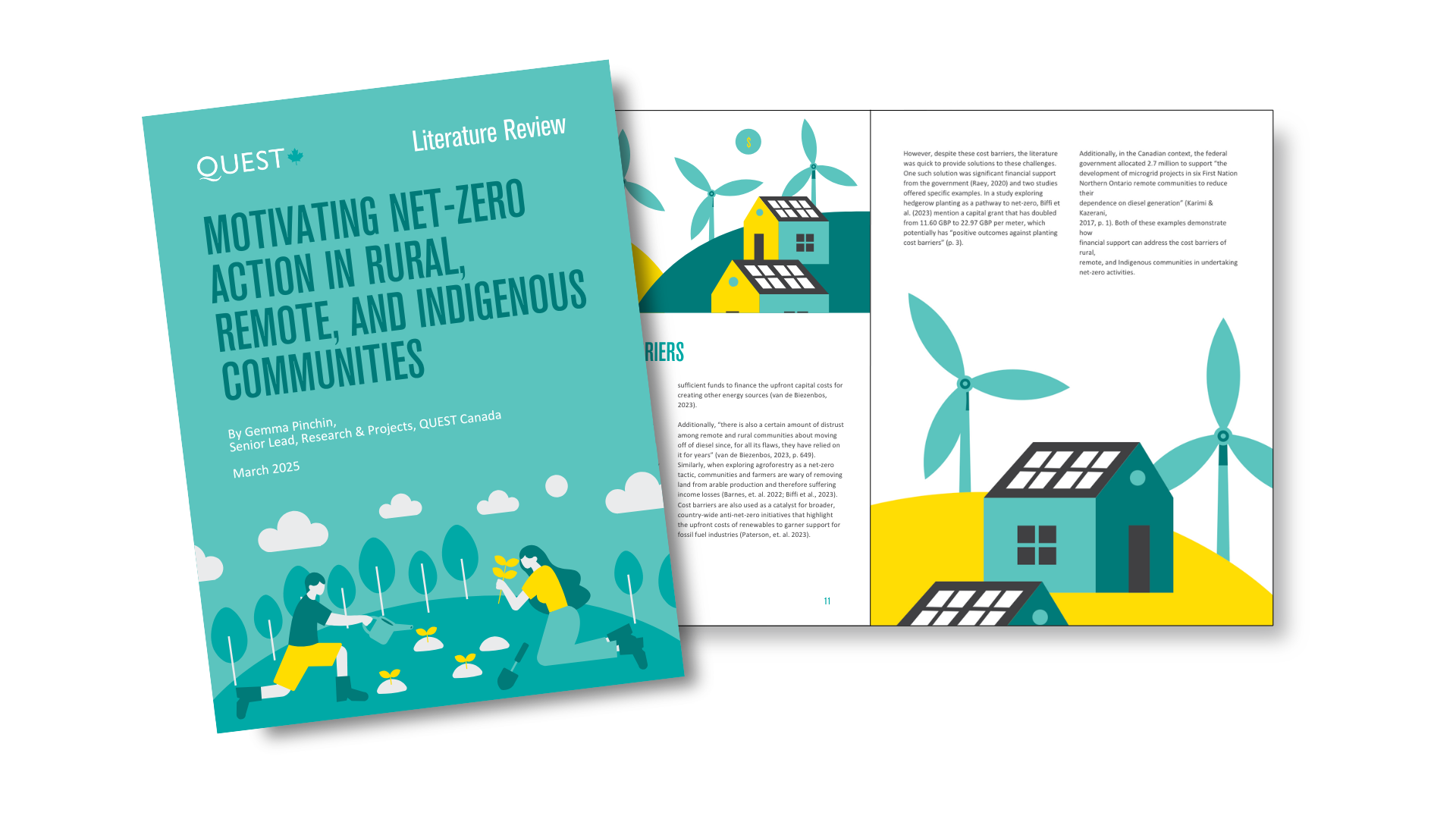
Literature Review
Titled Motivating Net-Zero Action in Rural, Remote, and Indigenous Communities, QUEST Canada’s literature review emphasizes that rural, remote, and Indigenous communities face a distinct set of needs, challenges, and opportunities as they pursue net-zero goals.
The review offers new insights into how these communities can benefit from a solutions-focused approach while addressing their unique socio-economic needs.
It identifies six key themes to consider when examining rural, remote, and Indigenous communities as the transition to net-zero emissions: rural space use, rural needs, cost barriers, socio-economic impacts, decolonization and self-determination, and disconnection.
The review’s findings emphasize the need for a tailored approach that acknowledges the unique energy needs, land use challenges, and socio-economic conditions of these regions, which are often very different from those in urban areas.

Final Report
QUEST Canada’s MNZA final report demonstrates that pathways to net-zero in low-density communities are fundamentally shaped by place, culture, governance, and local capacity. Drawing on applied research conducted in partnership with 15 rural, remote, and Indigenous communities, the report centers community perspectives to better understand how climate and energy action is experienced on the ground.
The findings reveal that climate and energy priorities in these communities are deeply interconnected with everyday systems, including energy, housing, transportation, food systems, land stewardship, and local economies. Rather than addressing emissions reduction as a standalone objective, communities emphasized the importance of solutions that deliver co-benefits—improving affordability, resilience, wellbeing, and self-determination alongside environmental outcomes.
Organized across five interconnected themes—sustainable systems and infrastructure; environment, land, and climate resilience; governance, policy, and partnerships; knowledge, culture, and capacity; and community wellbeing, equity, and inclusion—the report highlights both shared challenges and context-specific opportunities. Participants identified persistent structural barriers such as limited capacity, inaccessible funding, aging infrastructure, and jurisdictional complexity, while also demonstrating strong local leadership, stewardship, and innovation.
Overall, the report concludes that rural, remote, and Indigenous communities are not only affected by the net-zero transition but are actively shaping it. Durable and just outcomes emerge when climate action is community-driven, grounded in local knowledge, and designed to reflect the realities of place. Supporting these pathways requires flexible, long-term investment, equitable governance, and sustained partnerships that enable communities to lead solutions aligned with their priorities, values, and visions for the future.
Participating Communities
Participating communities include rural and remote communities, with a population of 30,000 or less, comprised of local governments (Indigenous, municipal, regional, or a group of small municipalities and/or bands), or organizations applying on behalf of a local government or a group of local governments (i.e. a local energy distributor or not-for-profit organization).
Develop West Prince, PEI
Township of Severn, ON

Municipality of Alnwick, NB
Town of Smiths Falls, ON

Cortes Island, BC
Wawa, ON
Garden River First Nation, ON
Cold Lake First Nation, AB

Pinaymootang First Nation, MB
Frog Lake First Nation, AB

Pangnirtung, NU

Georgina Island First Nation, ON

Henvey Inlet First Nation, ON

Alderville First Nation, ON

Apitipi Anicinapek Nation, ON
Thanks to Our Funder
To support the mandate of Canada’s Net-Zero Advisory Body related to research, this project was undertaken with the financial support of the Government of Canada. Funding was provided through the Environmental Damages Fund’s Climate Action and Awareness Fund, administered by Environment and Climate Change Canada.

MNZA Project Contact
For more information about the project, please contact Gemma Pinchin, Senior Lead of Projects and Research at QUEST Canada.
MNZA Project News

New Research Shows Place-Based Climate and Energy Action Creates Lasting Co-Benefits Across Canada
News Release, Feburary 17, 2026
Read the News Release

Electrifying Canada’s remote communities with QUEST Canada
Podcast, October 14, 2024
Listen to thinkenergy’s podcast

