flickr photo shared by mrkrndvs under a Creative Commons ( BY-NC-SA ) license
In a recent post, Diane Kashin shared a series of quotes associated with Reggio-inspired learning. After being inspired and provoked, it got me thinking about technology and provocations that could be used to help dig deeper into digital pedagogies. This lead me back to my collection of links housed in Diigo, as well as various visual quotes kept in Flickr. So here then is a collection of images to get you thinking deeper about technology:
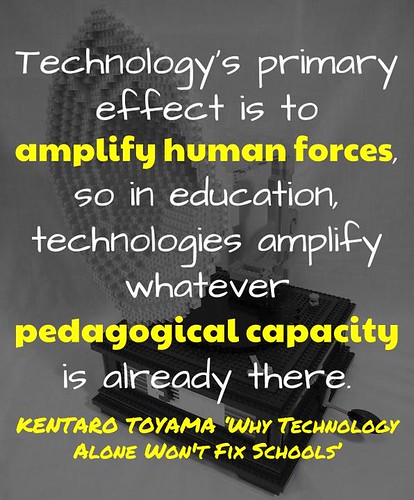
Why Technology Alone Won’t Fix Schools
flickr photo shared by mrkrndvs under a Creative Commons ( BY-NC-SA ) license
In this extract from Geek Heresy published in The Atlantic, Kentaro Toyama makes that point that technology merely amplifes pre-existenting pedagogical capacity and only emphasises differences in wealth and achievement.
Why Coding is the Vanguard for Modern Learning

flickr photo shared by mrkrndvs under a Creative Commons ( BY-SA ) license
In a response to the debate about coding, Richard Olsen makes an attempt reposition the way we see coding and why it truly matters. I wrote a response here.
Invent to Learn

flickr photo shared by mrkrndvs under a Creative Commons ( BY-NC-SA ) license
In their book Invent to Learn, Sylvia Libow Martinez and Gary Stager unpack everything from Project Based Learning, to Reggio Emilia, to makerspaces, to coding, all with the focus on learning through the act of making.
Parents: Reject Technology Shame

flickr photo shared by mrkrndvs under a Creative Commons ( BY-NC-SA ) license
In her post in the Atlantic, Alexandra Samuel argues that there are three distinct styles of digital parenting: limiters, mentors and enablers. I wrote a post wondering if the same distinctions could be applied to teachers.
(Digital) Identity in a World that No Longer Forgets

flickr photo shared by mrkrndvs under a Creative Commons ( BY-NC-SA ) license
In this post, Alec Couros and Katia Hilderbrandt ask the wicked question about life when we are no longer able to forget. There answer, empathy.
Visitors and Residents

flickr photo shared by mrkrndvs under a Creative Commons ( BY-NC-SA ) license

flickr photo shared by mrkrndvs under a Creative Commons ( BY-NC-SA ) license
In response to Marc Prensky’s notion of native verses immigrant, David White and Alison Le Cornu put forward an alternative with the idea of visitors and residents.
Computers in Education – Great Machines, Wrong Results

flickr photo shared by mrkrndvs under a Creative Commons ( BY-SA ) license
A central figure behind Wolfram Alpha and Wolfram Mathworld, Conrad Wolfram questions the way we use technology.
Delayed Gratification

flickr photo shared by mrkrndvs under a Creative Commons ( BY-NC-SA ) license
A continual inspiration in regards to play and experiential learning, Adrian Camm highlights the importance of developing resilience and moderation, rather simply banning devices like Sydney Grammar.
Creative Learning is Relational

flickr photo shared by mrkrndvs under a Creative Commons ( BY-SA ) license
In this post exploring creativity, Tom Barrett provides an explanation for social bookmarking as a means of resurfacing ideas.
Scaling Creativity and Innovation

flickr photo shared by mrkrndvs under a Creative Commons ( BY-NC-SA ) license
In his book exploring the idea of creativity and innovation, David Culberhouse outlines the challenges associated with being a connected educator. Along with The Changing Face of Modern Leadership, Culberhouse’s books are a useful resource for addressing education in an ever connected world.
Curation as a Tool for Teaching and Learning
flickr photo shared by mrkrndvs under a Creative Commons ( BY-SA ) license
Along with Robin Good’s post, Heather Baille’s essay offers an excellent discussion of all things curation and its place within education.
Too Big To Know

flickr photo shared by mrkrndvs under a Creative Commons ( BY-SA ) license
In the book that produced the saying that the smartest person in the room is the room, David Weinberger provides the warning that being in the room is not enough. It is what you do that actually matters.
OPEN

flickr photo shared by mrkrndvs under a Creative Commons ( BY-SA ) license
In his book on the modern world, David Price coined the notion of ‘SOFT’. Central to this is the power of sharing.
From Master Teacher to Master Learner

flickr photo shared by mrkrndvs under a Creative Commons ( BY-NC-SA ) license
In his book From Master Teacher to Master Learner, Will Richardson provides an outline for what is required with modern learning.
Why I’m Giving up on Creative Commons on YouTube

flickr photo shared by mrkrndvs under a Creative Commons ( BY-SA ) license
In a post aimed at Youtube’s confusing CC licences, Eddie Kai highlights the purpose of such licences and where this has gone wrong.
How to Get a Job at Google

flickr photo shared by mrkrndvs under a Creative Commons ( BY-SA ) license
In an article exploring modern employability skills, Thomas Friedman explains what you need to do to get a job at Google.
Revolution or Encouragement?

flickr photo shared by mrkrndvs under a Creative Commons ( BY-SA ) license
In a response to Will Richardson’s post, Dean Shareski argues that what is needed is not revolution, but support for those already doing great things.
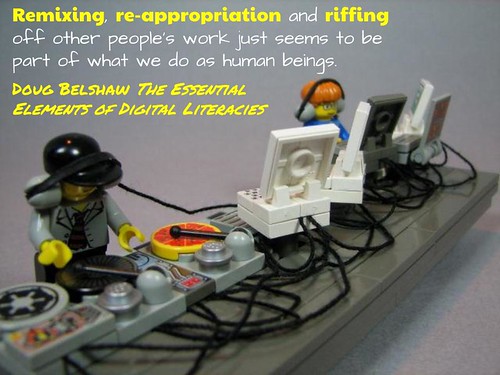
The Essential Elements of Digital Literacies
flickr photo shared by mrkrndvs under a Creative Commons ( BY-NC ) license
In the book summarising his work with digital literacies, Doug Belshaw addresses everything from what constitutes technology to how we actually define literacy. I wrote an extended response here.
A Bicycle of the Mind

flickr photo shared by mrkrndvs under a Creative Commons ( BY-SA ) license
Reflecting on the place of iPads in teaching and learning, Chris Betcher makes the call to let students actually utilise technology.
Smarter Than You Think

flickr photo shared by mrkrndvs under a Creative Commons ( BY-SA ) license
In an extract from his book Smarter Than You Think, Clive Thompson suggests that even the worst bloggers are making us smarter by working openly in the connection of different ideas.
Keeping Teens Private on Facebook Won’t Protect Them

flickr photo shared by mrkrndvs under a Creative Commons ( BY-NC ) license
Like Adrian Camm, danah boyd argues that instead of worrying about locking teens into protected communities, rather our concern should be about integrating them constructively into the wider web. This is a message carried through her book It’s Complicated.
On Best Behaviour- Three Golden Rules for Ethical Cyber Citizenship

flickr photo shared by mrkrndvs under a Creative Commons ( BY-SA ) license
Although there is some dispute about the application of Kant’s transcendental principles, David Tuffley’s post provides an interesting take on digital citizenship.
Inequality and BYOD

flickr photo shared by mrkrndvs under a Creative Commons ( BY-SA ) license
George Couros touches on one of the biggest challenges associated with technology, that is how we use it. This is a
What the Net Did Next

flickr photo shared by mrkrndvs under a Creative Commons ( BY-SA ) license
Taken from danah boyd’s book It’s Complicated, this quote from Vint Cerf sums up much of the challenge with technology, that it is how and why we use the internet that needs to be questioned.
Here then is a collection of quotes that I have come upon. They may not be the most quotable, rather they are those moments that stood out to me as I read. So what about you, what are some of the quotes you draw on to help stretch your understanding of technology. As always, comments welcome.