Saturday, 17 January 2026

Introducing Mauritius

Today’s imperative was to snatch a couple of hours out before the storm hit. A big tropical depression was headed towards the island as we landed into Mauritius and was predicted to make landfall shortly after lunch.
“Sleep can wait, I’m going birding.” With the rallying cry of Charlie from http://www.10000birds.com/ ringing in my ears, I got changed and went straight out.
Birding in Mauritius would usually take the form of a trip to Black River Gorge in the southwest of the island to look for endemics. This would not be feasible today with such a limited weather window, so I opted for the easy ride of SSR (Sir Seewoosagur Ramgoolam) Botanic Gardens at Pamplemousses.
Image10 minutes walk from Caudon Waterfront found me at the bus station. From there, bus 22 heads to Grande Gaube via Pamplemousses and stops right outside the gardens. Half an hour and MR23 (@MR50/£1) later, we arrived at the impressive entrance gates. A fee of MR25 is payable.
A comforting security presence was visible, Indeed, I had one guard all to myself as he followed me around, curious as to what I was up to. After each series of photos, he would like to see the results and offer his appraisal. Mostly security was discrete.
Immediately inside the gate, the trees were alive with birdsong mostly that of the Common Myna (introduced), Imagebut the Madagascar Turtle Dove (introduced) was also keen to make itself heard. Red-whiskered Bulbuls (introduced) were another obvious resident.
ImageMy first birdy picture came in the shape of a Madagascar Fody (introduced). I do not recall them being quite so approachable before. Even though the flash has washed him out a little, he is still a splendid bird.
The gardens cover an area of 37 hectares and are mostly laid out in an informal style with few straight lines. The most popular attraction is the giant water lily pond. Victoria Water Lilies cover a rectangular pond. At over a meter across and with turned up edges, they looked like giant round trays and were easily able to support a juvenile Green-backed Heron Imagethat used the raised edges as cover when stalking. It was watching some dragonflies that had caught my attention too. See www.redgannetsdragonflies.blogspot.com for the odonata of Mauritius.
The water lily pond brings in the crowds and the curiosity that I try so hard to avoid, so I moved on. Despite that, the gardens were reasonably quiet for a Saturday.
At the nearby lotus pond, a Scaled Munia (Spice Finch (introduced)), was heaving nesting material into a palm. I do not know what stage of the breeding year February in Mauritius would represent. The island is 20 degrees south of the equator, so the sun had by now returned from the Tropic of Capricorn to the Northern sky as it heads all too slowly towards the Palaearctic spring. Mauritius does not have a marked monsoon but between January and April, it becomes very hot and humid with squally depressions.
A picturesque lake with islands and sun/rain shelters is the largest body of water in the gardens. A Common Waxbill (introduced) climbed the seed-heads of some tall grasses. ImageOut on the water, a moorhen fed it’s chick and the nests of village weavers (introduced) were waiting inspection by the females.
At last, I found a bird which was the only endemic likely to be seen beyond the south-west part of the island. ImageThe Mauritius Grey White-eye is unusual among white-eyes in that the white eye-ring is very inconspicuous. It is like the rest of it’s family though in disliking staying still while being photographed.
The sun had passed it’s height of the day but the promised cyclone had not materialised. The heat was starting to take it’s toll on this tired blogger and I needed a few moments to myself in the shade. ImageI found a nice palm near a heron to settle beneath only to be startled by a Mascarene Swiftlet whistling past my ear to scoop a drink from the lake. Another one joined it and they made two or three passes each, pale rumps plainly visible, before climbing up and away.
ImageI realise that you need to be in the right frame of mind to photograph swifts. It is a thankless task.
As a special treat on the way home, we found ourselves flying over the wonderful looking Aldabra Atoll.Image
Bird species; 13

Green-backed Heron 3, Common Moorhen 8, Zebra Dove 4, Madagascar Turtle Dove 16, Mascarene Swiftlet 4, Red-whiskered Bulbul 30, Mauritius Grey White-eye 15, Common Myna 120, House Crow 2, Madagascar Fody 8 Village Weaver 6, Scaled Munia 4, Common Waxbill 1.

Sunday, 26 April 2015

Baby Robin

You’ve got to love baby robins; even more so when they are being fed by attentive parents in your own garden.

Image

This little one flicks about in my beech hedge as its mum and dad pick around my garden fork for goodies. I have taken a proprietorial interest in it as I have become quite familiar with its dad.

Image

I knew that the male, which has been with us through the cold times, had found himself a ladyfriend and that they were probably nesting nearby.  Sadly none of my boxes have been used yet.

Image


The parents have developed that ragged look that new parents get.

Monday, 23 February 2015

George C. Reifel Migratory Bird Sanctuary, Vancouver Canada, Feb 2015

GEORGE C. REIFEL MIGRATORY BIRD SANCTUARY is south of the airport (YVR International) at Vancouver. Unfortunately, there is no public transport that reaches the reserve. Ladner (5 miles) is served by buses from stations along the Canada Line train service and a cab can be used from there.

Image

My dilemma, as ever, was timing. I wanted to be at the sanctuary during the late afternoon in order to see a Great Gray Owl as it warmed up for its evening hunt. Cabs and public transport were not reliable enough to get me back to the hotel for an early evening pick-up for my return flight, so a rental car was the best solution. Even so, I had brought all my luggage and uniform in case I had to make pick-up from the airport.

Image

Not only was I lucky enough to be rostered a flight to Vancouver whilst a Great Gray Owl was being reliably seen, but I also stumbled across a Nature Vancouver bird walk and was kindly invited to join them. Thanks to John, Colin and Angela for their company and local knowledge and also to the chap, whose name I didn’t catch, who spotted the Northern Saw-whet Owls and the Great Horned Owl.
The gates at Reifel open at 09.00. The trees and bushes by the gate were quite productive with Downy Woodpecker, Northern Flicker, Golden-crowned Kinglet and a large flock of Pine Siskin as we waited.

Image

If you arrive in the vicinity earlier, it is possible to visit a couple of local spots before heading onto Westham Island. LADNER HARBOR PARK brought Bald Eagles in good numbers, but then so did the parking lot outside Quizno’s Subs where 8 were seen circling overhead.
This Saturday morning, cars were queued along the road from the entrance and the parking lot filled immediately as people came to see the Great Gray Owl; a first for the sanctuary. The bird had been misplaced however and the reserve manager, Kathleen, was trying to relocate it in a restricted part of the reserve.

Image

The large group on the Nature Vancouver walk was led by John and became strung out as we walked the trails of the reserve and bunched up again when Saw-whet Owls and Great Horned Owls were found.

Image

The sanctuary consists of a few ponds and marsh overlooking the estuary where Trumpeter Swans could be seen in the far distance and Northern Harriers much closer in. Wildfowl were well represented with over a dozen species and Great Blue Herons were especially common.

Image

A moment of added excitement almost brought an American Bittern which would have been a lifer for me. Unfortunately all I could make out was a clump of reeds that was denser and darker than the surrounding reeds. Try as I might, I could not turn it into a bittern, even though it appeared to change shape slightly.

Image

Back at the visitor centre, word reached us that the Great Grey Owl had been re-found on the restricted section and that the manager was taking small groups to see it. I was astonished at how tolerant the owls in the reserve had been today. The Saw-whet and Great Horned Owls had been seen very close to a busy path and groups of people were jockeying to get a clear view. The Great Gray was even more accommodating as we passed just 4 meters beneath it and looked back into its startling yellow eyes.

Image

The Sanctuary is situated in the north of Westham Island and forms a large land mass in the delta at the mouth of the estuary. It has well maintained trails which are always close to water. Mostly the water is fresh and observation has been made easy with verandas round the visitor centre, hides, platforms and a tower in the northern section. There is even a warming room for those chilly days. I didn’t get a chance to visit the display ponds, but a brief glimpse in passing made me think that the birds are very approachable there too and it would probably make a good photography area. Many of the birds are used to being fed and seed can be purchased from the gift shop. There are washrooms, but no food.

Image

The gates open at 09.00, though in practice, they are often open a little earlier. Entry closes at 16.00 with visitors already on site given a further hour to clear the gates. There is an entry fee of Can$5 for non-members.
Buses 601 and 620 leave from Bridgeport Canada Line Station. They stop at the transit mall at Ladner (EB Clarence Taylor Cres FS Harvest Drive), 6.5 miles from the reserve gates.  606, 608 and C86 will get you 1.5 miles closer, but cabs will be increasingly difficult to find as you leave the town. Delta Surrey Green Cab operate in the vicinity. 604 943 1111

As if a 3-owl day with 2 lifers amongst them wasn't enough, I tried to top it out with a quick visit to Boundary Bay between 64th and 72nd Streets. A Northern Harrier showed well here, but no owls. But as I drove back to return the car and go to work (and I have to question what I have been doing to deserve such luck), 2 Short-eared Owls were seen chasing each other across a meadow by the freeway. 6 owls from 4 species. Fantastic days!

I must Credit Kathleen, the reserve manager for the Great Gray Owl tick. She graciously allowed access to what is usually a restricted area and she ensured that the bird was not put to undue stress. The Saw-whets and the Great Horned Owls were found by the nature walk advance guard and pointed out to me as we passed. The Short-eared Owls belonged to Lady Ridiculous Blind Luck and she teased me with them as I passed at speed. Thanks to you all.


Image
Boundary Bay
If you cannot reach Reifel Bird Sanctuary, link to the dedicated USA and Canada page where you will find more sugestions for Vancouver.

Birds seen at George C. Reifel Migratory Bird Sanctuary.

Snow Goose (Chen caerulescens)
300
Canada Goose (Branta canadensis)
20
Trumpeter Swan (Cygnus buccinator)
6
Wood Duck (Aix sponsa)
5
Gadwall (Anas strepera)
4
American Wigeon (Anas americana)
60
Mallard (Anas platyrhynchos)
200
Northern Shoveler (Anas clypeata)
130
Northern Pintail (Anas acuta)
8
Ring-necked Duck (Aythya collaris)
1
Greater Scaup (Aythya marila)
1
Lesser Scaup (Aythya affinis)
2
Bufflehead (Bucephala albeola)
4
Hooded Merganser (Lophodytes cucullatus)
5
Great Blue Heron (Ardea herodias)
40
Black-crowned Night-Heron (Nycticorax nycticorax)
4
Northern Harrier (Circus cyaneus)
3
Cooper's Hawk (Accipiter cooperii)
1
Bald Eagle (Haliaeetus leucocephalus)
12
Red-tailed Hawk (Buteo jamaicensis)
2
American Coot (Fulica americana)
5
Sandhill Crane (Grus canadensis)
7
Glaucous-winged Gull (Larus glaucescens)
6
Great Horned Owl (Bubo virginianus)
1
Great Gray Owl (Strix nebulosa)
1
Northern Saw-whet Owl (Aegolius acadicus)
2
Downy Woodpecker (Picoides pubescens)
2
Northern Flicker (Colaptes auratus)
1
Northwestern Crow (Corvus caurinus)
3
Black-capped Chickadee (Poecile atricapillus)
15
Marsh Wren (Cistothorus palustris)
1
Golden-crowned Kinglet (Regulus satrapa)
5
American Robin (Turdus migratorius)
8
Varied Thrush (Ixoreus naevius)
2
European Starling (Sturnus vulgaris)
10
Spotted Towhee (Pipilo maculatus)
4
Fox Sparrow (Passerella iliaca)
3
Song Sparrow (Melospiza melodia)
4
Golden-crowned Sparrow (Zonotrichia atricapilla)
12
Red-winged Blackbird (Agelaius phoeniceus)
20
House Finch (Haemorhous mexicanus)
6
Pine Siskin (Spinus pinus)
200
House Sparrow (Passer domesticus)
6

Wednesday, 18 February 2015

Dubai, Feb 2015

February continues apace with another life tick in the glorious form of a Pharaoh Eagle-Owl. Actually, 2 if you don’t mind.

Image

The eBird invigilator for Dubai, Tommy Pederson (he of www.uaebirding.com fame), took me to a reliable spot to the south of the city, close to the Green Community. The first owl flushed before we saw it, but a second allowed me to take a couple of shots. One step closer and she (might have been he. It felt like a she, though I have no way of knowing) flushed too.

Image

As we moved further along, the birds flushed again. Tommy felt that they were much warier than he had seen them before, so we backed out and left them alone.

Image

Tommy dropped me at Safa Park for an evening hour with the common park birds of Dubai. Hoopoes featured of course as they picked through the lawns and I nearly got the Indian Roller shot that I have been longing for since I first set eyes on one in flight.

Image

The park is undergoing a lot of work. Whether this work will make the park better, or the city bigger was unclear, but the northern edge and the east end have been dug over and fenced off. One of the fenced bodies of water has been drained and only very few ducks remained. One curious individual was a Mandarin Duck. Did there used to be an exotic collection there?

Safa Park is within easy reach of Downtown Dubai and about 10 mins in a cab from the Emirates Mall on Sheik Zayed Road, the main drag through downtown. In the perimeter railings, there are 4 gates which open 08.00 ‘til 23.00 (currently, the gate halfway along the north edge and the gate at the east end are not useable).  There is a 3 Dirham entry fee. On Tuesdays, the park is restricted to ladies and children only. A fenced and hedged section at the west end of the park is reserved full-time for ladies and children.

Image

For a more detailed description of the park visit the dedicated Middle East Page, where there are four posts with bird lists.

Bird list for Safa Park, Feb ‘15;

Egyptian Goose (Alopochen aegyptiaca)
4
Mallard (Anas platyrhynchos)
2
Gray Francolin (Francolinus pondicerianus)
3
Great Cormorant (Phalacrocorax carbo)
20
Red-wattled Lapwing (Vanellus indicus)
4
Black-headed Gull (Chroicocephalus ridibundus)
150

Image

Caspian Tern (Hydroprogne caspia)
2
Eurasian Collared-Dove (Streptopelia decaocto)
40
Laughing Dove (Streptopelia senegalensis)
25
Pallid Swift (Apus pallidus)
2

Image

Indian Roller (Coracias benghalensis)
4
Eurasian Hoopoe (Upupa epops)
6
Rose-ringed Parakeet (Psittacula krameri)
8
House Crow (Corvus splendens)
120
Red-vented Bulbul (Pycnonotus cafer)
2
White-eared Bulbul (Pycnonotus leucotis)
3
Graceful Prinia (Prinia gracilis)
2
Common Myna (Acridotheres tristis)
80
Asian Pied Starling (Gracupica contra)
6
Purple Sunbird (Cinnyris asiaticus)
3
White Wagtail (Motacilla alba)
2
House Sparrow (Passer domesticus)
75


Image

Thursday, 12 February 2015

A winter summary

Sorry to have been away for so long. Sometimes birding and blogging gets overtaken by grown up stuff. I am still able to get out while I am away, but struggle to find time to review the photos and write up the trips when I get back home. I fear that I will never be able to catch up on winter 14/15, so I will try to get away with a quick summary. If I do ever get round to writing them up, I will make the links.

November found me in Houston looking for snakes in the Arboretum at Memorial park. This very fetching little Gulf Ribbon Snake allowed me a close look and stayed for about an hour sunning itself on a log by the water.

Image

November also brought the yearly safety checks, immediately followed by a house move. Our new place is also home to a Robin that follows me around the garden to see what I will kick up next.

Image

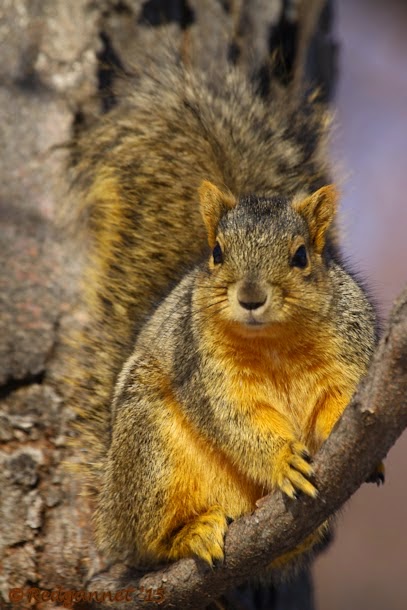
Denver was cold. I always seem to go in the winter. The big story here was geese. City Park gave up lots of Cackling and Canada Geese, but it was the squirrels that sat for the camera.

Image

December’s roster brought a couple of Bostons which turned up an unexpected Snowy Owl. A previously suspected owl, seen last year atop a shed on Boston’s Logan airfield was still there making me think that it probably wasn’t an owl. Close inspection revealed that the object had moved closer to the end of the building, reigniting my excitement, but it was still too far away to be sure. I was trying to see across the water from Castle Point, but a quick look over my shoulder onto the battlements brought a much better view of a Snowy Owl.

Image

San Francisco brought some unexpected ticks in the form of a Brown Booby and Rustic Bunting from Sutro Baths and Golden Gate Park respectively, but the highlight was a Burrowing Owl amongst the rocks. Thanks to Ken Schneider for his local expertise.

New Delhi beckoned as my duty for Christmas Day and rounded out the year with one more owl (can it be that I have three trips with owls in and I am skimming quickly over them?), a Spotted Owlet, in Hauz Khas Deer Park.

New Year in Accra began with a bang, literally, as a Laughing Dove crashed to the ground at my feet, spooked from its roost by the hotel fireworks. Later on New Year’s Day, the first lifer of the new list, in the shape of a Lesser Moorhen, skittered across the University of Ghana’s Botanic Garden pond.

Image

January was a big month with trips to 4 continents. Accra was followed by Phoenix, which included visits to Gilbert Water Ranch and the Salt River where a Rock Wren took the second lifer slot for the year.

Then a trip to Jo’berg, perhaps my last one as the route has been allocated to our Mixed Fleet colleagues from March. As it was potentially my final visit, I had to pay my respects at Pilanesberg NP (which brought 100 species, including a Dwarf Bittern), Marievale and Walter Sisulu Botanic Gardens.

Image

And so to Delhi again as January passes the baton to February. If you find yourself in Delhi during the winter a visit to Sultanpur is a must. 80 species were seen and kicked off the owl list for 2015 with the customary Spotted Owlet.

There seems to be no end to the work that needs doing on the house, so the blog may slip into bi-monthly updates. I will not prioritise trips where I visit tried and trusted birding areas, but I will try to make a whole post for a new site.


See you again in April.