Feeds:
Posts
Comments

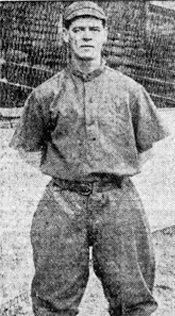
St. Louis tried to attract the nation’s best athlete at a time when its teams, Browns and Cardinals, were the worst in major-league baseball. Jim Thorpe, however, chose to enter the majors at the top, with the 1913 New York Giants.

ImageA two-time Olympic gold medalist in track and field as well as a football standout, Thorpe wasn’t as prominent in baseball. For six seasons in the National League with the Giants, Reds and Braves, he mostly was a spare outfielder.

The team Thorpe did best against was St. Louis. A career .252 hitter, Thorpe batted .314 overall versus the Cardinals and .339 in games played at St. Louis.

Bright Path

A citizen of the Sac and Fox Nation, James Francis Thorpe and a twin brother, Charles, were born in what is now Oklahoma. (Charles died of pneumonia as a youth.) Jim Thorpe also was known as Wa-Tho-Huck, which in the Sac and Fox language means “Bright Path,” according to the Oklahoma Historical Society.

After attending schools in Oklahoma and Kansas, Thorpe enrolled at the Carlisle Indian Industrial School in Pennsylvania when he was 16 in 1903 and excelled in athletics, especially football and track, for coach Pop Warner.

Thorpe also was proficient at archery, baseball, basketball, canoeing, handball, hockey, horsemanship, lacrosse, rifle shooting, skating, squash and swimming, according to The Sporting News.

Carolina in my mind

Taking a break from Carlisle in 1909, Thorpe, 22, signed to play minor-league baseball for the Rocky Mount (N.C.) Railroaders, a Class D club in the Eastern Carolina League. He was paid $12.50 to $15 per week, plus room and board, team secretary E.G. Johnston told the Rocky Mount Telegram.

A right-hander, Thorpe pitched and played right field. Speed was his main attribute. Eyewitness accounts told of him scoring from first on a single to right and racing to the plate from second on an infield out. His statistics that season were nothing special (9-10 record, .254 batting mark), but he was the talk of the town. A local sports reporter, Sam Mallison, noted, “Few Rocky Mount citizens had ever seen one of these original Americans.”

Rocky Mount was a segregated town of about 8,000 in 1909. It had a prominent railroad yard, cotton mills and tobacco farms. At that time, “The horse and buggy still provided the principal method of transportation between points not connected by the railroad,” Sam Mallison recalled in the Rocky Mount Telegram. “There were no hard-surfaced highways and few paved streets.”

As for baseball, Thomas McMillan Sr. wrote in the Telegram, “In those days, the players dressed for the game in their rooms (and) walked to the ballpark. Many stayed at the new Cambridge Hotel, a short block north of the passenger train station. The players would be met by a crowd of little boys as they came out of the hotel. Each boy sought the privilege of carrying the shoes or glove or bat for one of the ballplayers. Carrying a glove or a pair of shoes meant free admission to the game. I was one of those little boys and big Jim Thorpe seemed to favor me as his shoes and glove caddy. I remember Jim perfectly. Black hair, black eyes, high cheekbones in a mahogany face, and a physique that gave an impression of strength rather than mere size. His movements were quick and lithe.”

Thorpe returned to Rocky Mount in 1910, but the luster was lost. According to Sam Mallison, “(Thorpe’s) custom, in the early evening, was to take a snoot full … As time went on, (drinking) took hold of Jim earlier in the day, occasionally before the noon hour, and this, plus the fact that opposing pitchers had learned he was a sucker for a curveball on the outside (corner), diminished his speed and caused his batting average to plummet … (Thorpe) had ceased to be such an enormous gate attraction, and his antics were the despair of both the field manager and the front office. He ignored the rules and was wholly unresponsive to managerial direction. In short, he became a problem child.”

That summer, Thorpe was traded to the Fayetteville (N.C.) Highlanders and finished the 1910 season with them.

Glory and scandal

Thorpe re-enrolled at Carlisle and rocketed toward his athletic peak. He gained national fame as a consensus first-team football all-America in 1911 and 1912. He rose to worldwide prominence at the 1912 Summer Olympics in Stockholm, winning gold medals in the decathlon and pentathlon. Thorpe was the first Native American to win an Olympic gold medal for the United States.

“To a whole generation of American sports lovers, Jim Thorpe was the greatest athlete of them all,” the New York Times declared. “No one has equaled the hold that he had on the imagination of all who saw him in action … He was a magnificent performer.”

In January 1913, after the International Olympic Committee learned of Thorpe’s minor-league ballplaying, it was determined he had competed in the 1912 Games as a professional, violating the rules of amateurism. He was stripped of his medals and his achievements were erased from the Olympic records. “The committee’s insistence that the Olympics are amateur is as fatuous as its insistence that sports should never be soiled by politics,” the New York Times opined.

(In July 2022, 69 years after Thorpe’s death, the International Olympic Committee declared him sole winner of the 1912 Olympic decathlon and pentathlon.)

Looking to extend his athletic career, Thorpe saw big-league baseball as offering the best path. (The American Professional Football Association, which became the NFL, wasn’t established until 1920).

On the money

Thorpe got offers from five big-league clubs _ Browns, Giants, Pirates, Reds and White Sox, the New York Times reported.

The Browns had more than 100 losses in three consecutive seasons (1910-12) and would finish in last place in the American League at 57-96 in 1913, but club owner Robert Hedges was serious about a pursuit of Thorpe. Hedges had scout Pop Kelchner try to woo Thorpe to St. Louis. On Kelchner’s recommendation, the Browns acquired a minor-league shortstop, Mike Balenti. He and Thorpe played together in the Carlisle football team backfield. The Browns hoped having Balenti would help them land Thorpe.

On Jan. 24, 1913, the St. Louis Globe-Democrat reported, “It was learned yesterday that Jim Thorpe … had promised Hedges that if he played ball in professional circles he would join the Browns.”

A week later, though, Thorpe signed with the Giants. Led by manager John McGraw, the Giants won National League pennants in 1911 and 1912. They’d go to the World Series again in 1913. Perhaps most important of all to Thorpe was the money. The Giants offered a salary of more than $5,000, the New York Times reported. According to the St. Louis Post-Dispatch, Thorpe got a $6,000 salary and a $500 signing bonus, and Carlisle coach Pop Warner got $2,500 from the Giants for steering Thorpe to them.

“There are very few $6,000 ballplayers in the game today,” St. Louis columnist Sid Keener noted. According to Keener, that select group included Ty Cobb, Ed Konetchy, Nap Lajoie, Christy Mathewson and Tris Speaker.

Though McGraw never had seen Thorpe play, he told the New York World, “A wonderful athlete like Thorpe ought to have in him the makings of a great ballplayer. He has the muscle and the brain, and it is up to me to locate the spot where he will be of most value to the team.”

Cardinals calling

After seeing Thorpe in spring training, McGraw determined the best spot for him was on the bench, or maybe the minors. Thorpe, who turned 26 that year, was plenty fast and strong, but he misjudged fly balls, didn’t slide properly and couldn’t hit the curve consistently.

In April 1913, before the regular season got under way, McGraw apparently considered placing Thorpe on waivers. If Thorpe was available, Cardinals manager Miller Huggins was determined to get him.

“Jim Thorpe … may become a Cardinal,” the Bridgeport Times of Connecticut reported. “All that is needed for (Thorpe) to join the (Cardinals) is for John McGraw to accept an offer made by Miller Huggins. It is believed that waivers have been asked on Thorpe because Huggins sent the following telegram to McGraw: Will take Thorpe off your hands. What is his salary?”

According to the New York Herald, Huggins said the Cardinals, destined to finish with the worst record in the majors (51-99) that year, would spend “the extreme limit” for Thorpe.

Huggins told Sid Keener, “I believe Thorpe can be developed into a ballplayer.  He has what I want _ speed. It may be that he will need plenty of seasoning, but I would be willing to carry him a year or so as a utility player.”

The Cardinals’ eagerness to take Thorpe apparently gave McGraw pause. He decided Thorpe would remain with the Giants. “I can make a first-class player of him,” McGraw said, according to the Montpelier (Vermont) Morning Journal.

Playing on

Thorpe stuck with the Giants in 1913 and 1914, but rarely played. He spent most of 1915 in the minors. Sent to minor-league Milwaukee in 1916, Thorpe made significant progress. He led Milwaukee in total bases (240) and hits (157).

In 1917, the Giants loaned Thorpe to the Reds. McGraw’s friend and former ace, Christy Mathewson, was the Reds’ manager. In a game against the Cardinals, Thorpe had two hits and two RBI. In another, at St. Louis, he totaled four hits, three RBI and scored twice. Boxscore and Boxscore

Thorpe’s highlight with the Reds, though, came in a game at Chicago. Fred Toney of the Reds and Hippo Vaughn of the Cubs each pitched nine hitless innings. In the 10th, Thorpe’s single versus Vaughn drove in a run and the Reds won, 1-0. Boxscore

After four months with the Reds, Thorpe was returned to the Giants. He played for them in 1918, then was traded to the Braves. Thorpe hit .327 for Boston in 1919 and .354 versus the Cardinals. It wasn’t enough to keep him in the majors, but he wasn’t through with baseball. Thorpe played three more seasons in the minors and thrived, batting .360 for Akron in 1920 and .358 for Toledo in 1921.

Meanwhile, when the American Professional Football Association began in 1920, Thorpe was welcomed in as player-coach of the Canton Bulldogs.

In 1925, Thorpe, 38, was a running back with the NFL New York Giants. He is one of two men who played for both the NFL and baseball New York Giants. The other, Steve Filipowicz, was an outfielder with the baseball Giants (1944-45) and a running back with the football Giants (1945-46).

Thorpe finally got to play for the Cardinals, too. His last NFL game was with the Chicago Cardinals in 1929.

Throughout the NFL in 1971, quarterbacks with big reputations and colorful nicknames swaggered across the playing fields. Broadway Joe (Namath, of course) with the New York Jets. Mad Bomber (Daryle Lamonica) in Oakland. Captain Comeback (Roger Staubach) for Dallas.

ImageThen, almost, there was … the St. Louis Scrambler.
In his 1976 book “Tarkenton,” Fran Tarkenton revealed the New York Giants nearly dealt him to the Cardinals during the 1971 season. “The Giants tried to trade me … and they came close to dealing with St. Louis,” Tarkenton said.

Much like he did in scrambling out of reach of defenders, Tarkenton managed to dodge a trade to St. Louis.

Fran the Man

Tarkenton first got the attention of St. Louis football fans as a junior at the University of Georgia. Facing Missouri in the Orange Bowl on Jan. 1, 1960, Tarkenton threw two touchdown passes in Georgia’s 14-0 triumph. “Tarkenton showed aerial marksmanship and important ability to elude charging Missouri linemen,” Bob Broeg noted in the St. Louis Post-Dispatch.

An expansion franchise, the Minnesota Vikings, took Tarkenton in the third round of the 1961 NFL draft. Their head coach, The Dutchman, Norm Van Brocklin, was the quarterback who led the Philadelphia Eagles to the 1960 NFL championship.

In the Vikings’ first regular-season game, Tarkenton came off the bench, threw for four touchdowns and ran for another to beat the Chicago Bears. “A star was born,” the Associated Press declared.

Tarkenton was the Vikings’ quarterback their first six seasons (1961-66). He didn’t have a strong arm, but he was smart, accurate, creative, agile. As Jon Nordheimer of the New York Times noted, “He developed the role of scrambler into an art form, a quarterback who ran out of the protective pocket of his linemen a step ahead of grasping tacklers, crisscrossing the field on broken plays that often turned into long gains for his team.”

Tarkenton’s helter-skelter style produced thrills but gave Van Brocklin chills. According to Newsday, the coach said, “No scrambler will ever win a championship.” Tarkenton bristled and the relationship deteriorated.

After the 1966 season, Van Brocklin resigned and Tarkenton was traded to the Giants for four draft picks.

Talk of the town

With Tarkenton, the Giants sought to regain some of the flair they lost when Joe Namath made the Jets the glamour football team in New York.

It was an ideal Gotham storyline. Namath was Times Square. Tarkenton was Wall Street. The playboy versus the preacher’s boy. Or, as the New York Times put it, the swinger and the square.

Tony Kornheiser of Newsday wrote, “In a town where the other quarterback is Joe Namath, Tarkenton could run naked down the streets of New York with a pound of marijuana in one hand and a gallon of wood alcohol in the other and still the people would say, ‘He’s conservative.’ ”

Some of Tarkenton’s best performances for the Giants came against the Cardinals. He threw a career-high five touchdown passes versus St. Louis on Oct. 25, 1970. Two other times _ in 1967 and 1969 _ he had four touchdown throws in a game against the Cardinals. Video

“It’s as if he waves his magic wand and the Big Red defense disappears,” Jeff Meyers of the Post-Dispatch observed. “The ball has some mystical attraction to his receivers’ hands. There are some Cardinals who swear he wears a turban, not a helmet.”

Prodigal son

Entering the 1971 season, his fifth with the Giants, Tarkenton said he asked club owner Wellington Mara for a $250,000 loan. When Mara said no, Tarkenton left the team on the eve of the first exhibition game and went home to Atlanta. Mara was miffed and told the media Tarkenton retired.

A couple of days later, a contrite Tarkenton returned and signed a contract. In his book, Tarkenton said the deal called for a salary of $125,000 and a $2,500 bonus for each game the Giants won, but no loan.

Privately, Mara couldn’t forgive Tarkenton for abandoning the team. As Tarkenton noted in his book, “A breach had been created. What I had done, in Wellington’s mind, was to commit an act of disloyalty.”

Tarkenton played poorly (two touchdown passes, nine interceptions, 43 percent completion rate) in the Giants’ remaining exhibition games. When the Pittsburgh Steelers beat the Giants, 20-3, in the exhibition finale at Yankee Stadium, Tarkenton and his teammates were booed. “It was a reception we deserved,” Tarkenton told the New York Daily News.

Gotta have Hart

At the same time Tarkenton was going through turmoil with the Giants, a quarterback drama was unfolding with the Cardinals. First-year head coach Bob Hollway used the 1971 exhibition games as a competition between incumbent Jim Hart and Pete Beathard for the starting job.

Hart prevailed _ barely _ but in the regular-season opener at home against Washington he was intercepted three times and fumbled. Fans responded with “an avalanche of boos” and chants of “We want Beathard” before Hart was replaced early in the fourth quarter, the Post-Dispatch reported.

Beathard took over as starter for Game 2.

It was about then that the Giants and Cardinals apparently talked seriously about a trade involving Tarkenton.

According to Bob Broeg of the Post-Dispatch, speculation was the Cardinals would send Hart and safety Jerry Stovall to the Giants for Tarkenton. In the book “The Jim Hart Story” by Tom Barnidge and Doug Grow, the proposed deal was Hart, Stovall and defensive lineman Bob Rowe for Tarkenton.

At some point, it appears the Giants changed course and decided to wait until after the season to weigh offers for Tarkenton.

The 1971 Cardinals went 2-3 with Beathard before Hart was restored to the starter role.

Domino effect

Neither Tarkenton (11 touchdown passes, 21 interceptions), Hart (eight TDs, 14 interceptions) nor Beathard (six TDs, 12 interceptions) did well in 1971.

Tarkenton told the New York Daily News he expected to be traded. “The only teams I’d care to go to would be proven contenders,” he said.

In January 1972, Tarkenton informed the Giants he’d accept a trade to one of five teams _ Baltimore, Kansas City, Minnesota, Oakland, Washington. According to William N. Wallace of the New York Times, “Mara said four clubs called the Giants about Tarkenton’s availability, but he wouldn’t name them and only he knows if they match Tarkenton’s list.”

To Tarkenton’s delight, the Giants sent him to the Vikings for quarterback Norm Snead, receiver Bob Grim, running back Vince Clements and two draft choices.

The trade had a big impact on the Cardinals. Tarkenton’s return made Vikings quarterback Gary Cuozzo expendable. With Bob Hollway still not sold on Jim Hart as the starter, the Cardinals dealt their best receiver, John Gilliam, and two draft choices to Minnesota for Cuozzo in April 1972.

Hollway declared Cuozzo, an aspiring orthodontist, the starting quarterback. “We wouldn’t trade a player like Gilliam if we didn’t think Gary would come in here as our quarterback,” Hollway told the Post-Dispatch.

Tarkenton should have sent the Cardinals a thank-you card. Gilliam, the Cardinals’ leader in receiving yardage for three consecutive years (1969-71), was just what Tarkenton needed. Gilliam led the Vikings in receptions, receiving yards and touchdowns caught in each of his first two seasons (1972-73) with Minnesota. In a 1974 playoff game against the Cardinals, Gilliam caught two touchdown passes from Tarkenton in the Vikings’ 30-14 romp. As he had done with St. Louis, Gilliam averaged 20 yards per catch during his time with Minnesota.

Meanwhile, Cuozzo was a bust for the 1972 Cardinals. He played poorly in the exhibition games and, when the season opened, Hollway named Tim Van Galder, a 28-year-old NFL rookie, the starter.

The Cardinals were 1-3-1 in Van Galder’s five starts. Cuozzo took over, lost five of his six starts (the lone win was against Tarkenton and the Vikings) and was booed in St. Louis. When Jim Hart was reinstated as the starter for the final two games, the same fans cheered.

After Don Coryell replaced Hollway as head coach in 1973, one of his first decisions was to keep Hart as starting quarterback and build an offense around him. The Cardinals became a playoff team.

In Minnesota, Tarkenton thrived, taking the Vikings to three Super Bowls (though they lost each one.)

Tarkenton remains the Vikings’ career passing leader in yards (33,098), touchdowns (239) and completions (2,635). With the Giants, he threw 103 TD passes in 69 games. The only Giants with more touchdown throws are Eli Manning (366), Phil Simms (199) and Charlie Conerly (173).

The distance between the Canary Islands and St. Louis is 4,300 miles. It took Alfredo Cabrera 32 years to make the trek.

ImageCabrera is the only person born in the Canary Islands to play baseball in the big leagues. The shortstop was 32 when he debuted with the Cardinals in 1913.
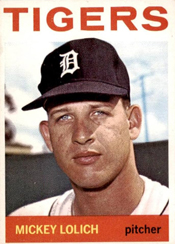
His time in the majors, however, was as fleeting as a glimpse of a canary in the wild. Cabrera appeared in one game, played four innings and never returned.

Instead, he had a long professional playing career in Cuba and as a Hispanic minor-league baseball pioneer in the northeastern United States.

Island hopping

Formed by volcanic eruptions that created black sand beaches along crystal-clear turquoise water, the Canary Islands of Spain are within 65 miles of Africa’s northwestern coast. Wild canaries are a native species of the islands. (Cardinals, however, are not.)

Alfredo Cabrera was born in the Canary Islands on May 11, 1881. He was a descendant of Guanches, the indigenous people of the islands, according to the St. Louis Post-Dispatch. Cabrera arrived at a time when the Canary Islands transitioned from an agricultural economy (largely bananas and sugar cane) to tourism as steamships carried winter-weary visitors to the port of Las Palmas.

Though raised in the Canary Islands, Cuba became Cabrera’s home. He “most likely sailed from the Canary Islands to Cuba around 1900, as a teenager, and almost immediately established himself as a gifted baseball player,” according to Erik Malinowski of the Society for American Baseball Research.

In 1901, when Cabrera turned 20, he made his professional baseball debut in the Cuban League. He spent 18 seasons in Latin leagues, primarily with Almendares, and was player-manager for part of that time, according to Seamheads.com. Cabrera was inducted into the Cuban Baseball Hall of Fame in 1942.

Integrating the minors

Cabrera was part of a team, the Baseball Stars of Cuba, that toured the United States in 1906. Charles Humphrey, owner of the New Britain club in the Connecticut State League, was impressed by how the Cubans played. Humphrey went to Havana and recruited four Cubans _ third baseman Rafael Almeida, outfielder Armando Marsans, pitcher Luis Padron and the shortstop, Cabrera _ to play for New Britain in 1908, according to Weston Ulbrich of the Greater Hartford Twilight Baseball League.

Humphrey named the New Britain club the Perfectos.

Bigots objected to the newcomers joining an all-white league. Recalling those days, Dan Porter of the New York Daily Mirror wrote in 1933, “As a kid, I saw a half dozen Cuban players break into organized baseball in the old Connecticut League. I refer to players like Marsans, Almeida, Cabrera and others. I recall the storm of protest from the One Hundred Per Centers at that time but I also recall that all the Cubans conducted themselves in such a manner that they reflected nothing but credit on themselves and those who favored admitting them to baseball’s select circle.”

A right-handed batter, Cabrera was 5-foot-10 and lean, with a complexion “the hue of burnt leather,” the New Britain Herald reported. (The Post-Dispatch described his skin as being “the color of a coconut shell.”)

Of the four from Cuba to join New Britain, three eventually reached the majors. Almeida and Marsans debuted with the Reds in July 1911. Almeida played three seasons (1911-13) with Cincinnati. Marsans spent sevens seasons in the big leagues with the Reds (1911-14), Browns (1916-17) and Yankees (1917-18). He also had a stint with the St. Louis Terriers of the Federal League (1914-15).

Cabrera played five seasons (1908-12) with New Britain _ (the franchise shifted to Waterbury in June 1912) _ before getting to the majors. His path to St. Louis, however, required a detour through Indianapolis.

St. Louis shuffle

Bob Connery played for and managed Hartford of the Connecticut State League from 1908-12 and was quite familiar with the talents of Alfredo Cabrera. Connery became a Cardinals scout after the 1912 season. He was a friend of Cardinals manager Miller Huggins and both were friends of Mike Kelley, who had become manager of Indianapolis in the American Association.

On Connery’s recommendation to Kelley, Indianapolis acquired Cabrera from the Connecticut State League in January 1913. (Two years later, Connery convinced the Cardinals to sign Rogers Hornsby.)

During 1913 spring training, Cardinals shortstop Arnold Hauser injured a knee. Needing shortstop help, Huggins turned to his friend Mike Kelley. Indianapolis sent two shortstops _ Cabrera and Charley O’Leary _ to the Cardinals.

Unlike Cabrera, O’Leary, 37, had big-league experience. He was the shortstop for the Tigers in two World Series (1907 and 1908). In his last big-league game, he helped turn a triple play before being dispatched by the Tigers to Indianapolis in April 1912.

O’Leary (starter) and Cabrera (reserve) opened the 1913 season with the Cardinals. According to the Indianapolis Star, the Cardinals were impressed by “the dandy throwing arm the Cuban exhibited.”

Huggins told the Post-Dispatch, “I like that fellow’s looks and I intend to give him a thorough trial.”

However, once the season started, Huggins stuck with O’Leary at shortstop and kept Cabrera on the bench. The Cardinals began looking to trade the rookie.

“Cabrera is a shortstop of rare promise and he is the entity which may be used as a pawn to strengthen the club in other departments,” W.J. O’Connor reported in the Post-Dispatch. “Either Brooklyn or Boston could use Cabrera, and Huggins will carry Alfredo until he makes the first swing around the (league) … Huggins is so well-fortified at short, now that O’Leary has proved himself still a major-league performer, that he can readily pass up a promising youngster like Cabrera … If either (Brooklyn) or (Boston) wants Cabrera, Huggins will pass him over for a first-string pitcher or an outfielder.”

One and done

After O’Leary pulled up lame rounding first in a game at Brooklyn on May 15, 1913, the Post-Dispatch reported Cabrera would make his big-league debut the next day as the starting shortstop at Ebbets Field.

Huggins put Cabrera seventh in the batting order, between Rebel Oakes and Ivey Wingo. Pitching for the Cardinals was left-hander Slim Sallee, who would win 19 that season for a club that totaled 51.

The Brooklyn lineup included leadoff batter and center fielder Casey Stengel, and cleanup hitter and left fielder Zack Wheat, who remains the Dodgers’ career leader in total bases (4,003), hits (2,804), doubles (464) and triples (171). The Brooklyn pitcher, Cliff Curtis, never achieved a winning record in five big-league seasons and was a 24-game loser with Boston in 1910.

In the first inning, the Cardinals scored three times against Curtis and had a runner on third, two outs, when Cabrera came to the plate. He grounded out to the pitcher, ending the inning. Cabrera batted again in the third, grounded to short and was out by 20 feet at first, the St. Louis Globe-Democrat reported.

Cabrera didn’t get a fielding chance, but Huggins apparently was miffed that the shortstop didn’t get to a grounder that went for a hit, the New York Herald reported. In the fifth, Cabrera was removed for a pinch-hitter and Lee Magee shifted from left field to shortstop. Brooklyn won, 6-5. Boxscore

The Cardinals started a utility player, Possum Whitted, at shortstop in their next game. Cabrera was sent to the Springfield (Massachusetts) Ponies of the Eastern Association. “He did not make a very satisfactory showing (with St. Louis) in the eyes of manager Huggins,” the Springfield Daily Republican noted.

International game

Cabrera spent three more seasons (1913-15) in the minors but his playing days lasted much longer in Cuba. As player-manager, he led Almendares to a Cuban League championship in 1915.

According to the Greater Hartford Twilight Baseball League, “Cabrera’s latter years were spent as groundskeeper of Havana’s El Gran Stadium.”

Today, baseball is part of the Canary Islands sports culture. Eric Gonzalez-Diaz, born in the Canary Islands town of San Juan de la Rambla, was a pitcher in the Padres farm system from 2008-10 and played for Spain in the 2013 World Baseball Classic. A Canary Islands team, the Tenerife Marlins, became 2025 Baseball European Cup champions.


Mickey Lolich was at a crossroads in his pitching career when a former Cardinals ace came to his rescue.

ImageA left-hander with a stellar fastball he couldn’t control, Lolich, 21, was an unhappy prospect in the Tigers system when he was dispatched to Portland (Ore.) in 1962. The pitching coach there, Gerry Staley, 41, served a dual role as reliever.
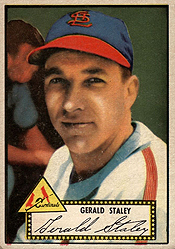
Staley had been a big winner for the Cardinals before becoming a closer for the White Sox. Perhaps his biggest save came later with the work he did on Lolich. Staley taught him how to make a fastball sink. Lolich became a pitcher instead of a thrower, a winner instead of a loser. The sinkerball made all the difference.

Six years later, Lolich earned the 1968 World Series Most Valuable Player Award for beating the Cardinals three times, including in the decisive Game 7.

In his 2018 book “Joy in Tigertown,” Lolich suggested Staley deserved a 1968 World Series share for helping him become a success. “Meeting him was one of the great breaks of my career,” Lolich said. “Maybe the most important one.”

Wild thing

Two-year-old Mickey Lolich was pedaling a tricycle as fast as he could in his Portland (Ore.) neighborhood when he lost control and slammed into the kickstand of a parked motorcycle. The big bike crashed down on the tyke, pinning him to the ground. His left collarbone was fractured.

“Well, back in 1942, they just sort of strapped your arm across your chest and waited for it to heal,” Lolich recalled to Pat Batcheller of Detroit Public Radio (WDET, 101.9 FM) in 2018. “When they took the bindings off, I had total atrophy in my left arm. It wasn’t working at all.”

Though Mickey was right-handed, a doctor advised the Lolich family to encourage him to use his left hand and arm as much as possible to build strength. His parents “tied my right arm behind my back and made me use my left hand,” Lolich told Detroit Public Radio. “I wanted to throw those little cars and trucks, so I threw them left-handed … and that’s how I became a left-handed pitcher.”

The kid learned to throw with velocity, too. In his senior high school season, Lolich struck out 71 in 42 innings. He was 17 when the Tigers signed him in 1958 and told him to report to training camp the following spring.

Lolich’s first manager in the minors was fellow Portland native Johnny Pesky, the former Red Sox shortstop whose late throw to the plate enabled Enos Slaughter to score the winning run for the Cardinals in Game 7 of the 1946 World Series.

When Braves executive Birdie Tebbetts saw Lolich’s fastball in April 1959, he told Marvin West of the Knoxville News-Sentinel, “I’d give cold cash for this Lolich boy.”

The problem was control. In a four-hit shutout of Asheville in May 1959, Lolich walked nine but was bailed out by five double plays. A month later, in a two-hitter to beat Macon, he walked 11 and threw four wild pitches.

Lolich began each of his first three pro seasons (1959-61) with Class A Knoxville and was demoted to Class B Durham each year. In June 1961, after Lolich gave up no hits but nine walks and four runs in a five-inning start, Knoxville manager Frank Carswell told the News-Sentinel, “I’ve seen some strange games, but I can’t remember seeing one pitcher give away a decision without a hit.”

Headed home

After a strong spring training in 1962, Lolich was assigned to Class AAA Denver, but he was a bust (0-4, 16.50 ERA). In late May, the Tigers demoted him to Knoxville, but Lolich refused to return there. Instead, he went home to Portland. The Tigers suspended him.

Portland had a city league for amateur and semipro players in conjunction with the American Amateur Baseball Congress. Lolich showed up one night in the uniform of Archer Blower, a maker of industrial fans, faced 12 batters and struck out all of them, the Oregon Daily Journal reported.

Blown away by the performance, the Tigers quickly reinstated Lolich and arranged for him to pitch the rest of the summer for the Portland Beavers, the Class AAA club of the Kansas City Athletics. That’s when Gerry Staley got a look at him. In the book “Summer of ’68,” Lolich told author Tim Wendel, “He (Staley) asked if I’d give him 10 days to let him try and turn me into a pitcher. All I was then was a thrower, really. I’d stand out there and throw it as hard as I could.”

Lolich agreed to the proposal.

Starting and closing

Gerry Staley went from Brush Prairie, his rural hometown in Washington state, into pro baseball as a rawboned right-handed pitcher who “looks as if he could whip a wounded bear,” Dwight Chapin of the Vancouver Columbian noted.

ImageWhen he was with a Cardinals farm club in 1947, Staley was throwing warmup tosses to infielder Julius Schoendienst, brother of St. Louis second baseman Red Schoendienst. “He noticed I had a natural sinker when I threw three-quarters overhand,” Staley recalled to United Press International. “He said my sinker did more than my fastball. So I stuck with it.”
Using the sinker seven out of every 10 pitches, Staley became a prominent starter with the Cardinals. He had five consecutive double-digit win seasons (1949-53) for St. Louis. His win totals included 19 in 1951, 17 in 1952 and 18 in 1953.

In explaining to Al Crombie of the Vancouver Columbian how he threw the sinker, Staley said, “You have to release the ball off one finger more than the other, and then I roll my wrist to get a little more of the downspin on the ball.”

Staley threw a heavy sinker. According to the Vancouver newspaper, “It breaks down at the last second, and as the surprised hitter gets his bat around on it, most of the ball isn’t there. Most of the time it dribbles off harmlessly to an infielder and is made to order for starting double plays.”

Traded to the Reds in December 1954, Staley went on to the Yankees and then the White Sox, who made him a reliever. In 1959, Staley got the save in the win that clinched for the White Sox their first American League pennant in 40 years. He appeared in 67 games that season and had eight wins, 15 saves and a 2.24 ERA. The next year also was stellar for him (13 wins, nine saves. 2.42 ERA).

Released by the Tigers in October 1961, Staley snared an offer to coach and pitch for Portland.

Soaring with a sinker

Mickey Lolich became Staley’s star pupil. As author Tim Wendel noted, “After a week or so, Lolich caught on to what Staley was trying to teach him _  how it was better to be a sinkerball pitcher, with control, than a kid trying to throw 100 mph on every pitch. The new goal was to keep the ball low, often away from the hitter, consistently hitting the outside corner.”

Staley also taught Lolich to extend his pregame warmup time. The extra pitches tired his arm a bit and gave more sink to his sinker.

The results were impressive. In 130 innings for Portland, Lolich struck out 138 and yielded 116 hits. The next year, he reached the majors with Detroit. “Gerry Staley changed my whole life,” Lolich told Tim Wendel. “It’s as simple as that.”

In the 1968 World Series, Lolich won Games 2, 5 and 7. He went the route in all three, posting a 1.67 ERA.

Lolich had double-digit wins 12 years in a row (1964-75), including 25 in 1971 and 22 in 1972. He pitched more than 300 innings in a season four consecutive times (1971-74).

In 16 seasons in the majors with the Tigers (1963-75), Mets (1976) and Padres (1978-79), Lolich earned 217 wins and had 41 shutouts. He is the Tigers’ career leader in strikeouts (2,679), starts (459) and shutouts (39).

The 1962 season with Portland was Gerry Staley’s last in professional baseball. He became superintendent of the Clark County (Washington) Parks Department. “It was time I went to work,” he told the Vancouver Columbian.

After retiring in 1982, Staley enjoyed gardening and fishing for steelhead trout. Once a week, he would take time to carefully autograph items mailed to him by baseball fans. “There are some people who won’t sign unless they get paid for it,” Staley said to the Vancouver newspaper. “What the heck. I’ve got enough to live on. It’s nice to be remembered.”

In baseball, being right can get you fired. It happened to Alvin Dark.

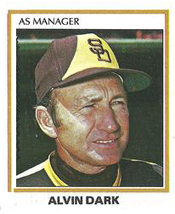
ImageWhen the Padres opened spring training camp in 1978, Dark made a daring decision. The manager named Ozzie Smith the starting shortstop.
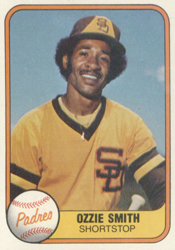
Smith, 23, had no big-league experience. He didn’t have much minor-league experience either. He’d spent part of a season at Walla Walla, and a couple of months in the Arizona Instructional League. Dark saw him there.

A shortstop himself (with the Cardinals and others) before becoming a manager, Dark determined Smith was ready to make the leap from Class A to the majors.

“Alvin Dark took a chance on a skinny kid from south-central Los Angeles, and he believed that I could one day be one of the best shortstops that ever played the game,” Smith recalled to Cardinals Yearbook in 2002.

Dark’s bold move turned out to be a smart one. Smith did the job, taking the first impressive steps toward a Hall of Fame career, but Dark wasn’t there to witness the rookie’s rise. In shaking up the infield, Dark shook up Padres management and players. He was fired before spring training ended.

Under development

When Ozzie was 6, his father, Clovis, a truck driver, and mother, Marvella, moved the family from Mobile, Ala., to the Watts section of Los Angeles. In August 1965, “we had to sleep on the floor because of the looting, rioting and sniping,” Smith recalled to Vahe Gregorian of the St. Louis Post-Dispatch.

Clovis left the family and Marvella worked seven days a week in a nursing home.

At Locke High School, Smith was a teammate of another future Baseball Hall of Famer, Eddie Murray. The Orioles took Murray in the 1973 amateur draft. No clubs sought Smith. He enrolled at California Polytechnic State University in San Luis Obispo and made the baseball squad as a walk-on.

“I never taught Ozzie anything about playing defense,” Cal Poly coach Berdy Harr told the Chula Vista Star-News. “He already knew what that was all about when he came to us. He had a sense of timing, rhythm, I had never seen.”

As Smith later recalled to the Philadelphia Daily News, “I never had trouble catching the ball, even in Little League. I’ve always been able to throw it and I’ve always had a knack for making the right play.”

What Smith needed help with was controlling his temper. “I had a short fuse in high school,” he told the San Luis Obispo Tribune.

He also had to become a better hitter. Smith batted .158 as a college freshman; .230 his sophomore season. Harr suggested he try switch-hitting.

In the summer of 1975, Smith played semipro baseball in Clarinda, Iowa. “Most people would have no idea of how intimidating and stressful it could be for a young black player to move into an all-white rural community in the Midwest,” Smith said in his Hall of Fame induction speech.

The townsfolk embraced him, however, and Smith thrived, improving his hitting. He was a complete player when he returned to Cal Poly for his junior year, batting .308. Detroit took Smith in the seventh round of the 1976 amateur draft, but he didn’t like the Tigers’ offer and opted to stay in school.

As a senior, Smith hit .307, stole 44 bases for the second season in a row and dazzled on defense. “In all my years of coaching, he is the one player I would most rather depend upon in a clutch situation whether it was fielding, making a throw or executing offensively,” Harr told the San Luis Obispo Tribune. “It has been a pleasure watching him mature as a person and as a player.”

Shortstop sensation

The Padres signed Smith after taking him in the fourth round of the 1977 draft. Sent to Walla Walla, he produced a .391 on-base percentage in 68 games and swiped 30 bases.

ImageIn the fall, the Padres put Smith on their Arizona Instructional League team. Hall of Fame second baseman Billy Herman, a Padres minor-league hitting instructor, saw him and was impressed. Then Alvin Dark arrived.
Dark knew what it took to play shortstop. He’d been a good one, a three-time all-star and recipient of the 1948 Rookie of the Year Award. Dark played in World Series for the Braves (1948) and Giants (1951, 1954). The Cardinals traded Red Schoendienst for him in 1956.

As a manager, Dark won a National League pennant (1962 Giants) and a World Series title (1974 Athletics). The Padres hired him in May 1977, replacing John McNamara.

It didn’t take long for Dark to determine the Padres needed an infield upgrade. Their second baseman, Mike Champion, batted .229, third baseman Tucker Ashford had no power (three home runs) and shortstop Bill Almon made 41 errors, hit two homers and struck out 114 times. Overall, the 1977 Padres made a league-leading 189 errors, including 46 at shortstop.

Dark came to the 1977 Arizona Instructional League to see another player, but the one who got his attention was Ozzie Smith. The shortstop made two jaw-dropping fielding plays in one game. “They were the kind of plays you said, ‘I don’t believe this,’ ” Dark recalled to the Post-Dispatch. “To have the coordination and the rhythm and the timing all in one body like Ozzie had, that was very unusual.”

Ready or not

At spring training in February 1978, Dark declared Smith the shortstop and shifted Bill Almon to second base. Derrel Thomas, acquired from the Giants, took over at third and Gene Richards went from left field to first. The reconstructed infield was “a gamble that alarmed the front office,” The Sporting News reported.

Almon, Richards and Thomas were playing out of position. When the four starting infielders didn’t mesh in early spring training games, the Padres reacted with panic rather than patience. “We were getting a lot of feedback from players,” Padres owner Ray Kroc told The Sporting News.

On March 21, 1978, Dark was fired. The infield experiment “contributed to his banishment,” The Sporting News reported.

Additionally, “Alvin wasn’t communicating with the players, the front office or the media,” Kroc said to The Sporting News. “He wasn’t willing to delegate authority to his coaches … Alvin had a tendency to overmanage. He wanted to be the pitching coach, the batting coach, the infield coach.”

Padres player Gene Tenace told the magazine Dark “put in so many trick plays and had so many signs that everyone was uptight. There were too many things to worry about. I like Alvin … but the team is more relaxed now that he’s gone.”

In his book “When In Doubt, Fire The Manager,” Dark said, “I felt it was disgraceful that I didn’t even get the chance to start a season with the Padres.”

According to The Sporting News, Kroc briefly considered replacing Dark with the man he’d been traded for 22 years earlier, former Cardinals manager Red Schoendienst, who was a coach with Oakland. Instead, Kroc went with another ex-Cardinal, Roger Craig, promoting him from pitching coach to manager.

Roller-coaster ride

Craig took over with 17 spring training games remaining. After eight days on the job, he shifted Bill Almon to third base and put Derrel Thomas at second, but he stuck with Ozzie Smith at shortstop. “I’ve never seen anyone with better hands, or quicker hands and feet,” Craig told The Sporting News.

On Opening Day against the Giants, Smith started and batted eighth. By the end of April, Craig moved him to the No. 2 spot in the batting order. Smith thrived; the Padres didn’t. After their record sunk to 24-32, Kroc expressed his disgust with the team. “I can’t understand it,” Kroc told The Sporting News. “These dumb (expletives) didn’t want to play for Alvin Dark. Now do they want to play for Roger Craig? Not a damn bit … I don’t think they’ve got any guts or pride … I want ballplayers. I’m not going to subsidize idiots … Only four players on this team are responding: Ozzie Smith, Derrel Thomas, Randy Jones and Gaylord Perry. The rest (which included the likes of future Hall of Famers Rollie Fingers and Dave Winfield) are demanding major-league salaries and playing like high school kids.”

The Padres won three of their next four. A week later, they won six in a row. They didn’t have a losing month the rest of the year, finishing at 84-78, their first winning season since entering the National League in 1969.

Smith was a major factor in the success. He produced 152 hits, swiped 40 bases and fielded superbly. Recalling his years with the World Series champion Athletics when Bert Campaneris was their shortstop, Rollie Fingers told The Sporting News, “Ozzie has made plays that Campy never could have made.”

When word about Smith’s wizardry spread through the league early in the 1978 season, Phillies manager Danny Ozark told the Philadelphia Daily News, “Nobody with just one year in Walla Walla can be that good.” After seeing Smith for the first time, Ozark said to columnist Bill Conlin, “He made a believer out of me. I’ve never seen a rookie shortstop make the plays he made against us. I haven’t seen any shortstop play better than he did … and I’ve got one of the best (Larry Bowa) in baseball history … Once every decade or so a player comes along you know is something special _ a (Willie) Mays, a (Hank) Aaron, a (Rod) Carew. I think Smith is going to fit into that special category with his defense.”

Padres broadcaster Jerry Coleman, who was a Yankees teammate of Hall of Fame shortstop Phil Rizzuto, said to the Chula Vista Star-News, “Ozzie has made plays this season that I have never seen other shortstops make.”

Reflecting on the Padres’ topsy-turvy season, Roger Craig told The Sporting News, “Alvin (Dark) made some mistakes, but Ozzie wasn’t one of them.”

Traded to the Cardinals before the 1982 season, Smith came to symbolize the Whiteyball style of play manager Whitey Herzog implemented in St. Louis. Smith helped the Cardinals win three National League pennants and a World Series title. He earned 13 consecutive Gold Glove awards from 1980 to 1992.

In his induction speech at the Baseball Hall of Fame in 2002, Smith gave Alvin Dark his due: “It was Alvin who saw the dream in me … He brought me into the major leagues.”

Wintertime and the living was easy for the frontcourt trio of Bob Pettit, Cliff Hagan and Clyde Lovellette. The high-scoring glamour boys of the NBA St. Louis Hawks were living on Easy Street. Their coach, Ed Macauley, was known as “Easy Ed.” His coaching style matched his nickname. He liked a set offense, with Pettit, Hagan and Lovellette taking most of the shots.

Easy as one, two, three.

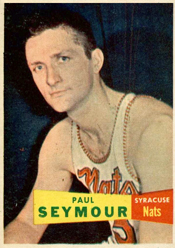
ImageThen came a change. Paul Seymour replaced Macauley. As a playmaking guard, Seymour sparked the Syracuse Nationals to a NBA title in 1955, then became their coach. He coached like he played _ fiery, tough, wily.
When Seymour came to St. Louis, he envisioned a wide-open style of play. He wanted a fast pace and scoring from the guards.

Cleo Hill was the kind of player Seymour had in mind. Hill was exceptionally quick, an acrobat who could score from anywhere on the court. After the Hawks drafted Hill, Seymour turned the rookie loose to run the floor and put up shots.

The Big Three, Pettit, Hagan and Lovellette, did not like this. Ease off, they told their coach. Buzz off, Seymour replied.

Then all hell broke loose.

Pioneer pro

As a youth, Paul Seymour played alley basketball in his hometown of Toledo, Ohio. The matchups were two against two. He and a friend, Bob Harrison, “challenged any other pair in the city,” Seymour recalled to the St. Louis Post-Dispatch. “In winter, we’d shovel the snow off the alley and play on.”

(Harrison later played nine seasons in the NBA, including two with St. Louis.)

After his freshman year at the University of Toledo, Seymour, 18, quit to join the Toledo Jeeps of the National Basketball League (NBL) in 1946. “That was a great club,” he told Lowell Reidenbaugh of The Sporting News. “I was the kid, getting $87.50 a week, and we traveled in a station wagon, often covering 500 miles a night to keep our schedule. We took turns at the wheel and you know what trick I got _ the last one, from 4 a.m. to daybreak.”

Seymour picked up the lifelong habit of smoking cigars then “because, with everyone else in the car smoking, a guy needed a smokescreen in self defense,” he told Bob Broeg of the Post-Dispatch.

The St. Louis Browns had seen Seymour play baseball and in 1947, when he was 19, he signed with them, then changed his mind rather than go to minor-league Pine Bluff, Ark., as an outfielder, the Post-Dispatch reported. Instead, he went to Baltimore of the Basketball Association of America (BAA).

After the 1948-49 season, the NBL and the BAA merged to become the National Basketball Association (NBA). Baltimore sold Seymour’s contract to Syracuse for $1, according to the Toledo Blade.

Seymour played 11 seasons for Syracuse, including the last four as player-coach. He was talented and successful in both roles.

A three-time all-star, Seymour was team captain of the 1955 NBA champions, averaging 14.6 points and 6.7 assists per game. “He played a brand of defense that bordered on stalking, refusing to let his opponent out of sight,” wrote Syracuse Post-Standard columnist David Ramsey. “He dropped 25-foot set shots and sank layups with either hand. He ran the team’s offense with wisdom and imagination. In short, he could play.”

As Syracuse forward Dolph Schayes noted to the newspaper, “He was the heart and soul of the Syracuse Nats … We were scrappy and never gave up. That was Paul … He was indestructible.”

Syracuse was 155-124 in Seymour’s four seasons as coach and twice reached the NBA Eastern Division Finals. The job paid just $13,000 a year, though, and Seymour wanted better.

After the 1959-60 season, Hawks owner Ben Kerner eased Easy Ed Macauley out of the coaching job, named him general manager and wooed Seymour with a three-year contract that included a pay raise, plus incentive clauses.

“He’s a complete coach,” Kerner told The Sporting News. “He knows the game, knows the talent and has that tremendous desire which is so necessary for all champions … He’s a rough, tough competitor … He reflects confidence in his every move and that assurance rubs off on his players.”

Changing times

Ben Kerner was to Hawks basketball coaches what George Steinbrenner later became to Yankees baseball managers: a carnivore who ate them for breakfast, lunch and dinner.

In the five seasons since moving the Hawks from Milwaukee to St. Louis in 1955, Kerner went through five head coaches: Red Holzman, Slater Martin, Alex Hannum, Andy Phillip and Ed Macauley. After Hannum led the Hawks to the 1958 NBA championship, he quit. “I never liked Hannum,” Kerner told Sports Illustrated. “He was a real tough hombre … He did a hell of a job, but he never was my type of guy … I didn’t feel safe with him. He wasn’t loyal.”

(Hannum won another NBA title with the 1966-67 Philadelphia 76ers.)

As for Macauley, Kerner told Sports Illustrated’s Gilbert Rogin, “I like Macauley … but he didn’t have the guts … I do feel Paul is a better coach than Macauley.”

The team Seymour inherited was a good one. The Hawks finished in first place in the Western Division in each of Macauley’s two seasons as coach and reached the NBA Finals in 1960. Seymour was hired to win a NBA title.

In addition to the Big Three of Pettit, Hagan and Lovellette, Seymour’s 1960-61 Hawks had a self-assured rookie guard, Lenny Wilkens. (Wilkens, elected to the Naismith Basketball Hall of Fame for his success as a player and a coach, was accepted by the Big Three because he passed the ball to them often. The rookie averaged 11.7 points per game.) “Our front line has the power,” Seymour told the St. Louis Globe-Democrat, “but we can increase that power through a more effective backcourt, especially in scoring.”

Seymour sent a message to the Big Three early in the 1960-61 season that the easy living days of Easy Ed were gone. (Macauley quit as general manager in September 1960.) Seymour fined Lovellette for lagging on defense during a game. As Bob Broeg noted, “When he put the bit on (Lovellette), he served notice to the rest of the team. Paul has been around long enough to know that hustle is part condition, part ability, but mostly desire.”

Described by Hawks radio broadcaster Buddy Blattner as “a backroom brawler with polish,” Seymour energized the Hawks, who hustled their way to the 1961 NBA Finals but then lost in five games to the Boston Celtics.

Boston was the better balanced team. It had plenty of muscle up front with center Bill Russell and power forward Tommy Heinsohn, and an array of guards (Bob Cousy, K.C. Jones, Sam Jones, Frank Ramsey, Bill Sharman) who poured in points. While Hagan and Pettit scored big, the Hawks’ backcourt didn’t match Boston’s. Wilkens was the only threat.

Meanwhile, two of the Hawks’ Western Division rivals had introduced big-scoring rookie guards _ Oscar Robertson with the Cincinnati Royals and Jerry West with the Los Angeles Lakers. If the Hawks were to stay atop the division and have a chance to dethrone Boston for the NBA title, Seymour determined, they’d need more firepower in the backcourt.

Urban legend

The Hawks’ first-round choice in the 1961 draft was Cleo Hill, a 6-foot-1 guard from Winston-Salem Teachers College.

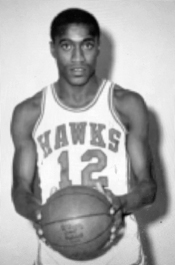
ImageHill’s path to the NBA had been filled with roadblocks. Growing up on Belmont Avenue in Newark, N.J., “I got in with a tough bunch of guys and wasted a lot of time,” Hill said to Dave Klein of the Newark Star-Ledger. “I didn’t study, I didn’t have respect for my elders, and I thought I knew everything there was to know.”

The first mentor who helped Hill get on track was Frank Ceres, a coach and playground instructor at Grover Cleveland Elementary School in Newark. Ceres told Hill he could become a good basketball player. He taught Hill to shoot a jump shot and how to produce backspin.

At Newark’s South Side High School (now Malcolm X Shabazz High School), Hill came under the guidance of Frank Delany, who taught U.S. history and coached the basketball team. “The best part of the (basketball) practice was his talk period,” Hill said to the Newark Star-Ledger. “He’d talk about the educational, athletic and social aspects of his players’ lives.”

Hill became a prolific prep scorer. His homecourt gym was small, with a low ceiling that intimidated visiting players. Hill tailored his shot-making to fit the territory. His arsenal included a line-drive hook shot he could make with either hand.

Al Attles, whose success in the NBA as a player, coach and executive earned him election to the Naismith Basketball Hall of Fame, played for Weequahic High School in Newark and was matched against Hill. “Cleo was the greatest high school player I’ve ever seen,” Attles said to the Star-Ledger. “In terms of overall basketball talent, he’s as good as there ever was.”

Weequahic coach Les Fein told the newspaper that Hill “could shoot from anywhere … He was incredibly quick and flexible and he had the ability to get free for any shot he wanted, any time he wanted.”

Despite Hill’s basketball talent, going to college was not a slam dunk. His academic grades “were barely passing,” the Star-Ledger noted. Frank Ceres, the elementary school mentor, made some calls to friends at Winston-Salem Teachers College. The school offered a basketball scholarship on one condition: Hill would need to get good grades in college to stay eligible.

Big man on campus

Winston-Salem Teachers College (now Winston-Salem State University) was the first historically black institution in the nation to grant degrees for teaching the elementary grades.

The school’s basketball coach, Clarence “Big House” Gaines, was dedicated to education as well as to athletics, and he helped Hill focus on studies. “He took a guy from the streets and put him into the programs _ English, mathematics and reading, remedials,” Hill recalled to the Star-Ledger. “He made me work hard and stressed getting a degree over and against making pro.”

To help Hill expand his vocabulary, Gaines encouraged a game: When Hill learned a new word, he’d test Gaines on whether the coach knew the meaning. Hill kept coming back with new words, hoping to trip up Gaines.

Hill also met a student, Eliza Ann, who emphasized to him the importance of an education. She became his wife.

(In spring 1962, after his season with the Hawks, Hill returned to Winston-Salem and completed the work to earn his degree.)

Meanwhile, Hill’s basketball skills blossomed. “He was the most scientific player I ever coached,” Gaines told the Star-Ledger. “He had the greatest assortment of shots of any player I ever coached.”

Basketball broadcaster Billy Packer was a player at a bigger Winston-Salem school, Wake Forest of the Atlantic Coast Conference (ACC), at the time Hill was in college. ACC basketball teams hadn’t integrated _ (the first black basketball player in the ACC wouldn’t arrive until December 1965) _ but Packer and his teammates would play pickup games against Hill and his teammates. “Cleo was better than anybody in the ACC at that time,” Packer told the Winston-Salem Journal.

Hill scored 2,488 career points in college. That was the school record until Earl “The Pearl” Monroe totaled 2,935. (Both achieved those figures before there was a three-point line.) Though Gaines coached both players, he told Mary Garber of the Winston-Salem Journal in 1973 that Hill was “the most complete player I’ve ever had … He could do the job both offensively and defensively.”

Special talent

The Hawks took Hill with the eighth pick in the first round of the March 1961 NBA draft. Paul Seymour, chief scout Emil Barboni and scouting adviser Ed Vogel saw Hill play and put him at the top of their list. “He would have been our first draft choice even if we would have had the first pick,” Seymour told the Post-Dispatch.

The Celtics, selecting after St. Louis, would have taken Hill if the Hawks hadn’t, the Post-Dispatch reported.

Marty Blake, then the Hawks’ business manager, later told reporter Vahe Gregorian that Hill “came into the league with abilities that were 40 years ahead of his time.”

“Great first step, unlimited range … and he was quick,” Blake said to the Asbury Park (N.J.) Press. “I mean, he was a speed demon.”

In a 1993 interview with reporter Bill Handleman about Hill, Billy Packer said, “There was no question he was destined for superstardom in the NBA. We’re not talking about some nice rookie here. We’re talking about Michael (Jordan). Cleo was Michael 33 years ago. At 6-foot-1, he did the things Michael Jordan does … We’re talking about a guy who should be in the (Naismith) Hall of Fame.”

Packer’s broadcast colleague Bill Raftery concurred, telling the Asbury Park Press in 1993 that Hill “did a lot of Jordanesque type of things we see today.”

With Lenny Wilkens unavailable for the first three months of the 1961-62 NBA season because of a military service commitment, Hill became the Hawks’ top guard. Seymour worked with the rookie to get him ready.

Power plays

In the regular-season opener, at home against Cincinnati, Hill scored 26, “drawing roars from the large crowd with his spectacular leaps while driving for shots or snaring rebounds,” the Post-Dispatch reported.

The black-owned weekly, St. Louis Argus, noted, “This young man captures the imagination of the crowd with his grasshopper leaps under the basket (and) his showboating gallops down (the) court.” Game stats

Hill scored 16 in his second game, but went cold soon after. The rookie missed 13 of 16 against Syracuse, misfired on 10 of 12 versus Chicago and clanked another 13 of 16 against Syracuse again.

Critics said he looked nervous, insecure, and there were grumbles about his unorthodox ways and playground style.

Seymour asked his players for patience and unity. He was confident Hill would figure it out, make the necessary adjustments.

The way the Big Three saw it, though, the rookie wasn’t ready, he’d been given too big a role too soon, and he should stop shooting so much. From their perspective, the team was better when the offense revolved around them.

Tensions built to a boiling point. In late October, Seymour told the Post-Dispatch that Lovellette “has been pouting for a month” and has complained about “not getting the ball.” Seymour also said one of the Big Three came to him and said Hill was getting too much publicity and should be benched.

“Never before was it more obvious that we needed a fast backcourt man, an outside scorer like Hill, an exceptional talent, but the big guys up front wouldn’t play with him,” Seymour told Bob Broeg of the Post-Dispatch. “Jealous, no doubt. Protecting those big salaries, I guess. Imagine, telling me the kid was getting too much publicity.”

On Nov. 8, Hill scored 20 points and snared 12 rebounds against the Lakers. He made half his shots the next game, finishing with 16 against Detroit. Then he sank six of nine and totaled 16 points versus Cincinnati.

It appeared Hill was finding a groove, but Ben Kerner, acting on behalf of the Big Three, ordered Seymour to remove the rookie from the starting lineup.

Reluctantly, Seymour did so, but he was seething.

Speaking at a luncheon in Detroit, before the Hawks played the Pistons, Seymour told the audience, “I’d trade any of our top players and that includes Bob Pettit … There are no untouchables any more on my club.”

Two days later, Nov. 17, 1961, with the Hawks’ record at 5-9, Kerner fired Seymour. “I couldn’t run a smooth club with the bad feeling between team and coach,” Kerner told the Globe-Democrat.

Seymour said he was fired because he insisted, against the wishes of the Big Three, to start Hill.  “I’d just rather lose my job doing what I think is right,” Seymour said to the Globe-Democrat.

Regarding the Big Three, he told the newspaper, “They didn’t help the kid but were against him. That’s my only gripe, the way they boycotted the kid … It takes the heart out of you when your own team players won’t help you … I wouldn’t treat a dog the way they treated him.”

Hill’s take on the Big Three was, “They knew they were getting paid for the points they scored, and, here I was, taking their points … It wasn’t racial. It was points,” he told the Newark Star-Ledger.

Pettit said to the Associated Press, “There’s nothing we want more than for Cleo Hill to be the greatest ballplayer in the world. We don’t care who plays or who scores as long as we win. I know I speak for Cliff (Hagan) and Clyde (Lovellette).”

New directions

Kerner asked Pettit to fill in as interim coach until a replacement for Seymour could be hired. In Pettit’s first game in that role, Hill played a total of two minutes.

Fuzzy Levane, who’d coached the Hawks when they were based in Milwaukee, took over for the remainder of the season and used Hill sparingly. The Hawks finished 29-51. Hill averaged 5.5 points in 58 games during his only NBA season.

Harry Gallatin became the next Hawks coach, and he cut Hill from the roster before the 1962-63 season. No other NBA team was interested in him.

Hill went on to play in the lower levels of professional basketball with the Philadelphia Tapers of the American Basketball League and then the Trenton Colonials, New Haven Elms and Scranton Miners of the Eastern League.

Putting his college degree to use, Hill became an elementary school teacher in New Jersey and then the basketball coach at Essex County College in Newark. His record in 24 seasons there was 489-128.

Back home in Syracuse, Paul Seymour worked in real estate, owned a liquor store and coached basketball at Onondaga Community College from 1962-64. He returned to the NBA as coach of Baltimore (1965-66) and Detroit (1968-69).

In a letter he sent to Hill, Seymour wrote, “Occasionally, I get disgusted thinking what happened to you (in the NBA). I believe you got white-balled.”