

All Activity
- Past hour
-

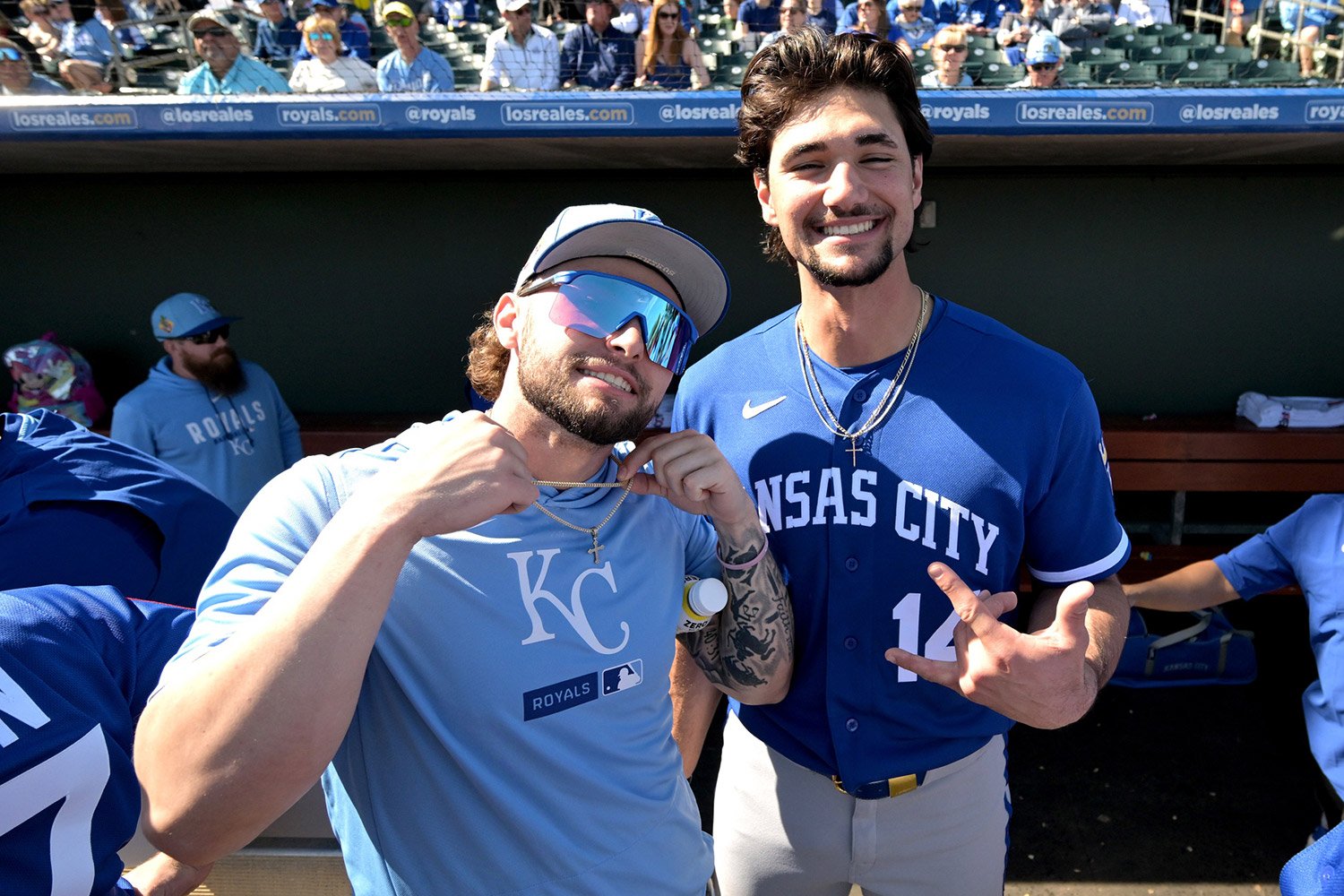 Spring training is now in full swing, and almost every player has had an opportunity to get at-bats or innings pitched. Which players have stood out with good or bad performances over the past few games? As a reminder, don't read too much into spring training performances. Sample sizes are small, competition levels vary, and players may be working on specific adjustments that don't necessarily translate to traditional stats. This post is only meant to inform and summarize what has happened in the past few games. Who’s Hot? 🔥 First of all, check out a post from yesterday to see which three non-roster invitee hitters are making their case in Royals camp with hot starts this spring. Jac Caglianone Caglianone has started hot this spring with a .400 average and a 1.283 OPS. He is starting to show signs of increased plate discipline with three walks in his four plate appearances on Saturday against the Rockies. With below average walk and chase rates last season, already having five walks is a good sign for Caglianone’s plate discipline heading into the 2026 season. He is also seeing the ball well and hitting it hard when he makes contact. Caglianone has five hard-hit balls in his last two games, including a 120.2 mph double on Friday against the Diamondbacks. For perspective, only two balls were hit harder in all of MLB last season. If Caglianone can sustain his excellent batted ball skills with an improvement in plate discipline, then he is showing the traits of a true middle-of-the-order bat. Michael Massey Massey is also off to a hot start with a Spring batting average so far of .538 and an OPS of 1.446. He has successfully reached base five times in his last two appearances while only striking out once. His average exit velocity in those two games was 92.26 mph, which is up from his average exit velocity of 87.5 mph last season. Massey is positioning himself for a larger share of playing time at second base over Jonathan India, who is so far not off to a great start this spring. If he can return to his 2024 form, which was cut short by injury, he will make manager Matt Quatraro face a tough decision about who to give the majority of the innings at second base. Cole Ragans Ragans made his first appearance of spring on Saturday against the Rockies, pitching two innings with three strikeouts while only allowing one hit and one hit batter. The Rockies hitters also struggled to make contact with Ragans, inducing 11 whiffs in his two innings. He allowed some hard hits when the batters were able to make contact with three hard hits in his four batted balls. His fastball averaged 97.0 mph and topped off at 98 mph, which is definitely a positive sign following his injuries last season. His pitch mix appeared balanced, with both his slider and changeup also grading well with Stuff+ over 100. His only pitch that did not grade well was his knuckle curve, which he only threw twice and allowed his lone single on. With this level of performance, Ragans showed that he should be the ace of this rotation if he can stay healthy. Who’s Not? 🧊 Carlos Estevez Estevez showed worrying signs in his second appearance this spring. He allowed two hits, one of which was a home run, and two earned runs in one inning against the Athletics on Friday. Including his first appearance on Tuesday, he has allowed four earned runs on four hits (three home runs) and eight hard-hit balls. Opposing batters are squaring up the ball at an alarming rate against Estevez. Estevez has also yet to throw a pitch faster than 89 mph, which is a very worrying sign from the player whom everyone had locked in as the closer at the end of the Royals’ bullpen. Statcast data shows that Estevez has not yet thrown a fastball this spring, but reports indicate that his fastball is registering as a changeup due to its lower velocity so far. In previous seasons, his fastball has needed time to ramp up, but these are still worrying measurements. The Royals will certainly hope that this is a case of ramping up rather than regression. If his fastball velocity does not increase, then the Royals will have reason to worry. Isaac Collins Collins got his first hit, a double, on Sunday against the Brewers, ending an 0-8 spell with four strikeouts. His batted balls have also not been particularly hard-hit, with an average exit velocity of 87.26 mph, a slight drop-off from his 88.8 mph average in 2025. There is still plenty of time for Collins to hit his stride this spring. Being slated to be the starting left fielder after being traded this offseason, there will be pressure to produce, since the position was a major weakness for the Royals last season. Collins’ start this spring was delayed since he received injections in both knees this offseason to address patella tendinitis that he was dealing with at the end of last year. While there is plenty of time this spring for Collins to hit his stride, his fitness will be something to keep an eye on moving forward. Salvador Perez Perez was featured a week ago as a player who had a strong start to spring, but he has since gone quiet this spring. Perez appeared on both Friday and Saturday and hit a combined 0-4 with a walk. He also failed to register a batted ball of at least 95 mph in his four at-bats. Perez will soon head off to the World Baseball Classic to captain Team Venezuela. The Royals will hope that his meaningful at-bats at the WBC will help him regain his form and return to the Royals at full form.
 -
Image courtesy of © Jayne Kamin-Oncea-Imagn Images Spring training is now in full swing, and almost every player has had an opportunity to get at-bats or innings pitched. Which players have stood out with good or bad performances over the past few games? As a reminder, don't read too much into spring training performances. Sample sizes are small, competition levels vary, and players may be working on specific adjustments that don't necessarily translate to traditional stats. This post is only meant to inform and summarize what has happened in the past few games. Who’s Hot? 🔥 First of all, check out a post from yesterday to see which three non-roster invitee hitters are making their case in Royals camp with hot starts this spring. Jac Caglianone Caglianone has started hot this spring with a .400 average and a 1.283 OPS. He is starting to show signs of increased plate discipline with three walks in his four plate appearances on Saturday against the Rockies. With below average walk and chase rates last season, already having five walks is a good sign for Caglianone’s plate discipline heading into the 2026 season. He is also seeing the ball well and hitting it hard when he makes contact. Caglianone has five hard-hit balls in his last two games, including a 120.2 mph double on Friday against the Diamondbacks. For perspective, only two balls were hit harder in all of MLB last season. If Caglianone can sustain his excellent batted ball skills with an improvement in plate discipline, then he is showing the traits of a true middle-of-the-order bat. Michael Massey Massey is also off to a hot start with a Spring batting average so far of .538 and an OPS of 1.446. He has successfully reached base five times in his last two appearances while only striking out once. His average exit velocity in those two games was 92.26 mph, which is up from his average exit velocity of 87.5 mph last season. Massey is positioning himself for a larger share of playing time at second base over Jonathan India, who is so far not off to a great start this spring. If he can return to his 2024 form, which was cut short by injury, he will make manager Matt Quatraro face a tough decision about who to give the majority of the innings at second base. Cole Ragans Ragans made his first appearance of spring on Saturday against the Rockies, pitching two innings with three strikeouts while only allowing one hit and one hit batter. The Rockies hitters also struggled to make contact with Ragans, inducing 11 whiffs in his two innings. He allowed some hard hits when the batters were able to make contact with three hard hits in his four batted balls. His fastball averaged 97.0 mph and topped off at 98 mph, which is definitely a positive sign following his injuries last season. His pitch mix appeared balanced, with both his slider and changeup also grading well with Stuff+ over 100. His only pitch that did not grade well was his knuckle curve, which he only threw twice and allowed his lone single on. With this level of performance, Ragans showed that he should be the ace of this rotation if he can stay healthy. Who’s Not? 🧊 Carlos Estevez Estevez showed worrying signs in his second appearance this spring. He allowed two hits, one of which was a home run, and two earned runs in one inning against the Athletics on Friday. Including his first appearance on Tuesday, he has allowed four earned runs on four hits (three home runs) and eight hard-hit balls. Opposing batters are squaring up the ball at an alarming rate against Estevez. Estevez has also yet to throw a pitch faster than 89 mph, which is a very worrying sign from the player whom everyone had locked in as the closer at the end of the Royals’ bullpen. Statcast data shows that Estevez has not yet thrown a fastball this spring, but reports indicate that his fastball is registering as a changeup due to its lower velocity so far. In previous seasons, his fastball has needed time to ramp up, but these are still worrying measurements. The Royals will certainly hope that this is a case of ramping up rather than regression. If his fastball velocity does not increase, then the Royals will have reason to worry. Isaac Collins Collins got his first hit, a double, on Sunday against the Brewers, ending an 0-8 spell with four strikeouts. His batted balls have also not been particularly hard-hit, with an average exit velocity of 87.26 mph, a slight drop-off from his 88.8 mph average in 2025. There is still plenty of time for Collins to hit his stride this spring. Being slated to be the starting left fielder after being traded this offseason, there will be pressure to produce, since the position was a major weakness for the Royals last season. Collins’ start this spring was delayed since he received injections in both knees this offseason to address patella tendinitis that he was dealing with at the end of last year. While there is plenty of time this spring for Collins to hit his stride, his fitness will be something to keep an eye on moving forward. Salvador Perez Perez was featured a week ago as a player who had a strong start to spring, but he has since gone quiet this spring. Perez appeared on both Friday and Saturday and hit a combined 0-4 with a walk. He also failed to register a batted ball of at least 95 mph in his four at-bats. Perez will soon head off to the World Baseball Classic to captain Team Venezuela. The Royals will hope that his meaningful at-bats at the WBC will help him regain his form and return to the Royals at full form. View full article
- Today
-

Is Helcris Olivarez This Year's Sleeper in the Royals Bullpen?
Kevin O'Brien posted an article in Royals
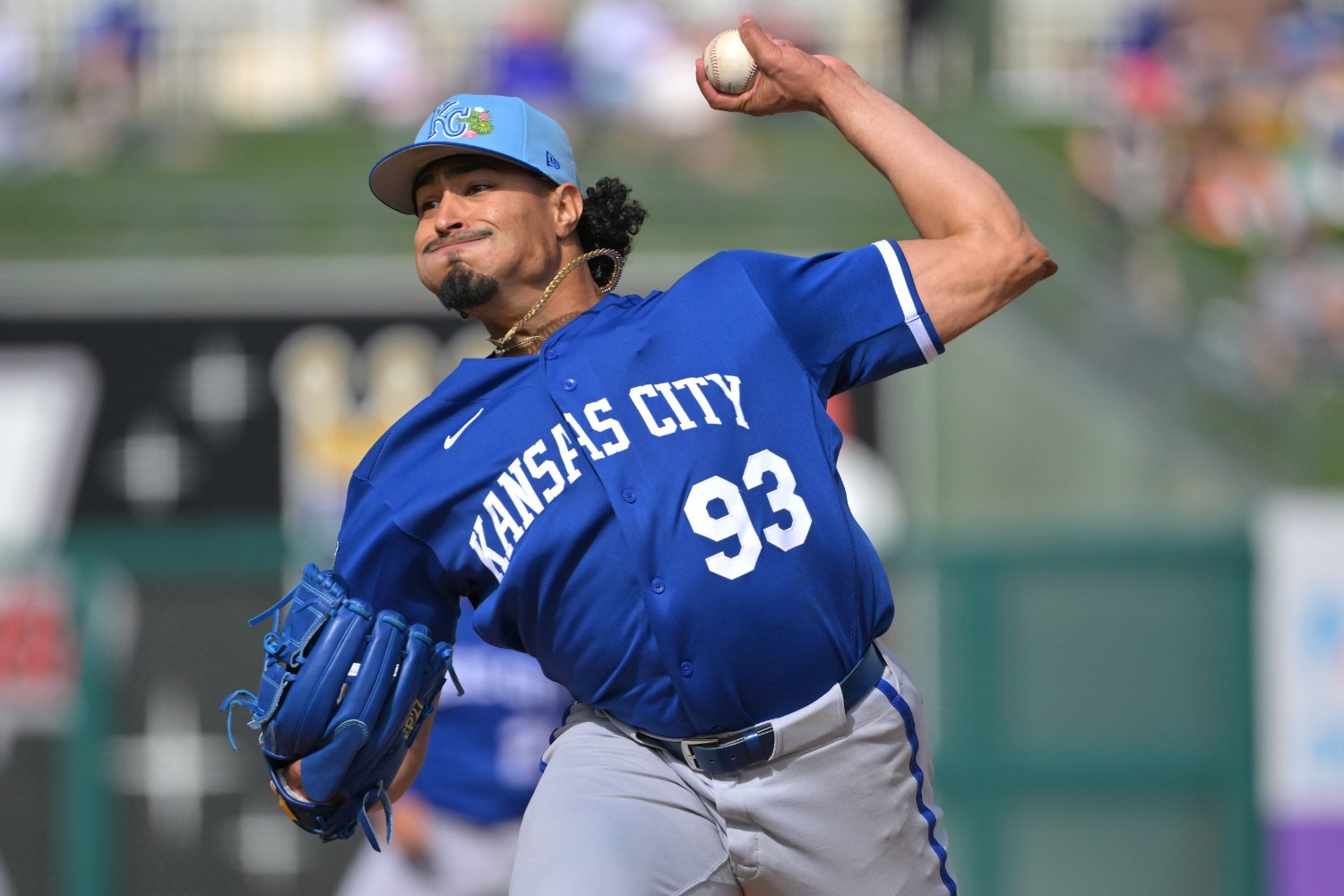 A big key for the Royals last year was the improvement in the bullpen from 2024 to 2025. While the bullpen improved after the Trade Deadline acquisition of Lucas Erceg, it was an inconsistent group in 2024, and the metrics proved it. Royals relievers ranked 20th in bullpen ERA (4.13), 28th in K/9 (8.06), 23rd in K/BB ratio (2.36), and 26th in SIERA (4.02). It's honestly amazing that the Royals won 86 games and made the playoffs with a bullpen that mediocre. In 2025, thanks to the acquisition of Carlos Estevez and the improvement of some other relievers, Kansas City's bullpen showed some growth in terms of results. They ranked 7th in bullpen ERA (3.63), 19th in K-BB ratio (2.46), and 21st in SIERA (3.99). However, the only blemish for this bullpen was the lack of strikeouts, as they actually ranked worse in K/9 with a 7.76 mark (which ranked 29th). Thus, Royals GM JJ Picollo made it a priority to acquire relievers who could get strikeouts and whiffs. Trades for Philadelphia's Matt Strahm and Milwaukee's Nick Mears confirmed that priority. That said, one intriguing Minor League signing this spring has been Helcris Olivarez, who pitched in the San Francisco Giants organization a season ago. In four outings and four IP, Olivarez has a 2.25 ERA, 1.50 WHIP, 3.87 FIP, and 3.00 K/BB ratio. The strikeouts haven't been great, as he has a 16.7% K% so far in Cactus League play. That said, he's limited the walks (5.6% BB%), something that has plagued him in the past in the Minor Leagues. For context, in 37 appearances in Double-A and Triple-A combined last year, he had a 24.6% BB% and 1.7% K-BB%. Safe to say, those kinds of numbers aren't going to cut it in the Majors. However, what has been different with Olivarez so far this spring? What kind of role could Olivarez have in the Royals' bullpen in 2026? What are some recent Royals bullpen success stories that are similar to Olivarez? Let's break down those questions using Fangraphs and TJ Stats data and applications. Olivarez's Four-Seamer and Curve Have Been Key This Spring The 25-year-old Dominican lefty hasn't generated a ton of strikeouts this spring, with only three strikeouts so far. That said, he's producing a decent chase and whiff, while minimizing hard contact, as illustrated by his reasonable xwOBACON. Those metrics can be seen via his TJ Stats summary of his performance this spring below. When it comes to TJ Stuff+, there's a lot to be encouraged about with Olivarez's profile. While his overall TJ Stuff+ is 100 and he has only one pitch with a TJ Stuff+ over 100 (his curve, which has a 106 mark), all four of his offerings have pitching grades over 50. That shows that he has a balanced profile, and he does have one elite pitch in his curveball, which has a pitching grade of 64 and a whiff rate of 66.7%. Olivarez hasn't generated an outstanding chase rate (28.6%), and his whiff rate has been below average (21.4%). That said, his four-seamer chase has been solid (31.6%), and he's been limiting hard contact on his fastball, with his four-seamer posting a .362 xwOBACON and his sinker posting a .107 xwOBACON. I believe a reason for the lower chase and whiff rates is due to his erratic control, as he has a 44.4% zone rate so far this spring. Below is Olivarez's pitch chart from yesterday's Cactus League game. Notice that it was feast or famine for him when it came to locating his pitches against the Rockies on Saturday. Once Olivarez is able to find the strike zone more this spring, the more effective his chase and whiff rates will be. His most thrown pitch this spring has been his four-seamer, and it's typically been a good pitch for him in terms of TJ Stuff+ and whiff profiles. Here's a look at his TJ Stats summary from last year in Triple-A Sacramento, and take a look at the data on the four-seamer from a season ago. The four-seamer not only averaged 97.3 MPH, but it also had a 99 TJ Stuff+, 52 grade, 36.5% whiff rate, and .248 xwOBACON. So, what can we say about that data on the fastball from last season? Yes, it is. Conversely, it had a 39.8% zone rate and 18.4% chase rate. Considering he threw the pitch 47.8% of the time, that erratic control of the four-seamer probably led to his 24.4% BB% in Sacramento. What's interesting about Olivarez's four-seamer is that it doesn't sport the characteristics of a normal four-seam fastball. It only had a 13.1 iVB and an 11.7 HB. Thus, it's more of a horizontal moving pitch with more armside movement than typical for a four-seamer. One can see that in the pitch below from his time in Double-A Portland (when he was in the Red Sox organization), which hovers on the line being a sinker (though I don't have the exact metrics of the pitch). Despite that unique profile, Olivarez located it up, which one would do with the typical four-seamer. Based on the TJ Stats heatmap data, the approach worked for Olivarez in Sacramento last season. He produced a 33.3% CSW, 21.7% whiff rate, and .230 xwOBACON against lefties and a 29.8% CSW, 41.1% whiff rate, and .258 xwOBACON against righties. Thus, his four-seamer was a better strike-generating pitch against lefties but a better swing-and-miss pitch against righties last year in Triple-A. Let's see how that heatmap data looks so far this spring. The location hasn't been quite as sharp for Olivarez, based on his heatmap. His four-seamer has been located more in the middle of the plate than it was a season ago, when it was located up and armside against both lefties and righties. Against lefties, whom he has a 55.6% four-seamer usage against, it's produced similar trends with a 26.7% CSW and 0.0% whiff, but .269 xwOBACON. Against righties, it's been even better when it comes to generating strikes (36.8% CSW) and whiffs (42.9%), but it's been hit a lot harder, as illustrated by a .487 xwOBACON. The four-seamer will be key for Olivarez this spring because it can effectively set up his curve, which may be his best put-away pitch. Here's a look at the TJ Stats heatmap data this spring on his primary breaking offering, especially against lefties. He's only thrown it 22.2% of the time against lefties (and 5.6% against righties). However, against lefties, it's been a stellar offering with a 33.3% CSW, 40% O-Swing (chase), and 66.7% whiff. He hasn't located it all that well either, with the curve being located more up and in than typical. Here's a look at his curveball heatmap data from 2025 with the Triple-A Rivercats. Olivarez located the curve primarily away and glove-side against lefties and righties last year. It was far more effective against righties with a 28% CSW, 57.1% whiff, and .120 xwOBACON. Command of the pitch is probably the reason for that difference, as his curve against righties was located more in the lower zone 7 portion of the strike zone, while against lefties, it was more up in zone 6. The curve breaking hard and in on hitters foot is always going to lead to more whiffs. It would be nice to see Olivarez get to commanding that curveball back in that area of the strikezone this spring in Cactus League play, but he would likely need his four-seam command to improve first so he can get in more ideal counts to utilize his effective curveball. What Kind of Role Can Olivarez Play in the Bullpen? The Royals lack lefty depth on the 40-man roster. The only lefties who could pitch out of the bullpen are Strahm, Daniel Lynch IV, and Bailey Falter. That said, Falter is more of a starter and only moved to the bullpen after struggling initially with the Royals last season. Lynch has looked solid this spring, with his stuff playing more up than it did a season ago, as illustrated by his TJ Stats summary in Cactus League play. Thus, Strahm and Lynch could probably hold things down in the bullpen from a lefty perspective. However, as for Falter? I'm not quite as sure, though the TJ Stuff+, his pitch extension, and xwOBACON have been fine so far in Spring Training, as illustrated below. It would be nice for the Royals to get one more lefty in the bullpen, especially with Angel Zerpa going to Milwaukee this offseason (in the Mears and Isaac Collins trade). Strahm is a workhorse, but he is another year older. Lynch IV has produced good numbers so far, but his 4.76 FIP was much higher than his 3.06 ERA last year. Thus, the former 34th overall pick of the 2018 MLB Draft could be due for regression in 2026. Olivarez is far from dependable, considering his track record. That said, he's a lefty with velocity and swing-and-miss stuff who could give the Royals the punch from the left side they desperately need in 2026, as long as he is able to harness the control a bit better. What Are Some Similar Situations to Olivarez? I don't think Olivarez will make the Opening Day roster. However, he still has a Minor League option, and he's still under-the-radar, so I don't think there will be a tremendous market for him to opt out (he likely wouldn't make another club's Opening Day roster either). However, while he will start the year in Triple-A Omaha, he has a chance to be a Royals reliever who started the year in the Minors but later became a key contributor to the Royals bullpen. Two examples of that archetype are Sam Long in 2024 and Taylor Clarke last year. Neither made the Royals' Opening Day roster that season. However, they ended up being key relievers for Kansas City when they got called up. Here's a look at what Long did in 2024. In 42.2 IP, Long posted a 3.16 ERA and 1.20 WHIP with a 15.3% K-BB%. He ended up being the Royals' most dependable left-handed reliever that season, with some key innings in the postseason. Like Olivarez, Long has control issues, as evidenced by his 45.7% zone rate. However, he generated strong chase (30.2%) and whiff rates (27.5%), and his four-seamer was his most effective pitch with a 55 grade. Long fell apart a bit in 2025, but the Royals would take a similar campaign from Olivarez in 2026. Now, let's take a look at Clarke, who returned to the Royals after being traded away after the 2023 season. Clarke didn't have a great four-seamer (97 TJ Stuff+ and 50 grade), but his slider was elite with a 108 TJ Stuff+ and 59 grade. The breaking offering that he threw 39.7% of the time also had a 50.9% zone rate, a 33.1% chase-and-whiff rate, and a .312 xwOBACON. As a result, in 55.1 IP, he posted a 3.25 ERA, 0.85 WHIP, 3.97 FIP, and 17% K-BB%. It may be unfair to compare Olivarez to either Long or Clarke, mainly because Olivarez's control issues are way worse than those of the two former Kansas City relievers. However, both are examples of pitchers who weren't taken seriously by fans in the offseason, had good Spring Training campaigns, started in the Minors, and parlayed that success into strong Major League campaigns. Success may look a little different for Olivarez in 2026. However, if the stuff continues and if he can continue to hone his command and control with each and every outing, both in Spring Training and in the Minor Leagues to begin the year, then it wouldn't be surprising to see Olivarez turn into some kind of dark-horse impact reliever for the Royals by mid-season. Hopefully, if that happens, he can have a longer, more successful tenure in Kansas City than Long or Clarke.
 -
Image courtesy of Jayne Kamin-Oncea-Imagn Images A big key for the Royals last year was the improvement in the bullpen from 2024 to 2025. While the bullpen improved after the Trade Deadline acquisition of Lucas Erceg, it was an inconsistent group in 2024, and the metrics proved it. Royals relievers ranked 20th in bullpen ERA (4.13), 28th in K/9 (8.06), 23rd in K/BB ratio (2.36), and 26th in SIERA (4.02). It's honestly amazing that the Royals won 86 games and made the playoffs with a bullpen that mediocre. In 2025, thanks to the acquisition of Carlos Estevez and the improvement of some other relievers, Kansas City's bullpen showed some growth in terms of results. They ranked 7th in bullpen ERA (3.63), 19th in K-BB ratio (2.46), and 21st in SIERA (3.99). However, the only blemish for this bullpen was the lack of strikeouts, as they actually ranked worse in K/9 with a 7.76 mark (which ranked 29th). Thus, Royals GM JJ Picollo made it a priority to acquire relievers who could get strikeouts and whiffs. Trades for Philadelphia's Matt Strahm and Milwaukee's Nick Mears confirmed that priority. That said, one intriguing Minor League signing this spring has been Helcris Olivarez, who pitched in the San Francisco Giants organization a season ago. In four outings and four IP, Olivarez has a 2.25 ERA, 1.50 WHIP, 3.87 FIP, and 3.00 K/BB ratio. The strikeouts haven't been great, as he has a 16.7% K% so far in Cactus League play. That said, he's limited the walks (5.6% BB%), something that has plagued him in the past in the Minor Leagues. For context, in 37 appearances in Double-A and Triple-A combined last year, he had a 24.6% BB% and 1.7% K-BB%. Safe to say, those kinds of numbers aren't going to cut it in the Majors. However, what has been different with Olivarez so far this spring? What kind of role could Olivarez have in the Royals' bullpen in 2026? What are some recent Royals bullpen success stories that are similar to Olivarez? Let's break down those questions using Fangraphs and TJ Stats data and applications. Olivarez's Four-Seamer and Curve Have Been Key This Spring The 25-year-old Dominican lefty hasn't generated a ton of strikeouts this spring, with only three strikeouts so far. That said, he's producing a decent chase and whiff, while minimizing hard contact, as illustrated by his reasonable xwOBACON. Those metrics can be seen via his TJ Stats summary of his performance this spring below. When it comes to TJ Stuff+, there's a lot to be encouraged about with Olivarez's profile. While his overall TJ Stuff+ is 100 and he has only one pitch with a TJ Stuff+ over 100 (his curve, which has a 106 mark), all four of his offerings have pitching grades over 50. That shows that he has a balanced profile, and he does have one elite pitch in his curveball, which has a pitching grade of 64 and a whiff rate of 66.7%. Olivarez hasn't generated an outstanding chase rate (28.6%), and his whiff rate has been below average (21.4%). That said, his four-seamer chase has been solid (31.6%), and he's been limiting hard contact on his fastball, with his four-seamer posting a .362 xwOBACON and his sinker posting a .107 xwOBACON. I believe a reason for the lower chase and whiff rates is due to his erratic control, as he has a 44.4% zone rate so far this spring. Below is Olivarez's pitch chart from yesterday's Cactus League game. Notice that it was feast or famine for him when it came to locating his pitches against the Rockies on Saturday. Once Olivarez is able to find the strike zone more this spring, the more effective his chase and whiff rates will be. His most thrown pitch this spring has been his four-seamer, and it's typically been a good pitch for him in terms of TJ Stuff+ and whiff profiles. Here's a look at his TJ Stats summary from last year in Triple-A Sacramento, and take a look at the data on the four-seamer from a season ago. The four-seamer not only averaged 97.3 MPH, but it also had a 99 TJ Stuff+, 52 grade, 36.5% whiff rate, and .248 xwOBACON. So, what can we say about that data on the fastball from last season? Yes, it is. Conversely, it had a 39.8% zone rate and 18.4% chase rate. Considering he threw the pitch 47.8% of the time, that erratic control of the four-seamer probably led to his 24.4% BB% in Sacramento. What's interesting about Olivarez's four-seamer is that it doesn't sport the characteristics of a normal four-seam fastball. It only had a 13.1 iVB and an 11.7 HB. Thus, it's more of a horizontal moving pitch with more armside movement than typical for a four-seamer. One can see that in the pitch below from his time in Double-A Portland (when he was in the Red Sox organization), which hovers on the line being a sinker (though I don't have the exact metrics of the pitch). Despite that unique profile, Olivarez located it up, which one would do with the typical four-seamer. Based on the TJ Stats heatmap data, the approach worked for Olivarez in Sacramento last season. He produced a 33.3% CSW, 21.7% whiff rate, and .230 xwOBACON against lefties and a 29.8% CSW, 41.1% whiff rate, and .258 xwOBACON against righties. Thus, his four-seamer was a better strike-generating pitch against lefties but a better swing-and-miss pitch against righties last year in Triple-A. Let's see how that heatmap data looks so far this spring. The location hasn't been quite as sharp for Olivarez, based on his heatmap. His four-seamer has been located more in the middle of the plate than it was a season ago, when it was located up and armside against both lefties and righties. Against lefties, whom he has a 55.6% four-seamer usage against, it's produced similar trends with a 26.7% CSW and 0.0% whiff, but .269 xwOBACON. Against righties, it's been even better when it comes to generating strikes (36.8% CSW) and whiffs (42.9%), but it's been hit a lot harder, as illustrated by a .487 xwOBACON. The four-seamer will be key for Olivarez this spring because it can effectively set up his curve, which may be his best put-away pitch. Here's a look at the TJ Stats heatmap data this spring on his primary breaking offering, especially against lefties. He's only thrown it 22.2% of the time against lefties (and 5.6% against righties). However, against lefties, it's been a stellar offering with a 33.3% CSW, 40% O-Swing (chase), and 66.7% whiff. He hasn't located it all that well either, with the curve being located more up and in than typical. Here's a look at his curveball heatmap data from 2025 with the Triple-A Rivercats. Olivarez located the curve primarily away and glove-side against lefties and righties last year. It was far more effective against righties with a 28% CSW, 57.1% whiff, and .120 xwOBACON. Command of the pitch is probably the reason for that difference, as his curve against righties was located more in the lower zone 7 portion of the strike zone, while against lefties, it was more up in zone 6. The curve breaking hard and in on hitters foot is always going to lead to more whiffs. It would be nice to see Olivarez get to commanding that curveball back in that area of the strikezone this spring in Cactus League play, but he would likely need his four-seam command to improve first so he can get in more ideal counts to utilize his effective curveball. What Kind of Role Can Olivarez Play in the Bullpen? The Royals lack lefty depth on the 40-man roster. The only lefties who could pitch out of the bullpen are Strahm, Daniel Lynch IV, and Bailey Falter. That said, Falter is more of a starter and only moved to the bullpen after struggling initially with the Royals last season. Lynch has looked solid this spring, with his stuff playing more up than it did a season ago, as illustrated by his TJ Stats summary in Cactus League play. Thus, Strahm and Lynch could probably hold things down in the bullpen from a lefty perspective. However, as for Falter? I'm not quite as sure, though the TJ Stuff+, his pitch extension, and xwOBACON have been fine so far in Spring Training, as illustrated below. It would be nice for the Royals to get one more lefty in the bullpen, especially with Angel Zerpa going to Milwaukee this offseason (in the Mears and Isaac Collins trade). Strahm is a workhorse, but he is another year older. Lynch IV has produced good numbers so far, but his 4.76 FIP was much higher than his 3.06 ERA last year. Thus, the former 34th overall pick of the 2018 MLB Draft could be due for regression in 2026. Olivarez is far from dependable, considering his track record. That said, he's a lefty with velocity and swing-and-miss stuff who could give the Royals the punch from the left side they desperately need in 2026, as long as he is able to harness the control a bit better. What Are Some Similar Situations to Olivarez? I don't think Olivarez will make the Opening Day roster. However, he still has a Minor League option, and he's still under-the-radar, so I don't think there will be a tremendous market for him to opt out (he likely wouldn't make another club's Opening Day roster either). However, while he will start the year in Triple-A Omaha, he has a chance to be a Royals reliever who started the year in the Minors but later became a key contributor to the Royals bullpen. Two examples of that archetype are Sam Long in 2024 and Taylor Clarke last year. Neither made the Royals' Opening Day roster that season. However, they ended up being key relievers for Kansas City when they got called up. Here's a look at what Long did in 2024. In 42.2 IP, Long posted a 3.16 ERA and 1.20 WHIP with a 15.3% K-BB%. He ended up being the Royals' most dependable left-handed reliever that season, with some key innings in the postseason. Like Olivarez, Long has control issues, as evidenced by his 45.7% zone rate. However, he generated strong chase (30.2%) and whiff rates (27.5%), and his four-seamer was his most effective pitch with a 55 grade. Long fell apart a bit in 2025, but the Royals would take a similar campaign from Olivarez in 2026. Now, let's take a look at Clarke, who returned to the Royals after being traded away after the 2023 season. Clarke didn't have a great four-seamer (97 TJ Stuff+ and 50 grade), but his slider was elite with a 108 TJ Stuff+ and 59 grade. The breaking offering that he threw 39.7% of the time also had a 50.9% zone rate, a 33.1% chase-and-whiff rate, and a .312 xwOBACON. As a result, in 55.1 IP, he posted a 3.25 ERA, 0.85 WHIP, 3.97 FIP, and 17% K-BB%. It may be unfair to compare Olivarez to either Long or Clarke, mainly because Olivarez's control issues are way worse than those of the two former Kansas City relievers. However, both are examples of pitchers who weren't taken seriously by fans in the offseason, had good Spring Training campaigns, started in the Minors, and parlayed that success into strong Major League campaigns. Success may look a little different for Olivarez in 2026. However, if the stuff continues and if he can continue to hone his command and control with each and every outing, both in Spring Training and in the Minor Leagues to begin the year, then it wouldn't be surprising to see Olivarez turn into some kind of dark-horse impact reliever for the Royals by mid-season. Hopefully, if that happens, he can have a longer, more successful tenure in Kansas City than Long or Clarke. View full article
-
Been doing these on Twitter and Bluesky. Figure I will also share these here for those who don't follow on either (though I will primarily share my Bluesky posts on the forums). Subscribe to TJ Stats if you haven't already. Great stuff, and the website has gone through a great revamp.
-
On Sunday, after the Royals' 3-1 win over the Milwaukee Brewers, manager Matt Quatraro announced that Luinder Avila will be joining Team Venezuela for the upcoming World Baseball Classic. Avila will be joining Team Venezuela along with Royals teammates Salvador Perez and Maikel Garcia, who were announced to the roster earlier in the offseason. In addition to those three, Bobby Witt Jr. and Michael Wacha will be joining Team USA; Vinnie Pasquantino and Jac Caglianone will be joining Team Italy; Seth Lugo will be starting for Team Puerto Rico; and Carlos Estevez will be pitching for Team Dominican Republic. Michael Coyle had a breakdown of all participants in the World Baseball Classic on February 5th here at Royals Keep. Avila ranks 13th on our Top 20 preseason Royals prospects list. He had a strong MLB debut, posting a 1.29 ERA and 0.93 WHIP in 13 appearances with the Royals. He also posted a 28.6% K% and had a 2.09 xERA in his first stint against MLB competition. In Royals camp, he's been in competition for not just a roster spot, but perhaps a spot in the Royals' rotation. Quatraro mentioned in a press conference in Spring Training that Avila had "frontline starter" potential. Prior to his call-up, the 24-year-old primarily pitched as a starter in the Minor Leagues, posting a 5.23 ERA and 1.33 WHIP in 53.1 IP with the Storm Chasers last season. However, he still posted a 28% K%, a 17.7% K-BB%, and a 4.38 FIP, indicating he was better in Omaha than his ERA suggested. This spring, Avila has been off to a strong start in Cactus League play. In 4.0 IP, he has a 2.25 ERA and 1.75 WHIP. His K% and K-BB% are a little low at 21.1% and 10.5%, respectively. That said, his TJ Stuff+, chase, and whiff metrics have still been strong, as seen below via his TJ Stats summary. Avila has a 100 overall TJ Stuff+ but has four pitches with marks of 100 or higher and grades of 54 or higher. His curveball has been his best pitch this spring on a TJ Stuff+ end, with a 59 grade, but it has only generated a 20% whiff and chase rate. On the flip side, his sinker is his worst pitch in terms of TJ Stuff+ (93 and 45 grade), but it's been his best offering in terms of generating chases (66.7%) and whiffs (53.8%). His slider and changeup have shown promise, but he's only thrown them one time each this spring. The Venezuelan righty will likely pitch out of the bullpen for Team Venezuela in the WBC. Carlos Hernandez was the last Royals pitcher to pitch for Team Venezuela in 2023 and had a solid showing. In 2.2 IP, he struck out five batters and allowed no runs, no walks, and only three hits. Hernandez's solid performance in the WBC helped him get off to a strong start in 2023, as he posted a 3.83 ERA, a 2.65 FIP, a 28.8% K%, and 22% K-BB% in 44.2 IP in the first half. His strong first half prompted the Royals to trade away established closer Scott Barlow to San Diego at the Trade Deadline. Unfortunately, Hernandez regressed sharply in the second half, posting a 7.82 ERA, 1.93 WHIP, 7.16 FIP, 21.1% K%, and 5.7% K-BB% in 25.1 IP. Let's hope that Avila not only gets valuable experience competing in the WBC but also has a solid performance that can be parlayed into another step forward in pitching development in 2026. Avila has a lot more upside than Hernandez, and he will be needed, especially with Stephen Kolek straining his oblique and likely starting the season on the 15-Day IL. The World Baseball Classic kicks off with pool play on Thursday, March 5th, and will conclude on March 17th. Venezuela is in Pool D with the Dominican Republic, Israel, Nicaragua, and the Netherlands. More information about the World Baseball Classic can be found on its website. View full rumor
-
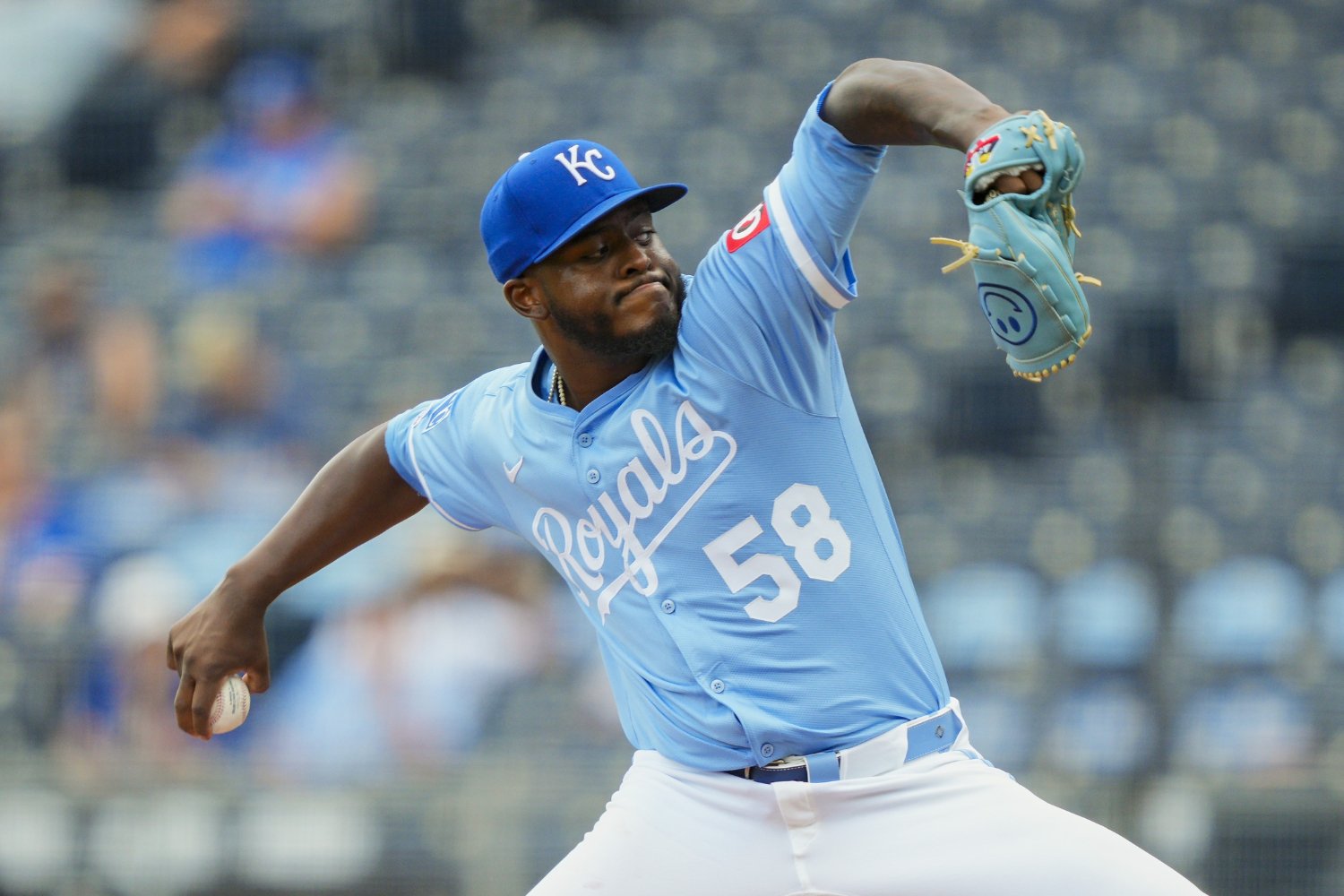 On Sunday, after the Royals' 3-1 win over the Milwaukee Brewers, manager Matt Quatraro announced that Luinder Avila will be joining Team Venezuela for the upcoming World Baseball Classic. Avila will be joining Team Venezuela along with Royals teammates Salvador Perez and Maikel Garcia, who were announced to the roster earlier in the offseason. In addition to those three, Bobby Witt Jr. and Michael Wacha will be joining Team USA; Vinnie Pasquantino and Jac Caglianone will be joining Team Italy; Seth Lugo will be starting for Team Puerto Rico; and Carlos Estevez will be pitching for Team Dominican Republic. Michael Coyle had a breakdown of all participants in the World Baseball Classic on February 5th here at Royals Keep. Avila ranks 13th on our Top 20 preseason Royals prospects list. He had a strong MLB debut, posting a 1.29 ERA and 0.93 WHIP in 13 appearances with the Royals. He also posted a 28.6% K% and had a 2.09 xERA in his first stint against MLB competition. In Royals camp, he's been in competition for not just a roster spot, but perhaps a spot in the Royals' rotation. Quatraro mentioned in a press conference in Spring Training that Avila had "frontline starter" potential. Prior to his call-up, the 24-year-old primarily pitched as a starter in the Minor Leagues, posting a 5.23 ERA and 1.33 WHIP in 53.1 IP with the Storm Chasers last season. However, he still posted a 28% K%, a 17.7% K-BB%, and a 4.38 FIP, indicating he was better in Omaha than his ERA suggested. This spring, Avila has been off to a strong start in Cactus League play. In 4.0 IP, he has a 2.25 ERA and 1.75 WHIP. His K% and K-BB% are a little low at 21.1% and 10.5%, respectively. That said, his TJ Stuff+, chase, and whiff metrics have still been strong, as seen below via his TJ Stats summary. Avila has a 100 overall TJ Stuff+ but has four pitches with marks of 100 or higher and grades of 54 or higher. His curveball has been his best pitch this spring on a TJ Stuff+ end, with a 59 grade, but it has only generated a 20% whiff and chase rate. On the flip side, his sinker is his worst pitch in terms of TJ Stuff+ (93 and 45 grade), but it's been his best offering in terms of generating chases (66.7%) and whiffs (53.8%). His slider and changeup have shown promise, but he's only thrown them one time each this spring. The Venezuelan righty will likely pitch out of the bullpen for Team Venezuela in the WBC. Carlos Hernandez was the last Royals pitcher to pitch for Team Venezuela in 2023 and had a solid showing. In 2.2 IP, he struck out five batters and allowed no runs, no walks, and only three hits. Hernandez's solid performance in the WBC helped him get off to a strong start in 2023, as he posted a 3.83 ERA, a 2.65 FIP, a 28.8% K%, and 22% K-BB% in 44.2 IP in the first half. His strong first half prompted the Royals to trade away established closer Scott Barlow to San Diego at the Trade Deadline. Unfortunately, Hernandez regressed sharply in the second half, posting a 7.82 ERA, 1.93 WHIP, 7.16 FIP, 21.1% K%, and 5.7% K-BB% in 25.1 IP. Let's hope that Avila not only gets valuable experience competing in the WBC but also has a solid performance that can be parlayed into another step forward in pitching development in 2026. Avila has a lot more upside than Hernandez, and he will be needed, especially with Stephen Kolek straining his oblique and likely starting the season on the 15-Day IL. The World Baseball Classic kicks off with pool play on Thursday, March 5th, and will conclude on March 17th. Venezuela is in Pool D with the Dominican Republic, Israel, Nicaragua, and the Netherlands. More information about the World Baseball Classic can be found on its website.
 - Yesterday
-

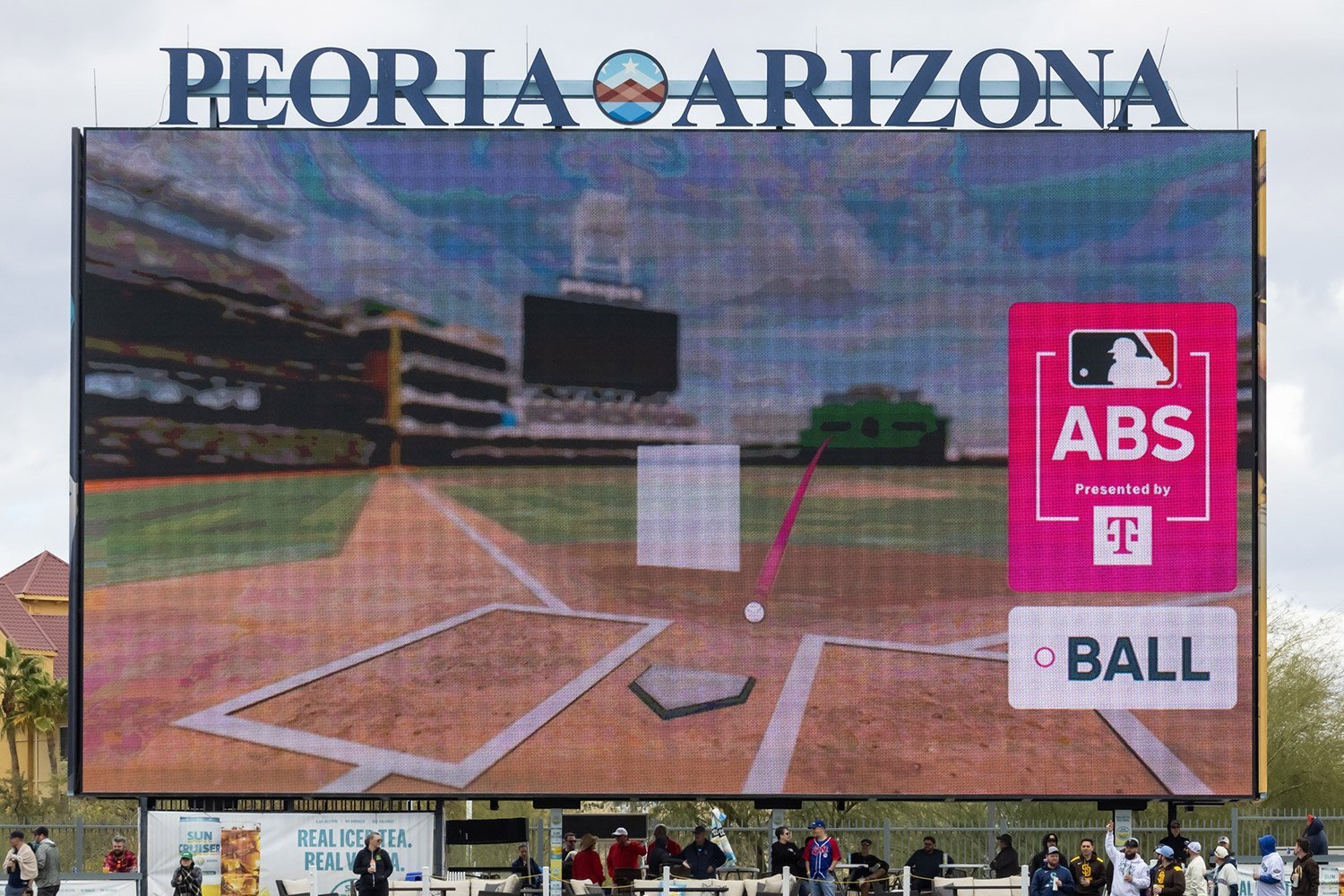 ABS Challenge System means fresh statistics for the major leagues.View the full article
 -
Royals Agree to Deal With Starling Marte
Kevin O'Brien replied to Kevin O'Brien's topic in Royals Keep Front Page News
Agreed. I think it's ironic that many Royals fans are lamenting this move as if there's not a "spot" for Marte. Marte last year would've been a tremendous upgrade over the rotating OF group you mentioned, and he could've been the difference in the Royals making the postseason, honestly. As you said, not every player is going to play 162, and you need depth that can handle their own. Marte fits that mold, and at the very least, the talent level on the Royals' 26-man roster has raised a bit, regardless of the role that Marte will play in 2026. -

Royals Agree to Deal With Starling Marte
RCT replied to Kevin O'Brien's topic in Royals Keep Front Page News
This makes a lot of sense to me. Even if he only plays a handful of outfield games and DH’s most of his AB’s. It’s not like Vinnie, Salvy, Jensen and Jac are going to play 162 games. Even if they all stay healthy and play 150 games (highly unlikely) that still leaves 48 games with most being an open DH spot and he is far and away the next best DH option. 48 games of Marte instead of Biggio, Rave, Waters, Renfro, MJ, etc. last year would have been nice!! - Last week
-
Royals Agree to Deal With Starling Marte
Kevin O'Brien posted a topic in Royals Keep Front Page News
Image courtesy of Jordan Godfree-Imagn Images On Saturday afternoon, MLB.com's Mark Feinsand reported that the Kansas City Royals had agreed to a deal with outfielder Starling Marte, pending a physical. Yancen Pujols, via El Extra Base's Daniel Alvarez-Montes, reported early this morning that Marte and the Royals had progressed in talks and were close to signing a deal to bring him to Kansas City. The Royals have shown interest in Marte before. Last year, a possible deal at the Winter Meetings would've brought Marte to Kansas City in exchange for reliever Hunter Harvey. However, the deal couldn't be finalized. Marte was also a free agent this winter, and there were rumblings that he fit what the Royals were looking for in the outfield for 2026. Marte has a career 35.9 fWAR and is a two-time All-Star and Gold Glove award winner. He's been beset by injuries over the past few years, as he hasn't had more than 370 plate appearances in a season since 2022, his first season with the Mets. Last season, in 329 plate appearances, he slashed .270/.335/.410 with a .326 wOBA, 112 wRC+, and 0.7 fWAR. He also had nine home runs, 37 runs scored, 34 RBI, and seven stolen bases. In terms of his Statcast percentiles, he showed a decent 90th percentile exit velocity and ranked in the 52nd percentile in strikeout rate. However, he is definitely a player in the later stages of his career, as illustrated in his TJ Stats summary from 2025 below. Despite this declining skill set, it's likely that Marte will be a platoon bat who will rotate among all three outfield positions with Isaac Collins, Kyle Isbel, and Jac Caglianone. MLB.com Royals beat writer Anne Rogers reported that Marte, who is coming to Kansas City on a one-year deal, will be utilized mostly as a depth piece off the bench, but he could earn more playing time if he produces like he did last year or in 2024 (103 wRC+). It sounds like Marte will be receiving a Major League deal, which means that the Royals will likely DFA someone on the 40-man roster to make room. Outfielders Dairon Blanco and Drew Waters seem like prime candidates, especially Waters, who is out of Minor League options and posted a 66 wRC+ in 219 plate appearances last season. View full article -
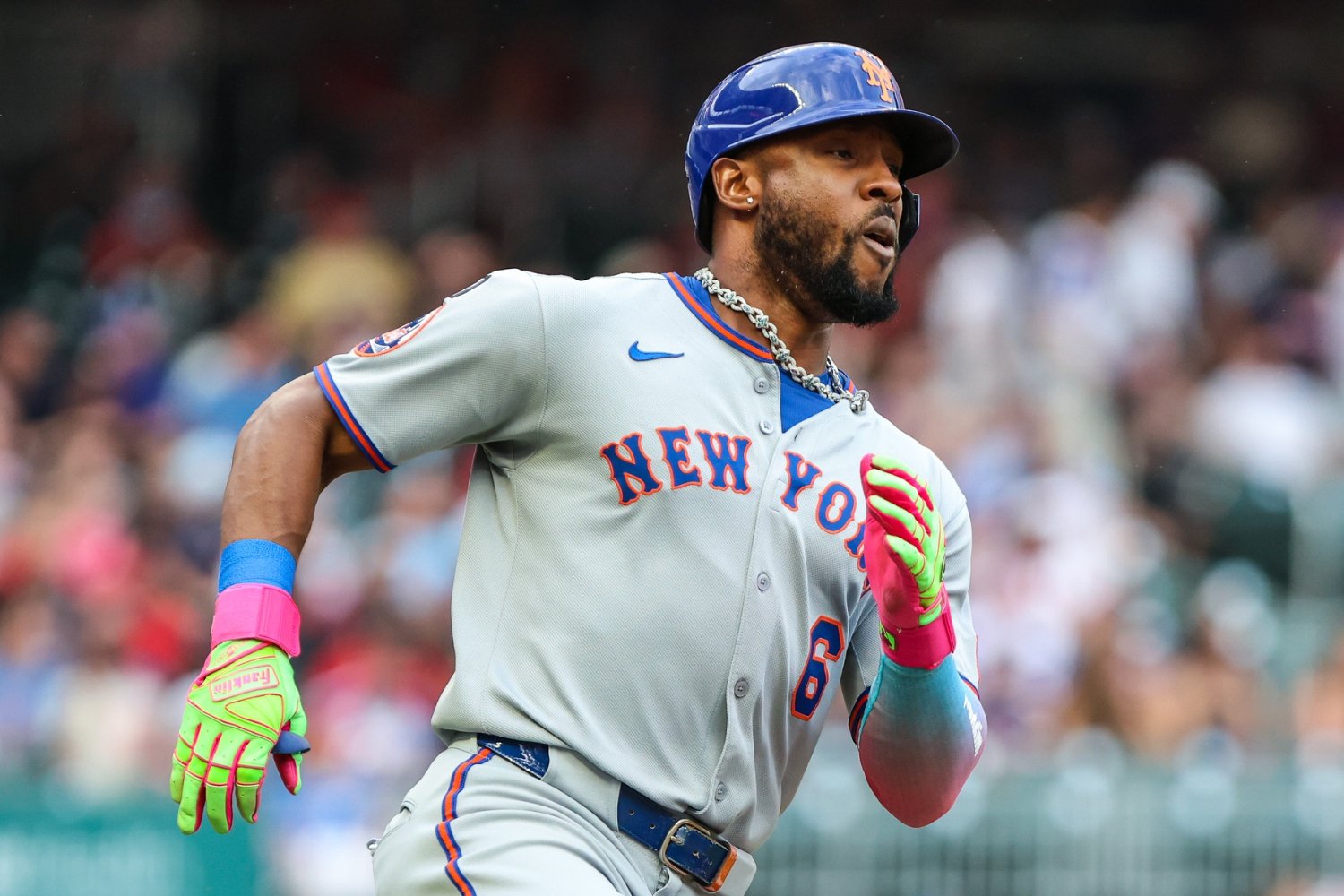 On Saturday afternoon, MLB.com's Mark Feinsand reported that the Kansas City Royals had agreed to a deal with outfielder Starling Marte, pending a physical. Yancen Pujols, via El Extra Base's Daniel Alvarez-Montes, reported early this morning that Marte and the Royals had progressed in talks and were close to signing a deal to bring him to Kansas City. The Royals have shown interest in Marte before. Last year, a possible deal at the Winter Meetings would've brought Marte to Kansas City in exchange for reliever Hunter Harvey. However, the deal couldn't be finalized. Marte was also a free agent this winter, and there were rumblings that he fit what the Royals were looking for in the outfield for 2026. Marte has a career 35.9 fWAR and is a two-time All-Star and Gold Glove award winner. He's been beset by injuries over the past few years, as he hasn't had more than 370 plate appearances in a season since 2022, his first season with the Mets. Last season, in 329 plate appearances, he slashed .270/.335/.410 with a .326 wOBA, 112 wRC+, and 0.7 fWAR. He also had nine home runs, 37 runs scored, 34 RBI, and seven stolen bases. In terms of his Statcast percentiles, he showed a decent 90th percentile exit velocity and ranked in the 52nd percentile in strikeout rate. However, he is definitely a player in the later stages of his career, as illustrated in his TJ Stats summary from 2025 below. Despite this declining skill set, it's likely that Marte will be a platoon bat who will rotate among all three outfield positions with Isaac Collins, Kyle Isbel, and Jac Caglianone. MLB.com Royals beat writer Anne Rogers reported that Marte, who is coming to Kansas City on a one-year deal, will be utilized mostly as a depth piece off the bench, but he could earn more playing time if he produces like he did last year or in 2024 (103 wRC+). It sounds like Marte will be receiving a Major League deal, which means that the Royals will likely DFA someone on the 40-man roster to make room. Outfielders Dairon Blanco and Drew Waters seem like prime candidates, especially Waters, who is out of Minor League options and posted a 66 wRC+ in 219 plate appearances last season.
 -
 What if the Bad News Bears were a major league team? It would be something like this...View the full article
 -
Three Non-Roster Invitee Hitters Making Their Case in Royals Camp
Kevin O'Brien posted an article in Royals
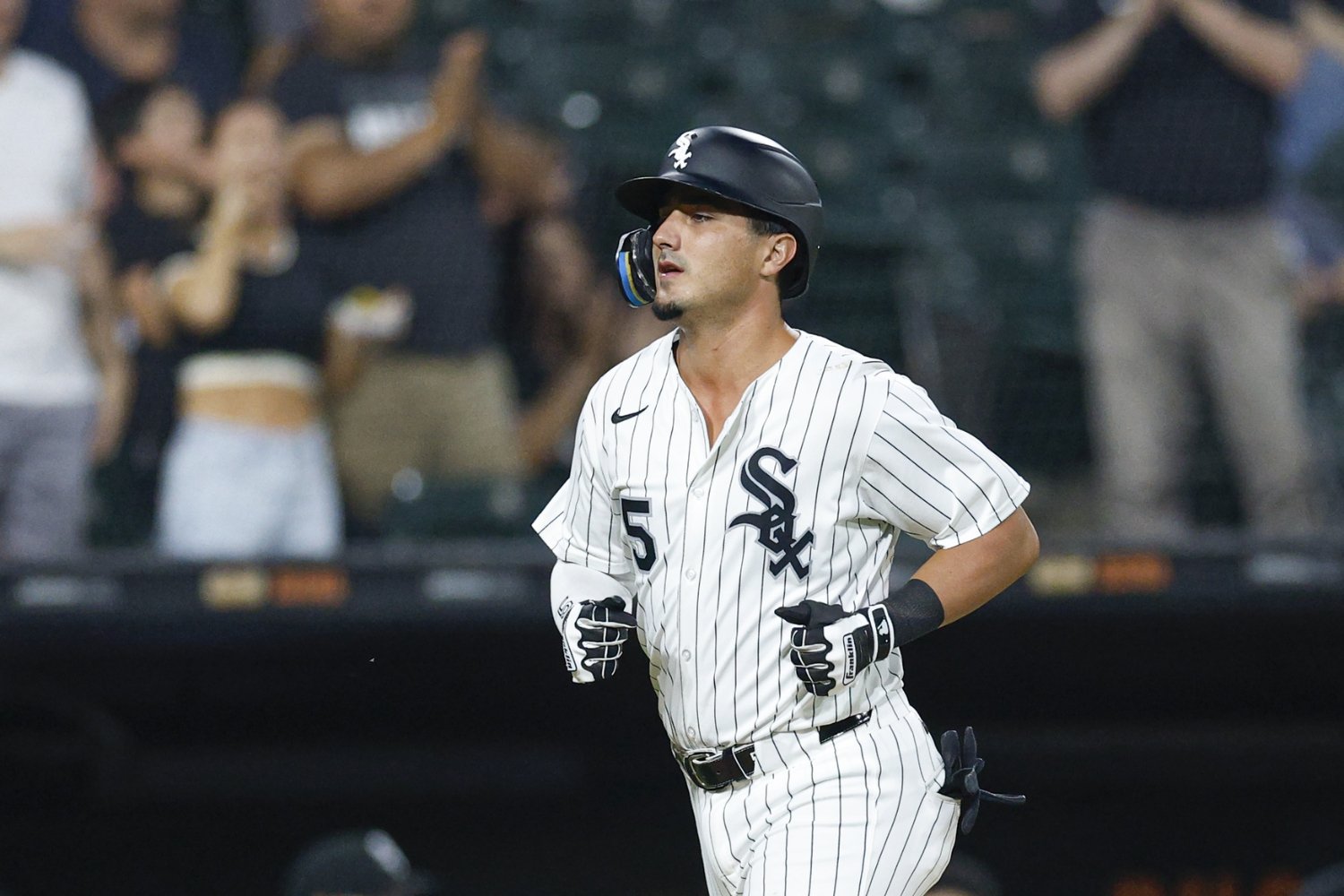 The Royals are 3-4 right now after roughly one week of Cactus League play. They earned their third win of the year in a wild one on Friday afternoon against the Sacramento Athletics, winning 7-6 after trailing in the seventh inning. The Royals have seen some familiar hitters get off to strong starts in Spring Training. Bobby Witt Jr. leads the Royals in hits with six and hit his first home run of the spring today against the Athletics, a three-run blast. Jac Caglianone is also off to a strong start this spring after a rough rookie campaign. He's hitting .417 with a 1.212 OPS and has launched some tanks in Arizona. That included a double on Thursday against the Diamondbacks that had an exit velocity of 120.2 MPH. Lastly, Maikel Garcia and Michael Massey have gotten off to strong starts with five hits apiece. Garcia has an .814 OPS, and Massey has a 1.445 OPS. Garcia is trying to prove that his breakout in 2025 wasn't a fluke, while Massey is looking to show Royals fans that he can be a long-term solution in Kansas City as a utility player who can rotate between second base and left field. While the familiar position players are off to strong starts, there are some unfamiliar ones, specifically non-roster invitees, who are also doing well at the plate in Cactus League play. Thus, let's take a look at three NRI Royals hitters who are not just putting up strong performances but are also making their case for roster spots on Opening Day (which is one month away). Josh Rojas, 2B/3B Rojas played for the White Sox last year and had a brutal season, which explains why he was not given a Major League deal this offseason, even though he has a career 5.5 fWAR in 639 career Major League games. In 211 plate appearances with the White Sox, Rojas hit .180 with a .232 wOBA, a 44 wRC+, and -1.3 fWAR, according to Fangraphs. His fWAR was the worst mark of his career and his worst mark since 2020 with the Diamondbacks, when he posted a -0.3 fWAR in 17 games. His chances of making the roster initially seemed long, especially with utility bench options such as Nick Loftin and Tyler Tolbert also competing for roster spots this spring. However, Rojas has gotten off to a hot start at the plate, showing he may deserve a shot on the Opening Day roster. In 10 at-bats, the 31-year-old utility infielder has four hits, two home runs, and six RBI. His latest home run came on February 24th against the Cincinnati Reds. The former 26th-round draft pick has long been known for his glove over his bat. His defense at second has traditionally been better than his defense at third. He has a +10 career OAA at the keystone, but a -8 career OAA at the hot corner. That said, the Royals seem set at third base with Garcia. They are less solidified with Massey and Jonathan India, who both struggled in 2025. Furthermore, given Massey's injury history, Rojas could be a player who seamlessly fills in for him, though he doesn't exactly have Massey's defensive versatility. The University of Hawaii product has only 729 innings in the outfield. On a positive note, he has a +1 OAA there, so if the bat continues, the Royals may be prompted to give Rojas more time in the outfield to give him more versatility off the bench. Kevin Newman, 2B/SS The Royals acquired Newman early in the offseason, and he seemed like an intriguing pickup who could give Kansas City not only positional flexibility but a veteran presence. In fact, his acquisition could be a reason why the Royals opted not to bring back Adam Frazier for the 2026 season. In 10 at-bats this spring, the 32-year-old infielder has three hits and is hitting .300 with an .864 OPS. He has one walk and two strikeouts, and he has hit two doubles, showing that he has the batted-ball profile to take advantage of Kauffman Stadium's spacious grounds. Against Arizona pitcher Kade Strowd, Newman laced a double down the line and showed excellent speed to get to second base standing up. Newman had an underwhelming 2025 season with the Angels, posting a .202 average, 27 wRC+, and -0.7 fWAR in 116 plate appearances. However, he played with the Diamondbacks in 2024 and fared much better over a larger sample. In 111 games and 311 plate appearances that season, he hit .278 with an 89 wRC+ and 1.4 fWAR. He also hit three home runs, scored 41 runs, stole eight bases, and provided solid defense, as evidenced by his +7 OAA at shortstop and second base combined. Loftin has gotten off to a slow start this spring. He is currently hitting .167 with a .481 OPS in 12 at-bats. While he did have a two-run double today, if the former Baylor product continues to perform poorly at the plate, the Royals may opt for Newman over Loftin for the right-handed utility role off the bench to start the 2026 season. Connor Kaiser, 2B When the Royals signed him to a Minor League deal, Kaiser struck me as more of an everyday player for the Omaha Storm Chasers than a serious candidate to make the Major League Opening Day roster. That said, the former Blue Valley West High School product is showing that he may be a call-up at some point in 2026, even if he begins the year in Omaha. In eight at-bats, the 29-year-old second baseman has three hits, including two doubles. He is hitting .375 with a 1.000 OPS, and he has one RBI to boot. It's a small sample, and Kaiser has mostly done this while coming off the bench (meaning he isn't facing top-flight pitching). Nonetheless, he's producing in the limited at-bats that he's getting. Kaiser will likely receive a lot more soon when Witt and Garcia leave camp to report for the World Baseball Classic. The Vanderbility product doesn't have an extensive track record in Major League. He has 23 career MLB plate appearances and has a career .091 average, -29 wrC+, and -0.2 fWAR. He also strikes out a bit too much, as he has a 30.4% career K rate in the Majors and had a 27.5% K rate with Reno, Arizona's Triple-A club, last season. Still, when he gets a hold of the ball, Kaiser can find the gaps, much like Newman, as illustrated in this hit below with the Diamondbacks last season (his first career MLB hit). With some modifications from the Royals' hitting development team, it's possible that Kaiser could morph into a Cam Devanney of sorts, who broke out last season in Triple-A Omaha. While Devanney didn't contribute at all to the Major League roster, he was utilized as capital in a trade to Pittsburgh for Frazier at the All-Star Break. Maybe Frazier can be acquired again by the Royals midseason, with Kaiser as the trade asset this time around.
 -
Image courtesy of Kamil Krzaczynski-Imagn Images The Royals are 3-4 right now after roughly one week of Cactus League play. They earned their third win of the year in a wild one on Friday afternoon against the Sacramento Athletics, winning 7-6 after trailing in the seventh inning. The Royals have seen some familiar hitters get off to strong starts in Spring Training. Bobby Witt Jr. leads the Royals in hits with six and hit his first home run of the spring today against the Athletics, a three-run blast. Jac Caglianone is also off to a strong start this spring after a rough rookie campaign. He's hitting .417 with a 1.212 OPS and has launched some tanks in Arizona. That included a double on Thursday against the Diamondbacks that had an exit velocity of 120.2 MPH. Lastly, Maikel Garcia and Michael Massey have gotten off to strong starts with five hits apiece. Garcia has an .814 OPS, and Massey has a 1.445 OPS. Garcia is trying to prove that his breakout in 2025 wasn't a fluke, while Massey is looking to show Royals fans that he can be a long-term solution in Kansas City as a utility player who can rotate between second base and left field. While the familiar position players are off to strong starts, there are some unfamiliar ones, specifically non-roster invitees, who are also doing well at the plate in Cactus League play. Thus, let's take a look at three NRI Royals hitters who are not just putting up strong performances but are also making their case for roster spots on Opening Day (which is one month away). Josh Rojas, 2B/3B Rojas played for the White Sox last year and had a brutal season, which explains why he was not given a Major League deal this offseason, even though he has a career 5.5 fWAR in 639 career Major League games. In 211 plate appearances with the White Sox, Rojas hit .180 with a .232 wOBA, a 44 wRC+, and -1.3 fWAR, according to Fangraphs. His fWAR was the worst mark of his career and his worst mark since 2020 with the Diamondbacks, when he posted a -0.3 fWAR in 17 games. His chances of making the roster initially seemed long, especially with utility bench options such as Nick Loftin and Tyler Tolbert also competing for roster spots this spring. However, Rojas has gotten off to a hot start at the plate, showing he may deserve a shot on the Opening Day roster. In 10 at-bats, the 31-year-old utility infielder has four hits, two home runs, and six RBI. His latest home run came on February 24th against the Cincinnati Reds. The former 26th-round draft pick has long been known for his glove over his bat. His defense at second has traditionally been better than his defense at third. He has a +10 career OAA at the keystone, but a -8 career OAA at the hot corner. That said, the Royals seem set at third base with Garcia. They are less solidified with Massey and Jonathan India, who both struggled in 2025. Furthermore, given Massey's injury history, Rojas could be a player who seamlessly fills in for him, though he doesn't exactly have Massey's defensive versatility. The University of Hawaii product has only 729 innings in the outfield. On a positive note, he has a +1 OAA there, so if the bat continues, the Royals may be prompted to give Rojas more time in the outfield to give him more versatility off the bench. Kevin Newman, 2B/SS The Royals acquired Newman early in the offseason, and he seemed like an intriguing pickup who could give Kansas City not only positional flexibility but a veteran presence. In fact, his acquisition could be a reason why the Royals opted not to bring back Adam Frazier for the 2026 season. In 10 at-bats this spring, the 32-year-old infielder has three hits and is hitting .300 with an .864 OPS. He has one walk and two strikeouts, and he has hit two doubles, showing that he has the batted-ball profile to take advantage of Kauffman Stadium's spacious grounds. Against Arizona pitcher Kade Strowd, Newman laced a double down the line and showed excellent speed to get to second base standing up. Newman had an underwhelming 2025 season with the Angels, posting a .202 average, 27 wRC+, and -0.7 fWAR in 116 plate appearances. However, he played with the Diamondbacks in 2024 and fared much better over a larger sample. In 111 games and 311 plate appearances that season, he hit .278 with an 89 wRC+ and 1.4 fWAR. He also hit three home runs, scored 41 runs, stole eight bases, and provided solid defense, as evidenced by his +7 OAA at shortstop and second base combined. Loftin has gotten off to a slow start this spring. He is currently hitting .167 with a .481 OPS in 12 at-bats. While he did have a two-run double today, if the former Baylor product continues to perform poorly at the plate, the Royals may opt for Newman over Loftin for the right-handed utility role off the bench to start the 2026 season. Connor Kaiser, 2B When the Royals signed him to a Minor League deal, Kaiser struck me as more of an everyday player for the Omaha Storm Chasers than a serious candidate to make the Major League Opening Day roster. That said, the former Blue Valley West High School product is showing that he may be a call-up at some point in 2026, even if he begins the year in Omaha. In eight at-bats, the 29-year-old second baseman has three hits, including two doubles. He is hitting .375 with a 1.000 OPS, and he has one RBI to boot. It's a small sample, and Kaiser has mostly done this while coming off the bench (meaning he isn't facing top-flight pitching). Nonetheless, he's producing in the limited at-bats that he's getting. Kaiser will likely receive a lot more soon when Witt and Garcia leave camp to report for the World Baseball Classic. The Vanderbility product doesn't have an extensive track record in Major League. He has 23 career MLB plate appearances and has a career .091 average, -29 wrC+, and -0.2 fWAR. He also strikes out a bit too much, as he has a 30.4% career K rate in the Majors and had a 27.5% K rate with Reno, Arizona's Triple-A club, last season. Still, when he gets a hold of the ball, Kaiser can find the gaps, much like Newman, as illustrated in this hit below with the Diamondbacks last season (his first career MLB hit). With some modifications from the Royals' hitting development team, it's possible that Kaiser could morph into a Cam Devanney of sorts, who broke out last season in Triple-A Omaha. While Devanney didn't contribute at all to the Major League roster, he was utilized as capital in a trade to Pittsburgh for Frazier at the All-Star Break. Maybe Frazier can be acquired again by the Royals midseason, with Kaiser as the trade asset this time around. View full article
-
 As impressive an age-17 season as you will see from a pitching prospect, Kendry Chourio climbed three levels in 2025 and has himself in position to be one of the most exciting lower-level arms in 2026. View full video
 -
As impressive an age-17 season as you will see from a pitching prospect, Kendry Chourio climbed three levels in 2025 and has himself in position to be one of the most exciting lower-level arms in 2026.
-
Image courtesy of Jay Biggerstaff-Imagn Images Kansas City Royals closer Carlos Estevez made his 2026 Cactus League debut on Tuesday, February 24th, against the Reds in Goodyear. Safe to say, it didn't go swimmingly. In one inning of work, Estevez allowed two runs on two hits, back-to-back home runs by Reds sluggers Elly De La Cruz and Eugenio Suarez. He did minimize the damage after those two home runs, retiring Spencer Steer, Will Benson, and Tyler Stephenson in order. However, the 33-year-old Royals reliever allowed four hard-hit balls and an average exit velocity of 99 MPH on batted balls in his lone Spring Training outing thus far. To make matters worse, MLB.com Royals beat writer Anne Rogers pointed out that Estevez saw a massive drop in his velocity from a season ago (though she said he also showed a similar drop last season). Of course, Royals fans are solely focusing on every little thing players do right now in Arizona, both good and bad. Hence, some are panicking, thinking that Estevez may be falling off a cliff in 2026 after making the All-Star team and leading Major League Baseball in saves a season ago. Are fans valid in their feelings that the Royals should be concerned about Estevez's ability to repeat his sensational 2025 campaign? Or is that just an example of Estevez getting warmed up and treating Spring Training in a similar way to how a veteran offensive lineman treats NFL Summer Camp? Here are three takeaways from Estevez's first outing of Spring Training and why Royals fans should keep their heads cool for now. Estevez May Have Been Working On A Particular Pitch (i.e., his changeup) When looking at his TJ Stats pitch plot data, his TJ Stuff+ doesn't look great. All three of his pitches registered TJ Stuff+ marks below 95. That is not an encouraging sign, especially considering his limited repertoire. His four-seamer, which he threw only once, received the highest grade, 42. Conversely, his two most thrown pitches, the changeup (55% usage) and slider (41% usage), registered grades of 30 and 32, respectively. Those aren't good trends, especially considering what Estevez's stuff looked like last season, according to TJ Stats pitch plot data. Estevez only threw the changeup 16% of the time last year, and it was a below-average pitch, according to the data. His main offspeed offering sported a 96 TJ Stuff+ and 49 grade, with limited spin at 1,616 RPM. Still, his TJ Stuff+ was 13 points lower on Tuesday than his overall mark in 2025. That said, it's entirely plausible that Estevez was trying something new with the changeup in this Spring Training outing, and the TJ Stuff+ metrics were a casualty. Here are some key differences in his changeup against the Reds and what it looked like a season ago. Last season, his changeup had an iVB of 9.8. On Tuesday, it had an iVB of 11. Thus, it may be that Estevez was trying to get more vertical movement on the pitch, and the quality was inconsistent as he toyed with this difference. A sign of that experimentation could be found in his changeup trends, as shown in both his pitch movement plot and velocity linear chart. The former, which can be seen in the Spring Training plot above, showed three pitches that are WAY off from the previous group, illustrating "gross mistake" pitches (i.e., super-waste ones). The sheer difference in movement profile from the main group of changeup pitches demonstrates that he tried something different, and it didn't work out (or he couldn't quite get a grip and lost command of it). In the latter, the changeup shows major dips at a few points in the velocity chart, as shown below. Those illustrate to baseball fans that Estevez messed up with his control against Cincinnati while trying something different on his changeup. Estevez had three changeups that hovered around 80 MPH or slightly below. That is a far cry from the rest of his changeup pitches, which were around the upper 80's. The Dominican-born pitcher, who will be pitching for the Dominican Republic in the upcoming WBC, is a veteran who doesn't need to earn his spot in Spring Training. Thus, Estevez trying to tweak his mix mid-game is something a pitcher of his status can afford to do, even if it produces lackluster results. He's not going to lose his closer job after one rough Cactus League game. Estevez May Be a Slow Starter The right-hander may just be a slow starter, whether it's in Spring Training or the start of the season. Therefore, this may be something Royals fans just have to get used to with him, or at least pay attention to, in his appearances in Arizona. Since 2021, Estevez has posted ERA marks in the double digits twice: 2021 with the Rockies (12.38 ERA) and 2023 with the Angels (10.57 ERA). While that looks bad, it's Spring Training, and the sample sizes are so small. One bad outing can sink a player's Cactus League campaign. Vice versa, a good Spring Training outing can correct itself in March/April with more innings and against better competition. This is what happened to Estevez last year in his first year in Kansas City. After posting a 1.80 ERA in five IP in the Cactus League, he struggled out of the gate, recovering from a minor back injury. He had a 2.77 ERA in 13 IP in April, but his WHIP was slightly higher than expected at 1.23, and he had eight walks to only 11 strikeouts. He struggled to get strikeouts, and his lackluster fastball velocity in the first two months (April and May) was likely a reason. Here's what his four-seam velocity looked like by month last season, and notice how in July, he looked like his best self, velocity-wise. Obviously, there's a desire for more with Estevez, especially with him signed in free agency last season and making slightly over $11 million this season in the last year of the two-year deal he signed prior to the 2025 MLB season. However, given his size and age, this may just be a sign that things are taking longer for Estevez to get ready for the upcoming season. A positive difference in this Spring Training, compared to a year ago, is that Estevez is healthy. A healthy Spring Training could help him avoid a slow start in the regular season, especially in April, as was the case in Estevez's first season in Kansas City. Could Normal Regression Be Happening? Estevez has become a fan favorite, especially for his Dragon Ball Z-inspired celebration after each and every save. It's becoming a popular trend for Royals fans to follow (and Royals broadcasters to revel in) after a Kansas City victory. However, while Estevez impressed last season with a 2.45 ERA, his FIP was 3.67, xERA 3.69, and xFIP 4.95. Furthermore, his strikeout rate dropped from 23.6% in 2024 to 20.1% in 2025, and his K-BB% declined from 17.9% to 11.9% over the same period. Hence, it's not a surprise that Estevez had only a 1.1 fWAR last year, which was the same amount he produced in 2024 with the Angels and Phillies, but in 11 fewer innings. The TJ Stats summary from last year also illustrates a closer with good stuff, but struggles to generate chase and whiffs on a regular basis. Estevez had a TJ Stuff+ of 103 overall, with pitch grades of 57 (slider) and 60 (four-seamer). That said, his chase was only 23%, his whiff was only 19%, and his xwOBACON was .386. All of those were below-average marks for Estevez last year, with his whiff rate rating especially low. ATC is projecting 32 saves in 65 IP for Estevez in 2026, according to Fangraphs. That also includes a 4.15 ERA, 1.27 WHIP, a 21.4% K rate, and 13.1% K-BB%. There are some improvements from last season expected for Estevez in those projections, especially in terms of K-BB% (his mark last season was his lowest mark in a single season since 2017, his second year in the Majors). Conversely, every other category in ATC's projection of him is a regression, suggesting that Estevez is unlikely to be the 42-save, sub-3.00 ERA reliever he was a year ago. The struggles this Spring Training may show that some regression is due to Estevez in this upcoming year. Nonetheless, that doesn't mean that Royals fans should automatically give up, especially after one bad outing. Even with a slightly down season, Estevez could still be a 3 to 3.50 ERA pitcher and collect 30+ saves in 2026. That's how good the stuff is (even if the chase and swing-and-miss aren't as good). This bad performance from Estevez isn't something for the Royals to freak out about just yet. Instead, it should be eye-opening and a sign that he may regress and look more mortal (i.e., less lucky) in 2026. However, he isn't going to fall off a cliff statistically for the Royals. Rather, he will just need to receive more help from other pitchers in the bullpen. With newcomers Matt Strahm, Alex Lange, and Nick Mears, as well as returners Lucas Erceg, John Schreiber, and Daniel Lynch IV, the Royals have the help Estevez may need more often than a year ago. View full article
-
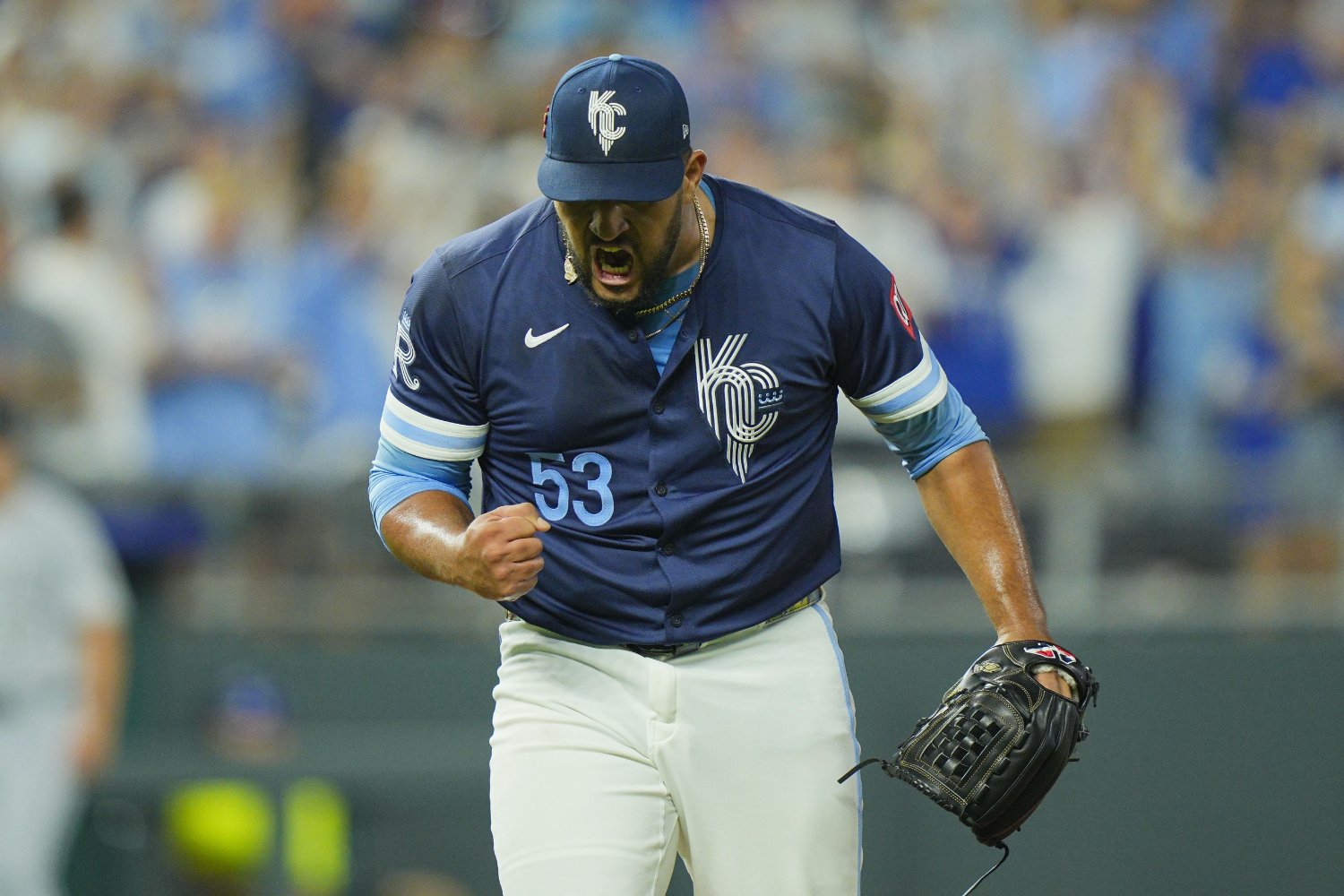 Kansas City Royals closer Carlos Estevez made his 2026 Cactus League debut on Tuesday, February 24th, against the Reds in Goodyear. Safe to say, it didn't go swimmingly. In one inning of work, Estevez allowed two runs on two hits, back-to-back home runs by Reds sluggers Elly De La Cruz and Eugenio Suarez. He did minimize the damage after those two home runs, retiring Spencer Steer, Will Benson, and Tyler Stephenson in order. However, the 33-year-old Royals reliever allowed four hard-hit balls and an average exit velocity of 99 MPH on batted balls in his lone Spring Training outing thus far. To make matters worse, MLB.com Royals beat writer Anne Rogers pointed out that Estevez saw a massive drop in his velocity from a season ago (though she said he also showed a similar drop last season). Of course, Royals fans are solely focusing on every little thing players do right now in Arizona, both good and bad. Hence, some are panicking, thinking that Estevez may be falling off a cliff in 2026 after making the All-Star team and leading Major League Baseball in saves a season ago. Are fans valid in their feelings that the Royals should be concerned about Estevez's ability to repeat his sensational 2025 campaign? Or is that just an example of Estevez getting warmed up and treating Spring Training in a similar way to how a veteran offensive lineman treats NFL Summer Camp? Here are three takeaways from Estevez's first outing of Spring Training and why Royals fans should keep their heads cool for now. Estevez May Have Been Working On A Particular Pitch (i.e., his changeup) When looking at his TJ Stats pitch plot data, his TJ Stuff+ doesn't look great. All three of his pitches registered TJ Stuff+ marks below 95. That is not an encouraging sign, especially considering his limited repertoire. His four-seamer, which he threw only once, received the highest grade, 42. Conversely, his two most thrown pitches, the changeup (55% usage) and slider (41% usage), registered grades of 30 and 32, respectively. Those aren't good trends, especially considering what Estevez's stuff looked like last season, according to TJ Stats pitch plot data. Estevez only threw the changeup 16% of the time last year, and it was a below-average pitch, according to the data. His main offspeed offering sported a 96 TJ Stuff+ and 49 grade, with limited spin at 1,616 RPM. Still, his TJ Stuff+ was 13 points lower on Tuesday than his overall mark in 2025. That said, it's entirely plausible that Estevez was trying something new with the changeup in this Spring Training outing, and the TJ Stuff+ metrics were a casualty. Here are some key differences in his changeup against the Reds and what it looked like a season ago. Last season, his changeup had an iVB of 9.8. On Tuesday, it had an iVB of 11. Thus, it may be that Estevez was trying to get more vertical movement on the pitch, and the quality was inconsistent as he toyed with this difference. A sign of that experimentation could be found in his changeup trends, as shown in both his pitch movement plot and velocity linear chart. The former, which can be seen in the Spring Training plot above, showed three pitches that are WAY off from the previous group, illustrating "gross mistake" pitches (i.e., super-waste ones). The sheer difference in movement profile from the main group of changeup pitches demonstrates that he tried something different, and it didn't work out (or he couldn't quite get a grip and lost command of it). In the latter, the changeup shows major dips at a few points in the velocity chart, as shown below. Those illustrate to baseball fans that Estevez messed up with his control against Cincinnati while trying something different on his changeup. Estevez had three changeups that hovered around 80 MPH or slightly below. That is a far cry from the rest of his changeup pitches, which were around the upper 80's. The Dominican-born pitcher, who will be pitching for the Dominican Republic in the upcoming WBC, is a veteran who doesn't need to earn his spot in Spring Training. Thus, Estevez trying to tweak his mix mid-game is something a pitcher of his status can afford to do, even if it produces lackluster results. He's not going to lose his closer job after one rough Cactus League game. Estevez May Be a Slow Starter The right-hander may just be a slow starter, whether it's in Spring Training or the start of the season. Therefore, this may be something Royals fans just have to get used to with him, or at least pay attention to, in his appearances in Arizona. Since 2021, Estevez has posted ERA marks in the double digits twice: 2021 with the Rockies (12.38 ERA) and 2023 with the Angels (10.57 ERA). While that looks bad, it's Spring Training, and the sample sizes are so small. One bad outing can sink a player's Cactus League campaign. Vice versa, a good Spring Training outing can correct itself in March/April with more innings and against better competition. This is what happened to Estevez last year in his first year in Kansas City. After posting a 1.80 ERA in five IP in the Cactus League, he struggled out of the gate, recovering from a minor back injury. He had a 2.77 ERA in 13 IP in April, but his WHIP was slightly higher than expected at 1.23, and he had eight walks to only 11 strikeouts. He struggled to get strikeouts, and his lackluster fastball velocity in the first two months (April and May) was likely a reason. Here's what his four-seam velocity looked like by month last season, and notice how in July, he looked like his best self, velocity-wise. Obviously, there's a desire for more with Estevez, especially with him signed in free agency last season and making slightly over $11 million this season in the last year of the two-year deal he signed prior to the 2025 MLB season. However, given his size and age, this may just be a sign that things are taking longer for Estevez to get ready for the upcoming season. A positive difference in this Spring Training, compared to a year ago, is that Estevez is healthy. A healthy Spring Training could help him avoid a slow start in the regular season, especially in April, as was the case in Estevez's first season in Kansas City. Could Normal Regression Be Happening? Estevez has become a fan favorite, especially for his Dragon Ball Z-inspired celebration after each and every save. It's becoming a popular trend for Royals fans to follow (and Royals broadcasters to revel in) after a Kansas City victory. However, while Estevez impressed last season with a 2.45 ERA, his FIP was 3.67, xERA 3.69, and xFIP 4.95. Furthermore, his strikeout rate dropped from 23.6% in 2024 to 20.1% in 2025, and his K-BB% declined from 17.9% to 11.9% over the same period. Hence, it's not a surprise that Estevez had only a 1.1 fWAR last year, which was the same amount he produced in 2024 with the Angels and Phillies, but in 11 fewer innings. The TJ Stats summary from last year also illustrates a closer with good stuff, but struggles to generate chase and whiffs on a regular basis. Estevez had a TJ Stuff+ of 103 overall, with pitch grades of 57 (slider) and 60 (four-seamer). That said, his chase was only 23%, his whiff was only 19%, and his xwOBACON was .386. All of those were below-average marks for Estevez last year, with his whiff rate rating especially low. ATC is projecting 32 saves in 65 IP for Estevez in 2026, according to Fangraphs. That also includes a 4.15 ERA, 1.27 WHIP, a 21.4% K rate, and 13.1% K-BB%. There are some improvements from last season expected for Estevez in those projections, especially in terms of K-BB% (his mark last season was his lowest mark in a single season since 2017, his second year in the Majors). Conversely, every other category in ATC's projection of him is a regression, suggesting that Estevez is unlikely to be the 42-save, sub-3.00 ERA reliever he was a year ago. The struggles this Spring Training may show that some regression is due to Estevez in this upcoming year. Nonetheless, that doesn't mean that Royals fans should automatically give up, especially after one bad outing. Even with a slightly down season, Estevez could still be a 3 to 3.50 ERA pitcher and collect 30+ saves in 2026. That's how good the stuff is (even if the chase and swing-and-miss aren't as good). This bad performance from Estevez isn't something for the Royals to freak out about just yet. Instead, it should be eye-opening and a sign that he may regress and look more mortal (i.e., less lucky) in 2026. However, he isn't going to fall off a cliff statistically for the Royals. Rather, he will just need to receive more help from other pitchers in the bullpen. With newcomers Matt Strahm, Alex Lange, and Nick Mears, as well as returners Lucas Erceg, John Schreiber, and Daniel Lynch IV, the Royals have the help Estevez may need more often than a year ago.
 -
 One of the Royals' best pitching prospects, Drew Beam, is quietly one of the more reliable arms in all of Minor League Baseball. After logging over 130 innings in High-A Quad Cities, the former Tennessee Volunteer showed the baseball world what he's capable of from the get-go. This video breaks down Beam's strengths, his shortcomings, and his projected big league debut date. View full video
 -
One of the Royals' best pitching prospects, Drew Beam, is quietly one of the more reliable arms in all of Minor League Baseball. After logging over 130 innings in High-A Quad Cities, the former Tennessee Volunteer showed the baseball world what he's capable of from the get-go. This video breaks down Beam's strengths, his shortcomings, and his projected big league debut date.
-

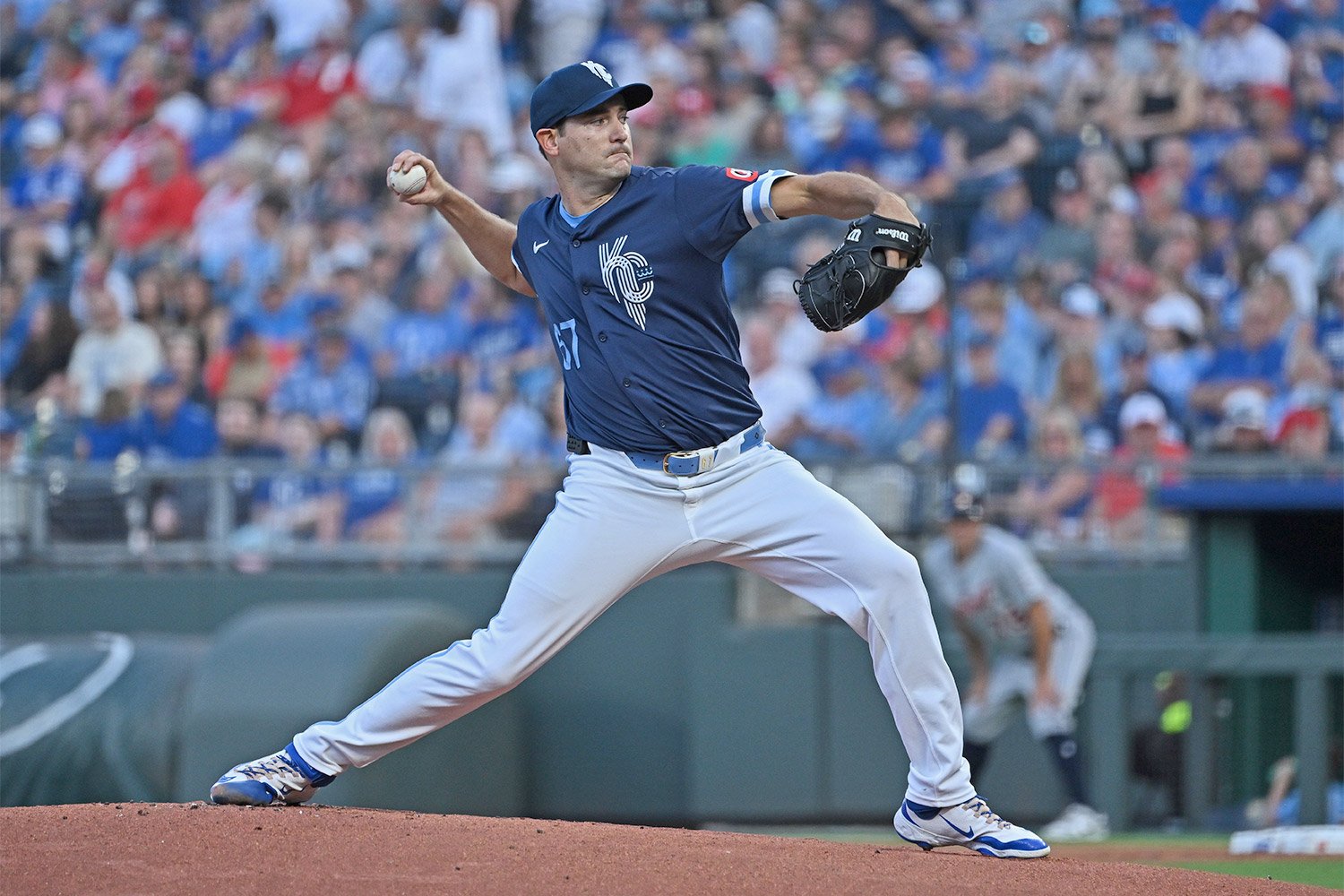 The Kansas City Royals are now a week into spring training, posting a record of 2-3. While statistics and records don’t mean much in February, it is still nice to see players put together strong springs in anticipation of the regular season. With only six games played, the sample size is still relatively small as we look into who is off to a strong or not-so-strong start in spring training. Who’s Hot? 🔥 Seth Lugo: Lugo fired two scoreless innings on Monday against the Chicago Cubs. Over the two innings, Lugo allowed two hits, while walking none and striking out one. The 36-year-old faced the minimum over his two innings, needing 27 pitches to get through the two frames. Lugo was able to retire 2025 and Cubs center fielder Pete Crow-Armstrong on three pitches to open the game with a ground out to first base. Lugo missed time last year with two trips to the injured list, making 26 starts, a step back from the 33 during his All-Star season in 2024. With a veteran pitcher like Lugo, health is the main concern, so seeing the right-hander get through two clean innings is a good start to the spring, especially with Lugo participating in the World Baseball Classic. Bobby Witt Jr.: Witt Jr. impresses each year. Through four games in the spring, Witt Jr. has batted .364, with a double and a triple. The double came on Wednesday when facing Seattle Mariners ace Bryan Woo. Having an exit velocity of 99.8, Witt Jr. gave center fielder Víctor Robles no opportunity to make a play. Seeing Witt Jr. look sharp prior to the WBC is a welcome sight for Royals fans. If the Royals want to return to postseason baseball, Witt Jr. is going to be the driving force of this team. Noah Cameron: Cameron made his first start of the spring on Wednesday against the Mariners, pitching two shutout innings, allowing one hit and one walk, while striking out two. The left-hander required 36 pitches to get through the two frames. Cameron struck out Robles and induced a weak ground ball off the bat of Josh Naylor, looking good against MLB-caliber players as Cameron tries to recapture the success he showed in his rookie season. Who’s Not? 🧊 Jonathan India: 2026 is a big year for India. After struggling during his first season with the Royals, India was re-signed on a one-year, $8 million contract. India will be a free agent at season's end and is looking for fortunes closer to what he showed during his rookie season. Through three spring training games, India is hitless through five at-bats, while recording one walk. Like I mentioned to open the piece, spring training statistics are often a moot point, but I’m sure many Royals fans would feel more comfortable if India can see some success before the year begins. José Cuas: Cuas has pitched in three games this spring, totalling three innings. In the three outings, Cuas has allowed three hits, four runs, two home runs, and one walk, pitching to an ERA of 12.00. With opponents hitting .250 off the right-hander and a deep Royals pitching staff, Cuas doesn’t appear to be working his way onto the Royals’ roster. Lane Thomas: Through seven at-bats, Thomas has recorded only one hit, while striking out four times. A season after batting .160, the Royals need Thomas to provide a steady production of offense from one of the outfield positions. While it’s still way too early to get upset, similar to India’s situation, Royals fans want to see Thomas’ production get closer to the version of the 2023 season where Thomas blasted 28 home runs.
-
- 1
-

-
- seth lugo
- bobby witt jr
- (and 4 more)
-
Image courtesy of © Peter Aiken-Imagn Images The Kansas City Royals are now a week into spring training, posting a record of 2-3. While statistics and records don’t mean much in February, it is still nice to see players put together strong springs in anticipation of the regular season. With only six games played, the sample size is still relatively small as we look into who is off to a strong or not-so-strong start in spring training. Who’s Hot? 🔥 Seth Lugo: Lugo fired two scoreless innings on Monday against the Chicago Cubs. Over the two innings, Lugo allowed two hits, while walking none and striking out one. The 36-year-old faced the minimum over his two innings, needing 27 pitches to get through the two frames. Lugo was able to retire 2025 and Cubs center fielder Pete Crow-Armstrong on three pitches to open the game with a ground out to first base. Lugo missed time last year with two trips to the injured list, making 26 starts, a step back from the 33 during his All-Star season in 2024. With a veteran pitcher like Lugo, health is the main concern, so seeing the right-hander get through two clean innings is a good start to the spring, especially with Lugo participating in the World Baseball Classic. Bobby Witt Jr.: Witt Jr. impresses each year. Through four games in the spring, Witt Jr. has batted .364, with a double and a triple. The double came on Wednesday when facing Seattle Mariners ace Bryan Woo. Having an exit velocity of 99.8, Witt Jr. gave center fielder Víctor Robles no opportunity to make a play. Seeing Witt Jr. look sharp prior to the WBC is a welcome sight for Royals fans. If the Royals want to return to postseason baseball, Witt Jr. is going to be the driving force of this team. Noah Cameron: Cameron made his first start of the spring on Wednesday against the Mariners, pitching two shutout innings, allowing one hit and one walk, while striking out two. The left-hander required 36 pitches to get through the two frames. Cameron struck out Robles and induced a weak ground ball off the bat of Josh Naylor, looking good against MLB-caliber players as Cameron tries to recapture the success he showed in his rookie season. Who’s Not? 🧊 Jonathan India: 2026 is a big year for India. After struggling during his first season with the Royals, India was re-signed on a one-year, $8 million contract. India will be a free agent at season's end and is looking for fortunes closer to what he showed during his rookie season. Through three spring training games, India is hitless through five at-bats, while recording one walk. Like I mentioned to open the piece, spring training statistics are often a moot point, but I’m sure many Royals fans would feel more comfortable if India can see some success before the year begins. José Cuas: Cuas has pitched in three games this spring, totalling three innings. In the three outings, Cuas has allowed three hits, four runs, two home runs, and one walk, pitching to an ERA of 12.00. With opponents hitting .250 off the right-hander and a deep Royals pitching staff, Cuas doesn’t appear to be working his way onto the Royals’ roster. Lane Thomas: Through seven at-bats, Thomas has recorded only one hit, while striking out four times. A season after batting .160, the Royals need Thomas to provide a steady production of offense from one of the outfield positions. While it’s still way too early to get upset, similar to India’s situation, Royals fans want to see Thomas’ production get closer to the version of the 2023 season where Thomas blasted 28 home runs. View full article
-
Agreed. I don't think a lot of KC sports fans realize how lucky we are, especially since we are so used to Patrick Mahomes. Having a Top-3 players in baseball in a market like KC is pretty rare, especially in baseball, where star players are more likely to play in bigger markets than the NFL.
-
 It is great to have such a talented and selfless baseball player on the Kansas City Royals. Bobby Witt Jr. is only in the early stages of his career and yet he is already considered one of the top three baseball players in the majors. Go Royals powered by Bobby Witt Jr.
-
Recent News
-
Recent Topics
-
Recent Blogs